

SUBSCRIBE TO OUR FREE NEWSLETTER
Daily news & progressive opinion—funded by the people, not the corporations—delivered straight to your inbox.
5
#000000
#FFFFFF
To donate by check, phone, or other method, see our More Ways to Give page.
Daily news & progressive opinion—funded by the people, not the corporations—delivered straight to your inbox.
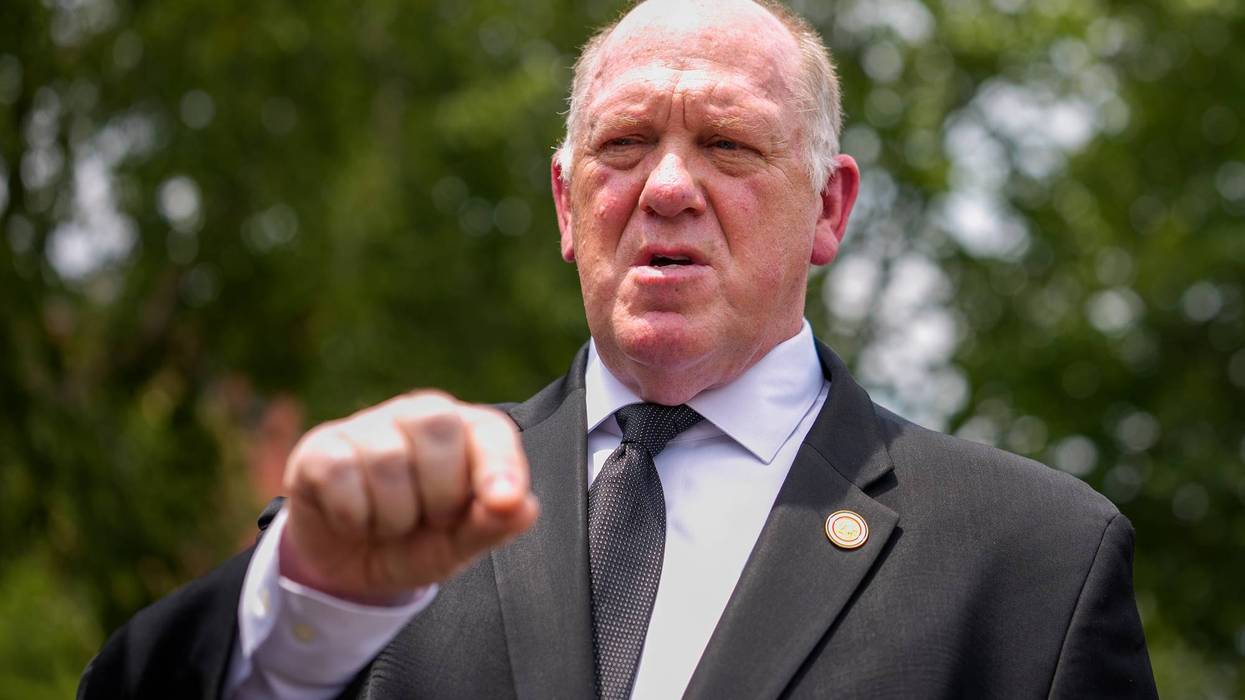
"If the administration wants to investigate anyone, maybe they should look at themselves first."
Progressive US Rep. Pramila Jayapal this week not only joined a growing chorus outraged by President Donald Trump's "rogue" Department of Homeland Security agents raiding Congresswoman Ilhan Omar's home, the Washington Democrat took it a step further.
After putting out a nearly three-minute video decrying Trump's repeated attacks on her Democratic colleague from Minnesota, Jayapal reminded social media users of the president's "border czar," Tom Homan, allegedly accepting a bribe in the form of a paper bag stuffed with $50,000 in cash.
As part of a probe launched under the Biden administration, Homan was the target of a Federal Bureau of Investigation sting operation. In September 2024, he was recorded taking the bag of cash from undercover FBI agents posing as businessmen interested in securing government contracts if Trump returned to the White House.
"If the administration wants to investigate anyone, maybe they should look at themselves first. Anyone remember this?" Jayapal wrote alongside a photo of media coverage that notes Trump's Department of Justice (DOJ) closed the probe into Homan last year.
Before former US Attorney General Pam Bondi was fired by Trump this past April, she insisted last year that "the investigation into Mr. Homan was subjected to a full review by the FBI, agents, and DOJ prosecutors," who "found no credible evidence of any wrongdoing."
However, congressional Democrats as well as the groups Democracy Defenders Fund and Democracy Forward have fought for access to records, including the recording of Homan and the undercover agents.
Homan is far from the only member of Trump's second administration to face credible allegations of corruption. In fact, according to polling results released Tuesday, 59% of Americans believe the president himself has done illegal or unethical things to cash in on his return to power.
Jayapal also isn't the only critic of the Omar raid to point a finger at Trump's border czar this week. Rep. Don Beyer (D-Va.) similarly wrote on social media that "Tom Homan, the man leading Trump’s authoritarian 'investigation' of Rep. Ilhan Omar right before the midterm, was caught by the FBI accepting a bribe of $50,000 in cash in a paper bag."
"But Trump's Justice Department simply dropped the case and covered it up," Beyer stressed. "The most corrupt presidential administration in history."
"His plan to ask Trump’s border czar to send ICE agents to Maine polling places just weeks before Election Day is not only deeply alarming—it is likely illegal," said the head of the state Democratic Party.
By letting attendees at a Maine Young Republicans event in on his "secret" plan for the midterm elections, the state's Republican nominee for governor detailed a proposal that, according to one public policy think tank, is wholly illegal.
In an audio clip released Wednesday by the Bangor Daily News, Bobby Charles, a lawyer and former Reagan administration staffer, boasted about his connections to the Trump administration's border czar, Tom Homan, a key figure in President Donald Trump's mass deportation operation.
"Here's my secret. I have a friend named Tom Homan," said Charles, drawing applause from the GOP voters. "I'm going to ask Tom... three or four weeks before the election, maybe three, I'm going to make an appeal for ICE and Marshals to be at our voting booths."
🚨 NEW Audio: Bobby Charles reveals "secret" plan to invite ICE to Maine three weeks before Election Day. pic.twitter.com/nSx2o9yxjJ
— Maine Democrats (@MaineDems) August 26, 2026
Charles was referring to US Immigration and Customs Enforcement and the US Marshals, both armed federal law enforcement officers whose presence at polling sites to intimidate voters would be against the law, according to the Brennan Center for Justice .
Trump has also alluded to sending ICE and other armed federal agents to polling places during the midterm elections in November, saying in May when he was asked about the idea that he would "do anything necessary to make sure we have honest elections."
At the Brennan Center for Justice last month, senior counsel Hayne Yoon wrote that "despite the implied threat, the law is clear."
"Sending armed federal agents, including those from ICE, to election sites is illegal," wrote Yoon. "Federal law and many states’ laws prohibit not only armed federal agents at polling sites, but also interference in elections or voter intimidation by any officials or private citizens. More important, using these tactics would be a flagrant attempt to hold on to power through force and intimidation and an affront to free and fair elections."
In his comments at the Young Republicans event, Charles also asked rhetorically whether “illegals who are being paid money” to vote would "like" the deployment of ICE agents at polling places. The remark made the gubernatorial candidate one of several Republicans to push the baseless claim that undocumented immigrants or noncitizens have committed voter fraud in order to sway elections.
There are no documented reports of immigrants ever being paid to vote, and a 2024 American Immigration Council analysis of data collected by the right-wing Heritage Foundation found only 68 cases of proven noncitizen voting dating back to 2000, "amounting to less than 0.0001% of total votes."
Democratic gubernatorial candidate Hannah Pingree said Wednesday that Charles' comments make clear that he would push Trump's MAGA agenda, despite his recent attempts to distance himself from the president, who is unpopular with Mainers.
"He is begging Trump's ICE to come interfere with our free and fair elections," said Pingree. "I think that conduct speaks for itself and I trust the Maine people to see it for what it is."
Devon Murphy-Anderson, executive director of the Maine Democratic Party, added that Charles "continues to prove that he is a MAGA extremist who will stop at nothing to put himself and his MAGA agenda ahead of Mainers. His plan to ask Trump’s border czar to send ICE agents to Maine polling places just weeks before Election Day is not only deeply alarming—it is likely illegal. This is a blatant attempt to intimidate voters and yet another reason Bobby Charles is too extreme for Maine.”
Charles' comments come six weeks after an ICE agent fatally shot Biddeford, Maine resident Johan Sebastián Durán Guerrero in an incident that the Trump administration has not appeared to investigate. ICE has made more arrests in Maine so far this year than it did in all of 2024-25 combined, and out of 491 arrests made, 89% of those detained had no criminal convictions.
Homan recently told a Republican state lawmaker that the state would soon "see a lot more enforcement action" due to Trump's decision to end Temporary Protected Status for Haitians and Syrians.
The Justice Department announced this month that it would deploy at least 1,000 federal officers to polling places as people vote in the November 3 elections. The administration has suggested the public should not be alarmed by the plan because anyone who is a citizen will not be targeted by the agents, but as the ACLU noted, at least 155 citizens in eight states last year, including 32 children, were detained, targeted, or subjected to misconduct by federal immigration agents.
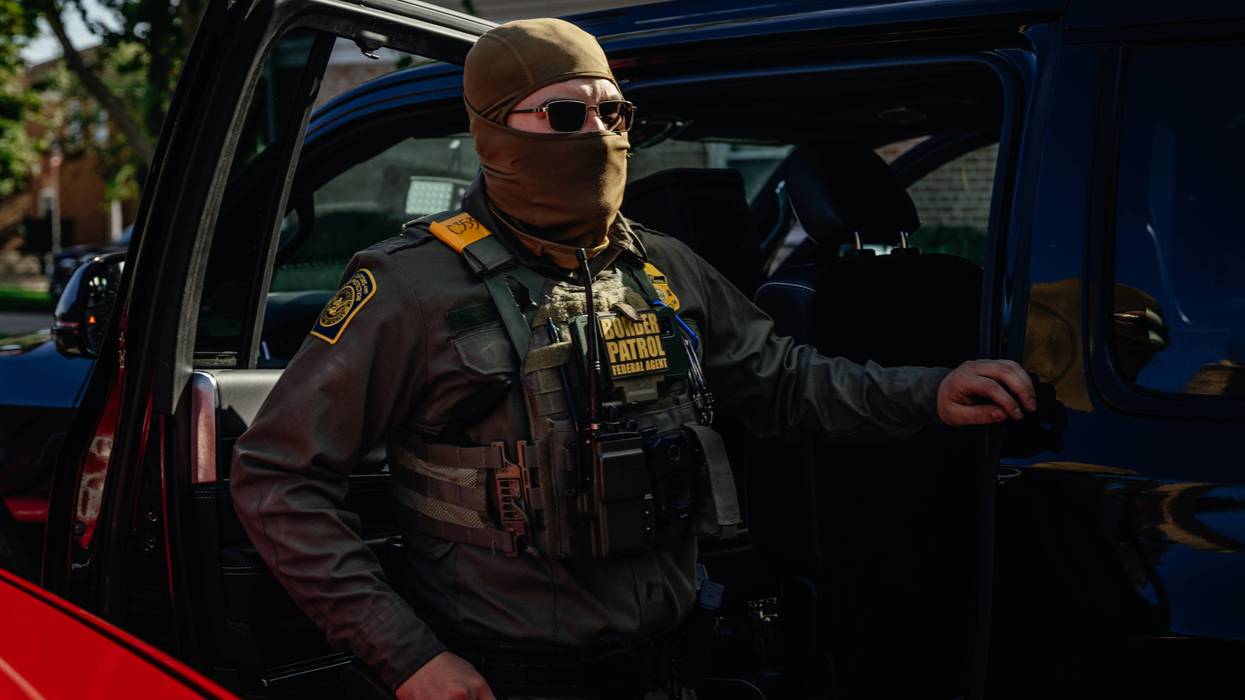
"'Just comply' means women are being told to surrender to potential kidnappers, and hope they turn out to be government agents."
As US Immigration and Customs Enforcement deals with the fallout of two fatal shootings, President Donald Trump's border czar Tom Homan has said the deaths were the fault of victims who did not "comply" with agents.
"It comes down to one simple fact. These people failed to comply with law enforcement," Homan said on Monday outside the White House. "All they had to do was simply comply. If they did, they'd be alive today."
Questions remain about the extent to which the two men killed earlier this month—Lorenzo Salgado Araujo in Texas and Johan Sebastián Guerrero in Maine—defied ICE agents leading up to their arrests, and the Department of Homeland Security's (DHS) initial narrative that the two men attempted to attack agents with their vehicles has been undercut by video and eyewitness evidence.
Meanwhile, legal experts have noted that failure to comply with law enforcement on its own is not a justification for deadly force under DHS guidelines or the guidelines of any other law enforcement agency, and the Supreme Court has repeatedly ruled that lethal force must be reserved for situations where suspects pose an immediate danger.
ICE critics have further pointed out that the agency’s unprecedented tactics under the second Trump administration—the use of unmarked cars, the refusal to self-identify, and the use of excessive force without clear justifications—make compliance impossible in many cases.
A prominent social media user known as Jesus Freakin' Congress, who catalogs ICE abuses on her account for more than 50,000 followers, drew attention to a case out of Schaumburg, Illinois, as "an example of what [Homan] wants you to comply with."
The video, filmed by Instagram user Mari Elena months earlier and posted this week, shows what she believed to be agents in unmarked vehicles following her as she attempted to leave a parking lot before a gray SUV suddenly cut her off as she approached an intersection.
"I saw what appeared to be ICE agents in a parking lot and began recording them from a distance," she explained in the post. "After they noticed I was recording, several of their vehicles drove past me. Because I was alone, I decided to leave the parking lot. As I was leaving, four ICE vehicles surrounded my vehicle in the middle of the road."
Video shows the gray SUV sitting motionless in front of Mari as she honked repeatedly. She had nowhere to go without hitting either the curb or the vehicle in front of her. After blocking her for over a minute, the vehicle drove through the intersection, allowing Mari to leave.
At no point did any of the vehicles activate their emergency lights to indicate that they were law enforcement or that she was being detained.
Jesus Freakin' Congress noted the difficulty this posed for Mari, who "wasn’t even 100% sure" that the men boxing in her car were ICE agents.
Imagine being a woman, alone in your car. A group of cars you cannot clearly identify as law enforcement, start following you. They don’t turn on emergency lights. They don’t clearly identify themselves. And one of them cuts you off and [is] blocking your vehicle from being able to drive away.
What are you supposed to think is happening? Because from your perspective, it looks like you are being kidnapped by random people.
And that is the terrifying part of what ICE is doing. They are creating situations where people have no idea whether the people surrounding them are legitimate law enforcement officers, or strangers attempting to abduct, or rob them. And Tom Homan’s answer to being kidnapped, or robbed, is… “Just comply.”
Don’t try to drive away. Don’t defend yourself. Don’t try to escape. Just calmly allow unidentified people, in unmarked vehicles, to follow you, box you in, and potentially kidnap or rob you… Because if they happen to be ICE agents, and you react like a normal person who believes they are being kidnapped, you could be assaulted, detained, or even shot. Do you understand how dangerous and insane that is?!?
“Just comply” means women are being told to surrender to potential kidnappers, and hope they turn out to be government agents. And if they don’t? Tom Homan says it’s their fault for not complying.
Although Mari was not able to confirm that the vehicles boxing her in were driven by ICE agents, her case represents the type of scenario in which Homan demands people to simply "comply."
Since it became commonplace for faceless agents to prowl the streets, there have been numerous documented cases of people impersonating immigration agents in order to kidnap, rob, and sexually assault victims.
The FBI itself put out a bulletin last year urging agents to identify themselves to prevent confusion. However, there is no evidence that DHS has implemented those guidelines.
According to a report from Wired on Wednesday, the Trump administration has sued at least five states, as well as the city of Philadelphia, in order to block laws that would stop agents from wearing masks during operations.
Witnesses say that in the incident that led to Salgado's shooting, agents did not identify themselves as law enforcement before the encounter escalated. ICE has not produced evidence that agents identified themselves before shooting Guerrero in Maine. In both cases, the men killed were not the targets of ICE's operations.
In the wake of Homan's demands that those approached by immigration agents "comply", legal experts have warned that ICE's tactics are creating fear that compels people to do the exact opposite.
"ICE and other federal immigration agents have made quick compliance difficult or impossible," Hiroshi Motomura, professor of immigration and citizenship law at the UCLA School of Law, told HuffPost. "Many agents aren't identifying themselves in any trustworthy way."
"It's only natural for people to not comply as quickly as officers might like," he continued. "In these moments of apprehension and fear, some officers seem to be escalating into violence."
"They are blaming the opposition for people being killed by their police."
As Democrats demand investigations and accountability after a pair of fatal shootings by immigration agents, the White House border czar, Tom Homan, issued an ominous warning on Wednesday: Shut your mouth or the "bloodshed" will continue.
Since July 7, Immigration and Customs Enforcement (ICE) agents have shot and killed two men—Lorenzo Salgado Araujo in Texas and Johan Sebastián Guerrero in Maine.
The killings, which are part of a broader rash of violent behavior by immigration agencies, briefly led DHS to suspend the use of traffic stops by agents, before President Donald Trump ordered them to continue.
Meanwhile, Democratic lawmakers have promised to launch investigations and congressional hearings. Some have threatened to withhold funding for the agency unless reforms, like body camera requirements, are enacted, while others have called for the agency to be defunded or abolished.
Homan, a senior adviser to Trump tasked with coordinating immigration enforcement across agencies, took to Fox News on Wednesday night to address this heightened scrutiny.
Just one day before, Homan had defended the decision to temporarily halt vehicle stops, saying there should be a "short-term review to make sure ICE agents are safe and doing the right thing.”
But following Trump's orders, he reversed course entirely the next day and rejected the idea that anything about the agency's tactics needed reevaluation.
He told host Laura Ingraham, "President Trump was clear, this policy is not going away."
Instead of trigger-happy agents, he said that anti-ICE "rhetoric" from Democrats was to blame for the recent killings.
"It all goes back to the Dems who want to continually attack ICE and tell people to evade them and tell people don't comply, tell people to resist, and tell people ICE isn't a real law enforcement agency," Homan said.
"You and I talked about this a year-and-a-half ago, Laura," he continued. "I said, if the hateful rhetoric didn't stop, there would be bloodshed."
"I'm saying it right now," Homan said. "There's still going to be more bloodshed unless they shut their mouth and let ICE enforce the laws that they enacted."
DHS has acknowledged that neither of the men who have been shot in recent weeks was the target of the ICE operations that led to their deaths.
A witness reported that Guerrero shouted, "I tried to stop" after being shot by an agent while his vehicle moved forward slowly.
ICE's use-of-force rules state that agents should only use deadly force if they believe an individual poses an imminent threat to an agent or someone else, not simply because they are fleeing arrest.
DHS claimed that Salgado attempted to "weaponize" his vehicle, but that claim has been undercut by video evidence and eyewitness accounts.
The agency said in a statement that Guerrero "attempted to flee the scene and, fearing for public safety, an officer discharged his weapon," a justification that has not been used for previous shootings.
Many Democratic lawmakers, including Rep. Alexandria Ocasio-Cortez (NY), have provided information about individuals' rights when dealing with immigration agents—including the right not to answer the door without a judicial warrant, the right to decline a search or to sign documents, or the right to record law enforcement.
But Homan did not reference any particular case in which they encouraged those facing detention to "resist" by fleeing or attacking agents.
Several Democratic members of Congress, including Reps. Jimmy Gomez (Calif.), Jason Crow (Colo.), and Ilhan Omar (Minn.), among others, have published "Know Your Rights" documents explicitly warning people not to run away or resist arrest.
Agents have frequently faced criticism that they are not, in fact, "enforcing the law" as Homan claimed, but defying it by conducting indiscriminate arrests without warrants, using excessive violence, detaining legal residents and US citizens, and engaging in racial profiling.
Homan's remarks were widely seen as a deflection of blame from immigration agents and as a way to intimidate critics into silence.
"They are blaming the opposition for people being killed by their police," said Alex Nowrasteh, the senior vice president of policy at the libertarian Cato Institute.
USA Today columnist Chris Brennan said Homan was "threaten[ing] more governmental violence… unless Americans stop engaging in speech protected by the First Amendment."
Rep. Rosa DeLauro (D-Conn.) called it "extremely irresponsible and dangerous language from the Trump administration's top immigration official."
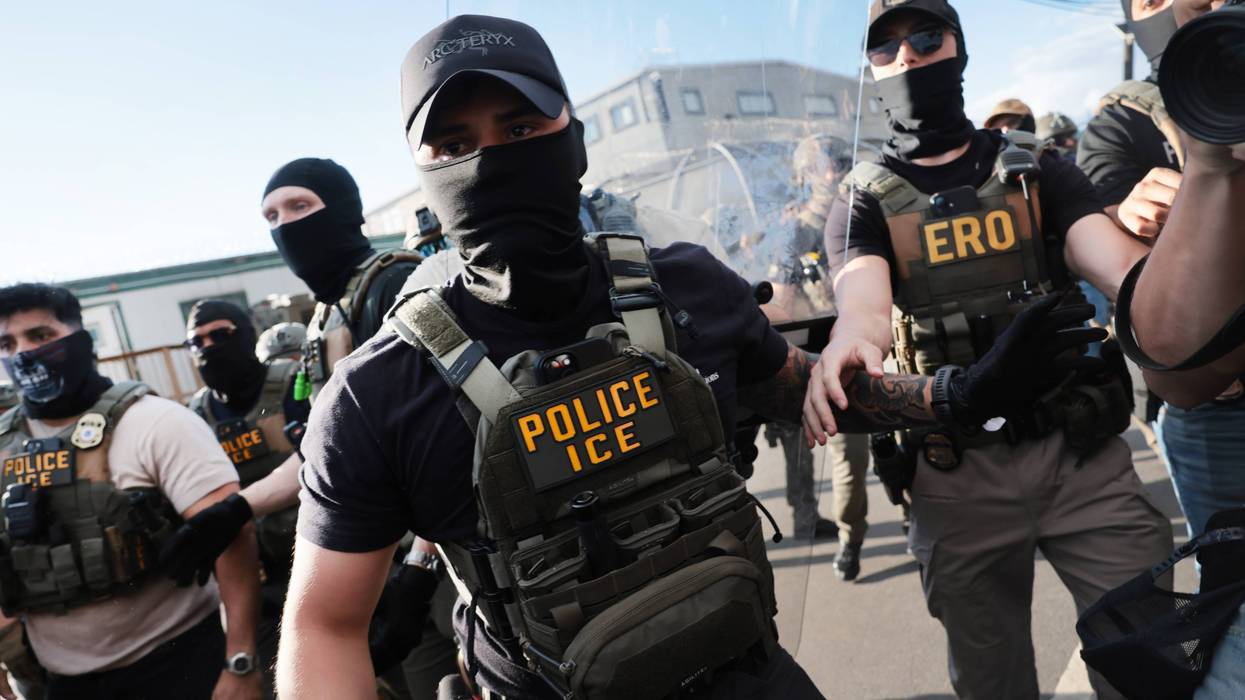
One of the report authors said it showed how under the Trump administration, federal agents have “used force in a way we’ve never seen from these agencies, in their history.”
US Immigration and Customs Enforcement is facing intense scrutiny once again after agents killed at least two people during arrests in less than two weeks.
But the author of a report out Thursday from the American Civil Liberties Union (ACLU) tells Common Dreams that this rash of violence is just "the tip of the iceberg" in a much broader campaign by immigration agents that has been indiscriminate, violent, and lawless.
Naureen Shah, one of the authors of the ACLU report, said that these killings were part of a "much, much bigger pattern, where ICE agents and the agents who are working with them have threatened to use force and used force in a way we've never seen from these agencies, in their history."
Our new report is the first in-depth civil rights review of immigration enforcement actions throughout 2025 in Arizona, California, Colorado, Florida, Illinois, Louisiana, Maryland, and New Mexico.Read more about how we’re exposing the deportation machine’s depravity.
[image or embed]
— ACLU (@aclu.org) July 16, 2026 at 10:01 AM
The report examined more than 1,200 immigration enforcement actions by the Trump administration in 2025 across eight states—Arizona, California, Colorado, Florida, Illinois, Louisiana, Maryland, and New Mexico—in what the organization called "the first in-depth civil rights review of immigration enforcement actions throughout 2025."
In more than a third of the cases, it found examples of misconduct, including excessive force, intimidation, and racial profiling.
The report detailed how agents have used extreme force as a "default" tool. On 418 occasions, agents pushed, shoved, tackled, or pinned people to the ground.
In many cases, the report said force was used to "coerce immediate compliance rather than to respond to a threat." Often, it found, that force was excessive and potentially deadly.
In one exemplary case, Border Patrol agents reportedly grabbed Ricardo Aguayo Rodriguez, a 54-year-old construction worker who is the father of two deaf teenagers, as he was riding his bicycle home from the grocery store in Illinois.
According to the report: "Agents grabbed him in a stranger’s driveway, pepper-sprayed him, locked an arm around his neck, and struck his head. Video captures him gasping, 'Por favor, amigo.' While he was hospitalized with head wounds, masked agents barred his US citizen sister from seeing him at the hospital."
Threats of force and the brandishing of weapons were also commonplace, appearing in at least 128 cases.
In Hawthorne, California, masked agents surrounded the truck of US citizen Cary Lopez Alvarado, who was nine months pregnant. After she called 911, an agent asked her, "Do you want to get killed?" before shoving her into the side of her truck, pressing her stomach against it.
Children were detained, targeted, or subjected to misconduct in 214 cases, the report found. At least 32 of them were US citizens.
A father in Colorado was detained after a court visit, with agents using their vehicles to box his car in at a traffic stop.
"One agent pointed a gun at them as he approached the vehicle, and another smashed the driver’s side window while his US citizen partner screamed there was a baby in the car. Glass cut her as she shielded their 1-month-old infant,' the report said.
The report also identified racial profiling as an "operating practice," with agents routinely stopping people without prior information to question them about their legal status. At least 437 cases were identified that likely involved racial profiling.
Often these cases involved agents targeting certain workplaces and occupations where many immigrants worked and stopping people based on appearance, spoken language, and location.
In Arizona, agents followed a member of the Pascua Yaqui Tribe in an unmarked van for several minutes before jumping out to tackle and arrest him for “suspicious activity." They then took him to an immigration facility where he was deprived of food and water.
When they attempted to prove his citizenship by showing a tribal ID, driver's license, and state identification, agents said his documentation "seemed fake" and claimed he was an "illegal." He was detained for nearly a day before being released.
The report makes clear that no place or person was off limits for immigration agents. More than half the observed cases occurred in public spaces like streets, bus stops, stores, and gas stations. Hundreds of other cases involved individuals being targeted at their places of work.
Under the Trump administration, agents have routinely operated at “sensitive” sites previously deemed off limits, like schools, places of worship, shelters, and courthouses in a reversal of previous policies.
And while the administration has portrayed its mass deportation campaign as part of a fight against illegal immigration, more than 200 incidents involved US citizens or people with other forms of legal immigration status being detained, targeted, or subjected to alleged misconduct.
The report identified 150 incidents affecting at least 782 protesters, legal observers, journalists, elected officials or staff members, and clergy, many of whom faced retaliation, verbal abuse, and intimidation while attempting to document the actions of agents, a protected right under the First Amendment.
“Street arrests have always been part of what ICE did, but never at the scale that we have now,” Shah told Common Dreams. “We never had a situation in this country’s modern history where civil arrests were taking place habitually in grocery store parking lots, at bus stops, at gas stations because the public safety imperative just wasn’t there.”
“They’re often in plain clothes, sometimes they’re masked, they’re heavily militarized, it’s scary looking, and it sends fear in all these communities,” she said. “If you’ve got these agents out there constantly trolling for people they believe are immigrants, you know, that means all of us are exposed to those agents.”
The report examined just a fraction of the more than 400,000 immigration arrests that took place in 2025. The vast majority of those arrested have not been convicted of crimes, and most of those who have were convicted of nonviolent offenses.
ICE agents have shot and killed two men in vehicle stops over the past ten days—neither of whom was the intended target of the operation—while two other men died during an ICE operation or in the agency’s custody.
As scrutiny of the agency intensified this week, the Department of Homeland Security briefly announced it was suspending vehicle stops, only for President Donald Trump to order the policy to continue.
Through recent spending bills, the Republican-controlled US Congress has more than tripled ICE's budget, providing roughly $240 billion for immigration enforcement over the next four years.
According to the report, ICE has used these funds to hire at least 12,000 agents and send them out into the field with limited training and vetting, while diverting another 25,000 personnel from other agencies.
The ACLU describes this as part of an effort to create a "national deportation policing force" of more than 50,000 agents.
Stephen Miller, the White House deputy chief of staff, has pushed for a quota of 3,000 immigration arrests per day and has emphasized to ICE personnel that when carrying out deportations, "there is no list" of people to be targeted and "everyone is fair game."
Administration officials have hinted that with ICE's newfound wealth of resources, the public can expect even more aggressive tactics in the months to come.
"You ain’t seen shit yet," said Trump's border czar Tom Homan at a border security expo in May. "This year will be a good year. Mass deportations are coming."
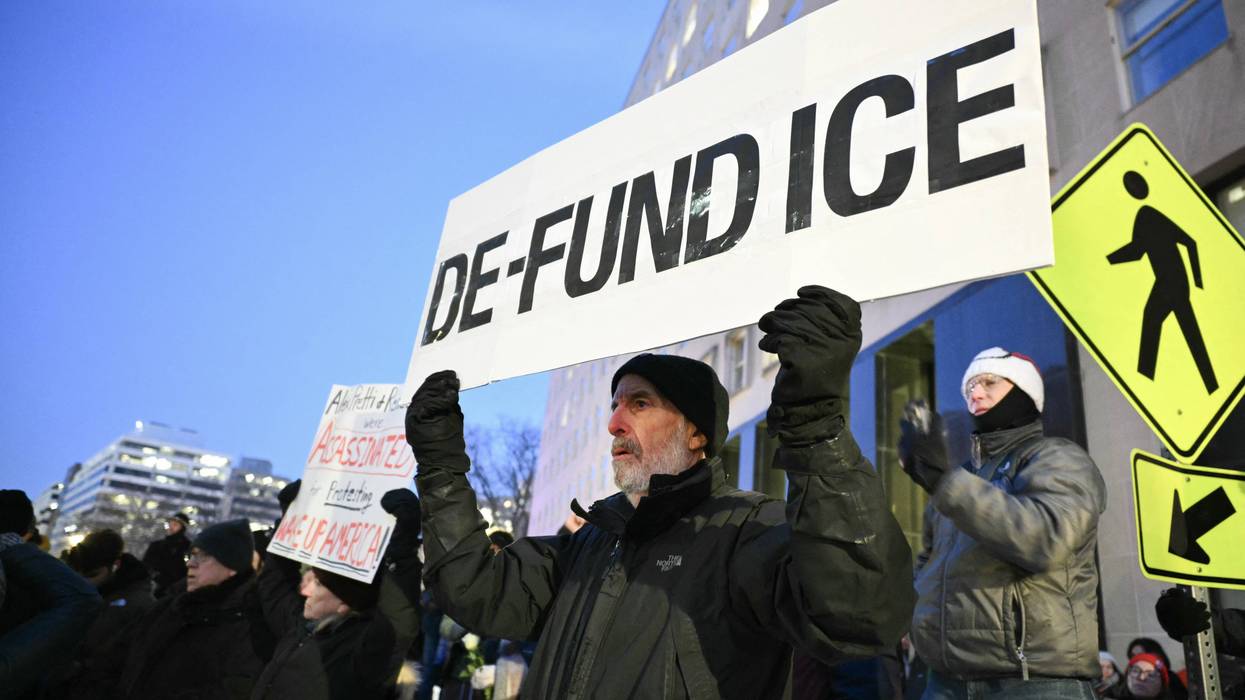
"Just as Minnesotans fought back, Congress must now follow suit and refuse to fund DHS agencies that enable such reckless and dangerous acts that, in some cases, have killed people in broad daylight," said one watchdog leader.
While people across Minnesota and beyond welcomed "border czar" Tom Homan's Thursday announcement that "Operation Metro Surge is ending," he also made clear that the administration's deadly immigration operations still threaten other US communities, declaring that President Donald Trump "made a promise of mass deportation, and that's what this country's gonna get."
Homan said last week that 700 agents were leaving the state, but around 2,000 would remain. However, as outrage from the public and local officials persisted, he announced Thursday that "I have proposed, and President Trump has concurred, that this surge operation conclude. A significant drawdown has already been underway this week and will continue through the next week."
The administration's "tactical withdrawal" came just a day after a car crash involving federal agents led Democratic Saint Paul Mayor Kaohly Her to renew her call for an immediate end to the US Department of Homeland Security (DHS) operation, which has involved officers with Customs and Border Protection (CBP) and Immigration and Customs Enforcement (ICE) terrorizing Twin Cities residents for over two months—and even fatally shooting Renee Good and Alex Pretti in Minneapolis.
"Today's announcement reflects what happens when communities organize, speak out, and refuse to accept fear as public policy," said Jaylani Hussein, executive director of the Council on American-Islamic Relations' Minnesota chapter. "This is a hard-fought community victory. But it comes after real trauma, real harm, and the loss of life. That cannot be ignored."
"This moment belongs to the community," Hussein added. "Faith leaders, organizers, tenants, youth, and everyday residents stood together and demanded dignity. That collective action forced change. And we will remain vigilant."
After ICE officer Jonathan Ross killed Good, Minneapolis Mayor Jacob Frey told the agency to "get the fuck out" of his city. After Homan confirmed the operation is ending, the Democrat acknowledged the strong local pushback to the invasion, saying on social media that "they thought they could break us, but a love for our neighbors and a resolve to endure can outlast an occupation."
"These patriots of Minneapolis are showing that it's not just about resistance—standing with our neighbors is deeply American," Frey said. "This operation has been catastrophic for our neighbors and businesses, and now it's time for a great comeback. We will show the same commitment to our immigrant residents and endurance in this reopening, and I'm hopeful the whole country will stand with us as we move forward."
Outgoing Democratic Gov. Tim Walz similarly said that "the long road to recovery starts now. The impact on our economy, our schools, and people's lives won't be reversed overnight. That work starts today."
Minneapolis Community Safety Commissioner Todd Barnette, Minnesota Attorney General Keith Ellison, Congresswoman Angie Craig (D-Minn.), and US Sen. Amy Klobuchar (D-Minn.) were also among the Minnesotans welcoming the development. The senator, who is running to replace Walz, said that "Minnesotans stood together, stared down ICE, and never blinked."
Not everyone critical of the operation has been satisfied by local Democrats' response. Progressive organizer and lawyer Aaron Regunberg said Thursday that it is "important to remember that this victory belongs 100%—literally one hundred percent—to the people of Minneapolis. Elected Dems did essentially nothing to bring this about. Our political leadership is dogshit. Everyday Americans, on the other hand, can really do amazing things."
Maurice Mitchell, national director of the Working Families Party, said that "Minneapolis residents' heroic resistance has resulted in this retreat. We hope the people of Minneapolis can start to heal from the monthslong siege of their city, the murder of their neighbors, and the tragedy of families ripped apart by the Trump administration."
Mitchell pointed out that the end of the Minnesota operation comes on the eve of a likely DHS shutdown due to a funding fight in Congress, which is narrowly controlled by Republicans. Because of their slim margins and Senate rules, most bills need some Democratic support to get through the upper chamber to Trump's desk.
"Donald Trump is trying to distract us and turn our attention away from the growing resistance in Congress to funding his campaign of cruelty and retribution," Mitchell said, taking aim at not only the president but also his deputy chief of staff for policy, Stephen Miller, Homeland Security Secretary Kristi Noem, "and their cronies" who "refuse to make this agency and its criminal activities accountable to anyone."
"Democrats are using their power by voting NO as a bloc and pledging not one dollar more in DHS funding until demands for accountability are met," he highlighted. Various Democratic leaders have made demands for reforming the department, and specifically its immigration operations, and growing shares of the party's caucus and the public have even called for abolishing ICE.
Progressive Democratic Congresswoman Ilhan Omar, whose district includes Minneapolis, said on social media that "ending this operation is not enough. We need justice and accountability. That starts with independent investigations into the murders of Renee Good and Alex Pretti, economic restitution for businesses impacted, abolishing ICE, and the impeachment of Kristi Noem."
Lisa Gilbert, co-president of the watchdog group Public Citizen, said in a statement that "the people of Minnesota set the example of bravery, compassion, and strength against masked, lawless federal agents who vastly underestimated the power of community and peaceful protest."
While calling Homan's announcement "a crucial win," Gilbert also noted that congressional Republicans and the president gave ICE an extra $75 billion in their so-called One Big Beautiful Bill Act last year. She stressed that Trump's federal government "is still stripping families from their homes and throwing them into unlivable conditions in detention centers across the country in a militarized mass detention campaign. And there is no sign from the Trump administration that it plans on doing anything—including arresting and persecuting small children—differently."
Recent reporting—including by Wired, which obtained related federal records—has revealed ICE's ongoing expansion efforts across the country. As Wired executive editor Brian Barrett wrote Wednesday:
Its occupation of Minneapolis is not an anomaly; it's a blueprint. Communities deserve to know that they might be next. People have a right to know who their neighbors are, especially when they amount to an invading force.
What we've reported so far fills in only part of the puzzle. It shows what ICE had planned as of January, not beyond. More than 100 addresses remain unknown, some of them in high-concentration states like New York and New Jersey. The specific nature of the work being done in some of these offices remains unclear, as is how long ICE plans to be there.
The need to resolve these questions is urgent as ICE continues to metastasize. At the same time, the Department of Justice has become increasingly aggressive in its dealings with journalists, and has repeatedly claimed that revealing any identifying information about ICE agents or their activities is "doxing." In Minnesota and beyond, ICE and CBP agents have treated observers as enemies, arresting and reportedly harassing them with increased frequency. The DOJ has been quick to label any perceived interference with ICE activity as a crime.
While Barrett pledged that Wired "will continue to report on this story until we have the answers," Gilbert argued to the public that "the victory in Minnesota should galvanize our efforts to fight these atrocities."
"Just as Minnesotans fought back, Congress must now follow suit and refuse to fund DHS agencies that enable such reckless and dangerous acts that, in some cases, have killed people in broad daylight," Gilbert added. "We need drastic reforms now."
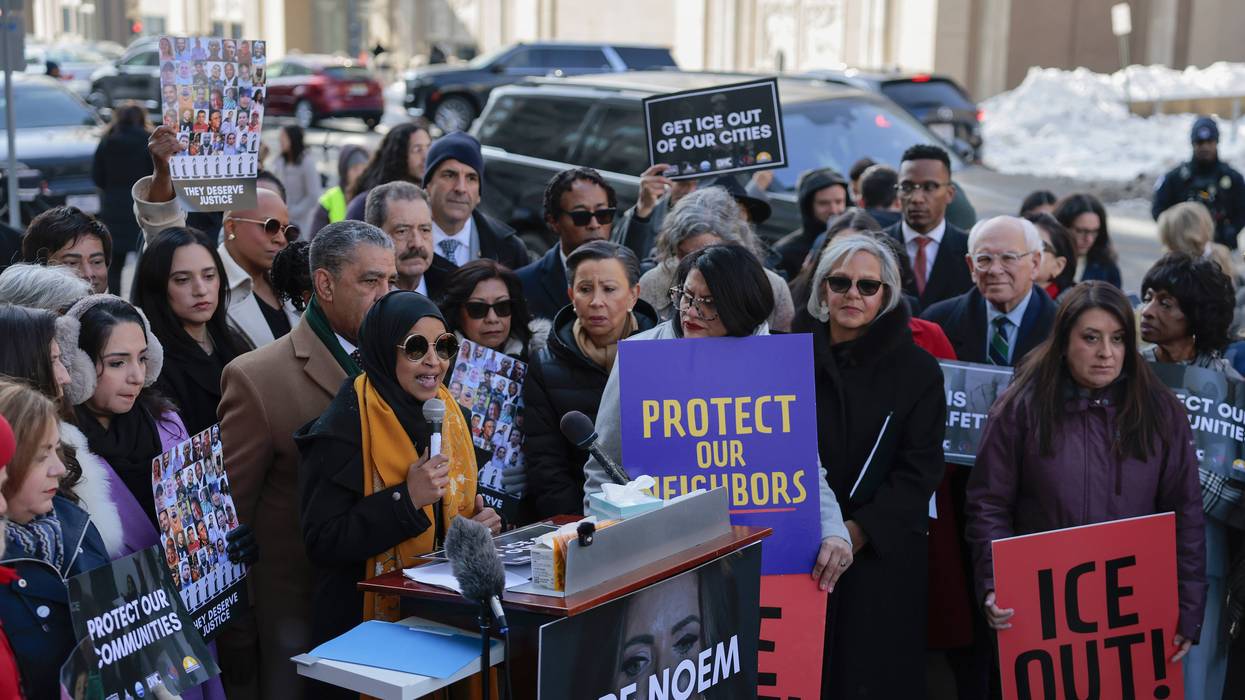
"Every single ICE and CBP agent should be out of Minnesota," the congresswoman said. "The terror campaign must stop."
President Donald Trump's "border czar," Tom Homan, announced Wednesday that 700 immigration agents are leaving Minnesota, but with around 2,000 expected to remain there, Democratic Congresswoman Ilhan Omar, whose district includes Minneapolis, declared that the drawdown is "not enough."
As part of Trump's "Operation Metro Surge," agents with Customs and Border Protection (CBP) and Immigration and Customs Enforcement (ICE) have invaded multiple Minnesota cities, including Minneapolis and Saint Paul, and committed various acts of violence, such as fatally shooting Alex Pretti and Renee Good.
In a pair of social media posts about Homan's announcement, Omar argued that "every single ICE and CBP agent should be out of Minnesota. The terror campaign must stop."
"This occupation has to end!" she added, also renewing her call to abolish ICE—a position adopted by growing shares of federal lawmakers and the public as Trump's mass deportation agenda has hit Minnesota's Twin Cities, the Chicago and Los Angeles metropolitan areas, multiple cities in Maine, and other communities across the United States.
In Congress, where a fight over funding for CBP and ICE's parent agency, the Department of Homeland Security, is playing out, Omar has stood with other progressives in recent votes. The bill signed by Trump on Tuesday only funds DHS through the middle of the month, though Republicans gave ICE an extra $75 billion in last year's budget package.
During an on-camera interview with NBC News' Tom Llamas, Trump said that the reduction of agents came from him. After the president's factually dubious rant about crime rates, Llamas asked what he had learned from the operation in Minnesota. Trump responded: "I learned that maybe we can use a little bit of a softer touch. But you still have to be tough."
"We're really dealing with really hard criminals," Trump added. Despite claims from him and others in the administration that recent operations have targeted "the worst of the worst," data have repeatedly shown that most immigrants detained by federal officials over the past year don't have any criminal convictions.
Operation Metro Surge has been met with persistent protests in Minnesota and solidarity actions across the United States. Jaylani Hussein, executive director of the Minnesota chapter of the Council on American-Islamic Relations, said Wednesday that "the limited drawdown of ICE agents from Minnesota is not a concession. It is a direct response to Minnesotans standing up to unconstitutional federal overreach."
"Minnesotans are winning against this attack on all our communities by organizing, resisting, and defending our constitutional rights. But this moment should not be a victory lap," Hussein continued. "It must instead be a call to continue pushing for justice. The deaths of Renee Good and Alex Pretti at the hands of federal immigration agents remain uninvestigated, and communities and prosecutors alike have raised grave concerns about violations of their oaths and the Constitution. This is not the time to pull back, it is the time to deepen our resilience, increase our support for one another, and keep fighting for our democracy and accountability until justice is served."
The Not Above the Law coalition's co-chairs—Praveen Fernandes of the Constitutional Accountability Center, Kelsey Herbert of MoveOn, Lisa Gilbert of Public Citizen, and Brett Edkins, of Stand Up America—similarly said that "Tom Homan's announcement that 700 federal immigration agents will be withdrawn from Minnesota is more a minor concession than a meaningful policy shift."
"The vast majority—approximately 2,000 federal agents—remain deployed in the state, and enforcement operations continue unabated," the co-chairs stressed. "This token gesture does nothing to address the ongoing terror families face or the constitutional crisis this administration's actions have created."
“The killings of Minnesotans demand real accountability," they added. "Families torn apart by raids and alleged constitutional violations deserve justice. Real change means the complete withdrawal of all federal forces conducting these operations in Minnesota, full accountability for the deaths and violations that have occurred, and congressional action to restore the rule of law. The American people deserve better than political theater when constitutional rights hang in the balance."
On Tuesday, the state and national ACLU asked the United Nations Committee on the Elimination of Racial Discrimination to "use its early warning and urgent action procedure in response to the human rights crisis following the Trump administration's deployment of federal forces" in the Twin Cities.
"The Trump administration's ongoing immigration enforcement operations in Minnesota are being carried out by thousands of masked federal agents in military gear who are ignoring basic constitutional and human rights of Minnesotans," said Teresa Nelson, legal director of the ACLU of Minnesota. "Their targeting of our Somali and Latino communities threatens Minnesotans’ most fundamental rights, and it has spread fear among immigrant communities and neighborhoods."

Seriously addressing this country's ongoing immigration crisis will require policy change, and to get to that point, there needs to be a narrative shift in this country away from indiscriminately criminalizing all undocumented people to humanizing them.
By now, we have heard the mantra that President Donald Trump was right to close the border, but wrong in his heavy-handed approach to immigration enforcement. We are also told that if he would have simply done what most Americans wanted, that is, arrest and deport violent criminals, then his poll numbers would be higher, and his administration wouldn’t find itself embroiled by crisis in the aftermath of two killings at the hands of federal agents in Minneapolis.
But this claim—that the problem with Trump's immigration agenda is mainly about enforcement tactics—is flawed.
Seriously addressing this country's ongoing immigration crisis will require policy change, and to get to that point, there needs to be a narrative shift in this country away from indiscriminately criminalizing all undocumented people to humanizing them.
To put this in perspective, we need to realize that for America to enforce its way out of our current immigration disaster would trigger events like what's happening in Minneapolis all over the country.
The enforcement-first rhetoric put forth by this administration and its supporters is dangerous for the violence it exacts on immigrants and citizens alike.
Considering two sets of numbers makes this clear.
The first is how apprehensions at the border have dropped to zero. Beginning with asylum restrictions put into place at the end of Biden’s term in 2024, the flow of people into the US has fallen steadily. This becomes an issue when noting another figure, specifically, the Trump administration's goal of making 1 million deportations a year.
Of the 14-or-so million undocumented people in the US now, according to the Pew Research Center, the majority are long-term residents with more than 15 years living in the country. Logically then, with border removals no longer a factor in deportation figures as they were in prior administrations, reaching the 1 million mark will mean going after people who have spent years, perhaps decades, living in the US without legal status.
Finding and apprehending those people who have become central to the fabric of their communities is what Immigration and Customs Enforcement (ICE) is doing in Minneapolis. The chaos seen in Minneapolis will continue elsewhere, as coworkers, neighbors, and our fellow parishioners will disappear, triggering anger, protest, and perhaps worse wherever federal agents are sent.
Border Czar Tom Homan, claiming that there would be calm in Minnesota if local officials would just let ICE into its jails, and how the government is going after the “worst of the worst,” is also doing nothing more than gaslighting.
Consider Texas, where we find 1 in 4 of every immigrant who has been arrested in the country.
The Lone Star state has the second-most local law enforcement agencies, at 167, trailing only Florida, that have partnered with the federal government to carry out Trump’s immigration agenda. State law that went into effect this year states that every police department must collaborate by year’s end.
Data from Texas don’t lie—ICE is not going after the “worst of the worst.” In fact, according to the Texas Tribune’s analysis of Department of Homeland Security data, nearly 60% of immigrants detained in the state have only the immigration-related offenses of either coming to the county without legal authorization, or residing here after their permits or visas expired. Figures nationwide on the immigrants in detention are the same. Administration officials, including Homan and Kristi Noem, neglect to mention these facts as they cherry-pick individual cases of violent criminals to distract the public from the community-destroying results of their enforcement actions.
Still, even with the numbers belying the administration's official line, immigration offenses are still, well, offenses.
This is why humanizing immigrants, especially by acknowledging their pathways to the US, is needed now more than ever.
Before legislative changes can be made—and there are many options currently in Congress, such as establishing legal pathways for undocumented farmworkers, children, and spouses of US citizens—we need to note that people come to the United States for many reasons outside of their control. How economic and political crises drive people away from their homes—as they did from Mexico in the 1990s in the aftermath of NAFTA, and most recently, from Venezuela and Nicaragua—point to factors beyond individual choice. As the data on detentions show, the vast majority come not to kill people or deal drugs, but to work, escape some form of oppression, or leave natural disasters. If you want further proof of this, then look at research—from Texas—showing that undocumented people commit crimes at a rate lower than native-born people.
The fact that we live in a volatile world also should make people rethink heaping praise on the Trump administration for closing the border, which in reality only asks for humanitarian crisis to take place there. Instead, we need a more durable, flexible approach to immigration that takes into consideration the reality that the world is not perfect, crises occur, and people may consider coming to the US. Thinking that central to immigration policy is sealing the border like a jar, is at best a childish fantasy, or at its worst, ideological fodder for white nationalists.
The point is that the enforcement-first rhetoric put forth by this administration and its supporters is dangerous for the violence it exacts on immigrants and citizens alike. The problem our country has with immigration is not enforcement tactics, but vision and basis for the policy area in the first place.
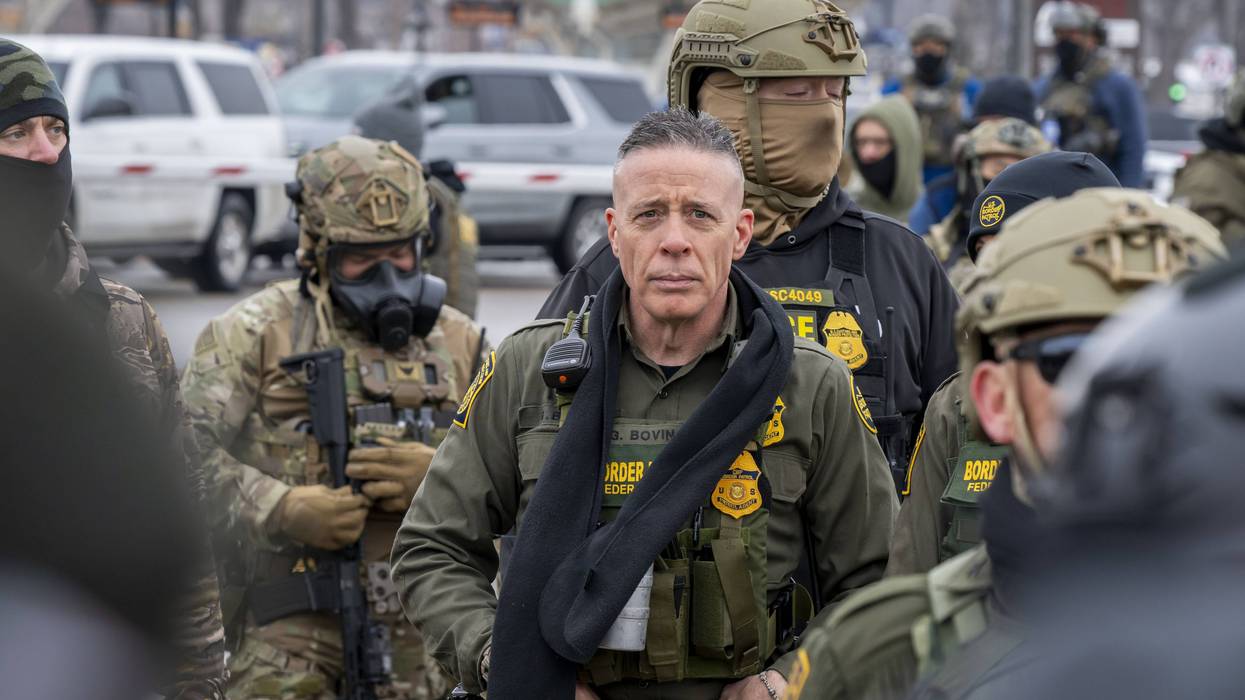
Bovino’s departure changes nothing about ICE’s lawless behavior on the ground. If anything, the situation has become more volatile.
The recent firing of Greg Bovino, the face of Immigration and Custom Enforcement’s Operation Metro Surge in Minneapolis, was clearly intended to serve as a pressure-release valve for a city at its breaking point. For weeks, we have watched federal agents transform our neighborhoods into a theater of intimidation, characterized by warrantless stops, the brutalization of peaceful protestors, and the killings of two constitutional observers, captured on video and now seen by the majority of Americans.
By replacing Bovino with Border Czar Tom Homan, the administration likely hopes to signal a new direction or a cooling of tensions. But no one should be fooled. Firing a commander is an empty act of appeasement when the machinery of the operation itself remains fully fueled and operational. Bovino’s departure changes nothing about ICE’s lawless behavior on the ground. If anything, the situation has become more volatile.
The timing of this leadership shuffle is particularly cynical when viewed alongside the latest developments in the federal judiciary. On Monday night, the Eighth Circuit granted the Department of Justice (DOJ) a full stay on the injunction previously secured by Judge Katherine Menendez. That injunction was the only thin line of defense protecting protesters from ICE violence and retaliation. With that stay in place, federal agents have been handed a blank check to target activists and constitutional observers in ways that Menendez had previously found unconstitutional.
Operation Metro Surge was never about public safety in the way most Minnesotans understand it. It is a display of federal power, designed to bypass local oversight and treat our state as an occupied zone because the current administration doesn’t like our social welfare policies. Bovino was a symptom of this strategy, not its sole architect.
Minneapolis does not need a new commander, it needs Operation Metro Surge to end.
The tactics of intimidation, unmarked vehicles, lack of clear identification, and the racial profiling of community members is baked into the Operation Metro Surge’s DNA. Changing a public-facing figure while maintaining the underlying tactics only creates a more dangerous environment. It allows the operation to continue under a veil of "reform" while ICE’s mandate continues to broaden, and the reality on the street remains one of fear and violence.
I believe we are now entering the most dangerous phase of ICE’s enforcement operations in Minnesota. The combination of a leadership changeup and a legal victory for the DOJ has created a perfect storm. History shows us that when law enforcement agencies feel vindicated by the courts and pressured by optics, they do not retreat, they push forward, and citizen vigilantes come to their defense.
The attack on Rep. Ilhan Omar (D-Minn.) on Tuesday was primed by years of dehumanizing rhetoric against her, prompted by ICE’s illegal actions in Minneapolis, and executed by a lone-wolf reactionary in an attempt to silence calls for abolition. When the administration labels “disrespect” as a capital offense, and has pushed the rule of law to its breaking point, we should not be surprised when citizens take it in their hands to “enforce” the new law.
Minneapolis does not need a new commander, it needs Operation Metro Surge to end. The replacement of Bovino is a tactical retreat, a cosmetic change meant to buy time. If we accept Homan’s takeover as "progress," we are consenting to the continued erosion of our civil liberties and political culture. A leadership shakeup doesn’t change anything; it’s just a convenient news cycle that the Trump administration would prefer for us to focus on. Don’t give them your attention. Keep watching the streets of Minneapolis and the actions of our federal courts.

"'In theater' is an expression that has no place anywhere within the United States," said one critic.
White House border czar Tom Homan on Thursday sparked alarm when he used terminology associated with overseas war to describe federal immigration operations taking place in Minnesota.
During a press briefing, Homan was asked about the number of US Immigration and Customs Enforcement (ICE) and Customs and Border Protection (CBP) agents operating in Minnesota.
"3,000," Homan replied. "There's been some rotations. Another thing I witnessed when I came here, I'll share this with you, I've met a lot of people, they've been in theater, some of them have been in theater for eight months. So there's going to be rotations of personnel."
Q: Can you be specific about how many ICE and Border Patrol agents are currently operating in the state?
HOMAN: 3,000. There's been some rotations. They've been in theater a long time. Day after day, can't eat in restaurants, people spin on you, blowing whistles at you. But my… pic.twitter.com/1Vz8mKYCAv
— Aaron Rupar (@atrupar) January 29, 2026
Typically terms such as "rotations" and "theater" are not used to describe domestic law enforcement operations, but overseas military deployments.
Many critics were quick to notice Homan's use of war jargon to describe actions being taken in a US city and said it was reflective of how the Trump administration sees itself as an occupying force in its own country.
"'In theater' like they're landing marines at Guadalcanal or something," wrote Aaron Fritschner, deputy chief of staff for Rep. Don Beyer (D-Va.), in a post on X. "This stuff is happening in suburban American communities, that's where they're sending violent, masked invaders."
Northwestern University historian Kathleen Belew also expressed shock at Homan's rhetoric.
"'In theater' is an expression that has no place anywhere within the United States," she wrote on Bluesky. "'In theater' means in a war."
Andrew Lawrence, deputy director of rapid response as Media Matters, said Homan's war talk was "a crazy way to describe Minneapolis," while documentary filmmaker John Darwin Kurc described it as a "frightening characterization."
Shelby Edwards, a retired US Army major, also recognized the violent implications of Homan's words.
"Incredibly damaging how military language has infiltrated these agencies," she observed. "'In theater' is used for deployments into foreign nations, when we deploy soldiers we say things like this. This is America. This is an American agency assigned to an American city."