

5
#000000
#FFFFFF
To donate by check, phone, or other method, see our More Ways to Give page.
Daily news & progressive opinion—funded by the people, not the corporations—delivered straight to your inbox.
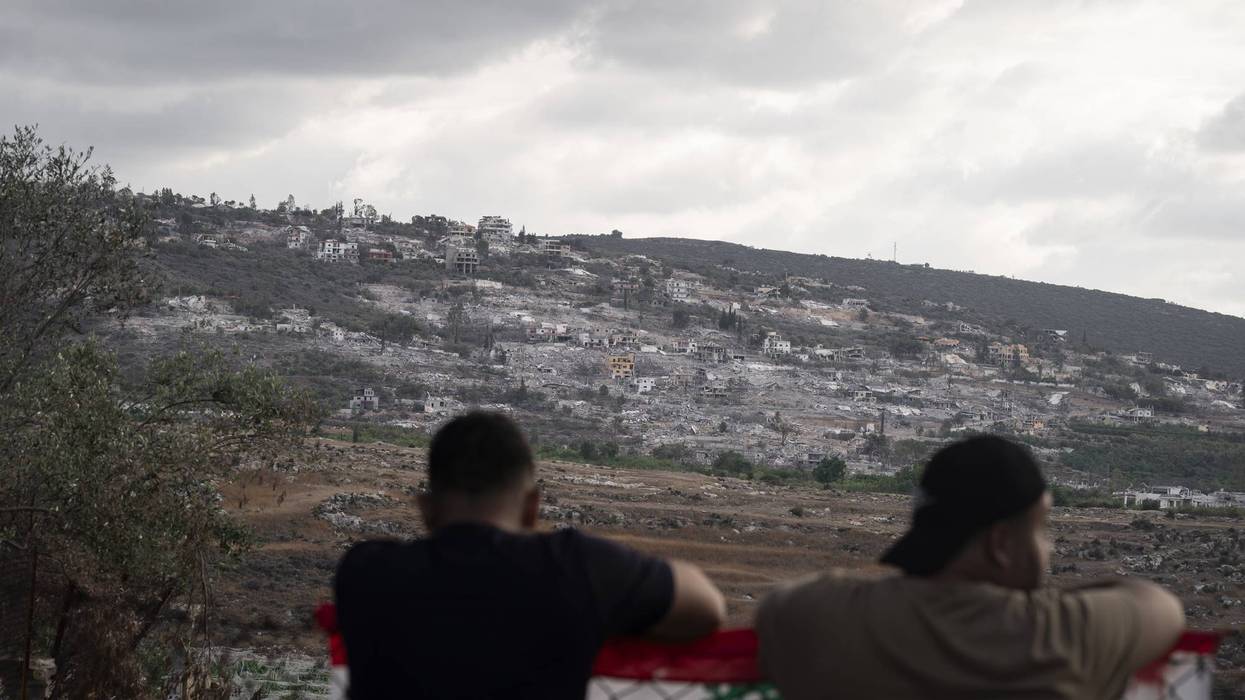
Defense Minister Israel Katz has bragged that Israel was destroying "not one house at a time," but "the entirety of those villages."
When Israel and Lebanon reached a ceasefire in April, the Israel Defense Forces' systematic destruction of villages in southern Lebanon was supposed to halt. Instead, it was just getting started.
Israeli forces have largely leveled 48 of the roughly 60 villages and towns in occupied southern Lebanon, a New York Times investigation published Monday revealed, fueling fears that Israel intends to permanently prevent displaced residents from returning.
Rather than collateral damage from military attacks, the razing of Lebanese villages since April has largely been carried out through controlled demolitions by Israeli forces.
Nearly all the villages destroyed have been majority Shia—the sect from which Hezbollah draws much of its support—while those containing Christian, Druze, and Sunni Muslims have largely been spared.
In July, Israeli Defense Minister Israel Katz acknowledged that Israel had destroyed at least 24 historic Lebanese villages, describing it as punishment for their residents.
“Twenty-four Lebanese villages that were hundreds of years old—with Shiite residents who acted as enemies [of Israel] on behalf of Hezbollah and threatened our borders and our residents—we destroyed all of the buildings.”
“Not one house at a time," he emphasized. "The entirety of those villages—their demolition has been completed.”
Since March, Israel's military campaign has displaced at least 1.1 million Lebanese civilians, while its forces have entrenched themselves in an occupied swath of southern Lebanon extending as far as eight miles from the border.
Roughly 270,000 people remain barred from returning home. Many have no homes to return to. In many villages, homes, roads, utilities, and public facilities no longer function.
The Times found that Israeli forces have also burned about 16,500 acres of land—roughly 11% of the total occupied area—since the April ceasefire, including farmland and olive groves. Meanwhile, thousands of trees have been bulldozed.
As this life-sustaining infrastructure has come down, Israel has erected what appear to be the fixtures of a long-term military occupation: satellite imagery shows at least three new Israeli military outposts have been at least partially built since the ceasefire began, alongside new roads connecting them to Israeli territory.
The US-brokered ceasefire expressly prohibited "offensive military operations against Lebanese targets, including civilian, military, and other state targets, in the territory of Lebanon" except in cases where it was necessary to take defensive measures against planned, imminent, or ongoing attacks.
Israel's military told the Times it received no directive “to carry out widespread damage to structures or to demolish villages" in southern Lebanon. “The IDF operates in the security zone in southern Lebanon with the aim of removing threats posed by the Hezbollah terrorist organization to the residents of Israel and to IDF troops," it added.
Israeli officials have suggested that the occupation of southern Lebanon will continue indefinitely. Katz said last month that Israel "will not withdraw from the security zone" until Hezbollah disarms.
Prime Minister Benjamin Netanyahu has suggested that some of the Christian villages would like to be annexed into Israeli territory. Finance Minister Bezalel Smotrich, meanwhile, renewed his call last month for Israel to extend its borders north to the Litani River, which encompasses most of the Lebanese territory it currently occupies.
Israel has said it has razed entire villages to destroy Hezbollah military infrastructure and prevent fighters from returning to the area near the Israeli border.
Janina Dill, a professor of global security at the University of Oxford, has said using mass destruction to carry out this objective was "manifestly illegal" under international law, which says that destroying civilian property without an imperative military necessity can constitute a war crime.
"It’s deeply implausible that imperative military necessity applies to every house in a particular village," she told the Financial Times in August.
Volker Türk, the United Nations high commissioner for human rights, said in July that Israel was engaging in the "wholesale destruction" of civilian homes, adding that "demolition of this type raises huge flags about compliance with international humanitarian law.”
"In large parts of southern Lebanon, Israel’s ‘everybody-leave’ orders were followed by ‘don’t-come-back’ orders," said Kristine Beckerle, Amnesty International's deputy regional director for the Middle East and North Africa in June. "Israel’s forced displacement and prevention of return of tens of thousands of civilians from southern Lebanon amounts to unlawful transfer, which is a grave breach of the Fourth Geneva Convention and thus a war crime."
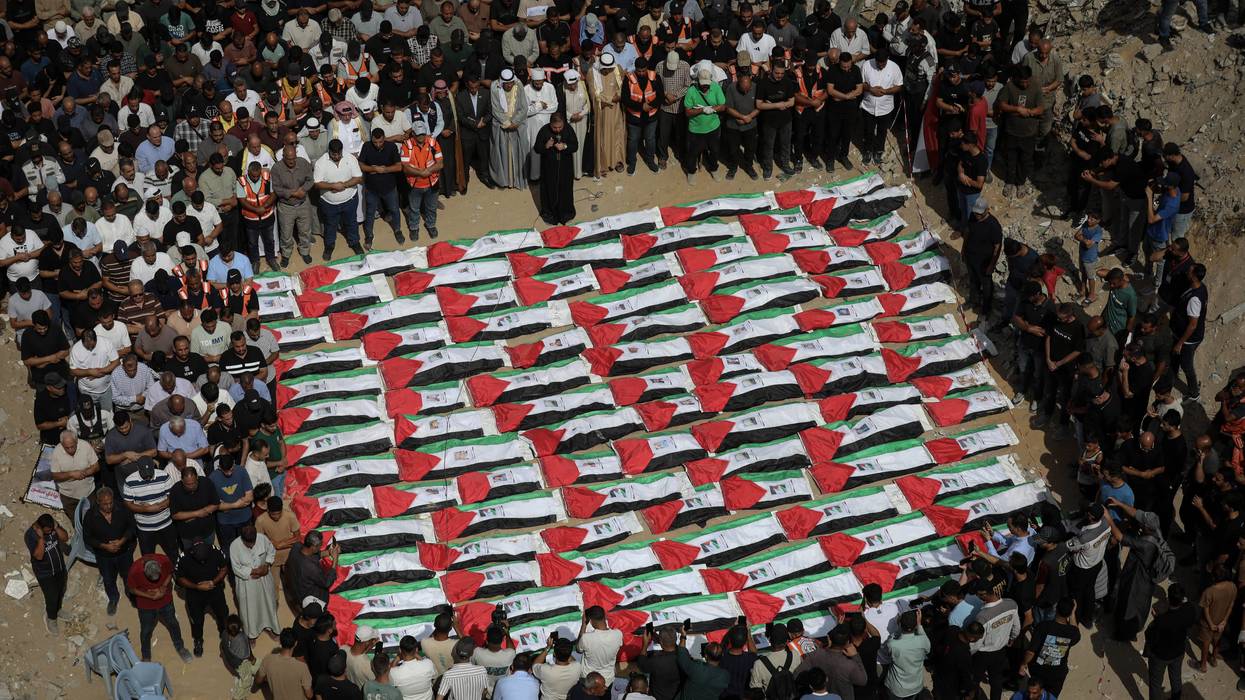
"You can't authorize the potential killing of 300 civilians... and still tell the public we did everything we could to avoid harming innocent people," said one veteran.
Former Israeli military and intelligence personnel affirmed that rules for targeting confirmed and alleged Hamas members in Gaza were dramatically loosened after the October 7, 2023 attack, allowing strikes expected to kill hundreds of Palestinian civilians to target even low-ranking members of the Palestinian resistance group, according to a report published Monday.
In a paywalled article published by Haaretz, Israel's oldest daily newspaper, Yaniv Kubovich gathered testimonies from former Israel Defense Forces intelligence personnel that add to the body of evidence from Israeli whistleblowers, military officials, and investigative journalists documenting how the IDF expanded its targeting practices during its devastating US-backed annihilation of Gaza, which has killed or wounded more than 250,000 Palestinians in the coastal exclave over the past three years.
One change described by some of those interviewed by Kubovich was "the opening of the intelligence apparatus to untrained personnel."
"People arrived at military intelligence who weren't from the unit, reservists who'd never even served in intelligence, brought in from all sorts of places," said one veteran, identified as "A."
"They sat in the Targeting Directorate looking for the most insignificant targets, the small fry, so they could kill them," A added. "Anyone displaying Hamas symbols on Facebook or identifying themselves as Hamas was marked as a target. Some were Hamas members, some were fighters too, but they really were small fry."
Another veteran, "D," who was assigned to a strike cell—units that coordinate drone and other aerial attacks—said: "Suddenly, the IDF was striking even the lowest of the low indiscriminately, and everyone had forgotten about conserving ammunition. We were striking Hamas drivers. That's how far it went."
Kubovich wrote that "a recurring theme in the accounts is the gap between a target's importance, the scale of the strike and the civilian toll deemed acceptable."
For example, on October 31, 2023, IDF warplanes dropped 2,000-pound "bunker-buster" bombs supplied by the United States on the densely populated Jabalia refugee camp in northern Gaza in order to kill one Hamas commander, Ibrahmi Biari.
"We knew Biari was underground, beneath several large buildings, but we couldn't pinpoint which building he was under," said D. "So they chose several buildings that were still occupied and decided to bring down all the buildings above the tunnel he was in. We didn't initiate an evacuation because it was important to kill him before he could get away."
A, who was also involved in the mission, said the decision to bomb the buildings was referred to the IDF chief of staff for approval, since intelligence officials estimated that there would be hundreds of civilian casualties. The IDF calculated that roughly 100 people would be killed or wounded in the proposed attack.
"We couldn't get any more intelligence to pinpoint his exact location," said veteran D. "They told us, 'He's killing soldiers right now. We have to strike him,' out of concern for the troops on the ground, and in the end the strike was approved. They really wanted to kill this guy."
Hamas said that 400 people were killed or wounded in the attack.
"Among other things, we relied on figures coming from Hamas, which we considered relatively plausible, even if they weren't 100% accurate," veteran A told Kubovich. "As time went on, we realized the death toll was around 250. I remember being stunned that we were bringing down several densely populated buildings, killing and injuring hundreds of people, to kill a battalion commander who, just a few weeks earlier, hadn't even been someone we were supposed to gather intelligence on."
The UK-based civilian casualty monitor Airwars said that at least 126 civilians, including 69 children, were killed in the attack, which wiped out whole families.
"You can't authorize the potential killing of 300 civilians for a battalion commander, or the killing of 20 civilians for every Hamas truck driver, and still tell the public we did everything we could to avoid harming innocent people," Nadav Weiman, executive director of the IDF veterans' group Breaking the Silence, told Kubovich.
Referring to the Jabalia massacre, D said: "I can't say this particular strike is what really messes with my head. What's much harder for me is the system of strike after strike after strike, with collateral damage running into dozens of people, sometimes hundreds. Being part of a system like that bothers me more than taking part in any particular strike."
The veterans' accounts raise further questions about Israel's repeated assertions that its military operations have been conducted in accordance with international humanitarian law, which requires parties in armed conflicts to distinguish between civilians and combatants and prohibits attacks expected to cause excessive civilian harm relative to the anticipated concrete and direct military advantage.
Those claims stand in stark contrast with statements by Prime Minister Benjamin Netanyahu and other senior Israeli officials, who began calling for the genocidal destruction of Gaza and its 2.2 million people in the immediate aftermath of the Hamas-led attack of October 7, 2023.
Netanyahu and Yoav Gallant—his former defense minister who ordered the “complete siege” of Gaza, explaining that “we are fighting human animals, and we are acting accordingly"—are currently fugitives from the International Criminal Court in The Hague, where they are wanted for alleged crimes against humanity and war crimes, including murder and forced starvation.
The International Court of Justice (ICJ), also in The Hague, is currently conducting a genocide case against Israel filed by South Africa and formally supported by more than 15 nations. While a ruling in the case isn’t expected until at least 2029, a United Nations commission of inquiry, the International Association of Genocide Scholars, and other experts—including many Israeli and international Jewish academics, jurists, human rights campaigners, and others—have already concluded that Israel is committing genocide in Gaza.
The new Haaretz investigation adds to the body of reporting on Israel's loosened rules of engagement and their disastrous implications for Gaza civilians, including a December 2024 New York Times exposé involving interviews with over 100 IDF soldiers and veterans, Israeli officials, dozens of airstrike victims, and experts on the law and conduct of war.
Kubovich's revelations also come as the documentary NAZA, directed by Israeli journalists and filmmakers Yuval Abraham and Rachel Szor, brings testimony from Israeli military and intelligence insiders to international audiences. The film features 24 anonymized insiders describing the surveillance, artificial intelligence-assisted targeting, and military procedures used during the assault on Gaza.
IDF veteran testimonies are consistent with earlier investigations into the IDF's use of artificial intelligence to generate targets at extraordinary speed, often with limited human scrutiny.
In April 2024, Abraham reported for +972 Magazine and Local Call that the military used an AI system called Lavender to identify suspected Hamas and Palestinian Islamic Jihad operatives. The investigation found that the IDF initially authorized officers to accept civilian casualty estimates of up to 15 or 20 people for each low-ranking alleged militant targeted, and more than 100 civilians for certain senior Hamas officials.
“The IDF bombed them in homes without hesitation, as a first option,” one intelligence officer told the outlets. “It's much easier to bomb a family's home. The system is built to look for them in these situations.”
The investigation also found that officers were permitted to rely on Lavender's recommendations without thoroughly checking the underlying intelligence.
Former IDF Chief of Staff Herzi Halevi has also acknowledged the enormous human toll of the war.
“This is not a gentle war; we took the gloves off from the first minute,” Halevi said during a September 2025 speech to residents of Ein Habor, adding that “not once” has any legal authority “limited” his wartime conduct.
Implicitly confirming Gaza Health Ministry casualty figures—which then stood at around 220,000 Palestinians killed or wounded—Halevi said that “over 10%” of Gaza’s population of approximately 2.2 million had been "killed or injured” since October 2023.
In August 2025, Abraham and Emma Graham-Harrison, The Guardian's senior international affairs correspondent, revealed that classified IDF intelligence data suggested that 5 in 6 Palestinians, or 83% of people, killed by Israeli forces through the first 19 months of the war were civilians.
Current and former IDF troops have accused their own of deliberately shooting Palestinian civilians, including children, sometimes out of sheer boredom. Palestinian and international volunteer medical professionals have also described what they say is the deliberate shooting of Gazans, including children, more than 21,500 of whom have been killed by Israeli bombs and bullets—with more victims added to that grim total with every passing day.

"Congress never authorized Trump to wage war to defend the Saudi regime," said Democratic Rep. Ro Khanna.
President Donald Trump said Saturday that his administration could soon join Saudi Arabia's military assault on Yemen following a deadly Houthi attack on Riyadh's international airport, the latest salvo in a long-running conflict that has intensified since the US launched an illegal war on Iran earlier this year.
Trump told reporters that "we may" join US ally Saudi Arabia in directly attacking Yemen's Houthis. The president said that "we're going to look at it," adding, "We move very quickly."
The president's remarks prompted swift pushback from progressives in the US. Rep. Ro Khanna (D-Calif.), who is considering a presidential run in 2028, wrote on social media that "Congress never authorized Trump to wage war to defend the Saudi regime."
"I introduced a Yemen War Powers Resolution (H.Con.Res.124) with Rep. Thomas Massie (R-Ky.) to mandate that the US stay out of war in Yemen," added Khanna, who has been working for years to stop unauthorized US involvement in Saudi-led attacks on Yemen.
"Trump must honor the US-Yemen ceasefire and use diplomacy, not war," wrote the California Democrat, referring to a 2025 agreement that the president reached with the Houthis following a weeks-long US bombing campaign. The US attacks came as the Houthis targeted shipping in the Red Sea in response to Israel's genocidal war on Gaza.
The Costs of War project at Brown University estimates that in the two years after October 7, 2023, the US spent between $2.76 billion and $4.95 billion attacking the Houthis. American forces have been bombing Yemen since 2002 and have for years supported devastating Saudi-led coalition attacks on one of the world's poorest countries.
Trump said Saturday that members of his administration "have communication with the Houthis," a political and military organization that claimed responsibility for Saturday's attack on the Saudi airport. The attack, which drew international condemnation, killed at least a dozen people—including one US citizen—and injured over 300 more.
The New York Times observed Sunday that "repeated, deadly Houthi attacks on the airport this week have struck at the heart of Crown Prince Mohammed bin Salman’s ambitions to turn the city into a global travel and business hub, threatening to disrupt major international events planned for the coming weeks."
"Across the border in Yemen, Saudi warplanes have been waging a deadly bombing campaign against the Houthis, who say that the country has been subjected to hundreds of airstrikes in recent weeks," the Times added. "Since September 3, airstrikes have killed 91 people in Yemen, mostly women and children, according to Anees al-Asbahi, a spokesman for the Houthi government-affiliated health ministry."
The Houthis are also facing an all-out assault from Yemen's Saudi-backed government, which is aiming to recapture Houthi-controlled areas. Trump administration officials told Axios earlier this month that the US military is providing Saudi Arabia with "everything short of direct combat, mainly intelligence and targeting data."
The Saudi crown prince has reportedly pressured Trump to intervene directly in the Saudi-led assault on the Houthis.
The US-based advocacy group Just Foreign Policy said Sunday that "there is nothing less America First than waging an unconstitutional war to defend the corrupt Saudi regime."
"The Saudis should use diplomacy to resolve their dispute," the group added.
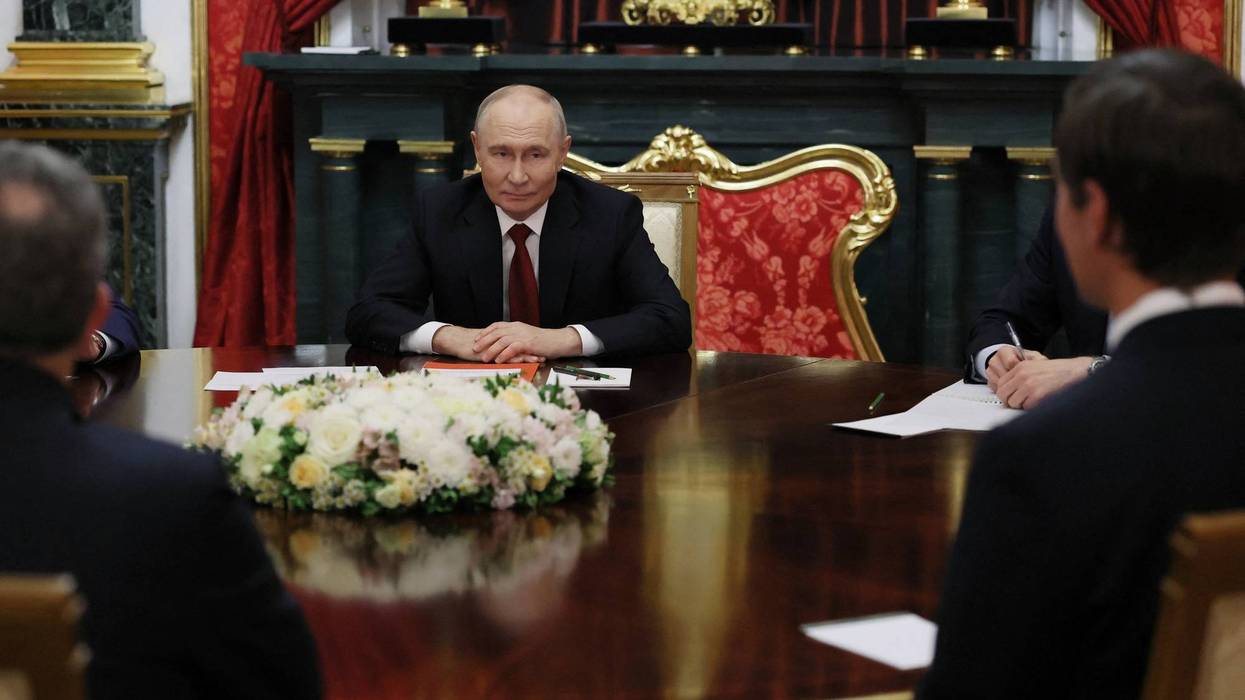
"He's helping fund Russia's war machine, while our allies pay the price," said one congressional Democrat.
Democrats in Congress and Ukrainian President Volodymyr Zelenskyy on Friday swiftly condemned US President Donald Trump's plan to secure diesel from Russia in hopes of combating fuel prices that have skyrocketed due to his illegal war on Iran.
"I have just concluded a highly successful discussion with President Vladimir Putin, of Russia, wherein it was agreed that Russia will immediately supply over 300,000 Tons of Diesel Fuel to the American and Global Marketplace, another 500,000 Tons during the month of November, and 1,000,000 Tons immediately thereafter," Trump wrote on his Truth Social platform, with the US midterm elections just weeks away, and voters frustrated by the country's affordability crisis.
"Additionally, based on the condition of their Diesel Refineries, Russia will then deliver, within a short period of time, 3,000,000 Tons of Diesel Fuel," Trump said. "Between our TOTAL CONTROL of the Strait of Hormuz, and this great announcement on Russian Energy, Diesel Prices for Americans and, indeed, the World, will be COMING DOWN, IN RECORD NUMBERS, AND FAST! Lower prices for Americans, especially our Great Farmers, Ranchers, and Truckers, is my Greatest Priority. This is a very big and important announcement. Additionally, it must be understood, that Iran will not have a Nuclear Weapon!"
After Trump's post, the Department of the Treasury's Office of Foreign Assets Control issued a general license "authorizing transactions related to the sale, delivery, offloading, and importation of diesel" from Russia—which launched a full-scale invasion of neighboring Ukraine in 2022. In response, Congress has appropriated over $170 billion to help Ukraine.
The Associated Press pointed out that Trump announced the deal with Putin after "he signed a sweeping Russia sanctions law last month that aimed at clamping down on Russia's energy revenues," and as "his envoy Steve Witkoff and son-in-law Jared Kushner were meeting with Ukrainian officials in Miami to discuss a proposal to try to end the Russia-Ukraine war."
In a lengthy statement, the Ukrainian president warned Friday that "any easing of sanctions against Russia without a clear and lasting de-escalation agreement with Russia is an obvious weakness. It plays into Russia's hands—allowing it to kill more, wage war for longer, have even less respect for America, and inflict even greater losses and damage on the world."
US Senate Minority Leader Chuck Schumer (D-NY) declared that "Trump is doing a deal with the devil to try to help his flailing political fortunes from the shockingly high diesel prices caused by his own reckless, illegal war in the Middle East. This filthy deal will only aid and abet the same Putin who is helping the Iranians to target and try to kill American troops in the Middle East and who illegally and viciously invaded our ally Ukraine."
According to an online tracker launched by Brown University's Costs of War Project, since Trump started bombing Iran without congressional authorization in February, Americans have paid over $130 billion more for fuel—$71.74 billion for gasoline and $58.56 billion for diesel—or nearly $1,000 per household.
Several other Democratic lawmakers from both chambers of Congress—which Democrats hope to reclaim from Trump's Republican Party in November—were also critical, including Sen. Richard Blumenthal (D-Conn.), who said that striking a deal "with a murdering dictator" to lift sanctions "is an embarrassment and makes us complicit in Putin's war against Ukraine."
"This poorly concealed attempt to mitigate the havoc caused by Trump's illegal war in Iran will only benefit the Chinese and Russian economies, and lead to the slaughter of more innocents in Ukraine," he argued. "The president should rescind this agreement immediately. To the American companies considering taking Putin's blood money: Congress is watching."
Denouncing Trump's announcement as "a disgrace," Sen. Elizabeth Warren (D-Mass.) said: "You know how Trump could bring down gas and diesel prices? By ending his illegal war with Iran. Instead, he's going to help fund Putin's war machine."
Sen. Andy Kim (D-NJ) described Trump's approach as "desperate and shortsighted," adding: "Trump ran on America First but has no idea how to actually deliver for the American people. We wouldn't be in this mess without his wasteful war with Iran. We need to build opportunity for Americans with our foreign policy, not Putin. End this war and not a single dime to Russia."
House Foreign Affairs Committee Ranking Member Gregory Meeks (D-NY) also slammed the president's reversal on sanctions against Russia, stressing that "instead of putting economic pressure on Putin for his invasion of Ukraine, Trump continues to appease him. His disastrous Iran War has sent gas and diesel costs soaring, and Americans are paying the price."
Congresswoman Madeleine Dean (D-Pa.) similarly said: "Desperate to escape the consequences of his failed Iran war, Trump is preparing to stab Ukraine in the back and buy diesel from Putin. He's helping fund Russia's war machine, while our allies pay the price."
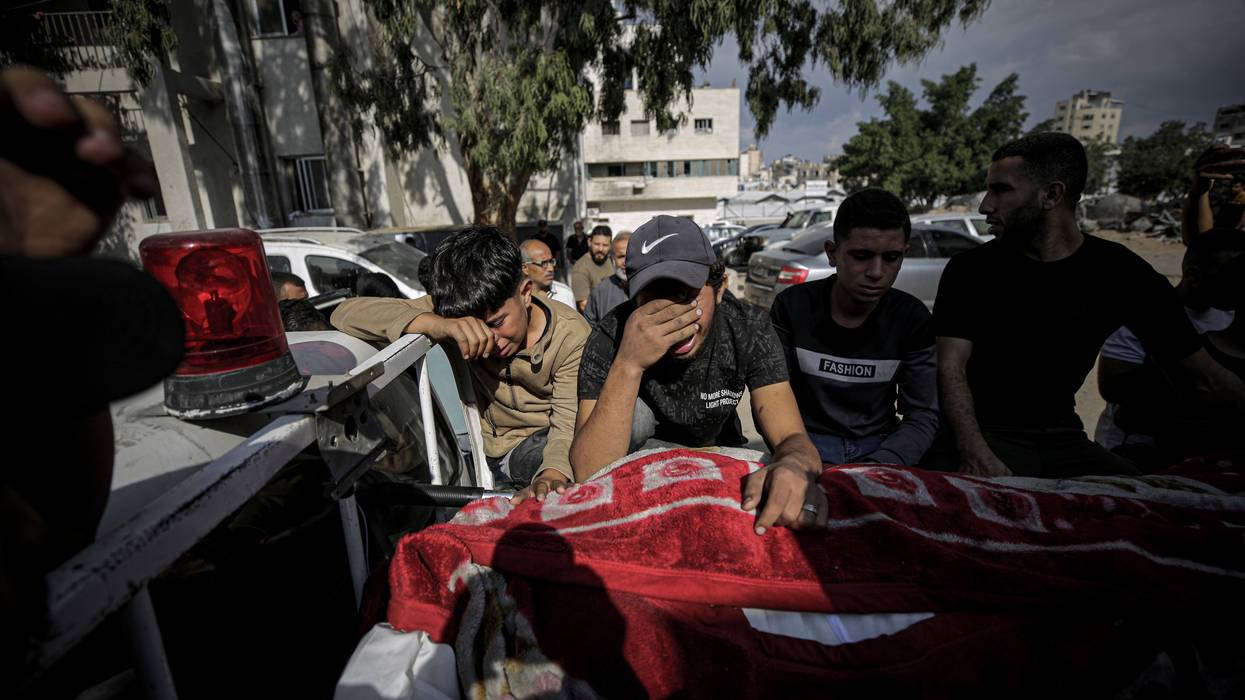
"Accountability cannot be swept under the rubble."
A coalition of more than 100 humanitarian, human rights, and civil society organizations on Friday said that the Gaza ceasefire agreement signed one year ago exists in "name only" amid continued Israeli attacks on the enclave.
The groups noted that Israeli military operations over the last year have killed at least 1,400 Palestinians, including more than 300 children, despite a supposed ceasefire being in effect.
The Israeli military has also pushed Palestinians "into an increasingly small and overcrowded area" by moving forces beyond the withdrawal line agreed to in the ceasefire plan, the groups said.
In addition to outlining the toll on civilian life, the groups also pointed to extensive damage to civilian infrastructure, pointing to recently published satellite images showing "neighborhoods reduced to rubble, homes flattened, and agricultural land razed."
Jan Egeland, secretary general of the Norwegian Refugee Council, called it "utterly shameful" that so little had improved for Gaza residents since the ceasefire went into effect last year.
"Families are still being forced to make impossible choices," said Egeland, "between sheltering in damaged and dangerous buildings or living in tents facing unbearable temperatures. Israeli restrictions are still preventing the required equipment or materials, which are the only ways for communities to begin rebuilding their lives."
Inger Ashing, CEO of Save the Children, said the reality on the ground in Gaza shows that "a ceasefire is meaningless if children are still being killed and families are still unable to rebuild their lives."
"Governments that backed this agreement must use their influence to stop the killing and ensure children can access food, healthcare, shelter, and education," Ashing emphasized. "Gaza's children have a right to safety and a future. Governments have the power to help secure both, and they must use it."
Agnes Callamard, secretary general of Amnesty International, similarly called upon the international community to take responsibility not only for helping Palestinians, but also punishing Israel for violating the ceasefire plan.
“Accountability cannot be swept under the rubble," said Callamard. "The recovery and future of Gaza cannot be separated from a framework grounded in international law, justice, and the rights of victims. The persistent failure to hold Israel accountable and press Israel to comply with the International Court of Justice’s binding orders continues to fuel the atrocity crimes on a mass scale against Palestinians."
The groups' assessment of the ceasefire deal was echoed by Shayna Lewis, deputy director of Win Without War, who said on Friday that "the genocide continues" one year after the agreement was signed.
Lewis pointed the finger directly at US President Donald Trump for the continued suffering, arguing that the ongoing bloodshed in Gaza is his "peace plan in action."
"The ceasefire agreement failed to include any real accountability mechanisms that might restrain the Israeli government’s aggression in Gaza," Lewis said. "Moreover, his administration refuses to hold [Israeli Prime Minister Benjamin] Netanyahu’s government to its word on ending bombings, withdrawing troops, or expanding humanitarian access."

A petition signed by nearly 6,500 healthcare workers demands accountability for the Israeli Medical Association, accusing the organization of complicity in human rights violations.
Thousands of healthcare workers from across the globe are calling on the World Medical Association to suspend Israel’s membership in the organization over the government's mass killing and detention of medical professionals in Gaza, destruction of the Palestinian territory's healthcare system, and ongoing genocide.
The demand came as the WMA's General Assembly gathered in The Netherlands for its annual meeting, which runs through Saturday. A petition addressed to WMA leadership and signed by around 6,500 healthcare workers declares that the Israeli Medical Association (IMA) has "failed to uphold core medical ethical standards" and is "complicit in serious violations of medical neutrality and human rights, committed by the Israeli military and government."
The petition points to Israel's systematic attacks on Palestinian healthcare infrastructure and personnel, detention and torture of medical professionals such as Dr. Hussam Abu Safiya, obstruction of medicine and other humanitarian aid in the occupied Palestinian territories, and the ongoing genocide in Gaza.
Supporters of the petition campaign demanded that the WMA suspend the IMA "until it publicly upholds medical ethics and humanitarian law, condemns murder and torture of Palestinian health workers and takes action against violations by its members." They also called on individual national members of the WMA to follow the example of the South African Medical Association, the British Medical Association, and the Turkish Medical Association in cutting institutional ties with the IMA.
"Medical ethics are the foundation of trust in healthcare," the petition states. "The international medical community has acted before, including during apartheid in South Africa. If medical ethics are to mean anything in the future, and we are to have confidence that the WMA can fulfill its role as the international guardian of medical ethics, then it must take concerted action to hold the IMA to account."
The Israeli military has killed around 1,700 healthcare workers and detained hundreds more without charge since it began its massive assault on Gaza in the aftermath of the Hamas-led October 7, 2023 attacks.
Last year, the IMA defeated a similar effort to suspend its WMA membership. Instead, the WMA General Assembly adopted a toothless resolution calling on the Israeli government to "instantly halt all forms of attacks on healthcare personnel, patients, healthcare facilities, and food and medical aid logistics."
“Thirty years of WMA dialogue with the IMA has done nothing but give the IMA a sense of impunity. Why should they change?” Jonathan Fluxman, a British Medical Association member and retired doctor, said in a statement on Friday. “It is time for national medical associations and the WMA to speak out and take action. Break your ties with the IMA and suspend the IMA from the WMA now.”
"Either a white coat is worth protecting everywhere, or it is protected nowhere."
Earlier this week, Doctors Without Borders—known internationally as Médecins Sans Frontières (MSF)—called on the WMA to "join the calls to conduct swift, transparent, and impartial investigations into attacks on healthcare in Gaza and the West Bank, while reiterating its call for the release of all arbitrarily detained healthcare workers."
Dr. Javid Abdelmoneim, MSF's international president, highlighted the case of Abu Safiya, the former head of Gaza's Kamal Adwan hospital who has been detained by Israeli authorities for over 18 months without charge.
"He continues to endure prolonged solitary confinement, severe weight loss, and untreated pre-existing conditions; an international petition for his release has drawn signatories from 41 countries," Abdelmoneim noted. "Alongside him stands Dr Mazen Al-Rantisi, the 71-year-old family physician from Ramallah, known as the ‘doctor of the poor,' arrested in June 2026 in a pre-dawn raid on his home. In addition, our long-time Médecins Sans Frontières colleague, Dr Mohammed Hassan Ali Obeid, a respected 43-year-old Palestinian orthopedic surgeon and father of three children, has been detained under the Unlawful Combatant Law in Israel for more than 600 days without charges."
"Healthcare workers are not targets," wrote Abdelmoneim. "Either a white coat is worth protecting everywhere, or it is protected nowhere. The test is not simply whether we affirm these principles, but whether we uphold them when it matters most."
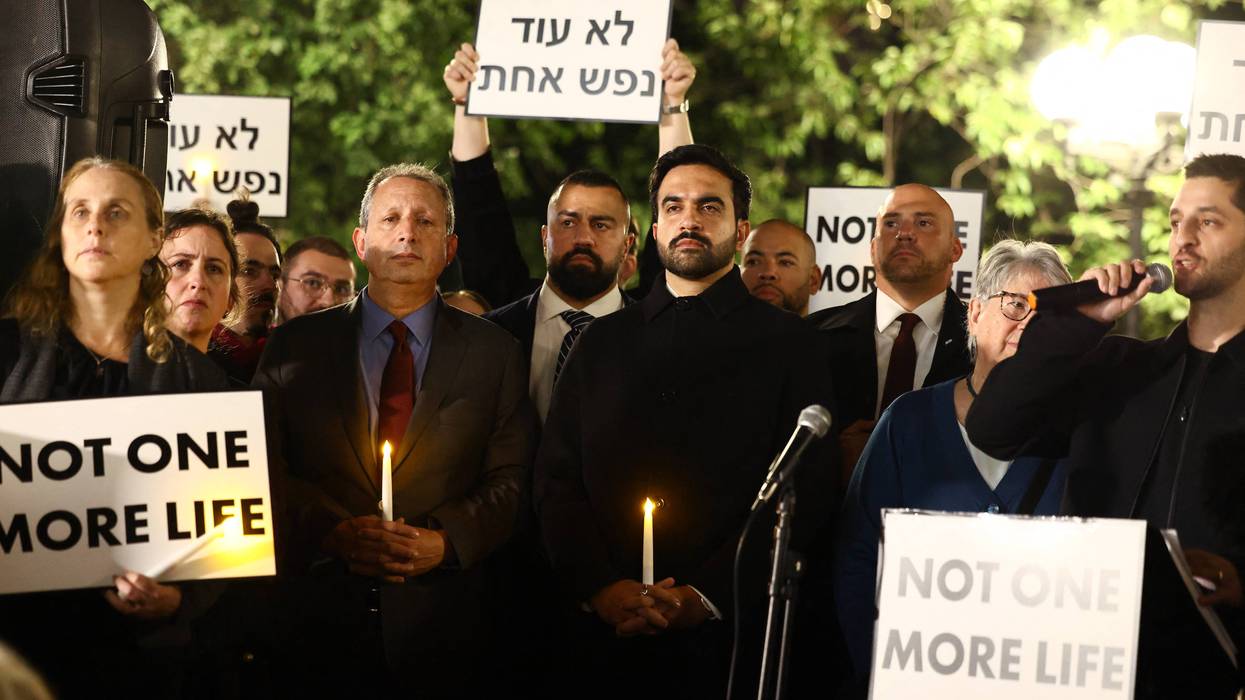
"That to me is a part of what it means to believe in a sense of humanity, that we need not choose between which death we will mourn and which we will ignore."
New York City Mayor Zohran Mamdani said during a press conference on Thursday that "there must be room to mourn" both the Israelis killed during the Hamas-led October 7 attack three years ago and the Palestinians killed in the Israeli government's subsequent genocidal assault on Gaza.
“I believe that there must be room to mourn every single life," said Mamdani, echoing the sentiment he expressed in a statement 24 hours earlier marking the three-year anniversary of the October 7 attack—and the start of Israel's military response.
At Thursday's press conference, a reporter noted that Mamdani "got it from both sides yesterday," referring to criticism the New York City mayor received from both pro-Israel and pro-Palestinian voices in response to his statement. Mamdani's statement described the Hamas-led attacks as "horrific war crimes" and the Israeli government's response as a "devastating, ongoing genocide."
Asked if he "made any missteps that inflamed tensions" and whether he would, in hindsight, alter the language of his statement or decide against attending a vigil hosted by the anti-occupation group Israelis for Peace—where the mayor faced jeers from protesters accusing him of complicity in genocide—Mamdani responded: "There must be room to mourn the lives of the more than 1,100 Israelis that Hamas killed there years ago. There must be room to mourn the 74,000 Palestinians that the Israeli government has killed since."
"There must be room to reckon with the ways in which so many New Yorkers' lives have been shattered," he continued. "And that to me is a part of what it means to believe in a sense of humanity, that we need not choose between which death we will mourn and which we will ignore. That we can reckon with the fact that all of it is to be opposed."
Video footage from the Wednesday night vigil shows Mamdani standing expressionless alongside Brad Lander, a Democratic congressional candidate who is Jewish, as protesters shout at the mayor, calling him a "traitor."
Lander, the former New York City comptroller, told reporters that protesters at the vigil sometimes drowned out the reading of testimony from loved ones of people killed in the October 7, 2023 attack and in the Israeli government's assault on Gaza.
“From where I sit, Mamdani is a very strong supporter of Palestinian freedom and human rights,” said Lander. “I don’t know what world leaders have done more.”
During his press conference on Thursday, Mamdani said of those protesting him, "This is what I signed up for."
Mamdani is stone-faced as the protesters call him a traitor and sellout. https://t.co/oXducpYsMR
— Peter Sterne (@petersterne) October 8, 2026
Mamdani also faced hysterical backlash from pro-Israel members of his party. Rep. Dan Goldman (D-NY), who lost to Lander in the Democratic primary for New York's 10th congressional district, denounced Mamdani's statement as "reprehensible" and declared that it would "offend and further upset those same people he pretends to grieve with."
Rep. Debbie Wasserman Schultz (D-Fla.) falsely accused Mamdani of "desecrating the memory of murdered, innocent Jews" and "refusing to even condemn Hamas."
Mamdani didn't back away from his criticism of the Israeli government in response to such attacks.
"The Israeli government used and continues to use that day, those war crimes, as a justification for an ongoing genocide against Palestinians," Mamdani told reporters on Thursday. The mayor also stressed "our federal government's complicity in funding so much of the weaponry" that has been used by the Israeli military in Gaza.
"We have to extend human rights to all people," said Mamdani, "and that has to include Palestinians."
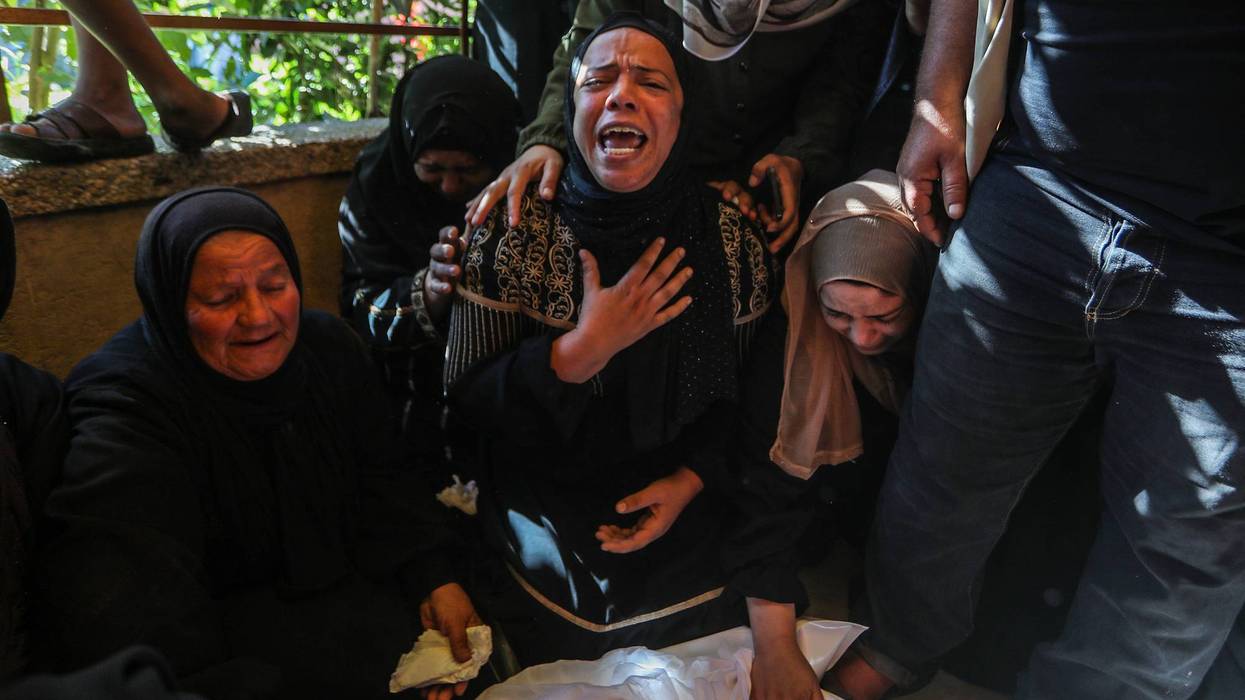
“The situation on the ground is catastrophic," said Francesca Albanese. "It’s really beyond what words can say."
The top United Nations expert on Palestine said Wednesday—the third anniversary of the Hamas-led attack on Israel—that Israel's US-backed genocidal annihilation of Gaza continues, with daily airstrikes adding to a toll of 250,000 Palestinians killed or wounded as Israeli forces seize most of the coastal strip and raze as much of it as they can.
In an interview with the Turkish news agency Anadolu, Francesca Albanese, the United Nations special rapporteur for the occupied Palestinian territories, said that "the situation on the ground is catastrophic."
"It's really beyond what words can say, and it gives the sense that the destruction of Gaza is not over," the 49-year-old Italian jurist continued. "Seventy percent of the strip is under the control of the [Israeli] army, which is leveling as much as it can. There is an environmental catastrophe, a humanitarian catastrophe."
Israel's assault on Gaza began in the immediate aftermath of the Hamas-led attack of October 7, 2023, in which more than 1,100 Israelis and others were killed—at least some by so-called “friendly fire” and under the fratricidal Hannibal Directive—and over 240 people were abducted.
Prime Minister Benjamin Netanyahu and other Israeli officials soon began calling for the genocidal destruction of Gaza and its 2.2 million people. Netanyahu declared it a "holy mission" for Israel to fulfill a divine command to the Israelites to exterminate every man, woman, child, and animal in Amalek, the fictional archenemy of the ancient Jews.
Over the past three years, Israeli forces have killed at least 74,237 Palestinians and wounded at least 175,206 others in Gaza, according to Gaza Health Ministry figures—which not only have been affirmed by senior Israeli military and intelligence officials, but are believed by the authors of multiple peer-reviewed scientific studies to be a significant undercount.
Tens of thousands of those injuries are classified as "life-altering," including thousands of amputations performed on adults and children, sometimes without anesthesia.
The Gaza Health Ministry says more than 10,000 of those killed were women, over 5,100 were elderly, and upward of 21,000 were children—figures supported by classified Israel Defense Forces intelligence data suggesting that 5 in 6 Palestinians killed by the IDF through the first 19 months of the onslaught were civilians.
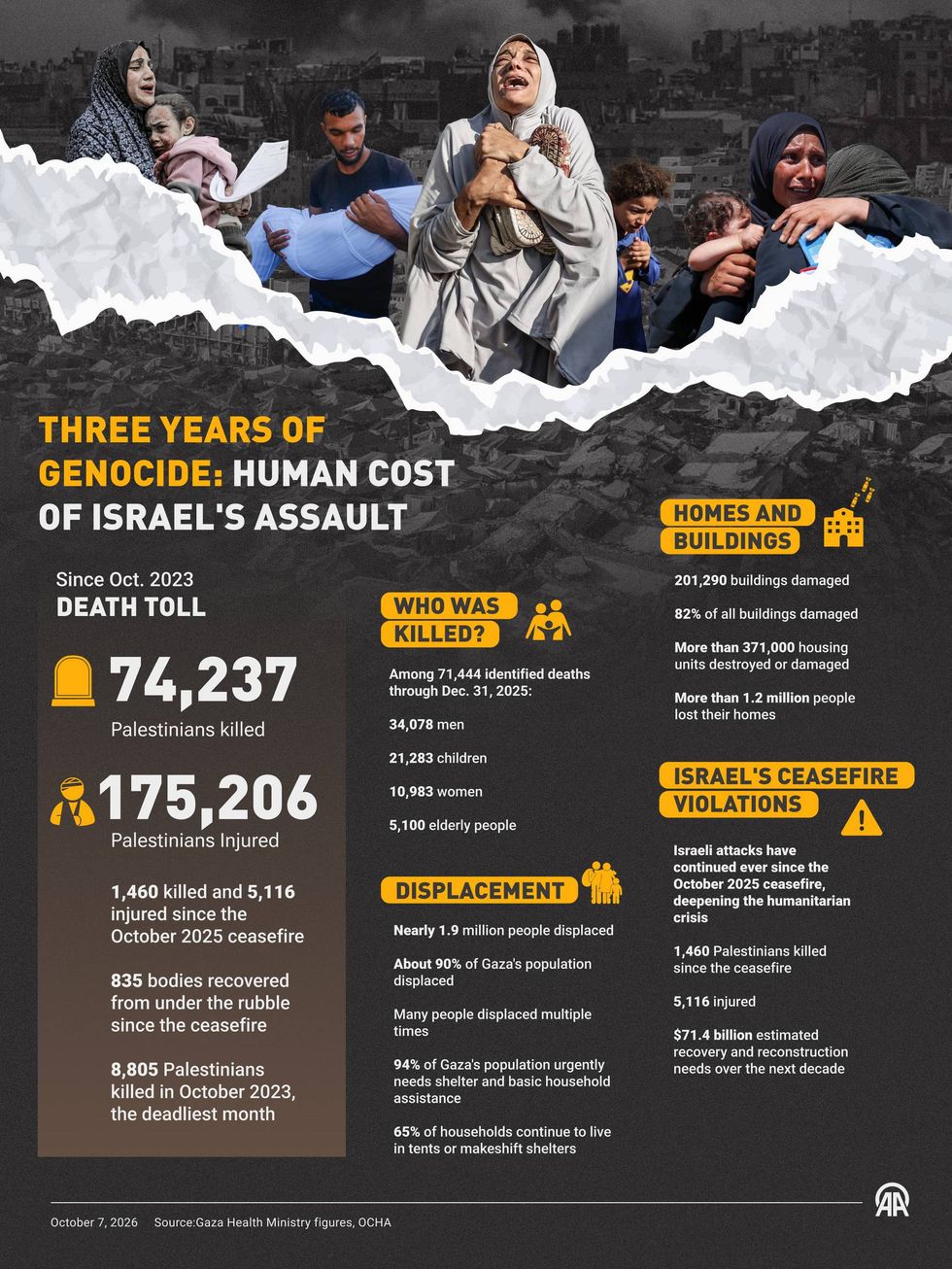
Tens of thousands of children have also been left without one or both parents, with more than 2,700 families suffering so many deaths that they were erased from the civil registry in Gaza. The UN Children's Fund called the strip the "world's most dangerous place to be a child."
In the wake of the October 7 attack, the IDF dramatically loosened rules of engagement, effectively allowing an unlimited number of civilians to be killed when targeting a single Hamas member, no matter how low-ranking. The IDF’s use of massive ordnance, including US-supplied 1,000- and 2,000-pound “bunker buster” bombs, and the utilization of artificial intelligence to select targets, have resulted in staggering numbers of civilian deaths, including numerous instances of dozens or more people being massacred in single strikes.
At closer range, current and former IDF troops have accused their own of deliberately shooting Palestinian civilians, including children, sometimes out of sheer boredom. Palestinian medical professionals—who, like journalists and aid workers, have suffered hundreds of their ranks killed by Israeli bombs and bullets—have also described what they say is the deliberate shooting of Gazans, including children.
On October 8, 2023, then-Israeli Defense Minister Yoav Gallant ordered the "complete siege" of Gaza, explaining that "we are fighting human animals, and we are acting accordingly." The siege, which is actually a tightening of a decadeslong blockade of Gaza, fueled famine and disease that killed many of the most vulnerable people in the strip. Nothing was spared, including hospitals and other medical facilities, whose staff members were sometimes abducted and tortured—allegedly to death in at least one case—by their Israeli captors.
Around 90% of Gaza's population—around 1.9 million people—has been forcibly displaced, most of them multiple times. With the vast bulk of Gaza's buildings damaged or destroyed, nearly two-thirds of Gazans continue to live in tents or makeshift shelters as the war's fourth winter, and with it the prospect of more infants and newborns dying of hypothermia, approaches.
Despite a purported year-old ceasefire, Israeli forces continue to kill, wound, and displace Palestinians in Gaza to this day. Gaza officials say that at least 1,460 people have been killed and more than 5,100 others have been wounded since the ceasefire took effect. Israel is still blocking or delaying desperately needed humanitarian aid from entering Gaza, although there have been some improvements in delivery during the ceasefire period.
Meanwhile, Israeli calls for more ethnic cleansing, occupation, and possibly even the Jewish recolonization of Gaza continue. And while President Donald Trump no longer openly discusses a US takeover and redevelopment of the Mediterranean strip into the "Riviera of the Middle East," his administration is still trying to determine Gaza's future through vehicles like his widely derided "Board of Peace."
In November 2024, the International Criminal Court in The Hague, Netherlands issued arrest warrants for Netanyahu and Gallant for alleged war crimes and crimes against humanity in Gaza, including murder and forced starvation. The ICC simultaneously ordered the arrest of three senior Hamas officials, but Israel has since assassinated them.
The International Court of Justice (ICJ), also in The Hague, is currently in the written stage of a genocide case against Israel brought by South Africa and formally supported by more than 15 nations. While a ruling in the case isn't expected until at least the end of the decade, a UN commission of inquiry, the International Association of Genocide Scholars, and other experts—including many Israeli and international Jewish academics, jurists, human rights campaigners, and others—have already concluded that Israel is committing genocide in Gaza.
Yet genocide denial persists in Israel, the United States, and among supporters of Israel's destruction of Gaza around the world. And while numerous nations have severed diplomatic ties with Israel or imposed sanctions—sometimes both—the United States under both the Biden and Trump administrations has lavished the key Middle East ally with tens of billions of dollars in armed aid, as well as diplomatic cover including a string of vetoes of UN Security Council ceasefire resolutions.
Furthermore, the Trump administration has moved to punish members of the ICC, ICJ, and UN, including Albanese—who has been relentlessly critical of both Israel's genocide and Western complicity, especially by the United States.
On the other hand, increasing diplomatic recognition of Palestine by even Israel's allies and a worldwide wave of protests against the Gaza genocide—including numerous demonstrations organized and led by Jewish groups—has shown Palestinians that much of the world stands in solidarity with them.
"There are really these two forces... symbolically, fighting against each other," Albanese told Anadolu during Wednesday's interview. "Those who want to continue the genocide, the exploitation, and the erasure of Palestine, and those who want to stop it."
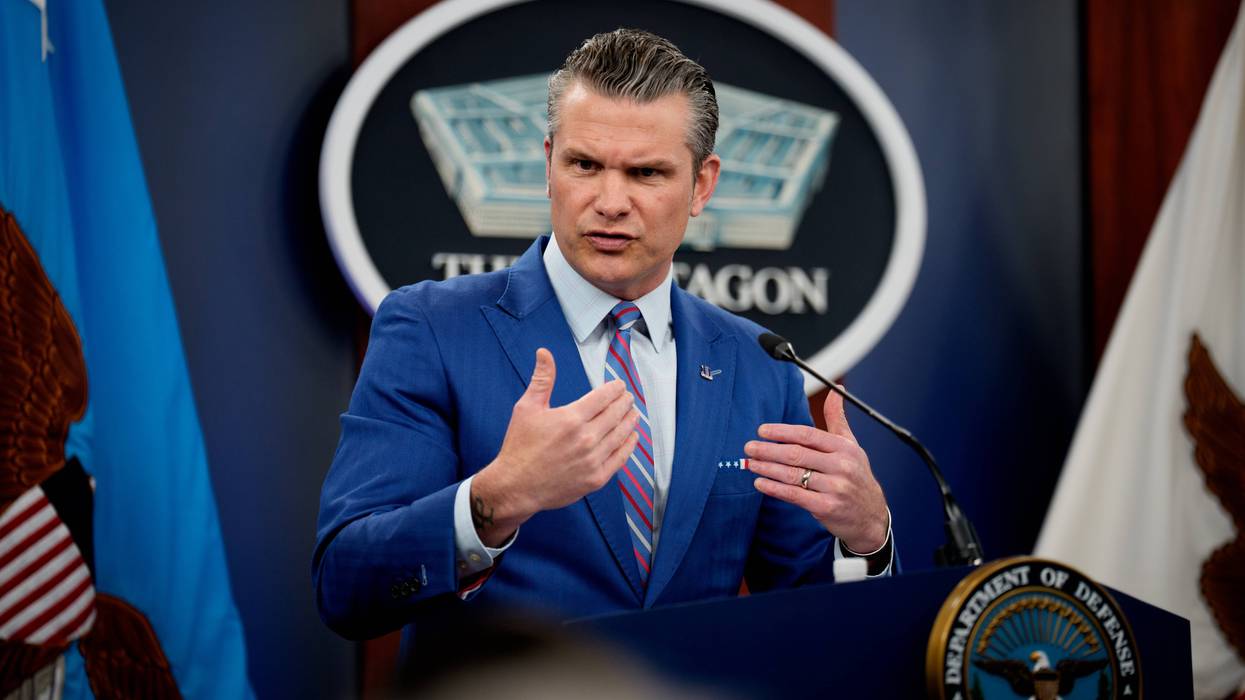
"And from what I understand, this is happening both to Democrats and Republicans when they are traveling to the Middle East."
A US senator visiting the Persian Gulf said Tuesday that the Pentagon blocked him from inspecting a heavily damaged American military installation and refused to arrange a briefing on the Iran War, accusing Defense Secretary Pete Hegseth of mounting an "unprecedented" effort to conceal the conflict's costs and consequences from lawmakers and the public.
“This trip confirmed for me that there is an active, unprecedented, unconstitutional effort underway to hide the costs of this war and the implications of this war from Congress and the American people,” Sen. Chris Murphy (D-Conn.) told reporters Tuesday in Riyadh, Saudi Arabia.
Murphy said he sought to inspect Al Udeid Air Base in Qatar, the largest US military installation in the Middle East and a crucial hub for American operations in the region. The base was struck by Iranian missiles during the opening days of the war and sustained heavy damage, including a direct hit to its Combined Air Operations Center.
“I've never encountered anything like this in my time in the Senate,” the senator said, describing the Pentagon's actions as “part of a deliberate campaign of obfuscation that my Republican colleagues in Congress should demand an end to."
"We appropriate the money for that military action, and it is an ordinary function of members of Congress to travel around the world and talk to our generals and to our troops about military activities, especially during a time of war," Murphy continued.
"Adding insult to injury, the Department of Defense, under orders from [Defense Secretary] Pete Hegseth, even denied me access to talk to military leadership," he alleged. "They would not provide me even a briefing at the [US] Embassy."
According to Murphy:
Never before has this happened. Never before has a member of Congress been denied access to military facilities and been refused briefings by generals in theater. And from what I understand, this is happening both to Democrats and Republicans when they are traveling to the Middle East.
So just understand what this is: This is Secretary Hegseth deliberately trying to cover up the extent of damage, likely in the billions of dollars, trying to cover up the true cost of this war, trying to hide from you, from the American public, not just from members of Congress, the actual consequences of a war that is spiraling out of control by the day.
"This should be unacceptable to every member of Congress—Republicans and Democrats—and this should be unacceptable to the American public," he added.
The Pentagon defended the decision, saying the senator's office had been informed before his trip that the department would not support his access to Al Udeid. A senior Pentagon official cited a March 3 directive issued by Hegseth restricting travel to the region.
The dispute comes as the Trump administration faces mounting scrutiny over the increasingly protracted war's human and financial costs.
The illegal US-Israeli war of choice has cost the lives of thousands of Iranians, dozens of citizens and residents of Gulf states, and more than 20 US troops.
The 220-day war has already cost US taxpayers more than $40 billion, according to the nonpartisan Congressional Budget Office. It has driven up gasoline and energy prices, transportation and food costs, and is having broader inflationary effects caused largely by the disruption to global oil supplies and shipping.
Last week, President Donald Trump ordered the deployment of thousands more troops and another aircraft carrier to the Middle East.
"You know, by the way, we’re kicking Iran’s ass. You do know that, right? And that’ll end soon," the president told a Nebraska rally during a Monday speech in which he suggested he wouldn't mind Iran bombing California cities. "It’s gonna end one way or the other. It’s gonna end very soon.”

"The role of a president is to protect the country, not to actively threaten it and encourage attacks on American lives," said the mayor of Los Angeles.
"Keep our city out of your reckless war talk," said San Diego's mayor, Todd Gloria, Monday night after President Donald Trump's rambling speech at a rally in Nebraska included a particularly violent mention of the California city.
Gloria was among several Democratic political leaders who were incensed after Trump—moments after predicted the Republican Party would see a "tremendous victory" in the November 3 midterm elections—suggested that he would not object to an Iranian military or nuclear attack on San Diego and Los Angeles.
The president said that soaring prices for gas, groceries, and other essentials are a "small price to pay for keeping the world safe—keeping our country safe."
Trump on Iran: Let 'em take out Los Angeles and San Diego, it's a small price to pay https://t.co/Fc4BcjVDKj
— Headquarters (@HQNewsNow) October 6, 2026
He warned that Iran could "take out a city," before adding that he would "let them" attack the two deep-blue cities—home to a collective 5.2 million people, with more than 20 million residents in the surrounding areas
“Let them take out Los Angeles. Let them take out San Diego," Trump said at the rally in Grand Island. "This is a very small price to pay... It’s gonna be over very soon."
The crowd responded to Trump's comments with laughter and cheers. The president has frequently made Democratic strongholds like Los Angeles, Chicago, and his own hometown of New York City the targets of rhetorical attacks. He has also targeted those cities with the deployment of armed federal agents as part of his mass deportation agenda.
California Gov. Gavin Newsom, a Democrat whose name has been floated as a potential 2028 presidential candidate, condemned Trump's remarks as "deranged and dangerous."
"After sending the National Guard and Marines to occupy California, Donald Trump is now saying our foreign enemies should 'take out' Los Angeles and San Diego," said Newsom, who later criticized Trump's vice president and secretary of state for not speaking out against the comments.
"The SILENCE from JD Vance and Marco Rubio today is deafening," said the governor.
Gloria added that San Diego, which is home to major military installations, "is not collateral damage. We are not expendable. And we are never a 'small price to pay.'"
Los Angeles Mayor Karen Bass accused Trump of compromising the safety of the nation's second-largest city.
"The role of a president is to protect the country, not to actively threaten it and encourage attacks on American lives," said Bass. "In the face of irresponsible threats, as Angelenos, we know how to stand together and protect our city."
Jim Desmond, a Republican running for Congress in California's 48th District, which lies in San Diego, was also quick to distance himself from the president's comments.
Some observers claimed the president had simply been speaking in an "especially confusing style," as journalist Daniel Dale suggested, and did not intend to suggest that the two cities could be acceptable collateral damage.
"Of course you can say it’s inappropriate regardless for the president to casually float the possibility of a city being wiped out," he added.
Trump's comments came days after it was reported that the Pentagon is prepared to send thousands more troops and a third aircraft carrier to the Middle East, as talks between the US and Iran remain stalled. Gas prices remain elevated, at $4.36 per gallon on average, and nearly two-thirds of respondents to an Associated Press poll in June said they disapproved of how Trump had handled the war, which he joined Israel in starting in February without congressional approval.
Sen. Alex Padilla (D-Calif.) had a succinct response to Trump's remarks, referring to the constitutional amendment that allows members of a president's Cabinet to remove him from office on the ground that they cannot fulfill the duties of the president.
"Twenty-fifth amendment NOW," said Padilla.
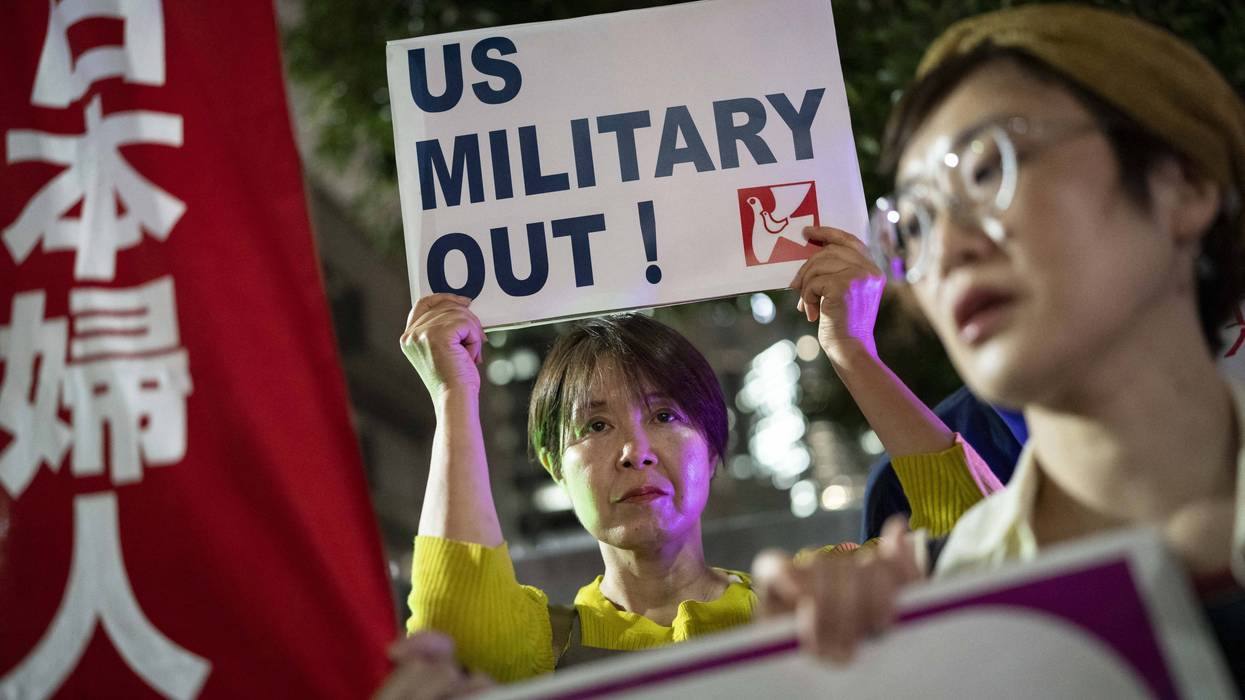
"As long as there are US military bases in Okinawa, such incidents will occur," said one former Japanese senator.
Anger over the US military presence in Okinawa is growing anew this week after Japanese police arrested a Marine Corps lance corporal accused of robbing and murdering a local woman, prompting protests and renewed calls for a revision of the US-Japan Status of Forces Agreement and even the removal of American bases.
Lance Cpl. Devin Jacob Ballard, 20, who is stationed at Marine Corps Air Station Futenma, was arrested Sunday on suspicion of killing 39-year-old Anna Yagi at the Naminoue Crustal Hotel in Naha early Saturday and stealing her wallet and backpack. Yagi died from asphyxiation caused by pressure to her neck, according to Okinawa police. Ballard has denied the allegations.
The Japan Times reported that area surveillance cameras captured footage of a man with "distinctive features," including tattoos on both arms and a shaved head, leaving the hotel carrying the woman’s backpack, which was later found nearby.
The killing sparked protests in Okinawa and Tokyo.
"How much longer do we have to bear this?" one protester asked outside the Okinawa prefectural government headquarters in Naha, according to Jiji Press.
A woman in her 40s from Nago said, "I feel it's a contradiction that a serviceman stationed at a US military base in Okinawa to protect Japan has killed a civilian."
Another woman at the protest said, "I don't want to see any more people hurt."
The advocacy group Femibridge Okinawa said on social media: "Anger has reached its boiling point. We don't want to hear words like 'refrain from commenting.'"
On Monday, Japanese Prime Minister Sanae Takaichi—who leads the right-wing Liberal Democratic Party (LDP) and supports US troops in Japan as a strategic deterrent to China—condemned the "heinous crime" in a speech to the Kokkai, or Parliament.
“The Japanese government has lodged a strong protest with the US side and has strongly demanded full cooperation with the investigation," she added, "as well as strict disciplinary action against US military personnel and thorough measures to prevent a recurrence of such incidents."
Okinawa Gov. Genta Koja, who has no party affiliation but was elected last month with LDP support, issued a statement Sunday calling Yagi's killing "absolutely unforgivable."
"I feel deeply outraged," he continued. "It has come as a great shock to residents of the prefecture, who are forced to live in close proximity to bases, and has sparked fresh anxiety."
“Although the prefecture has consistently demanded that the US military take measures to prevent recurrence whenever such incidents have occurred in the past, the fact that this type of incident has happened again compels us to conclude that the US military’s efforts to maintain discipline and educate its personnel are completely ineffective," Koja added.
US Ambassador to Japan George Glass—who on Sunday was summoned by Japanese Foreign Minister Toshimitsu Motegi over Yagi's killing—on Monday expressed his condolences and pledged "full cooperation" with investigators.
“I am speaking with US military commanders this week about how we continue to hold our American service members to the very highest levels of discipline and integrity,” he said, according to The Japan Times.
The Third Marine Expeditionary Force also said it was “actively cooperating" with Japanese officials in regard to the case, and that the US Marine Corps "takes these allegations very seriously and expects every Marine to adhere to the highest standards of behavior."
In Naha, Okinawa's prefectural capital, residents expressed their anxiety over the continued US military presence.
One 53-year-old woman said she has been "afraid to walk at night" in Naha.
"If we do not change the Japan-US Status of Forces Agreement, the crime of US soldiers will not decrease," she asserted.
Hidekiyo Shinkawa, 89, expressed outrage over the number of people killed by US troops in Okinawa over the past eight decades.
"When I was a junior high school student, a classmate of mine died after being hit by a US military vehicle," Shinkawa told Kumamoto Nichinichi Shimbun.
Okinawa was under US occupation from 1945-72. Today, the southern archipelago hosts 70% of US military bases in Japan and most of the 50,000 troops stationed in the country.
While many Okinawans appreciate the economic and security benefits of having US bases in their backyards, distrust of American troops in Okinawa—which was conquered during the closing months of World War II at the cost of over 100,000 civilian lives—runs deep.
Okinawans have been trying in vain to get the Americans to leave since the beginning of the occupation, when property was seized at gunpoint, residents were expelled, and homes and farms were bulldozed or burned. The Americans promised Okinawans good farmland and financial aid if they resettled in Bolivia. Thousands accepted the offer only to find themselves shipped off to an inhospitable wilderness where many died from disease. Much of the promised assistance was never delivered.
In Okinawa, the US military built more than 100 military facilities—over 30 of which are still in operation—on a series of islands roughly the size of Los Angeles. Washington forced the Japanese government to accept status of forces agreements that gave the US jurisdiction over all American personnel on Japanese soil.
US troops stationed in or visiting Okinawa have committed thousands of crimes, including at least dozens of murders and over 100 alleged rapes. In one six-month period in 1949, US troops killed 29 Okinawans and raped 18 more, including a 9-month-old infant.
The US military has also fired and lost nuclear weapons in local waters, leaked the deadly nerve agent sarin, and exposed residents to chlorine gas, to name but a handful of the most egregious environmental incidents over the decades.
Although the 1995 gang-rape of a 12-year-old girl by two Marines and a sailor led to a revision of the US-Japan SOFA so that Japanese authorities could convict and imprison Americans who commit the most heinous offenses—a development that led to scores of convictions—crimes against Okinawans and the local environment continue to this day.
On Monday, Koja argued in the wake of Yagi's killing that “to ensure that such an incident never happens again, I strongly urge the Japanese and US governments to take responsibility and implement effective, fundamental measures—including a review of the Japan-US Status of Forces Agreement.”
Some Japanese went even further, demanding an end to US bases in Okinawa.
"As long as there are US military bases in Okinawa, such incidents will occur, and the fear that such incidents will occur and that they may happen in the future will continue," wrote Keiko Itokazu, a former leftist lawmaker in the House of Councillors, the Kokkai's upper chamber.
"How long will this pain and sorrow be felt by the people, especially women?" she added. "Such incidents have been repeated in the past, and each time the government and the US military have said that they will provide proper education to US soldiers... But is this the result of education?"
Former Japanese Prime Minister Yukio Hatoyama said on social media: "Once again, an incident that should never have happened has occurred. A woman was murdered in a hotel in Naha City, and a Marine was arrested."
"Far from protecting Japan's peace, the safety of women in Okinawa is being threatened," he added. "As the nature of warfare changes, the Marines are no longer necessary for Japan's peace. Voices calling for the Marines to leave will likely grow louder in Okinawa."