

5
#000000
#FFFFFF
To donate by check, phone, or other method, see our More Ways to Give page.
Daily news & progressive opinion—funded by the people, not the corporations—delivered straight to your inbox.

"It should be a no-brainer: Our tax dollars should not fund a genocide," said Democratic Rep. Ilhan Omar, who supports an amendment to cut off $3.3 billion in military aid to Israel.
Israeli Prime Minister Benjamin Netanyahu on Tuesday compared US aid to "welfare" and said he wants it to end, remarks that came as top Democrats in the US House of Representatives expressed opposition to an amendment that would cut off $3.3 billion in American military assistance to Israel.
"I want to stop American aid," Netanyahu said during a televised event in Israel on Tuesday, saying he wants the US aid phaseout to begin this year. "We can finance ourselves."
In recent weeks, amid growing US public backlash against continued military aid to Israel as its military commits atrocities in Gaza and throughout the Middle East, Netanyahu has signaled a desire to "shift the framework" of the US-Israeli relationship "from aid to partnership," as the prime minister put it in a June 1 letter to US Rep. Marlin Stutzman (R-Ind.).
"Israel deeply appreciates the financial component of the military aid the United States has generously provided us over the years," Netanyahu wrote in the letter. "The time has now arrived for us to move from aid recipient to partner."
Netanyahu's stated vision aligns with legislative text included in annual US defense policy legislation, which would deepen integration of the American and Israeli militaries. Earlier this week, the Republican-controlled House Rules Committee refused to allow a floor vote on an amendment by Reps. Thomas Massie (R-Ky.) and Ro Khanna (D-Calif.) that proposed stripping the integration measure from the bill, which is currently moving through Congress.
But the rules panel is allowing a full House vote on a separate Massie-led amendment that would prevent any US State Department or national security appropriations from being "obligated or expended for Israel" in the coming fiscal year. The amendment would specifically cut off the $3.3 billion in assistance Israel is slated to receive via the Foreign Military Financing Program in 2027.
Massie's proposal has spotlighted a consequential rift in the House Democratic caucus, even as an overwhelming majority of Democratic voters support ending US aid to the Israeli government.
Prominent progressives—including Reps. Greg Casar (D-Texas), Alexandria Ocasio-Cortez (D-NY), and Ilhan Omar (D-Minn.)—have said they plan to vote yes on the amendment, which could come to a vote next week.
"It should be a no-brainer: Our tax dollars should not fund a genocide," Omar, the deputy chair of the Congressional Progressive Caucus, said Tuesday. "We cannot continue to be complicit in Israel’s crimes against humanity."
But top Democrats, including the ranking members of key committees, are opposed to the Massie amendment, which is unlikely to get through the Republican-controlled House. Few Republicans are expected to support Massie's proposal.
"I don't want Israel to be without what they need," Rep. Gregory Meeks (D-NY), the top Democrat on the House Foreign Affairs Committee, told Jewish Insider earlier this week, following a closed-door House Democratic caucus meeting.
Rep. Adam Smith (D-Wash.), the top Democrat on the House Armed Services Committee, said he is "against" the Massie proposal because it would cut off "all aid for Israel."
"I don’t think there’s support for it," Smith added, "but we’ll see."
House Minority Leader Hakeem Jeffries (D-NY), who is staunchly pro-Israel and a recipient of AIPAC campaign cash, has not publicly taken a position on the Massie amendment.
The Hill reported that the House Democratic leadership told caucus members during Tuesday's private meeting to "vote according to their conscience" on the amendment, as some members expressed concerns about the proposal's broad scope and the process by which it is being brought to a vote.
Casar, the chair of the Congressional Progressive Caucus, acknowledged earlier this week that—if passed—the amendment "may cut off both military weapons (~$3.3 billion) and some diplomatic funding (~$50 million)."
“While I would prefer to vote on an amendment that stripped just military funding,” Casar wrote on social media, “I think opposing the billions in military funding is what’s most important here.”
Speaking to MS NOW earlier this week, Casar said that "it's really important for members to recognize that, while a relatively very small amount of diplomatic funding could be implicated on the amendment... virtually all of the money is military financing that the Israeli military has used to buy fighter planes and attack helicopters."
“You’re going to see a growing number of Democrats come out against sending more money for weapons for Netanyahu’s military,” Casar predicted. “In the past, it was just a very, very small number. You could count on maybe one or two hands how many members of Congress would vote against sending the Israeli military money for more weapons.”
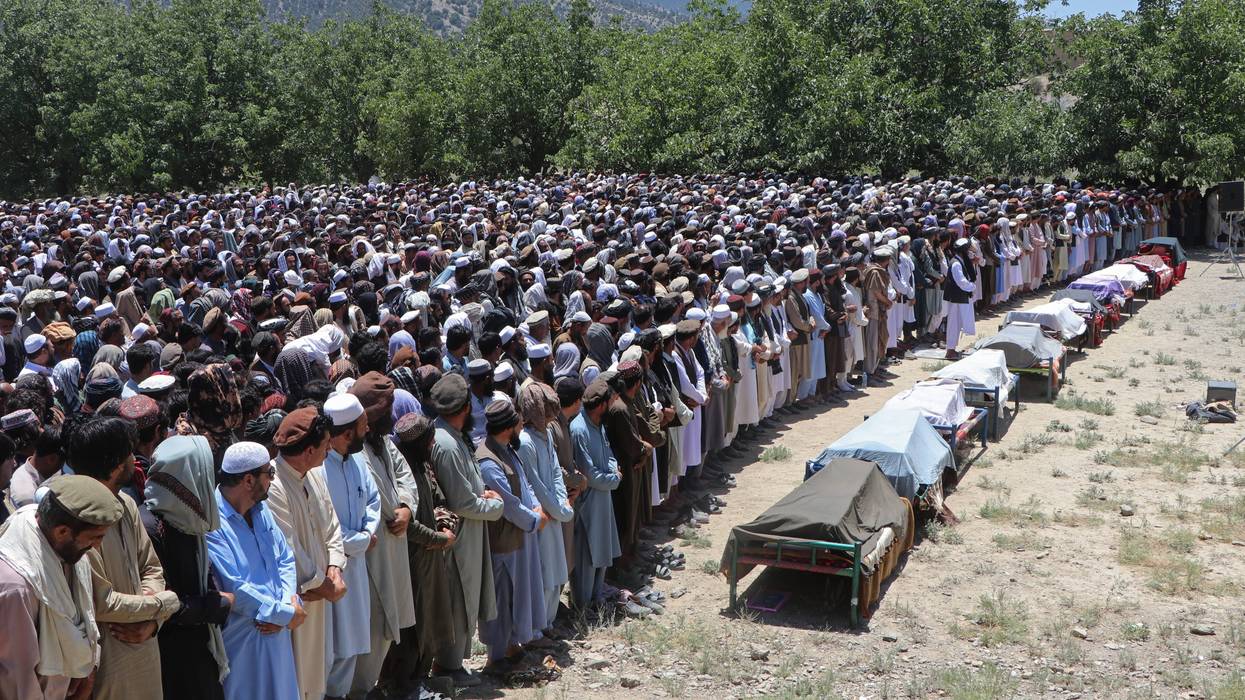
Women and children were reportedly among the at least 28 civilians killed and 49 others wounded on Sunday by airstrikes targeting Pakistani Taliban fighters in Afghanistan's Paktia, Paktika, and Kunar provinces.
United Nations Secretary-General António Guterres on Monday called for “an immediate cessation of hostilities and the protection of civilians” after Pakistani airstrikes killed and wounded scores of Afghans, including women and children.
Pakistani forces bombed targets in Afghanistan's Paktia, Paktika, and Kunar provinces and launched a ground invasion of the neighboring nation.
The attacks—which Afghanistan's Taliban government called "cowardly" and an "atrocity"—reportedly killed at least 28 civilians and wounded 49 others.
"We call on all parties to uphold their obligations under international humanitarian law and continue to stress that civilians and civilian infrastructure must be protected at all times," Guterres said in a statement read in New York by his spokesperson, Stéphane Dujarric.
Dujarric also said that the UN Assistance Mission in Afghanistan (UNAMA) “just confirmed that many civilians were killed and injured in these airstrikes carried out by Pakistan," and that “humanitarian colleagues tell us that the latest attacks have also reportedly triggered displacement, and humanitarian partners on the ground are assessing needs and preparing to provide emergency assistance.”
Paktia elder Adam Khan told Agence France-Presse that those killed in one of the strikes "were innocent civilians, including children, elderly people, and women" sleeping in a house.
Pakistani officials say the military operations are aimed at militant groups that it says operate from Afghan territory and launch attacks into Pakistan, not at Afghanistan's government. Islamabad accuses Tehreek-e-Taliban Pakistan—also known as the Pakistani Taliban—and Jamaat-ul-Ahrar of having recently attacked Pakistani security forces and civilians.
Last October, Pakistan and Afghanistan agreed to a now-imploded ceasefire after weeks of border clashes that killed dozens of civilians and wounded hundreds more.
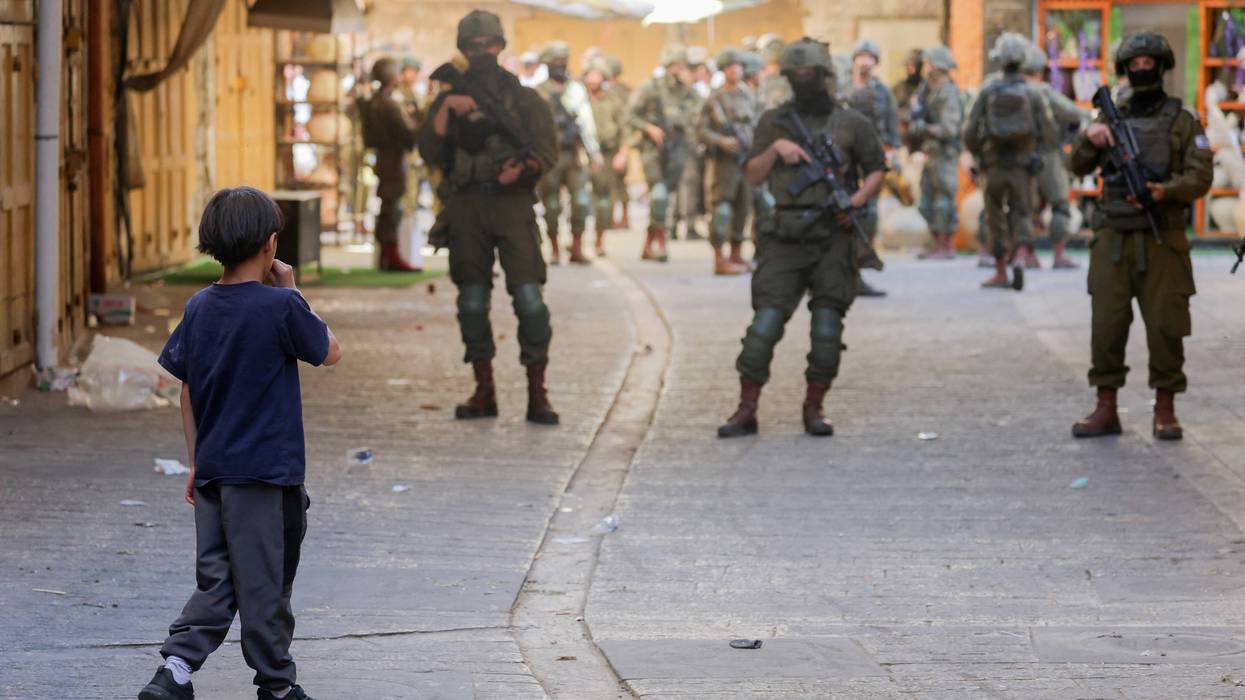
"The system does not merely back those who pull the trigger—it effectively grants them a license to kill," said the Israeli human rights group B'Tselem.
Between October 2023 and June 2026, Israel's military killed Palestinian children in the occupied West Bank at the highest rate since 1967, according to a report published Monday by the Israeli human rights organization B'Tselem.
The report, titled Unshielded Childhood, argues that "the unprecedented scale of killing of Palestinian children and teenagers by Israeli forces is the result of a reckless open-fire policy, expanded to be even more permissive than in the past, that is currently being implemented in the West Bank." Between October 7, 2023 and June 28, 2026, Israeli forces killed more than 240 children and teenagers, with 54 killed in 2025 alone.
The report, which tells the story of each child killed by Israeli forces last year, quotes Israel's top West Bank commander, Avi Bluth, who recently boasted that Israeli forces are "killing like we haven’t killed since 1967"—a reference to the Six-Day War in which Israel seized the West Bank. Among those killed between the start of 2025 and June 7, 2026 were two brothers—one 5 years old, the other 6—and a seven-month-old baby.
Yuli Novak, executive director of B'Tselem, said in a statement that "the widespread, unprecedented killing of Palestinian children and teenagers in the West Bank is the result of a broader Israeli policy that enables the killing of Palestinians with virtually no accountability."
"When the military commander of the area boasts that Israel is killing Palestinians ‘like we haven't killed since 1967,’ he is confirming exactly that: The system does not merely back those who pull the trigger—it effectively grants them a license to kill," Novak added.
Citing fellow Israeli human rights organization Yesh Din, B'Tselem noted that "no indictments are known to have been filed in cases involving killings in the West Bank" since October 2023.
"Yet the immunity guaranteed in advance and the absence of any real demand for accountability after these crimes are committed are not confined to the legal sphere," the report states. "They are also reflected in 'public impunity' that stems from the Israeli public’s indifference to the killing of Palestinian children."
בשנת 2025 הרגה ישראל הרגה 54 ילדים ובני נוער פלסטינים בגדה המערבית.
הדו״ח החדש שלנו מספר את סיפורם של כל אחד ואחת מהם.
מאז אוקטובר 2023 נהרגו בידי ישראל בגדה המערבית 1,086 פלסטינים, בהם 241 ילדים ובני נוער – ובהם גם סאם אבו הייכל, תינוק בן שבעה חודשים. אלה אינם מקרים חריגים,… pic.twitter.com/j96gyE3dAQ
— B'Tselem בצלם بتسيلم (@btselem) June 29, 2026
B'Tselem linked the spike in Israeli forces' killing of Palestinian children in the West Bank to "the military's declared easing of open-fire regulations at the end of 2021, reportedly permitting soldiers to use lethal fire against stone throwers in a departure from previous rules."
"The new regulations permitted use of lethal fire even at individuals fleeing after suspectedly throwing stones, who no longer posed a danger—in violation of international law," the group noted. "After 7 October 2023, the rules of engagement were further expanded, leading to another sharp rise in fatalities."
B'Tselem's investigation found that just two of the 54 Palestinian children and teenagers killed in the West Bank last year were armed with guns at the time they were killed by Israeli forces.
The group continued:
Thirteen were shot while throwing stones at roads or at armored Israeli forces, with no injuries reported from the stone-throwing. By contrast, at least 21 were not involved in any clashes, even when clashes were taking place nearby that included stone-throwing, hurling explosives or live fire. Regarding 12 minors, the military claimed they had tried to injure forces by throwing Molotov cocktails, IEDs ,or stones; B’Tselem’s investigation could neither verify nor refute this claim. Another teen was the object of a targeted killing. Forty-seven of the children and teenagers were killed by gunfire, and the remaining seven in airstrikes.
B'Tselem emphasized that the West Bank killings "cannot be separated from Israel's killing of more than 21,000 Palestinian children in the Gaza Strip."
"By allowing Israel to kill on such a scale in Gaza without consequences, the international community has effectively given it a green light to pursue the same lethal policy in the West Bank," the group said in a statement. "As long as Israel continues to enjoy near-total impunity in the world, the lives of Palestinians—including children—will remain unprotected and exposed."
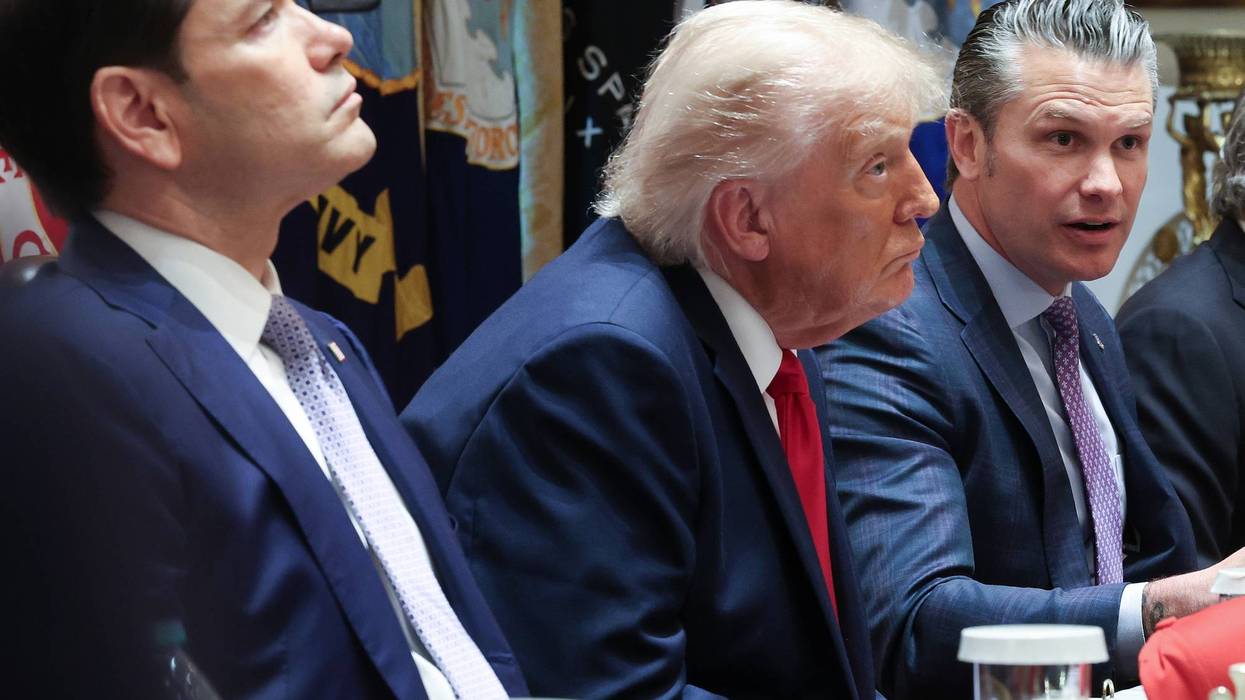
The US attack came as Secretary of State Marco Rubio announced a trilateral agreement with Israel and Lebanon, which Israeli forces have bombed and occupied throughout the Iran War.
US President Donald Trump resumed bombing Iran on Friday, a day after an Iranian attack on a cargo ship in the Strait of Hormuz, elevating concerns about the future of a ceasefire agreement just as Israel and Lebanon signed a related deal.
The Trump administration—which partnered with Israel to launch an illegal war on Iran in late February—and the Iranian government agreed on a memorandum of understanding (MOU) earlier this month. On Thursday, Iran attacked the Singapore-flagged commercial vessel, the Ever Lovely, in the strait, a key trade waterway.
"The Islamic Republic of Iran shot at least four One Way Attack Drones at Ships transversing the Strait of Hormuz," Trump wrote on his Truth Social platform Friday morning. "One of the Drones solidly hit the upper deck of a large and very expensive Cargo Carrying Ship. Damage was done, but the Ship was able to proceed on its way. We knocked down three other Drones. Obviously, this is a foolish violation of our Ceasefire Agreement."
Responding on the social media network X, Ebrahim Azizi, who heads the Iranian Parliament's Commission on National Security and Foreign Policy, said: "The reality in the Persian Gulf has changed. The Strait of Hormuz is governed by Iran, so: Respect the rules. Use secure routes. Do not mistake control for escalation. If you do not learn the rules, the Iranian armed forces will teach them to you. This is not a violation of the ceasefire; it is ceasefire management."
Later Friday, US Central Command (CENTCOM) announced that "as a powerful response to yesterday's attack on a commercial ship that was transiting the Strait of Hormuz," American aircraft "struck Iranian missile and drone storage locations and coastal radar sites."
"The unwarranted aggression against commercial shipping by Iranian forces clearly violated the ceasefire," CENTCOM said. "Furthermore, Iran's dangerous behavior undermined freedom of navigation as commerce increasingly flows through the vital international trade corridor."
"CENTCOM forces continue to provide safe passage coordination and support to commercial vessels transiting the strait," Central Command added. "The US military remains present and vigilant to ensure all aspects of the agreement with Iran are adhered to, obeyed, and in full force and effect."
Flagging CENTCOM's announcement, the National Iranian American Council (NIAC) pointed out that "this marks the first publicly acknowledged US military action against Iran since the recent ceasefire agreement, potentially representing the most serious test yet of the fragile understanding between Tehran and Washington."
"Notably, the alleged violation of the MOU resulted in military retaliation," NIAC added, "contra coordination via the executive mechanism that was supposed to be established to monitor implementation of the deal."
Al Jazeera reported late Friday that Iran's Islamic Revolutionary Guard Corps (IRGC) released a statement saying it has responded with fire:
The IRGC said its Navy targeted locations in the region where US forces are deployed, without specifying where or providing additional details.
It condemned the US strikes on Iran, saying Washington, "as always, violated its commitments and launched an airstrike” on the Iranian coast.
"According to Article 5 of the memorandum of understanding, Islamabad has arrangements for controlling traffic in the Strait of Hormuz with the Islamic Republic of Iran," the IRGC said.
"However, the US, by inciting various parties, sought to violate this commitment, which was met with the necessary response," the statement continued. "If the aggression is repeated, our response will be more extensive."
As for the administration's supposedly diplomatic efforts, US Secretary of State Marco Rubio announced that the United States, Israel, and Lebanon—which Israeli forces have been bombing throughout the Iran War—had signed a trilateral framework that he claimed "builds a realistic path out of endless conflict."
"This agreement establishes a clear and structured process to restore Lebanon’s sovereignty, disarm Hezbollah, and dismantle its terrorist infrastructure, and enable Israel to return to its borders once that threat to its citizens is removed," Rubio said. "It also creates a trilateral Military Coordination Group for Lebanon (MCG4L), facilitated by the United States, allowing the two sides to implement this framework. For Lebanon, this framework provides a genuine pathway out of a long crisis. For Israel, it creates a verifiable path to removing the persistent threat on its northern border."
The framework was met with protests in the Lebanese capital. Lebanon's National News Agency reported that Hezbollah supporters gathered on motorcycles in Beirut to oppose the deal.