SUBSCRIBE TO OUR FREE NEWSLETTER
Daily news & progressive opinion—funded by the people, not the corporations—delivered straight to your inbox.
5
#000000
#FFFFFF
To donate by check, phone, or other method, see our More Ways to Give page.
The U.S. government is bringing together world leaders for an online Climate Summit on 22-23 April to discuss combating the climate crisis. The climate summit is part of U.S. President Joe Biden's efforts to reposition his country as an international leader in the fight against climate change.
President Biden cannot achieve any position of climate leadership if he participates in behind-the-scenes negotiations with the government of Brazilian President Jair Bolsonaro.
But President Biden cannot achieve any position of climate leadership if he participates in behind-the-scenes negotiations with the government of Brazilian President Jair Bolsonaro.
Behind closed doors, Brazil and the United States are negotiating the transfer of billions of dollars' worth of resources intended to curb deforestation in Brazil. However, there is no guarantee that the money from the U.S. will actually go towards protecting forests in Brazil. On the contrary, the agreement could make the Biden government complicit in the environmental destruction promoted by the Bolsonaro government.
In hopes of dissuading Biden from enabling forest destruction, Greenpeace Brazil joined 199 organizations in Brazil and sent a letter to John Kerry, the U.S. special envoy for climate, asking the Biden government not to sign a "blank check" for Bolsonaro.
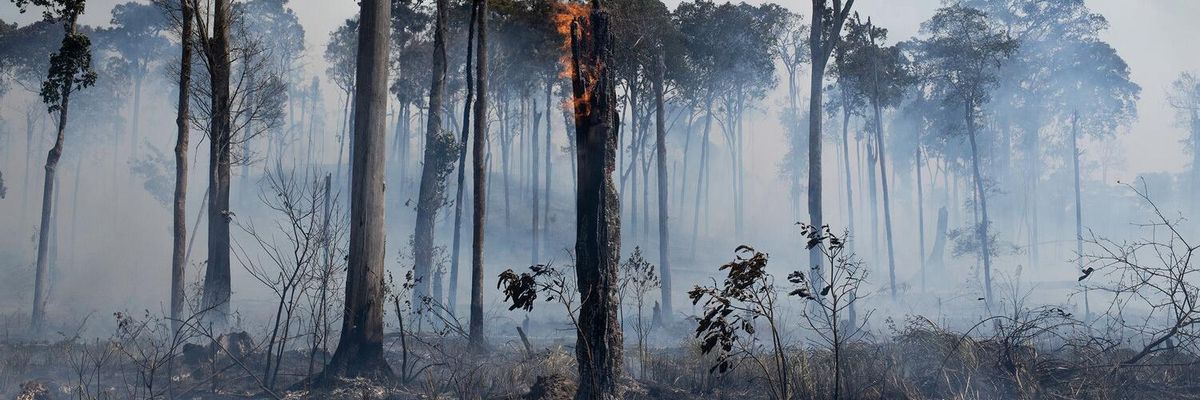
Since being elected in 2018, Bolsonaro's administration has promoted deforestation in the Amazon and rewarded environmental criminals. Any transfer of resources from the U.S. to Brazil would legitimize and strengthen the anti-environmental policy of Bolsonaro and his Environment Minister, Ricardo Salles. Any secretive deal with Bolsonaro's government would also prevent the money from reaching those who most need aid, such as Indigenous Peoples, Quilombolas, and family farmers.
There is no doubt that resources are needed for environmental protection, but the current Brazilian government has shown it cannot be trusted with the protection of the largest tropical forest on the planet.

Here are just a few of the ways Bolsonaro's government has failed to prevent deforestation:
It is difficult to imagine a solution for the Amazon proposed by the government responsible for a historic increase in deforestation and which repeatedly supports bills that are harmful to Indigenous Peoples, conservation groups, and small farmers.

Any effort to defend forests in Brazil must support Indigenous Peoples, widely recognized as guardians of the forest. Likewise, a genuine effort to defend forests must curb environmental crimes and not compensate the large landowners and land grabbers who have been emboldened by Bolsonaro to advance over the forest.
By reaching an agreement with the Bolsonaro government, the U.S. would be legitimizing the regressive policies that have increased inequality in Brazil, aggravated the global climate crisis, and prioritized political interests above the protection of the population which is suffering the consequences of intersecting climate and health crises.
Joe Biden and Kamala Harris were elected by U.S. voters on the promise of listening to science and resuming the fight against the climate crisis. By negotiating with the Bolsonaro government they would be endorsing the sort of anti-human rights and anti-science policies that were a reality in the United States under Donald Trump. Repairing what has been destroyed takes more than good speeches and photos in the newspapers.
The U.S. government is bringing together world leaders for an online Climate Summit on 22-23 April to discuss combating the climate crisis. The climate summit is part of U.S. President Joe Biden's efforts to reposition his country as an international leader in the fight against climate change.
President Biden cannot achieve any position of climate leadership if he participates in behind-the-scenes negotiations with the government of Brazilian President Jair Bolsonaro.
But President Biden cannot achieve any position of climate leadership if he participates in behind-the-scenes negotiations with the government of Brazilian President Jair Bolsonaro.
Behind closed doors, Brazil and the United States are negotiating the transfer of billions of dollars' worth of resources intended to curb deforestation in Brazil. However, there is no guarantee that the money from the U.S. will actually go towards protecting forests in Brazil. On the contrary, the agreement could make the Biden government complicit in the environmental destruction promoted by the Bolsonaro government.
In hopes of dissuading Biden from enabling forest destruction, Greenpeace Brazil joined 199 organizations in Brazil and sent a letter to John Kerry, the U.S. special envoy for climate, asking the Biden government not to sign a "blank check" for Bolsonaro.
Since being elected in 2018, Bolsonaro's administration has promoted deforestation in the Amazon and rewarded environmental criminals. Any transfer of resources from the U.S. to Brazil would legitimize and strengthen the anti-environmental policy of Bolsonaro and his Environment Minister, Ricardo Salles. Any secretive deal with Bolsonaro's government would also prevent the money from reaching those who most need aid, such as Indigenous Peoples, Quilombolas, and family farmers.
There is no doubt that resources are needed for environmental protection, but the current Brazilian government has shown it cannot be trusted with the protection of the largest tropical forest on the planet.
Here are just a few of the ways Bolsonaro's government has failed to prevent deforestation:
It is difficult to imagine a solution for the Amazon proposed by the government responsible for a historic increase in deforestation and which repeatedly supports bills that are harmful to Indigenous Peoples, conservation groups, and small farmers.
Any effort to defend forests in Brazil must support Indigenous Peoples, widely recognized as guardians of the forest. Likewise, a genuine effort to defend forests must curb environmental crimes and not compensate the large landowners and land grabbers who have been emboldened by Bolsonaro to advance over the forest.
By reaching an agreement with the Bolsonaro government, the U.S. would be legitimizing the regressive policies that have increased inequality in Brazil, aggravated the global climate crisis, and prioritized political interests above the protection of the population which is suffering the consequences of intersecting climate and health crises.
Joe Biden and Kamala Harris were elected by U.S. voters on the promise of listening to science and resuming the fight against the climate crisis. By negotiating with the Bolsonaro government they would be endorsing the sort of anti-human rights and anti-science policies that were a reality in the United States under Donald Trump. Repairing what has been destroyed takes more than good speeches and photos in the newspapers.
The U.S. government is bringing together world leaders for an online Climate Summit on 22-23 April to discuss combating the climate crisis. The climate summit is part of U.S. President Joe Biden's efforts to reposition his country as an international leader in the fight against climate change.
President Biden cannot achieve any position of climate leadership if he participates in behind-the-scenes negotiations with the government of Brazilian President Jair Bolsonaro.
But President Biden cannot achieve any position of climate leadership if he participates in behind-the-scenes negotiations with the government of Brazilian President Jair Bolsonaro.
Behind closed doors, Brazil and the United States are negotiating the transfer of billions of dollars' worth of resources intended to curb deforestation in Brazil. However, there is no guarantee that the money from the U.S. will actually go towards protecting forests in Brazil. On the contrary, the agreement could make the Biden government complicit in the environmental destruction promoted by the Bolsonaro government.
In hopes of dissuading Biden from enabling forest destruction, Greenpeace Brazil joined 199 organizations in Brazil and sent a letter to John Kerry, the U.S. special envoy for climate, asking the Biden government not to sign a "blank check" for Bolsonaro.
Since being elected in 2018, Bolsonaro's administration has promoted deforestation in the Amazon and rewarded environmental criminals. Any transfer of resources from the U.S. to Brazil would legitimize and strengthen the anti-environmental policy of Bolsonaro and his Environment Minister, Ricardo Salles. Any secretive deal with Bolsonaro's government would also prevent the money from reaching those who most need aid, such as Indigenous Peoples, Quilombolas, and family farmers.
There is no doubt that resources are needed for environmental protection, but the current Brazilian government has shown it cannot be trusted with the protection of the largest tropical forest on the planet.
Here are just a few of the ways Bolsonaro's government has failed to prevent deforestation:
It is difficult to imagine a solution for the Amazon proposed by the government responsible for a historic increase in deforestation and which repeatedly supports bills that are harmful to Indigenous Peoples, conservation groups, and small farmers.
Any effort to defend forests in Brazil must support Indigenous Peoples, widely recognized as guardians of the forest. Likewise, a genuine effort to defend forests must curb environmental crimes and not compensate the large landowners and land grabbers who have been emboldened by Bolsonaro to advance over the forest.
By reaching an agreement with the Bolsonaro government, the U.S. would be legitimizing the regressive policies that have increased inequality in Brazil, aggravated the global climate crisis, and prioritized political interests above the protection of the population which is suffering the consequences of intersecting climate and health crises.
Joe Biden and Kamala Harris were elected by U.S. voters on the promise of listening to science and resuming the fight against the climate crisis. By negotiating with the Bolsonaro government they would be endorsing the sort of anti-human rights and anti-science policies that were a reality in the United States under Donald Trump. Repairing what has been destroyed takes more than good speeches and photos in the newspapers.