SUBSCRIBE TO OUR FREE NEWSLETTER
Daily news & progressive opinion—funded by the people, not the corporations—delivered straight to your inbox.
5
#000000
#FFFFFF
To donate by check, phone, or other method, see our More Ways to Give page.
Daily news & progressive opinion—funded by the people, not the corporations—delivered straight to your inbox.
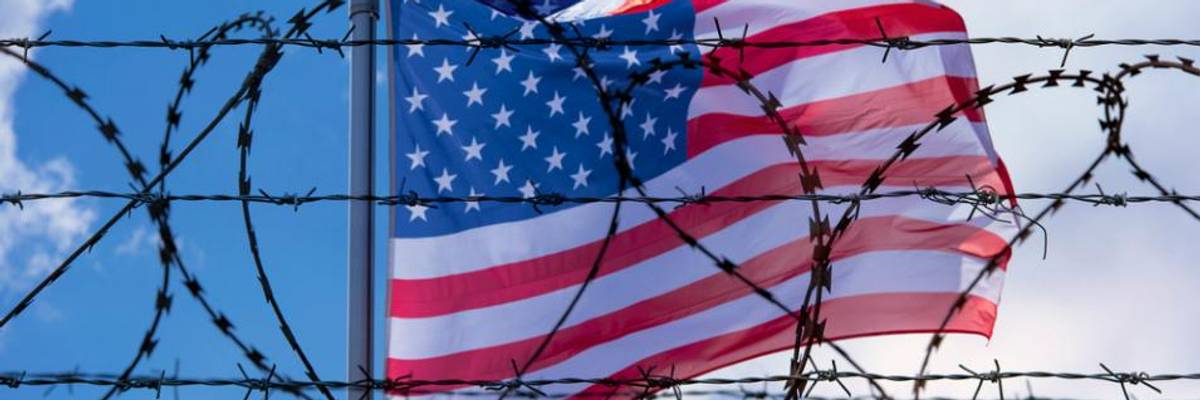
"For me, loving this country means making it better. It means taking a good hard look at our mistakes, learning from the ones in the past, and correcting the ones in the present," Richardson writes. (Photo: Shutterstock)
As the Fourth of July rolls around, I think plenty of us are eager for barbecues, corn on the cob, watermelon, and fireworks, but our feelings about our country are somewhat more complicated.
How do you love and celebrate a country that's so obviously flawed? A country that's currently committing atrocities against innocent children?
"This Fourth of July, don't celebrate a nation that's perfect already. Celebrate a nation where movements have spent more than two centuries struggling and fighting and striving to create an ever more perfect union."
Is criticizing America unpatriotic? Some would say it is. I say no.
For me, loving this country means making it better. It means taking a good hard look at our mistakes, learning from the ones in the past, and correcting the ones in the present.
That's something we don't do enough. When I teach sociology at the college level, again and again my students say things like, "This isn't the country I thought I lived in." Sadly, though, we are that country.
When you examine the full extent of the poverty, inequality, racism, sexism, homophobia, and so on in this country, it can feel crushing. We still have a lot of work to do. But there's a quote from Bill Clinton -- himself a deeply imperfect president -- that says it all: "There is nothing wrong with America that cannot be cured with what is right in America."
When I teach, I balance all of the bad news with the good news. For one thing, much of our history is a story of strong movements pushing us in the right direction.
Fifty years ago, LGBTQ people marked the start of their civil rights movement with a riot when the police cracked down on them for simply being themselves and going to a bar. Today, many of us no longer need to hide in a bar to be ourselves. For one thing, we can legally marry if we so choose, unthinkable back then.
Today, that bar, the Stonewall Inn, is a National Monument. We still have work to do, but we're on our way.
Fifty years ago, the Cuyahoga River was on fire due to the pollution in the water. Today, the fish in that river are safe to eat. The Cuyahoga River fire was a catalyst to Americans to clean up our environment. We aren't perfect today, and we need to get much, much more serious about climate change, but movements have shown that big change is possible.
Sometimes we take big steps backwards after we take a few forward. After the advances of the Civil Rights movement in the 1950s and 1960s, progress stalled and some of the gains were eroded. The last major civil rights bill, the Fair Housing Act, was passed in 1968.
After the 2008 election, Barack Obama became the first black president. In 2017, white nationalists held a major rally in Charlottesville, Virginia, where Donald Trump spoke of "very fine people on both sides." Our country clearly needs a lot more work to become the "more perfect union" it strives to be in its founding documents.
If you look at the progress of our past, from the writing and ratifying of the Constitution, to the emancipation of enslaved people, to women claiming the right to vote, and the Civil Rights movement of the 1960s, the American people worked hard to make it happen -- often with other Americans working against them, sometimes violently.
It was never easy. It's still not easy. But that doesn't mean it can't be done.
This Fourth of July, don't celebrate a nation that's perfect already. Celebrate a nation where movements have spent more than two centuries struggling and fighting and striving to create an ever more perfect union, and commit yourself to continuing to do so.
Dear Common Dreams reader, It’s been nearly 30 years since I co-founded Common Dreams with my late wife, Lina Newhouser. We had the radical notion that journalism should serve the public good, not corporate profits. It was clear to us from the outset what it would take to build such a project. No paid advertisements. No corporate sponsors. No millionaire publisher telling us what to think or do. Many people said we wouldn't last a year, but we proved those doubters wrong. Together with a tremendous team of journalists and dedicated staff, we built an independent media outlet free from the constraints of profits and corporate control. Our mission has always been simple: To inform. To inspire. To ignite change for the common good. Building Common Dreams was not easy. Our survival was never guaranteed. When you take on the most powerful forces—Wall Street greed, fossil fuel industry destruction, Big Tech lobbyists, and uber-rich oligarchs who have spent billions upon billions rigging the economy and democracy in their favor—the only bulwark you have is supporters who believe in your work. But here’s the urgent message from me today. It's never been this bad out there. And it's never been this hard to keep us going. At the very moment Common Dreams is most needed, the threats we face are intensifying. We need your support now more than ever. We don't accept corporate advertising and never will. We don't have a paywall because we don't think people should be blocked from critical news based on their ability to pay. Everything we do is funded by the donations of readers like you. When everyone does the little they can afford, we are strong. But if that support retreats or dries up, so do we. Will you donate now to make sure Common Dreams not only survives but thrives? —Craig Brown, Co-founder |
As the Fourth of July rolls around, I think plenty of us are eager for barbecues, corn on the cob, watermelon, and fireworks, but our feelings about our country are somewhat more complicated.
How do you love and celebrate a country that's so obviously flawed? A country that's currently committing atrocities against innocent children?
"This Fourth of July, don't celebrate a nation that's perfect already. Celebrate a nation where movements have spent more than two centuries struggling and fighting and striving to create an ever more perfect union."
Is criticizing America unpatriotic? Some would say it is. I say no.
For me, loving this country means making it better. It means taking a good hard look at our mistakes, learning from the ones in the past, and correcting the ones in the present.
That's something we don't do enough. When I teach sociology at the college level, again and again my students say things like, "This isn't the country I thought I lived in." Sadly, though, we are that country.
When you examine the full extent of the poverty, inequality, racism, sexism, homophobia, and so on in this country, it can feel crushing. We still have a lot of work to do. But there's a quote from Bill Clinton -- himself a deeply imperfect president -- that says it all: "There is nothing wrong with America that cannot be cured with what is right in America."
When I teach, I balance all of the bad news with the good news. For one thing, much of our history is a story of strong movements pushing us in the right direction.
Fifty years ago, LGBTQ people marked the start of their civil rights movement with a riot when the police cracked down on them for simply being themselves and going to a bar. Today, many of us no longer need to hide in a bar to be ourselves. For one thing, we can legally marry if we so choose, unthinkable back then.
Today, that bar, the Stonewall Inn, is a National Monument. We still have work to do, but we're on our way.
Fifty years ago, the Cuyahoga River was on fire due to the pollution in the water. Today, the fish in that river are safe to eat. The Cuyahoga River fire was a catalyst to Americans to clean up our environment. We aren't perfect today, and we need to get much, much more serious about climate change, but movements have shown that big change is possible.
Sometimes we take big steps backwards after we take a few forward. After the advances of the Civil Rights movement in the 1950s and 1960s, progress stalled and some of the gains were eroded. The last major civil rights bill, the Fair Housing Act, was passed in 1968.
After the 2008 election, Barack Obama became the first black president. In 2017, white nationalists held a major rally in Charlottesville, Virginia, where Donald Trump spoke of "very fine people on both sides." Our country clearly needs a lot more work to become the "more perfect union" it strives to be in its founding documents.
If you look at the progress of our past, from the writing and ratifying of the Constitution, to the emancipation of enslaved people, to women claiming the right to vote, and the Civil Rights movement of the 1960s, the American people worked hard to make it happen -- often with other Americans working against them, sometimes violently.
It was never easy. It's still not easy. But that doesn't mean it can't be done.
This Fourth of July, don't celebrate a nation that's perfect already. Celebrate a nation where movements have spent more than two centuries struggling and fighting and striving to create an ever more perfect union, and commit yourself to continuing to do so.
As the Fourth of July rolls around, I think plenty of us are eager for barbecues, corn on the cob, watermelon, and fireworks, but our feelings about our country are somewhat more complicated.
How do you love and celebrate a country that's so obviously flawed? A country that's currently committing atrocities against innocent children?
"This Fourth of July, don't celebrate a nation that's perfect already. Celebrate a nation where movements have spent more than two centuries struggling and fighting and striving to create an ever more perfect union."
Is criticizing America unpatriotic? Some would say it is. I say no.
For me, loving this country means making it better. It means taking a good hard look at our mistakes, learning from the ones in the past, and correcting the ones in the present.
That's something we don't do enough. When I teach sociology at the college level, again and again my students say things like, "This isn't the country I thought I lived in." Sadly, though, we are that country.
When you examine the full extent of the poverty, inequality, racism, sexism, homophobia, and so on in this country, it can feel crushing. We still have a lot of work to do. But there's a quote from Bill Clinton -- himself a deeply imperfect president -- that says it all: "There is nothing wrong with America that cannot be cured with what is right in America."
When I teach, I balance all of the bad news with the good news. For one thing, much of our history is a story of strong movements pushing us in the right direction.
Fifty years ago, LGBTQ people marked the start of their civil rights movement with a riot when the police cracked down on them for simply being themselves and going to a bar. Today, many of us no longer need to hide in a bar to be ourselves. For one thing, we can legally marry if we so choose, unthinkable back then.
Today, that bar, the Stonewall Inn, is a National Monument. We still have work to do, but we're on our way.
Fifty years ago, the Cuyahoga River was on fire due to the pollution in the water. Today, the fish in that river are safe to eat. The Cuyahoga River fire was a catalyst to Americans to clean up our environment. We aren't perfect today, and we need to get much, much more serious about climate change, but movements have shown that big change is possible.
Sometimes we take big steps backwards after we take a few forward. After the advances of the Civil Rights movement in the 1950s and 1960s, progress stalled and some of the gains were eroded. The last major civil rights bill, the Fair Housing Act, was passed in 1968.
After the 2008 election, Barack Obama became the first black president. In 2017, white nationalists held a major rally in Charlottesville, Virginia, where Donald Trump spoke of "very fine people on both sides." Our country clearly needs a lot more work to become the "more perfect union" it strives to be in its founding documents.
If you look at the progress of our past, from the writing and ratifying of the Constitution, to the emancipation of enslaved people, to women claiming the right to vote, and the Civil Rights movement of the 1960s, the American people worked hard to make it happen -- often with other Americans working against them, sometimes violently.
It was never easy. It's still not easy. But that doesn't mean it can't be done.
This Fourth of July, don't celebrate a nation that's perfect already. Celebrate a nation where movements have spent more than two centuries struggling and fighting and striving to create an ever more perfect union, and commit yourself to continuing to do so.