SUBSCRIBE TO OUR FREE NEWSLETTER
Daily news & progressive opinion—funded by the people, not the corporations—delivered straight to your inbox.
5
#000000
#FFFFFF
To donate by check, phone, or other method, see our More Ways to Give page.
Daily news & progressive opinion—funded by the people, not the corporations—delivered straight to your inbox.

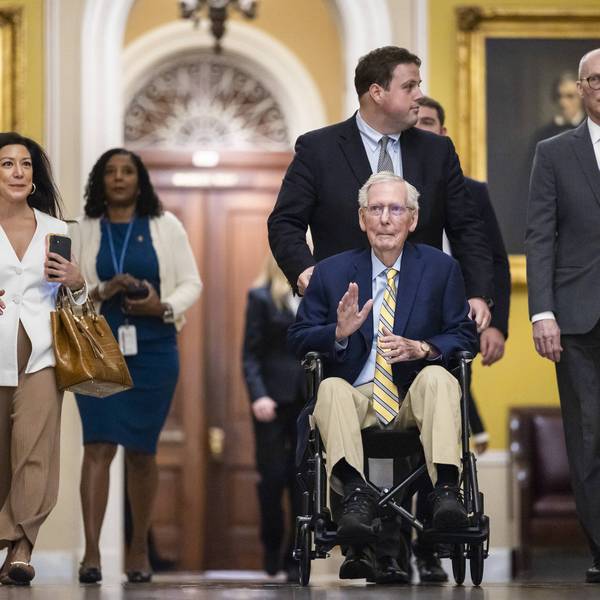
Even with support from family and friends, the lack of a strong long-term care system leaves many elderly and disabled Americans suffering a severely reduced quality of life. (Photo: Shutterstock)
By 2035, seniors are projected to outnumber children in the U.S. population.
Maybe then we'll look back and credit Washington state activists for being on the forefront of tackling America's elder care crisis. On May 13, the state became the first in the nation to adopt a social insurance program for long-term care benefits.
"This is a huge victory for organizing and people power, for care and caregiving, and for older adults and people with disabilities," said Josephine Kalipeni of Caring Across Generations, one of more than 20 groups that formed Washingtonians for a Responsible Future to push the path-breaking legislation.
Nationally, our long-term care financing system is broken. Medicare doesn't currently cover home care or nursing facility care, while Medicaid coverage varies widely by state. To qualify, you have to meet poverty criteria, which requires people to spend down nearly all of their savings before getting coverage.
"Nationally, our long-term care financing system is broken. Medicare doesn't currently cover home care or nursing facility care, while Medicaid coverage varies widely by state."
So what do people do?
For the richest 1 percent, there's a growing market for luxury care communities. Vi Living, for example, has 10 facilities across the country that feature 24-hour valets, gourmet meals, indoor pools, and other amenities. At their Palo Alto development in California, entrance fees run as high as $6.5 million.
Most families obviously can't afford that. Even typical out of pocket costs for professional home care, which run about $46,000 per year, are often out of reach. Many people who need care end up relying on family members, primarily women.
In fact, an estimated 60 percent of unpaid caregivers in the United States are women, and they pay much higher economic costs for taking on this role than men. More than a quarter of women caregivers who work are forced to shift to less demanding positions, or else give up their jobs entirely.
Even with support from family and friends, the lack of a strong long-term care system leaves many elderly and disabled Americans suffering a severely reduced quality of life. One survey found that nearly 60 percent of seniors with seriously compromised mobility weren't able to get out of their house. Another 25 percent said they often remained in bed, while 20 percent went without getting dressed.
The new Washington state program will use a paycheck deduction of 58 cents out of every $100 in income to pay for care in people's homes or nursing facilities, as well as other services like wheelchair ramps and rides to the doctor. Starting in 2025, eligible participants will receive up to $100 per day, with a lifetime maximum benefit of $36,500.
Caring Across Generations, a national campaign co-chaired by Jobs With Justice and the National Domestic Workers Alliance, had already notched a long-term care victory in Hawaii.
While not an insurance trust like the Washington state model, the Kapuna Caregivers program, launched in 2017, provides subsidies of $70 per day for people who are both taking care of family members and working outside the home at least 30 hours a week. The funds can be used for services for the elderly, including professional home care.
At the national level, Senators Cory Booker, Kirsten Gillibrand, Kamala Harris, and Elizabeth Warren have all endorsed the Bernie Sanders Medicare for All plan. It includes long-term care coverage and provisions for assistance with daily activities, such as eating, bathing, preparing meals, and housekeeping, whether provided by nursing homes, professional home care workers, or a family caregiver.
Now Caring Across Generations aims to help build campaigns in more states for Washington-style insurance programs, as a way to help build momentum for federal reforms like these. As Kalipeni put it, "One state down, 49 to go!"
Dear Common Dreams reader, It’s been nearly 30 years since I co-founded Common Dreams with my late wife, Lina Newhouser. We had the radical notion that journalism should serve the public good, not corporate profits. It was clear to us from the outset what it would take to build such a project. No paid advertisements. No corporate sponsors. No millionaire publisher telling us what to think or do. Many people said we wouldn't last a year, but we proved those doubters wrong. Together with a tremendous team of journalists and dedicated staff, we built an independent media outlet free from the constraints of profits and corporate control. Our mission has always been simple: To inform. To inspire. To ignite change for the common good. Building Common Dreams was not easy. Our survival was never guaranteed. When you take on the most powerful forces—Wall Street greed, fossil fuel industry destruction, Big Tech lobbyists, and uber-rich oligarchs who have spent billions upon billions rigging the economy and democracy in their favor—the only bulwark you have is supporters who believe in your work. But here’s the urgent message from me today. It's never been this bad out there. And it's never been this hard to keep us going. At the very moment Common Dreams is most needed, the threats we face are intensifying. We need your support now more than ever. We don't accept corporate advertising and never will. We don't have a paywall because we don't think people should be blocked from critical news based on their ability to pay. Everything we do is funded by the donations of readers like you. When everyone does the little they can afford, we are strong. But if that support retreats or dries up, so do we. Will you donate now to make sure Common Dreams not only survives but thrives? —Craig Brown, Co-founder |
By 2035, seniors are projected to outnumber children in the U.S. population.
Maybe then we'll look back and credit Washington state activists for being on the forefront of tackling America's elder care crisis. On May 13, the state became the first in the nation to adopt a social insurance program for long-term care benefits.
"This is a huge victory for organizing and people power, for care and caregiving, and for older adults and people with disabilities," said Josephine Kalipeni of Caring Across Generations, one of more than 20 groups that formed Washingtonians for a Responsible Future to push the path-breaking legislation.
Nationally, our long-term care financing system is broken. Medicare doesn't currently cover home care or nursing facility care, while Medicaid coverage varies widely by state. To qualify, you have to meet poverty criteria, which requires people to spend down nearly all of their savings before getting coverage.
"Nationally, our long-term care financing system is broken. Medicare doesn't currently cover home care or nursing facility care, while Medicaid coverage varies widely by state."
So what do people do?
For the richest 1 percent, there's a growing market for luxury care communities. Vi Living, for example, has 10 facilities across the country that feature 24-hour valets, gourmet meals, indoor pools, and other amenities. At their Palo Alto development in California, entrance fees run as high as $6.5 million.
Most families obviously can't afford that. Even typical out of pocket costs for professional home care, which run about $46,000 per year, are often out of reach. Many people who need care end up relying on family members, primarily women.
In fact, an estimated 60 percent of unpaid caregivers in the United States are women, and they pay much higher economic costs for taking on this role than men. More than a quarter of women caregivers who work are forced to shift to less demanding positions, or else give up their jobs entirely.
Even with support from family and friends, the lack of a strong long-term care system leaves many elderly and disabled Americans suffering a severely reduced quality of life. One survey found that nearly 60 percent of seniors with seriously compromised mobility weren't able to get out of their house. Another 25 percent said they often remained in bed, while 20 percent went without getting dressed.
The new Washington state program will use a paycheck deduction of 58 cents out of every $100 in income to pay for care in people's homes or nursing facilities, as well as other services like wheelchair ramps and rides to the doctor. Starting in 2025, eligible participants will receive up to $100 per day, with a lifetime maximum benefit of $36,500.
Caring Across Generations, a national campaign co-chaired by Jobs With Justice and the National Domestic Workers Alliance, had already notched a long-term care victory in Hawaii.
While not an insurance trust like the Washington state model, the Kapuna Caregivers program, launched in 2017, provides subsidies of $70 per day for people who are both taking care of family members and working outside the home at least 30 hours a week. The funds can be used for services for the elderly, including professional home care.
At the national level, Senators Cory Booker, Kirsten Gillibrand, Kamala Harris, and Elizabeth Warren have all endorsed the Bernie Sanders Medicare for All plan. It includes long-term care coverage and provisions for assistance with daily activities, such as eating, bathing, preparing meals, and housekeeping, whether provided by nursing homes, professional home care workers, or a family caregiver.
Now Caring Across Generations aims to help build campaigns in more states for Washington-style insurance programs, as a way to help build momentum for federal reforms like these. As Kalipeni put it, "One state down, 49 to go!"
By 2035, seniors are projected to outnumber children in the U.S. population.
Maybe then we'll look back and credit Washington state activists for being on the forefront of tackling America's elder care crisis. On May 13, the state became the first in the nation to adopt a social insurance program for long-term care benefits.
"This is a huge victory for organizing and people power, for care and caregiving, and for older adults and people with disabilities," said Josephine Kalipeni of Caring Across Generations, one of more than 20 groups that formed Washingtonians for a Responsible Future to push the path-breaking legislation.
Nationally, our long-term care financing system is broken. Medicare doesn't currently cover home care or nursing facility care, while Medicaid coverage varies widely by state. To qualify, you have to meet poverty criteria, which requires people to spend down nearly all of their savings before getting coverage.
"Nationally, our long-term care financing system is broken. Medicare doesn't currently cover home care or nursing facility care, while Medicaid coverage varies widely by state."
So what do people do?
For the richest 1 percent, there's a growing market for luxury care communities. Vi Living, for example, has 10 facilities across the country that feature 24-hour valets, gourmet meals, indoor pools, and other amenities. At their Palo Alto development in California, entrance fees run as high as $6.5 million.
Most families obviously can't afford that. Even typical out of pocket costs for professional home care, which run about $46,000 per year, are often out of reach. Many people who need care end up relying on family members, primarily women.
In fact, an estimated 60 percent of unpaid caregivers in the United States are women, and they pay much higher economic costs for taking on this role than men. More than a quarter of women caregivers who work are forced to shift to less demanding positions, or else give up their jobs entirely.
Even with support from family and friends, the lack of a strong long-term care system leaves many elderly and disabled Americans suffering a severely reduced quality of life. One survey found that nearly 60 percent of seniors with seriously compromised mobility weren't able to get out of their house. Another 25 percent said they often remained in bed, while 20 percent went without getting dressed.
The new Washington state program will use a paycheck deduction of 58 cents out of every $100 in income to pay for care in people's homes or nursing facilities, as well as other services like wheelchair ramps and rides to the doctor. Starting in 2025, eligible participants will receive up to $100 per day, with a lifetime maximum benefit of $36,500.
Caring Across Generations, a national campaign co-chaired by Jobs With Justice and the National Domestic Workers Alliance, had already notched a long-term care victory in Hawaii.
While not an insurance trust like the Washington state model, the Kapuna Caregivers program, launched in 2017, provides subsidies of $70 per day for people who are both taking care of family members and working outside the home at least 30 hours a week. The funds can be used for services for the elderly, including professional home care.
At the national level, Senators Cory Booker, Kirsten Gillibrand, Kamala Harris, and Elizabeth Warren have all endorsed the Bernie Sanders Medicare for All plan. It includes long-term care coverage and provisions for assistance with daily activities, such as eating, bathing, preparing meals, and housekeeping, whether provided by nursing homes, professional home care workers, or a family caregiver.
Now Caring Across Generations aims to help build campaigns in more states for Washington-style insurance programs, as a way to help build momentum for federal reforms like these. As Kalipeni put it, "One state down, 49 to go!"