SUBSCRIBE TO OUR FREE NEWSLETTER
Daily news & progressive opinion—funded by the people, not the corporations—delivered straight to your inbox.
5
#000000
#FFFFFF
To donate by check, phone, or other method, see our More Ways to Give page.
Daily news & progressive opinion—funded by the people, not the corporations—delivered straight to your inbox.
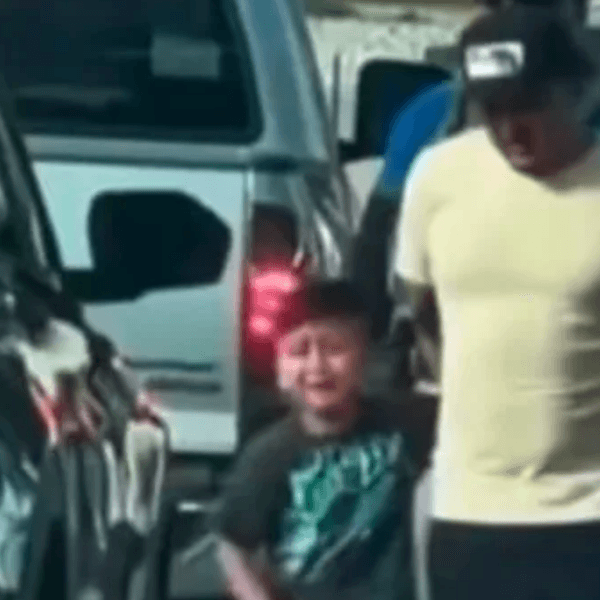
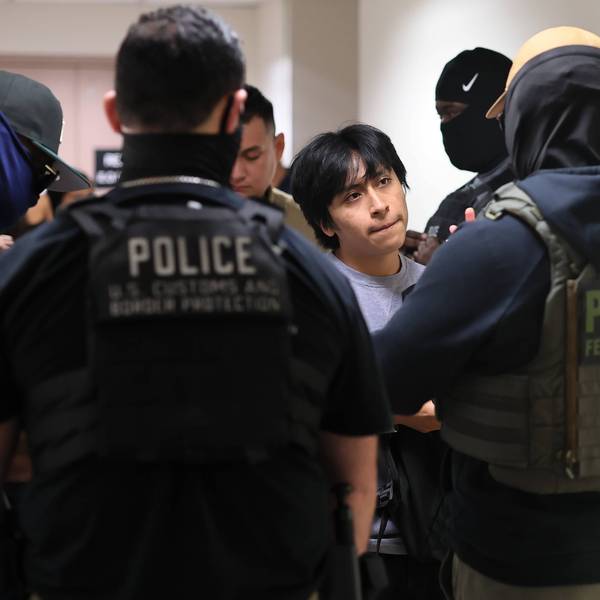
Have you seen the pictures? All the kids, sleeping on floors in row upon row, detained by the Department of Homeland Security. There are more children coming in every day, and the federal government doesn't know where to keep them.
Have you seen the pictures? All the kids, sleeping on floors in row upon row, detained by the Department of Homeland Security. There are more children coming in every day, and the federal government doesn't know where to keep them.
"When I first saw the pictures, I cried. I cried, and my heart really broke for these children," Jose Luis Zelaya told me. He was looking at photos of these migrant children being warehoused by the U.S. government. Zelaya understands their plight. He is getting his Ph.D. at Texas A&M University, but he is not your typical student. His path was long and difficult, a striking example of the struggles, and successes, of many undocumented immigrants in the United States. His ordeal is especially important to hear now, as tens of thousands of unaccompanied children from Central America and Mexico are pouring across the southern border of the United States, expanding the crisis of the U.S.'s broken immigration system.
"I was born in Honduras, in San Pedro Sula, the capital of violence in the world. As a child I grew up in extreme poverty. I literally witnessed my brother dying in my mother's arms because we didn't have money to take him to the hospital," Jose told me on the "Democracy Now!" news hour. "We had an abusive father, an alcoholic man who used to beat my mother in public ... he used to beat us with the side of machetes, he used to beat us with the side of guns." His mother fled, taking his sister with her. They made it to the United States. Eventually, Jose's abusive father kicked him out of his house. His story continued: "I became homeless, I became a street child. ... I dug into trash cans to eat food. Once, I was simply playing soccer and there was a drive-by shooting ... I ended up being shot twice, in both of my arms, and it was then that I made the decision I needed to run away. "
Jose had a scrap of paper with his mother's phone number on it, which began with "713," the area code for Houston. With just that, as a 13-year-old, he embarked on a hellish journey north to reunite with his mother. An estimated 500,000 people ride atop freight trains from Central America, through Mexico, hoping to reach the U.S. border. Sonia Nazario is a journalist who won a Pulitzer Prize for her reporting on the migration issue. Her reports were published as a book, "Enrique's Journey: The Story of a Boy's Dangerous Odyssey to Reunite With His Mother." it is the story of another boy who fled his home, much like Jose. Nazario retraced his steps by riding the perilous trains that both Jose and Enrique took north, often referred to as "La Bestia," or "The Beast."
If they make it, the children must still confront an increasingly militarized U.S. border, and criminal "coyotes" who offer passage across the border for exorbitant fees. Jose was caught and held in a detention center in Harlingen, Texas, for two months. The conditions in which he was held were shocking: "We were only allowed out to see the sunlight one hour a week, and we were only allowed to drink water three times a day."
His experiences over a dozen years ago are important, as there is now an influx of unaccompanied children crossing the U.S.-Mexico border. So far in 2014, U.S. Customs and Border Protection reports over 47,000 unaccompanied children detained after crossing the border, almost double the number for all of 2013, and almost five times the number from 2009. The Office of the United Nations High Commissioner for Refugees issued a study in March, "Children on the Run," which reaffirmed what Sonia Nazario said is driving these tens of thousands of children to flee north, alone: "The real reasons why children are coming is, number one, the violence and, number two, to reunify with a parent who left them behind."
This unprecedented increase in children crossing the border has triggered some action from the federal government. Attorney General Eric Holder announced last week that he would commit $2 million to hire lawyers and paralegals to assist unaccompanied children through the legal maze of immigration detention. Nazario says it is not nearly enough, and thinks these children should be afforded refugee status: "We measure a country by how we treat children. And we're asking these children to do the impossible, which is to defend their right to be here. Not all of them should be able to stay, but we should give them due process."
Nazario predicts that next year there will be well over 100,000 unaccompanied children crossing into the U.S., spurred north to avoid the violence of the drug war, gangs and systemic poverty exacerbated by unfair trade agreements and U.S. drug policy. These brave children are trying to save their own lives by journeying north. Our job in the U.S. is to solve the policy issues that compel their flight.
Denis Moynihan contributed research to this column.
Dear Common Dreams reader, It’s been nearly 30 years since I co-founded Common Dreams with my late wife, Lina Newhouser. We had the radical notion that journalism should serve the public good, not corporate profits. It was clear to us from the outset what it would take to build such a project. No paid advertisements. No corporate sponsors. No millionaire publisher telling us what to think or do. Many people said we wouldn't last a year, but we proved those doubters wrong. Together with a tremendous team of journalists and dedicated staff, we built an independent media outlet free from the constraints of profits and corporate control. Our mission has always been simple: To inform. To inspire. To ignite change for the common good. Building Common Dreams was not easy. Our survival was never guaranteed. When you take on the most powerful forces—Wall Street greed, fossil fuel industry destruction, Big Tech lobbyists, and uber-rich oligarchs who have spent billions upon billions rigging the economy and democracy in their favor—the only bulwark you have is supporters who believe in your work. But here’s the urgent message from me today. It's never been this bad out there. And it's never been this hard to keep us going. At the very moment Common Dreams is most needed, the threats we face are intensifying. We need your support now more than ever. We don't accept corporate advertising and never will. We don't have a paywall because we don't think people should be blocked from critical news based on their ability to pay. Everything we do is funded by the donations of readers like you. When everyone does the little they can afford, we are strong. But if that support retreats or dries up, so do we. Will you donate now to make sure Common Dreams not only survives but thrives? —Craig Brown, Co-founder |
Have you seen the pictures? All the kids, sleeping on floors in row upon row, detained by the Department of Homeland Security. There are more children coming in every day, and the federal government doesn't know where to keep them.
"When I first saw the pictures, I cried. I cried, and my heart really broke for these children," Jose Luis Zelaya told me. He was looking at photos of these migrant children being warehoused by the U.S. government. Zelaya understands their plight. He is getting his Ph.D. at Texas A&M University, but he is not your typical student. His path was long and difficult, a striking example of the struggles, and successes, of many undocumented immigrants in the United States. His ordeal is especially important to hear now, as tens of thousands of unaccompanied children from Central America and Mexico are pouring across the southern border of the United States, expanding the crisis of the U.S.'s broken immigration system.
"I was born in Honduras, in San Pedro Sula, the capital of violence in the world. As a child I grew up in extreme poverty. I literally witnessed my brother dying in my mother's arms because we didn't have money to take him to the hospital," Jose told me on the "Democracy Now!" news hour. "We had an abusive father, an alcoholic man who used to beat my mother in public ... he used to beat us with the side of machetes, he used to beat us with the side of guns." His mother fled, taking his sister with her. They made it to the United States. Eventually, Jose's abusive father kicked him out of his house. His story continued: "I became homeless, I became a street child. ... I dug into trash cans to eat food. Once, I was simply playing soccer and there was a drive-by shooting ... I ended up being shot twice, in both of my arms, and it was then that I made the decision I needed to run away. "
Jose had a scrap of paper with his mother's phone number on it, which began with "713," the area code for Houston. With just that, as a 13-year-old, he embarked on a hellish journey north to reunite with his mother. An estimated 500,000 people ride atop freight trains from Central America, through Mexico, hoping to reach the U.S. border. Sonia Nazario is a journalist who won a Pulitzer Prize for her reporting on the migration issue. Her reports were published as a book, "Enrique's Journey: The Story of a Boy's Dangerous Odyssey to Reunite With His Mother." it is the story of another boy who fled his home, much like Jose. Nazario retraced his steps by riding the perilous trains that both Jose and Enrique took north, often referred to as "La Bestia," or "The Beast."
If they make it, the children must still confront an increasingly militarized U.S. border, and criminal "coyotes" who offer passage across the border for exorbitant fees. Jose was caught and held in a detention center in Harlingen, Texas, for two months. The conditions in which he was held were shocking: "We were only allowed out to see the sunlight one hour a week, and we were only allowed to drink water three times a day."
His experiences over a dozen years ago are important, as there is now an influx of unaccompanied children crossing the U.S.-Mexico border. So far in 2014, U.S. Customs and Border Protection reports over 47,000 unaccompanied children detained after crossing the border, almost double the number for all of 2013, and almost five times the number from 2009. The Office of the United Nations High Commissioner for Refugees issued a study in March, "Children on the Run," which reaffirmed what Sonia Nazario said is driving these tens of thousands of children to flee north, alone: "The real reasons why children are coming is, number one, the violence and, number two, to reunify with a parent who left them behind."
This unprecedented increase in children crossing the border has triggered some action from the federal government. Attorney General Eric Holder announced last week that he would commit $2 million to hire lawyers and paralegals to assist unaccompanied children through the legal maze of immigration detention. Nazario says it is not nearly enough, and thinks these children should be afforded refugee status: "We measure a country by how we treat children. And we're asking these children to do the impossible, which is to defend their right to be here. Not all of them should be able to stay, but we should give them due process."
Nazario predicts that next year there will be well over 100,000 unaccompanied children crossing into the U.S., spurred north to avoid the violence of the drug war, gangs and systemic poverty exacerbated by unfair trade agreements and U.S. drug policy. These brave children are trying to save their own lives by journeying north. Our job in the U.S. is to solve the policy issues that compel their flight.
Denis Moynihan contributed research to this column.
Have you seen the pictures? All the kids, sleeping on floors in row upon row, detained by the Department of Homeland Security. There are more children coming in every day, and the federal government doesn't know where to keep them.
"When I first saw the pictures, I cried. I cried, and my heart really broke for these children," Jose Luis Zelaya told me. He was looking at photos of these migrant children being warehoused by the U.S. government. Zelaya understands their plight. He is getting his Ph.D. at Texas A&M University, but he is not your typical student. His path was long and difficult, a striking example of the struggles, and successes, of many undocumented immigrants in the United States. His ordeal is especially important to hear now, as tens of thousands of unaccompanied children from Central America and Mexico are pouring across the southern border of the United States, expanding the crisis of the U.S.'s broken immigration system.
"I was born in Honduras, in San Pedro Sula, the capital of violence in the world. As a child I grew up in extreme poverty. I literally witnessed my brother dying in my mother's arms because we didn't have money to take him to the hospital," Jose told me on the "Democracy Now!" news hour. "We had an abusive father, an alcoholic man who used to beat my mother in public ... he used to beat us with the side of machetes, he used to beat us with the side of guns." His mother fled, taking his sister with her. They made it to the United States. Eventually, Jose's abusive father kicked him out of his house. His story continued: "I became homeless, I became a street child. ... I dug into trash cans to eat food. Once, I was simply playing soccer and there was a drive-by shooting ... I ended up being shot twice, in both of my arms, and it was then that I made the decision I needed to run away. "
Jose had a scrap of paper with his mother's phone number on it, which began with "713," the area code for Houston. With just that, as a 13-year-old, he embarked on a hellish journey north to reunite with his mother. An estimated 500,000 people ride atop freight trains from Central America, through Mexico, hoping to reach the U.S. border. Sonia Nazario is a journalist who won a Pulitzer Prize for her reporting on the migration issue. Her reports were published as a book, "Enrique's Journey: The Story of a Boy's Dangerous Odyssey to Reunite With His Mother." it is the story of another boy who fled his home, much like Jose. Nazario retraced his steps by riding the perilous trains that both Jose and Enrique took north, often referred to as "La Bestia," or "The Beast."
If they make it, the children must still confront an increasingly militarized U.S. border, and criminal "coyotes" who offer passage across the border for exorbitant fees. Jose was caught and held in a detention center in Harlingen, Texas, for two months. The conditions in which he was held were shocking: "We were only allowed out to see the sunlight one hour a week, and we were only allowed to drink water three times a day."
His experiences over a dozen years ago are important, as there is now an influx of unaccompanied children crossing the U.S.-Mexico border. So far in 2014, U.S. Customs and Border Protection reports over 47,000 unaccompanied children detained after crossing the border, almost double the number for all of 2013, and almost five times the number from 2009. The Office of the United Nations High Commissioner for Refugees issued a study in March, "Children on the Run," which reaffirmed what Sonia Nazario said is driving these tens of thousands of children to flee north, alone: "The real reasons why children are coming is, number one, the violence and, number two, to reunify with a parent who left them behind."
This unprecedented increase in children crossing the border has triggered some action from the federal government. Attorney General Eric Holder announced last week that he would commit $2 million to hire lawyers and paralegals to assist unaccompanied children through the legal maze of immigration detention. Nazario says it is not nearly enough, and thinks these children should be afforded refugee status: "We measure a country by how we treat children. And we're asking these children to do the impossible, which is to defend their right to be here. Not all of them should be able to stay, but we should give them due process."
Nazario predicts that next year there will be well over 100,000 unaccompanied children crossing into the U.S., spurred north to avoid the violence of the drug war, gangs and systemic poverty exacerbated by unfair trade agreements and U.S. drug policy. These brave children are trying to save their own lives by journeying north. Our job in the U.S. is to solve the policy issues that compel their flight.
Denis Moynihan contributed research to this column.