SUBSCRIBE TO OUR FREE NEWSLETTER
Daily news & progressive opinion—funded by the people, not the corporations—delivered straight to your inbox.
5
#000000
#FFFFFF
To donate by check, phone, or other method, see our More Ways to Give page.
President Obama used his European tour to make another pitch for sweeping new free-trade agreements such as the Transatlantic Trade and Investment Partnership and the Trans-Pacific Partnership. Recognizing that there is mass opposition to these sorts of deals in the U.S. and abroad -- based on the profound concerns about job security, wages, the circumstance of working farmers, environmental protection and democracy raised by the North American Free Trade Agreement, the permanent normalization of trade relations with China, and more recent trade arrangements -- Obama urged critics of race-to-the-bottom trade policies to trust that he would negotiate better deals.
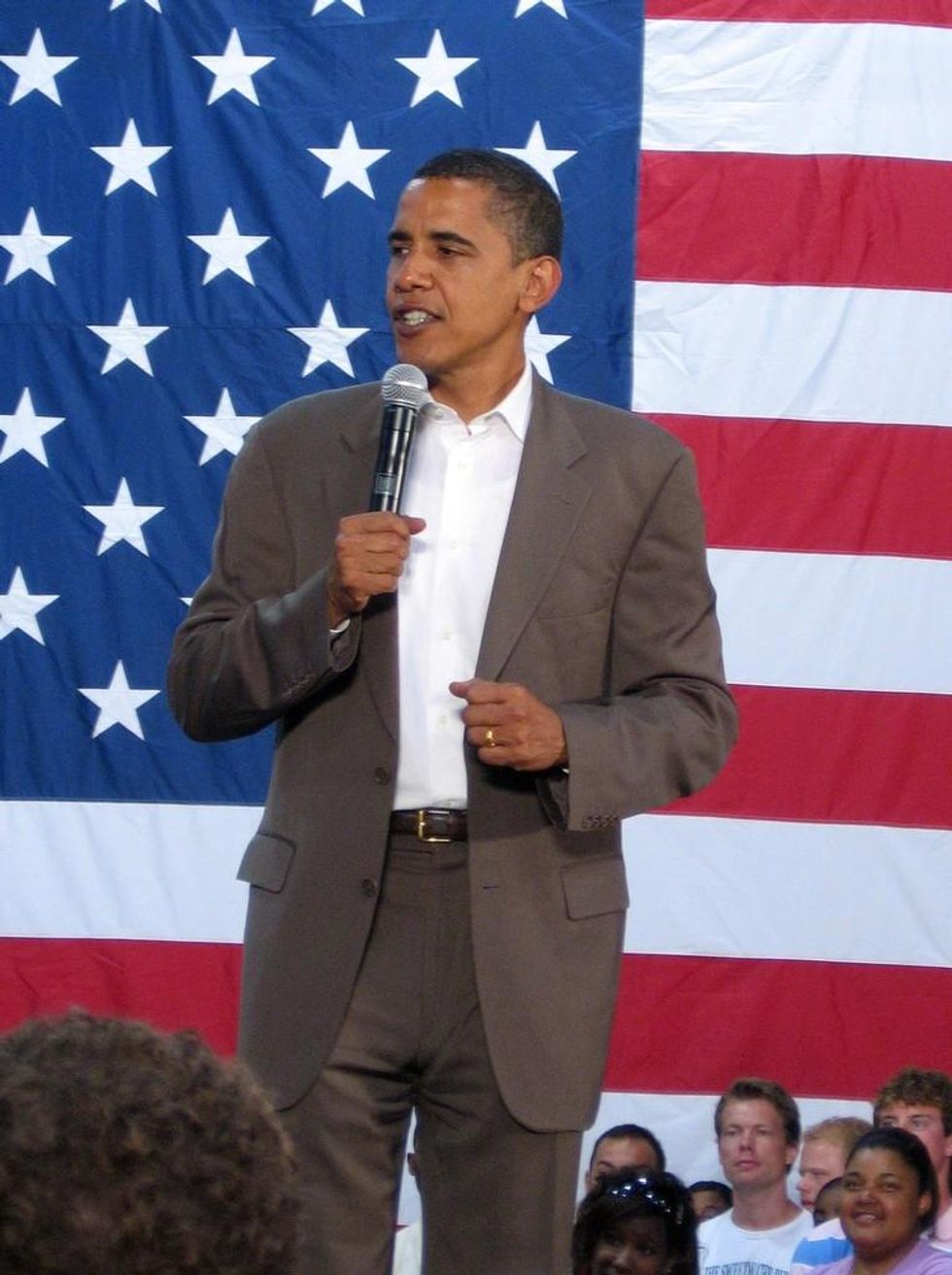
"(There's) no point in getting excited about potential provisions in trade agreements that haven't been drafted yet," the president said. "There will be plenty of time to criticize trade agreements when they are actually put before the public."
Unfortunately, once agreements of this sort are reached -- using the fast track authority sought by the administration -- they are almost impossible to alter. And the pressure on Congress to approve them "as is" becomes immense. This is why the overwhelming majority of House Democrats and many Republicans, as well as Senate Majority Leader Harry Reid, D-Nev., have expressed opposition to granting the fast track authority.
It's not just that corporate lobbyists and their political allies have learned how to rush these deals through Congress. It is also that the media, for the most part, do a lousy job of covering trade debates and trade policy.
Fairness and Accuracy in Reporting, the national media watchdog group that to my view does the smartest and most serious analysis of media coverage, has noted: "The proposed Trans-Pacific Partnership trade deal has drawn heavy criticism. Over 500 labor, environmental and farm groups oppose granting the White House fast track authority to speed the pact through Congress. The deal, still being negotiated in secret, has spawned protests around the world. Even some Democrats are pushing back against the White House.
"But there's one thing that TPP hasn't generated: news."
Congressman Keith Ellison, D-Minn., calls the push for fast track and new trade deals such as TPP "the largest corporate power grab you never heard of."
"He's right," notes FAIR. "Over 14 months -- from January 2013 through February 2014 -- TPP was never covered in any detail by ABC, CBS or NBC."
For the most part, cable news outlets have been little better. MSNBC's Ed Schultz has been the exception. He has regularly highlighted the debate about fast track, the TPP and the TTIP. Schultz features workers and union leaders who are critical of failed free-trade policies -- and who rarely get a hearing on national news shows. SCHULTZ has a long history of giving voice to union members -- he's rallying today with members of AFT Local 243, which represents staff and full-time faculty at Madison Area Technical College. But his programs regarding fast track and the TPP have gone far beyond labor issues. Over the past six months, he's provided a forum for thoughtful members of Congress, environmentalists, farm families, policy analysts and advocates for oversight -- including Wisconsin Congressman Mark Pocan, Public Citizen Global Trade Watch Director Lori Wallach (a Wausau native) and this writer -- to raise concerns about a free-trade agenda that too frequently serves Wall Street rather than Main Street.
Vital issues come into play when trade deals are being negotiated behind closed doors -- in the public's name but without the public's informed consent. Most media neglect those issues. Only a few radio and television outlets give voice to the concerns of the great mass of Americans who are skeptical about fast tracking free-trade agreements. Amy Goodman has done essential reporting for many years on these issues with Democracy Now! Thom Hartmann has been terrific on his radio and cable programs. Locally, WEKZ/93.7 FM's John "Sly" Sylvester has provided steady and uncompromising commentary. And with the consistency and range of his coverage in recent months, Schultz has made a vital contribution to the debate that must take place on trade issues.
President Obama used his European tour to make another pitch for sweeping new free-trade agreements such as the Transatlantic Trade and Investment Partnership and the Trans-Pacific Partnership. Recognizing that there is mass opposition to these sorts of deals in the U.S. and abroad -- based on the profound concerns about job security, wages, the circumstance of working farmers, environmental protection and democracy raised by the North American Free Trade Agreement, the permanent normalization of trade relations with China, and more recent trade arrangements -- Obama urged critics of race-to-the-bottom trade policies to trust that he would negotiate better deals.
"(There's) no point in getting excited about potential provisions in trade agreements that haven't been drafted yet," the president said. "There will be plenty of time to criticize trade agreements when they are actually put before the public."
Unfortunately, once agreements of this sort are reached -- using the fast track authority sought by the administration -- they are almost impossible to alter. And the pressure on Congress to approve them "as is" becomes immense. This is why the overwhelming majority of House Democrats and many Republicans, as well as Senate Majority Leader Harry Reid, D-Nev., have expressed opposition to granting the fast track authority.
It's not just that corporate lobbyists and their political allies have learned how to rush these deals through Congress. It is also that the media, for the most part, do a lousy job of covering trade debates and trade policy.
Fairness and Accuracy in Reporting, the national media watchdog group that to my view does the smartest and most serious analysis of media coverage, has noted: "The proposed Trans-Pacific Partnership trade deal has drawn heavy criticism. Over 500 labor, environmental and farm groups oppose granting the White House fast track authority to speed the pact through Congress. The deal, still being negotiated in secret, has spawned protests around the world. Even some Democrats are pushing back against the White House.
"But there's one thing that TPP hasn't generated: news."
Congressman Keith Ellison, D-Minn., calls the push for fast track and new trade deals such as TPP "the largest corporate power grab you never heard of."
"He's right," notes FAIR. "Over 14 months -- from January 2013 through February 2014 -- TPP was never covered in any detail by ABC, CBS or NBC."
For the most part, cable news outlets have been little better. MSNBC's Ed Schultz has been the exception. He has regularly highlighted the debate about fast track, the TPP and the TTIP. Schultz features workers and union leaders who are critical of failed free-trade policies -- and who rarely get a hearing on national news shows. SCHULTZ has a long history of giving voice to union members -- he's rallying today with members of AFT Local 243, which represents staff and full-time faculty at Madison Area Technical College. But his programs regarding fast track and the TPP have gone far beyond labor issues. Over the past six months, he's provided a forum for thoughtful members of Congress, environmentalists, farm families, policy analysts and advocates for oversight -- including Wisconsin Congressman Mark Pocan, Public Citizen Global Trade Watch Director Lori Wallach (a Wausau native) and this writer -- to raise concerns about a free-trade agenda that too frequently serves Wall Street rather than Main Street.
Vital issues come into play when trade deals are being negotiated behind closed doors -- in the public's name but without the public's informed consent. Most media neglect those issues. Only a few radio and television outlets give voice to the concerns of the great mass of Americans who are skeptical about fast tracking free-trade agreements. Amy Goodman has done essential reporting for many years on these issues with Democracy Now! Thom Hartmann has been terrific on his radio and cable programs. Locally, WEKZ/93.7 FM's John "Sly" Sylvester has provided steady and uncompromising commentary. And with the consistency and range of his coverage in recent months, Schultz has made a vital contribution to the debate that must take place on trade issues.
President Obama used his European tour to make another pitch for sweeping new free-trade agreements such as the Transatlantic Trade and Investment Partnership and the Trans-Pacific Partnership. Recognizing that there is mass opposition to these sorts of deals in the U.S. and abroad -- based on the profound concerns about job security, wages, the circumstance of working farmers, environmental protection and democracy raised by the North American Free Trade Agreement, the permanent normalization of trade relations with China, and more recent trade arrangements -- Obama urged critics of race-to-the-bottom trade policies to trust that he would negotiate better deals.
"(There's) no point in getting excited about potential provisions in trade agreements that haven't been drafted yet," the president said. "There will be plenty of time to criticize trade agreements when they are actually put before the public."
Unfortunately, once agreements of this sort are reached -- using the fast track authority sought by the administration -- they are almost impossible to alter. And the pressure on Congress to approve them "as is" becomes immense. This is why the overwhelming majority of House Democrats and many Republicans, as well as Senate Majority Leader Harry Reid, D-Nev., have expressed opposition to granting the fast track authority.
It's not just that corporate lobbyists and their political allies have learned how to rush these deals through Congress. It is also that the media, for the most part, do a lousy job of covering trade debates and trade policy.
Fairness and Accuracy in Reporting, the national media watchdog group that to my view does the smartest and most serious analysis of media coverage, has noted: "The proposed Trans-Pacific Partnership trade deal has drawn heavy criticism. Over 500 labor, environmental and farm groups oppose granting the White House fast track authority to speed the pact through Congress. The deal, still being negotiated in secret, has spawned protests around the world. Even some Democrats are pushing back against the White House.
"But there's one thing that TPP hasn't generated: news."
Congressman Keith Ellison, D-Minn., calls the push for fast track and new trade deals such as TPP "the largest corporate power grab you never heard of."
"He's right," notes FAIR. "Over 14 months -- from January 2013 through February 2014 -- TPP was never covered in any detail by ABC, CBS or NBC."
For the most part, cable news outlets have been little better. MSNBC's Ed Schultz has been the exception. He has regularly highlighted the debate about fast track, the TPP and the TTIP. Schultz features workers and union leaders who are critical of failed free-trade policies -- and who rarely get a hearing on national news shows. SCHULTZ has a long history of giving voice to union members -- he's rallying today with members of AFT Local 243, which represents staff and full-time faculty at Madison Area Technical College. But his programs regarding fast track and the TPP have gone far beyond labor issues. Over the past six months, he's provided a forum for thoughtful members of Congress, environmentalists, farm families, policy analysts and advocates for oversight -- including Wisconsin Congressman Mark Pocan, Public Citizen Global Trade Watch Director Lori Wallach (a Wausau native) and this writer -- to raise concerns about a free-trade agenda that too frequently serves Wall Street rather than Main Street.
Vital issues come into play when trade deals are being negotiated behind closed doors -- in the public's name but without the public's informed consent. Most media neglect those issues. Only a few radio and television outlets give voice to the concerns of the great mass of Americans who are skeptical about fast tracking free-trade agreements. Amy Goodman has done essential reporting for many years on these issues with Democracy Now! Thom Hartmann has been terrific on his radio and cable programs. Locally, WEKZ/93.7 FM's John "Sly" Sylvester has provided steady and uncompromising commentary. And with the consistency and range of his coverage in recent months, Schultz has made a vital contribution to the debate that must take place on trade issues.