

SUBSCRIBE TO OUR FREE NEWSLETTER
Daily news & progressive opinion—funded by the people, not the corporations—delivered straight to your inbox.
5
#000000
#FFFFFF
To donate by check, phone, or other method, see our More Ways to Give page.
Daily news & progressive opinion—funded by the people, not the corporations—delivered straight to your inbox.
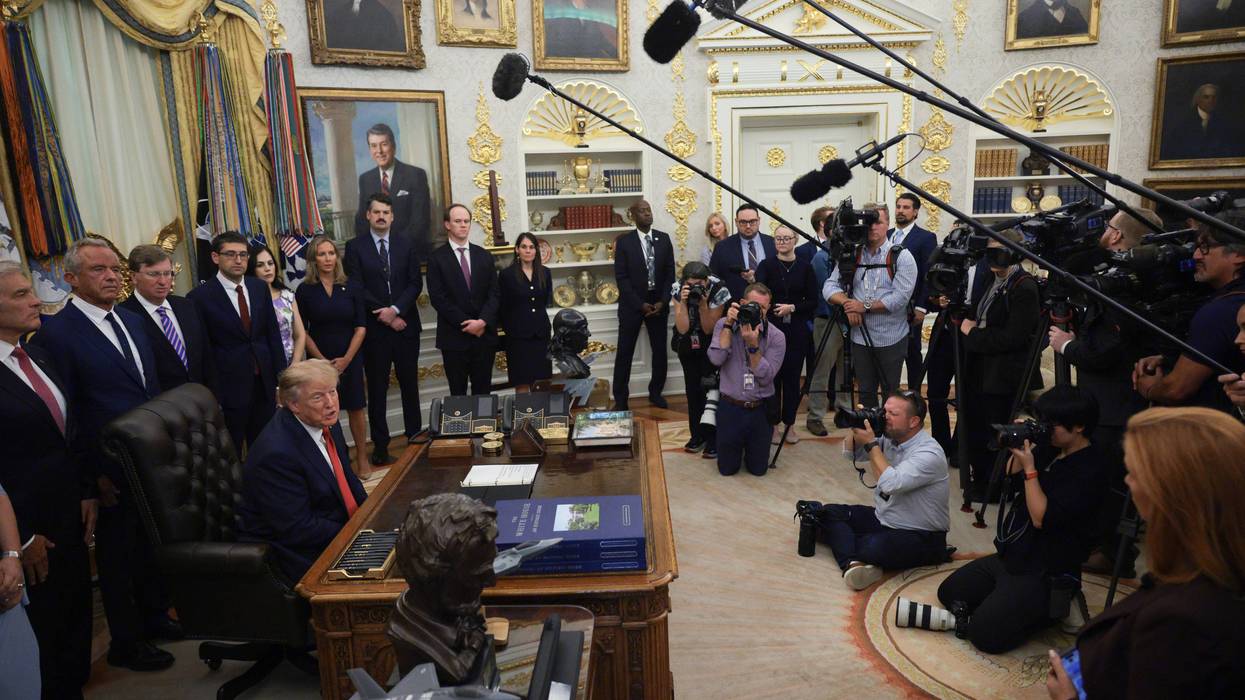
One press freedom advocate said it was "difficult to imagine a more blatant violation of the First Amendment."
In one of his most direct assaults on the First Amendment, President Donald Trump announced in a Friday afternoon tirade that he would ban CNN, MSNOW (formerly MSNBC), and Politico from the White House.
"I am proud to announce that, effective immediately, I am banning Fake News CNN, MSNOW... and Politico from the White House as a result of their constant 'reporting' FAKE NEWS!" the president wrote in a rambling Truth Social post.
"Media Outlets shouldn’t be able to constantly write or report FICTION and LIES when they’re covering the President of the United States, the Trump Administration, or the United States of America," he added, though he did not specify any particular reports he objected to. He added that bans on "Other Fake News Media Outlets" would soon follow.
Trump, who has long portrayed himself as a defender of free speech, has taken unprecedented actions to censor news outlets during his second term, including threatening networks' broadcast licenses through the Federal Communications Commission over unfavorable programming.
As of Friday afternoon, it's unclear whether Trump actually plans to follow through on his White House ban.
Reacting to the news on the air, CNN anchor Brian Stelter said that the network's reporting team "remains at the White House working just like a usual normal Friday afternoon." He added that "right now, there is no indication that the administration is taking any steps to actually follow through on his threat."
"Certainly, if there is an attempt to remove journalists from the White House, well, our cameras are rolling. I think viewers will see it happen," he said.
"CNN stands fully behind our White House team and their fair and accurate reporting," the network said in a statement following news of the ban. "We have a right under the US Constitution to do that reporting without hindrance or interference from the government."
Bruce D. Brown, the president of the Reporters Committee for Freedom of the Press, told Common Dreams in an email Friday that simply banning news organizations from the White House over the content of their reporting "would be flatly unconstitutional."
"The First Amendment is clear that once the White House invites in some journalists, it can't ban others because it doesn't like their reporting," he said. "This is textbook viewpoint discrimination and will be quickly struck down by the courts if challenged."
Federal courts have previously struck down attempts by Trump to bar certain press outlets on First Amendment grounds. Last year, a judge ruled that Trump's removal of the Associated Press from the White House press pool for its refusal to adopt the name "Gulf of America" for the Gulf of Mexico was an unconstitutional form of viewpoint discrimination.
Defense Secretary Pete Hegseth's rule banning reporters from obtaining information not authorized by the Pentagon, which led dozens of journalists to turn over their press badges and walk out of the building in protest, was also struck down as a violation of press freedom.
In light of these previous failures, Jameel Jaffer, the executive director of the Knight First Amendment Institute at Columbia University, expressed bewilderment that Trump was once again trying to ban news outlets from the White House.
"With so many courts having ruled against him on exactly this point, you’d think President Trump would have learned this lesson by now," he said in a statement.
Seth Stern, chief of advocacy at the Freedom of the Press Foundation, agreed it was "difficult to imagine a more blatant violation of the First Amendment than Trump banning news outlets from the People’s House for criticizing the government."
"It’s also hard to imagine a dumber move," he said. "The historically unpopular president has been retaliating against the press for years, but it hasn’t helped him. The press keeps exposing his corruption and his failures. These outrageous attacks only demonstrate how scared he is of an informed public."
He added that the press must "fight back to protect their rights, not only to access the White House but to access the public records and whistleblowers this administration so desperately wants to keep from them."
Trump's announcement was met with outrage from Democrats in Congress, who described it as an assault on a basic constitutional freedom.
Sen. Mark Warner (D-Va.) responded to the news simply by posting the full text of the First Amendment on X.
"Fascist and communist governments limit press access to only favorable outlets, persecute journalists, and suppress truthful reporting," said Rep. Jim McGovern (D-Mass.) in a post to social media. "Trump’s administration is doing all of that."
Sen. Ruben Gallego (D-Ariz.) agreed the move was "straight out of the authoritarian playbook."
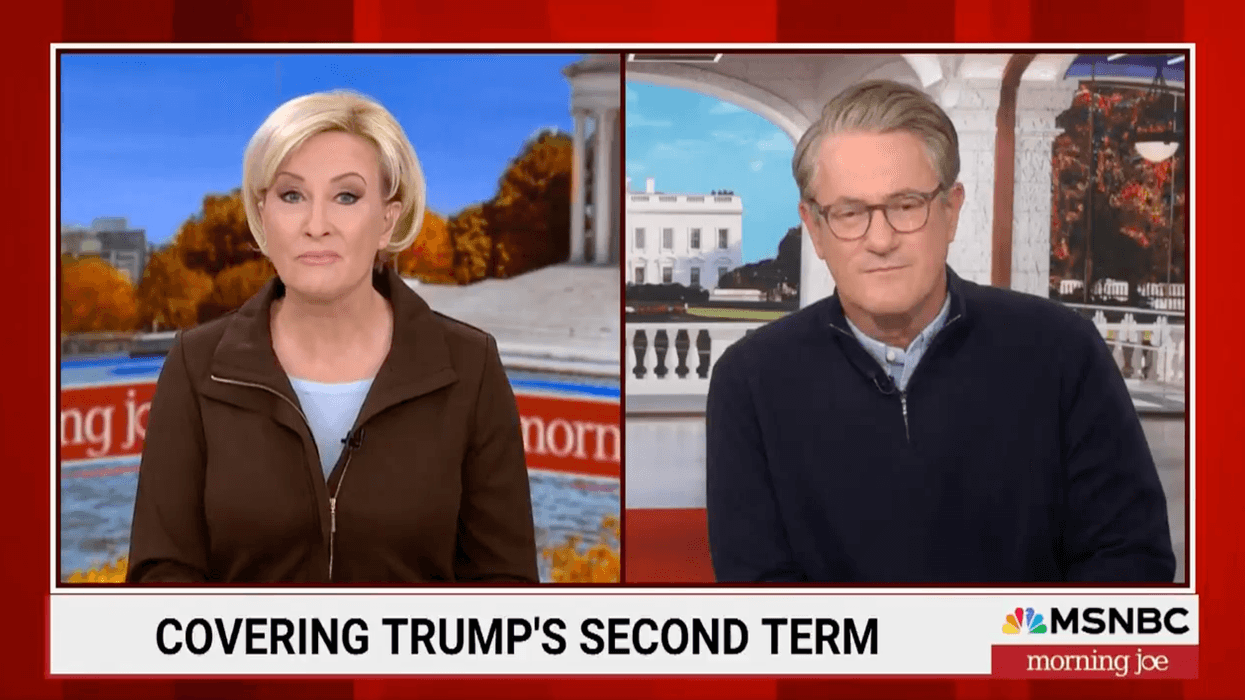
One veteran journalist called Mika Brzezinski and Joe Scarborough's meeting with Donald Trump "a disgusting show of obeisance in advance."
On MSNBC's "Morning Joe" on Monday, hosts Mika Brzezinski and Joe Scarborough assured viewers that their recent meeting with U.S. President-elect Donald Trump at Mar-a-Lago was not meant to "normalize" the Republican leader, whose own former chief of staff said recently would govern as a dictator.
But Trump's warning to the media after the gathering underscored the danger of treating the president-elect as just another politician whose views differ from those of the liberal news network.
Trump told Fox News that the meeting with Brzezinski and Scarborough—who celebrated New Year's Eve with Trump in 2016, only to be called "crazy" and a "psycho" by him months later after their coverage angered him—was "extremely cordial," but then issued a warning.
He told Fox he believes he has "an obligation to the American public, and to our country itself, to be open and available to the press."
"If not treated fairly, however, that will end," Trump said. "The media is very important to the long-term success of the United States of America."
Trump also immediately used Brzezinski and Scarborough's "ring-kissing," as progressive news outlet The Tennessee Holler called it, "as a trophy and saying they praised him effusively."
The Holler wasn't the only critic to compare the hosts' meeting with Trump to a scene out of The Godfather. Krystal Ball, co-host of the online political news show "Breaking Points," accused Brzezinski and Scarborough of helping to "usher the fascists in" before going to Mar-a-Lago to "kiss the ring."
In addition to drawing Trump's ire by warning ahead of the election that he was a threat to democracy and accusing him of "lying every day and destroying the country" during his first term, the hosts and their network have been hostile and dismissive of progressives who have called on Democrats to try to appeal to working-class voters instead of "Liz Cheney Never Trumpers," said Ball.
On "Morning Joe" on Monday, Brzezinski said, "For those asking why we would go speak to the president-elect during such fraught times, especially between us, I guess I would ask back, 'Why wouldn't we?'"
"Joe and I realized it's time to do something different, and that starts with not only talking about Donald Trump but also talking with him," she said.
Scarborough said the trio discussed and expressed their different views on issues such as "abortion, mass deportation, threats of political retribution against political opponents and media outlets." He claimed Trump "seemed interested in finding common ground with Democrats on some of the most divisive issues."
The hosts suggested Trump has done an about-face in his views on the media since the election, when he called journalists "the enemy camp" and the days leading up to it, when he said he wouldn't "mind" if reporters at a rally he held were shot.
Ryan Grim of Drop Site News joked on social media that the meeting exposed the hosts as "resistance commanders" who had turned out "to have been collaborating double agents from the beginning."
"We've been played," he added.
While the two journalists said they believe it is "time for a new approach" in covering the president-elect, Julianne McShane at Mother Jones pointed out that journalists "have tried" for years to talk with Trump about his perspective on issues.
"Trump repeatedly rebuffed sit-down interview invitations during the campaign from CBS News and NBC News, both of which Harris did do; Instead, Trump gave interviews to a bevy of right-wing male podcasters. If Trump and his team are serious about respecting the press, they will have to engage with them—respectfully, and on the issues—rather than denigrate them," wrote McShane. "It's ultimately unclear if Trump's sudden friendliness toward the media can be attributed to the MSNBC reunion at Mar-a-Lago. But one thing remains certain: You probably can't trust this one, at all."
Philadelphia Inquirer columnist Will Bunch wrote that Brzezinski and Scarborough's "capitulation is another of my worst fears about life under Trump 47."
"Those of us who plan to keep writing against Trump's autocratic ways are going to be marginalized as 'dead-enders' who aren't getting with the program, which will make it easier to shut us up," said Bunch.
Veteran journalist Jeff Jarvis denounced the "Morning Joe" hosts' Mar-a-Lago meeting as a "betrayal of their colleagues, democracy, and us all" and "a disgusting show of obeisance in advance."
Bunch quoted Yale historian Timothy Snyder, an expert on authoritarianism, who advised Americans as Trump took office for the first time in 2017: "Do. Not. Obey. In. Advance."
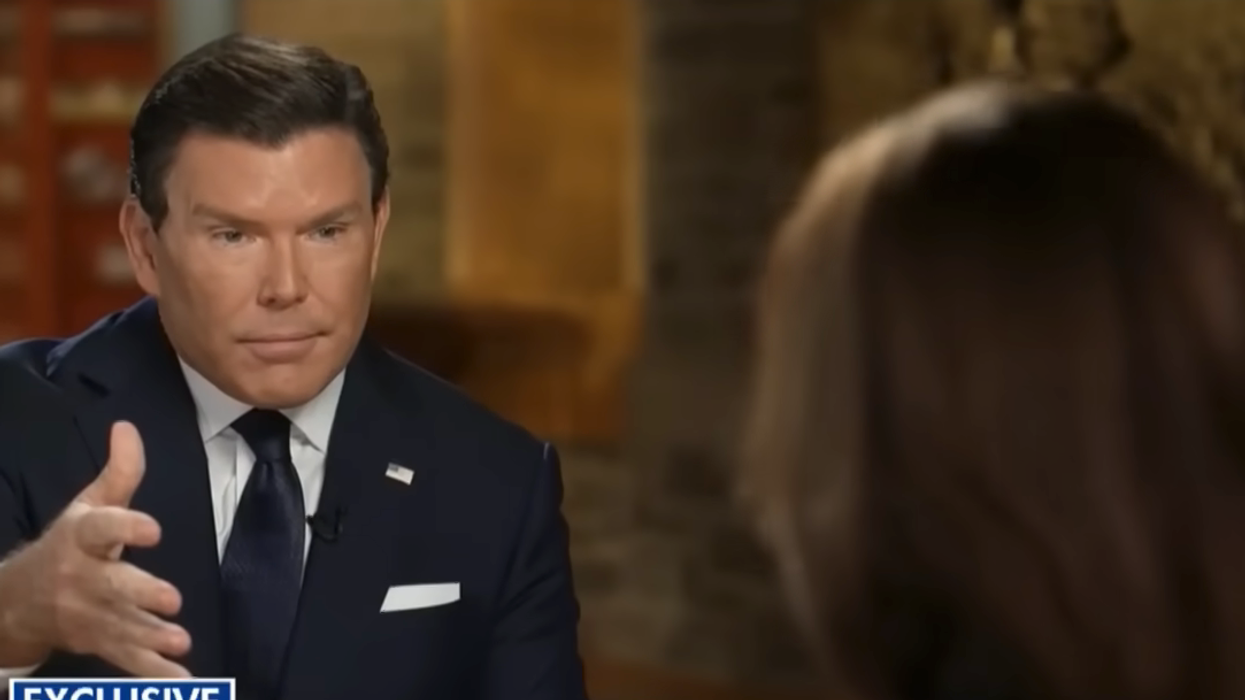
"Do you see what they did there, on their own network?"
MSNBC's evening news anchor Chris Hayes walked his audience through an overt deception perpetrated by Fox News Wednesday night as the right-wing cable outlet used selective editing of Donald Trump during Bret Baier's primetime interview with Kamala Harris.
The line of questioning from Baier stemmed from recent public remarks Trump made in which he said "the enemy from within" was the most serious danger to the nation and that he would use both the National Guard and U.S. military to go after "radical-left lunatics," which he claimed included Rep. Adam Schiff (D-Calif.), a centrist member of the Democratic Party currently running for U.S. Senate in California.
When Harris invoked these comments to criticize Trump for threatening to turn the U.S. military against people who have different political beliefs than him, Baier interrupted her to say that the former Republican president had been asked about those very remarks earlier in the day during a separate town hall-style event, also hosted by Fox.
But in the clip shown by Baier to the television audience and to which Harris was asked to respond, Fox only included a small part of what Trump actually said on the subject during the town hall, leaving out his clear repetition of calling Schiff and others "the enemy from within" who must be dealt with.
As Hayes explains during his examination of what transpired, Baier used a selected "soundbite to try to clear Donald Trump of saying a thing in which he cut out the part where says it."
Watch the segment:
"Do you see what they did there, on their own network?" asked Hayes of the selective editing by Fox producers. "[Trump] said—he repeated—'They are the enemy within... they're sick people... they're evil.' He repeated it! And then Brett Baier's like, 'Let me play you what [Trump] said today,' and just cut out the big chunk."
In her reaction to the clip showed by Baier, Harris said, "Bret, I'm sorry and with all due respect—that clip was not what he has been saying about the 'enemy within' when he has been speaking about the American people. That's not what you just showed."
When Baier tried to explain that he was just trying to show his response to a question, Harris interjected, "You and I both know that he has talked about turning the American military on the American people. He has talked about going after people who are engaged in peaceful protest. He has talked about locking people up because they disagree with him."
"This is a democracy," Harris continued. "And in a democracy, the president of the United States should be able to handle criticism without saying they are going to lock people up for doing it. And this is what's at stake, which is why you have someone like the former chairman of the Joint Chiefs of Staff saying what Mark Milley has said about Donald Trump being a threat to the United States of America."
For his part, Hayes said the entire episode—in which Trump refused to climb down from his fascist positions, but Fox still tried to "clean up" for him—represents "the same playbook we see over and over from Fox."
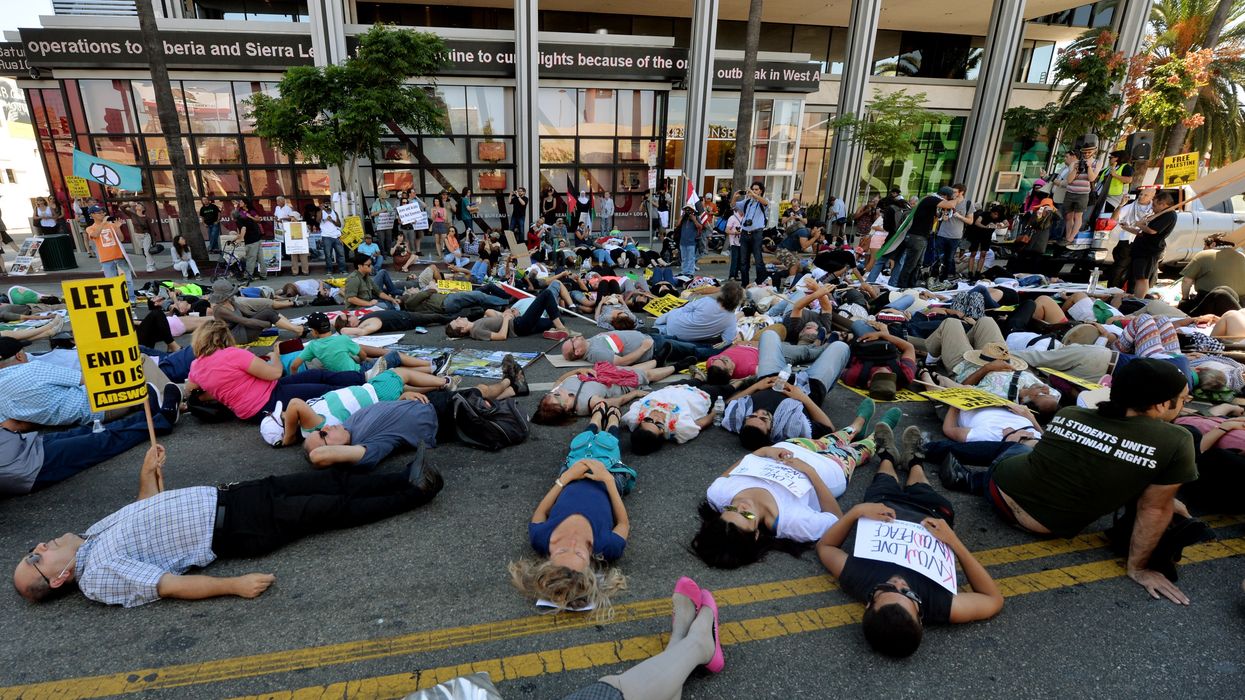
U.S. media, analysts said, "should elevate its coverage of the suffering in Gaza to be comparable to that of Ukraine, with the same urgent and moralizing tone."
As the death toll from the U.S.-backed Israeli assault on the Gaza Strip continued to climb on Monday, The Nation published a study revealing the "glaring double standard" for American corporate media coverage of that war and Russia's invasion of Ukraine.
The analysis was conducted by Adam Johnson, who co-hosts the podcast Citations Needed and writes media criticism at The Column, and Othman Ali, a researcher and data analyst with an advanced degree from the University of Oxford.
The pair—who released their full dataset on GitHub—focused on the first 100 days of each conflict. Russia invaded Ukraine on February 24, 2022 and Israel launched its war on Gaza in retaliation for the Hamas-led October 7, 2023 attack.
Since the Russian invasion, media critics have highlighted "the racist and dehumanizing double standards of war reporting." Over the past year, such criticism has mounted, with arguments that Western media are "enabling" genocide in Gaza.
In March, protesters frustrated with the U.S. "newspaper of record" even gathered in Manhattan and chanted, "New York Times you can't hide, we charge you with genocide." Watchdogs like Fairness & Accuracy In Reporting and Media Matters for America have published various critiques, with the latter often focusing on right-wing sources.
"CNN and MSNBC's pointed lack of sympathy with Palestinians is also important to examine because the media's consistent dehumanization and erasure of their suffering has helped 12 months of a killing campaign."
Johnson and Ali focused on commentary, editorial priorities, and reporting by CNN and MSNBC, explaining that "the third major cable network, Fox News, was not included in our analysis because the focus of our study is in the formation of liberal and Democratic Party-aligned support for Israel's war on Gaza."
They found that on the two networks, Palestinians in Gaza received "far less sympathetic and humanizing coverage than either Israelis during the same period or Ukrainians during the first 100 days after Russia's invasion."
"The point of this analysis is not that U.S. media should reduce its coverage of the tragedies in Ukraine to achieve parity with Gaza, but that it should elevate its coverage of the suffering in Gaza to be comparable to that of Ukraine, with the same urgent and moralizing tone," the pair stressed.
"CNN and MSNBC's pointed lack of sympathy with Palestinians is also important to examine because the media's consistent dehumanization and erasure of their suffering has helped 12 months of a killing campaign, backed by unending American military and political support, that is unprecedented in the 21st century," they added.
Johnson and Ali highlighted four key findings:
They found that for each child death in Ukraine during the first 100 days, there was the equivalent of 16.1 mentions on air, while kids in Gaza received the equivalent of 0.36 mentions. For journalist deaths, it was 24 versus 2.5. The study also shows that the networks "covered Ukrainian civilian suffering almost twice as often as they covered that in Gaza," despite the latter having a death toll that was 500% greater.
In just the first 30 days of the Russian invasion, cable news anchors, guests, and reporters used emotive terms for Russians killing Ukrainians 661 times. In the first month of Israel's assault on Gaza, they used such language to describe the killing of Israelis 1,053 times and Palestinians 43 times. Additionally, people appearing on-air for both networks described Ukrainians as being subjected to genocide or war crimes 1,790 times compared to just 104 times for Palestinian victims.
"One common rejoinder to this double standard is that Israel doesn't intentionally kill civilians, whereas Hamas and Russia do," Johnson and Ali pointed out. "But this assertion is based entirely on unsubstantiated conventional wisdom and is belied by scores of data points."
In a note attached to the article, the researchers detailed that the United Nations "estimated that around 4,000 civilians had been killed 100 days into the Ukraine war. The broadly accepted death toll in Gaza for the first 100 days is over 24,000, but this is a figure that doesn't distinguish between civilians and noncivilians. So, in the interest of being conservative, we are using the civilian death toll of 20,000—though this number, as several researchers have explained, is almost certainly a massive undercount because it only includes confirmed deaths, not those unidentified, under rubble, or dying from secondary causes such as preventable illness, starvation, etc."
More than 1,100 people were killed in Hamas' attack on Israel last October, and militants took over 240 others hostages. Some captives have been released, some have been killed—including by the
Israeli assault—and some are still believed to be alive.
As of Tuesday, Gaza officials put the confirmed death toll for Palestinians in the Hamas-governed enclave at 42,344, with another 99,013 wounded. In recent days, Israel has bombed a hospital complex and refugee camps. The vast majority of the strip's 2.3 million residents have been displaced, often several times over the past year.
The U.S. government has long supplied Israel with weapons and diplomatic backing and has ramped up such support since last October, despite global criticism. Multiple news outlets revealed Tuesday that in a Sunday letter, the Biden administration finally threatened to cut off U.S. arms unless Israel takes certain action to improve the humanitarian conditions in Gaza.
In response to the letter, Johnson
said on social media: "1) Israel can keep bombing all it wants 2) Criteria for 'improve' is vague and like 'invasion of Rafah' they'll just post facto change the definition."
"BUT what's noteworthy is the tacit admission the U.S. can condition military aid," Johnson added, "something I was told was pointless five [minutes] ago."
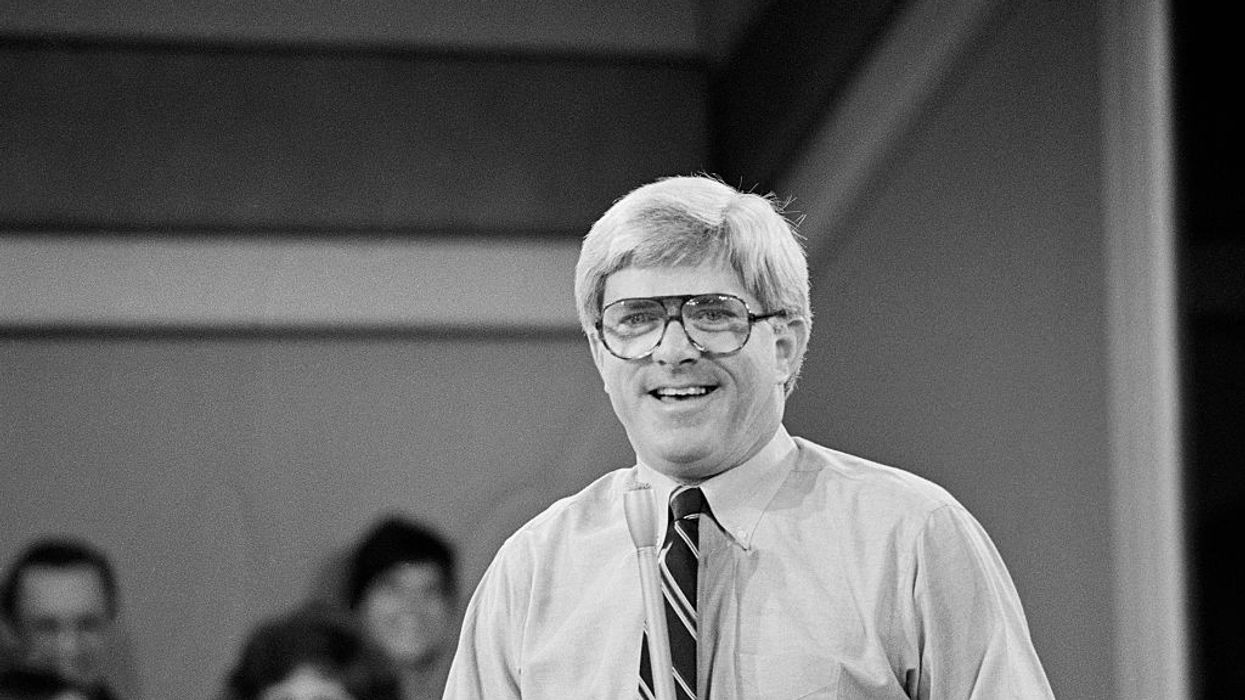
The journalist and TV show host, who died Sunday at the age of 88, made his mark on our society. He fought for the underdog. He did it with style and grace and a wonderful sense of humor. He changed my life and the lives of so many others.
Phil Donahue passed away Sunday night, after a long illness. He was beloved by those who knew him and by many who didn’t.
He started as a local reporter in Ohio, was a trailblazer in bringing social issues to a national audience as a daytime broadcast TV host, and then he was pretty-much banished from TV by MSNBC because he—accurately, correctly, and morally—questioned the horrific U.S. invasion of Iraq.
In the 1970s, Phil took progressive issues and mainstreamed them to millions through his syndicated daytime show. He was a pioneer in syndication. He also pioneered on the issues; his most frequent guests on his daytime show were Ralph Nader, Gloria Steinem, and Rev. Jesse Jackson. They appeared dozens of times as Phil boosted civil rights, women’s rights, and consumer rights. He regularly hosted Dr. Sidney Wolfe warning of the greedy pharmaceutical industry and unsafe drugs. Raised a Catholic, he also featured advocates for atheism.
Mainstream media obits will likely focus on his daytime TV episodes that included male strippers or other titillation, but Phil was serious about the issues—and did far more than most mainstream TV journalists to address the biggest issues.
I was a senior producer on Phil’s short-lived MSNBC primetime show in 2002 and 2003. It was frustrating for us to have to deal with the men Phil called “the suits”—NBC and MSNBC executives who were intimidated by the Bush administration and resisted any efforts by NBC/MSNBC to practice journalism and ask tough questions of Washington before our young people were sent to Iraq to kill or be killed. Ultimately, Phil was fired because—as the leaked internal memo said—Donahue represented “a difficult public face for NBC at a time of war.”
But before we were terminated, we put guests on the screen who were not commonly on mainstream TV. We offered a full hour with Barbara Ehrenreich on Labor Day in 2002; a full hour with veteran journalist Studs Terkel; interviews with progressive members of Congress, including Bernie Sanders and Dennis Kucinich; and segments with the "maverick" Texas Observer columnist Molly Ivins; and offered platforms to foreign policy experts like Phyllis Bennis and Laura Flanders as well as Palestinian advocates, including Hanan Ashrawi.
No one on American television cross-examined Israeli leaders like Phil did when he interviewed then-Israeli Foreign Minister Shimon Peres, and later, former Prime Minister Ehud Barak. They seemed stunned—never having faced such questioning from a U.S. journalist.
But “the suits” ruined our show when they took control and actually mandated a quota system favoring the right wing: If we had booked one guest who was antiwar, we needed to book two that were pro-war. If we had one guest on the left, we needed two on the right. When a producer suggested booking Michael Moore—known to oppose the pending Iraq war—she was told she’d need to book three rightwingers for political balance.
Three weeks before the Iraq war started, and after some of the biggest antiwar mobilizations the world had ever seen (which were barely covered on mainstream TV), the suits at NBC/MSNBC terminated our show.
- YouTubeyoutu.be
Phil was a giant. A huge celebrity who supported uncelebrated indy media outlets. He loved and supported the progressive media watch group FAIR (which I founded in the mid-1980s.)
Phil put Noam Chomsky on mainstream TV. He fought for Ralph Nader to be included in the 2000 presidential debates. He went on any TV show right after 9/11 that would have him to urge caution and to resist the calls for vengeful, endless warfare that would pointlessly kill large numbers of civilians in other countries. He opposed active wars and the Cold War with the Soviet Union. He supported war veterans and produced an important documentary on the topic: “Body of War,” on the life and death of Tomas Young.
Phil Donahue made his mark on our society. He fought for the underdog. He did it with style and grace and a wonderful sense of humor. He changed my life. And others’ lives.
He was inspired by the consciousness-raising groups he saw in the feminist movement and he sought to do consciousness-raising on a mass scale . . . using mainstream corporate TV. He did an amazing job of it.
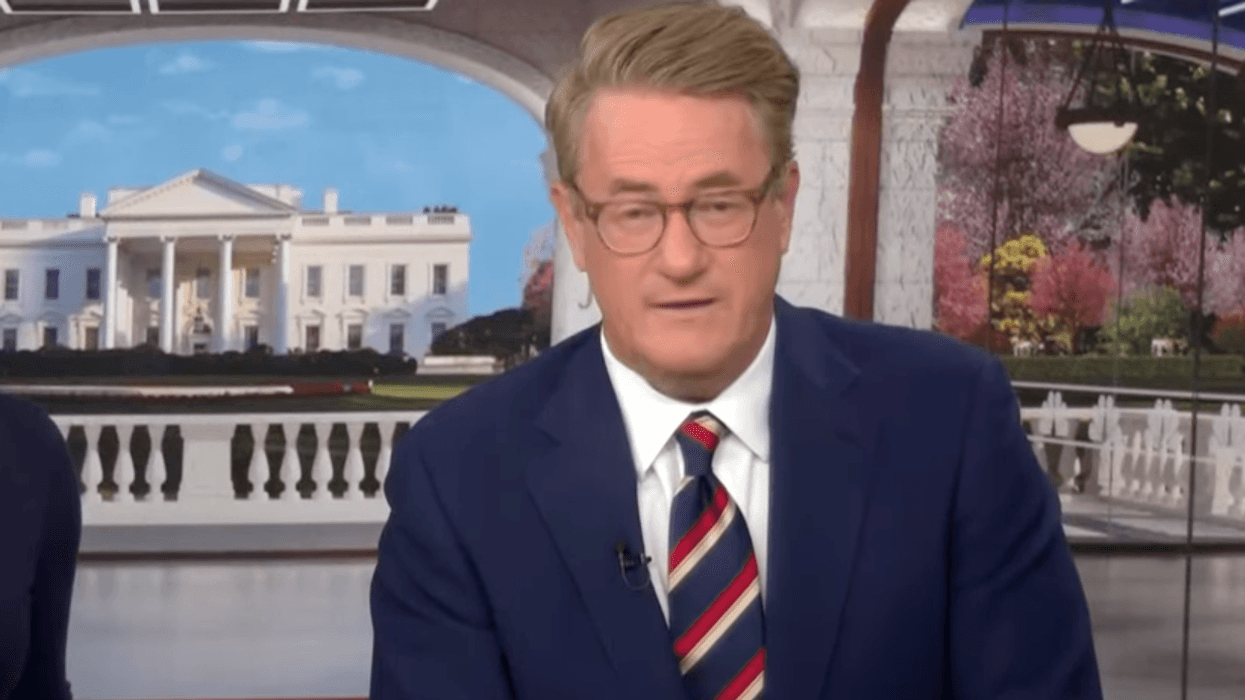
The characterizations by politicians and cable TV personalities of the so-labeled pro-Palestinian protests by college students are over the top—and dangerous.
Sometimes in the morning with a cup of coffee I watch some of Morning Joe on MSNBC. I did on Monday (April 29) hearing Joe Scarborough’s condescending rant on college protests. On those today opposing Israel’s actions in the Gaza war, and on those earlier opposing the Vietnam war.
“Where are the adults!?” Scarborough asked after saying “it makes as much sense in 2024 having 18- and 19-year-olds running college campuses as in 1968, which is to say it doesn’t make any sense at all.” Any 18- and 19-year-olds protesting in 1968 and 2024 are not “adults” according to Scarborough, even though in 1968 they could be killed in Vietnam.
'Where are the adults?' Joe on continuing campus protests
Scarborough went on in his diatribe characterizing all so-labeled pro-Palestinian protestors as Jew-haters. His own brand of fearmongering as he blamed college administrators for, and I quote:
...letting their students and outside agitators run across the campus, shut down debate, scream whenever anybody tries to talk, reason to them, shout genocidal chants, hold up signs pointing to Jews saying Hamas’s next victims. Holding up signs talking about the “Final Solution.” Chanting constantly: “From the river to the sea”…Most of the students chanting it don’t understand that they are chanting genocidal comments.
Clearly Scarborough hasn’t read, or ignored, the article the day before in the Sunday Washington Post (available even earlier online) describing the experience of college students, in their own words, regarding today’s protests.
A 24-year-old Jewish student who talked to The Post reporters supported the protest at his school, UC-Berkeley, but with juggling two part-time jobs and coursework hadn’t joined the protest encampment there. But he said, his words, “things need to change in this drastic way to keep our eyes from averting away from what’s going on in Gaza” adding the “best way to do that is to mess up the status quo.” He rejected being a Jew meant automatic support for Israel’s war in Gaza. Of course, he doesn’t “want people to be hostages, either,” those taken by Hamas militants on October 7. But the children in Gaza also “don’t have any say in the fight,” so he has donated to funds supporting these Palestinian children.
As it is, Scarborough attributed antisemitism the dominant motive across today’s protest. His evidence? The fact protesters haven’t appeared concerned with known atrocities in other countries, mimicking Bill Maher’s related punchlines on Maher’s HBO show on April 26, Scarborough even showing a video clip where Maher asks why those protesting civilian deaths and starvation in Gaza today, in his words,
care so much about this particular cause? North Korea starves its people. China puts them in concentration camps. Myanmar brutalizes the Rohingya. Boko Haram kidnaps whole villages of women. The president of Burundi says Gays should be stoned to death because they, quote, ‘deserve it.’
On CNN’s GPS with Fareed Zakaria on April 28, Columbia University professor Bruce Robbins had an answer for Maher (and Scarborough), saying:
I don't think that people think that Israel is unique example of evil in the world. I think what's special about it is it couldn't do what it's doing without the support of the United States. So students in the United States think we have a responsibility…I mean, the United States is not supporting North Korea…not supporting Syria...What's being done [in Gaza] is being done in my name as an American and…as a Jew.
Professor Robbins also said this about the phrase “From the river to the sea”:
So as I understand “From the river to the sea,” it means equal rights for all the people living between the river and the sea.
The role of the U.S. underlies protests today on the Gaza war as it motivated protests on the Vietnam war we participated in over 50 years ago. It was the U.S. engaged in the Vietnam carnage and drafting 18-year-old men to die there for a cause even their presidents knew privately was a losing cause. To needlessly die in Vietnam as civilians are needlessly dying in Gaza from bombings and starvation.
Here's how Professor Robbins characterized earlier pro-Palestinian protests at Columbia University in the discussion on CNN:
[Students] at Columbia, they have not shouted out slogans, chanted slogans in support of Hamas or the wanton destruction of civilian lives on October 7th…It's a little upsetting I think to everybody at Columbia that the mainstream media, as well as the politicians, have confused things that are chanted outside Columbia's gates with things that the Columbia protesters are saying…I haven't heard anything even remotely like that…that are being chanted outside the gates.
In her statement on April 29, Columbia University president Nemat “Minouche ”Shafik also said this: “External actors have contributed to creating a hostile environment…especially around our gates, that is unsafe for everyone.” Even Scarborough in his rant mentioned “outside agitators.”
In Vietnam anti-war protests there were isolated incidents of violence, but those didn’t represent the vast majority of protests. Similarly, in pro-Palestinian protests there may have been incidents of antisemitic remarks, and even occupying an administrative building as protestors did April 30 at Columbia University, but it’s an exaggeration (unfortunately, often purposefully so) to paint the majority of these protestors with that same brush.
Hyperbole concluding antisemitism is THE defining characteristic of students in pro-Palestinian demonstrations. Now, on the other hand, antisemitism was quite evident in Charlottesville in 2017 when white supremacists shouted “Jews will not replace us.“
Perhaps President Joe Biden could help end the pro-Palestinian demonstrations if he took a firmer stand against the genocidal conduct of the war in Gaza under Prime Minister Benjamin Netanyahu’s direction. Stopping delivery of U.S. military aid to Israel until Netanyahu changes course, for instance.
Instead of conditioning military aid, House Speaker Mike Johnson in his speech at Columbia University April 24, aside from speciously attributing all protesting students antisemitic, said if the protests could not be “contained quickly…there is an appropriate time for the National Guard…to bring order to these campuses.”
Remember Kent State? When National Guard killed four students on May 4, 1970 as students gathered to protest President Richard Nixon’s invasion of Cambodia, expanding the Vietnam war. Kent State University’s professors Jerry Lewis and Thomas Hensley provide a detailed account of events leading up to, during, and after the Guard opened fire with life rounds. Here is a segment of their account:
Four Kent State students died as a result of the firing by the Guard. The closest student was Jeffrey Miller, who was shot in the mouth while standing in an access road leading into the Prentice Hall parking lot, a distance of approximately 270 feet from the Guard. Allison Krause was in the Prentice Hall parking lot; she was 330 feet from the Guardsmen and was shot in the left side of her body. William Schroeder was 390 feet from the Guard in the Prentice Hall parking lot when he was shot in the left side of his back. Sandra Scheuer was also about 390 feet from the Guard in the Prentice Hall parking lot when a bullet pierced the left front side of her neck.
You’re reading right. The Guard killed students more than a football field away.
After Kent State, demonstrations exploded across campuses leading to hundreds of colleges to temporary close.
Now think about the Guard being called in to break up the crowded close quarters of encampments pro-Palestinian protesters constructed on campuses across the country. What could possibly go wrong? A lot.
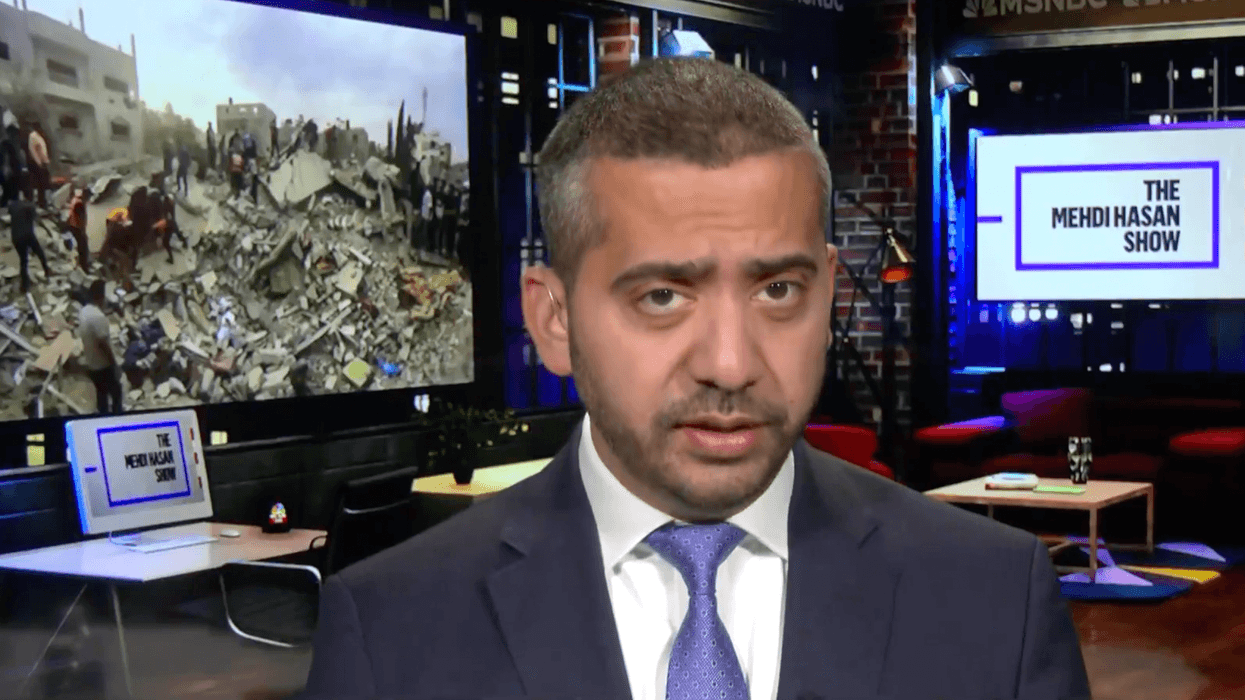
The journalist says Zeteo will feature "hard-hitting interviews and unsparing analysis" in op-eds, podcasts, and streaming shows.
After a few weeks of "soft launch" mode, journalist Mehdi Hasan on Monday officially debuted his new media platform, Zeteo, and declared that "this is not a one-man band."
The former MSNBC and Peacock host—whose show was canceled in November and wrapped up in January, after his incisive criticism of Israel's assault on the Gaza Strip—revealed nine of the contributors he has lined up so far, calling them "some of the biggest, boldest, and best names from media, activism, entertainment, and beyond."
They are Pulitzer Prize-winning journalist Spencer Ackerman, comedian and podcaster W. Kamau Bell, Palestinian Canadian lawyer Diana Buttu, former CNBC and CNN correspondent John Harwood, foreign policy analyst Rula Jebreal, author Naomi Klein, novelist Viet Thanh Nguyen, actor and activist Cynthia Nixon, and Swedish climate campaigner Greta Thunberg.
"The tough interviews and knowledgeable analysis are all coming back, along with a global cast of contributors," Klein said on social media Monday. "I was honored when Mehdi asked me to be one of them, along with Rula Jebreal and Greta Thunberg and many others yet announced."
"Mehdi and I will be having a regular conversation called 'Unshocked,'" noted Klein, who authored The Shock Doctrine.
Hasan—who has also produced content for Al Jazeera, The Guardian, and The Intercept—has said Zeteo will feature "hard-hitting interviews and unsparing analysis" in a variety of forms, from op-eds and podcasts to streaming shows, beginning with "Mehdi Unfiltered."
“What else do we call this other than the deliberate dehumanization of the Palestinian people?”
I called out media bias and racism, on Gaza, and brought receipts!, in the opening monologue of my new show #MehdiUnfiltered today.
Watch/share/subscribe:https://t.co/20UUcW06TK pic.twitter.com/oHA1bfZqWK
— Mehdi Hasan (@mehdirhasan) April 15, 2024
"To keep
Zeteo's journalism independent and free of advertiser and corporate influence," Hasan explained ahead of the formal launch, "and to allow us to continue investing in the future, we have to rely on our individual paid subscribers."

"Frankly, I don't care what a bunch of talking-headed pundits say" about the push for Michigan Democrats to vote "uncommitted" in the primary. "We're here on the ground in Michigan and they are dead wrong."
Labor organizer and former congressman Andy Levin on Sunday became the latest progressive to lay out the facts on the ground in the key swing state of Michigan for U.S. President Joe Biden and issue a stark warning: If he doesn't end the government's support for Israel's bombardment of Gaza and demand a permanent cease-fire, he runs a serious risk of losing the presidency on November 5.
While Democratic pundits have complained in recent days that Rep. Rashida Tlaib (D-Mich.) and other Michigan leaders are doing a disservice to the party by pushing voters to vote "uncommitted" in the state presidential primary on February 27, Levin made clear in an MSNBC interview that his support for the effort is the best way he can help Biden position himself for a victory in November.
While the progressive group Our Revolution and a coalition of Michigan leaders called Listen to Michigan are organizing the push for voters to vote "uncommitted," the groups are not "whipping this up," Levin told anchor Ayman Mohyeldin.
"People are not going to vote for Joe Biden on February 27 because they are really mad at him," said Levin. "Their cousins are dying. Their friends are dying."
With 200,000 Muslim voters and 300,000 people with Middle Eastern and North African ancestry in Michigan, which Biden won just only 154,000 votes in 2020, Levin is among those who say that in addition to the moral case for ending U.S. support for Israel, the Biden campaign must pay close attention to the political case as well.
"We have 1.4 million African Americans" in the state, Levin said, noting that the African Methodist Episcopal Church Bishops Council last week demanded Biden suspend military aid for what it called Israel's "mass genocide" of Palestinians.
"And then you've got 370-some thousand 18-to-24-year-old voters, all of whom are very upset," said Levin. "Now these are somewhat overlapping groups. But Ayman, Joe Biden won Michigan by 150,000 votes in 2020. We need these people to vote for Joe Biden on November 5th."
Levin was undeterred as Mohyeldin pointed out that political strategists and commentators have claimed the push for Michiganders to vote "uncommitted" in the primary will backfire and help former President Donald Trump, the presumptive Republican candidate.
To the contrary, Levin told The New York Times last week, warning the president about the stakes in Michigan is "the best way I can help Joe Biden."
"Frankly, I don't care what a bunch of talking-headed pundits say on MSNBC," Levin told Mohyeldin on Sunday. "We're here on the ground in Michigan and they are dead wrong."
With two-thirds of Americans supporting a cease-fire, including three-quarters of Democrats, Michigan voters are among those who are angry over Israel's U.S.-backed killing of nearly 30,000 Palestinians since October, as both Israeli and American officials have repeatedly claimed the Israel Defense Forces (IDF) are targeting Hamas and not civilians.
"We can't stand on 28,000 people being killed," said Levin. "Women and children being killed at the fastest rate of any conflict since World War II. The most journalists being killed of any conflict on record... Two thousand-pound bombs, provided by the U.S., being dropped on places, according to The New York Times, where the IDF told civilians to run to, and then our military officials say we wouldn't use those bombs at all on such a dense population... I mean, people are super upset about this."
Blaming voters for not supporting Biden in the primary is "totally useless," added the former congressman. "What we're all saying is, 'This is a catastrophe in Gaza. We have to change course. Let's do it now and then November will take care of itself.'"
"I'm afraid if we don't change course then we can't win on November 5 and that's why I'm pouring my energy into this, because we cannot allow Donald Trump to be anywhere near the White House again."
Historian Barbara Ransby on Monday applauded Levin and Tlaib for their vehement support of the Listen to Michigan movement.
Richard Yeselson of Dissent magazine also applauded Levin's explanation of the movement in Michigan.
"This is the leverage—if you want Biden to win, you should not be prematurely pissed off about this!" said Yeselson. "Pressure Biden to do what is right, then vote."

"Without those brave Palestinian journalists on the ground, there would be no one to tell the rest of the world—to tell all of us—about the ongoing horrific impact of this war on the innocent people of Gaza," said Hasan.
Closing out a three-year tenure as host of "The Mehdi Hasan Show" at MSNBC which included some of the U.S. corporate media's only critical coverage of the U.S.-backed Israeli onslaught in Gaza, Mehdi Hasan devoted some of his final show with the network to the dozens of journalists who have been killed in the war.
Hasan reiterated the doubts he shares with a growing number of world governments and international human rights experts, that Israel is truly targeting Hamas in the bombardment that's killed more than 23,000 people in just three months, before noting the public service Palestinian reporters have provided since October while risking their own lives.
"What is Israel's end goal in Gaza?" he asked, cataloguing just a couple of examples of the genocidal plans top Israeli officials have outlined while continuing to claim they are targeting Hamas in retaliation for the group's attack on Israel on October 7.
"Ethnic cleansing is, of course, a war crime," Hasan added, "but Israel continues to deny that its committing war crimes in Gaza even as journalists on the ground continue to document what leading human rights groups and even U.N. rapporteurs have said could amount to war crimes. And those journalists themselves keep getting killed."
Hasan told his audience that at least 72 Palestinian journalists have been killed since October 7, as well as four Israeli reporters and three Lebanese journalists—the total of 79, he noted, means "more journalists [have been] killed in this conflict than in any conflict for three decades."
He paid particular tribute to Hamza Al Dahdouh, a cameraman for Al Jazeera and the son of Wael Al Dahdouh, who serves as the network's Gaza bureau chief. Along with freelance Agence France Presse videographer Mustafa Thuraya, Hamza Al Dahdouh was killed on Sunday when an Israeli drone strike hit the car they were driving in en route to an assignment in southern Gaza. Their killing was part of what Christophe Deloire, secretary-general of Reporters Without Borders, called "the eradication of journalism in the besieged enclave."
Hasan noted that Wael Al Dahdouh "has already lost his wife, two other children, and a grandson in this war, and has been injured himself from an Israeli airstrike."
"Let's be clear," he added, "without those brave Palestinian journalists on the ground, there would be no one to tell the rest of the world—to tell all of us—about the ongoing horrific impact of this war on the innocent people of Gaza."
Hasan also interviewed photojournalist Motaz Azaiza on his final show, asking him about the destruction he's documented for three months as the U.S. has defended and funded Israel's slaughter of civilians.
"What I witness here is that all the world is ruled by people that, no one can say no to them, or they can't stop them," said Azaiza. "So nobody shall call themselves a free person if he is watching... another human being getting murdered."
Media analysts warned that in its own way, the end of Hasan's show will also leave American audiences without an incisive critical voice in the corporate news media as the war continues.
"A massive loss for MSNBC and the viewing audience," said Dan Froomkin, editor of Press Watch. "Mehdi Hasan is a truth-teller in a time of crisis."
Shortly after Hasan pushed Israeli government adviser Mark Regev in an interview to address Israel's misinformation about the war, MSNBC announced in November that the show would end after the new year, and that Hasan would continue at the network as a guest host. But on Sunday Hasan said he would be leaving the network altogether to "look for a new challenge."
"MSNBC caved to bad faith pressure and iced Mehdi Hasan, their best interviewer, right before the 2024 election," said columnist Wajahat Ali. "Hope someone respects his talents and gives him the space to do what he does."

"Mehdi Hasan's program has felt like an oasis on air and more needed than ever," said one Palestinian American advocate of the journalist's Gaza coverage.
Progressives on Thursday said the American public was losing a vital voice that for nearly two months has offered rare critical coverage of the U.S.-backed Israeli assault on civilians in Gaza, as MSNBC announced it was canceling "The Mehdi Hasan Show."
The show began on the streaming service Peacock in 2020 and Hasan has hosted the weekend program on the network since 2021. He has gained recognition in the past for his incisive interviews of former Blackwater CEO Erik Prince and GOP presidential candidate Vivek Ramaswamy.
More recently he has provided viewers with commentary on the war in Gaza, in which more than 15,000 Palestinians have been killed so far, while also condemning Hamas' attack against civilians in southern Israel on October 7 as "undeniably, a vicious act of terror."
"How many more innocent people are going to die, and what will be achieved?" asked Hasan in one segment last month. "Does killing innocent Palestinians in Gaza, and not just members of Hamas, killing a Palestinian child every 15 minutes since October 7... Does that help defeat Hamas?"
Guardian columnist Owen Jones said there is "no better interviewer than Mehdi Hasan: forensic, razor-sharp, an encyclopedic knowledge."
"So MSNBC has now canceled his show," Jones said. "The few mainstream voices who challenge Israel's mass slaughter of Gaza are under attack."
As the cancellation of Hasan's show was announced, Palestinian American human rights lawyer Noura Erakat pointed to his recent interview with Mark Regev, an adviser to Israeli Prime Minister Benjamin Netanyahu, as "a whole class on journalistic method."
In the interview, Hasan implored Regev to admit Israel's onslaught has led to a high death toll of Palestinians, pushed back against his claim that Israel has targeted Hamas members, and demanded he address misinformation from his own government about the war.
"They canceled Mehdi Hasan for interviews like this—evidence-based and willing to challenge power," said author Sarah Kendzior of the Regev segment, "and it is doubtful he will be the only journalist pushed out for daring to practice journalism."
The Progressive Change Campaign Committee (PCCC) pointed out that on Wednesday evening Hasan appeared on "The Daily Show" to promote his program.
"To be clear, there was no instigating outrage. No shocking new thing," said the group. "He was acceptable (and cool) enough for 'The Daily Show,' and MSNBC let him go out and promote the network, and then they blindside one of their best hosts?"
"It's a huge programming mistake to kick voices like Mehdi Hasan off the air instead of asking: Why are they resonating with the public as they challenge power and question conventional wisdom?" the PCCC added.
MSNBC president Rashida Jones reportedly told staffers that the network was reshuffling its weekend programming—cutting Hasan's show and adding a program with hosts including Democratic strategist Symone Sanders-Townsend and former Republican National Committee Chair Michael Steele—"to better position ourselves as we head into the presidential election."
In canceling Hasan's show, noted journalist David Sirota, MSNBC is eliminating not only one of its most vocal critics of Israel, but also "one of the only people in cable TV news who has been willing to report critically on both parties."
"Canceling him," said Sirota, "is another step in the deliberate homogenization of news content into pure red-vs-blue infotainment" ahead of the election.