

SUBSCRIBE TO OUR FREE NEWSLETTER
Daily news & progressive opinion—funded by the people, not the corporations—delivered straight to your inbox.
5
#000000
#FFFFFF
To donate by check, phone, or other method, see our More Ways to Give page.
Daily news & progressive opinion—funded by the people, not the corporations—delivered straight to your inbox.
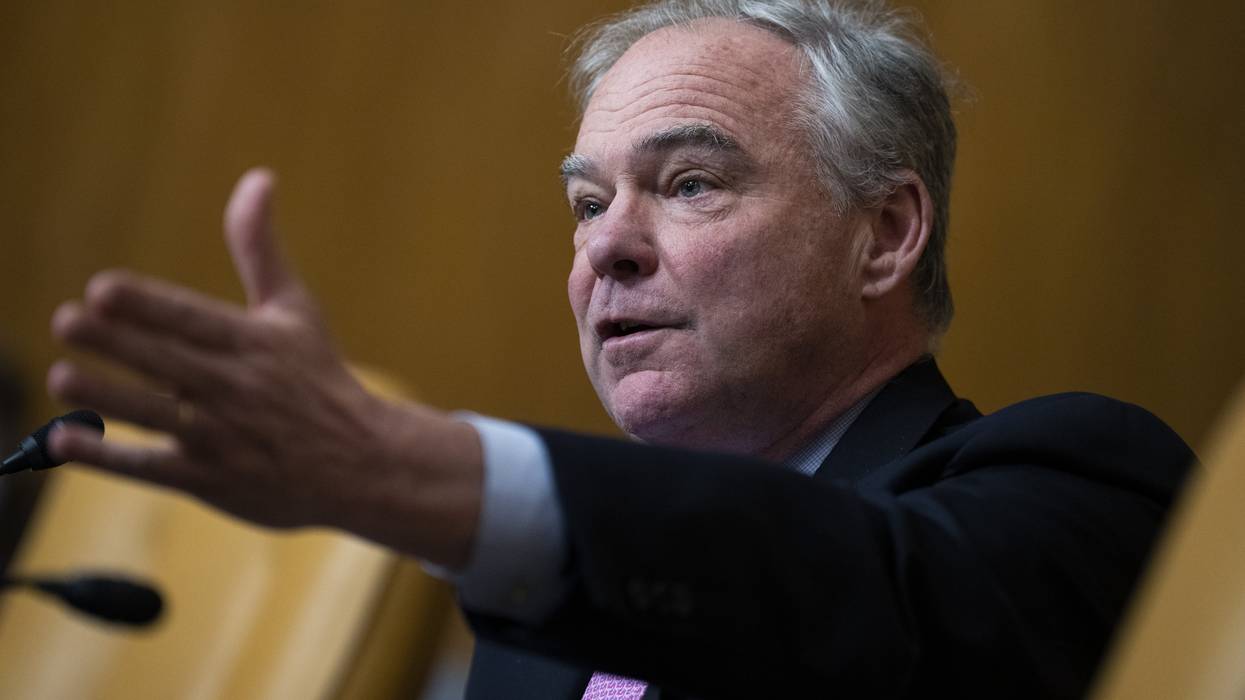
We face an unprecedented fascist and imperialist threat from the Trump administration; mealy-mouthed centrist imperialism just won’t do the trick.
On Friday, the Trump administration announced a “deal” handing the United States 65 billion barrels of Venezuelan crude oil, roughly a fifth of the country’s total reserves (the largest on Earth), on leases running up to 100 years. They would give $200 billion, or just about $3 a barrel (just 3% of market value) to Venezuela. If this was a fair “deal,” following market value, it should be over $6 trillion. That may be the biggest fraud in human history.
Billionaires are already circling like vultures. A Coinbase co-founder is in talks to run his own Venezuelan oil fields, and pro-Israel megadonor Paul Singer is positioned to profit too. The arrangement comes eight months after US special forces stormed and carpet-bombed Caracas and abducted President Nicolás Maduro.
Marines have openly occupied the streets of Caracas since, doing numerous muscle-flexing helicopter raids across the city. The administration has said Venezuela is “not ready yet” for elections, despite running their own elections for decades—plus, why does the US get to dictate when and if countries can have elections, anyway?
The Pentagon itself reportedly holds a 35% stake in the venture set to extract the oil, and Secretary of State Marco Rubio runs the country as its de facto “viceroy," according to The New York Times. The whole scheme was backed by neocons like the Vandenberg Coalition and the Florida lobby.
Would the US accept it if China, Russia, Iran, or Mexico kidnapped a US president, bombed American fishermen, seized American oil fields, and installed a puppet government because officials in Beijing or Tehran deemed it “in the national interest”?
I guess they’ve stopped pretending this was ever about democracy or drugs (the original bogus reason). It is now even being sold as the cure-all for a worsening recession and a pre-midterm buy-off, even as the affordability crisis worsens.
President Donald Trump and the neocons’ message seems to be: It’s fine to steal trillions from other countries, kidnap their leaders, kill civilians, and install puppet governments, for profit. We skipped the Cold War and went straight back to old-school imperialism.
As almost always, most of the windfall from this “deal” will go to the super rich. Gas prices keep climbing, but oil majors are hitting record highs on Wall Street. Chevron’s stock sits near an all-time high as it committed $7 billion to the new venture. Canada’s largest oil investor also hit an all-time high in the stock market the day of the news.
You may ask yourself, how have Democrats responded to all this depravity and barbarism? Well, would it shock you if I said most Democratic politicians have attacked Trump from the right, and legitimated his warmongering? Unfortunately, it probably won’t.
My home state’s senator, the ever-boring Tim Kaine (D-Va.), joined by Chuck Schumer (D-NY) and Adam Schiff (D-Calif.), filed a war-powers resolution to block what they called an “illegal war” with Venezuela. “Illegal” is the operative word. Their objection is that Congress never voted on this, not that invading, bombing, and looting a sovereign country is morally wrong.
In a Tweet, quoting the right-wing oil-funded Wall Street Journal, Kaine added that Trump had "Invaded Venezuela, Removed the dictator Maduro but... Kept his VP in power While blocking opposition leader and Nobel laureate Maria Corina Machado from returning home and delaying all talk of elections," ending on "So the US could control Venezuelan oil in violation of its constitution!"
Now we see why Trump
Invaded Venezuela
Removed the dictator Maduro but . . .
Kept his VP in power
While blocking opposition leader and Nobel laureate Maria Corina Machado from returning home
And delaying all talk of elections
So the US could control Venezuelan oil in violation…
— Tim Kaine (@timkaine) August 29, 2026
He's basically saying, "We want to coup foreign governments to put in a far-right puppet and take their oil, LEGALLY." We don't need Mickey Mouse anti-imperialists.
If Congress had passed a resolution approving all of it, the way it did for the wars in Iraq, Libya, and Afghanistan, would that make it morally acceptable? Of course not. Torture under the Bush administration was legal, as was the US colonization of the Philippines, and even the Transatlantic Slave Trade, for that matter.
But for Democratic leadership, this was never about principle, or backing a truly progressive foreign policy vision; they just care about opposing Trump for its sake, and respecting the oh-so-perfect process. Though legislating morality is the purpose of law, legality and morality are not the same—and in this case, legal approval means nothing.
This is nothing new. Democrats have spent decades backing a hawkish, neoliberal Venezuela policy. During the 2002 coup that briefly ousted democratically elected president Hugo Chávez, then-Sen. Joe Biden dodged the question on television before pivoting, months later, to demand Washington “ratchet this up” against Chávez. By 2006 he was warning of an “axis of oil” led by Venezuela, echoing talking points from neoconservatives like Iraq War architect John Bolton.
Washington-aligned opposition forces also waged the 2002-2003 PDVSA oil lockout meant to strangle Chávez’s government economically. In 2019, when Trump anointed the unelected Juan Guaidó as president, Rep. Nancy Pelosi (D-Calif.) recognized him, and most congressional Democrats stayed silent or lined up behind her.
Now, with the Pentagon routinely bombing fishing boats off Venezuela's coast for months, which it says, without evidence, are narco boats, killing hundreds of civilians, Democrats’ loudest objection was, again, that Congress hadn’t authorized it.
They wanted to see “proof” of these being narco boats, rather than focusing on the more important point: Are we okay with just murdering any suspected criminal? This is the kind of logic that leads to right-wing politicians arguing to kill thieves and petty drug peddlers, like in Brazil and the Philippines.
Hillary Clinton, of all people, said more than many elected Democrats would. Now Democrats are lining up behind Delcy’s far-right replacement-in-waiting, María Corina Machado. Even the Central Intelligence Agency thought she was too extreme and alienating to be Maduro’s replacement. Yet, Sens. Dick Durbin (D-Ill.) and Jeanne Shaheen (D-NH) met with Machado months before she shamefully won the 2025 Nobel Peace Prize (before giving it to Trump). Durbin later co-sponsored a resolution honoring her alongside far-right Republican Sens. Ted Cruz (Texas) and Rick Scott (Florida). Most Democrats have been backing her as the next president, calling her a “champion of democracy,” among other ridiculous stolen valor.
Machado, backed by the Bush administration and US intelligence agencies, backed the 2002 coup; relentlessly pushed for and defended the sanctions that starved her own country; wants to privatize PDVSA and hand away her country’s, in her own words, “trillions of dollars of natural resources” to the US on Donald Trump Jr.'s podcast; and has praised autocrats like Daniel Noboa, Javier Milei, and Nayib Bukele.
Machado is “completely aligned,” historian Greg Grandin told Democracy Now!, “with the most militarist and darkest face of US imperialism. She was the main force lobbying for the coup against Maduro, and has supported the boat strikes on fishermen, her own fellow citizens. She has been supported by neocon war criminals like John Bolton, Elliott Abrams, and Mike Pompeo—does that sound like someone the Democrats should be backing?
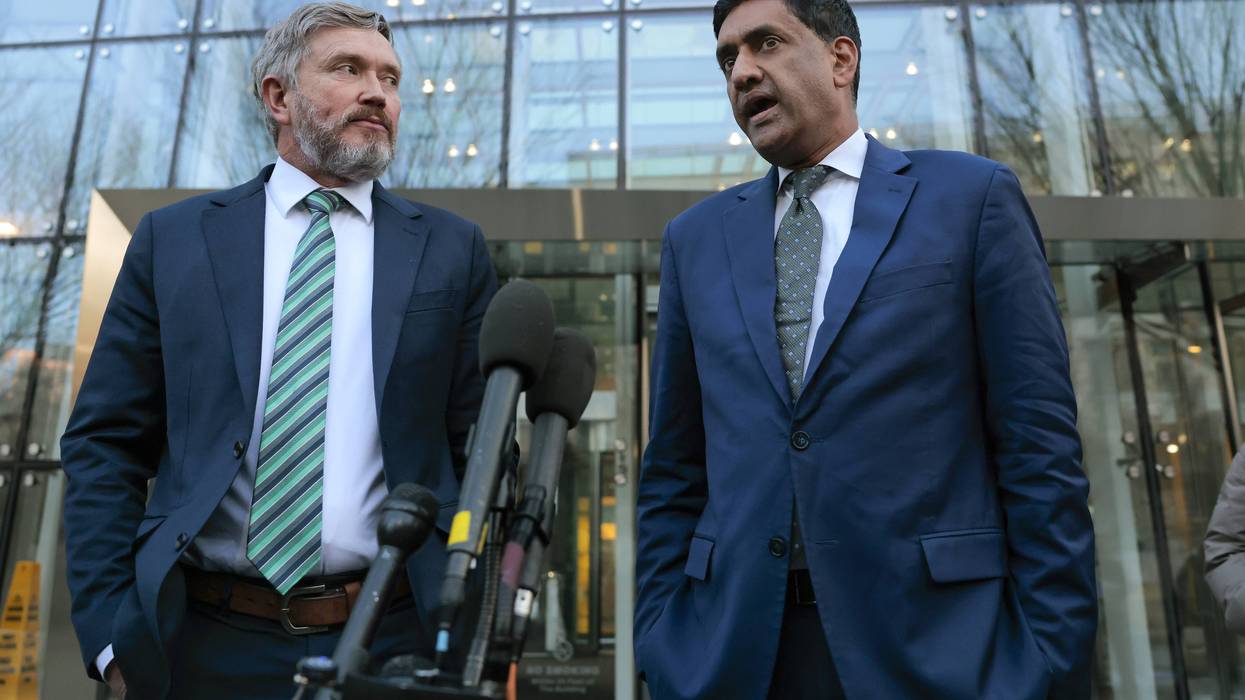
There are, still, some exceptions worth naming. Rep. Ro Khanna (D-Calif.) has made the actual moral case, not just the legal one, calling Trump’s approach a return to "the era of gunboat diplomacy where might makes right” and saying plainly, “It's not just that it's strategically wrong. It's morally wrong.” Sen. Chris Van Hollen (D-Md.) has also warned against letting “control of the world’s most powerful military” rest in one man's hands, and called out Trump’s imperialism plainly.
Expanding the anti-war coalition, libertarian Rep. Thomas Massie (R-Ky.) has repeatedly co-sponsored bipartisan war-powers resolutions with Democrats Rep. Jim McGovern (Mass.) and Joaquin Castro (Texas), arguing, “This is not about drugs; this is about oil and regime change... our troops are not pawns to be risked for the profits of oil companies and investment bankers.” A real transpartisan anti-war bloc is possible, it just needs bold politicians to lead it.
We face an unprecedented fascist and imperialist threat. Washington is using its world-bending power to expand its territory, remove leaders who won’t play ball with US crony and intelligence interests, and turn sovereign countries into de facto American possessions. Venezuela, as even the often-disappointing New York Times has reported, has effectively become a US colony.
Mealy-mouthed centrist imperialism just won’t do the trick. A legal invasion is still an invasion. Pursuing “US interests” doesn't give any official carte blanche to roam the world like rogue thugs. Would the US accept it if China, Russia, Iran, or Mexico kidnapped a US president, bombed American fishermen, seized American oil fields, and installed a puppet government because officials in Beijing or Tehran deemed it “in the national interest”? They might nuke them within the hour.
All empires end at some point. When it does, no power will grant the US the mercy it denied the countries it pillaged.
Democrats, and American officials generally, should recognize their precarious position in a world increasingly turning toward rivals like China, and finally build that coalition in earnest. Thankfully, there are now constituencies challenging Washington’s neo-imperial consensus, in academia, in think tanks, at the State Department, and even in Congress, that are growing too significant to ignore.

"The United States cannot keep bankrolling this violence and looking the other way—it’s time to end our complicity, once and for all," said US Sen. Bernie Sanders.
A group of Senate Democrats on Thursday announced plans to introduce a privileged resolution requiring the Trump administration to give Congress more information about violence carried out by extremist settlers in the Israeli-occupied West Bank.
Led by Sens. Chris Van Hollen (D-Md.), Tim Kaine (D-Va.), and Bernie Sanders (I-Vt.), who caucuses with Democrats, the lawmakers are demanding the US Department of State produce reports detailing investigations into the killings of nine US citizens at the hands of Israeli settlers in recent years, as well as assessments on the human rights impact of Israeli policies such as the detention of Palestinian children.
Van Hollen said the resolution was necessary because the Trump administration has done nothing to hold the Israeli government accountable for the deaths of US citizens.
"As we've seen violence rise in the West Bank, American citizens have been killed time and again, and they have received no justice and no accountability," said Van Hollen. "It’s past time we get answers on their deaths—and on the growing violent instability in the West Bank and the injustices facing Palestinian civilians on a daily basis."
Sanders accused the Israeli government of offering "impunity" to settlers who carry out "horrific violence" against Palestinian civilians regularly.
"Enough is enough," said Sanders. "The United States cannot keep bankrolling this violence and looking the other way—it’s time to end our complicity, once and for all."
Kaine described the Israeli government's "lack of response" to the settler violence as "unacceptable," saying it "threatens the long-term safety and security of the entire region."
"Friends need to listen to each other," said Kaine, "and my colleagues and I have repeatedly urged Israeli leaders to take firmer action to curtail illegal settlements in the West Bank, prosecute violent settlers, and protect Palestinian residents as well as American citizens living in or visiting the West Bank."
Sen. Elizabeth Warren (D-Mass.), who is also supporting the resolution, slammed the Trump White House's complicity in the Israeli settler attacks, nothing that the administration "has even gone so far as to reverse sanctions against individuals connected to this pattern of horrific violence."
"It's long past time for the US government to stand up for human rights," said Warren, "investigate this violence against Americans and Palestinian civilians, provide full information to Congress, and hold the perpetrators accountable."
By introducing the measure as a privileged resolution, the Democrats can force a vote on it on the floor of the US Senate if the chamber's Foreign Relations Committee fails to act on it within 10 days of its introduction.
Human rights organizations for months have been sounding the alarm about the situation in the West Bank, where Israeli settlers have routinely attacked Palestinians at their own homes.
An analysis published by the Carter Center last month found that "settler attacks are now the leading cause of Palestinian injuries in the West Bank," as "more than 3,200 Palestinians have been displaced by settler attacks and home demolitions this year—double the daily rate of the previous three years."

"I urge you to halt this illegal, costly, and ineffective operation."
Sen. Tim Kaine on Monday accused the Trump administration of committing murder with its campaign of military strikes against purported drug trafficking vessels, which has killed at least 221 people since its launch in September 2025.
In a letter sent to President Donald Trump, Kaine (D-Va.) said that he reviewed classified notifications sent to Congress related to the boat strike campaign and concluded that the US "is engaged in violent and fatal attacks against people far beyond those" whom the Department of Justice Office of Legal Counsel (OLC) said would be legitimate military targets.
Kaine didn't go into detail about the OLC's classified legal opinion justifying the strikes, but he said the evidence he has gathered suggests the US "has killed individuals who are not involved in narcotrafficking."
"They are murder victims," Kaine emphasized.
Kaine also pointed to a recent analysis conducted by the Drug Enforcement Administration, first reported on by The Washington Post last month, which found that the boat strike campaign "has had no effect on the flow of illegal drugs into the United States."
Kaine concluded his letter by urging Trump to "closely examine the circumstances of these strikes, to ensure that you are personally aware of the extent to which the leadership of the Department of Defense has exceeded your July 2025 directive, incurring massive expense and operating with dubious legality, and with no progress towards your stated objective."
"And once you have done so," Kaine added, "I urge you to halt this illegal, costly, and ineffective operation."
Despite Kaine's warnings, there is little sign that the administration is rethinking its boat strike campaign.
US Southern Command (SOUTHCOM) on Monday announced the formation of the Joint Task Force Western Hemisphere, a new command structure aimed specifically at combating international drug cartels.
Journalist Juan Esteban Silva described the announcement of the task force as "major shift" in US security strategy that is putting "Colombia and Venezuela... at the center of the conversation."
An analysis published by The Diplomatic Insight on Tuesday said the SOUTHCOM announcement "aligns with Trump administration’s anti-narcotics campaign under a permanent command structure with expanded geographic reach, part of what the administration has described as a 'maximum pressure' policy against transnational criminal networks in the hemisphere."
The analysis also noted that the new command structure replaces Joint Task Force Southern Spear, which has been responsible for carrying out boat strike operations in the Caribbean and Eastern Pacific Ocean.

The latest killing came a day after a Democratic senator revealed that "the presence of narcotics on the boat has never been a targeting criteria" in the boat bombings.
The Trump administration killed two more people in a boat bombing in the eastern Pacific Ocean Wednesday, bringing the total number of people killed in the operation human rights experts have condemned as an "extrajudicial killing" spree to at least 207.
"The Trump administration’s lawless killing spree at sea continues," said Brian Finucane, senior adviser at the US program at the International Crisis Group. "The term for premeditated killing outside of armed conflict is murder—and there is no armed conflict here."
As with previous announcements of the lethal boat strikes, at least 63 of which have now been carried out by the US military in an operation the Trump administration has insisted is stopping drugs from reaching the US, US Southern Command presented no evidence Wednesday night when it said the victims were "two male narco-terrorists" and that the boat was "engaged in narco-trafficking operations."
Finucane noted that "even if there were an armed conflict, there’s no indication these supposed 'narco-terrorists' are lawful targets."
President Donald Trump has claimed the US is in an armed conflict with drug cartels in Latin America, and that the Caribbean and eastern Pacific are a legitimate battleground where the conflict has played out. But a number of victims have been identified as fishermen, and families have filed legal complaints against the US over the killings.
After the bombings began in September, Vice President JD Vance all but publicly admitted that the operation would put innocent people at risk, joking at a rally that he "wouldn’t go fishing right now in that area of the world."
The US in the past has treated drug trafficking as a criminal issue, in accordance with international law. A top military lawyer warned the Pentagon last August, just before the operation began, that carrying out the boat bombings could put top officials as well as rank-and-file service members at risk of being held criminally liable.
"Over 200 people killed so far, some who seem likely to have died agonizing deaths by drowning after clinging to wreckage for hours, with no trials, and without a single piece of evidence released to the public of their guilt or of any intent to smuggle drugs to the United States," said Aaron Rechlin-Melnick, a senior fellow at the American Immigration Council.
The latest boat bombing came a day after US Sen. Tim Kaine (D-Va.) revealed a key detail about the "targeting criteria" the military has been using as it's conducted the bombings since last September.
On Tuesday at a hearing where Secretary of State Marco Rubio testified, Kaine noted that "evidence of narcotics on the boat" has not been a prerequisite for US Southern Command to conduct lethal strikes in Operation Southern Spear, despite the fact that the administration has insisted the operation is aimed at stopping drug trafficking boats from reaching the US.
"I've been briefed on Southern Spear since the first operation on September 2 and most recently within the last couple of weeks, and I've asked again and again, 'Have the targeting criteria changed?' 'No they have not,'" said Kaine. "The presence of narcotics on the boat has never been a targeting criteria."
Despite that, Kaine noted, "The administration has always announced, 'This is against narco-traffickers'" when a new strike has been carried out.
Adam Isacson, director for defense oversight at the Washington Office on Latin America, pointed out that Operation Southern Spear comes two decades after human rights groups presented evidence to US military leaders that "their Colombian military partners were carrying out extrajudicial executions" in what became known as the "false positive" killings.
As Human Rights Watch has explained:
Between 2002 and 2008, army brigades across Colombia routinely executed civilians. Under pressure from superiors to show “positive” results and boost body counts in their war against guerrillas, soldiers and officers abducted victims or lured them to remote locations under false pretenses—such as with promises of work—killed them, placed weapons on their lifeless bodies, and then reported them as enemy combatants killed in action. Committed on a large scale for more than half a decade, these “false positive” killings constitute one of the worst episodes of mass atrocity in the Western Hemisphere in recent decades.
"Now," said Isacson, US officials are "carrying out their own extrajudicial executions every few days. No middleman."
Journalist Joseph Bouchard said the boat strikes could be called the United States' "own false positives scandal."
"None of these have been military targets," said Bouchard. "And even then, do we just kill drug traffickers now, without trial? Better name might be the classic 'crimes against humanity.'"
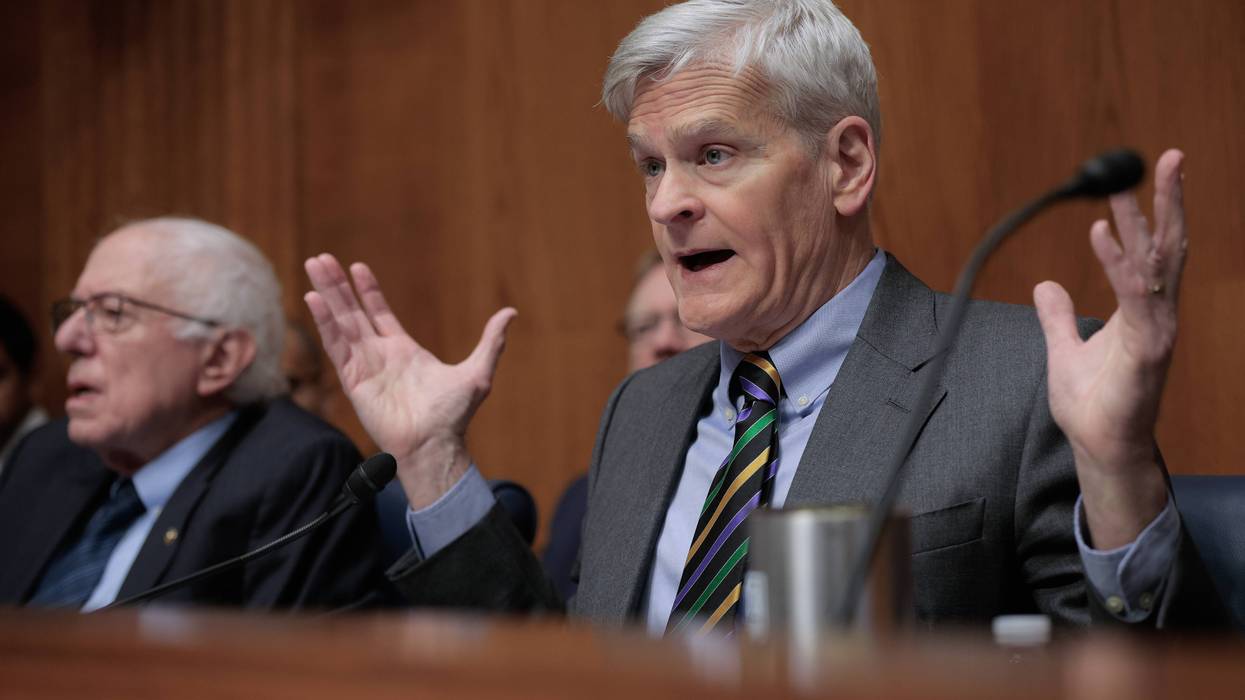
"This is a major blow for the disastrous, backfiring war and sends a clear signal to President Trump: End the war, do not escalate it," said NIAC. "The hard work of pro-peace Americans is paying off."
After months of failed votes on Democratic war powers resolutions intended to end President Donald Trump's illegal assault on Iran, the US Senate finally advanced legislation to a final vote on Tuesday, when a fourth Republican broke ranks.
Sen. Bill Cassidy (R-La.) joined three other Republicans and all Democrats but one for the 50-47 vote on a motion to discharge Sen. Tim Kaine's (D-Va.) bill from committee. Cassidy's move notably came just days after he lost a primary race in which Trump backed one of his challengers—apparent retribution for the senator voting to convict Trump following his historic second impeachment.
"While I support the administration's efforts to dismantle Iran's nuclear program, the White House and Pentagon have left Congress in the dark on Operation Epic Fury," Cassidy said on social media Tuesday. "In Louisiana, I've heard from people, including President Trump's supporters, who are concerned about this war. Until the administration provides clarity, no congressional authorization or extension can be justified."
The US and Israel launched the operation on February 28, without authorization from Congress and in violation of the United Nations Charter. Faced with a key deadline under the War Powers Act earlier this month, the White House claimed the conflict had been "terminated" due to a ceasefire agreement reached hours after Trump's genocidal threat against Iran on April 7. However, the president has maintained a naval blockade, and Iran has continued to limit ship traffic through the Strait of Hormuz.
As with last week's vote on a war powers resolution from Sen. Jeff Merkley (D-Ore.), Sens. Susan Collins (R-Maine), Lisa Murkowski (R-Alaska), and Rand Paul (R-Ky.) backed the new motion, while Sen. John Fetterman (D-Pa.) voted with the GOP. A potential tie was avoided on Tuesday when Sens. John Cornyn (R-Texas), Thom Tillis (R-NC), and Tommy Tuberville (R-Ala.) did not participate.
The Associated Press noted that Kaine's bill "will get a vote on final passage, but the timing was not immediately clear," and if the three Republicans who were absent Tuesday maintain their stances on the war, the resolution could still ultimately be defeated.
Despite that uncertainty, congressional Democrats and other critics of the illegal assault welcomed the Tuesday vote that followed seven unsuccessful votes in the Senate and many more in the House of Representatives, where Republicans also have a narrow majority.
"This is a major blow for the disastrous, backfiring war and sends a clear signal to President Trump: End the war, do not escalate it," the National Iranian American Council (NIAC) declared on social media. "The hard work of pro-peace Americans is paying off."
NIAC president Jamal Abdi said that "it has taken 10 weeks and a dozen votes but Congress is finally coming in line with the vast majority of Americans who oppose the senseless war on Iran... There are strong odds it will pass in the Republican-controlled House later this week."
Senate Minority Leader Chuck Schumer (D-NY) said in a statement that "vote by vote, Democrats are breaking through Republicans' wall of silence on Trump’s illegal war."
"For more than 80 days, Trump has dragged America into a costly, chaotic conflict with no plan, no objective, and no legal authority," he continued. "Today proved our pressure is working: Republicans are starting to crack, and momentum is building to check him. We are not letting up."
According to The New York Times, Kaine similarly said that "the momentum is moving our way slowly."
While Trump would be able to veto a war powers resolution that reached his desk, Democrats have argued that passing one would make clear to him that his assault on Iran is unpopular. Kaine said that "what the president cares about is his own popularity, and when Congress, even including members of his own party, start to vote against him."
Kaine expects a final vote to come after the Memorial Day recess, and expressed hope that lawmakers returning to their state or districts will hear from frustrated constituents. He predicted that "people are going to hear an earful when they get home about gas prices," which have soared due to the Strait of Hormuz closure.
Alix Fraser, vice president of advocacy at the pro-democracy group Issue One, called Tuesday's vote "a significant step in the effort to reestablish one of Congress' most sacred roles—the constitutional right to send American men and women to war."
Fraser applauded "the senators who voted to reaffirm Congress's constitutional role in decisions of war and peace," recognizing by name the Republicans who had the "for having the courage to stand up for the American service members being asked to risk their lives, as well as for the American families already struggling with rising costs at home."
He also urged the House "to follow suit," emphasizing that "this is a pivotal moment for our democracy. We must decide whether future generations will inherit a system in which the representatives of the American people debate and authorize the most consequential decisions, like going to war—or whether we normalize a system where presidents can unilaterally lead the country into ill-defined and open-ended conflicts."
“Americans should remain concerned about the broader structural weaknesses that allowed the country to reach this point without meaningful congressional involvement from the outset," Fraser added. "The current war powers framework needs to be reformed to empower the legislative branch and follow the constitutional process that the framers intended."

"The last thing working Americans need right now is another war," said the Senate's top Democrat.
The US Senate on Tuesday defeated a Democrat-led bid to stop President Donald Trump from following through on his threat to wage war on Cuba, whose long-suffering people are reeling from the American administration's tightened economic stranglehold.
Upper chamber lawmakers voted 51-47 on a procedural motion to block further debate Sen. Tim Kaine's (D-Va.) SJ Res. 124, "a joint resolution to direct the removal of United States armed forces from hostilities within or against the republic of Cuba that have not been authorized by Congress."
Republican Sens. Susan Collins of Maine and Rand Paul of Kentucky voted to advance the resolution, while John Fetterman of Pennsylvania joined his GOP colleagues in voting to sink the measure.
The vote effectively sidelines the measure, one of many failed attempts to curb Trump's ability to wage war on countries including Iran and Venezuela, as well as rein in his high seas boat bombing spree.
“The American people are not asking for another war," Sen. Ruben Gallego (D-Ariz.)—one of SJ Res. 124's dozen co-sponsors—said following Tuesday's vote. "They want us focused on building housing in Arizona, not bombing housing in Havana. They want us to lower the cost of healthcare not condemn a generation of veterans to a lifetime of hospital visits. They want us to make their lives more affordable, not spend their tax dollars on unnecessary wars."
Kaine called the GOP move "purely a regime change effort."
"Why do they want it? You'll have to ask them," he added. "What we're doing with respect to Cuba, if somebody was doing it to us, we would consider it an act of war. But because they don't pose a security threat to the United States, it's clearly an effort to change the regime."
Senate Minority Leader Chuck Schumer (D-NY), who also co-sponsored the resolution, said, "The last thing working Americans need right now is another war—let alone one that’s 90 miles south of the US."
Resolution co-sponsor Sen. Angela Alsobrooks (D-Md.) said on Bluesky after the vote, "A conflict with Cuba would cost hardworking Americans billions of dollars, deepen the humanitarian crisis in Cuba, and put American service members in harm’s way."
"The Constitution is clear: Only Congress has the authority to declare war," Alsobrooks added.
Trump has attacked seven countries since returning to office and 10 since the start of his first term—more than any other president.
The situation in Cuba is dire, as a result of both the 65-year US economic chokehold on the island and mismanaged central planning by its socialist rulers.
Trump has been ramping up military threats and economic pressure on Cuba, whose people were already suffering from generations of US sanctions. His administration's tightened embargo has severely restricted fuel imports, worsening an energy emergency in which blackouts have become the norm, threatening the lives of vulnerable Cubans—especially sick people and children.
The US president said that “we may stop by Cuba after we’re finished" with the illegal US-Israeli war of choice on Iran that’s killed thousands of people, including hundreds of children. Trump has also said that he believes he’ll “be having the honor of taking Cuba."
The United States already took Cuba once, during an 1898 war waged against Spain under highly dubious pretenses that ended with the US also acquiring Puerto Rico, the Philippines, and Guam—with Hawaii also annexed that year under the guise of security.
American presidents have been trying to force out Cuba's socialist government since shortly after the revolution that overthrew a US-backed dictatorship in 1959. US efforts have included carrying out or backing an armed invasion, terrorist attacks, assassination attempts, and other acts of aggression.
Cuba commits no such acts against the United States or anyone else, yet Trump added the country to the US State Sponsors of Terrorism list.
Following Tuesday's vote, Sen. Ed Markey (D-Mass.) said that "Trump should learn the law of holes: If you find yourself in one, stop digging."
"Instead of threatening that ‘Cuba is next,’ President Trump should remove his blockade against Cuba, which has devastated Havana’s economy and healthcare system, and has created a deepening humanitarian crisis," Markey added.
The United Nations General Assembly has overwhelmingly condemned the blockade 33 times since 1992.
“With its catastrophic Iran war of choice, the Trump administration has lost all credibility on issues of war and peace," Markey asserted. "The American people do not want yet another endless war that will only costs more lives and more taxpayer dollars, and undermine US security.”
Progressive International co-general coordinator David Adler warned Tuesday that "Trump is preparing military action against Cuba," calling the Senate vote possibly "the last chance for US Congress to stop it."
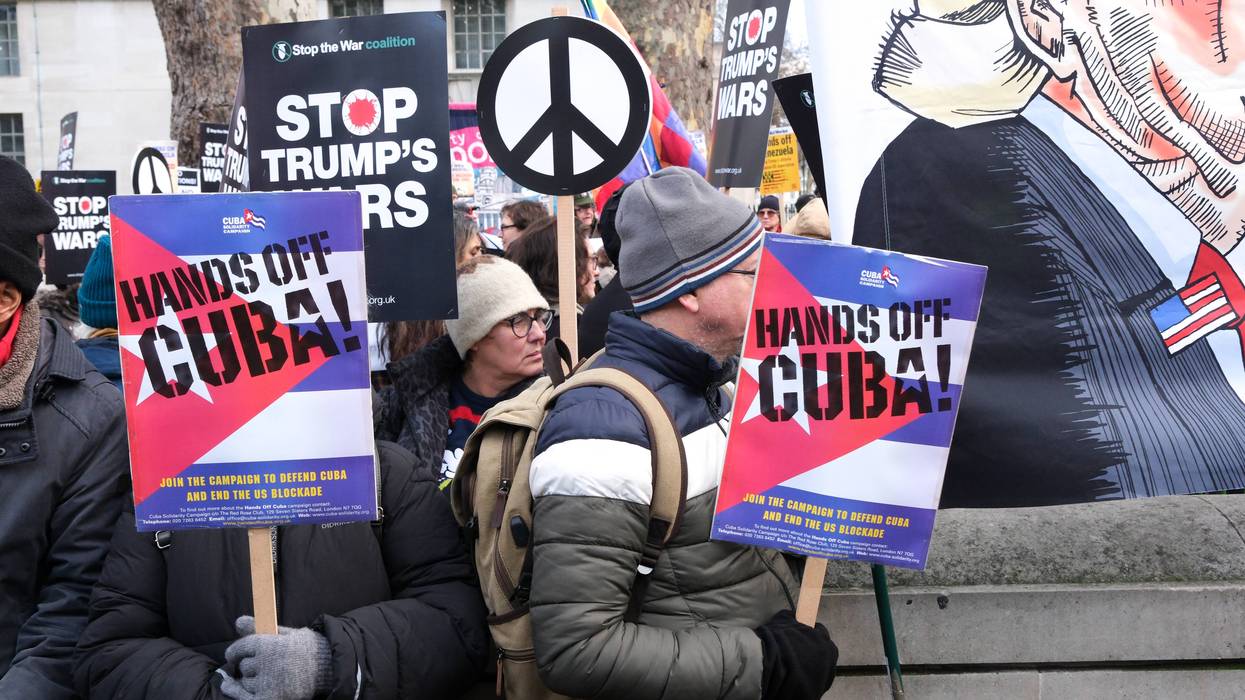
"When will President Trump understand that Americans want lower prices, not more unnecessary wars?"
As President Donald Trump continued to face global criticism for his and Israel's joint assault on Iran, a trio of US Senate Democrats on Friday introduced a war powers resolution intended to prevent him from also attacking Cuba without congressional authorization amid talks with the island's government.
Despite the US Constitution empowering Congress to declare war, Trump this year has not only launched Operation Epic Fury against Iran but also killed dozens of Venezuelans and Cubans in a military invasion to abduct President Nicolás Maduro, sent troops to Ecuador for a joint campaign to combat "narco-terrorism," and blown up over 150 people allegedly trafficking drugs in Caribbean Sea and Pacific Ocean in bombings that critics have called "war crimes, murder, or both."
"When will President Trump understand that Americans want lower prices, not more unnecessary wars?" asked Sen. Tim Kaine (D-Va.), who is spearheading the Cuba measure with Sens. Adam Schiff (D-Calif.) and Ruben Gallego (D-Ariz.). A member of the Senate Armed Services and Foreign Relations committees, Kaine also led the war powers resolution on Iran that Sen. John Fetterman (D-Pa.) and nearly all Republicans blocked last week.
Despite constitutional limits, Trump "operates with the belief that the US military is a palace guard, ordering military action in the Caribbean, Venezuela, and Iran without Congress' authorization or any explanation for his actions to the American people," said Kaine. "We shouldn't risk our sons and daughters' lives at the whims of any one person."
The Biden administration intended to cut Cuba from the State Sponsors of Terrorism list, but Trump reversed course after returning to office last year and revived a list of "restricted entities" established during his first term. US Secretary of State Marco Rubio, the son of Cuban immigrants and longtime supporter of regime change on the island, also expanded a visa policy targeting Cuba's international medical missions.
Since Trump's operation to abduct Maduro and seize control of his country's nationalized oil industry—which led to protests in Venezuela and Cuba—Trump has also ramped up the United States' decades-long economic blockade against the island, cutting off shipments of Venezuelan oil, with dire consequences for the Cuban people.
As Marta Hurtado, a spokesperson for United Nations High Commissioner for Human Rights Volker Türk, explained last month: "Given the dependence of health, food, and water systems on imported fossil fuels, the current oil scarcity has put the availability of essential services at risk nationwide. Intensive care units and emergency rooms are compromised, as are the production, delivery, and storage of vaccines, blood products, and other temperature-sensitive medications."
Meanwhile, Trump and his allies have signaled they're considering an attack on the island. Trump told reporters late last month that "the Cuban government is talking with us," but also said that "maybe we'll have a friendly takeover of Cuba."
Just days later, after Trump ditched nuclear negotiations with Iran and teamed up with Israel to bomb the Middle Eastern country, Sen. Lindsey Graham (R-SC) declared during a Fox News interview: "Cuba's next. They're gonna fall."
Noting the rising death toll for US service members involved in the war on Iran, Schiff said Friday that "the American people have spoken loud and clear that they do not want any more costly wars of choice that skyrocket prices at home."
"The president's saber-rattling toward Cuba makes clear where his sights are next," he continued. "Congress must make its voice heard, or we risk involvement in another risky war of choice and losing our constitutionally granted authorities forever."
Gallego also highlighted how Trump's misadventures abroad are impacting US citizens, as Americans contend with surging gasoline prices on top of high costs for groceries, housing, and health insurance, plus massive cuts to social safety net programs that congressional Republicans and the president imposed with their budget package last year to give more tax cuts to the rich.
"As if the disaster of the Iran War and the resulting spike in oil prices weren't enough, Trump is now threatening to intervene in Cuba as well," said Gallego, a former Marine who served in the Iraq War. "He ran on America First, but now it's clear he's become a puppet of the war hawks in his party. The American people want nothing to do with nation building—they want lower prices, good healthcare, and affordable homes, not a new war to satisfy neoconservatives in South Florida."
The senators announced their resolution as Cuban President Miguel Díaz-Canel publicly confirmed that his government recently held "sensitive" talks with the Trump administration "to determine the willingness of both parties to take concrete actions for the benefit of the people of both countries. And in addition, to identify areas of cooperation to confront threats and guarantee the security and peace of both nations, as well as in the region."
According to The Associated Press:
US Secretary of State Marco Rubio and top aides met late last month in the Caribbean with the grandson of retired Cuban leader Raul Castro, two US officials said Friday shortly after Díaz-Canel spoke.
The US officials, who spoke on condition of anonymity because of the sensitivity of the discussions, said that Rubio had met secretly with Raúl Guillermo Rodriguez Castro on the sidelines of a Caribbean Community leaders meeting in St. Kitts and Nevis.
Rubio's meeting coincided with a shootout involving men on a Florida speedboat and Cuban forces that left five suspects dead and five others detained in Cuba, facing terrorism charges. The AP noted that when asked about that case on Friday, Díaz-Canel "said that FBI officials would visit Cuba soon as both countries continue to share information on the incident."
During his remarks to reporters, Díaz-Canel also noted the "tremendous" impact of the oil blockade, which has affected communications, education, healthcare, and transportation.
Sharing a clip of the Cuban leader's comments on social media, Progressive International co-general coordinator David Adler said: "I am asking you to imagine how a civilian population of over 10 million people can survive without any access to imported energy for three whole months. In Cuba, the United States is committing the most barbaric war crimes known to man—and Washington simply shrugs it off."
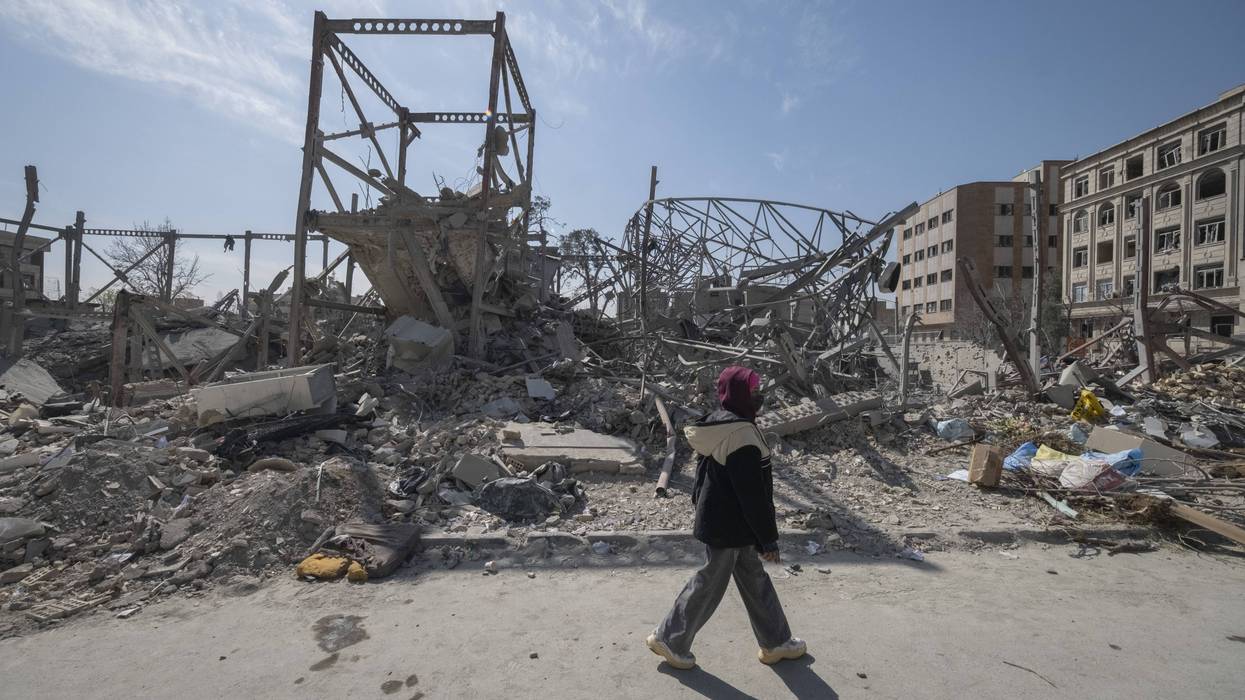
The Pennsylvania Democrat "and his GOP colleagues now share ownership of Trump's stupid, unpopular, unjustified, and already tragic war—and the fallout," said Indivisible.
Democratic US Sen. John Fetterman of Pennsylvania voted with nearly every Senate Republican on Wednesday to block a war powers resolution intended to halt President Donald Trump and Israeli Prime Minister Benjamin Netanyahu's war on Iran.
Only Sen. Rand Paul (R-Ky.), who co-sponsored S.J.Res.104 with Sen. Tim Kaine (D-Va.), joined Democrats for the 47-53 vote on the motion to discharge the measure, which would direct the removal of US armed forces from hostilities with Iran.
"This is shameful," declared the anti-war group CodePink, calling out the senators who voted to let the war continue. "The blood is on their hands."
The grassroots group Indivisible similarly said that Fetterman "and his GOP colleagues now share ownership of Trump's stupid, unpopular, unjustified, and already tragic war—and the fallout."
So far, over 1,000 people have been killed in Iran—including around 175 in an attack on a girls' elementary school in Minab—according to the Iranian government, and six US service members are dead.
Cavan Kharrazian, senior policy adviser at the group Demand Progress, said in a statement that "the American people will remember who voted to continue an illegal, unnecessary war. Every senator who voted against the war powers resolution also voted against the wishes of the American people and against the safety of the service members they are sworn to protect."
"The stakes are clear, and there is no more time for political games," Kharrazian continued. "We cannot accept anything except full opposition to Trump's war. This means no votes to authorize it for any period of time and no votes for spending a single penny on it."
The vote came after Senate Democrats left a Tuesday night classified briefing even more concerned that the US-Israeli war on Iran will involve a ground invasion and drag on "forever." The Pentagon is reportedly planning to seek around $50 billion to fund the war, which has not been authorized by Congress and has been widely condemned as illegal under international law.
In the lead-up to the vote, Senate Minority Leader Chuck Schumer (D-NY) had urged Democrats and Republicans alike to "stand with the American people who are tired of war in the Middle East" and "act to stop Trump’s belligerence" by voting "yes."
Pointing to US Defense Secretary Pete Hegseth's Wednesday morning press conference, during which he suggested the war could last at least eight weeks, Schumer said that "one thing is crystal clear: America is at war with no plan, no strategy."
Schumer—who has faced criticism for not leading a strong enough opposition to Trump in general—continued:
In his own words, Hegseth said, "We are just getting started." Hegseth says, "We are accelerating, not decelerating." And in the wake of six brave Americans who died in uniform, Trump simply says: "There will likely be more. That's the way it is." This, my colleagues, is madness. Americans spent the last two decades fighting and dying in the Middle East. Parents watched their kids shipped off to foreign lands.
So many lives lost. So many billions wasted. So much suffering and anguish that scarred an entire generation. Why is Donald Trump hellbent on making history repeat itself? Why is he plunging America headfirst into a war that Americans do not want, and which he cannot even explain? Enough is enough. The American people deserve a say. And that is what our resolution is about.
As the voting got underway, Dylan Williams, vice president for government affairs at the Center for International Policy, a Washington, DC-based think tank, highlighted on social media that "Democrats are at their desks, while the Republican side is empty. The message is unmistakable. For Democrats this is a solemn moment. For Republicans it's just another vote."
The Senate blocked Kaine and Paul's measure from advancing to a final vote as the US House of Representatives on Wednesday debated H.Con.Res.38, a war powers resolution led by Reps. Thomas Massie (R-Ky.) and Ro Khanna (D-Calif.).
"The Constitution entrusts Congress to declare war—not the president," noted Alix Fraser, vice president of advocacy at Issue One. "Today's Senate vote on Sens. Tim Kaine's and Rand Paul's war powers resolution is the first step in setting a precedent to reclaim war powers from the president. We thank Kaine and Paul for bringing this resolution to the floor in a bipartisan manner and Paul for his bravery in standing up and exercising Congress' Article I responsibilities."
"War puts the lives of American military personnel at risk, and the potential economic fallout is massive. The disruption of energy supply chains risks raising the price of everything from fuel to food for everyday Americans. This is why the representatives of we the people must make this decision," he continued. "We hope that tomorrow, the House will follow the Senate's lead and vote on a war powers resolution. Even if the House votes down a war powers resolution like the Senate, this will be an important step in reclaiming our experiment in self-government that our founders intended."
Promoting the We the People Playbook crafted by his and other groups, Fraser stressed that "it is clear that more must be done to ensure that Congress plays its constitutional role. In two months, President Trump has started military conflicts in Iran and Venezuela without congressional approval, and it seems likely he will continue this course unless Congress steps up and reasserts its power."
"Lawmakers should have no doubt that this will be their equivalent of the Iraq War vote," said one observer.
Sponsors and supporters of bipartisan resolutions aimed at limiting US President Donald Trump's power to attack Iran are strongly urging Congress to back the measures when they're up for votes later this week, with some observers evoking the specter of the Iraq quagmire as a warning against yet another protracted and illegal war.
Anticipating Trump's June 2025 attack on Iran's nuclear facilities and scientists, Reps. Thomas Massie (R-Ky.) and Ro Khanna (D-Calif.) introduced H.Con.Res.38, which directs the president to "remove United States armed forces from unauthorized hostilities" against Iran. The measure has 83 other co-sponsors, all of them Democrats.
In the upper chamber, Sen. Tim Kaine (D-Va.) also introduced a war powers resolution, S.J.Res.59, last June.
"As a principled opponent of military adventurism since America’s 2003 invasion of Iraq, I was devastated this weekend when we learned that once again, American service members will be coming home in body bags," Khanna wrote in an opinion piece published Tuesday by Fox News.
"Trump announced: 'There will likely be more before it ends. That’s the way it is,'" Khanna added. "No. That’s not the way it is. That must not be the way it is. As Trump now refuses to rule out sending ground troops to Iran, I believe we must do everything in our power to stop this horrific war of choice before more Americans are killed."
At least six US troops and, according to the Iranian Red Crescent Society, nearly 800 Iranians have been killed since Trump and Israeli Prime Minister Benjamin Netanyahu launched the war on Saturday.
"The Constitution says we're not supposed to be at war without a vote of Congress," Kaine told NPR. "This is important. The lives of our troops are at risk. We ought to come back to Washington right away and vote on this."
As every single democrat in the universe should.
— Craig (@thelordgod.bsky.social) March 3, 2026 at 1:13 PM
The resolutions had been scheduled for debate and votes before Trump ordered the attack on Iran. With the war underway, some observers doubt whether passage of the measures would be an effective curb on the president's military campaign. If passed, Congress would likely have to vote on overriding Trump's anticipated vetoes, with an all-but-impossible two-thirds majority needed in both chambers.
The War Powers Resolution of 1973—also known as the War Powers Act—requires the president to notify lawmakers within 48 hours of committing troops to military action, and limits such action to 60 days, with a 30-day withdrawal period, unless Congress declares war or issues an authorization for the use of military force.
On Tuesday, six House Democrats—members of a faction that was reportedly working to thwart votes on the two resolutions—introduced a competing war powers resolution that would give Trump a month to continue the war without congressional approval.
“Of course Democrats who raced to applaud Trump’s illegal war in Iran—and in one case was pardoned by him—would draft a pro-war war powers resolution meant to sabotage the real war powers resolution receiving a vote this week," Demand Progress senior policy adviser Cavan Kharrazian said in response to the reporting.
Numerous groups are imploring Congress to pass the two original resolutions.
“President Trump—and Congress if it does not act to stop him—has effectively ceded American war-making authority to indicted war criminal Benjamin Netanyahu and dragged our nation into an unconstitutional war," Council on American Islamic Relations (CAIR) government affairs director Robert McCaw said Tuesday. "That is not self-defense. That is executive submission to Israel’s regional ambitions and warmongering."
“Six American service members are dead. More than 180 Iranian schoolchildren and teachers have been killed along with hundreds of others, as well as people in various countries," McCaw continued. "These are not abstractions. These are human beings lost in a war Congress never authorized and the American people never wanted."
“No president has the authority to start a war without congressional authorization for the benefit of a foreign government," he added. "The Constitution does not delegate war-making authority to foreign governments. It vests that power in Congress, and Congress must stop this war.”
Amid a massive anti-Iraq war movement in 2003, 72% of people in the U.S. still supported going to war.Today, even without an overwhelming anti-war movement, only 18% of people support war against Iran.This war is senseless, illegal, and unpopular. End it now.
— Institute for Policy Studies (@ips-dc.org) March 3, 2026 at 5:02 AM
Lisa Gilbert, co-president of the consumer advocacy group Public Citizen, said after Trump launched the attack on Iran that “the president who so pathetically claims to be deserving of a Nobel Peace Prize has launched a deadly and unconstitutional regime change war."
“There is no congressional declaration of war nor authorization for the use of force in Iran, making Trump’s actions transparently unconstitutional and illegal," Gilbert continued. "Importantly, Trump’s actions in Iran would be illegal under international law even if there were congressional authorization. Iran poses no imminent security threat to the United States."
"Exactly like the Iraq War Trump untruthfully claimed to have opposed, this is a war of choice driven by arrogance and imperial ambition," she added. "And exactly like the Iraq War, the risks are manifold—with needless short-term deaths inevitable and long-term consequences unknowable."
"Congress must act immediately to end this illegal and unconstitutional aggression," Gilbert stressed.
The progressive political action group Our Revolution said in an email that "Trump's illegal war with Iran is spiraling out of control—and Congress has only hours left to slam on the brakes."
"It could not be clearer that Trump has dragged us into a war with no endgame, no congressional debate, and no concern for who gets killed," the group added. "But with the House and Senate vote... we have a crucial chance to stop another forever war."
At the peace group Win Without War, deputy director Shayna Lewis said that “this war is flatly illegal—neither authorized by Congress, nor justified under any international law."
"Trump has similarly failed to make his case to the US public in any way," Lewis noted. "Instead, he has capriciously upended critical diplomatic negotiations to ignite a major, open-ended, region-wide war."
“While Trump has tried to portray himself as an ally to brave protesters in Iran facing grave violence, the Iranian government’s horrific record does not justify this reckless push to war," she contended. "We know from decades of tragic US-led interventions that bombs do not deliver peace and freedom to people struggling under brutal regimes."
“Congress must convene immediately and end this illegal war," Lewis added. "This week both the House and Senate will have yet another chance at passing war powers resolutions to rein in our out-of-control president. They owe it to their constituents, their constitutional duty, and people across the globe to vote yes.”
"With this historic, bipartisan vote to prevent further war in Venezuela, Congress has begun the long-overdue work of reasserting its constitutional role in decisions of war and peace," said one observer.
Amid President Donald Trump's admission that his intervention in Venezuela could last years, US senators voted Thursday to advance legislation aimed at blocking the president's use of military forces against the oil-rich South American nation.
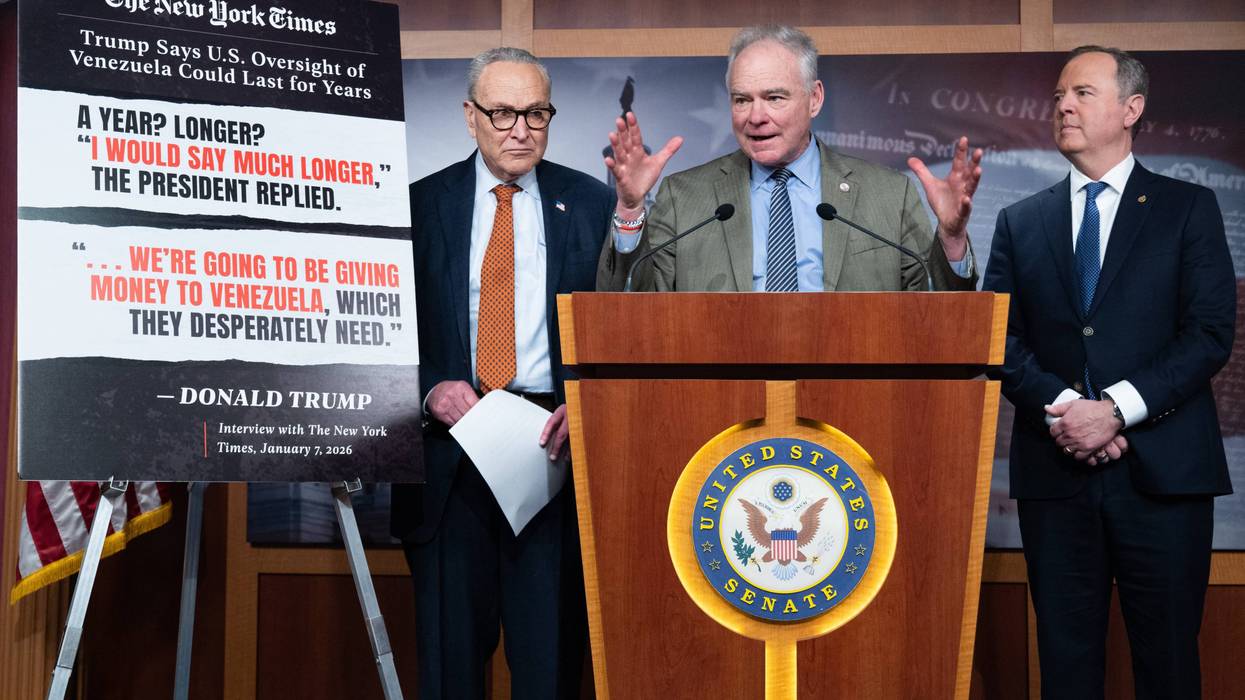
Senators voted 52-47 to advance a war powers resolution introduced last month by Sens. Tim Kaine (D-Va.), Rand Paul (R-Ky.), Adam Schiff (D-Calif.), and Senate Minority Leader Chuck Schumer (D-NY) "to block the use of the US armed forces to engage in hostilities within or against Venezuela unless authorized by Congress" as required by the 1973 War Powers Act.
The Senate will now continue debating the measure, which, if passed by both the upper chamber and the House of Representatives, would be subject to a likely veto by Trump—who has sunk two previous war powers resolutions unrelated to Venezuela.
In addition to Paul, four other GOP senators voted to advance the resolution: Susan Collins of Maine, Josh Hawley of Missouri, Lisa Murkowski of Alaska, and Todd Young of Indiana. While lawmakers often assent during the procedural phase, only to cast ballots against legislation during final votes, at least one of the GOP senators signaled they will vote the same as they did Thursday.
"While I support the operation to seize [Venezuelan President] Nicolás Maduro, which was extraordinary in its precision and complexity, I do not support committing additional US forces or entering into any long-term military involvement in Venezuela or Greenland without specific congressional authorization," Collins said in a statement, referring to Trump's threats to acquire the Danish territory by force if he deems it necessary. Sen. Ruben Gallego (D-Ariz.) this week introduced a bill that would ban the president from any such action.
"I believe invoking the War Powers Act at this moment is necessary, given the president’s comments about the possibility of ‘boots on the ground’ and a sustained engagement ‘running’ Venezuela, with which I do not agree," added Collins, who is facing a serious challenge for her Senate seat from candidates including former Maine Gov. Janet Mills and progressive Graham Platner, both Democrats who oppose US military action in Venezuela.
At the time of bipartisan war powers resolution's introduction last month, Trump had not yet attacked Venezuelan territory, although he had threatened to do so, deployed warships and thousands of US troops to the region, authorized covert CIA action to topple Maduro, and ordered the bombing of boats the administration claimed—without evidence—were smuggling drugs in the Caribbean Sea and Pacific Ocean.
However, Trump dramatically escalated US intervention in Venezuela, first with a December drone strike on a port facility and then by bombing and invading the country and abducting Maduro and his wife.
Asked during a Wednesday interview with the New York Times whether the US intervention in Venezuela would last a year, or longer, Trump replied, "I would say much longer," explaining that "we will rebuild" the country "in a very profitable way," including by "taking oil" from it.
The specter of yet another US "forever war" like the ongoing open-ended War on Terror that's left nearly 1 million people dead in at least seven countries since 2001 has prompted the introduction of several congressional war powers resolutions. So far, none have passed.
“If there was ever a moment for the Senate to find its voice, it is now," Schumer said on the Senate floor ahead of Thursday's vote. "Today, the Senate must assert the authority given to it on matters of war and peace. We must send Donald Trump a clear message on behalf of the American people: No more endless wars. Donald Trump’s ready for an endless war in Venezuela, and lord knows where else. The American people are not.”
Kaine made it clear during his pre-vote Senate floor remarks that the resolution does not challenge the "execution of a valid arrest warrant against Nicolás Maduro," which—despite experts concurring that the invasion and abduction were illegal—he called "good for America and good for Venezuela."
However, Kaine said, given that Trump's intervention "will go on for a long period of time," US troops "should not be used for hostilities in Venezuela without a vote of Congress as the Constitution requires.”
“No one has ever regretted a vote that just says, Mr. President, before you send our sons and daughters to war, come to Congress," he added.
However, such votes have very rarely succeeded in stopping any president from proceeding with military action.
In 2019 during Trump's first term, the House and Senate both passed a war powers resolution introduced by Sen. Bernie Sanders (I-Vt.) to cut off US military support for the Saudi-led coalition’s atrocity-laden war on Yemen. Trump vetoed the measure, and senators lacked the two-thirds majority needed to override his move.
The following year, both houses of Congress passed another war powers resolution—this one introduced in the Senate by Kaine—to terminate military action against Iran. But Trump again vetoed the legislation, and the Senate could not muster the two-thirds majority required for an override. After returning to office last year, Trump ordered sweeping attacks on Iran—and is threatening to do so again.
While Trump took to his Truth Social network to blast the five Republican senators who voted to advance the war powers resolution on Thursday and Vice President JD Vance called the War Powers Act "fundamentally a fake and unconstitutional law," progressive and anti-war advocacy groups hailed the advancement.
"With this historic, bipartisan vote to prevent further war in Venezuela, Congress has begun the long-overdue work of reasserting its constitutional role in decisions of war and peace," Demand Progress senior policy adviser Cavan Kharrazian said in a statement.
"We commend the leadership of Sens. Kaine and Paul in forcing this vote, and we thank Sens. Collins, Young, Hawley, and Murkowski for their principled votes," Kharrazian continued. "Senators should move quickly to adopt the resolution to prevent further unauthorized military escalation and the House should follow suit."
"Congress should also make clear, using the full force of the law, that no president has the authority to unilaterally launch hostilities anywhere in the world," he added, "whether in Venezuela or against other countries the administration has openly threatened, including Cuba, Greenland, Colombia, and Iran.”
"The dam has broken." Afghanistan War Veteran Max Rose applauds the Senate’s bipartisan vote advancing the War Powers Resolution. He calls it a stunning rebuke of Trump’s unilateral wars, reminding the President that the military belongs to America, not him.
[image or embed]
— VoteVets (@votevets.org) January 8, 2026 at 9:05 AM
Jose Vasquez, executive director of Common Defense and an Army veteran, said, "The vote is a victory for the Constitution, the stability of the region, and for the veterans and military families who organized, spoke out, and refused to accept another reckless slide toward forever war."
"By drawing this vote, Congress sends an essential message that accountability still matters and that no one person or presidential administration can send Americans to war," he added. "Veterans will remain organized and vigilant, but today shows what is possible when Congress listens to the will of the people and leans toward peace rather than war."