

SUBSCRIBE TO OUR FREE NEWSLETTER
Daily news & progressive opinion—funded by the people, not the corporations—delivered straight to your inbox.
5
#000000
#FFFFFF
To donate by check, phone, or other method, see our More Ways to Give page.
Daily news & progressive opinion—funded by the people, not the corporations—delivered straight to your inbox.
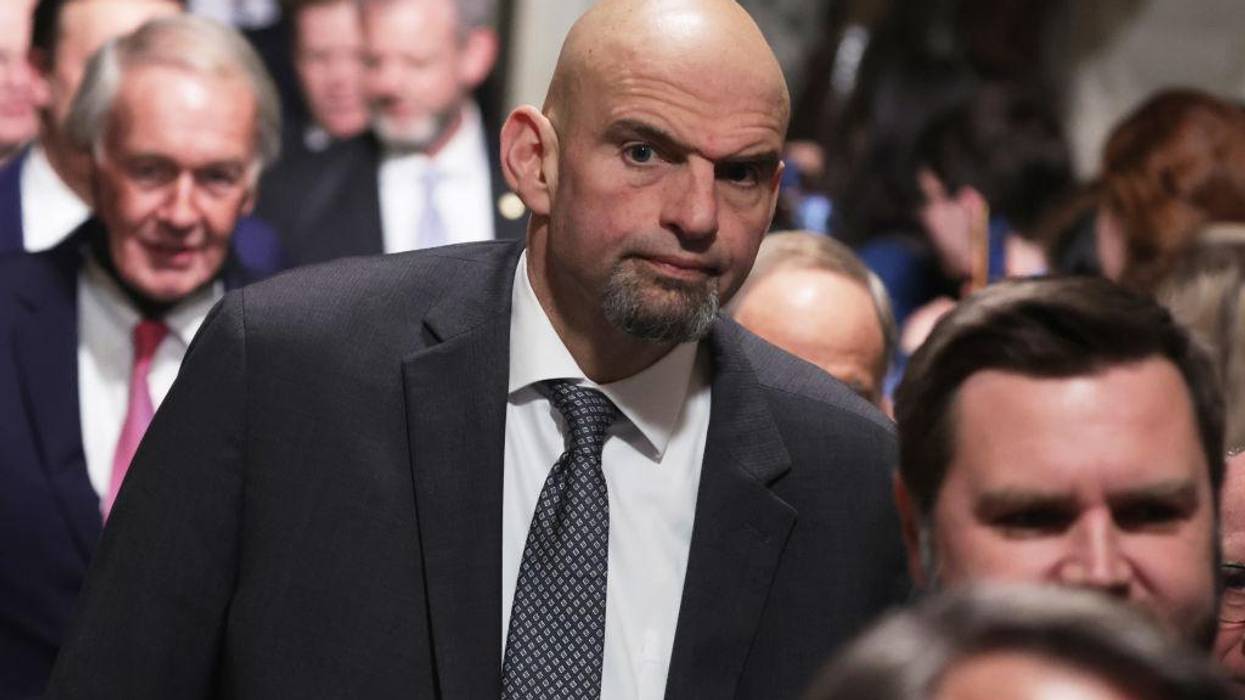
"We urge the commission to continue to focus on its vital work preserving market integrity and protecting the public, uphold the letter and spirit of the Dodd-Frank Act, and withdraw the proposed rule."
A trio of Democratic U.S. senators on Monday wrote to Commodity Futures Trading Commission Chair Rostin Behnam expressing their "serious reservations" with the agency's proposed rule on seeded funds and money market funds, a policy the lawmakers warned would "undermine the goals of Dodd-Frank" by rolling back the already weakened financial oversight law.
Passed in the wake of the 2008 global financial meltdown, the Dodd-Frank Wall Street Reform and Consumer Protection Act—which was partially rolled back during the Trump administration—overhauled federal financial regulation. In a letter to Behnam, Sens. John Fetterman (Pa.), Sherrod Brown (Ohio), and Tina Smith (Minn.) assert that the CFTC's proposed rule is a "step in the wrong direction" that would increase market instability by decreasing collateral requirements for certain transactions.
The Global Markets Advisory Committee, largely made up of finance industry insiders, recommended the proposed rule in 2020 during the Trump administration.
As the letter explains:
The proposed rule would reduce or eliminate initial margin requirements for up to three years for a subset of swap market participants. "Initial margin" is the collateral that participants must set aside when entering swap agreements. Initial margin requirements, along with "variation margin" and other capital requirements, protect counterparties to a swap in the event of a default. Dodd-Frank set up comprehensive rules for swap agreements after they significantly contributed to the 2008 financial crisis and the federal government was forced to bail out Wall Street.
"The 2008 financial crisis showed the dangers that swaps can pose to economic stability, and Dodd-Frank directed regulators, including the CFTC, to require initial margin for uncleared swaps specifically to reduce those risks," the senators wrote. "It is vital for the CFTC to continue upholding its Dodd-Frank mandate and to maintain high standards and safeguards for this important market."
"We urge the commission to continue to focus on its vital work preserving market integrity and protecting the public, uphold the letter and spirit of the Dodd-Frank Act, and withdraw the proposed rule," the lawmakers added.
The collapse earlier this year of Silicon Valley Bank and Signature Bank—both of which benefited from regulatory relief thanks to the 2018 rollback—brought renewed scrutiny on Dodd-Frank's Republican-engineered shortcomings. Sen. Mike Crapo (R-Idaho), who wrote the 2018 banking deregulation law, insisted in March that "there is no need for regulatory reform" in the wake of the banks' failures.
Robert Weissman, president of the consumer advocacy group Public Citizen, responded to Crapo's assertion by writing that "you have to be hard-core committed to mindless free-market fundamentalism—or truly in thrall to your donors—to insist there's no need for new regulations after Silicon Valley Bank."
Last month, Sen. Elizabeth Warren (D-Mass.) also wrote a letter to Behman sharing her concerns about the proposed rule. Noting the policy's 2020 introduction, Warren said in her October 10 letter that "it is unclear why the commission is choosing to propose these rules now, three years later, without conducting its own additional analyses of whether the changes are necessary or will strengthen the stability of the domestic financial system."
"I strongly urge the commission not to loosen the existing rules and not to roll back important Dodd-Frank Act reforms," Warren added.
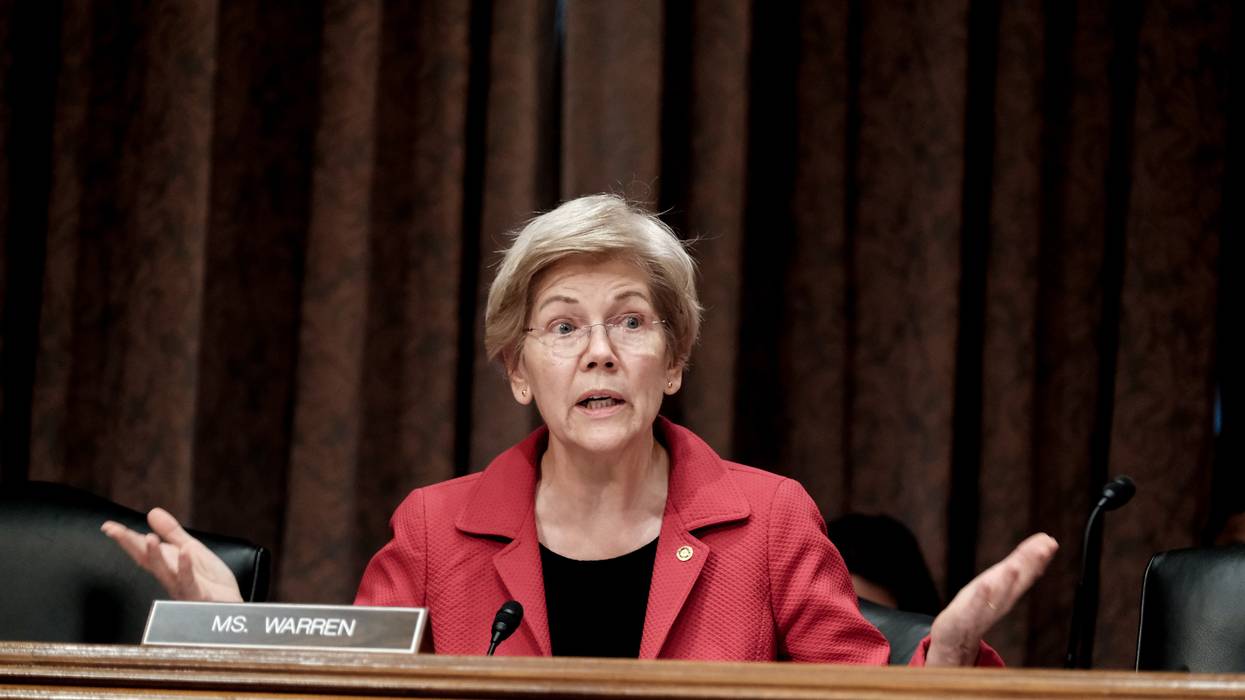
"The recent bank crisis underscores the urgency of strengthening the merger review process and reversing the dangerous trend of bank consolidation."
In the wake of three recent bank failures, U.S. Sen. Elizabeth Warren on Tuesday urged financial regulators to promote competition rather than further consolidation in the industry and improve merger guidelines.
The Massachusetts Democrat's call for action came in a letter to Assistant Attorney General Jonathan Kanter, Federal Deposit Investment Corporation (FDIC) Chairman Gruenberg, Acting Comptroller of the Currency Michael Hsu, Federal Reserve Vice Chair for Supervision Michael Barr, and Treasury Secretary Janet Yellen.
"Earlier this year, a series of fatal errors—poor risk management by bank executives, corporate greed, deregulation, and the lack of sufficient federal supervision—led to the implosion of Silicon Valley Bank, which was shortly followed by the collapses of Signature Bank, and First Republic," she wrote. "Unfortunately, Secretary Yellen and Acting Comptroller Hsu have recently indicated that they appear to be taking the wrong lessons from these bank failures, suggesting that they would like to see more bank consolidation."
"The number of commercial banks in the U.S. has fallen by 70% over the past two decades, and the trend is accelerating."
The letter references reporting from Politico's "Morning Money" (MM) earlier this month. As the outlet detailed:
A top lobbyist for big U.S. banks is hearing more openness from government officials on the topic of mergers for midsize lenders in the wake of banking stress earlier this year. But the industry wants more than just talk.
"There's been something of a sea change in Washington over the last two months," Bank Policy Institute CEO Greg Baer told MM in an interview this week. "I do think, at the highest level, and at the highest levels, there is a recognition that midsize banks need to be allowed to merge and be acquired potentially by larger banks."
"The problem, though, is that's easy to say," he added. "But you have to convince banks that in fact, you mean what you say."
Warren argued to Yellen and the letter's other recipients that "while your agencies are working to update the guidelines under which you evaluate bank mergers, which were last published in 1995, the recent bank crisis underscores the urgency of strengthening the merger review process and reversing the dangerous trend of bank consolidation."
"I have long been concerned with bank concentration and your agencies' failures to curb the proliferation of banks that are 'too big to fail,'" the senator acknowledged, noting that none of the federal banking agencies have formally denied a bank merger application in over 15 years, and the U.S. Department of Justice has not challenged one in more than 35 years.
"Meanwhile, the number of commercial banks in the U.S. has fallen by 70% over the past two decades, and the trend is accelerating with $77 billion in bank mergers and acquisitions in 2021 alone—the 'highest yearly deal volume since the 2008 financial crisis,'" she continued. Such consolidation not only harms consumers and small businesses but also heightens "systemic risk in the financial system, reducing the number of smaller banks and creating even more too-big-to-fail banks."
After highlighting President Joe Biden's 2021 executive order directing financial regulators and the attorney general to review and strengthen bank merger oversight, the senator asserted that allowing additional industry consolidation "would be a dereliction of your responsibilities" as well as a betrayal of the White House's "commitment to promoting competition in the economy."
"Shoring up our banking system will require stronger regulation and more vigorous oversight of big banks to keep them from failing in the first place," Warren contended, "and stronger merger guidelines and rules that significantly check consolidation and limit the size and number of too-big-to-fail banks that put taxpayers at risk."
One of the senator's proposed solutions is the Bank Merger Review Modernization Act, which would limit consolidation in the sector with various policies, including a requirement that mergers are in the public interest.
Her new letter concludes with a series of questions about ongoing work to update bank merger review guidelines—including when those guidelines will be released. She requested responses by July 10.
Warren has recently pressed financial regulators not only via letters but also at congressional hearings—including in May, when she grilled Hsu about the sale of First Republic to JPMorgan Chase, which made the nation's biggest bank even bigger. During that event, the senator declared that "the single biggest threat to the U.S. banking system is concentration."
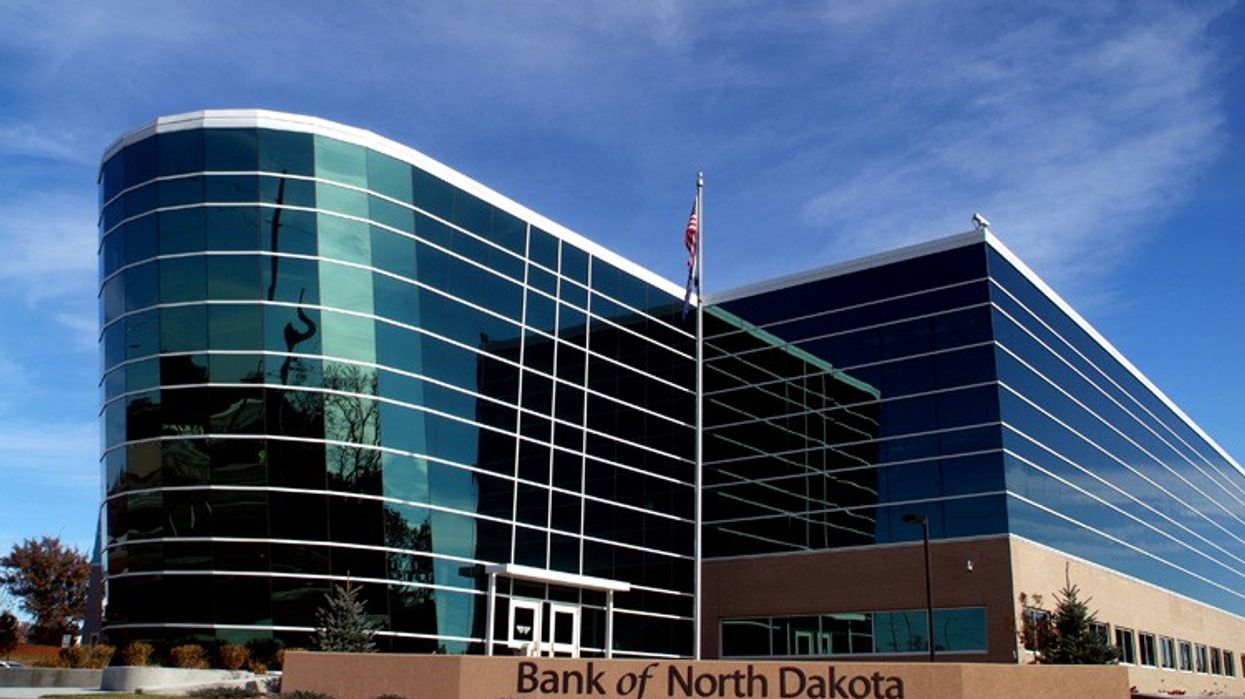
A state-owned bank on the model of the Bank of North Dakota can provide low-interest loans, liquidity, and financial sovereignty.
On CNN March 14, Roger Altman, a former deputy Treasury secretary in the Clinton administration, said that American banks were on the verge of being nationalized:
What the authorities did over the weekend was absolutely profound. They guaranteed the deposits, all of them, at Silicon Valley Bank. What that really means… is that they have guaranteed the entire deposit base of the U.S. financial system. The entire deposit base. Why? Because you can't guarantee all the deposits in Silicon Valley Bank and then the next day say to the depositors, say, at First Republic, sorry, yours aren't guaranteed. Of course they are.
…So this is a breathtaking step which effectively nationalizes or federalizes the deposit base of the U.S. financial system.
The deposit base of the financial system has not actually been nationalized, but Congress is considering modifications to the Federal Deposit Insurance Corporation (FDIC) insurance limit. Meanwhile, one state that does not face those problems is North Dakota, where its state-owned bank acts as a "mini-Fed" for the state. But first, a closer look at the issues.
Bail In, Bail Out, or "Socialism for the Rich"?
On Friday, March 10, Silicon Valley Bank (SVB) was put into receivership by the FDIC. The FDIC announced that deposits over the $250,000 insurance limit would get an advance dividend within the next week, and would receive a receivership certificate for the rest of the funds. Most of the depositors were venture-backed startups that needed to keep large deposits in the bank to meet payroll and pay suppliers, and over 95% of the deposits were uninsured and at risk of being lost. It was basically a "bail in" of the uninsured deposits, which would be recoverable only if funds were available after the bank's assets had been sold.
But that arrangement lasted only two days. On March 12, Signature Bank was put into receivership; and the FDIC, Treasury, and Federal Reserve jointly announced that all of the deposits at the two banks, not just those under the insurance limit, would be available for withdrawal on demand.
At a Senate Finance Committee hearing on March 16, Treasury Secretary Janet Yellen said that the guarantee would not apply to all deposits at all banks. Rather, the determination would be made on a case-by-case basis.
In a Bloomberg News interview on March 16, former FDIC Chair Sheila Bair criticized that decision. She observed that the two banks getting special treatment were not "systemically important," and that the cost of the expanded guarantee was to be covered by a special assessment against all insured banks, including the small community banks that provide essential credit to local businesses. She argued that if guarantees were going to be given over the $250,000 limit, they should apply to deposits everywhere.
Meanwhile, on March 12, the Federal Reserve announced that it had set up a special purpose vehicle of the sort arranged for Covid relief in March 2020, called the Bank Term Funding Program (BTFP). Like the Covid special purpose vehicles, it would be backstopped with $25 billion from the Exchange Stabilization Fund (ESF), a fund set up in 1934 to stabilize the exchange value of the dollar. The BTFP was to be available to any bank needing it, and many banks obviously did. Over $300 billion in short-term loans were withdrawn from the Fed's various facilities just in the week after SVB's collapse.
This money is not, however, the sort of "free lunch" provided to troubled banks in the last financial crisis. The money is to be advanced as a loan for up to a year, at a hefty interest rate as of March 22 of 4.88%. According to a Federal Reserve press release, advances will be made to "eligible depository institutions pledging U.S. Treasuries, agency debt and mortgage-backed securities, and other qualifying assets as collateral. These assets will be valued at par. The BTFP will be an additional source of liquidity against high-quality securities, eliminating an institution's need to quickly sell those securities in times of stress."
"Valued at par" means that banks can hold their long-term federal securities to maturity while acquiring ready cash against them to meet withdrawals, without having to "mark to market" and sell at a loss.
The Systemic Flaw
So what caused this crisis, and what can be done to remedy it?
In the midst of the 2008 economic crisis, former Fed Chair Alan Greenspan conceded that there was a flaw in his perception of the financial operating system. For 40 years, he had believed that banks could "self-regulate" responsibly, a presumption that had proven to be flawed.
In the case of SVB, however, the bank was not engaged in the sort of risky lending seen in the subprime crisis, and increased "stress testing" wouldn't have saved it. It had put its deposits largely in federal securities, purported to be the safest assets available—so safe that they carry a "zero risk weighting" requiring no extra capital buffer. What went wrong was that they were long-term bonds at low interest. When rates shot up, the market value of the bonds dropped, since buyers prefer newer bonds paying higher interest. Bonds that could be sold were sold at a loss, and some marked "hold to maturity" could not be sold at all. As a result, SVB lacked the liquidity to meet the sudden unexpected demand for withdrawals.
The flaw to which SVB and many other "troubled" banks have fallen victim is the age-old systemic problem of "borrowing short to lend long." For centuries, banks have borrowed the money of depositors who expect to have it available on demand, and have invested it in long-term assets that cannot be immediately liquidated. The system works well so long as the depositors don't panic and rush to pull their money out all at once. But when they do, if the problem is systemic, not just single banks but the whole banking system can collapse.
We used to see this flaw dramatized every December, when TV networks ran the 1946 Christmas classic "It's a Wonderful Life." When the Bailey Brothers Building and Loan suffered a bank run, George Bailey (Jimmy Stewart) had to explain to the panicked depositors that their money had been lent to their neighbors. He was on the verge of suicide, when a guardian angel showed him how critical he and his bank had been to the community; and the neighbors pitched in and rescued the bank.
Even closer to the situation today was the crisis of the savings and loan associations (S&Ls) of the 1980s, after the Federal Reserve raised interest rates dramatically to kill inflation. Most of the assets of the S&Ls were long-term fixed-rate mortgages. As rates rose, they had to pay more to attract deposits; but the amount they earned on their fixed-rate mortgages didn't change. Losses mounted, but the S&L insurance fund, the FSLIC, lacked sufficient money to reimburse all the depositors at failed S&Ls so the regulators turned a blind eye and allowed them to keep operating as "zombies." The matter was finally resolved with legislation in 1989 that placed S&L insurance under the FDIC and established the Resolution Trust Corporation to resolve the remaining troubled S&Ls. The ultimate cost to the taxpayers was estimated to be as high as $124 billion.
As with George Bailey's savings and loan, the flaw was not "fractional reserve" lending. The S&Ls pooled the money of their customers and lent only what they had. The systemic flaw was and still is that to make long-term loans, banks must borrow "other people's money," which is expected to be available on demand. Today the banks' liquidity options include not just their own depositors but other banks' depositors in the fed funds market, and pension funds and other institutional creditors lending in the repo market. But they all expect their money to be available on demand; and if the bank has lent it out in long-term loans, the bank can be caught short shuffling reserves around trying to meet that demand.
The Failed Banks Were Not Nationalized, But Maybe They Should Have Been
One option that was debated in the 2008-09 crisis was actual nationalization. As professor Michael Hudson wrote in February 2009:
Real nationalization occurs when governments act in the public interest to take over private property… Nationalizing the banks along these lines would mean that the government would supply the nation's credit needs. The Treasury would become the source of new money, replacing commercial bank credit. Presumably this credit would be lent out for economically and socially productive purposes, not merely to inflate asset prices while loading down households and business with debt as has occurred under today's commercial bank lending policies.
Gar Alperovitz, professor emeritus at the University of Maryland, also weighed in on the issue. In a 2012 New York Times article titled "Wall Street Is Too Big to Regulate," he noted that the five biggest banks—JPMorgan Chase, Bank of America, Citigroup, Wells Fargo, and Goldman Sachs—had amassed assets amounting to more than half the nation's GDP. He wrote:
With high-paid lobbyists contesting every proposed regulation, it is increasingly clear that big banks can never be effectively controlled as private businesses. If an enterprise (or five of them) is so large and so concentrated that competition and regulation are impossible, the most market-friendly step is to nationalize its functions…
Nationalization isn't as difficult as it sounds. We tend to forget that we… essentially nationalized the American International Group, one of the largest insurance companies in the world, and the government still owns roughly 60 percent of its stock.
Another example was Continental Illinois, the largest bank bankruptcy and the seventh-largest bank in the country when it failed in 1984. The FDIC wiped out existing shareholders, infused capital, took over bad assets, replaced senior management, and owned the bank for about a decade, running it as a commercial enterprise, selling it in 1994.
What constituted a radical departure from capitalist principles in the last financial crisis was not "nationalization" but an unprecedented wave of bank bailouts, sometimes called "welfare for the rich." The taxpayers bore the losses while the culpable management not only escaped civil and criminal penalties but made off with record bonuses. Banks backed by an army of lobbyists succeeded in getting laws changed so that what was formerly criminal behavior became legal. Instead of nationalization, we got TARP, the Troubled Asset Relief Program, in which toxic assets were purchased from financial institutions by the Treasury. Faced with the inequity of that solution, many economists recommended nationalization instead. Willem Buiter, chief economist of Citigroup and formerly a member of the Bank of England's Monetary Policy Committee, wrote in the Financial Times in September 2009:
Is the reality of the modern, transactions-oriented model of financial capitalism indeed that large private firms make enormous private profits when the going is good and get bailed out and taken into temporary public ownership when the going gets bad, with the taxpayer taking the risk and the losses?
If so, then why not keep these activities in permanent public ownership? There is a long-standing argument that there is no real case for private ownership of deposit-taking banking institutions, because these cannot exist safely without a deposit guarantee and/or lender of last resort facilities that are ultimately underwritten by the taxpayer. ...Once the state underwrites the deposits or makes alternative funding available as lender of last resort, deposit-based banking is a license to print money. [Emphasis added.]
Those are all good arguments, but Congress is not likely to nationalize the whole banking system any time soon.
What About Nationalizing the Liquidity Pool?
Without going to those lengths, what could be made a public utility is the banks' liquidity pool. Banks could borrow directly from the deep pocket of the central bank, the "lender of last resort" (or from the Treasury if it were reengineered so that it could issue money as credit without taxing or going into debt). Banks would still need to make "prudent" loans—loans to borrowers who had demonstrated an ability to pay the money back—since if they suffered substantial defaults, they would not be able to balance their books and could be put into bankruptcy. They would still charge interest to cover their costs, and they would still compete for borrowers by keeping their interest rates low, maintaining the principles of "market capitalism" operating now. Customer deposits could be sequestered separately from loans, e.g. at government-backed postal banks. In fact, sequestering customer funds is what brokerages (such as Schwab and Fidelity) do now. Rather than the bank gambling with your money, you gamble with it yourself. But that, of course, can be risky too!
In any case sequestering deposits is not likely to happen either. What is being sought is what Roger Altman predicted—FDIC insurance coverage of the entire deposit base. In a March 17 letter first reported by Bloomberg News, the Midsize Bank Coalition of America called on regulators "immediately... to reinstate full deposit insurance coverage for depositors," for two years. That was done in 2008, the letter noted, "and was one of the most effective tools used in the great financial crisis and it needs to be brought back immediately. Importantly, as happened previously, this increase in insurance should be paid for directly by the banks themselves by simply increasing the deposit insurance assessment on banks who choose to participate in this increased insurance coverage."
The concern for midsize banks is that depositors have been fleeing to giant "too big to fail" banks, perceiving them to be safer. But as Cornell professor Robert Hockett observes, midsize banks lend to the midsize businesses that are the backbone of the productive economy. He has drafted legislation to provide for universal deposit insurance, discussed in Forbes. However, it's an uphill battle. Even Sheila Bair, who is clearly sympathetic to the plight of local banks, has reservations on full coverage. As reported on MSN.com:
FDIC Chairwoman Sheila Bair said Tuesday that Congress should consider temporarily providing guarantees for deposits in transaction accounts used by employers to pay their workers—a move that some Democrats are considering.
But Bair said it would be an "overreaction" to insure all bank deposits.
"Unlimited insurance would be very expensive to do. It would be assessed on the banking system, backstopped by taxpayers, and would primarily help very, very wealthy people," Bair said on Washington Post Live.
Small community banks—defined as banks with $10 billion or less in assets—have spoken out against paying more to cover the failure of larger banks such as SVB.
The Public Bank Option
Meanwhile, one midsize bank that has escaped this furor is the Bank of North Dakota. With assets in 2021 of $10.3 billion and a return on investment of 15%, the BND is owned by the state, which self-insures it. There is no fear of bank runs, because the state's revenues compose the vast majority of its deposits, and they must be deposited in the BND by law.
The state's local banks are also protected by the BND, which is forbidden to compete with them. Instead, it partners with them, helping with liquidity and capitalization. The BND has been called a "mini-Fed" for the state and its banks. That helps explain why North Dakota has more local banks per capita than any other state, at a time when other states have been losing banks to big bank mergers, causing the number of U.S. banks to shrink radically.
U.K. professor Richard Werner recently published a briefing memo supporting the case for a public bank. It was prepared for the state of Tennessee, which is considering a sovereign state bank on the North Dakota model, but the arguments apply to all states. Benefits discussed include dividends, higher state-level tax revenues, greater job creation, greater local autonomy and resilience to shocks, more options for funding public sector borrowing and state pension funds, and protection of financial transaction freedom and privacy.
Small and local is good, but even small regional banks need to pool their resources for maximum efficiency and security. A state-owned bank on the model of the Bank of North Dakota can provide low-interest loans, liquidity, and financial sovereignty, keeping financial resources in the state directed to public purposes, all while turning a profit for the state.

"The CEOs of the largest banks in America should not be allowed to serve as directors of the main agency we have in this country in charge of regulating those very same financial institutions," the senator said.
U.S. Sen. Bernie Sanders on Thursday introduced the Federal Reserve Independence Act to prevent bank executives from serving on regional Fed boards that are responsible for regulating their institutions.
The bill—which would also bar the U.S. central bank's board members and employees from owning any stock or investing in any company that is regulated by the Federal Reserve—comes as Fed leadership is under fire for recent interest rate hikes and regulatory rollbacks that preceded the Silicon Valley Bank (SVB) and Signature Bank failures.
"The Fed has got to become a more democratic institution that is responsive to the needs of working people and the middle class."
"I think it would come as a shock to most Americans to find out that Gregory Becker, the CEO of Silicon Valley Bank, who successfully lobbied for the deregulation of his financial institution was allowed to serve as a director of the same body in charge of regulating his bank: the San Francisco Federal Reserve," Sanders (I-Vt.) said in a statement.
"It is clear to me and to the American people, that the CEOs of the largest banks in America should not be allowed to serve as directors of the main agency we have in this country in charge of regulating those very same financial institutions," he asserted. "The Fed has got to become a more democratic institution that is responsive to the needs of working people and the middle class, not just CEOs of some of the largest financial institutions in America."
In a letter to his congressional colleagues about the bill, Sanders highlighted:
Gregory Becker may be the poster child for why we need this legislation, but he is not alone. Incredibly, two-thirds of the directors of these boards are hand-picked by the same bankers that the Federal Reserve is in charge of regulating.
Today, five top executives of financial institutions with over $150 billion in assets currently serve as directors of Federal Reserve banks. For example, the CEO of State Street (a financial institution with nearly $300 billion in assets) currently serves as a director of the Boston Federal Reserve. The CEO of M&T Bank (a financial institution with over $200 billion in assets) currently serves as a director of the New York Fed. The CFO of Ally Bank which has assets of over $180 billion is currently a director of the Richmond Fed. And the CEO of Northern Trust with assets of more than $150 billion currently serves on the Chicago Fed.
Sanders also pointed to a 2011 Government Accountability Office study which "found that allowing members of the banking industry to both elect and serve on the Federal Reserve's board of directors creates 'an appearance of a conflict of interest' and poses 'reputational risks' to the Federal Reserve System."
The senator provided examples involving Stephen Friedman, a former chairman of the New York Federal Reserve board as well as a Goldman Sachs board member and stockholder, and JPMorgan Chase CEO Jamie Dimon, whose bank got $391 billion in assistance while he sat on that same regional Fed board.
Along with seeking support for his bill—which is backed by Americans for Financial Reform, Demos, Revolving Door Project, Public Citizen, Working Families Party, and Association of Flight Attendants-CWA—Sanders is urging Congress to take other action in the wake of the SVB and Signature collapses.
Specifically, the senator is calling for:
As Sanders put it earlier this month: "We cannot continue down the road of more socialism for the rich and rugged individualism for everyone else. Let us have the courage to stand up to Wall Street, repeal the disastrous 2018 bank deregulation law, break up too big to fail banks, and address the needs of working families not the risky bets of vulture capitalists."
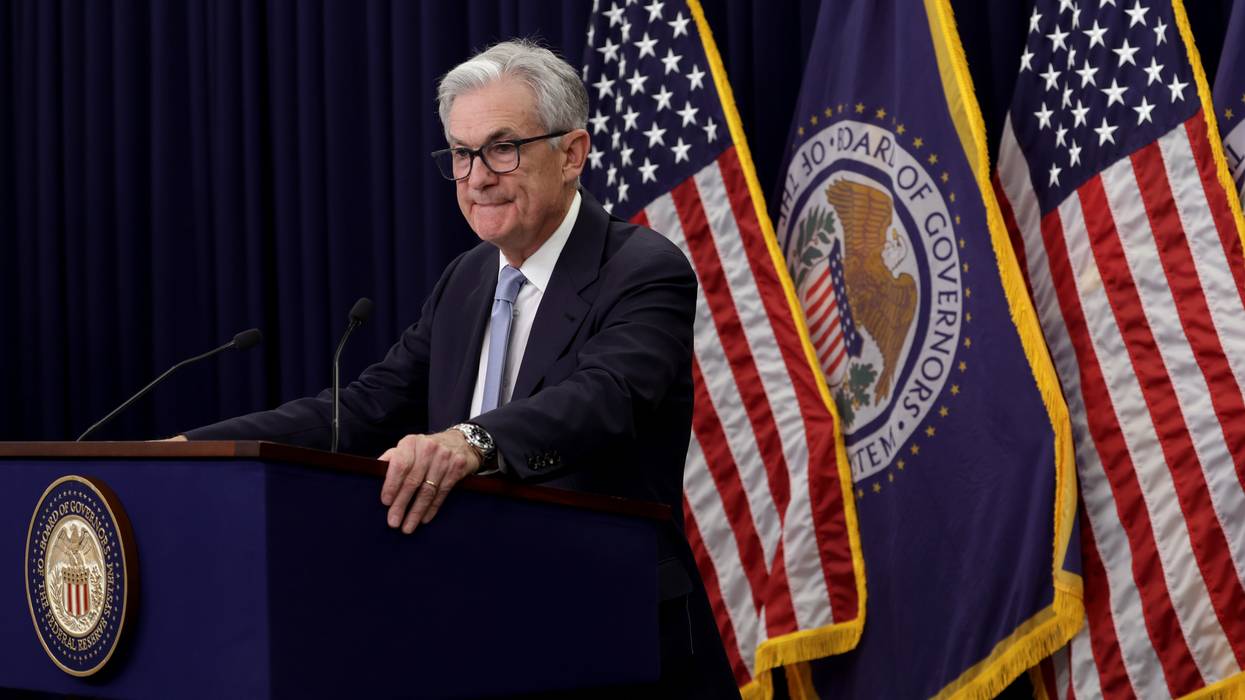
"It shouldn't take a lot of courage to resist another interest rate hike when the economy is this fragile," said one critic.
Progressive economists and other experts blasted Federal Reserve leadership on Wednesday for raising interest rates yet again despite concerns about recent bank failures and how the quarter-point increase will impact the U.S. and global economies.
"Once again, interest rate hikes are going to fall hardest on low-wage workers and the poor—the same people who have already been hurt the most by rising prices," tweeted University of California, Berkeley professor and former Labor Secretary Robert Reich. "Higher rates could also imperil more banks, and risk even more financial chaos. The Fed is playing with fire."
Fed Chair Jerome Powell told reporters Wednesday that although the Federal Open Market Committee "did consider" a pause on rate increases following the Silicon Valley Bank (SVB) and Signature Bank failures, officials ultimately decided to raise the federal funds rate to a range of 4.75-5%, the highest level since 2007.
"The Fed under Chair Powell made a mistake not pausing its extreme interest rate hikes," declared Sen. Elizabeth Warren (D-Mass.) a fierce critic of nine consecutive rate hikes since last March as well as the Fed's regulatory rollbacks that preceded the bank collapses.
"I've warned for months that the Fed's current path risks throwing millions of Americans out of work. We have many tools to fight inflation without pushing the economy off a cliff," added Warren, who has repeatedly called for ousting Powell.
Patriotic Millionaires chair Morris Pearl—a bank bailout expert and former managing director at BlackRock—similarly contended that "the Fed's decision to keep pushing forward with rate hikes no matter the circumstances is a dangerous mistake."
Describing such hikes as "a blunt instrument," he stressed that high interest rates "are not well suited to the economic realities the country now faces—and will inevitably end up doing more harm than good."
Pearl continued:
In our modern economy, high interest rates are simply not an effective way to fight inflation. Rate hikes have disproportionately hurt just a few sectors, like housing, automobiles, and some banks and investors, while leaving many of the nation's largest employers relatively unscathed.
Rising interest rates do nothing to address a major cause of inflation, corporate price gouging, and actually make another long-term cause, lack of investment in new housing, worse. Instead, the Fed is betting that lowering employment and cooling wage growth is the best solution to inflation.
Higher interest rates may be a cure for inflation, but if they end up causing another banking crisis, or pushing the economy into a recession, the cure may be worse than the disease.
An analysis released Wednesday by Accountable.US explained that "SVB's failure was partly due partly to a 'plunge' in bond value and $1.8 billion in 'paper losses' amid the Fed's rate hikes. By the end of 2022, the Federal Deposit Insurance Corporation (FDIC) had warned that U.S. banks were 'sitting on $620 billion in unrealized losses' that may make their balance sheets appear healthier than they really are."
The watchdog group found that "at the end of 2022, the five biggest U.S. banks—JPMorgan Chase, Bank Of America, Citigroup, Wells Fargo, and U.S. Bank—reported a total of $233 billion in unrealized losses on held-to-maturity securities, including $54 billion in unrealized losses on Treasury securities. These same banks reported a combined $39.4 billion in unrealized losses on available-for-sale securities, including $12.7 billion in losses on available-for-sale U.S. Treasuries."
Liz Zelnick, director of economic security and corporate power at Accountable.US, warned Wednesday that "hiking interest rates, even if more slowly, will devastate Main Street and Wall Street alike by wiping out millions of jobs while sending Treasury securities into a downward spiral," acknowledging that the recent bank turmoil prevented an even bigger increase than 25 basis points.
"A recession and broken financial system are not worth the price of higher interest rates that have failed miserably to curb the corporate greed epidemic helping to drive up costs," Zelnick added. "To date, the Federal Reserve and Chairman Jerome Powell have been more than willing to let average American families bear the brunt of their job-killing strategy—but are they also willing to let their banker friends on Wall Street go down with the ship?"
The Hill highlighted that ahead of Wednesday's announcement, influential figures such as economist Paul Krugman and analysts for Goldman Sachs—in a Monday letter to investors—had advocated for pausing rate hikes.
"Bank stress calls for a pause," wrote Goldman Sachs analysts. "Banking is not just another sector of the economy because financial intermediation is vital to every sector. As a result, addressing stress in the banking system is the most immediate concern and must take priority over other less urgent goals for the moment. We expect that policymakers and staff economists at the Fed will have the same view."
During his Wednesday press conference, Powell insisted that "our banking system is sound and resilient with strong capital and liquidity. We will continue to closely monitor conditions in the banking system and are prepared to use all of our tools as needed to keep it safe and sound."
While Powell also emphasized the Fed's commitment to learning from the recent SVB and Signature failures to prevent repeat events, both the bank collapses and a year of rate hikes have fueled calls for his ouster.
Asked by CNN's Jake Tapper on Wednesday whether she had ever directly told President Joe Biden that he should fire Powell, Warren said she wouldn't talk about private conversations "but what I will say is I've made it very clear as publicly as humanly possible that I didn't think that he should be reconfirmed as chair of the Fed. And I think he's doing a really terrible job."
"And he's doing a terrible job on both fronts," she said, referring to the Fed's dual mandate. In terms of oversight, Powell "has spent five years weakening regulations over these multibillion-dollar banks," and on monetary policy, he is "risking pushing our economy into a recession."
"What he's trying to do is get two million people laid off, and one of the things that we need to understand: He wants to raise the unemployment rate by more than a point within a single 12-month period. We have done that before in this country. In fact, we have done it 12 times before. And out of all 12 times, how many times has it resulted in a recession?" she said. "The answer is 12."
The financial system gets another bailout.
Once again, government socialism—ultimately backed by taxpayers—is saving reckless midsized banks and their depositors. Silicon Valley Bank (S.V.B) and Signature Bank in New York greedily mismanaged their risk levels and had to be closed down. The Federal Deposit Insurance Corporation (FDIC), in return, to avoid a bank panic and a run on other midsized banks went over its $250,000 insurance cap per account and guaranteed all deposits—no matter how large, which are owned by the rich and corporations—in those banks.
Permitting such imprudent risk-taking flows directly from the Trump-GOP Congressional weakening of regulations in 2018, which was supported by dozens of Democrats, led by bank toady Senator Mark Warner (D-Va.). That bipartisan deregulation provided a filibuster-proof passage by the Senate.
The other culprit is the Federal Reserve. Its very fast interest rate hikes reduced the asset value of those two banks’ holdings in long-term Treasury bonds, which reduced their capital reserves. With the "What, me worry?" snooze of the California Department of Financial Protection and Innovation, SVB had little supervision from state regulatory examiners and compliance enforcers.
Actually, big depositors sniffed the shakiness of these two banks and acted ahead of the regulatory cops with mass withdrawals that sealed the fate of SVB. Imagine, SVB was giving out bonuses hours before its collapse. For this cluelessness, the bank's CEO, Gregory Becker, took home about eleven million dollars in pay last year.
All this was predicted by Sen. Elizabeth Warren (D-Mass.) and Rep. Katie Porter (D-Calif.). Warren, in particular, specifically opposed the 2018 Congressional lifting of stronger liquidity and capital requirements along with regular stress tests for banks with assets over $50 billion. Trump's law allowed the absence of these safeguards to cover banks with assets up to $250 billion. Such de-regulation covered SVB and Signature.
Signature Bank had former House Banking Committee Chair Barney Frank on its board of directors. His name is on the Dodd-Frank Wall Street Reform and Consumer Protection Act, which was passed following the 2008 Wall Street collapse. Even Mr. Frank was clueless about what Signature's CEO Joseph DePaolo was mismanaging. (DePaulo was paid $8.6 million last year.)
Of course, the underfunded FDIC doesn't have enough money to make good all the large depositors in these two banks. So, it is increasing the fees charged to all banks for such government insurance. The banks will find ways to pass these surchargers on to their customers.
Other midsized banks may be shaky as more major depositors pull out and put their money into mega-giant banks like JPMorgan Chase, Bank of America, and Citigroup, which are universally viewed as "too big to fail." The smaller businesses harmed by these closed banks are now on their own. No corporate socialism is as yet saving them.
One of the provisions of the Dodd-Frank law was to require federal agencies to rein in bank executives' pay that incentivizes recklessness and even fraud, as Public Citizen noted. Yet after 13 years, PC declared: "a hodgepodge of federal agencies—the Federal Deposit Insurance Corporation, the Federal Housing Finance Agency, the Federal Reserve, the National Credit Union Administration, the Office of the Comptroller of the Currency, and the Securities and Exchange Commission—that is supposed to finalize the rule has so far failed to do so."
Defying mandates of Congress, often riddled with waivers from Capitol Hill, is routine for federal agencies. They know that when it comes to law and order for profiteering corporations, Congress is spineless. Have you heard of any resignations or firings from these sleepy regulatory agencies? Of course not. They continue to raise the ante for corporate socialist rescue even beyond their legal authority. For example, where does the FDIC get the authority to guarantee all the deposits in the failed banks when the Congressional limit is strictly $250,000 per account?
Some people will remember Secretary of the Treasury Henry Paulson telling the Washington Post that there were "no authorities" for massive bank bailouts—think Citigroup in 2008 during a private weekend meeting in Washington, DC— but, he said, "someone had to do it."
Meanwhile, the American people remain fearful but silent over the safety of their bank deposits. They heard Treasury Secretary Janet Yellen tell Congress that the banking system "remains sound." Some remember that's what her predecessor said in the spring of 2008 about Fannie Mae and Freddie Mac—the safest investments after Treasury bonds. By the fall, both of these giants had collapsed taking millions of trusting shareholders down with them.
Finally, all those brilliant economists at the Federal Reserve surely must know that when midsize banks lose almost 20% on the value of their 10-year Treasuries, due to the very fast interest rate hikes by Jerome Powell's Fed, trouble is on the horizon. Why didn't they anticipate this outcome and do some foreseeing and forestalling? Nah, why worry, didn't you know that the Fed prints money?
Or maybe the Federal Reserve (its budget comes from bank fees, not the Congress), couldn't see beyond fighting inflation, something it did not take seriously in time over a year and a half ago. More than a few outside economists repeatedly gave the Fed fair warning. But then the Fed, hardly ever criticized by the mainstream press, was listening to its brilliant economists.
Stay tuned. This rollercoaster ride is not over yet.

"Everyone involved in Biden's decision to renominate him must apologize," said one watchdog.
The Federal Reserve was the primary regulator of both Silicon Valley Bank and Signature Bank, whose back-to-back collapses sparked panic in financial markets and concerns about cascading impacts on the U.S. economy.
But despite immediate questions about the possible supervisory failures that allowed the banks' crises to fester, Fed Chair Jerome Powell personally intervened over the weekend to block any mention of regulatory slipups in a joint statement on the federal government's response to the situation.
The New York Times reported late Thursday that some Biden administration officials "wanted to include that lapses in bank regulation and supervision had contributed to the problems that helped fell" Silicon Valley Bank, whose collapse marked the second-largest bank failure in U.S. history.
But Powell, an ex-investment banker originally nominated by former President Donald Trump, "pushed to take the line on regulation out of the statement because he wanted to focus on the actions being taken to shore up the financial system," according to the
Times, which cited an unnamed person familiar with the matter.
The resulting statement issued Sunday by the Fed, the Treasury Department, and the Federal Deposit Insurance Corporation (FDIC) appeared to conform to Powell's demand, not mentioning what Sen. Elizabeth Warren (D-Mass.) and watchdogs have described as glaring failures in supervision by the central bank.
The joint statement vaguely highlights "reforms that were made after the financial crisis that ensured better safeguards for the banking industry"—but neglects to mention that the Fed and Congress rolled back some of those rules in subsequent years, decisions that experts say set the stage for SVB and Signature Bank's collapse.
"That sounds a lot like putting the institutional interests of Fed and personal interests of the chair above financial stability," Americans for Financial Reform (AFR) said in response to news of Powell's intervention, which—according to The American Prospect's David Dayen—ended up delaying the release of the statement for "an indeterminate period of time."
Dayen also reported Friday that the Fed "tried to influence" President Joe Biden's statement on the bank failures and bailout that followed.
Jeff Hauser, director of the Revolving Door Project, wrote on Twitter that "Biden should have never renominated Powell," calling the Fed chair "an abomination."
While Biden's Sunday statement doesn't specifically mention regulatory failures, the president—who renominated Powell in late 2021—said in prepared remarks the following day that "there are important questions of how these banks got into these circumstances in the first place."
"During the Obama-Biden administration, we put in place tough requirements on banks like Silicon Valley Bank and Signature Bank, including the Dodd-Frank Law, to make sure the crisis we saw in 2008 would not happen again," Biden said. "Unfortunately, the last administration rolled back some of these requirements. I'm going to ask Congress and the banking regulators to strengthen the rules for banks to make it less likely that this kind of bank failure will happen again and to protect American jobs and small businesses."
Biden was referring to a 2018 measure passed by the then-Republican-controlled Congress with the support of dozens of Democrats—and with a public endorsement from Powell.
Emboldened by the Republican-authored law—which weakened regulations for banks with between $50 billion and $250 billion in assets—the Fed under Powell's leadership proceeded to go well beyond the measure's mandates "by relaxing regulatory requirements for domestic banking institutions that have assets in the $250 to $700 billion range," then-central bank governor Lael Brainard noted in October 2018.
Brainard went on to caution, presciently, that the Fed's deregulatory actions would "weaken the buffers that are core to the resilience of our system" and result in "increased risk to financial stability and the taxpayer."
"Make no mistake: your decisions aided and abetted this bank failure, and you bear your share of responsibility for it."
As Dayen wrote Friday, "Silicon Valley Bank had billions in unrealized losses on its balance sheet that it hoped to avoid having to surface."
"It also had a tightly correlated, mostly uninsured depositor base, all largely from one industry and connected to each other, that represented significant flight risk if there were any signs of trouble," he added. "The rapid growth at the bank and its significant mismatch for liquidity purposes should have had the system flashing red."
Dennis Kelleher, the president of Better Markets, expressed a similar sentiment earlier this week, noting that "the Fed has much more and superior knowledge, information, expertise, and access to banks than short sellers, rating agencies, and the media, yet they all appear to have done a much better job at identifying the very serious risks at SVB than the Fed."
In a letter to Powell on Thursday, Warren—one of the Fed chair's most outspoken critics in Congress—laid out in detail what she characterized as the central bank's "astonishing list of failures" that contributed to the collapse of Silicon Valley Bank and Signature Bank.
"As chair of the Fed, you have led and vigorously supported efforts to weaken the regulations that would have subjected banks like SVB and Signature to stronger liquidity requirements, more robust stress testing, and routine resolution planning obligations," the Massachusetts Democrat wrote. "Make no mistake: your decisions aided and abetted this bank failure, and you bear your share of responsibility for it."
In response to the Times' reporting, Warren tweeted Friday that "the Fed chair's outrageous attempt to muzzle the rest of the government about his role in contributing to this current crisis is completely inappropriate—and it won't work."
"Congress needs to step in to fix these mistakes before things get even worse," added Warren, who introduced legislation earlier this week that would repeal a key section of the 2018 bank deregulation law.
This story has been updated to include Sen. Elizabeth Warren's reaction to the reporting on Fed Chair Jerome Powell's intervention.
With echoes of 2008, the collapse and bailout of Silicon Valley Bank shows little has changed for reckless financial actors. Exactly how long will we allow this to continue?
In case we need any more proof, the bailout of the Silicon Valley Bank (SVB) is yet another overt sign that we are operating within a new version of capitalism. The wealthiest among us have little fear of losing money from their most important financial investments. They know they will be bailed out, and the rest of us will pick up the tab.
The crisis at SVB has made a mockery of bank deposit insurance and private banking. In the US, bank deposits are insured up to $250,000. If the bank fails, those with accounts below that amount are fully protected. But deposits over that amount are not.
The reason is straightforward. If you insure all accounts, no matter their size, bank executives will have every incentive to maximise their profits by investing depositor money in the riskiest, highest-yielding investments they can find.
If they succeed, the bank officers and investors become rich. If they fail, the government makes the depositors whole. It’s a business model with little downside.
This logic has been understood since the first bank insurance was debated and put in place during the 1930s. (President Roosevelt worried that bank insurance would unfairly subsidise poorly run banks.) So why is this rule being breached now?
The reasons given are many. Small businesses with sums in SVB above $250,000 won’t be able to make payroll. Workers will be laid off. Cutting-edge high-tech enterprises will fail. People will lose confidence and cause bank runs. The entire financial system, it is implied, is so interconnected that a failure of one bank may take down many others, and so on.
But perhaps the major reason in the case of SVB’s bailout has to do with the very wealthy venture capitalists who are invested in many of the tech start-ups that have their money parked in SVB accounts. These VC moguls, many of whom profess to be anti-government libertarians, made it clear to the political establishment that a bailout was required – and immediately!
This time, they didn’t care about bailing out the investors or bank officers. Those days are over. The big money was wrapped up in more than $200 billion in uninsured deposits. Their argument was simple—we are just too important to America for it to allow our operations to suffer financially. We are the backbone of high tech, of innovation, of American economic leadership. (And we put a lot of money into your political campaigns.)
Gutting regulation
SVB’s failure—and the failure of New York-based Signature Bank that followed—will lead to much hand-wringing about the need to tighten regulations, which were weakened in 2018 during the Trump administration.
SVB lobbied successfully to avoid facing the same regulations as the “systemically important” mega-banks. They wriggled out of some of the strongest provisions of the Dodd-Frank banking legislation, as the bank assets threshold was increased from $50 billion to $250 billion. (Barney Frank, the Frank in Dodd-Frank, incredibly, supported the weakening of his own bill. He sits on the board of the failed Signature Bank, having received more than $2.4 million in cash and stock awards over the past seven years.)
While the need for tighter regulations will dominate the discussion, we are missing the bigger picture. The financial barons and their CEO partners have a stranglehold over our economy: They are too big to fail and too politically important to suffer any appreciable financial harm. We will always bail them out, or the economy will crash, harming millions of working people.
It wasn’t always like this.
After the Great Depression, banking in the US was tightly regulated. One measure of this government control shows up in the income received by bankers. Between WWII and 1980 or so, there was virtually no difference in income between financial and manufacturing professionals.
That changed in a hurry after the Reagan-Thatcher idea of government captured the minds of most policymakers. The goal was to get the government out of the economy and get its foot off the necks of Wall Street/City financiers. Let them be free to create, free to build, free to drive the economy forward. Let them fund mergers and hostile takeovers that weed out the weak. Let them use corporate money to buy back stocks, manipulate share prices and stuff their own pockets. Let them become rich and richer as they lead us to a brighter, better world.
Once deregulation started, money flowed to the top. In the US, the gap between the top 100 CEOs and an average worker was about 40 to 1 in 1980. Today it is closer to 1000 to 1. And as the money flowed upwards, more deregulation followed.
Both political parties tripped over themselves to compete for Wall Street cash. The Democrats, under Bill Clinton, broke through Glass Steagall—the wall created during the New Deal that separated risky investment banking from the insurance industry and commercial banking.
And they deregulated derivatives that allowed for financial betting involving tens of trillions of dollars. It was argued that these bets would stabilise the financial system by spreading risk far and wide.
Instead, it brought the system to its knees. The entire financial system froze in 2008, causing six million American workers to lose their jobs in a matter of months due to no fault of their own.
The government responded by bailing out those banks and basically guaranteeing their profits. It allowed the failed banking executives to stay in control, and none of the financial criminals were prosecuted. This announced to all who cared to notice that we had entered a phase of capitalism we could call the Billionaire Bailout Society.
To be sure, new regulations had to be passed to appease a furious public. Dodd-Frank forced the large banks to keep more cash on hand and to go through periodic stress tests. But should a crisis reach those banks, does anyone really believe they will be allowed to fail?
The question to ask right now must go beyond how to re-regulate massive for-profit private banks. The real question is, what will it take to disband the Billionaire Bailout Society?
The SVB event tells us that any bank that is well-connected or simply large enough to cause financial chaos will have its depositors bailed out – all of them. But then, how are such banks free enterprises?
The next step should be obvious. Our only realistic path away from having to bail them out over and over again is to nationalise large parts of the banking system. If these financial institutions are so interconnected that we can’t let them fail, they should be run as publicly owned utilities.
I put it this way at the end of Looting of America, written in 2009:
Let’s hope we don’t throw away much of our children’s inheritance because we did not have the courage to do the obvious: Take over the failing major banks, drastically trim their astronomical salaries, control their hazardous financial engineering, and run the damn things for the good of us all….
If by the time you read these words, we have avoided a full-scale depression, we should consider ourselves more fortunate than wise. Or as Bob Dylan lamented:
An’ here I sit so patiently
Waiting to find out what price
You have to pay to get out of
Going through all these things twice
"You have to be hard-core committed to mindless free-market fundamentalism—or truly in thrall to your donors—to insist there's no need for new regulations after Silicon Valley Bank," said one critic.
Republican Sen. Mike Crapo, the lead author of a 2018 bank deregulation law that weakened key guardrails designed to prevent another financial crisis, insisted this week that there is "no need" to impose more strict rules following two of the largest bank collapses in U.S. history.
"There is no need for regulatory reform," said Crapo, who chaired the Senate Banking Committee when Congress passed the 2018 law despite vocal warnings from experts that it would destabilize the banking sector. Dozens of Democrats supported the measure.
In a Fox Business appearance on Tuesday, the Idaho Republican deflected blame for the failures of Silicon Valley Bank and Signature Bank, both of which were in the category of firms that saw regulatory relief thanks to the 2018 law.
"The fact is that President Biden—through all of the spending that he did in the last Congress and the last two years—has driven inflation up to the point where wage earners have to get a 14.8% wage increase just to hold even with this kind of inflation," said Crapo. "And when the Fed responded to push interest rates up, that's what caused a liquidity crisis for these two banks."
While analysts agree that the Fed's aggressive interest rate hikes are at least partly to blame for the collapse of SVB and Signature Bank, they also argue that the 2018 law's removal of enhanced capital requirements and stress tests for banks with between $50 billion and $250 billion in assets—reforms implemented by the post-financial crisis Dodd-Frank Act—also played a significant role.
"You have to be hard-core committed to mindless free-market fundamentalism—or truly in thrall to your donors—to insist there's no need for new regulations after Silicon Valley Bank," wrote Robert Weissman, the president of Public Citizen. (Crapo received more than $880,000 in donations from the securities and investment industry between 2017 and 2022, according to OpenSecrets.)
In effect, the 2018 law ( S.2155) removed the "systemically important" designation and the associated regulations from SVB and Signature Bank—a change that didn't stop the Fed and the Biden administration from rushing in to backstop the financial system and prevent "contagion" after the firms collapsed.
"Congress gave regulators permission to take their eyes off of these mid-sized regional banks."
SVB's announcement last week that it sold its bond portfolio at a major loss and was trying to raise funds led venture capitalists to advise startups—SVB's primary clientele—to withdraw their money, setting off a bank run that ultimately resulted in the firm's failure and takeover by regulators.
"The federal government then stepped in to guarantee the deposits, a dramatic move designed to prevent the panic from spreading to other banks," HuffPost's Arthur Delaney noted Wednesday. "But this kind of intervention... was not supposed to be necessary. The enhanced prudential standards under Dodd-Frank include liquidity requirements that would have automatically covered Silicon Valley Bank if Congress hadn't relaxed the law in 2018."
As former FDIC attorney Todd Phillips told The Washington Post earlier this week, "Congress gave regulators permission to take their eyes off of these mid-sized regional banks."
Hilary Allen, a law professor at American University, similarly observed that the 2018 law "did indeed reduce regulatory requirements for banks like Silicon Valley Bank."
"While it is impossible to say categorically that legislative rollback equals the bank’s collapse," Allen added, "it does seem that it made it more likely."
The Fed, as then-central bank governor Lael Brainard lamented in 2019, proceeded to take the Republican-authored law and run with it, further weakening safeguards against financial chaos.
"I see little benefit to the banks or the system from the proposed reduction in core resilience that would justify the increased risk to financial stability in the future," Brainard said in a statement at the time.
On Tuesday, dozens of lawmakers led by Sen. Elizabeth Warren (D-Mass.) and Rep. Katie Porter (D-Calif.) introduced legislation that would repeal the section of the 2018 law that relaxed regulations for banks with less than $250 billion in assets.
In a floor speech, Warren said that "both SVB and Signature Bank suffered from a toxic mix of poor risk management and weak supervision."
"If Congress and the Federal Reserve had not rolled back key provisions of Dodd-Frank, these banks would have been subject to stronger liquidity and capital requirements to help withstand financial shocks," Warren continued. "These threats never should have been allowed to materialize. Now, we must prevent them from occurring again by reversing the dangerous bank deregulation of the Trump era."

After he had received more than $1 million as a Signature board member, the architect of the Dodd-Frank banking regulations minimized the risks of weakening rules he helped enact post-2008 financial crisis.
Barney Frank, a former House Democrat from Massachusetts, has been the subject of criticism since federal regulators took over Signature Bank on Sunday.
That's because Frank, architect of the Dodd-Frank banking regulations implemented in the aftermath of the 2008 financial crisis, played a key role in whitewashing the bipartisan effort to weaken those rules in 2018—after he had received more than $1 million while serving on Signature's board following his departure from Congress.
Since federal regulators seized Signature's assets on Sunday—two days after they intervened to protect depositors amid the collapse of Silicon Valley Bank (SVB)—progressive critics have been quick to blame a deregulatory measure approved five years ago by the then-Republican-controlled Congress for engendering two of the three largest bank failures in U.S. history.
The GOP, however, wasn't alone in supporting Sen. Mike Crapo's (R-Idaho) Economic Growth, Regulatory Relief, and Consumer Protection Act. As Sen. Elizabeth Warren (D-Mass.), a trenchant critic of the legislation, observed when it was moving through Congress, several Democrats—including Sens. Mark Warner (Va.), Joe Manchin (W.Va.), and Jon Tester (Mont.)—were integral to its passage.
To justify their decision, many of them pointed to Frank. The originator of the Dodd-Frank Wall Street Reform and Consumer Protection Act used his cachet as a presumed banking expert to legitimize a rollback of the very framework he helped enact in 2010 as chair of the House Financial Services Committee. But the ex-lawmaker wasn't merely an uninterested bystander. In 2015, he joined the board of directors at Signature, a crypto-friendly bank that was poised to benefit from less stringent oversight.
Frank said Crapo's Economic Growth, Regulatory Relief, and Consumer Protection Act "would not help the biggest Wall Street banks and denied it would increase the risks of another financial crisis," The Washington Post reported when then-President Donald Trump signed the bill into law in May 2018. "Some Democrats leaned heavily on those words as they pushed back against the plan's liberal critics."
However, the newspaper noted, "proponents of the law rarely, if ever, mentioned that Frank is not just the author of the 2010 law, but also sits on the board of New York-based Signature Bank."
In the wake of Signature's collapse on Sunday night, Frank's role in downplaying the risks of deregulation—while being paid by a bank that stood to gain from it—has received fresh light.
As the Post reported in May 2018: "Dodd-Frank imposed additional regulatory safeguards on banks with more than $50 billion in assets, but the rollback that passed this week, among other things, raises that threshold to $250 billion. Signature Bank has more than $40 billion in assets and can now grow significantly without automatically facing additional regulation."
But the bank's growth over the past half-decade came to a screeching halt over the weekend when its customers, alarmed by the failure of SVB, quickly withdrew $10 billion.
"Frank acknowledged that Signature stood to benefit, but he said his role on the bank's board did not influence his thinking," the Post reported five years ago. "Frank said his position on the threshold predates his compensation from the financial sector."
As Politico reported on Monday, Frank disputes that Trump-era deregulation "had anything to do with" Signature's failure, even though it weakened oversight of "mid-size and regional banks like his own."
"I don't think that had any impact," Frank told the outlet. "They hadn't stopped examining banks."
Frank went so far as to tell CNBC that there was "no real objective reason" that Signature had to enter federal receivership.
"I think part of what happened was that regulators wanted to send a very strong anti-crypto message," Frank argued. "We became the poster boy because there was no insolvency based on the fundamentals."
Warren, by contrast, has focused her ire directly on the deregulatory moves minimized by Frank.
"Had Congress and the Federal Reserve not rolled back the stricter oversight, SVB and Signature would have been subject to stronger liquidity and capital requirements to withstand financial shocks," Warren wrote Monday in a New York Times opinion piece.
"They would have been required to conduct regular stress tests to expose their vulnerabilities and shore up their businesses," the lawmaker continued. "But because those requirements were repealed, when an old-fashioned bank run hit SVB, the bank couldn't withstand the pressure—and Signature's collapse was close behind."
"These bank failures were entirely avoidable if Congress and the Fed had done their jobs and kept strong banking regulations in place since 2018," she added. "SVB and Signature are gone, and now Washington must act quickly to prevent the next crisis."
Like Warren, Independent Sen. Bernie Sanders of Vermont has called for fully repealing "the disastrous 2018 bank deregulation law."