

SUBSCRIBE TO OUR FREE NEWSLETTER
Daily news & progressive opinion—funded by the people, not the corporations—delivered straight to your inbox.
5
#000000
#FFFFFF
To donate by check, phone, or other method, see our More Ways to Give page.
Daily news & progressive opinion—funded by the people, not the corporations—delivered straight to your inbox.

The Republican coalition targeted California and New York, both home to doctors who have been targeted by legal cases for allegedly providing abortion pills to patients in states with strict bans.
While a recently filed lawsuit in Texas jeopardizes the future of telehealth abortions, some Republican state attorneys general don't want the GOP-controlled Congress to wait for the results of that case, and this week urged leaders on Capitol Hill to consider passing federal legislation that would restrict doctors from shipping pills to patients to end their pregnancies.
Since the U.S. Supreme Court's right-wing majority ended nationwide abortion rights with Dobbs v. Jackson Women's Health Organization three years ago, anti-choice state lawmakers have ramped up efforts to restrict reproductive freedom. At the same time, some Democratic officials have enacted "shield laws" to protect in-state providers and traveling patients.
Led by Arkansas Attorney General Tim Griffin, 16 state AGs on Tuesday wrote to top congressional leaders from both parties, calling on them to "assess the constitutional authority it may have to preempt shield laws."
Griffin also sent cease-and-desist letters to two entities shipping abortion medication within the United States and two website companies that provide services to LifeOnEasyPills.org. Reporting on the AG's press conference, South Carolina Daily Gazette noted that "if the entities don't cease advertising abortion pills in Arkansas, Griffin said his office may bring a lawsuit against them for violating the state's deceptive trade practices law."
While Griffin also "said he believes what he is asking lawmakers to do is different from a federal abortion ban that the closely divided Congress has seemed hesitant to tackle," according to the Daily Gazette, advocates for reproductive rights disagreed.
Responding to the letter to Congress on social media, the advocacy group Reproductive Freedom for All shared a petition opposing a national abortion ban. It says that Republican President Donald Trump "has proven time and time again that he is out of touch with the 8 in 10 Americans who support protecting abortion rights."
"On the campaign trail he spewed whatever lies he could to get him reelected. Now he'll use the Project 2025 playbook to further restrict our right to access abortion, contraception, fertility treatments, and more," the petition warns. "We must stop him."
Yesterday, 16 Republican attorneys general sent a letter to congressional leadership urging them to override state telemedicine abortion shield laws.Sign the petition below to stand up to Republican lawmakers!act.reproductivefreedomforall.org/a/no-nationa...
[image or embed]
— Reproductive Freedom for All (@reproductivefreedomforall.org) July 30, 2025 at 3:48 PM
In addition to Griffin, the Tuesday letter is signed by the attorneys general of Alabama, Florida, Idaho, Indiana, Iowa, Kansas, Louisiana, Missouri, Nebraska, Oklahoma, South Carolina, South Dakota, Texas, West Virginia, and Wyoming.
The GOP coalition targeted two states, arguing that "when New York or California refuses to respect a criminal prosecution or a civil judgment against an individual who is accused of violating the abortion laws of another state, they are refusing to give full faith and credit to that state's judicial proceedings."
Last December, Texas Attorney General Ken Paxton announced a first-of-its-kind lawsuit against a provider in New York. He sued Dr. Margaret Daley Carpenter, co-founder of the Abortion Coalition for Telemedicine (ACT), for providing two drugs used in medication abortions—mifepristone and misoprostol—to a 20-year-old resident of Collin County.
In February, on the same day that Texas State District Judge Bryan Gantt ordered Carpenter to pay over $100,000 in fines and fees, Louisiana Attorney General Liz Murrill sought to extradite the ACT doctor. Her state classifies mifepristone and misoprostol as dangerous controlled substances.
While Republican Louisiana Gov. Jeff Landry signed the extradition warrant sought by Murrill and the district attorney, New York is one of nearly two dozen states with shield laws for reproductive healthcare, and its Democratic governor, Kathy Hochul, said that "I will not be signing an extradition order that came from the governor of Louisiana—not now, not ever."
On Monday, Paxton took legal action against Taylor Brucka, the clerk in Ulster County, New York, for refusing to make Carpenter pay the $100,000 penalty. Bruck told The Guardian that "it's really unprecedented for a clerk to be in this position" and "I'm just proud to live in a state that has something like the shield law here to protect our healthcare providers from out-of-state proceedings like this."
Meanwhile, another case involving a California doctor emerged in Texas earlier this month: A man filed a wrongful death lawsuit against Dr. Rémy Coeytaux for allegedly mailing to Galveston County medication that his girlfriend used to end her pregnancy. His lawyer is Jonathan Mitchell, an "anti-abortion legal terrorist" who previously served as the state's solicitor general and was the chief architect of its law that entices anti-choice vigilantes with $10,000 bounties to enforce a six-week ban.
Mary Ziegler, an abortion historian and law professor at the University of California, Davis, recently told Mother Jones that "the whole game for Jonathan Mitchell is to get into federal court... both because he wants to shut down doctors in shield law states, like everyone in the anti-abortion movement, and because he wants a federal court to weigh in on the Comstock Act," a dormant 1873 law that criminalized the shipping of "obscene" materials, including abortifacients.
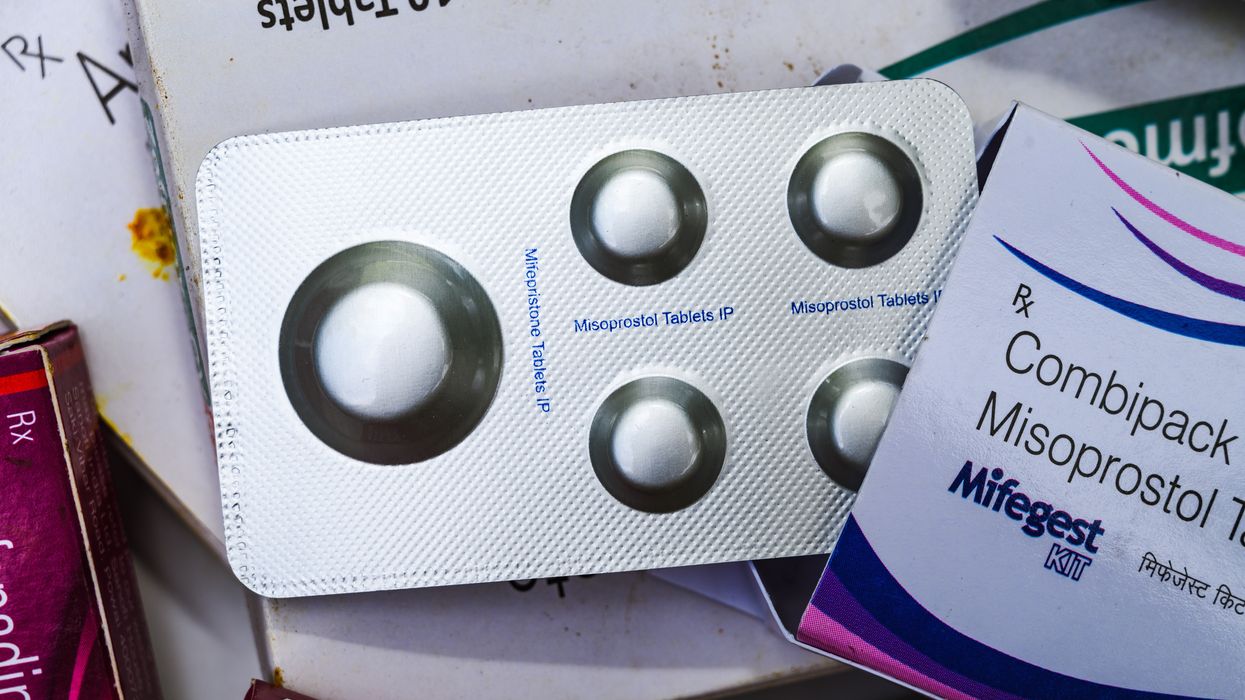
The high-profile lawyer behind the case "wants to shut down doctors in shield law states," said one expert, and "he wants a federal court to weigh in on the Comstock Act."
As polling reaffirms U.S. public support for abortion rights, a new case in Texas is generating alarm and outrage, as it involves a federal "zombie law" that the forced birth movement aims to use to block people across the country from accessing abortion pills.
Jonathan Mitchell is serving as lead counsel in the proposed class action lawsuit, filed Sunday in the Southern District of Texas. Described as an "anti-abortion legal terrorist" by Susan Rinkunas in Jezebel, Mitchell is Texas' former solicitor general and the chief architect of a state law that entices anti-choice vigilantes with $10,000 bounties to enforce a six-week abortion ban.
"He's represented at least three other men who've sued over women's abortions—including Marcus Silva, who sued his ex-wife's friends for helping her get abortion pills. That case was eventually dropped, but not before it came out that Silva tried to use the lawsuit to blackmail his ex into having sex with him," Jessica Valenti noted in her Abortion, Everyday newsletter. "Since then, Mitchell and other anti-abortion activists have been cozying up to men's rights groups, 'abortion recovery' ministries, and crisis pregnancy centers—on the lookout for more angry men eager to sue their partners or exes for ending a pregnancy."
In the new wrongful death case in Texas, Mitchell represents Jerry Rodriguez, who is suing Rémy Coeytaux, a California doctor accused of mailing to Galveston County medication that his girlfriend used to end her pregnancy last September. The complaint claims the girlfriend's estranged husband and mother "pressured her to kill the baby with the drugs obtained from Coeytaux."
The complaint also claims the girlfriend ended a second pregnancy with "pills that were illegally obtained" in January—and she is now two months into a third pregnancy, and Rodriguez believes she may seek another medication abortion. He asked for $75,000 in damages and "an injunction to stop Coeytaux from distributing abortion-inducing drugs in violation of state or federal law."
The new "wrongful death" abortion pill lawsuit out of Texas is a BFD for several reasons, but one twist is that the doctor being targeted is the brother of lifelong reproductive health advocate Francine Coeytaux of @plancpills.bsky.social Collab by Nina Martin & me on what the case is all about:
[image or embed]
— Madison Pauly (@msjpauly.bsky.social) July 23, 2025 at 5:25 PM
Among the legislation cited in the filing is the Comstock Act, or 18 U.S. Code § 1461, a dormant 1873 law that criminalized the shipping of "obscene" materials, including abortifacients. While some anti-choice advocates aim to outlaw abortion nationwide with legislation in Congress, Mitchell has said that "we don't need a federal ban when we have Comstock on the books."
Since the U.S. Supreme Court's right-wing majority reversed Roe v. Wade with Dobbs v. Jackson Women's Health Organization in 2022, Republican lawmakers have ramped up their efforts to restrict abortion rights within their states—with deadly consequences. Residents of those parts of the country have increasingly turned to telehealth. States with pro-choice policymakers have enacted "shield laws" to protect abortion providers and patients who are traveling or receiving care online.
"These anti-abortion folks are really upset that all these pills are being sent to their states, and they're doing whatever they can to try to stop it," Jill Wieber Lens, a University of Iowa College of Law professor and reproductive rights expert, told Jezebel.
Lens also framed the Texas case as a fear tactic. "I think so much of this is about the chilling effect, as opposed to actually winning this lawsuit," she said. "This might scare other doctors in shield states from wanting to continue what they're doing."
According to Mother Jones, "The case is the first known test of whether abortion opponents can use federal court lawsuits to circumvent state shield laws aimed at protecting providers—a major escalation of attacks on abortion-friendly states."
Mary Ziegler, an abortion historian and law professor at the University of California, Davis, told the outlet that "the whole game for Jonathan Mitchell is to get into federal court... both because he wants to shut down doctors in shield law states, like everyone in the anti-abortion movement, and because he wants a federal court to weigh in on the Comstock Act."
Ziegler added on social media that the suit is also intended to "force a response" from the U.S. Supreme Court and President Donald Trump, who has so far resisted pressure from forced birth activists to use the Comstock Act to ban abortion nationwide. Further, she said, "it reinforces arguments for fetal personhood (note that is a class action on behalf of all 'fathers of unborn children')."
Three years after the fall of Roe v. Wade, most Americans still support legal abortion.-64% say abortion should be legal in all or most cases.-80%+ support it in cases of rape, incest, or health risks.-Even after Dobbs, public opinion hasn’t budged; the people are not with the ban.
[image or embed]
— Anna DNP, FNP, BC@ AccessToCareAdvocate (@anna1900.bsky.social) July 24, 2025 at 7:33 AM
The case comes as Thursday polling from the Associated Press-NORC Center for Public Affairs Research shows that 64% of U.S. adults across the political spectrum say that abortion should be legal in all or most cases.
While 52% of all respondents agreed abortion should be allowed if the patient does not want to be pregnant "for any reason," large majorities believe it should be allowed if the pregnant person's health is seriously endangered (89%), the pregnancy is a result of rape or incest (86%), and an abnormality would prevent the fetus from surviving outside of the womb (85%).
Additionally, according to the poll, a majority of Americans support protecting abortion access for people who endure miscarriages or other pregnancy-related emergencies (69%), protecting a patient's right to obtain care in another state (56%), and protecting doctors from fines or prison time (55%).
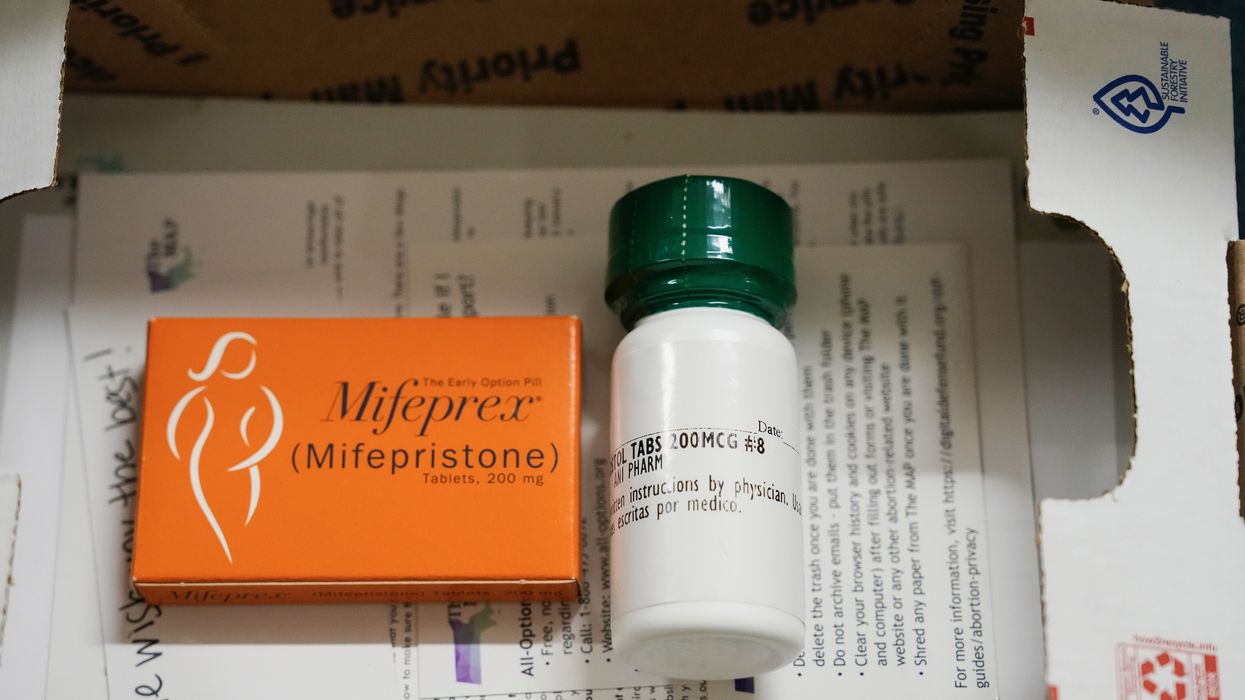
The Louisiana attorney general also tried to extradite the physician for sending medication abortion pills to a patient in the state.
Republican-controlled states' testing of abortion rights "shield laws" that have been passed in eight states in recent years ramped up on Thursday as a judge in Texas ordered a New York doctor to pay more than $100,000 in fines and fees for prescribing medication abortion pills to a 20-year-old woman in the Dallas area last year.
On the same day, the physician, Dr. Margaret Daley Carpenter of the Abortion Coalition for Telemedicine (ACT), was subject to a demand for extradition to Louisiana after a state grand jury last month indicted her for mailing misoprostol and mifepristone, pills that are used in a majority of abortions in the U.S., to the state.
The charges in Louisiana are the first criminal charges filed against an abortion provider in a state with a shield law, which bar officials and agencies from cooperating with lawsuits and prosecutions against healthcare professionals who send abortion pills to patients in states that ban abortion care. The laws have been passed as advocates in states where abortion care remains legal fight to ensure Americans across the country can still obtain care after the U.S. Supreme Court's overturning of Roe v. Wade in 2022.
Texas Attorney General Ken Paxton did not file criminal charges against Carpenter, but accused her in a lawsuit of violating the state's near-total abortion ban by providing the medication to a resident through the mail.
In the country's first ruling on a case involving a shield law, State District Judge Bryan Gantt ordered Carpenter to pay $100,000 in fines and $13,000 in attorneys' and other fees. He also ruled that Carpenter, who did not attend Thursday's court proceedings, "is permanently enjoined from prescribing abortion-inducing drugs to Texas residents."
Violating the ruling could result in a jail sentence for Carpenter.
Despite the ruling, ACT executive director Julie Kay told The Associated Press on Thursday that "patients can access medication abortion from licensed providers no matter where they live."
"ACT has and continues to stand behind New York and other shield laws across the country that enable the distribution of safe and effective telemedicine abortion care."
In December, ACT said medication abortion pills, which have been approved by the Food and Drug Administration since 2000 and have "been proven safe and effective globally for decades," are "an essential part of women's healthcare."
The Texas case is expected to eventually reach the U.S. Supreme Court, where the right-wing majority could rule against legal protections for abortion providers who provide telemedicine for out-of-state patients—even as Republicans including President Donald Trump claim they believe abortion law should be left up to the states.
In Louisiana, Carpenter was indicted for allegedly violating the state's near-total abortion ban by sending pills for a girl who reportedly then experienced a medical emergency. The patient's mother has also been charged. If convicted, Carpenter could face up to 15 years in prison.
Republican state Attorney General Jeff Landry demanded her extradition to Louisiana, but New York Gov. Kathy Hochul, a Democrat, said Thursday that she "will not be signing an extradition order that came from the governor of Louisiana. Not now, not ever."
ACT said Thursday that "ongoing attempts by anti-abortion state officials to restrict access to abortion care are inconsistent with New York state law."
"ACT has and continues to stand behind New York and other shield laws across the country that enable the distribution of safe and effective telemedicine abortion care," said the group.
The Texas case also reflects a dynamic that could lead to new prosecutions against abortion providers: those resulting from legal challenges filed by men whose partners receive abortion care.
In the case of the 20-year-old Texas resident, the patient was taken to a hospital in July by a man identified in legal filings as the "biological father of her unborn child."
After the man "started to suspect" the patient had used abortion pills and found the medications that had been prescribed by Carpenter and ACT, he "filed a complaint with the Texas attorney general's office."
The New York Times reported that with Texas Right to Life, several men plan to file wrongful death lawsuits in the coming weeks against doctors and others who assisted their female partners in obtaining abortion care.
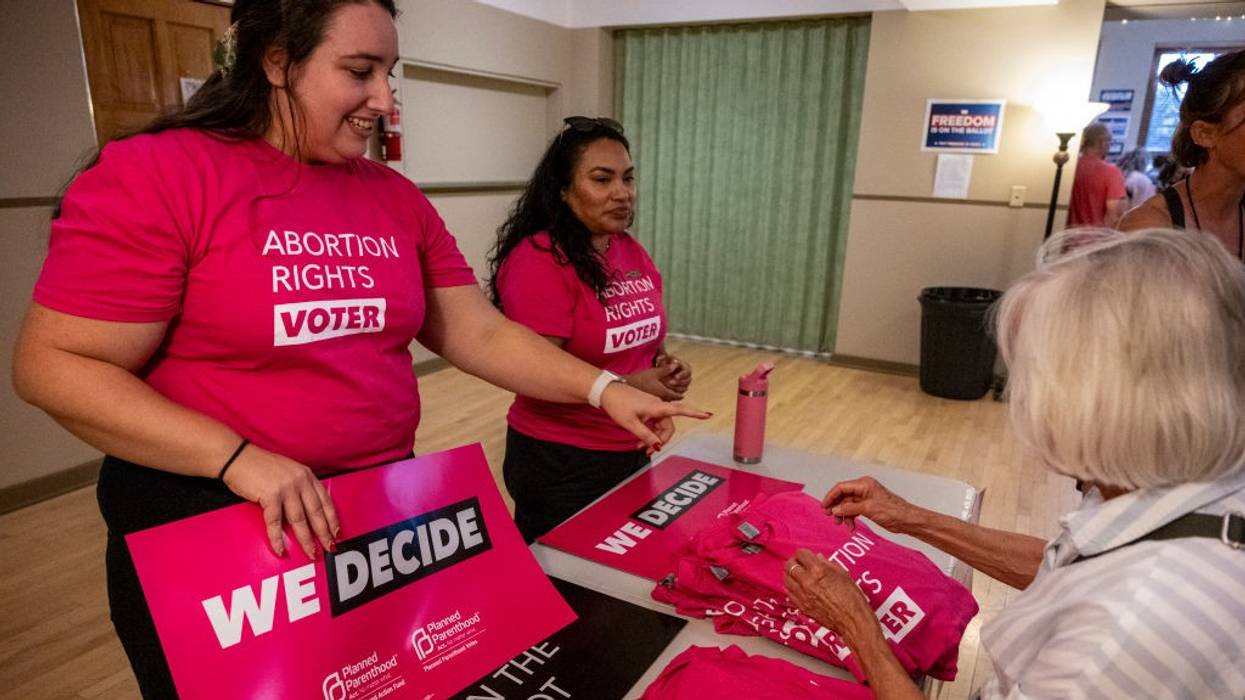
As law professors who teach about reproductive justice, we view attempts to restrict abortion travel as one of the frontiers in the anti-abortion rights movement, raising new legal questions for courts to unravel.
Almost half of the states in the country have made it harder to get an abortion since the Supreme Court in 2022 overturned the federal right to get an abortion. Fourteen states ban abortions in almost all circumstances, and another eight in almost all cases after 6 to 18 weeks of pregnancy.
Nonetheless, the number of abortions provided in the U.S. has actually grown since the court’s Dobbs v. Jackson Women’s Health Organization decision, rising 11% since 2020, to over 1 million abortions a year.
This increase can partially be explained by the fact that the number of people who crossed state lines to get abortions more than doubled from 81,000 in 2020 to 171,000 in 2023.
Justice Brett Kavanaugh wrote in the 2022 Dobbs decision that states cannot legally prevent their residents from going to another state to get an abortion, because he believes there is a “constitutional right to interstate travel.”
The U.S. Constitution does not, however, explicitly recognize a “right to interstate travel.” But the Supreme Court has issued decisions as far back as 1867 that can be interpreted to protect this right – and some scholars are confident that such a right exists.
But that hasn’t stopped states such as Idaho and Tennessee from enacting laws that make it harder to travel for an abortion – and some people have even attempted to legally punish their own partners for traveling to end a pregnancy.
As law professors who teach about reproductive justice, we view attempts to restrict abortion travel as one of the frontiers in the anti-abortion rights movement, raising new legal questions for courts to unravel.
Idaho bans abortion at all stages of pregnancy. In April 2023, it also became the first state to impose travel restrictions with what it called an “abortion trafficking” law.
This law prevents people from helping minors who are not their children get abortions – without parental consent – including in another state.
Idaho’s attorney general has interpreted the law to mean that health care providers cannot refer patients to abortion clinics in other states. And based on this interpretation, the new law also means that a grandparent or teacher, for example, could not provide advice to a pregnant teenager.
An abortion access fund and a few others have challenged this law, saying that it violates the First Amendment and infringes on pregnant patients’ constitutional right to travel.
A federal district court temporarily blocked the law from going into effect in November 2023, but the case is currently being appealed at the 9th U.S. Circuit Court of Appeals.
More recently, in July 2024, Tennessee enacted copycat legislation, which is also being challenged.
Other states – Alabama, Mississippi and Oklahoma – have considered similar abortion trafficking laws but so far have not enacted any.
Idaho’s and Tennessee’s laws don’t directly prevent interstate travel, because they focus on people helping minors get an abortion. But some abortion rights activists still say these laws could lead to more explicit bans on interstate travel for abortion.
In the meantime, four Texas counties and a handful of Texas cities are imposing what they call “abortion trafficking laws.”
Under these laws, people can sue anyone who travels through their cities or counties to get an abortion in another state. Supporters of these laws describe “abortion trafficking” in broad terms, because as one anti-abortion activist has said, “the unborn child is always taken against their will” by a pregnant person.
This understanding of “abortion trafficking” effectively treats the fetus as a person, in line with other fetal personhood efforts by anti-abortion rights groups. They are also carefully crafted to avoid constitutional challenges.
In some cases, it is individual people, not states, who are trying to block people from traveling to get an abortion.
In February 2024, for example, a man named Collin Davis tried to prevent his ex-partner from traveling from Texas to Colorado to get an abortion.
While Davis failed to prevent the abortion, he later filed a lawsuit to investigate his ex-partner and people who assisted her in having the procedure. His goal is to “pursue wrongful-death claims against anyone involved in the killing of his unborn child.”
As the courts consider whether it is legal to ban interstate travel for abortion, it is useful to consider the 1975 Supreme Court case, Bigelow v. Virginia.
This case materialized after a Virginia newspaper published an advertisement for an abortion clinic in New York. The state of Virginia convicted the managing editor for violating a Virginia law that made it a misdemeanor for any person “by publication, lecture, advertisement, or by the sale or circulation of any publication” to encourage getting an abortion.
The Supreme Court struck down the Virginia law as violating the First Amendment, and it also noted that Virginia could not “prevent its residents from traveling to New York to obtain” an abortion or “prosecute them for going there.” This language about the right to travel was not, however, essential to the court’s final decision, so it can’t necessarily be relied upon.
The Bigelow case was also decided just a few years after Roe v. Wade established a constitutional right to abortion. Such a right no longer exists after Dobbs.
This legal situation raises uncertainty about whether and how the Supreme Court would protect the right to travel for abortion.
There are approximately 22 states that have responded to other states’ abortion bans and other restrictive measures on interstate travel by adopting statutes called “shield” laws. These laws seek to prevent states with abortion bans from investigating their residents’ efforts to get an abortion in the shield state.
Along these same lines, the Biden administration issued a rule in 2024 that protects the privacy of people’s personal health information with respect to abortion when such care is legal.
The Dobbs decision returned the question of abortion to the states. But it has not settled many other legal issues related to abortion, such as whether there is a right to travel to get an abortion.

"Journalists must be able to freely report on government actions without fear the government will compel them to reveal their sources," said one campaigner.
Privacy and First Amendment advocates on Wednesday urged the U.S. House to pass legislation that would protect the United States' bedrock freedoms and a core tenet of journalism: the right of reporters to guard the identities of their sources.
The House Judiciary Committee advanced the Protect Reporters from Exploitative State Spying (PRESS) Act with bipartisan support, despite claims in recent months by Republican lawmakers such as Sen. Tom Cotton (R-Ark.) that the legislation would "immunize journalists and leakers alike from scrutiny and consequences for their actions."
The bill has been recognized by press freedom advocates as the most important piece of legislation in modern times regarding journalists' rights, as it would codify state protections at the federal level.
Forty-nine states already protect reporters from being compelled to reveal their confidential sources and federal abuse of subpoena power, and the PRESS Act would ensure all journalists have those protections regardless of where in the country they live and work.
"Journalists must be able to freely report on government actions without fear the government will compel them to reveal their sources. We commend the House Judiciary Committee for its bipartisan support of the PRESS Act," said Daniel Schuman, policy director at Demand Progress. "The Senate must act now to advance this important legislation."
The House previously advanced the bill with a voice vote last September, garnering support from all the Republicans in the chamber. Schuman pointed out late last year, as Cotton blocked the passage of the bill in the Senate, that the lower chamber included a number of exceptions in the law to satisfy the House GOP.
The bill includes exceptions for cases pertaining to information necessary to identify people accused of terrorist acts or involving the risk of imminent bodily harm or death, crimes unrelated to journalism, slander, libel, and defamation.
"The PRESS Act creates critical protections for the fearless journalists who act as government watchdogs and keep all of us informed," said Jenna Leventoff, senior policy counsel at the ACLU, which has long advocated for the bill. "While the majority of states already have shield laws in place that protect journalists from compelled disclosure of their sources, the PRESS Act provides uniform protections to journalists all across the country. We thank the House Judiciary Committee for protecting our constitutional right to a free press and urge the full House to swiftly pass this bipartisan legislation."
Although the U.S. Department of Justice adopted a policy in 2021 restricting subpoenas and seizures of journalists' technological devices and data, Gabriela Schneider noted at First Branch Forecast, Demand Progress Education Fund's newsletter, that the measure "could just as easily be suspended, ignored, or secretly altered."
"Importantly," Schneider wrote, "the PRESS Act would codify into law this prohibition, making it real and permanent."