

SUBSCRIBE TO OUR FREE NEWSLETTER
Daily news & progressive opinion—funded by the people, not the corporations—delivered straight to your inbox.
5
#000000
#FFFFFF
To donate by check, phone, or other method, see our More Ways to Give page.
Daily news & progressive opinion—funded by the people, not the corporations—delivered straight to your inbox.
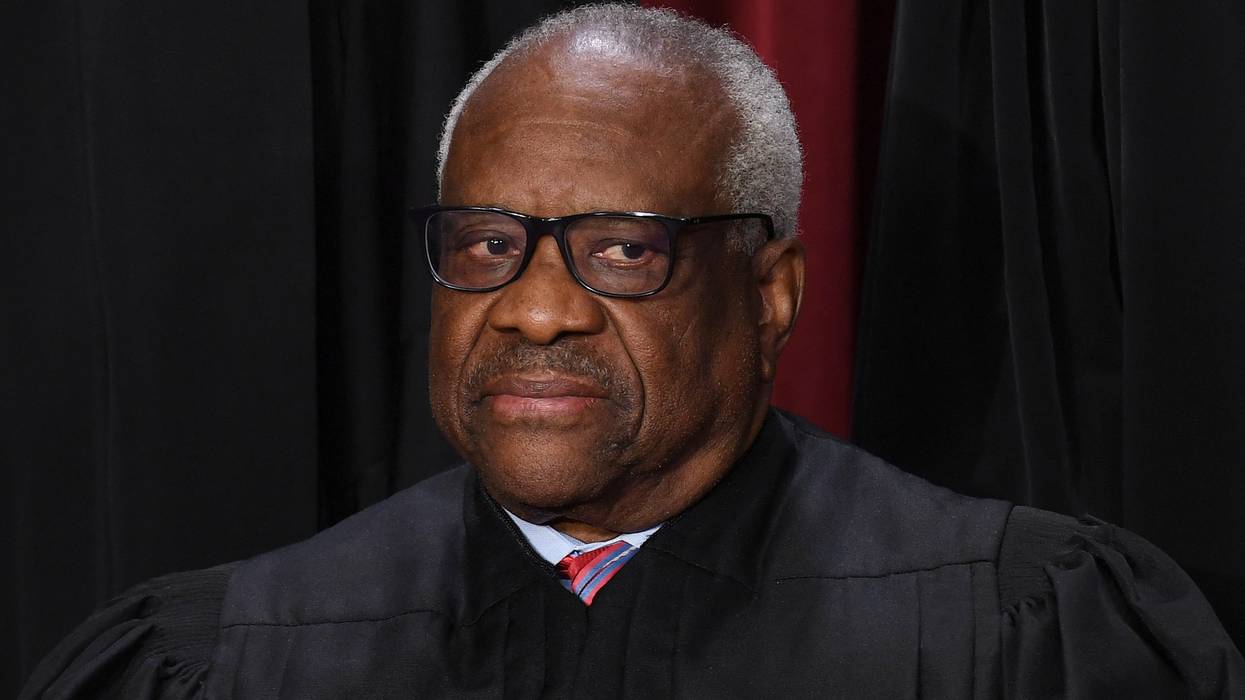
As Thomas reportedly told two of his law clerks in 1993, he planned to serve until 2034, and until then would continue to make the lives of liberals “miserable.” He has already made good on that pledge.
Clarence Thomas went more than 10 years without asking a single substantive question from the bench. His silence between 2006 and 2016 prompted commentators to call his courtroom quietude embarrassing, a sign of fatigue and a lack of intellectual candlepower. Even earlier in his career, he had earned the nickname of “Scalia’s Puppet” for his habit of joining majority opinions written by Justice Antonin Scalia, the outspoken and reactionary “originalist” who shared the dais with him until his death in 2016.
But the characterization of Thomas as an inattentive echo of Scalia is wrong. Thomas has always been more extreme and dangerous than Scalia, and his influence has never been greater.
After his bruising 1991 confirmation hearing, Thomas set his eyes on the goal of moving American law backward to the laissez-faire era of the Gilded Age, undoing the regulatory state of the New Deal, weakening the civil rights legislation of the 1950s and ’60s, and undermining many of the forward-looking precedent decisions issued by the Warren Court. As Thomas reportedly told two of his law clerks in 1993, he planned to serve until 2034, and until then would continue to make the lives of liberals “miserable.” He has already made good on that pledge: He is now the second-longest serving Supreme Court justice in history.
Thomas is best known for concurrences and dissents that seemed culled from the lunatic fringe when he wrote them, but were later embraced by the majority as the court moved hard right.
There is no telling how much more jurisprudential carnage he will cause or how much more disgrace he will bring to the reputation of the world’s most powerful judicial tribunal.
On affirmative action, in a 1995 case on government contracting (Adarand Constructors v. Pena), his concurrence denounced “remedial racial preferences” in federal hiring as a form of “racial paternalism.” This was an astonishing choice of words for the nation’s second Black Supreme Court justice, who overcame childhood poverty and, after a brief flirtation with Black nationalism, became the beneficiary of affirmative action at Yale Law School. Twenty-eight years later, however, in a majority opinion written by Chief Justice John Roberts (Students for Fair Admissions v. Harvard), the court ended affirmative action in higher education.
On abortion in a 2000 case (Stenberg v. Carhart) that invalidated Nebraska’s late-term abortion ban, Thomas dissented, arguing that the Roe v. Wade decision was “grievously wrong,” and that nothing in the Constitution “dictates that a State” must legalize abortion. Twenty-two years later, Samuel Alito’s majority opinion in Dobbs v. Jackson Women’s Health Organization adopted Thomas’ view.
Ditto for the Second Amendment. In Printz v. United States, a 1997 gun-regulation case, Thomas contributed a concurrence arguing that the amendment encompassed a personal right to keep and bear arms rather than simply a right connected with service in state militias, as prior case law had clearly held. Eleven years later, in District of Columbia v. Heller, the court recognized the personal right in an opinion authored by Scalia. Thomas went on to expand the personal right in 2022 with his majority opinion in New York State Rifle & Pistol Association v. Bruen, a decision that severely handicaps state and local authorities from enforcing gun-control laws.
Thomas is also on record advising the court to revisit its precedent decisions on the right to court-appointed counsel in criminal trials (Gideon v. Wainwright, 1963); the right of married persons to contraception (Griswold v. Connecticut, 1965); the right of adults to engage in private consensual sex (Lawrence v. Texas, 2003); and the right to same-sex marriage (Obergefell v. Hodges, 2015). He has also called for the court to reconsider 1964’s New York Times v. Sullivan, the landmark case establishing First Amendment protections in defamation cases involving public officials and public figures, which is widely considered the lynchpin of freedom of the press in America.
In a recent column published by the influential Scotusblog website, constitutional law scholar Erwin Chemerinsky noted that “Thomas is the only justice… who has openly said that precedent deserves little weight in constitutional law.”
Despite his laid-back courtroom demeanor, Thomas has also been an active and loquacious speaker out of court on the right-wing banquet and convention circuit, especially in meetings of the Federalist Society and events hosted by Hillsdale College, the Michigan-based private Christian institution long recognized as a hub for conservative thought leaders and a breeding ground for the right-wing’s ever expanding culture wars.
Supreme Court justices typically attend academic, judicial, and bar-related conferences, and initially, Thomas’ public remarks were fairly judge like, focusing on time-honored topics like judicial independence. But as his stature grew and the court’s lurch to the right accelerated, he shed whatever inhibitions he once had about voicing his personal beliefs, becoming in time a full-fledged and open culture war combatant.
n a 2011 address at a law student symposium sponsored by the Federalist Society in Charlottesville, Virginia, he devoted most of his time not to expounding on legal doctrine but to defending his tea party activist wife Ginni against adverse press coverage. He also exhorted his young audience to be wary of the “fundamental changes” wrought by the left that aimed to distort the original meaning of the Constitution. In a 2016 commencement speech at Hillsdale, he went further, urging graduates “not [to] hide your faith and your beliefs under a bushel basket… in this world that seems to have gone mad with political correctness.”
Thomas is now unbound and unrestrained. In a speech on April 15 at the University of Texas, he went “full Monty” in an unhinged broadside against liberals and progressives. “Progressivism seeks to replace the basic premises of the Declaration of Independence and hence our form of government declaring,” he declared, continuing:
It holds that our rights and our dignities come not from God but from government… [Progressivism] was the first mainstream American political movement—with the possible exception of the pro-slavery reactionaries on the eve of the Civil War—to openly oppose the principles of the Declaration.
He went on to blame progressives for the 20th century evils of racial segregation and eugenics, insisting that “Stalin, Hitler, Mussolini, and Mao” were “intertwined with the rise of progressivism.”
All this from an angry and embittered ideologue who is also arguably the most corrupt justice in the Supreme Court’s history, having failed for 13 years to report his wife Virginia’s earnings on his annual financial disclosure forms, and who has been on the gimme end of lavish vacations funded by billionaire Republican donor Harlan Crow.
Thomas celebrated his 78th birthday on June 23. He may not make it to his projected retirement date of 2034, but until he actually steps down, whether voluntarily or post mortem in the fashion of Scalia, there is no telling how much more jurisprudential carnage he will cause or how much more disgrace he will bring to the reputation of the world’s most powerful judicial tribunal.

Australia’s response to a December 14 mass shooting reminds us that violence is not an inevitability to be endured; it is a problem to be confronted.
Days ago, two tragedies unfolded on opposite sides of the world—each marked by gun violence and grief, yet met with starkly different national responses.
On December 14, on the first night of Hanukkah, a gathering on Bondi Beach in Sydney turned into horror when a father and son opened fire during a “Hanukkah by the Sea” celebration, killing 15 people and wounding 40 in what Australian authorities called an antisemitic terrorist attack. The carnage would have been much worse were it not for the heroic act of Ahmed al-Ahmed, an Australian citizen who migrated from Syria two decades ago.
The day before in Providence, Rhode Island, a shooter opened fire at Brown University during finals, killing two students and wounding nine. As of this writing, authorities are actively searching for a suspect—and a motive.
These shootings—one at a beloved public beach, the other on an Ivy League campus—expose not only shared grief but radically different understandings of responsibility. In Australia, sorrow was quickly followed by collective resolve. The US followed a familiar ritual: shock, condolences, and political paralysis. If I had a dollar for every politician’s “thoughts and prayers,” I could join the billionaire class those officials so eagerly protect.
If we are serious about honoring the victims and survivors in Sydney, at Brown, and everywhere else touched by mass shootings, expressing grief is not enough.
Australian Prime Minister Anthony Albanese condemned the Bondi Beach massacre as an act of “evil beyond comprehension,” pledging solidarity with the Jewish community and signaling renewed efforts to strengthen gun laws: tougher licensing, tighter oversight, and renewed limits on gun ownership.
Australians remember what followed the 1996 Port Arthur massacre. Within days, the country banned rapid-fire weapons, bought back and destroyed nearly 1 million firearms, and created a national gun registry. The result? Decades with virtually no similar mass shootings.
In the US, by contrast, each new tragedy yields the same results: more guns, more shootings, more grief; this in a country with more guns than people! And once again, the gendered reality of this violence is almost entirely ignored. There's a reason we never hear the phrase, gunwoman.
The overwhelming majority of US mass shooters are male—frequently young, usually white, and commonly driven by grievance, isolation, and entitlement. This is not incidental. It’s a pattern demanding honest cultural reckoning. For decades, we’ve failed to challenge destructive norms of masculinity. No surprise that those norms keep finding their most lethal expression through guns.
Let’s be clear: This is not about demonizing men. It’s about telling the truth. We train boys to suppress vulnerability, to equate manhood with dominance, and to interpret frustration as humiliation. When that script collides with easy access to weapons designed to kill many people quickly, the outcome is predictable. Every time. Full stop.
Australia acted on that reality. After Port Arthur, it banned fully automatic weapons, semi-automatic rifles, and pump-action shotguns—and treated firearms not as sacred objects, but as regulated tools with enormous public risk. Rather than deny their grief, Australians transformed it into collective responsibility, identifying gun violence as a systemic problem requiring systemic solutions.
In the US, mass shootings are still framed as isolated incidents—acts of deranged individuals—or worse, as unavoidable features of national life: school shootings; movie theater shootings; grocery store shootings; church, mosque, and synagogue shootings. Together they form a normalized nightmare we refuse to confront honestly, ignoring the 393 mass shootings so far in 2025, according to the Gun Violence Archive.
At Brown University, students and families are now living with the trauma of a field of learning turned into a killing field. Final exams meant to test academic mastery became tests of life and death. The remainder of the semester was canceled, and students headed home to process a violent assault rather than celebrating the end of the semester.
And yet, even as Brown students grieve, politicians employ familiar distractions—talking about mental health or spiritual resilience—anything to avoid confronting easy access to weapons of mass destruction.
Australia’s response reminds us that violence is not an inevitability to be endured; it is a problem to be confronted. Their approach is not perfect; nor is their country. Their strategy reflects a fundamental belief: Government exists to protect lives, not to fetishize weapons. The US, trapped in a twisted love affair with the Second Amendment, continues to block meaningful reform.
Still, this country has a choice. We can center honest conversations about masculinity and how we raise boys. We can invest in early interventions for alienated youth. We can regulate weapons of mass killing. Or we can keep normalizing trauma and, laughably, calling it freedom.
When Brown students return to campus, many will have already spent weeks organizing for tougher gun laws. I predict students across the country will join them.
If we are serious about honoring the victims and survivors in Sydney, at Brown, and everywhere else touched by mass shootings, expressing grief is not enough. Action—the antidote to despair—is required. Now.
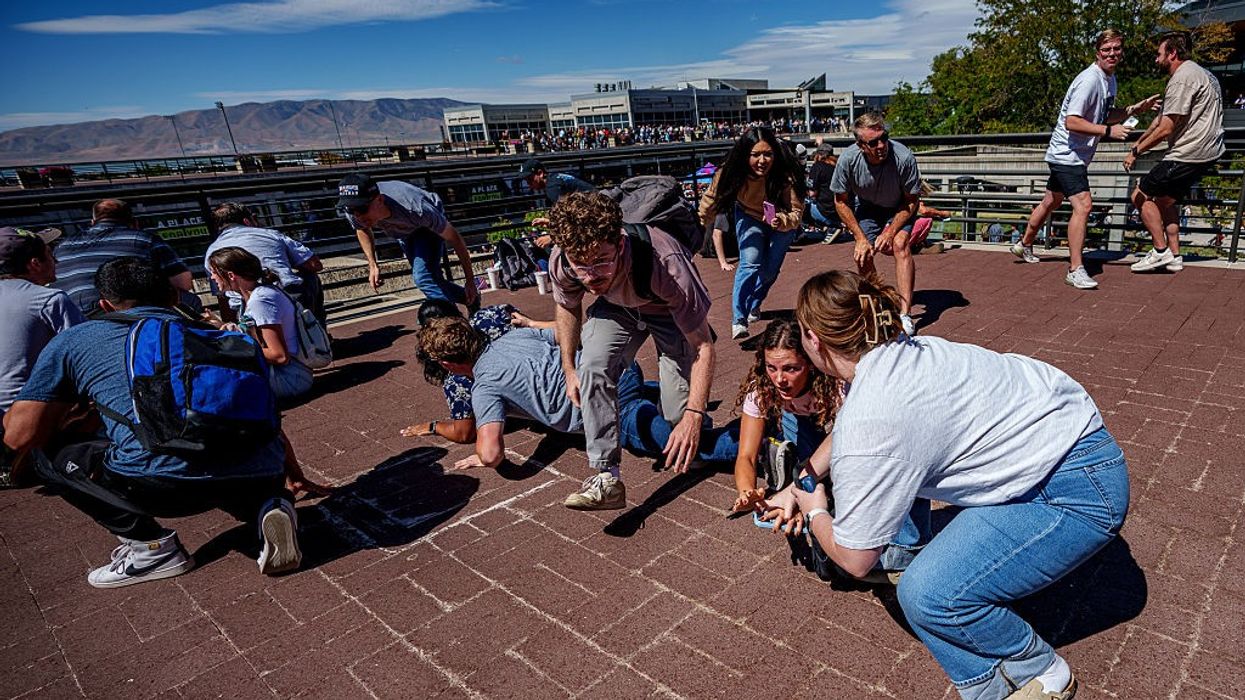
Melissa Hortman was a strong advocate of gun control laws. Charlie Kirk opposed them. Both are dead by gunfire, along with hundreds of children and adults so far this year.
“I think it’s worth to have a cost of, unfortunately, some gun deaths every single year so that we can have the Second Amendment to protect our other God-given rights. That is a prudent deal. It is rational.”—Charlie Kirk
Republican Charlie Kirk is dead. So is former Democratic Minnesota House Speaker Melissa Hortman and her husband, Mark.
Two clearly political assassinations in the past four months.
And a new study published in The Journal of the American Medical Association’s journal Pediatrics suggests that most of the deaths from the more than 250 mass shootings in America so far this year could also be classified as resulting from politics.
How did we get here, and what do we do?
In 2008, the in-the-National Rifle Association’s (NRA)-pocket Republican Supreme Court Justice Antonin Scalia did much the same thing that Sam Alito would later do with his Dobbs anti-abortion ruling: He reached back hundreds of years to look for a definition at the time the Second Amendment was written for how people then viewed the phrase “bear arms” and then twisted it beyond recognition.
The result was the corrupt Heller decision, as I lay out in The Hidden History of Guns and the Second Amendment, which unleashed a new wave of guns on an unsuspecting America.
It was followed two years later by McDonald v Chicago, another NRA-purchased, all-Republican decision striking down Chicago’s gun control laws and forcing cities and blue states to accept more weapons whether their people—through their elected officials—wanted that tsunami of guns in their communities or not.
As Justice John Paul Stevens wrote in his dissent in McDonald:
Although the Court’s decision in this case might be seen as a mere adjunct to its decision in Heller, the consequences could prove far more destructive—quite literally—to our Nation’s communities and to our constitutional structure.
As we saw Wednesday with the right’s new martyr, and have been seeing in the daily toll of gun deaths that America—alone among all other nations in the world—suffers from, Stevens was prescient.
We are literally the only country in the world that is experiencing this magnitude of gun crisis. Half of the guns in civilian hands in the entire world are here in the United States, so it shouldn’t surprise anybody that the leading cause of childhood death in the US is bullets and political assassinations have become routine.
The study in Pediatrics looked at child gun deaths in America before and after the 2010 McDonald decision. What they found is shocking.
Hopefully the assassination of a far-right “gun rights” icon will cause at least a few Republicans to break with their party’s fealty to the weapons industry.
That decision caused two major changes in gun laws across America. The first was that nearly every red state loosened their gun laws, sometimes in the extreme, even allowing open carry of semiautomatic weapons of war without any permit or regulation. Most blue states, on the other hand, looked for and found ways around the decision to actually tighten their gun control laws.
The result was astonishing. Between 2011 and 2023, the study period, red states that had loosened their gun laws saw 7,453 more children killed by firearms than the pre-McDonald statistical trends would have predicted had the Republicans on the court not further loosened gun laws.
In blue states that maintained or strengthened their gun laws, though, child gun deaths remained the same as before McDonald and Heller, and, to quote the study:
“Four states (California, Maryland, New York, and Rhode Island) had decreased pediatric firearm mortality after McDonald v Chicago, all of which were in the strict firearms law group.” (emphasis added)
Melissa Hortman was a strong advocate of gun control laws. Charlie Kirk opposed them. Both are dead by gunfire, along with hundreds of children and adults so far this year.
When Hortman was murdered by a politically-inspired right-wing thug, some conservatives on X and other platforms celebrated.
Utah Republican Sen. Mike Lee, for example, tweeted, “This is what happens When Marxists don’t get their way,” along with a picture of the shooter. An hour later, again showing the suspect’s picture, Sen. Lee wrote: “Nightmare on Waltz Street,” apparently trying to humorously reference Minnesota’s Democratic Gov. Tim Walz and his advocacy for gun control.
Yesterday, in the wake of Charlie Kirk’s murder, some liberals were posting the equivalent of “good riddance” to social media platforms, some making Lee’s obscene posts seem tame.
Both are reprehensible.
Instead, let’s take this moment to reflect on how the NRA’s work over the past decades—often funded and supported by Vladimir Putin’s Russia (where gun control is rigid)—killed both of them. And tens of thousands of children and adults over the years.
This week NPR reported that school shootings have spawned a $4 billion industry selling everything from bulletproof backpacks to “panic buttons, bullet-resistant whiteboards, facial recognition technology, training simulators, body armor, guns, and tasers.” They note:
Tom McDermott, with the metal detector manufacturer CEIA USA, says schools used to be a small fraction of their US business. Now they’re the majority.
"It’s not right. We need to solve this problem. It’s good for business, but we don't need to be selling to schools," McDermott says.
Sarah McNeeley, a sales manager with SAM Medical, is selling trauma kits, which include tourniquets, clotting agents, and chest seals. She says their customers are traditionally EMTs, fire departments, and military medics, but increasingly, school districts.
It’s insane that America’s answer to five corrupt Republicans on the Supreme Court and the NRA flooding our country with deadly weapons is to create a multibillion-dollar industry to stop bullets or ameliorate their damage in our public schools.
The vast majority of Americans want rational gun control laws instead of this Wild West insanity. Every other developed country in the world has them; not a single one forces their children through the trauma of active shooter drills or subjects them to metal detectors and requires them to occasionally come face-to-face with murderous psychopaths armed to the teeth.
It’s way past time for our politicians to wake the hell up, and hopefully the assassination of a far-right “gun rights” icon will cause at least a few Republicans to break with their party’s fealty to the weapons industry and join with Democrats to Make America Safe Again.
"Today, seven members of the Supreme Court followed the law and did not capitulate to special interests like the NRA, and our streets will be safer for it," said one Democratic senator.
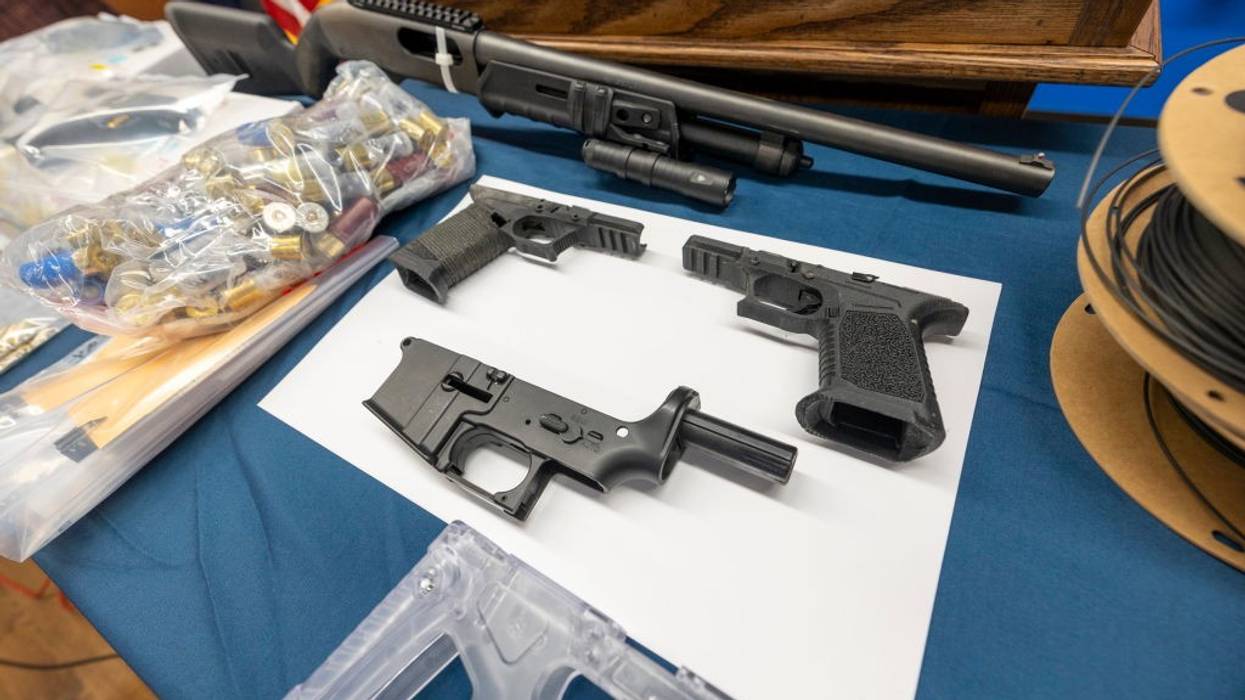
In what one gun control group hailed as "a BIG win for public safety," the U.S. Supreme Court on Wednesday upheld a Biden-era rule regulating ghost guns, which can be made using 3D printers, obtained without background checks, and smuggled into high-security locations.
The high court ruled 7-2—with Justices Samuel Alito and Clarence Thomas dissenting—in Bondi v. Vanderstock that ghost guns, which are virtually untraceable, are firearms subject to regulation by the U.S. Bureau of Alcohol, Tobacco, Firearms, and Explosives (ATF).
NEW: The Supreme Court just upheld ATF’s critical ghost gun rule 👏👏👏 They ruled that ghost gun kits are legally firearms, meaning they must have serial numbers and can only be sold by licensed sellers after a background check. This is a BIG win for public safety.
[image or embed]
— GIFFORDS ( @giffords.org) March 26, 2025 at 7:57 AM
In 2022, the Biden administration enacted rules including a licensing requirement for companies making and selling ghost gun parts, mandating serial numbers for such components, and subjecting buyers to background checks. Ghost gun component manufacturers and Second Amendment advocates sued the government, claiming that ghost guns are not firearms as defined by the landmark Gun Control Act of 1968.
The 5th U.S. Circuit Court of Appeals sided with the plaintiffs in a 2023 decision striking down the ATF ghost gun rules.
However, while conceding that some ghost gun kits may not qualify as firearms under the law, Justice Neil Gorsuch wrote for the majority that others "'contain all components necessary' for 'a complete pistol' and can be completed in perhaps half an hour using commonly available tools."
"But even as sold, the kit comes with all necessary components, and its intended function as instrument of combat is obvious," Gorsuch added. "Really, the kit's name says it all: 'Buy Build Shoot.'"
Today's decision is a pretty major smackdown for the 5th Circuit, which angrily rejected the ghost gun regulations as an egregiously unlawful assault on the rights of at-home gunsmiths. Gorsuch's opinion says the 5th Circuit badly misapplied the law in a number of ways. When you've lost Gorsuch...
— Mark Joseph Stern ( @mjsdc.bsky.social) March 26, 2025 at 7:16 AM
Responding to the ruling, David Pucino, the legal director and deputy chief counsel at the Giffords Law Center, said: "Ghost guns are the gun industry's way of skirting commonsense gun laws and arming dangerous people without background checks. We are thrilled that the Supreme Court has upheld the ATF rule that treats ghost guns as what they are: guns."
"We've seen how the rise in ghost guns has contributed to increases in crime and gun deaths in communities across the United States," Pucino added. "The Supreme Court's ruling is a huge win for public safety."
The legal division of Everytown for Gun Safety also hailed what it called the court's "lifesaving decision."
"We applaud the Supreme Court for doing the right thing by upholding a lawful and critical rule that protects public safety, and by rejecting the gun lobby's extreme legal agenda," Everytown Law executive director Eric Tirschwell said. "The ATF ghost gun rule has broad support from state and federal law enforcement, who have all affirmed it is crucial to keeping our communities safe—and data shows it is reducing the number of ghost guns recovered at crime scenes nationwide. We look forward to seeing this downward trend continue."
As Everytown noted, "early data indicates a drop in ghost gun recoveries at crime scenes since the ATF's rule went into effect," and "New York City, Baltimore, Boston, Los Angeles, San Francisco, Philadelphia, Oakland, and other cities reported declines in ghost gun recoveries" in 2023.
Great news coming out of the Supreme Court! In a 7-2 decision, Justices have upheld the ban on ghost guns. These untraceable weapons have no legitimate use and are the perfect firearms for use in crime. This is a victory for public safety!
— Team ENOUGH ( @teamenough.org) March 26, 2025 at 7:16 AM
"At 17, my son, Guy, was badly wounded when he was shot with a ghost gun by a minor too young to legally purchase a pistol. No one should have to go through the trauma of learning that your child has been shot and may not survive," Denise Wieck, a volunteer with the gun control advocacy group Moms Demand Action, said following Wednesday's ruling.
"Though Guy suffers the consequences of the gunshot wound to this day—including an epilepsy diagnosis, anxiety, and the loss of an eye—we have both turned our grief into power through education and advocacy," Wieck added. "We are deeply relieved by today's ruling, which will help ensure that a tragedy like ours never happens again."
Democratic lawmakers also welcomed Wednesday's ruling.
"Ghost guns have been a terror on our streets, haunting our communities, and taking lives," Senate Minority Leader Chuck Schumer (D-N.Y.) said in a statement. "For years, I have been warning of the dangers of these untraceable guns, and I strongly supported the Biden administration's rule to crack down on these treacherous kits."
"Today, seven members of the Supreme Court followed the law and did not capitulate to special interests like the NRA, and our streets will be safer for it," Schumer added, referring to the National Rifle Association. "Senate Democrats will continue to push Republicans to take commonsense actions to keep ghost guns off the streets."
"Remember the next time that a mass shooting happens," said one gun control advocate, "Trump did everything in his power to enable it, not prevent it."
An executive order issued Friday by President Donald Trump that aims to rollback gun control measures instituted by his predecessor received a swift rebuke from critics who said the order should be seen as a giveaway to the profit-hungry gun industry at the expense of a society ruthlessly harmed by gun violence year after year after year.
Trump's order tasks U.S. Attorney General Pam Bondi with conducting a sweeping review of the policies and positions of the previous administration and Justice Department as it relates to gun policies, including any executive orders issued by President Joe Biden during his term and the DOJ's positions taken on "all ongoing and potential litigation" related to firearms.
"On the chopping block," reports The Trace, "are several high-profile attempts by [Biden] to reduce gun violence, including regulations on ghost guns, expanded background checks on gun sales, and tougher regulatory oversight of lawbreaking gun dealers."
"Trump's priorities couldn't be more clear. Spoiler: it's not protecting kids."
According to the outlet, which focuses on the nation's gun violence crisis:
While most of Biden’s policies have taken effect, lawsuits against them are ongoing. In his executive order, Trump directed the attorney general to also review the Justice Department’s decision to defend those regulations, as well as all other gun-related litigation in which the government is involved. From age limits on firearm sales to the ban on gun possession by people convicted of felonies, federal gun laws have been under constant threat in the courts since a 2022 Supreme Court decision dramatically expanded gun rights.
If the Justice Department declines to defend the current federal laws in court, it would significantly raise the chances of them being ruled unconstitutional.
Gun control advocates widely rebuked the executive order, warning that Trump's reversal of the minimal amount of progress Biden was able to make was an endorsement of more death, pain, and suffering for the American people, including children, who too often find themselves at the deadly end of a gun's barrel.
"Trump's priorities couldn't be more clear. Spoiler: it's not protecting kids," said Natalie Fall, March For Our Lives executive director. "Gun deaths finally went down last year, and Trump just moved to undo the rules and laws that helped make that happen."
Trump's right-wing MAGA movement, she continued, "loves to rage about 'keeping kids safe,' but it’s all a smokescreen. They don’t care about what is actually killing and maiming thousands of American kids every year: gun violence. He is going to get Americans killed in his thirst for vengeance and eagerness to please the gun lobby and rally armed extremists. Remember, the next time that a mass shooting happens, Trump did everything in his power to enable it, not prevent it."
Hudson Munoz, executive director of the advocacy group Guns Down America, shared similar sentiments and said the president's latest order "is as reckless as it is predictable."
Not for the first time, he argued, Trump is "proving that he cares more about appeasing the gun industry than protecting the American people. This order is downright dangerous. His incompetence and Attorney General Pam Bondi's blind loyalty to the Trump agenda will lead to more violence while a few shareholders and gun industry executives line their pockets."
Referencing public polls, Munoz said more than 70% of people in the U.S. approve of common-sense gun safety laws that Trump and the gun lobby are attempting to destroy.
"Make no mistake, this executive order is about business," he said. "Trump is working to unleash more guns into American public life to boost the profits of gun manufacturers. This order leaves Americans to foot the bill with more gun deaths, more taxpayer dollars spent on emergency responses, and more families shattered by violence—while a handful of businesses cash in."
How the nation's highest court supercharged the nation’s gun violence epidemic.
If you’re looking for someone to blame for the gun violence that has left our schools, streets, and communities soaked in blood, don’t point just at the National Rifle Association and their lackeys in the Republican Party. Raise another finger, ideally your middle one, toward a Supreme Court that has enabled the unceasing rise of gun-related carnage in all its ever-more-obscene forms.
The key decision came in 2008, when a 5-4 majority led by the late Justice Antonin Scalia ruled in District of Columbia v. Heller that the Second Amendment protects an individual right to own firearms. Prior to Heller, the combined weight of academic scholarship and legal precedent had construed the Second Amendment as protecting civilian gun ownership only in connection with long-antiquated state militias. This view was long seen as reflecting the spirit of the actual debates held during the Constitutional Convention of 1787.
Scalia and the other members of the conservative Heller majority purported to base their radical reinterpretation of the Second Amendment on their “originalist” understanding of the Founding Fathers’ intentions. But their novel conclusion essentially ignored the first 13 words of the Second Amendment regarding the necessity of preserving the militias.
This amounted to a distortion of American history. State militias played a critical role in the American Revolution, and before that, in maintaining order in the 13 colonies. As the Second Amendment historian Noah Shusterman has written:
The men writing the Bill of Rights wanted every citizen to be in the militia, and they wanted everyone in the militia to be armed. If someone was prohibited from participating in the militia, the leaders of the founders’ generation would not have wanted them to have access to weapons… Read the debates about the Constitution and the Bill of Rights, and the militia’s importance leaps off the page. Alexander Hamilton, writing in the Federalist Papers, called a well-regulated militia “the most natural defense of a free country.” His anti-Federalist critics agreed with the need for a citizens’ militia, writing that “a well-regulated militia, composed of the Yeomanry of the country, have ever been considered as the bulwark of a free people.”
Few errors of constitutional interpretation have had such deadly real-world consequences as Heller. Justice John Paul Stevens, who authored the principal dissent in Heller, later condemned the ruling as “the worst self-inflicted wound in the court’s history.”
Since Heller, both guns and gun deaths have surged in tandem in what the American Enlightenment Project calls the “Heller Inflection.” In 2008, there were 305 million guns in circulation and 31,500 reported gun deaths; there are now 470 million guns in circulation and over 45,000 reported gun deaths per year. Mass shootings, defined as events involving four or more victims, have grown as well—from 272 in 2014 to 653 last year, according to the Gun Violence Archive.
But as bad as Heller was, it still recognized that certain gun control measures remained “presumptively lawful.” In the words of Scalia:
Nothing in our opinion should be taken to cast doubt on longstanding prohibitions on the possession of firearms by felons and the mentally ill, or laws forbidding the carrying of firearms in sensitive places such as schools and government buildings, or laws imposing conditions and qualifications on the commercial sale of arms.
In 2010, in McDonald v. Chicago, the court extended Heller’s Second Amendment analysis to cover state and local governments in addition to federal enclaves. But in 2022, with Clarence Thomas’ 6-3 majority opinion in New York Rifle & Pistol Association v. Bruen, the court cast aside the limiting language of Heller about presumptively lawful gun-control restrictions.
Bruen struck down New York’s firearm permit system that had been on the books since 1909. To reach that result, the court rejected the traditional methods of judicial scrutiny used to determine the constitutionality of state and federal statutes that required judges to balance the governmental interests advanced by legislation against the competing rights of individuals. In place of interest balancing, Thomas and his cohorts substituted a specious “history and tradition” test based on the justices’ highly selective and subjective reading of history and their sense of tradition.
In fact, gun-control regulations like the New York permit system have been commonplace in the United States from colonial times to the present. The founders supported a variety of strict measures, including the registration of guns issued to militia members and prohibitions against carrying firearms in public. By the early 1900s, nearly every state had enacted laws requiring firearm licenses and banning concealed carry.
As a result of Bruen, however, that history has effectively been neutered. Judges now must regard gun-control measures as presumptively invalid. To overcome the presumption, the government must prove that even the most commonsense laws are firmly rooted, either explicitly or by analogy, in the “nation’s historical tradition of firearm regulation.”
Together with Heller and McDonald, Bruen has led to a surge in Second Amendment challenges to gun laws since 2008. Pre-Heller, the lower federal courts decided an average of 26 gun cases per year; they now hear nearly 700 per year. The challengers are also winning a higher percentage of cases compared to the pre-Heller era, especially in cases decided by Donald Trump-appointed judges appointed. “Trump judges are close to casting 50% of their votes in favor of gun rights, when the average for other Republicans is 28%,” one study has found.
Last term, the Supreme Court surprised many by upholding a federal law that bars anyone subject to a domestic-violence restraining order from possessing a gun. However, it did so without signaling that it is prepared to modify the hard Second Amendment lines drawn in Heller and Bruen. As long as the court is controlled by right-wing activists beholden to the gun lobby and the Republican Party, those lines and their horrendous consequences are here to stay.
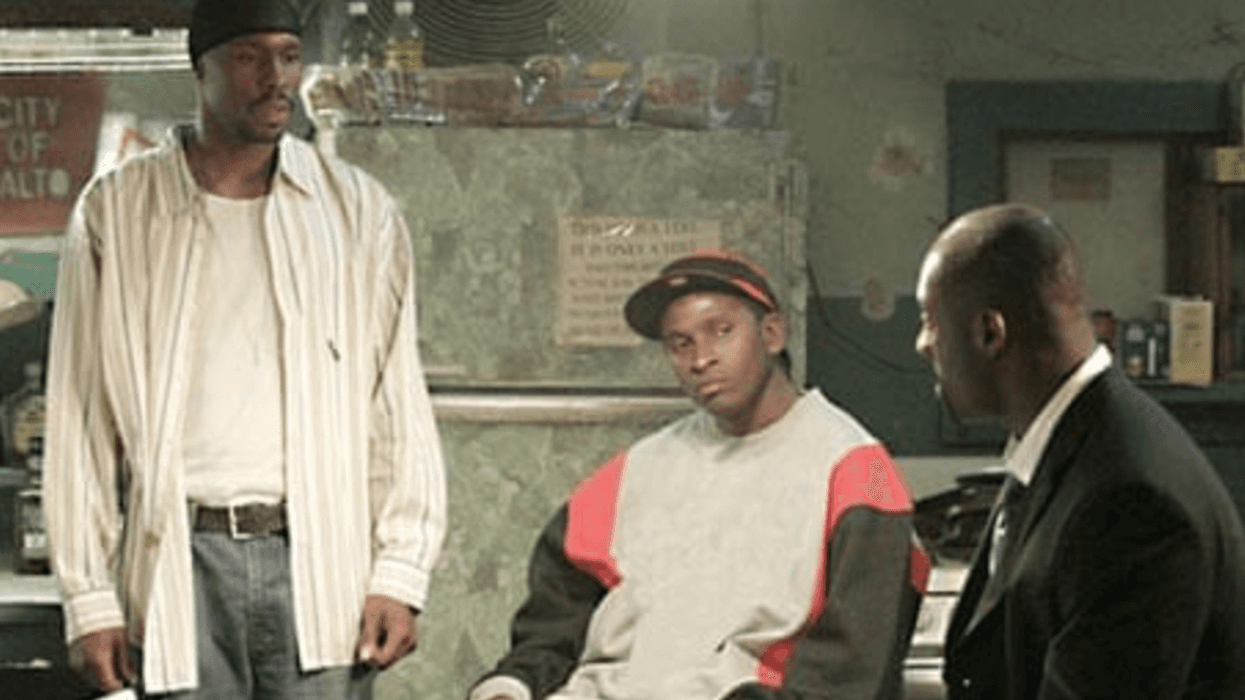
"The thing about the old days, they the old days."
A 2022 U.S. Supreme Court ruling paved the way for states to weaken gun safety laws, but the Hawaii Supreme Court made clear on Wednesday—with the help of the character Slim Charles on HBO's "The Wire"—that the high court's regressive decision would not force the state to allow residents to carry unlicensed firearms in public.
The court unanimously upheld the state's ban, saying that "states retain the authority to require individuals have a license before carrying firearms in public."
The 5-0 decision was at odds with New York State Rifle & Pistol Association, Inc. v. Bruen, the 2022 case in which the Supreme Court's right-wing majority ruled that laws and regulations pertaining to firearms must fall within the United States' so-called "historical tradition."
Last year, Bruen underpinned a decision made by a federal judge in Virginia that 18-to-20-year-olds could not be barred from purchasing guns since men as young as 18 were permitted to join armed militias at the time of the United States' founding.
"Time-traveling to 1791 or 1868 to collar how a state regulates lethal weapons—per the Constitution's democratic design—is a dangerous way to look at the federal constitution," wrote Hawaii Supreme Court Justice Todd Eddins in the ruling. "The Constitution is not a 'suicide pact.'"
Eddins acknowledged that the state's constitution, like the U.S. Constitution, says, "A well-regulated militia being necessary to the security of a free state, the right of the people to keep and bear arms shall not be infringed."
"Those words do not support a right to possess lethal weapons in public for possible self-defense," he wrote.
The court issued an unequivocal rebuke of the importance the Supreme Court placed on the United States' "historical tradition."
"As the world turns, it makes no sense for contemporary society to pledge allegiance to the founding era's culture, realities, laws, and understanding of the Constitution," wrote Eddins before citing the words of Slim Charles, the fictional character from the popular series, who once said: "The thing about the old days, they the old days."
"This is a top-10 court precedent in history," one lawyer said of the citation.
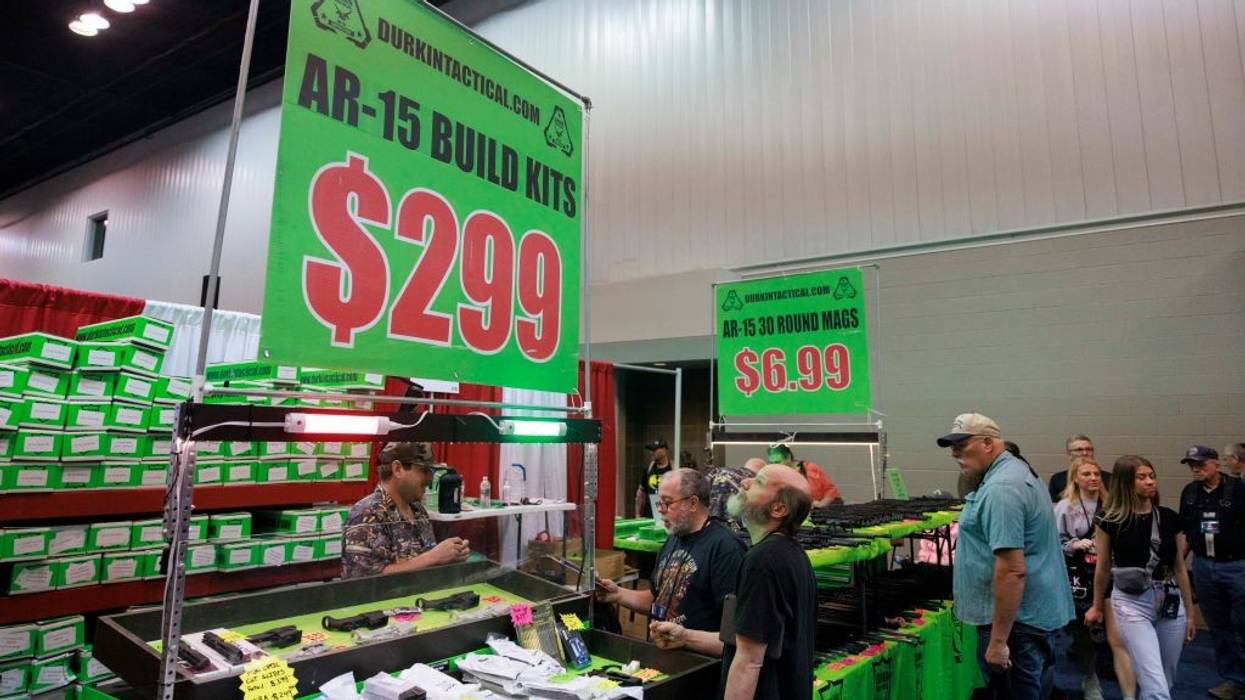
When people hear the term, they will know that somewhere a true patriot is expressing his God-given Constitutional right.
I don’t know about you, but I’m getting really bummed out by all of these mass shootings. One after another, day after day, more than one a day since the beginning of the year. Something has to change. This is America after all. The United States has a long history of dealing with challenging problems.
So, what’s the solution? Simple, rebranding.
America has a long history of rebranding, of changing the terms we use when dealing with unpleasant issues.
When slaughtering Indigenous people and stealing their land started to sound bad, we rebranded. We called it “Manifest Destiny” and said it was about spreading freedom from the Atlantic to the Pacific. This made it sound noble.
Clearly, we Americans have a long history of successfully rebranding difficult issues. Or more accurately, I should say that conservatives have a long and successful history of rebranding troubling issues.
When enslaving and dehumanizing the people stolen from Africa started to get bad press, slave owners knew they had to do something. So they rebranded. They began calling it “The Peculiar Institution.” Peculiar, sort of like your weird Uncle Phil, with his handlebar mustache and old MG, who affects a British accent. Although, as peculiar as old Phil was, he never whipped anyone to death or bred them like cattle.
After the South lost the Civil War, Southerners knew they needed to change the terms of the debate. They knew that if everyone thought they had simply been fighting to maintain slavery they would lose sympathy. They knew they had to do something to preserve any vestige of their traditions (you know, white supremacy). So they rebranded. They starting to refer to the war as “The Lost Cause.” This just sounds mundane, non-offensive. It made it sound not much different than the loss of a hard-fought, though honorable, soccer match. Simply a “Lost Cause,” never mind the fact that they were seeking to preserve the enslavement and systematic brutalization of millions of human beings, or the fact that Confederate soldiers routinely and summarily executed Black Union soldiers on the spot. Reality often is bad, and so sounds bad. Much better to hide behind banality, behind “The Lost Cause.”
When systemic and frequently violent racism in the 1950s started to get bad press, Southerners wisely rebranded it from white supremacy to “States’ Rights.” This sounds so much more noble, and hearkens back to the nation’s founding. Who could argue with a state simply seeking to preserve its own rights?
Perhaps the most recent example of rebranding involves “Parental Rights.” This is how conservatives now sell book bans and restrictions on medical care for transgender youth. After all, what kind of monster doesn’t support the right of a parent to protect and safeguard their own child? “We’re not banning books,” they say, “we’re not discriminating against gay or transgender children,” conservatives add, “we’re simply protecting the rights of parents to safeguard their children.” That just sounds so much better, doesn’t it?
Clearly, we Americans have a long history of successfully rebranding difficult issues. Or more accurately, I should say that conservatives have a long and successful history of rebranding troubling issues.
Now there are nearly daily news reports about mass shootings. And in nearly every news story there is also someone, a liberal politician or a grieving family member, demanding a solution. More often than not they call for restrictions on access to guns.
“Mass Shooting” has such a negative connotation, particularly when paired with “Mass Casualties.” The term is scary, and frankly it almost seems as if the biased liberal media has coined the term to embarrass gun rights advocates, and to make them look callous and uncaring. This must change.
I’ve batted the idea around in my mind for a while now, trying to come up with something more palatable or benign. And I think I’ve finally got it. Here’s my proposal.
Let’s changed “Mass Shooting” to “Second Amendment Celebration.” That shifts the tone from scary to laudatory, and when people hear about it (for example on Twitter at the hashtag “Active Shooter”) it will put a smile on their faces. They will know that somewhere a true patriot is expressing his God-given Constitutional right. This will also change the unwilling victim (“victim” is another downer of a word) from a casualty to a patriot, since they are nobly sacrificing their lives to preserve one of the primary rights in our revered Constitution.
This way, at each mass shooting… sorry, old habits die hard… at each Second Amendment Celebration, Americans can be reminded of what the Second Amendment means to all of us.
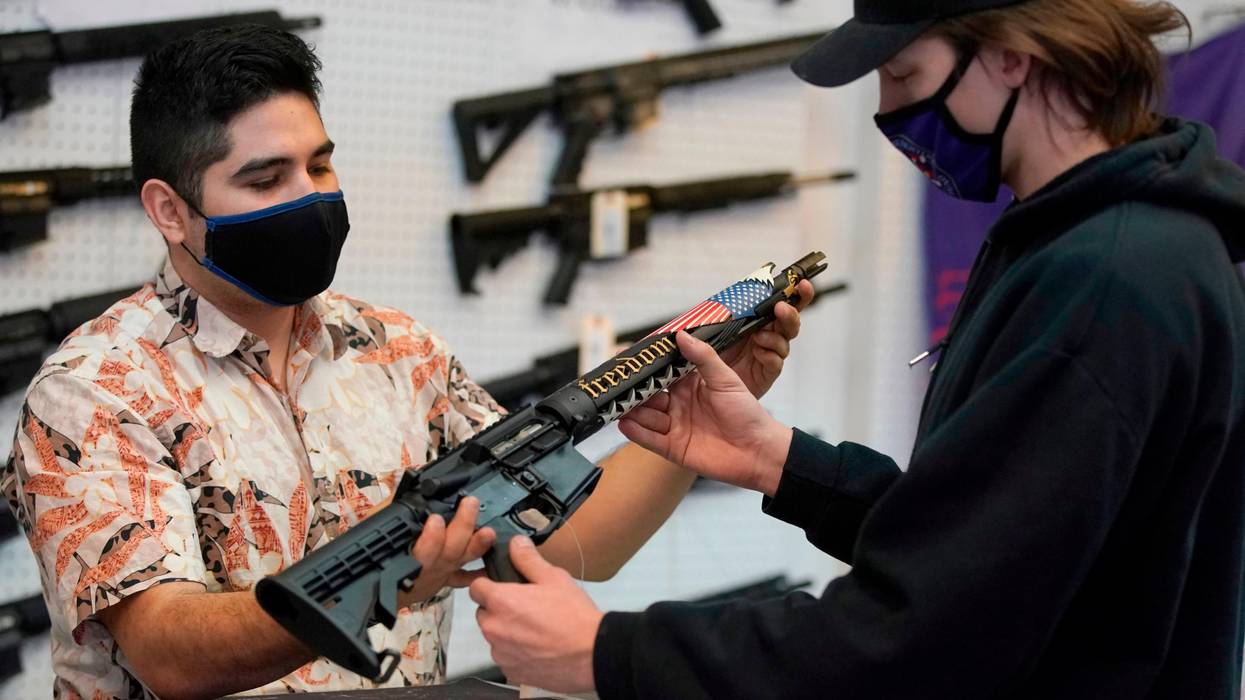
"The court's ruling will undoubtedly put lives at risk," said one policy expert. "It must be reversed."
A federal judge's ruling in Virginia on Thursday once again made clear the impact of the U.S. Supreme Court's decision in the case of New York State Rifle & Pistol Association v. Bruen, in which the right-wing majority ruled that laws and regulations pertaining to firearms must fall within the United States' so-called "historical tradition."
The ruling on Thursday was handed down by U.S. District Judge Robert E. Payne, a George H.W. Bush appointee, in the case of a 20-year-old who was turned away when he attempted to buy a Glock 19x handgun from a federally licensed dealer.
Under regulations put in place by the Bureau of Alcohol, Firearms, Tobacco, and Explosives (ATF) and the Gun Control Act of 1968, federally licensed sellers have been prohibited from selling guns to 18-to-20-year-olds, who have had to make such purchases in private sales.
Payne ruled that "the statutes and regulations in question are not consistent with our nation's history and tradition," and that "therefore, they cannot stand."
The judge made clear in his decision that the ruling was underpinned by Bruen, in which Justice Clarence Thomas wrote in the majority opinion that "constitutional rights are enshrined with the scope they were understood to have when the people adopted them."
According to Payne, the fact that 18-year-olds were permitted to join militias at the time of the nation's founding suggests that buyers should not have to reach age 21 before purchasing handguns from licensed sellers.
"The Second Amendment's protections apply to 18-to-20-year-olds. By adopting the Second Amendment, the people constrained both the hands of Congress and the courts to infringe upon this right by denying ordinary law-abiding citizens of this age the full enjoyment of the right to keep and bear arms unless the restriction is supported by the nation's history," said Payne. "That is what Bruen tells us."
Princeton University professor Eddie S. Glaude Jr. denounced the ruling as "madness," while New York University law professor Chris Sprigman said the decision is the latest result of "America's extremist form of constitutionalism."
Janet Carter, senior director of issues and appeals at gun control advocacy group Everytown Law, pointed to research that shows that "18- to 20-year-olds commit gun homicides at triple the rate of adults 21 years and older."
"The federal law prohibiting federally licensed firearms dealers from selling handguns to individuals under the age of 21 is not just an essential tool for preventing gun violence, it is also entirely constitutional," Carter told The Washington Post. "The court's ruling will undoubtedly put lives at risk. It must be reversed."
Attorneys on both sides of the case said they expected the Biden administration to appeal the ruling.
Numerous polls have shown that the majority of Americans favor stricter gun control measures, and a survey of gun owners taken last year by NPR/Ipsos found that 67% of respondents favored raising the age for any gun purchase from 18 to 21.
"At a moment when Americans are growing more unified and in favor of gun control," said historian Brian Rosenwald, "Clarence Thomas' grotesque, inane opinion in Bruen is going to make all of them illegal."
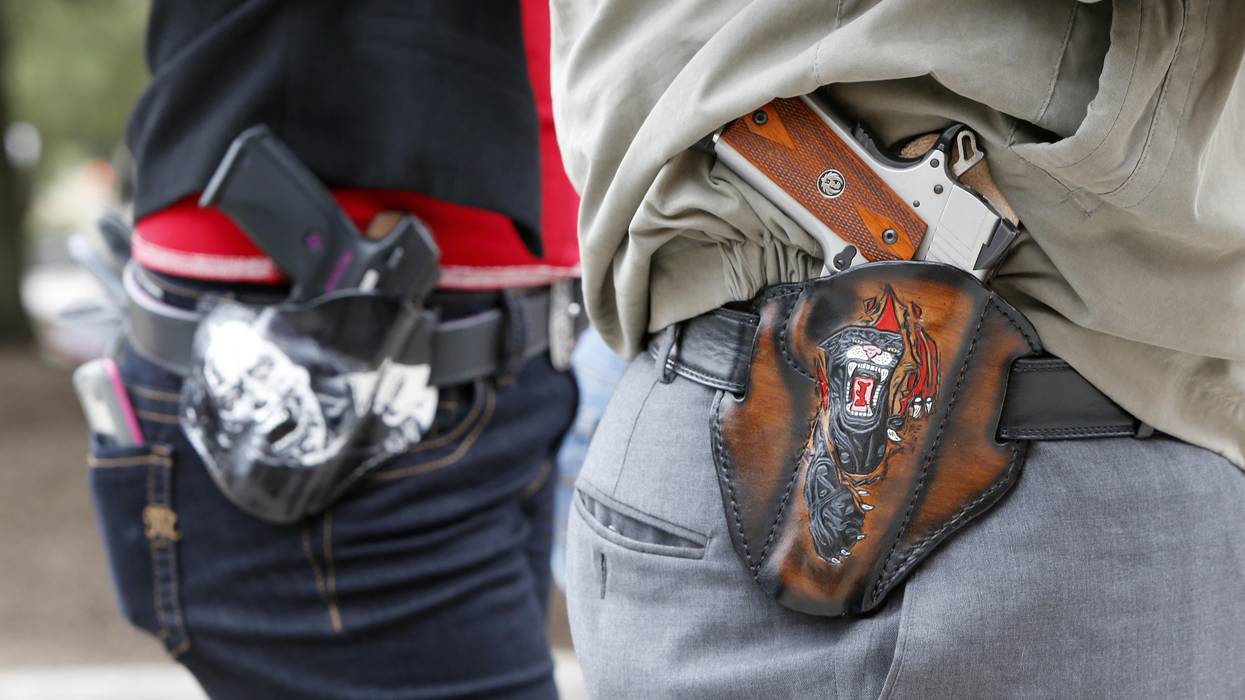
"Insanity."
"Utter madness."
These are just some of the ways critics are describing Texas' new law allowing people to carry handguns in public without a permit--a Republican achievement that many local officials say has already led to a spike in spontaneous shootings in highly populated parts of the state.
"It seems like now there's been a tipping point where just everybody is armed."
In one high-profile case earlier this year, Tony Earls "pulled out his handgun and opened fire, hoping to strike a man who had just robbed him and his wife at an A.T.M. in Houston," The New York Times reported Wednesday. "Instead, he struck Arlene Alvarez, a 9-year-old girl seated in a passing pickup, killing her."
A grand jury declined to indict Earls, agreeing with his lawyer that "everything about that situation, we believe and contend, was justified under Texas law."
As the Times noted, "The shooting was part of what many sheriffs, police leaders, and district attorneys in urban areas of Texas say has been an increase in people carrying weapons and in spur-of-the-moment gunfire in the year since the state began allowing most adults 21 or over to carry a handgun without a license."
"Far from an outlier, Texas, with its new law, joined what has been an expanding effort to remove nearly all restrictions on carrying handguns," the newspaper continued. "When Alabama's 'permitless carry' law goes into effect in January, half of the states in the nation, from Maine to Arizona, will not require a license to carry a handgun."
"But Texas is the most populous state to do away with handgun permit requirements," the Times pointed out. "Five of the nation's 15 biggest cities are in Texas, making the permitless approach to handguns a new fact of life in urban areas to an extent not seen in other states."
"In the border town of Eagle Pass, drunken arguments have flared into shootings," the newspaper reported. "In El Paso, revelers who legally bring their guns to parties have opened fire to stop fights. In and around Houston, prosecutors have received a growing stream of cases involving guns brandished or fired over parking spots, bad driving, loud music, and love triangles."
"Who could've predicted arming folks without a license would result in this type of chaos?" columnist Wajahat Ali asked sardonically on social media.
Another person tweeted: "This is the future the GOP wants for all of America. Vote accordingly."
Peer-reviewed research published Wednesday showed that Americans are more likely to die early if they live in states dominated by right-wing lawmakers, and weak gun safety measures were among the factors driving up state-level mortality rates.
No statewide data on shootings has been released since the law--passed by Texas Republicans last spring--went into effect last September, but many law enforcement officials say the presence of firearms on the street has increased while handgun permit applications have decreased.
"It seems like now there's been a tipping point where just everybody is armed," said Sheriff Ed Gonzalez of Harris County, which includes Houston.
As the Times reported:
Recent debates over gun laws in Texas have not been limited to handgun licensing. After the elementary school shooting in Uvalde, gun control advocates have pushed to raise the age to purchase an AR-15-style rifle. And after the [United States] Supreme Court struck down New York's restrictive licensing program, a federal court in Texas found that a state law barring adults under 21 from carrying a handgun was unconstitutional. [Republican] Gov. Greg Abbott has suggested he agreed, even as the Texas Department of Public Safety, which oversees the state police, is appealing.
Meanwhile, the Texas GOP's assault on gun control is just part of a "state-by-state legislative push," which "has coincided with a federal judiciary that has increasingly ruled in favor of carrying guns and against state efforts to regulate them," the Times reported.
With their June decision in New York State Rifle & Pistol Association v. Bruen, the high court's reactionary justices--most of whom were appointed by Republican presidents who lost the popular vote--struck down New York state's restrictions on the concealed carry of firearms in public. In the process, journalist Mark Joseph Stern argued, they enlarged the scope of the Second Amendment and made it harder for voters around the U.S. to protect communities "by enacting gun safety laws through the democratic process."
Calling it "a revolution in Second Amendment law," Stern wrote that "the Supreme Court has effectively rendered gun restrictions presumptively unconstitutional."
Before the ruling was handed down, journalist Jay Michaelson shed light on the right's "preposterous misreading of the Second Amendment, funded largely by gun manufacturers," in a Rolling Stone essay:
Contrary to what you may have been led to believe, until 2008, no federal court had held that the Second Amendment conveyed a right to own a gun. On the contrary, the Supreme Court clearly said that it didn't.
[...]
And what had once been a fringe view rejected by the Supreme Court--that the Second Amendment gave individuals a right to own guns--gradually became Republican Party gospel when the fringe took over the party. Former Chief Justice Warren Burger (a conservative appointed by Richard Nixon) described it as "a fraud on the American public."
Years before making it easier to carry handguns in public, Texas Republicans turned their state into one of the 29 nationwide with so-called "stand your ground" laws. These laws, also known as "shoot first" laws, upend the common law principle of a "duty to retreat," enabling individuals to use deadly force in purported self-defense as a first, rather than last, resort.
A study published earlier this year found that "shoot first" laws are associated with hundreds of additional firearm homicides each year.
Although Texas was one of the few states where the enactment of "shoot first" laws did not lead to a significant change in gun homicide rates between 2000 and 2016, it remains to be seen if its new permitless carry law will generate a surge in violent encounters between armed parties claiming "self-defense."
Last week in Florida, which became the first state to enact a "shoot first" law by statute in 2005, a man and his teenage son were arrested for attempted murder after allegedly shooting at a woman whom they suspected of being a burglar.
There are more guns than people in the U.S., and due to National Rifle Association-bankrolled Republicans' opposition to meaningful gun safety laws, it remains relatively easy for people to purchase and carry firearms in many states.
As a result, there have been thousands of mass shootings since 2012, and guns recently became the leading cause of death among children and teens in the United States.
Studies have shown that gun regulations with high levels of public support, including bans on assault weapons and high-capacity magazines, help reduce the number and severity of fatal mass shootings.
"We don't have to live this way," mom, teacher, and Democratic Minnesota House of Representatives candidate Erin Preese said Monday after a deadly school shooting in St. Louis. "Vote for lawmakers who will stand up to the gun lobby. Our kids' lives depend on it."