

SUBSCRIBE TO OUR FREE NEWSLETTER
Daily news & progressive opinion—funded by the people, not the corporations—delivered straight to your inbox.
5
#000000
#FFFFFF
To donate by check, phone, or other method, see our More Ways to Give page.
Daily news & progressive opinion—funded by the people, not the corporations—delivered straight to your inbox.
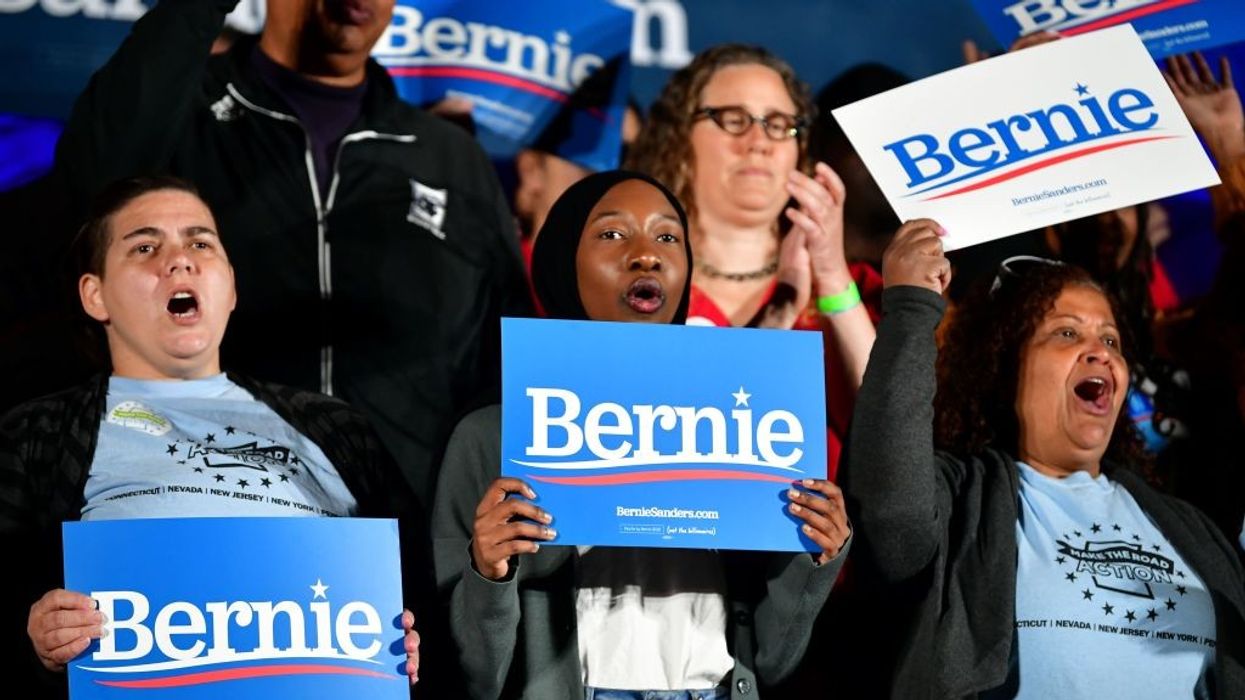
What's happening to Judith Whitmer and her allies in Nevada is a classic battle between top-down corporate money and bottom-up progressive activism.
To understand the current fierce attacks on the progressive leadership of the Nevada Democratic Party, it's helpful to recall the panicked reaction from political elites three years ago when results came in from the state's contest for the presidential nomination. Under the headline "Moderates Hustle to Blunt Sanders' Momentum After Nevada Win," the Associated Press reported that "Bernie Sanders' commanding Nevada caucus victory made him a top target for his Democratic rivals and a growing source of anxiety for establishment Democrats."
Such anxiety spiked for Nevada's establishment Democrats a year later, in early March 2021, when a progressive slate, headed by activist Judith Whitmer, won every officer seat in the state party, stunning its entrenched leaders. As she explained at the time, "what they just didn't expect is that we got better and better at organizing and out-organizing them at every turn."
At the eleventh hour, seeing the progressive writing on the wall, the sore losers-to-be had siphoned $450,000 out of the state party's treasury, transferring the loot to the Democratic Senatorial Campaign Committee, safely under the control of corporate-aligned operatives. And when Whitmer's victory became clear, all the employees of the Nevada Democratic Party greeted the newly elected chair by immediately quitting.
Bloviating predictions of disaster quickly ensued. But Nevada's Catherine Cortez Masto, widely seen as the nation's most vulnerable Democrat in the Senate, won re-election last November. So did each Democratic member of the U.S. House. And Democrats control both chambers of the state legislature. (The only major loss was the governor's seat.) Whitmer cites nearly 2 million "direct voter contacts," increased rural turnout and "wins in deep red territories."
With her two-year term as state party chair about to expire, Whitmer is running for re-election as part of a progressive slate, while old-guard forces ousted by party delegates two years ago are on the attack under the banner of the ironically named "Unity Slate." The Nevada Democratic Party's central committee will vote on March 4.
The Unity Slate candidates "work for corporations and Republican-backed lobbyists," Whitmer said, adding that if elected "the Unity Slate would work in an echo chamber to only serve the most funded politicians in our state, and only support the status quo's agenda."
The Unity Slate's corporate ties are underscored by sponsors of its Sapphire PAC, which recently reported taking donations totaling $10,000 from Southwest Gas as well as $5,000 from NV Energy. Whitmer charged that acceptance of such funding from utility corporations "screws over the same voters we're working hard to fight for as the so-called Unity Slate turns a blind eye to rising costs that impact our community's most vulnerable."
Whitmer said on Monday that her opponents "have the audacity and brazenness to run a registered lobbyist" on their Unity Slate as the candidate for second vice chair of the state party. She added that he "lobbies for an anti-union company fighting against our largest hardest-working union," referring to the Culinary Union -- which days ago "tweeted against his company," the lobbying law firm Brownstein Hyatt Farber Schreck.
Nationally, Whitmer has been a leader in efforts to reform the Democratic National Committee. In early February, the DNC resolutions committee refused to act on a motion she co-authored to ban dark money in party primaries. "Time and time again, we've watched 'dark money' used to silence the voices our party most needs to hear," Whitmer said. When "strong Democratic candidates willing to speak truth to power" have messages that "can be drowned out in a flood of untraceable expenditures," she pointed out, "many candidates are questioning why they should even run."
Three years ago, during the leadup to the hard-fought Nevada caucuses for delegates in the presidential nomination race, the wide gap between powerful union officials and rank-and-file workers was thrown into sharp relief. The hierarchy of the powerful Las Vegas-based Culinary Workers Union bashed Bernie Sanders for championing Medicare for All, but workers and their families overwhelmingly voted for Sanders. Now, the state AFL-CIO leadership is backing the "unity" slate against progressives.
The Nevada showdown comes right after notable progressive breakthroughs this winter in two other western states: Shasti Conrad won election to become chair of the Washington Democratic Party. Yolanda Bejarano, a leader of Communications Workers of America and a member of Progressive Democrats of America, won election to chair the Arizona Democratic Party.
Methodical organizing at the grassroots makes such progress possible. That's what happened in West Virginia, where last summer activists wrested control of the state Democratic Party away from Joe Manchin, the archetypal big-money-talks Democratic senator.
Now, powerful forces are doing all they can to prevent the re-election of Judith Whitmer as chair of the Nevada Democratic Party. It's a classic battle between top-down corporate money and bottom-up progressive activism.
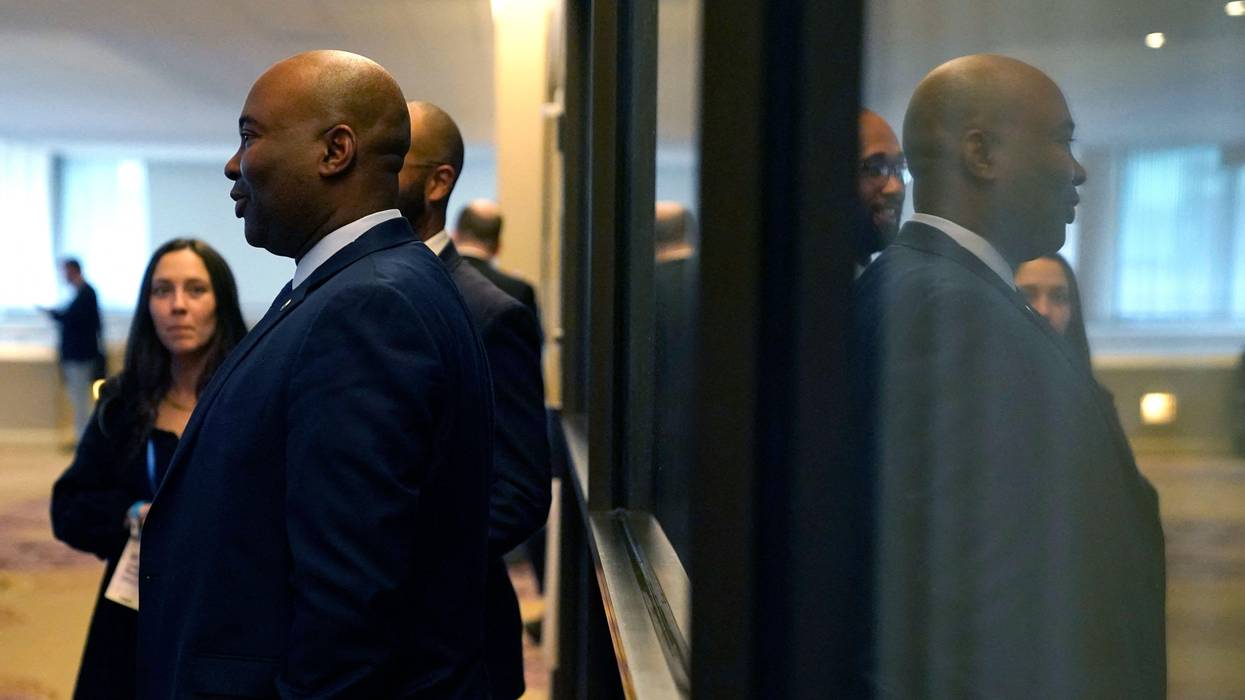
"Time and time again, we've watched 'dark money' used to silence the voices our party most needs to hear."
Nevada Democratic Party Chair Judith Whitmer said Friday that progressives won't stop working to stem the flow of untraceable cash into national primary contests after the DNC Resolutions Committee blocked a vote on her proposed dark money ban for the second time.
Whitmer, a DNC member, told Common Dreams that "time and time again, we've watched 'dark money' used to silence the voices our party most needs to hear."
"Our party and our country need strong Democratic candidates willing to speak truth to power, but when their messages can be drowned out in a flood of untraceable expenditures, many candidates are questioning why they should even run," Whitmer said. "Restoring faith in our democracy has never been more urgent, and that all-important work should start in our own primary elections."
Whitmer sponsored the proposed dark money ban alongside fellow DNC member James Zogby, who previously served as chair of the resolutions panel. If approved, the resolution would have prohibited dark money donations in Democratic primary contests and established guidelines for investigating any violations of the ban.
On Thursday, members of the DNC Resolutions Committee—who likely faced pressure from DNC leadership—stayed quiet when the proposed ban was put up for consideration, so the measure did not receive a vote. Had the committee approved the proposal, which was backed by dozens of DNC members, it would have gone to the full DNC for a vote this weekend. (The DNC doesn't publicize membership lists for its standing committees.)
"Although we were disappointed that the Resolutions Committee once again chose not to move our resolution forward, we will keep fighting to make our primaries a fair and level playing field for all candidates," Whitmer told Common Dreams.
Democratic leaders, including President Joe Biden, have repeatedly railed against the scourge of dark money, decried its corrupting influence, and pledged to rein it in—only to balk at pressure for substantive action.
The party's platform, adopted in 2020, states that "we will bring an end to 'dark money' by requiring full disclosure of contributors to any group that advocates for or against candidates."
Yet as the DNC leadership, headed by Chair Jaime Harrison, refuses to act on its rhetoric—and as congressional Republicans block broader legislative efforts to curtail dark money—Democratic incumbents continue to benefit from untraceable donations, which are frequently used to undercut progressive challengers.
Last year, the newly formed dark money group Opportunity for All Action Fund spent around $600,000 to bolster Reps. Donald Payne Jr. (D-N.J.), Dina Titus (D-Nev.), and Danny Davis (D–Ill.).
All three went on to defeat their progressive primary opponents and win reelection. That pattern played out across the country, though some candidates—including Rep. Summer Lee (D-Pa.), who was aggressively targeted by AIPAC's super PAC—were able to overcome torrents of opposition spending and prevail in November.
"In races around the nation, we've seen these underhanded tactics used to silence debate on critical issues, with competing views buried under an avalanche of dark money-funded messaging."
According to an August 2022 study by the Wesleyan Media Project, nearly 70% of pro-Democratic Senate ads up to that point in last year's election cycle were funded by groups that don't disclose any of their donors.
"Letting our primaries devolve into auctions, rather than elections, has done more than simply create an unequal and unfair playing field," Whitmer said during the DNC Resolutions Committee's last gathering in September. "In races around the nation, we've seen these underhanded tactics used to silence debate on critical issues, with competing views buried under an avalanche of dark money-funded messaging."
At this weekend's DNC meeting in Philadelphia, members approved a presidential primary calendar that would bump South Carolina up to the first-in-the-nation primary slot for 2024—a plan that has drawn criticism from some progressives.
But the issue of dark money was brushed aside once again.
"It was deeply upsetting that the Democratic Party refused to even vote on our resolution to ban 'dark money' from primaries," Zogby tweeted Saturday. "Using millions of 'dark money' from questionable billionaire sources to target and smear progressives is damaging to democracy and party unity."
While Democrats in Congress continue to push legislation to curb dark money across the board in federal elections, progress will be virtually impossible with a closely divided Senate and a Republican-controlled House, leaving internal party rule changes one of the only viable paths toward genuine campaign finance reform in the near future.
Larry Cohen, a DNC member and the board chair of Our Revolution, wrote in an email Friday that the DNC and state-level Democratic parties "have extensive rules relating to the nominating process, which provide many opportunities to block dark and dirty money."
"What happens inside the Democratic Party and inside party caucuses of elected Democrats is frequently ignored by progressives, who are generally more comfortable protesting and working solely outside the party. Of course, protest is essential, and new party-building is fine," Cohen wrote. "But for those of us who believe we must fight in every possible way to advance progressive issues and win real power, we ignore party reform at our peril, even as we demand broader electoral reforms, such as fusion and ranked-choice voting, proportional representation, and more."
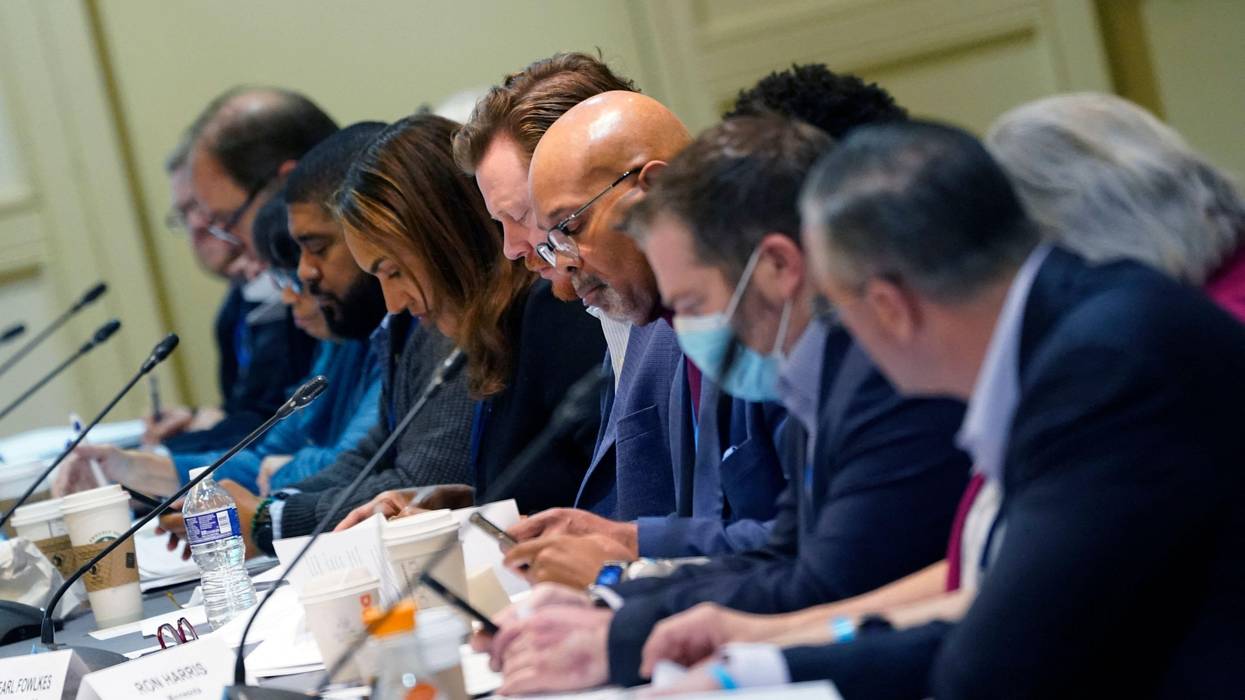
Nevada Democratic Party Chair Judith Whitmer, the lead sponsor of the resolution, said that dark money is "being used to silence the voices our party most needs to hear."
For the second time in less than five months, the Democratic National Committee's resolutions panel refused Thursday to allow a vote on a proposed ban on dark money in the party's primaries, despite substantial support for the change among DNC members and prominent progressive lawmakers.
Judith Whitmer, the chair of the Nevada Democratic Party and lead sponsor of the dark money resolution, wrote on Twitter that "these funds are being used to exclude, not empower."
"They're being used to silence the voices our party most needs to hear," Whitmer added. "The DNC did not pass my dark money resolution, but my voice was heard. Our elections are not for sale."
According to DNC member R.L. Miller, the founder of Climate Hawks Vote, "not a single person" on the Resolutions Committee "dares move to even put it for a vote, just like summer 2022."
During that meeting, which took place in September, the panel also declined to let the proposed dark money ban advance to a vote, as
Common Dreams reported at the time.
Recounting the September meeting in an
op-ed for The Nation, longtime DNC member James Zogby—who helped craft the dark money proposal—wrote that after Whitmer delivered a "powerful" statement to the resolutions panel in support of the ban, the panel's chair "asked if any member of the committee wanted to put our resolution up for a vote."
"There was dead silence in the room," Zogby wrote, suggesting that members were likely pressured by DNC leadership to stonewall the dark money proposal. "With not one of the two dozen committee members in attendance willing to call for a vote, the resolution died."
The DNC's proceedings are notoriously anti-democratic and untransparent—and they are likely to become even more so under bylaw changes that the body quietly enacted during its September gathering.
As The Intercept's Akela Lacy reported following last year's meeting, "The national committee approved language requiring that it must ratify any bylaw amendments that the convention, a broader body, wants to adopt."
"The amendment removes the authority over DNC decisions from the national convention, which includes thousands of members, and places it instead with the smaller national committee of just under 500," Lacy noted. "According to three people present, several DNC members were frustrated with the change."
"If we don't get the dark money—what I call 'the dirty money'—out of Democratic primaries, it becomes increasingly impossible to elect the challengers, the insurgents, the progressives in those primaries."
The DNC doesn't publicize the membership lists of its standing committees, though 2020 reporting from Sludge identified at least three corporate lobbyists who were serving on the resolutions panel at that time.
As of the September 2022 meeting, Patrice Taylor and Rich Fitzgerald were the
co-chairs of the DNC Resolutions Committee.
The committee's obstruction of the proposed dark money ban comes in the wake of the most expensive U.S. midterm cycle on record. According to OpenSecrets, super PACs spent an astounding $1.35 billion during the 2022 midterm election cycle.
An outgrowth of the Supreme Court's 2010 Citizens United decision, super PACs are legally required to disclose their donors—but many of them are effectively dark money groups because of how difficult it is to trace the sources of their funding.
During last year's Democratic primaries, progressive candidates across the country faced barrages of opposition spending from super PACs, including one bankrolled by Republican billionaires.
The torrent of super PAC cash provided the impetus for progressives' push to ban dark money in Democratic primaries, an effort that garnered the support of Sen. Bernie Sanders (I-Vt.)—who caucuses with Senate Democrats—and other members of Congress.
Ahead of the winter DNC gathering in Philadelphia, which is set to formally kick off this weekend, Sanders wrote in a letter that "the Democratic Party must not allow oligarchs and their super PACs, often aligned with Republicans, to buy Democratic Party primaries."
"Virtually all Democrats talk about the need for campaign finance reform," Sanders added. "Talk is easy. Now it's time to walk the walk. Let's stand up for democracy."
Larry Cohen, a DNC member and board chair of the progressive group Our Revolution, lamented in an organizing call earlier this week that the DNC is "a shitshow."
"There's no other way to describe it," Cohen said. "If we don't get the dark money—what I call 'the dirty money'—out of Democratic primaries, it becomes increasingly impossible to elect the challengers, the insurgents, the progressives in those primaries."
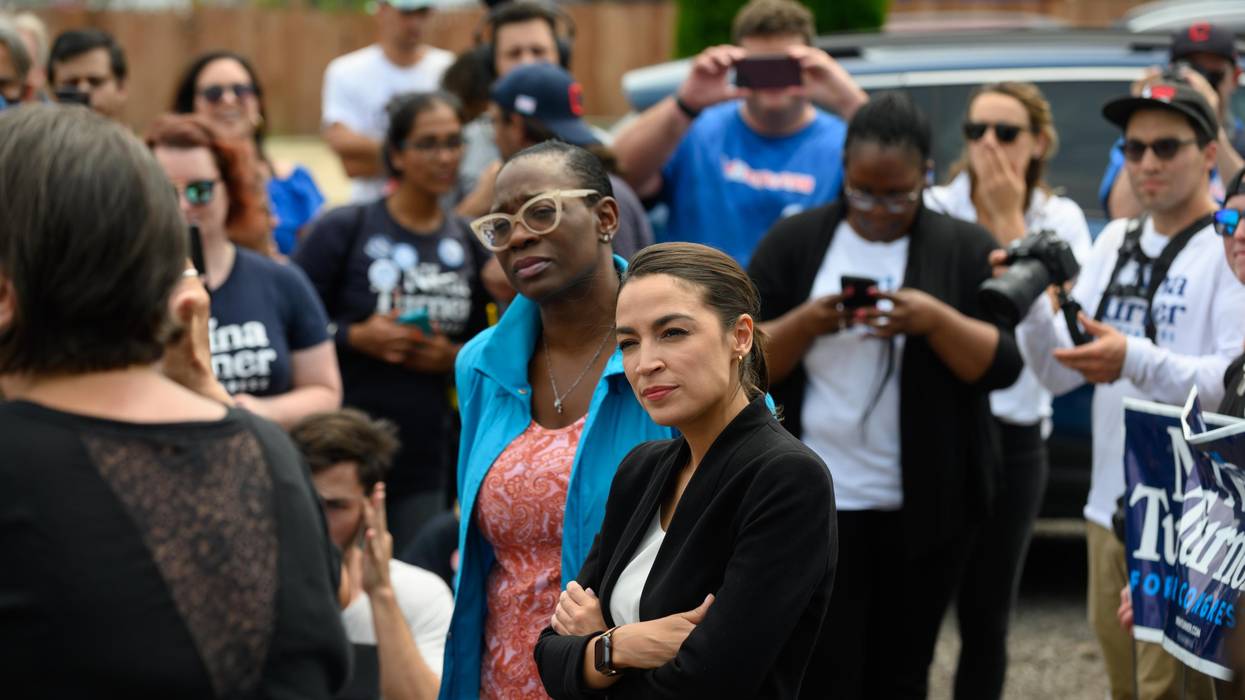
A Democratic National Committee panel on Thursday refused to allow a vote on a resolution aimed at banning dark money from the party's primary process, a decision that sparked outrage from progressive DNC members and others who backed the proposal.
Former Ohio state Sen. Nina Turner, a DNC member who faced an onslaught of dark money during her recent campaigns for a U.S. House seat, told Common Dreams that "it's really a sad state of affairs" for the DNC Resolutions Committee to "not even bring this to the floor so that the members of the DNC can weigh in."
"Dark money taints the will of the people of these communities because dark money is doing the bidding of the elites."
"This should be judged through the lens of right and wrong," said Turner. "It is wrong to allow dark money to enter any primary in any state, in any race. What it does is it suffocates the will of the people in those districts. Let's take my district, for example: Do you think the dark money that came in after me cares that Cleveland is the poorest city of its size in the nation? Do they care that 50% of the children who live in Cleveland live in poverty? No, they don't give a damn."
"Dark money taints the will of the people of these communities because dark money is doing the bidding of the elites and the oligarchs who don't give a damn about the conditions people are living in," she added. "The Democratic Party, by not allowing this resolution to come to the floor, is complicit in the railroading of democracy itself."
Led by Nevada Democratic Party Chair Judith Whitmer, the resolution would have prohibited dark money funding "during any and all Democratic primary elections" and established "procedures for the investigation of 'dark money' use by candidate committees as well as possible disciplinary action."
Dark money refers to spending whose source isn't disclosed and is often untraceable.
Supporters of the ban cited the torrent of dark money that poured into Democratic primary races across the country this year in an effort to defeat progressive candidates and bolster powerful incumbents--a strategy that, in a number of high-profile cases, succeeded.
During her argument in favor of a vote on the proposed ban, which was backed by dozens of DNC members and progressive members of Congress, Whitmer said dark money has allowed "our elections to devolve into auctions."
Joseph Geevarghese, executive director of the progressive advocacy group Our Revolution, called the DNC panel's decision to block a vote on Whitmer's resolution "abhorrent and anti-democratic."
"Democrats can't be the party of democracy in one breath and then let an astronomical sum of money from Republican megadonors and corporate interests flood Democratic primaries," Geevarghese added.
The proposed dark money ban's path forward is uncertain. Our Revolution said in an email to supporters Thursday that two of its board members, Larry Cohen and Jane Kleeb, are planning to "lead a coalition of 33 progressive DNC members to get this resolution to the full floor" despite the party panel's obstruction.
"The 33 of us are not going to stand down just because the resolution committee pulled a fast one," Turner told Common Dreams.
The Democratic Party's 2020 platform includes an explicit rebuke of dark money, which has surged in the years following the U.S. Supreme Court's 2010 decision in Citizens United v. FEC.
The platform states that Democrats "will bring an end to 'dark money' by requiring full disclosure of contributors to any group that advocates for or against candidates, and bar 501(c)(4) organizations from spending money on elections."
"Dark money should have no role in deciding elections."
"Democrats will ban corporate PACs from donating to candidates and bar lobbyists from donating, fundraising, or bundling for anyone they lobby," the document adds.
Shortly before refusing to allow a vote on the proposed dark money ban, the resolutions committee approved a separate, toothless measure that "condemns the use of 'dark money' that runs contrary to the values and principles of donors."
James Zogby, founder of the Arab American Institute and a longtime DNC member, tweeted that he is "furious" about Thursday's outcome and "all Dems should be too."
"The last time party leaders did this was on my February 2003 resolution to oppose the Iraq War," Zogby added. "Wrong then, wrong now!"
In an interview Friday, Zogby--who previously chaired the DNC's resolutions panel--gave his account of the committee meeting:
In recent months, prominent progressive lawmakers including Sen. Bernie Sanders (I-Vt.) and Rep. Alexandria Ocasio-Cortez (D-N.Y.) have called on the Democratic leadership to support a dark money ban to prevent anonymous donors from manipulating the primary process and stacking the deck against candidates who rely on grassroots support.
"It is well beyond time for the Democratic Party to practice what we preach and ban super PAC spending from our primaries," Ocasio-Cortez tweeted in May after progressive Summer Lee narrowly overcame millions in opposition spending. "Dark money should have no role in deciding elections."
This story has been updated to include an interview clip from DNC member James Zogby.
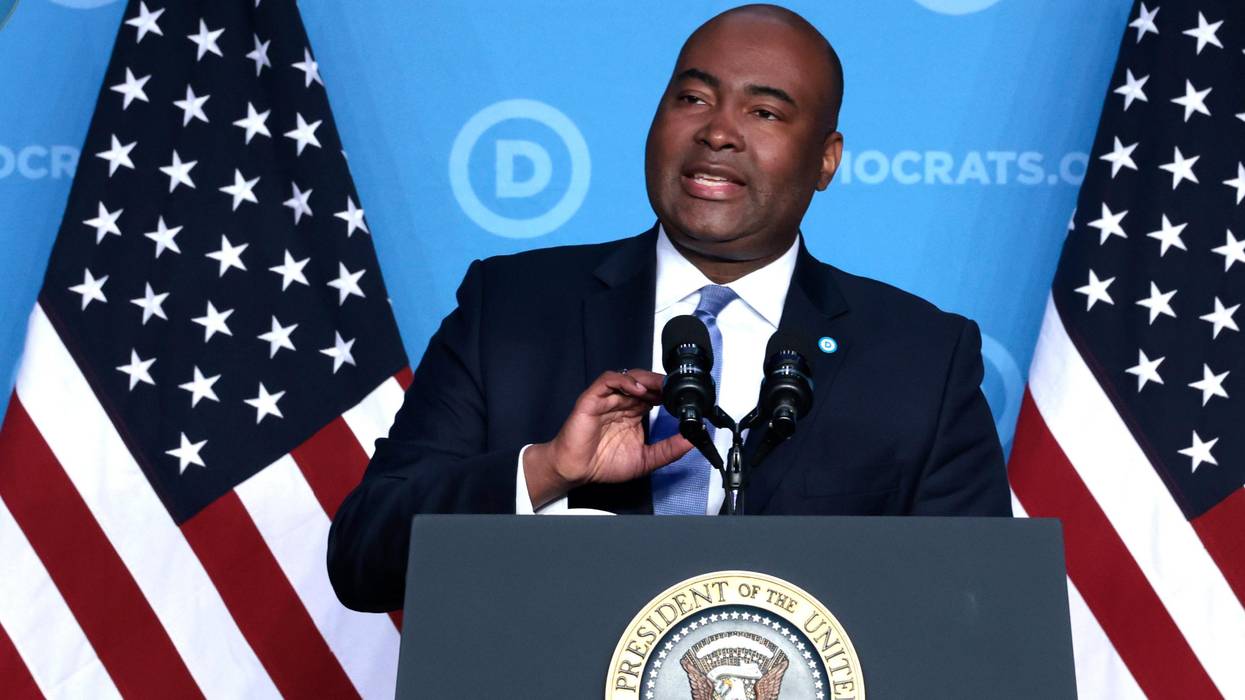
At the tail-end of a primary season that has seen torrents of dark money pour into districts across the U.S. to smear and defeat progressive candidates, the Democratic National Committee is facing mounting pressure to prohibit such spending in future elections, with supporters arguing such a ban would help jumpstart the process of cleaning up the nation's corrupt political process.
With the DNC scheduled to convene in Maryland later this week for its summer meeting, a group of more than 30 committee members spearheaded by Nevada Democratic Party Chair Judith Whitmer will demand approval of a resolution barring "the use of 'dark money' funding during any and all Democratic primary elections."
"If Democrats really believe in democracy and campaign finance reform, we must ban super PACs in primaries."
In an interview with The Nation last week, Whitmer warned that the "avalanche" of dark money is growing so large that voters are losing "their right to choose their own candidates."
Rep. Ro Khanna (D-Calif.) has called Whitmer's resolution "courageous" and declared that "any DNC member who truly believes in our slogan 'people over politics' should vote" in favor.
Katrina vanden Heuvel, The Nation's editor and publisher, argued in a column for the Washington Post on Tuesday that "passage of Whitmer's resolution shouldn't be controversial."
"No one can doubt that action is imperative," vanden Heuvel wrote. "According to the nonpartisan research group OpenSecrets, dark money topped $1 billion in the 2020 presidential race. This year, the Wesleyan Media Project reported, nearly 60% of all ads in Democratic House primaries have been purchased by sources that did not disclose, or only partially disclosed, their donors."
"Democrats in both the House and the Senate voted overwhelmingly for H.R. 1, the sweeping voting-rights bill introduced in 2021, which included strong campaign finance elements," vanden Heuvel added. "President Biden campaigned for its passage. That bill was ultimately defeated but, now, the Democratic National Committee can take action to clean its own house. It should not fail this test."
Several high-profile progressive lawmakers including Sen. Bernie Sanders (I-Vt.) and Rep. Pramila Jayapal (D-Wash.)--the chair of the Congressional Progressive Caucus--recently endorsed the idea of a dark money ban in Democratic primaries after watching progressive candidates lose congressional races that were inundated by super PAC cash, which is often difficult to trace due to the country's tattered campaign finance laws.
"It is now time to speak with one voice to end its influence in Democratic primaries--where record sums of money from millionaires and billionaires have infiltrated our primaries, and super PACs have drowned out the grassroots campaigns of working-class, progressive candidates," Jayapal, Rep. Mark Pocan (D-Wis.), and Rep. Jamie Raskin (D-Md.) wrote in a June letter to the DNC, the Democratic Congressional Campaign Committee, and the Democratic Senatorial Campaign Committee.
"Instead of Democratic primaries being an honest and free exchange of ideas with individual and small-dollar donor contributors dominant, corporate super PACs have flooded these races with millions in misleading mailers, digital ads, and television commercials," the letter continued. "Candidates who have worked hard to build grassroots support in their communities are being overwhelmed by a torrent of outside spending."
In a number of races this primary cycle, a super PAC formed by the American Israel Public Affairs Committee (AIPAC) and bankrolled by Republican billionaires intervened on the side of corporate Democrats running against progressives such as Pennsylvania's Summer Lee--who ultimately won her race despite the opposition spending--and Jessica Cisneros, who lost by the thinnest of margins to right-wing incumbent Rep. Henry Cuellar (D-Texas).
Rep. Andy Levin (D-Mich.), widely considered the most progressive Jewish member of the House, also lost his primary to fellow Rep. Haley Stevens (D-Mich.) in a newly drawn district after facing millions in opposition spending from the United Democracy Project, AIPAC's super PAC.
Sanders, who campaigned for Levin and vocally condemned super PAC influence on the race, tweeted Tuesday that "billionaires and their super PACs must not be able to buy Democratic Party primaries."
"If Democrats really believe in democracy and campaign finance reform, we must ban super PACs in primaries," the Vermont senator added. "I stand with progressive reformers advocating for this change."