
SUBSCRIBE TO OUR FREE NEWSLETTER
Daily news & progressive opinion—funded by the people, not the corporations—delivered straight to your inbox.
5
#000000
#FFFFFF
To donate by check, phone, or other method, see our More Ways to Give page.


Daily news & progressive opinion—funded by the people, not the corporations—delivered straight to your inbox.
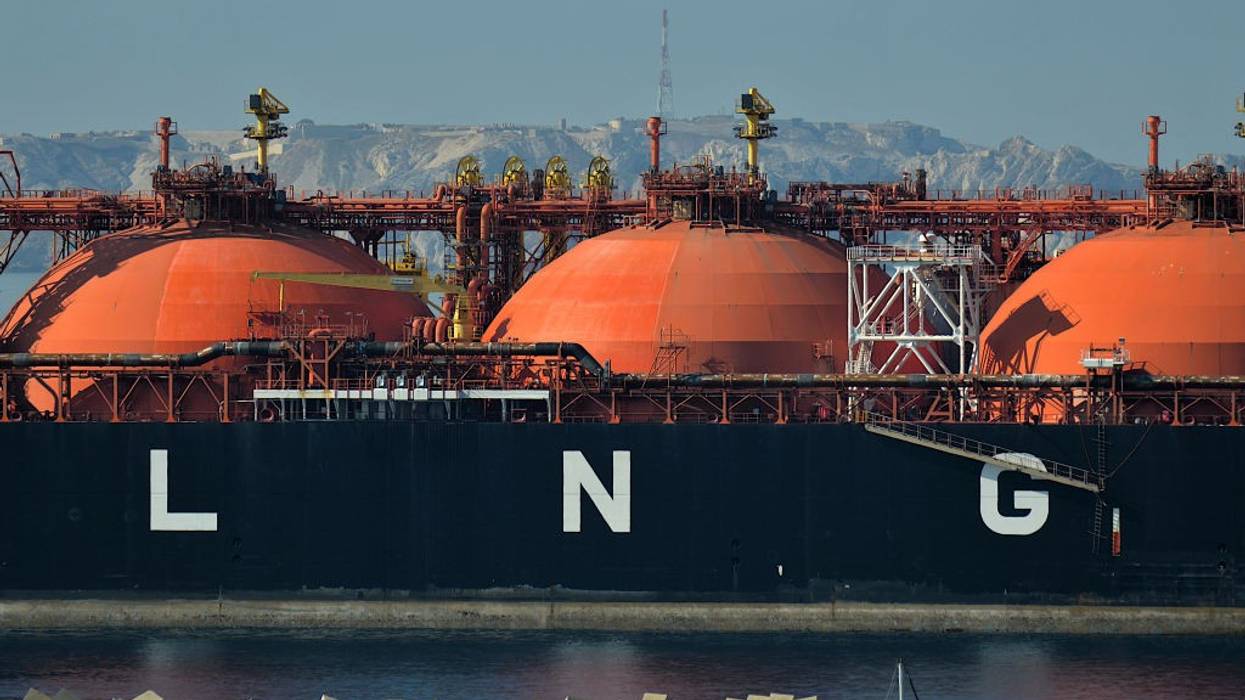
"LNG is not a bridge fuel to clean energy," said one expert. "It's a highway to climate hell."
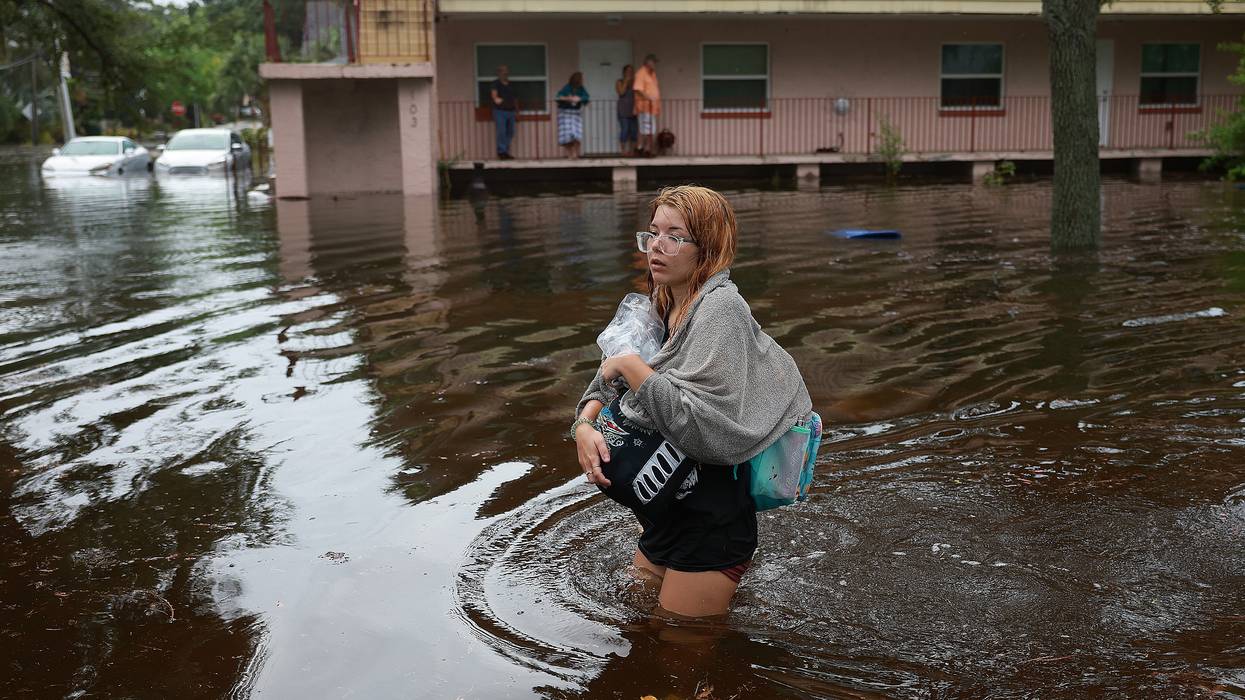
On the heels of Hurricane Helene devastating the U.S. Southeast and sparking fresh calls for action on the fossil fuel-driven climate emergency, a long-awaited study revealed Thursday that the planet-heating pollution from liquefied natural gas is worse than that of coal.
"Liquefied natural gas (LNG) exports from the United States have risen dramatically since the LNG-export ban was lifted in 2016, and the United States is now the world's largest exporter," wrote Cornell University scientist Robert Howarth, who analyzed the greenhouse gas footprint of LNG produced in and exported from the U.S.
Howarth found that "the greenhouse gas footprint for LNG as a fuel source is 33% greater than that for coal" in terms of its 20-year global warming potential, and "even considered on the time frame of 100 years after emission... which severely understates the climatic damage of methane, the LNG footprint equals or exceeds that of coal."
Advocates of bold climate action welcomed the formal publication of what Third Act founder Bill McKibbencalled a "crucial paper."
"LNG exports present HUGE risks to our planet and climate—and we need to reject any attempts to expand them!"
The study, published online by the journal Energy Science & Engineering, follows U.S. President Joe Biden pausing approvals for all LNG exports to non-fair trade agreement countries and comes a month out from the presidential election, in which Democratic Vice President Kalama Harris is facing Big Oil-backed Republican former President Donald Trump.
"This is a HUGE deal for the Biden administration's ongoing review of LNG exports," said Jamie Henn, executive director of Fossil Free Media and a founder of 350.org, sharing Howarth's findings on social media. Climate campaigners are calling on the Biden-Harris administration to make the January pause permanent.
"This should be the final nail in the coffin for the false narrative that LNG was somehow a climate solution," Henn added in a statement. "This now peer-reviewed paper demonstrates that LNG is worse for the climate than coal, let alone clean energy alternatives. Approving more LNG exports is clearly incompatible with the public interest."
As Henn and others acknowledged, Howarth's research has been targeted by journalists and the fossil fuel industry.
"This paper has been widely discussed, revised, and is now peer-reviewed and published," said Jason Rylander, legal director for the Center for Biological Diversity's Climate Law Institute. "LNG is not a bridge fuel to clean energy. It's a highway to climate hell."
Alex Walker, climate finance program manager at the Canadian group Environmental Defense, also responded to the research by stressing that, contrary to claims by the fossil fuel industry and its political allies, "LNG is not a bridge fuel."
Congressman Sean Casten (D-Ill.) said on social media that "there is no environmental case for increased U.S. LNG exports."
Howarth is on the board of directors of the Food & Water Watch, which similarly pointed to the paper as further proof that "LNG exports present HUGE risks to our planet and climate—and we need to reject any attempts to expand them!"
Cassidy DiPaola, communications director at Fossil Free Media, declared Thursday that "the science is clear."
"There's no place for LNG in a clean energy future," DiPaola said. "It's time to double down on truly clean alternatives like wind, solar, and energy efficiency."
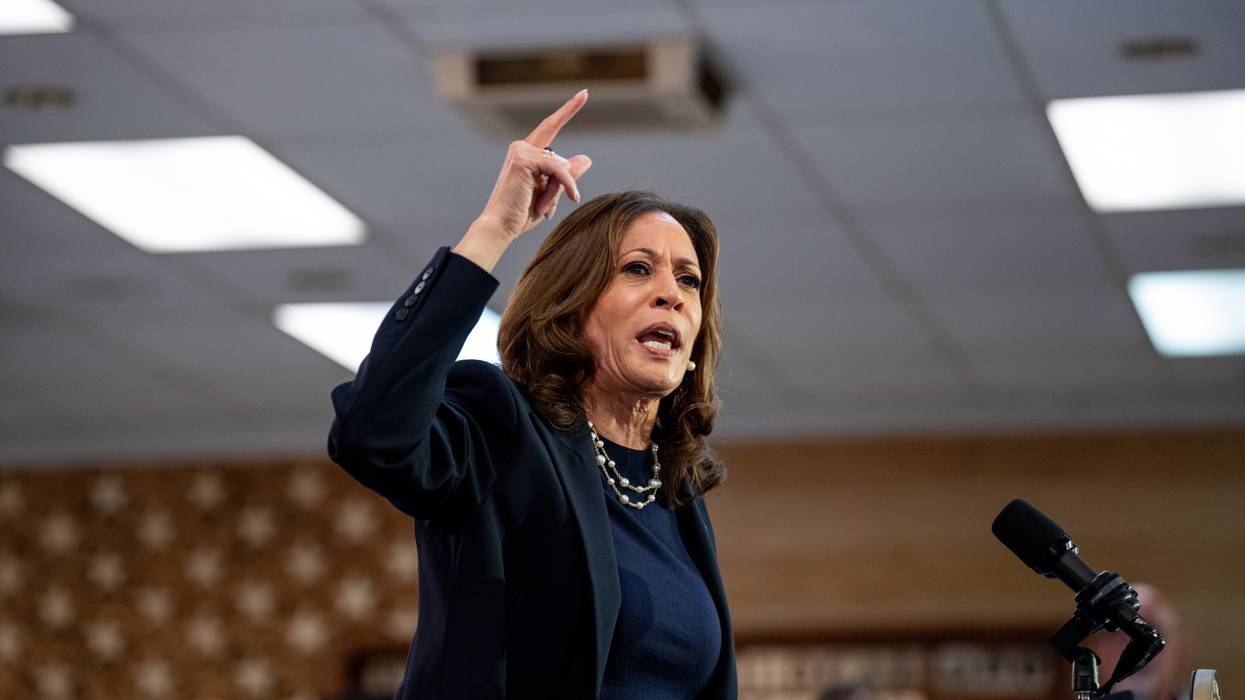
"Trump cozying up with the industry is wildly unpopular," asserted climate campaigner Jamie Henn.
Noting former U.S. President Donald Trump's coziness with the fossil fuel industry and the fact that an overwhelming majority of voters want politicians to tackle its greed, one prominent climate campaigner urged Vice President Kamala Harris—the Democratic nominee—to highlight her Republican opponent's Big Oil ties during Tuesday night's debate.
"Harris should absolutely go after Trump for being in the pocket of Big Oil," Fossil Free Media director Jamie Henn said on social media, adding that "89% of Americans want politicians to crack down on Big Oil price gouging."
In a
separate post, Henn urged ABC News, which is hosting the first—and likely only—2024 presidential debate, to ask the candidates about the climate emergency.
"Ninety-nine percent of Americans have experienced some form of extreme weather this year," he wrote. "If ABC News doesn't ask about the climate crisis this evening, it's journalistic malpractice."
On Tuesday, a trio of Democratic U.S. lawmakers called on fossil fuel executives to comply with a request for "information regarding quid pro quo solicitations" from former U.S. President Donald Trump, who earlier this year promised to gut climate regulations if they donated $1 billion to his Republican presidential campaign.
Climate campaigners have been warning of the dangers of a second term for Trump, who during his previous administration rolled back regulations protecting the climate, environment, and biodiversity, resulting in increased pollution and
premature deaths and fueling catastrophic planetary heating.
"If a Trump administration was merely going to be a four-year interregnum, it would be annoying. But in fact it comes at precisely the moment when we need, desperately,
acceleration," 350.org co-founder Bill McKibben wrote in a Guardian opinion article last week.
"The world's climate scientists have done their best to set out a timetable: Cut emissions in half by 2030 or see the possibilities of anything like the Paris pathway, holding temperature increases to 1.5°C above preindustrial levels, disappear," he continued. "That cut is on the bleeding edge of the technically possible, but only if everyone is acting in good faith. And the next presidential term will end in January of 2029, which is 11 months before 2030."
"If we elect Donald Trump, we may feel the effects not for years, and not for a generation," McKibben added. "We may read our mistake in the geological record a million years hence. This one really counts."
"A growing number of cities and states are investigating Big Oil for misleading the public about climate change," said the Sunrise Movement, emphasizing the need for a DOJ leader "who's ready to do the same."
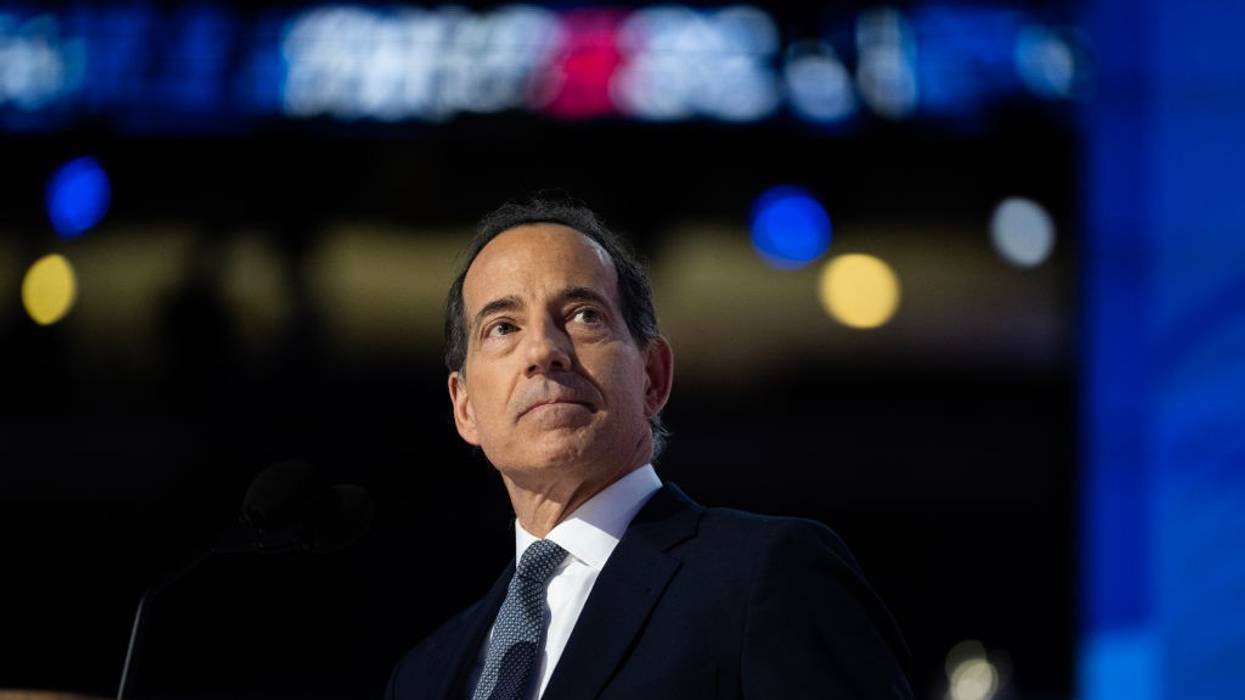
Just over two months away from the U.S. presidential election, one progressive organizer on Friday suggested Congressman Jamie Raskin for attorney general if Democratic Vice President Kamala Harris wins—and some climate leaders enthusiastically welcomed the proposal.
"I know, I know, it's bad luck to talk about personnel decisions before an election," Aaron Regunberg wrote for The New Republic, acknowledging the tight contest between Harris and Republican former President Donald Trump. "And yet, in the wake of last week's Democratic National Convention, discussions about appointments in a potential Harris-Walz administration are already picking up steam, with one position in particular getting attention: attorney general."
"DOJ will be one of the most powerful tools we have to take on Big Oil in a Harris administration, so it's not too early to start thinking about who we'd want to lead the department."
Regunberg cited recent Politico reporting that the Democratic Party's "political-legal establishment is already buzzing about who might replace" President Joe Biden's attorney general, Merrick Garland. He described Garland's leadership of the U.S. Department of Justice as "disastrous," arguing that "he has acted more like a judge than an advocate and prosecutor," and "consistently prioritized his own personal desire to look apolitical over his duty to, as the DOJ seal requires, 'prosecute on behalf of justice.'"
"The most obvious example is the DOJ's catastrophic handling of Trump's attempts to overturn the 2020 election," he declared.
By contrast, Raskin (D-Md.) is "a brilliant legal scholar" who managed Trump's historic second impeachment, after the Republican's efforts to reverse his loss culminated in him inciting his supporters to storm the U.S. Capitol on January 6, 2021, Regunberg noted. He was also "a prominent leader" on the select committee that investigated the attack.
Raskin is now the ranking member of the House Committee on Oversight and Accountability. Regunberg argued that although he wasn't mentioned in Politico's reporting—which had some "promising names" alongside options that "fail to inspire much confidence"—the former law professor "would be an inspired and inspiring choice to lead the DOJ."
As Regunberg—an advocate of holding fossil fuel giants criminally responsible for extreme weather-related deaths—wrote:
Who better to redeem Garland's failure to hold Trump accountable for January 6 than the lead impeachment manager who prosecuted Trump's high crimes and misdemeanors? Who better to ensure the DOJ stops bowing to fossil fuel industry pressure than the head of the House Oversight Committee's push to hold Big Oil accountable? And who better to tackle the challenge of out-of-control extremist judges and Supreme Court justices than Congress' leading constitutional expert?
Of course, Raskin doesn't cut a moderate profile like Garland does, and all appointment decisions will be shaped by whether Democrats retain control of the Senate—though it's worth noting that he has a record of collaborating effectively with Republicans, and he managed to win the votes of seven Republican senators during Trump's second impeachment.
While, as Regunberg noted, "it's also not clear that Raskin would even want the job," climate advocates still embraced the idea.
"DOJ will be one of the most powerful tools we have to take on Big Oil in a Harris administration, so it's not too early to start thinking about who we'd want to lead the department," said Fossil Free Media director Jamie Henn, a co-founder of the international climate group 350.org.
It's quite clear where Raskin stands on the oil and gas industry's decadeslong efforts to delay action on the fossil fuel-driven climate emergency. With Senate Budget Committee Chair Sheldon Whitehouse (D-R.I.), Raskin led a three-year investigation into the sector's "denial, disinformation, and doublespeak," resulting in their joint call for Garland to launch a criminal probe of oil and gas giants.
Sharing Regunberg's piece on social media Friday, the youth-led Sunrise Movement highlighted that "a growing number of cities and states are investigating Big Oil for misleading the public about climate change."
"Harris has campaigned on her own record of doing so," the group continued, referencing her time as California's chief lawyer. "We need an attorney general—like Jamie Raskin—who's ready to do the same."
Sunrise hasn't endorsed Harris, but it's part of the Green New Deal Network, which has, like various other green groups. The movement announced Tuesday that it would work to reach 1.5 million young voters in key swing states to defeat Trump.
Trump, notably, told Big Oil executives in April that he would gut the Biden administration's climate regulations if elected, as long as they put $1 billion toward his campaign—provoking probes from Raskin as well as Whitehouse and Senate Finance Committee Chair Ron Wyden (D-Ore.).
Since then, fossil fuel money has poured in for Trump—and as climate advocates have rallied around Harris, her campaign has warned that "oil barons are salivating" over the Republican's potential return to the White House next January.
"It cannot be stressed enough that this is an exceptionally dangerous and lethal situation," the National Weather Service warned.
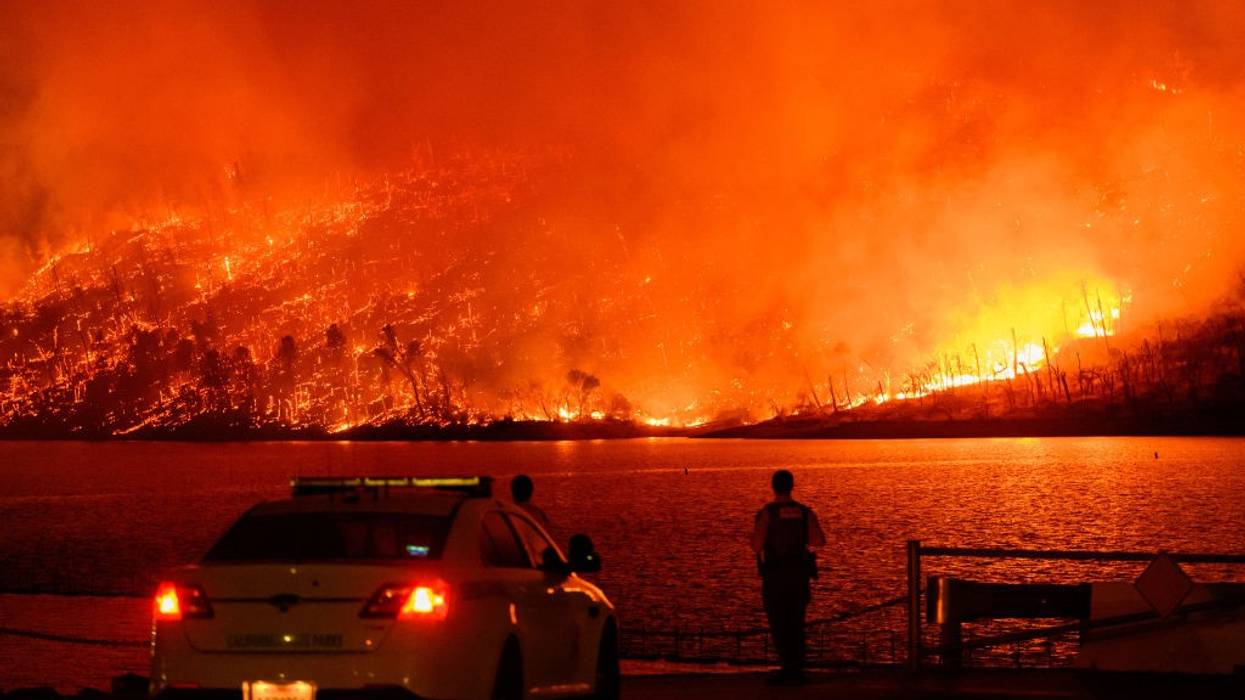
California Gov. Gavin Newsom on Wednesday declared a state of emergency in a northern county where a major wildfire has burned thousands of acres and forced the evacuation of thousands of residents amid near-record heat throughout much of the Golden State fueled by human-caused global heating.
The California Department of Forestry and Fire Protection (CAL FIRE) said shortly after noon local time Wednesday that the Thompson Fire, which began Tuesday morning in Butte County, had burned 3,568 acres with no containment in and around the city of Oroville, home to more than 20,000 people.
Citing an "imminent threat to life," Newsom, a Democrat, issued an emergency declaration and said that "we are using every available tool to tackle this fire and will continue to work closely with our local and federal partners to support impacted communities."
CAL FIRE said that more than 1,400 firefighters using 199 engines, 46 dozers, eight helicopters, and other equipment are battling the blaze. More than 28,000 Oroville area residents have been evacuated.
Red flag conditions are being exacerbated by low humidity and near-record temperatures throughout California. Oroville is expected to hit a high of 110°F on Wednesday, with daytime highs forecast to remain in the 110s through the holiday weekend. Dozens of daily, monthly, and all-time records could be broken throughout the state.
"It cannot be stressed enough that this is an exceptionally dangerous and lethal situation," the National Weather Service's (NWS) San Francisco Bay Area branch cautioned as it extended the red flag warning through Friday while preparing the public for the possibility of further extensions.
Daniel Swain, a climate scientist at the University of California, Los Angeles, said during a video briefing, "I'm not so sure that really any of us will have seen this many days at this sustained level of heat, both daytime and most importantly nighttime heat."
Commenting on the wildfire and heatwave, Fossil Free Media director Jamie Henn said on social media that "we need the California Legislature to pass their climate superfund bill NOW to #MakePollutersPay for these fossil-fueled disasters."
Introduced in April by California state Sen. Caroline Menjivar (D-20) but shelved the following month, S.B. 1497—the Polluters Pay Climate Cost Recovery Act—would require major fossil fuel producers to pay for their historic carbon emissions.
The NWS said that as of Wednesday, more than 110 million people across the United States were facing either a heat advisory, watch, or warning. So far, 2024 has been the hottest year on record. Climate Central, a nonprofit news organization focusing on the worsening planetary emergency, said climate change has made the current California heatwave at least five times likelier.
Yes, there are always devils in the details. And it doesn’t guarantee long-term victory, but it sets up a process where victory is possible.
A few minutes ago The New York Times moved a story saying that the White House has decided to pause permitting for new LNG terminals—if it’s true, and I think it is, this is the biggest thing a U.S. president has ever done to stand up to the fossil fuel industry.
The Times story begins with the next project in line, the mammoth CP2 export terminal planned for Louisiana:
The Energy Department is required to weigh whether the export terminal is in “the public interest,” a subjective determination. But now, the White House has requested an additional analysis of the climate impacts of CP2.
Natural gas, which is primarily composed of methane, is cleaner than coal when it is burned. But methane is a much more potent greenhouse gas in the short term, compared with carbon dioxide, and it can leak anywhere along the supply chain, from the production wellhead to processing plants to the stovetop. The process of liquefying gas to make it suitable for transport is incredibly energy intensive as well, creating yet more emissions.
Whatever new criteria is used to evaluate CP2 would be expected to be applied to the other 16 proposed natural gas terminals that are awaiting approval.
Yes, there are always devils in the details. And it doesn’t guarantee long-term victory—it sets up a process where victory is possible (to this point, the industry has gotten every permit they’ve asked for). But I have a beer in my hand. If the administration backtracks, it will be a disappointment of epic proportion that I can’t imagine them doing it. Here’s what veteran energy analyst Jeremy Symons, who has been a rock in this fight, just emailed campaigners:
I am heartened by several things in this article, including, critically, that the full array of LNG projects are potentially implicated. Also, this: "Within the White House, there is little division over the decision to delay CP2, in part because it is not seen as a major energy security issue, said people familiar with the discussion. That’s because the United States is already producing and exporting so much gas. That capacity is set to nearly double over the next four years, making the need for CP2 less urgent."
As you all know, this is a sea change in how the administration has viewed LNG. It is not by any means a final victory, but we KNOW that the facts will win the day when given a fair hearing. We have never had a fair hearing, until now.
One reason to think the Times story is correct is that the right wing is already screaming. Mitch McConnell took to the floor of the Senate to say
“This move would amount to a functional ban on new LNG export permits,” Senator Mitch McConnell of Kentucky, the Republican leader, said on the Senate floor Wednesday. “The administration’s war on affordable domestic energy has been bad news for American workers and consumers alike.”
As usual, he’s wrong. Exporting natural gas of course drives the price up for American consumers. That’s how economics work—so President Joe Biden’s stand is an actual live inflation reduction act.
And the only other argument that the fossil fuel industry has mustered—that Europe needs more gas in the wake of Putin’s invasion—is simply wrong. We’re already sending them plenty—the world is awash in cheap gas. As Ben Jealous (head of the Sierra Club and former head of the NAACP) said in The Washington Post this morning:
the Institute for Energy Economics and Financial Analysis makes clear that European demand for natural gas will steadily drop in the years ahead, because the continent, in the wake of Vladimir Putin’s invasion, dramatically stepped up its conversion to renewable energy.
This decision is brave, because Donald Trump (the man who pulled us out of the Paris climate accords on the grounds that climate change is a hoax) will attack it mercilessly. But it’s also very very savvy: Biden wants young people, who care about climate above all, in his corner. They were angry about his dumb approval of the Willow oil project in Alaska. CP2 alone would produce 20 times the greenhouse gas emissions of Willow. And of course everyone understands that if Biden is not reelected this win means nothing—it will disappear on day one when the ‘dictator’ begins his relentless campaign to ‘drill drill drill.’
I’m holding my breath as I type this post. After pouring my heart into this fight for the last six months it seems almost too good to be true. But there are people who have been pouring their hearts into it for much longer than that. I just got off the phone with the marvelous Roishetta Ozane and she was in tears of joy, so I soon joined her in that condition. There’s James Hiatt, John Beard, Travis Dardar, Ann Rolfes, and many many more like them down on the Gulf, and people like Rev Yearwood of the Hip Hop Caucus who are at home both in the bayous and in the D.C. swamp. There’s the wonder-workers at Third Act who started conjuring together what now looks like it may be an unnecessary protest action in D.C. next month—even this morning they were wrestling with questions like “can we use upper bunkbeds to house people coming for the protest?” There’s a huge pick-up crew of hardy souls from the big environmental groups like NRDC, LCV, and all the other mighty initials; there are TikTok magicians like Alex Haraus; and there are and remarkable behind-the-scenes coordinators like Jamie Henn and Maura Cowley. I could go on almost endlessly, and I imagine I will in the weeks ahead.
The Times gave me entirely too much credit (and, ironically, so did The Wall Street Journal yesterday in their editorial opposing this move, where they called me “chief climate lobbyist”). It was actually, well, you who rose to the call. When I started writing about this at summer’s end, it was hard to get people all that interested in “LNG export,” which does not sound on its face like that sexy a topic. But man did you go to work—writing letters, making calls, signing up to go to jail. I just want to say thanks. This community gets things done.
When we fight, we sometimes win. More often than I’d guess, actually.
"I won't allow for them to continue to poison my kids," one Gulf Coast environmental justice advocate said.
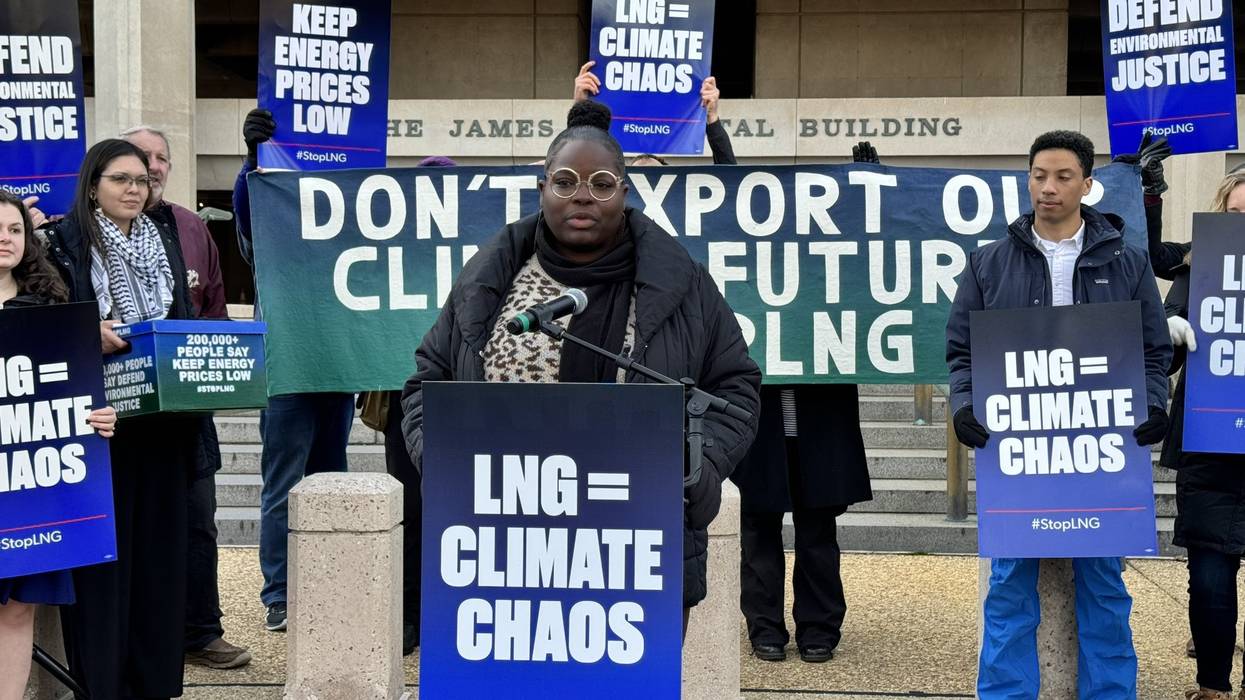
Climate advocates and frontline community leaders published a letter Tuesday urging concerned individuals to join them in Washington, D.C., in early February for a sit-in at the Department of Energy where they will demand that it end the expansion of liquefied natural gas exports.
Stopping the LNG buildout has emerged as a major priority for the climate movement in recent months, as just one proposed project, Venture Global's Calcasieu Pass 2 (CP2) facility, would emit 20 times more climate pollution than the controversial Willow oil drilling project in Alaska. But CP2 is only one of more than 20 LNG export facilities planned for the Gulf Coast, which would have combined emissions that exceed those of the European Union or 850 coal plants, Stop LNG said in a statement.
"If [President Joe Biden] wants to be a true climate president, his administration will stop the approval of new LNG facilities. If not we'll keep pushing until they do," letter signatory and Gulf Coast environmental justice organizer Roishetta Ozane wrote on social media. "I won't allow for them to continue to poison my kids."
The action is planned for February 6-8 at the Department of Energy.
"We're writing to ask you to do something hard but important: Come to Washington D.C. in the middle of this winter, to join a demonstration and, if you can, risk arrest in a large-scale civil disobedience action," the letter—which was signed by several prominent activists including Alexandria Villaseñor, Bill McKibben, Jane Fonda, Rebecca Solnit, and Varshini Prakash—begins.
The planned direct action builds on months of pressure on the administration to stop the planned expansion of LNG exports, including a petition to the DOE signed by more than 300,000 people and a letter to Biden signed by more than 170 scientists. Polling from Data for Progress and Fossil Free Media found that 60% of likely voters would support the Biden administration limiting LNG exports.
"We need the DOE to tell the president the truth: Expanding LNG damages our climate, and economy, and the communities forced to live alongside these facilities."
"It's time to convince the Department of Energy to stop licensing new export terminals for liquefied natural gas," Tuesday's letter reads. "Time after time they've approved these proposals, so the U.S. is now the biggest exporter of gas on Earth—and that volume could quadruple if the industry has its way. There's no bigger climate bomb left on planet Earth."
There are signs the administration is paying attention to the growing clamor and may be open to a change in policy. On Monday, Politico reported that the DOE was reviewing its decision-making process for approval LNG projects to make sure that it was considering the climate, economic, and security impacts.
"This would be smart policy and good politics," Jamie Henn of Fossil Free Media posted in response to the news.
The letter states that organizers "need the administration to stop CP2—the next big facility up for approval—and all other facilities by committing to a serious pause to rework the criteria for public interest designation, incorporating the latest science and economics, before any such facility is permitted," the letter reads.
"We need the DOE to tell the president the truth: Expanding LNG damages our climate, and economy, and the communities forced to live alongside these facilities," it continues. "That includes the land, water, and air in Louisiana and Texas, where most of these facilities are built—it's why some of us have fought on the front lines for years. We've rushed kids with asthma attacks to the hospital, seen our fishing spots and beaches polluted with chemicals, and breathe air filled with poisons everyday. We know what's at stake."
The letter writers said that they had committed "to keep this action peaceful in word, mood, and action."
Those who cannot travel to D.C. may participate in solidarity actions from their home. Those who do plan to participate should sign up on stoplng.org. They will need to complete online training, including one session the night before risking arrest.
"2023 saw the hottest weather on this planet in at least 125,000 years; we think it is an honor to rise in defense of the planet we love, and the places where we live," the letter concludes. "Thank you for considering joining in."
"Kerry's job isn't done," Bill McKibben wrote. "He needs to return home and convince the White House to pause the granting of new export licenses for the ongoing LNG buildout."
If it wants to honor the deal it helped negotiate at the United Nations Climate Change Conference in Dubai, the U.S. must stop the planned expansion of liquefied natural gas infrastructure, climate campaigners say.
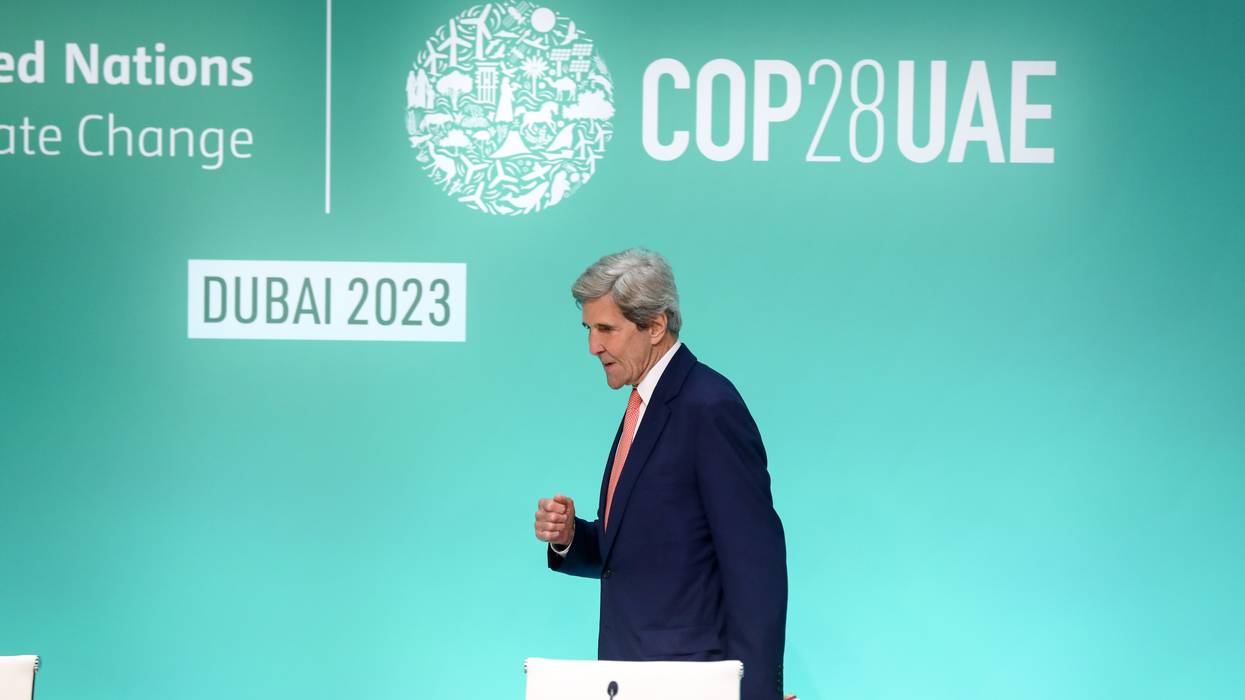
COP28 concluded Tuesday with a final document calling on nations to "contribute" to the goal of "transitioning away from fossil fuels in energy systems, in a just, orderly, and equitable manner." While this falls short of the global phaseout of fossil fuels sought by civil society and climate-vulnerable countries, it does give activists a "tool" in their efforts to stop fossil fuel expansion in their home countries, 350.org and Third Act co-founder Bill McKibben wrote Wednesday.
"If the language means anything at all," McKibben said, "it means no opening no more new oil fields, no more new pipeline[s]. No more new LNG export terminals."
"Concrete actions mean a lot more than words at a climate summit."
U.S. climate campaigners and frontline communities have already been pushing back against the expansion of LNG. More than 300 groups from more than 40 countries submitted a letter to U.S. President Joe Biden during COP28, calling on him to stop permitting new LNG infrastructure and to stop supporting LNG projects overseas. Within the U.S., which is already the world's leading LNG exporter, both existing and planned terminals would have the combined emissions of 675 coal plants. One in particular, Venture Global's Calcasieu Pass 2 (CP2), would spew 20 times the climate pollution into the atmosphere as the controversial Willow oil drilling project in Alaska.
"The United States is doling out permits for new gas export terminals like there's no tomorrow," said Ben Goloff of the Center for Biological Diversity, one of the letter's signatories. "Our new analysis shows that the Inflation Reduction Act's emissions benefits are more than canceled out by the Biden administration's support for new fossil fuel projects, and new LNG export facilities are the engine of this disastrous machine."
Activists and journalists have also criticized the U.S. for hypocrisy as it advocated for strong language around fossil fuels at COP28 while being responsible for more than a third of new planned oil and gas extraction through 2050. As Secretary of State Antony Blinken spoke at the climate talks, the State Department approved a fracked gas pipeline in Mexico without reviewing its emissions.
In his COP post-mortem, McKibben argued that U.S. climate envoy John Kerry should follow up his diplomacy abroad with domestic persuasion.
"Kerry's job isn't done," McKibben wrote. "He needs to return home and convince the White House to pause the granting of new export licenses for the ongoing LNG buildout, a project so enormous that by itself it could produce more greenhouse gas emissions than all of Europe."
If he succeeds, McKibben continued, "we will know there was something real in all this endless talk."
Fossil Free Media director Jamie Henn also argued that the COP28 deal should be used to push the U.S. away from its gas plans.
"Concrete actions mean a lot more than words at a climate summit," Henn tweeted in response to a statement against CP2 from Rep. Ro Khanna (D-Calif.). "In the U.S., the clearest test of our commitment to move away from fossil fuels is stopping these massive new LNG export terminals."
McKibben said it was up to civil society to give the new commitment to "transitioning away" from fossil fuels the same power as the Intergovernmental Panel on Climate Change's 1995 acknowledgement that human activity was having a "discernible influence" on the climate and the Paris agreement commitment to "pursue efforts to limit [warming] to 1.5°C above preindustrial levels."
McKibben concluded: "Today's agreement is literally meaningless—and potentially meaningful. But the diplomats are done now—the rest of us are going to have to supply that meaning."
Campaigners also argue that "Big Oil CEOs and politicians like Ron DeSantis must be held accountable for knowingly fueling the climate crisis that heats our oceans and strengthens deadly storms."
As U.S. President Joe Biden plans to visit Florida on Saturday to tour the wreckage from Hurricane Idalia, climate campaigners this week have yet again renewed demands for the Democrat—who is seeking reelection next year—to declare a climate emergency.
"I don't think anybody can deny the impact of the climate crisis anymore," the president said in a Wednesday speech about the hurricane response and wildfire recovery efforts in Maui. "Just look around: historic floods—I mean historic floods; more intense droughts; extreme heat; significant wildfires have caused significant damage like we've never seen before."
Biden suggested during an interview earlier this month that he had "practically" declared a climate emergency—which campaigners forcefully refuted, stressing that actually doing so would unlock various powers to tackle the global crisis.
After the president on Thursday confirmed his upcoming trip to Florida, the youth-led Sunrise Movement wrote on social media that "Biden must declare a climate emergency and do everything he can to prevent future disasters now."
White House Homeland Security Adviser Liz Sherwood-Randall told reporters on Thursday that Biden will "visit the areas most impacted" by the storm and has been receiving regular updates from her and Federal Emergency Management Agency (FEMA) Administrator Deanne Criswell "on the latest developments with Hurricane Idalia, and also of course with the ongoing recovery operations in Hawaii on the island of Maui," according to CNN.
Since the Category 3 hurricane made landfall in Florida early Wednesday before moving on to Georgia and the Carolinas, multiple groups, including Greenpeace USA and the Center for Popular Democracy, have called for a climate emergency declaration.
Scientists have warned that continuing to heat the planet through human activities like fossil fuel use will lead to increasingly devastating hurricanes—particularly because the global ocean has absorbed most of the warming from greenhouse gases in recent decades.
"We can see climate change fueling hurricanes," Andra Garner, a hurricane expert at Rowan University in New Jersey, told NPR on Wednesday, explaining how hotter ocean water is tied to more intense storms. "Think of it like getting a coffee in the morning and getting a couple extra shots of caffeine in there."
Along with calls for a climate emergency declaration, demands are also mounting for the fossil fuel industry—and the politicians who support it, like Florida Gov. Ron DeSantis, a 2024 GOP presidential candidate—to be held accountable for driving the disasters.
"As we Floridians face the devastation of yet another massive hurricane, we know exactly who is responsible for making these countless disasters exponentially worse: the Big Oil CEOs profiting off the climate crisis and their political allies," CLEO Institute executive director Yoca Arditi-Rocha said Thursday. "Big Oil CEOs and politicians like Ron Desantis must be held accountable for knowingly fueling the climate crisis that heats our oceans and strengthens deadly storms—then leading the fight to strip away resources our state could use to respond."
John Paul Mejia, a Miami native and national spokesperson for the Sunrise Movement, shared that "it's hard to see the people and places I love suffering after yet another climate disaster. But the truth is, Florida is standing out as an example of what a world ruled by fossil fuel executives and the politicians they employ looks like."
"By turning down millions of dollars in climate investments while people suffer, Gov. DeSantis has shown he's more willing to shield Big Oil executives from accountability than serve the people of Florida," the campaigner added. "My generation won't forget this and we will do anything in our power to defeat politicians like him."
"It's time to hold Big Oil accountable for the climate disasters they're fueling," declared Jamie Henn of Fossil Free Media, which recently bought billboards in U.S. communities blaming heatwaves on fossil fuel giants. "Big Oil executives are sitting in cushy corner offices making massive profits while people in Florida, Hawaii, and all over the world are losing their homes, businesses, and lives. Finally holding this industry accountable for the damage they're causing has become a major priority for the global climate movement."
As frontline communities and activists seek accountability, including through climate liability lawsuits against oil and gas companies, "the spate of summer disasters has highlighted another potentially looming crisis in the U.S." Inside Climate News reported Tuesday. "The federal Disaster Relief Fund, which allocates billions of dollars to help communities recover after a major disaster, is set to run out of money this fall if Congress can't come to an agreement on how to replenish it."
As the outlet detailed:
On Monday, the Biden administration announced nearly $3 billion in funding for hundreds of communities across the U.S. to reduce their vulnerability to climate-fueled extreme weather events. The money, which will come from the Bipartisan Infrastructure Law that Congress passed in 2021, will go toward building more weather-resilient infrastructure and flood mitigation efforts, among other projects.
But that money—though important—is geared toward preventative measures and is separate from FEMA's disaster relief fund, meaning it won't help communities recover from this summer's devastating weather. If the relief fund isn't replenished soon, the agency could be forced into a difficult position, having to choose which disaster recovery efforts to fund and which to postpone.
Climate scientist and activist Peter Kalmus said on Democracy Now! Thursday that "the public just doesn't understand, in my opinion, what a deep emergency we are in. This is the merest beginning of what we're going to see in coming years. And to me, it's absolutely horrifying."
"I don't think people really fully appreciate how irreversible these impacts are," he continued. "We can't just reverse this. It's not like cleaning up trash in a park. How hot we allow this planet to get is how hot it will stay for a very long time. And I feel like climate scientists, including myself, have been being ignored for decades by world leaders. They just don't seem to get this, either."
"I'm glad to hear President Biden finally using his bully pulpit a little bit to try to wake people up that this is real, but he continues to expand fossil fuels at breakneck pace," Kalmus added, pointing to drilling on public lands, the Willow project in Alaska, and the Mountain Valley Pipeline in Appalachia. "And that's the cause of all of this damage that we're seeing."
"I've got two sons, and it breaks my heart to see the Biden administration continue to expand fossil fuels and take us deeper into this catastrophe, instead of trying to bring us back from this," said the expert, who has called on the president to declare a climate emergency. "He's deeply on the wrong side of history."
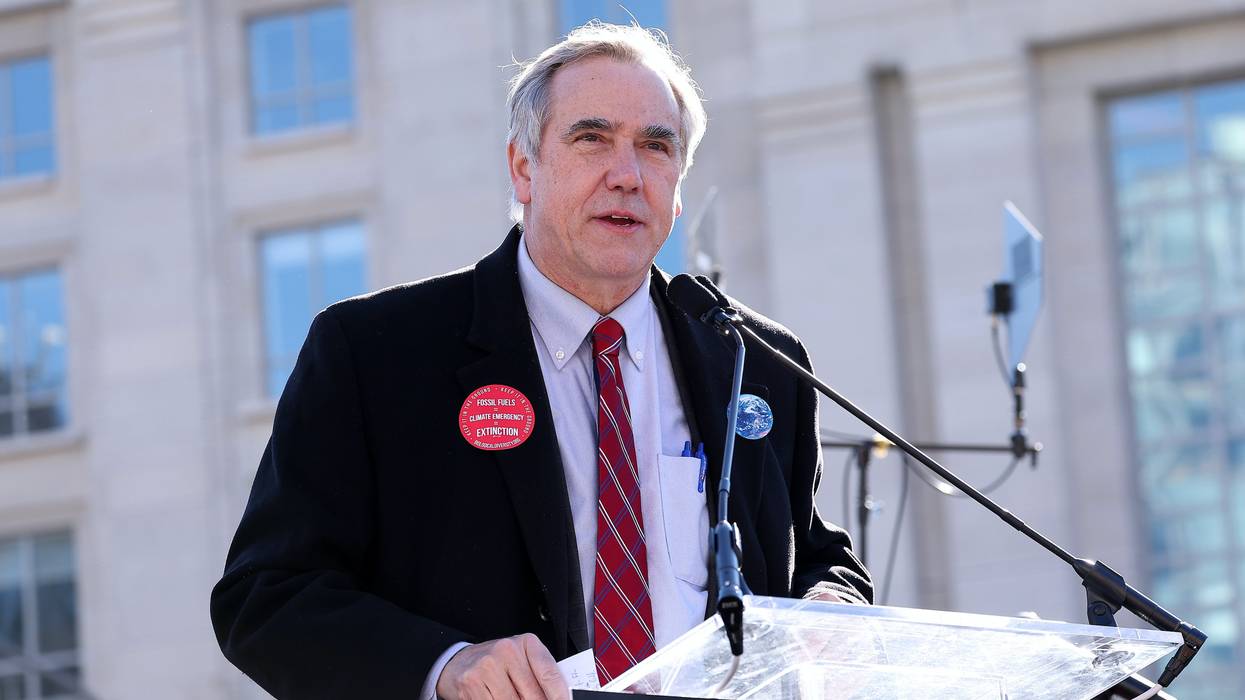
"We are in a climate emergency," said Oregon Democrat Jeff Merkley. "We can't take a piecemeal approach to the massive crisis we face."
Citing the extreme temperatures baking much of the United States during July—which is set to be the hottest month ever recorded on Earth—Democratic U.S. Sen. Jeff Merkley of Oregon on Thursday called on President Joe Biden to stop approving new fossil fuel projects and declare a climate emergency.
During his Thursday speech on the heat, Biden asked the Labor Department to increase efforts to protect workers from extreme temperatures and to announce new Interior Department water storage investments in Western states. However, the president did not unveil any new measures to combat the planetary emergency. He didn't even mention fossil fuels, the main driver of global heating.
"Americans are roasting and suffering under extreme heat and smoke in nearly every corner of our country. In Arizona, people are getting third-degree burns just from falling on the ground, while even East Coast states are experiencing air clogged with smoke from forest fires," Merkley said in a statement.
"In July, average temperatures for the entire globe have been the highest on record," he continued. "Add that on top of the last nine years being the nine warmest years on record. We are in a climate emergency. We can't take a piecemeal approach to the massive crisis we face."
"July should be a wake-up call for everyone," Merkley asserted, calling on Biden to first direct the Federal Emergency Management Agency (FEMA) "to unlock its authority to allow governors to address extreme heat and smoke events, and ask Congress to fund it robustly in an emergency disaster supplemental."
"Second, President Biden should develop a plan to end the reliance on fossil fuels that is causing this crisis," the senator added. "Any plan should start by ending approval of new fossil projects."
"Finally, the president should use his broad and crucial powers by declaring a climate emergency under the National Emergencies Act," Merkley stressed. "Under a climate emergency, the president can move decisively and swiftly to address the climate chaos happening all around us."
"Declaring a climate emergency is the best way for us to holistically protect the environment, public health, the planet, American workers, American consumers, and our national security from the worst effects of climate chaos," he argued.
Merkley's call echoes that of other progressive lawmakers and activists, including 21-year-old Elise Joshi, executive director of the advocacy group Gen Z for Change and a major social media influencer focusing on climate.
On Thursday, Joshi interrupted White House Press Secretary Karine Jean-Pierre during a speech to declare that "a million young people wrote to the administration pleading not to approve a disastrous oil drilling project in Alaska, and we were ignored." The climate campaigner called on Biden—who has approved fossil fuel projects "at a faster rate than the Trump administration"—to "stop approving new oil and gas projects and align with youth, science, and frontline communities."
"Real relief won't come until Biden confronts the culprit of deadly oil and gas," said one campaigner.
"My fellow Americans, we are facing a climate emergency. This summer, we have seen record-shattering heat waves sweep across our nation... If we do not act urgently to curb fossil fuel pollution, these deadly heat waves will only grow worse in frequency and severity."
That was how Fossil Free Media director Jamie Henn suggested U.S. President Joe Biden address the public on Thursday as he announced new measures to address the record-breaking heat that spread across the country from the Southwest to the Midwest and Northeast, placing more than half the U.S. population under heat advisories.
The climate campaigner was among those urging the president to make a clear connection between the extreme heat—which was expected to push temperatures to 105°F in Minneapolis and 107° in New York as Phoenix saw its 27th consecutive day with a heat index of at least 110°—and the climate crisis.
Instead, Biden did not utter the words "fossil fuels," "oil," or "gas" throughout his remarks, despite the fact that World Weather Attribution reported this week that the extreme heat seen in the U.S. and other countries would have been "virtually impossible" without the climate crisis and continued fossil fuel extraction.
The president spoke two days after Rep. Greg Casar (D-Texas) led a vigil and thirst strike on the steps of the U.S. Capitol, calling for the Occupational Safety and Health Administration (OSHA) to establish a new federal standard to prevent heat-related work injuries, illnesses, and deaths.
In his remarks, Biden said the Department of Labor will issue its first-ever hazard alert for extreme heat and strengthen enforcement to protect workers, increasing safety inspections in industries such as construction and agriculture.
The hazard alert "clarifies that workers have federal heat-related protections," said Biden. "We should be protecting workers from hazardous conditions, and we will. And those states where they do not, I'm going to be calling them out, where they refuse to protect these workers in this awful heat."
The speech also highlighted investments made under the Inflation Reduction Act and the Bipartisan Infrastructure Law to expand water storage in drought-affected states and improve the nation's weather forecasts.
Juley Fulcher, worker health and safety advocate for Public Citizen, noted that Biden made his speech on the same day that the World Meteorological Organization announced that this month is likely to be the hottest month ever recorded on Earth and said the hazard alert falls short of the demand for a federal workplace heat safety standard.
"While OSHA is able to educate employers and inspect workplaces for heat hazards, it is a Band-Aid for a problem that won't be solved until employers are required to protect workers," said Fulcher. "OSHA has limited options to hold employers accountable for failing to implement basic safety protocols to protect workers from extreme heat. Only a workplace heat standard will give OSHA the tools to fully protect workers."
Jean Su, energy justice director for the Center for Biological Diversity, called the steps Biden announced "embarrassing" and lamented his refusal to declare a climate emergency.
As climate scientist Peter Kalmus wrote in The Guardian on Thursday:
Declaring a climate emergency would unleash additional powers such as banning oil exports and further accelerating renewable energy buildout on a scale not seen since the mobilization for the Second World War. It would send an unmistakable signal to investors still living in the past, to universities that have been shamefully slow to divest [from fossil fuels], to media outlets that have failed to connect the dots, to all the dangerously lagging institutions of our society.
"The planet is desperate for visionary leadership," he added. "The planet is desperate for policy that creates an equitable transition away from fossil fuels, and into climate emergency mode as a society."