

SUBSCRIBE TO OUR FREE NEWSLETTER
Daily news & progressive opinion—funded by the people, not the corporations—delivered straight to your inbox.
5
#000000
#FFFFFF
To donate by check, phone, or other method, see our More Ways to Give page.
Daily news & progressive opinion—funded by the people, not the corporations—delivered straight to your inbox.

We are working to build bipartisan support for the Every Kid Outdoors Act, a bill that would make permanent free national park admission for fourth graders and their families, and expand the program to fifth graders.
As we head into fall, now is the perfect time for families to plan their next escape from the stresses of school, work, and everyday life—and there’s no better place to go than the outdoors. From Acadia to Everglades to Yosemite, our national parks provide opportunities for relaxation, camping, day hikes, and science education.
We are two people who understand—and love—the outdoors. I, Rep. Katie Porter (D-Calif.), am a single mom of three kids and an avid national park visitor, and serve on the House Natural Resources Committee, which oversees federal land and our environment. And I, Tigran Nahabedian, am a student and youth adviser at Outdoors Alliance for Kids. We’re both passionate about exploring our national treasures and making it easier for all Americans to experience our country’s beautiful parks and lands.
Some families might be daunted at the idea of visiting our national parks. For some, the cost of entry and other assorted expenses can feel prohibitive. Fortunately, the Every Kid Outdoors program helps remove one of those barriers by granting fourth graders and their families an annual pass that allows them free entry to all federal public lands, waters, and shores. Dedicated park staff, both in person and online, can help families plan a fun, safe trip, appropriate for every level of outdoor experience, fitness, and budget.
If you love visiting our national treasures and agree that everyone should have the ability to enjoy the outdoors, make your voice heard.
Every year, over 200,000 kids and their families get a pass, helping connect them with nature and history. These affordable vacation and recreation opportunities help kids learn about conservation and wildlife, and teach important lessons about our nation’s history, geology, biology, and more. The Every Kid Outdoors program sparks passions that can shape future careers in science or recreation and creates lifelong memories.
But, if Congress doesn’t act to extend and fund the program, it will expire in 2026, leaving families to pay the full cost of admission to our public lands. Respectively, in our roles as parent and congressmember, and as a student and an outdoor advocate, we have seen the benefits of this program firsthand, which is why we are working to build bipartisan support for the Every Kid Outdoors Act. This bill would make permanent the free admission for fourth graders and their families, and expand the program to fifth graders.
Getting families on our federal lands goes beyond the direct benefits of helping kids learn and grow. Our national parks, forests, and marine sanctuaries are cornerstones of our economy, infrastructure, and communities. That diner serving bananas foster pancakes half an hour from the campsite or that roadside shop stocking magnets and bug spray rely on thriving national parks that attract millions of visitors each year. A National Park Service report in 2023 found that over 325 million visitors spent $26.4 billion in communities within 60 miles of a national park. Outdoor recreation alone accounted for $560 billion of the United States’ 2022 GDP.
So, if you love visiting our national treasures and agree that everyone should have the ability to enjoy the outdoors, make your voice heard. Be loud and be proud about your support for the Every Kids Outdoors program and the Every Kid Outdoors Act so that generations of families can continue to make memories in our national parks. Talk about the program with your friends, family, and neighbors—and if you know a fourth grader, tell them to get an Every Kid Outdoors pass. It’s the perfect time to visit a park.
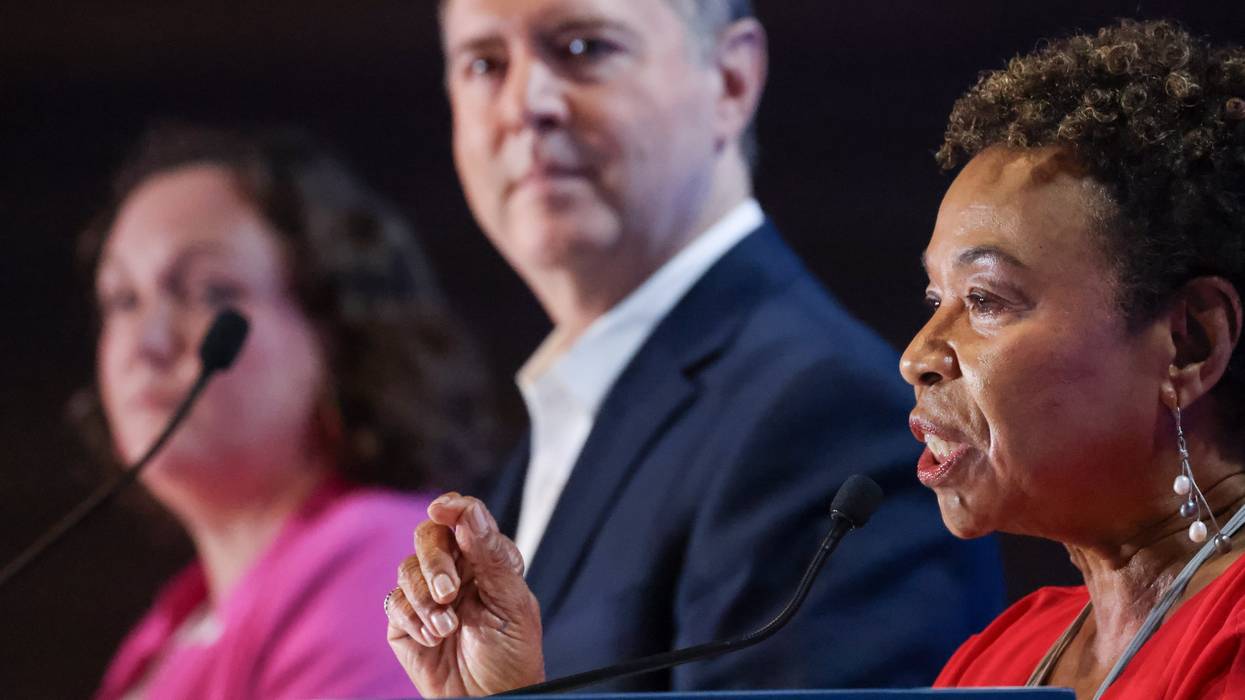
"We need leaders who set the pace for change—not halfheartedly follow along when it's politically expedient," the progressive congresswoman insisted.
Congresswoman Barbara Lee—the only one of three California House Democrats vying for a U.S. Senate seat who backs an unconditional Gaza cease-fire—on Wednesday set herself apart from congressional colleagues who support a pause to the fighting, but with strings attached.
"A conditional cease-fire is not a cease-fire at all," Lee
said on social media. "We need leaders who set the pace for change—not halfheartedly follow along when it's politically expedient."
"I've always shown up for the side of peace and I'll take urgent, unwavering action for peace and security in the Senate," added Lee, the only member of Congress to vote against authorizing the open-ended U.S. War on Terror after the September 11, 2001 attacks on the United States.
Lee's remarks came after rival Rep. Katie Porter
said this week that she now favors a Gaza cease-fire—but only on condition of "release of all hostages, durable security for Israel, and an end to Hamas' control of Gaza."
Porter—who earlier this year
said she was "extremely impressed" by far-right Israeli Prime Minister Benjamin Netanyahu after meeting him in Israel—had resisted pressure by progressive Democrats to endorse the cease-fire resolution introduced in October by Reps. Cori Bush (D-Mo.) and Rashida Tlaib (D-Mich.). Lee was an early backer of the measure.
Lee supporters expressed skepticism over Porter's new stance.
"She waited until the polling and the outcry became so large that she had to put forth a statement. It's a bunch of caveats and conditions to get her to be able to say the word cease-fire," Konstantine Anthony, a Democrat who on Monday completed his term as Burbank's mayor, told Politico.
Anthony—who last week switched his endorsement from Rep. Adam Schiff to Lee over the cease-fire issue—added that "once you have Katie Porter jump sides, now there's immense pressure for Schiff to take a stance on this."
However, Schiff remains the only candidate who has yet to back any sort of cease-fire in Gaza. He defends his position with the same rhetoric as Israel's far-right leaders and their backers in the Biden administration, arguing that a cease-fire would only benefit Hamas.
This, as the Palestinian death toll from 75 days of Israeli bombs and bullets topped 20,000 on Wednesday, with more than 50,000 others wounded and 1.9 million of Gaza's 2.3 million people forcibly displaced, with many suffering from hunger, diseases, and winter conditions.
As Lee said last week, most of the world's nations "agree with the majority of Americans: We need a permanent cease-fire in Gaza. We must end the bloodshed. Countless lives depend on it."

"We need to stand up and say we're not going to stand for this, and we have to have a cease-fire," said the chair of the state's progressive caucus.
Thousands of protesters demanding an immediate Gaza cease-fire forced an early shutdown Saturday of California's Democratic Convention in Sacramento in a resounding rebuke of national party leaders' support for what the demonstrators called Israel's "genocidal" war on the Palestinian people.
Protesters chanted "cease-fire now" and waved Palestinian flags as they marched through the SAFE Credit Union Convention Center, where California Democrats were set to vote on their state party platform. The flood of demonstrators prompted security guards to lock down entrances to the building, ending the day's official events well ahead of schedule.
Outside the convention center, activists from Jewish Voice for Peace laid out 500 pairs of shoes representing the more than 5,000 children killed by Israeli forces in Gaza since the October 7 Hamas-led attacks on Israel that left around 1,200 people dead and about 240 others kidnapped.
Fatima Iqbal-Zubair, chair of the California Democratic Progressive Caucus, said that "disruption has to happen in a democracy for something drastic to change."
Delegate Sameena Husman told CBS News that "a lot of people who are Democrats have lost faith in the party" due to its leadership's staunch support for Israel.
"We need to stand up and say we're not going to stand for this, and we have to have a cease-fire," she added.
Earlier on Saturday, activists interrupted a Democratic U.S. Senate candidates' forum, disrupting speeches by U.S. Reps. Adam Schiff and Katie Porter. Rep. Barbara Lee—the sole California Democratic Senate candidate supporting a Gaza cease-fire—was cheered as she called for an end to the 44-day war in which Israeli forces have killed or maimed more than 40,000 Palestinians and forcibly displaced over 70% of the besieged strip's population.
In preliminary results released Saturday night, none of the Senate candidates mustered the 60% majority required for the party's endorsement. Lee led the pack with over 41% of delegate votes, closely trailed by Schiff with 40% and Porter garnering just 16%.
"I was the only one who voted against the authorization to use force right after the 9/11 horrific events," Lee told convention attendees. "And yes, I am calling for a cease-fire now."
While U.S. President Joe Biden has resisted demands for a cease-fire in favor of a so-called humanitarian pause, progressive Democrats led by Rep. Cori Bush (D-Mo.) have signed on to a resolution urging the president to push Israeli leaders to agree to a cessation of the relentless assault on Gaza.
"We want to stop the genocide against my people in Gaza," said Adeeb Alzanoon with the Sacramento Coalition for Palestinian Rights.
"I've lost 42 of my extended family," Alzanoon—who is Palestinian American—added. "We all come here to stand up for justice and for peace."
Many of the demonstrators at the convention had a simple message for Democratic leadership: "In November, we'll remember."
Farah Ard'Lana, a 22-year-old organizer with Palestine Youth Movement and Students for Justice in Palestine at Sacramento State University, told The San Francisco Chronicle that the Democratic Party must "reckon with the fact that their complicity and silence will lose them a generation of voters."
"These politicians say that they support us, but they're empty words," Ard'Lana added. "They're not following their morals."
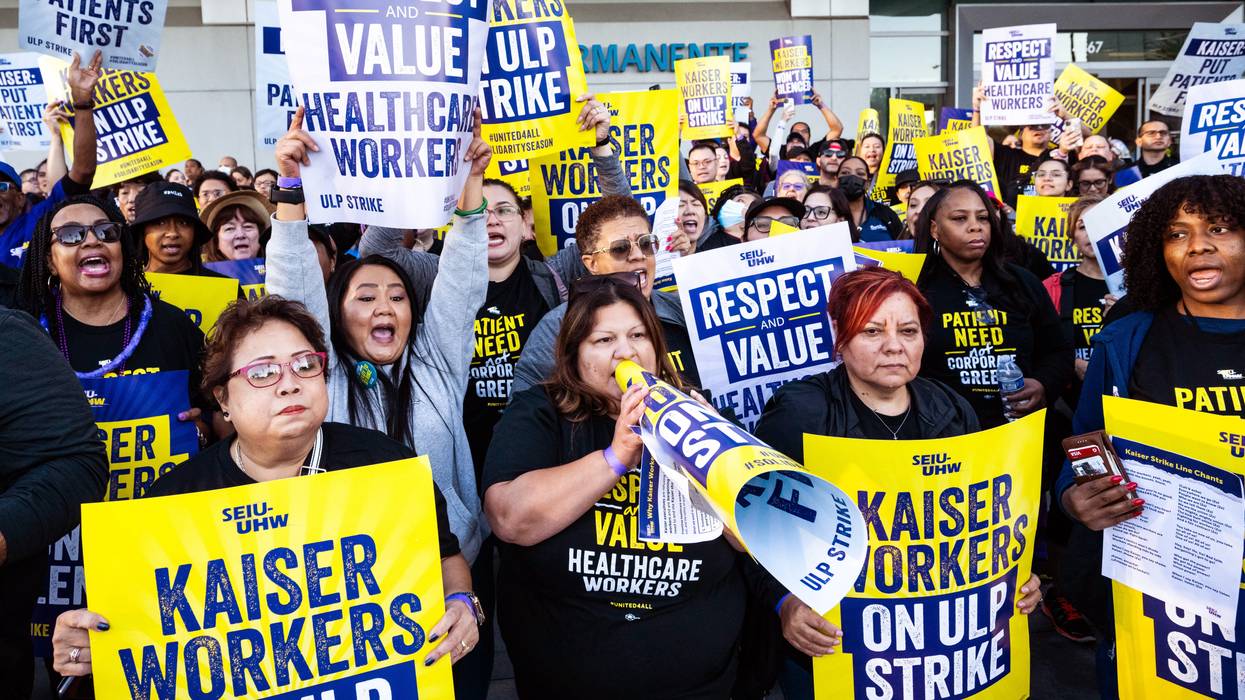
"If Kaiser can afford to pay its CEO over $15.4 million it can afford to treat all of its workers with respect," said Sen. Bernie Sanders.
The largest healthcare worker strike in U.S. history entered its second day on Thursday with the backing of progressive members of Congress, who voiced solidarity with Kaiser Permanente employees in their fight for better wages and an end to chronic understaffing at facilities across the country.
"Safe staffing levels and living wages are critical to delivering high-quality healthcare to the millions of Californians covered by Kaiser," Rep. Barbara Lee (D-Calif.), a 2024 U.S. Senate candidate, wrote on social media Wednesday, calling on Kaiser management to "bargain in good faith."
Other prominent lawmakers in the House and Senate—including Sens. John Fetterman (D-Pa.) and Bernie Sanders (I-Vt.) and Reps. Cori Bush (D-Mo.), Ro Khanna (D-Calif.), and Katie Porter (D-Calif.)—also voiced support for the striking workers.
"During the height of Covid, we all said that healthcare workers were absolutely essential and we applauded them for their bravery and courage," Khanna said in a video message. "Now it's time we have their back to make sure that they're paid fairly and treated with respect."
Sanders, the chair of the Senate Health, Education, Labor, and Pensions Committee, wrote that "if Kaiser can afford to pay its CEO over $15.4 million it can afford to treat all of its workers with respect."
"Whether you work in a hospital, or behind a desk, or on an assembly line, your fight is our fight."
More than 75,000 Kaiser workers—including nurses, pharmacists, radiology technicians, and call center representatives—walked off the job early Wednesday in California, Colorado, Oregon, and other states after around six months of contract negotiations that did not produce an acceptable agreement. The previous contract expired on September 30.
While the walkouts are expected to end Saturday morning, the coalition of unions that represents the striking workers has said it is prepared to launch a bigger and longer strike next month if the company continues engaging in unfair labor practices and refusing to meet core wage and staffing demands.
Understaffing at Kaiser has resulted in delays in patient care and left workers feeling burnt out and overwhelmed. And low pay in areas with high costs of living has forced some healthcare workers to sleep in their cars as Kaiser—a nonprofit that benefits hugely from tax exemptions—rakes in billions.
"Frontline healthcare workers are awaiting a meaningful response from Kaiser executives regarding some of our key priorities including safe staffing, outsourcing protections for incumbent healthcare workers, and fair wages to reduce turnover," Caroline Lucas, a spokesperson for Coalition of Kaiser Permanente Unions, said in a statement late Wednesday.
"Healthcare workers within the coalition remain ready to meet at any time," said Lucas. "Currently, the strike continues, and there are no sessions scheduled at this hour."
The striking Kaiser employees are among the more than 400,000 U.S. workers in a range of sectors who have walked off the job this year in pursuit of better pay, benefits, and conditions.
The United Auto Workers (UAW), which is currently striking at the Big Three U.S. car manufacturers, celebrated the Kaiser strike as part of a broader working-class fight for justice.
"Today, we stand in solidarity with the 75,000 members of our union family who are on strike at Kaiser," UAW president Shawn Fain said Wednesday. "Whether you work in a hospital, or behind a desk, or on an assembly line, your fight is our fight. We all deserve dignity on and off the job. We all deserve a future for our families and our communities. We all deserve our fair share of the economy that we, as working people, create and run. To our union family on strike at Kaiser, the UAW has your back."

One expert called the new revelations "a five-alarm fire" for taxpayer privacy.
After a seven-month investigation, a group of congressional Democrats and Independent Sen. Bernie Sanders released a bombshell report Wednesday showing that private tax prep firms have been secretly sharing U.S. taxpayers' sensitive personal information with tech giants for years, a practice that the lawmakers condemned as outrageous and possibly illegal.
The report, spearheaded by Sen. Elizabeth Warren (D-Mass.) in the Senate and Rep. Katie Porter (D-Calif.) in the House, notes that TaxAct, H&R Block, and TaxSlayer "used computer code—known as pixels—to send data to Meta and Google." The lawmakers' investigation was sparked by recent reporting in The Markup.
"While most websites use pixels, it is particularly reckless for online tax preparation websites to use them on webpages where tax return information is entered unless further steps are taken to ensure that the pixels do not access sensitive information," the lawmakers' 54-page report states. "Yet, the tax prep companies described this as a 'ubiquitous' and 'common industry practice.'"
The three tax prep giants, which have lobbied fervently against efforts to establish a free IRS tax filing program, each admitted to sharing taxpayer data through the use of the Meta Pixel and Google tools.
"The Meta Pixel and other Meta tools used by TaxAct collected far more information than was previously reported," the report reads. "In addition to taxpayers' filing status, approximate [adjusted gross income], approximate refund amount, and names of dependents, the Pixel collected approximate federal tax owed and buttons that were clicked and names of text-entry forms that the taxpayer navigated to."
"H&R Block and TaxSlayer also revealed an extensive list of data shared via the Meta Pixel, including transmitting information on whether taxpayers had visited pages for many revealing tax situations," the report adds. "Although the tax prep companies and Big Tech firms claimed that all shared data was anonymous, the FTC and experts have indicated that the data could easily be used to identify individuals, or to create a dossier on them that could be used for targeted advertising or other purposes."
Facebook's privacy policy states that it "may retain" data gathered with the Meta Pixel for up to two years.
"The findings of this report reveal a shocking breach of taxpayer privacy by tax prep companies and by Big Tech firms that appeared to violate taxpayers' rights and may have violated taxpayer privacy law."
David Vladeck, a law professor at Georgetown University and a former consumer protection chief at the Federal Trade Commission (FTC), told CNN on Wednesday that the revelations in the Senate report are "a five-alarm fire" for taxpayer privacy.
"On a scale from one to 10, this is a 15," said Vladeck. "This is as great as any privacy breach that I've seen other than exploiting kids."
The lawmakers alerted key federal agencies to their findings in a letter on Wednesday and demanded prosecution for "any company or individuals who violated the law."
"The findings of this report reveal a shocking breach of taxpayer privacy by tax prep companies and by Big Tech firms that appeared to violate taxpayers' rights and may have violated taxpayer privacy law," the lawmakers wrote. "The Internal Revenue Service, the Treasury Inspector General for Tax Administration, the Federal Trade Commission, and the Department of Justice should fully investigate this matter."
"We also welcome the recent IRS announcement of a free, direct file pilot next year, which will give taxpayers the option to file taxes without sharing their data with untrustworthy and incompetent tax preparation firms," they added.
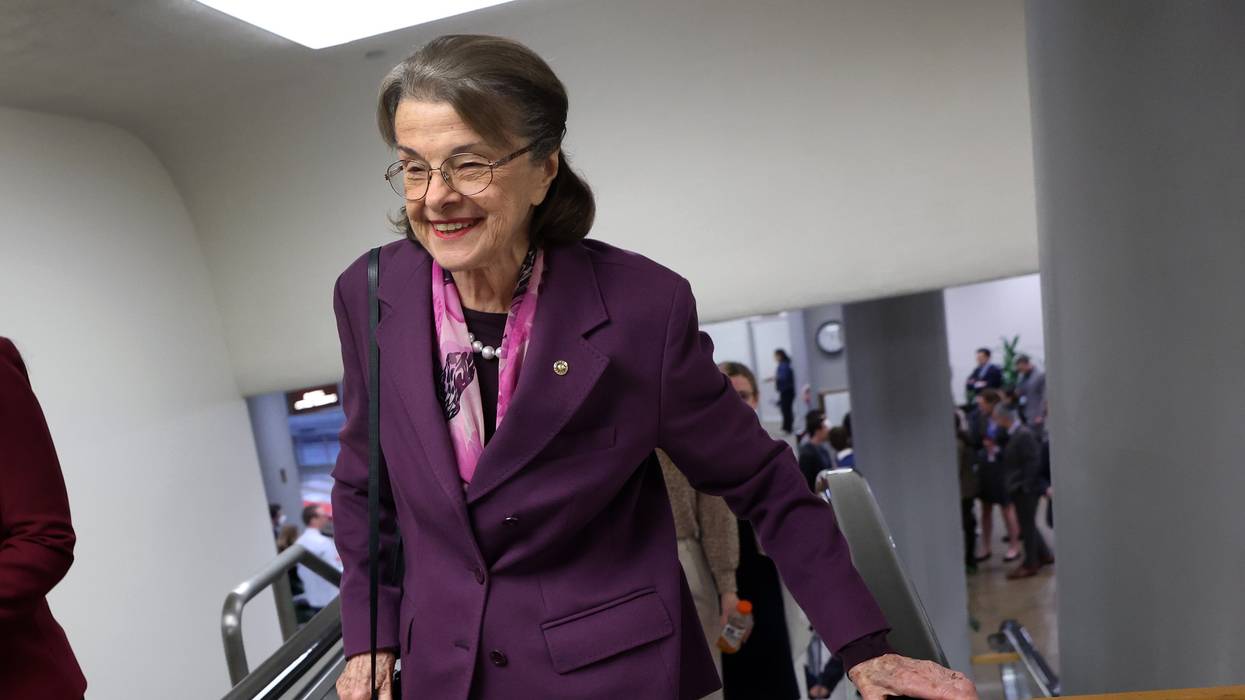
The veteran California Democrat, who plans to retire after this term, has missed 91 votes since late February.
Faced with mounting calls to resign due to the impact of her extended absence, U.S. Sen. Dianne Feinstein headed to Washington, D.C. on Tuesday after being away since late February while recovering from shingles.
The San Francisco Chronicle reported that the California Democrat "boarded a chartered private plane" and "could return to the Senate as early as Tuesday evening." Feinstein spokesperson Adam Russell confirmed her departure to the newspaper.
Senate Majority Leader Chuck Schumer (D-N.Y.) said in a statement that "I'm glad that my friend Dianne is back in the Senate and ready to roll up her sleeves and get to work. After talking with her multiple times over the past few weeks, it's clear she's back where she wants to be and ready to deliver for California."
Feinstein, who is 89, has already said she will retire at the end of the current term, and three California Democrats in the U.S. House—Reps. Barbara Lee, Katie Porter, and Adam Schiff—have launched campaigns for next year's primary.
Demands for Feinstein to step down early have been building since last spring, when the Chronicle reported that based on interactions with the senator, some of her colleagues were concerned she is mentally unfit to continue serving. During her recent absence, Feinstein has missed 91 floor votes.
The missed votes, Democrats' narrow control of the chamber, and the GOP's refusal to let Schumer temporarily replace Feinstein on the Senate Judiciary Committee so the panel can advance President Joe Biden's judicial nominees, have fueled fresh calls for her to resign—including from some members of Congress.
Ahead of the news of Feinstein's return on Tuesday, former Labor Secretary Robert Reich—who described himself as "one of her personal friends as well as one of her constituents"—wrote that "as someone in his late 70s, let me be clear. I'm not suggesting an age limit on public service. I'm only suggesting vigilance."
Feinstein "has accomplished many worthy things since she was first elected to the Senate in 1992," Reich noted, detailing some of them. "She has said she will retire at the end of 2024, but too much damage is being done in the interim. If she can no longer perform her duties, it is now time for her to step down."
"The three-month absence hurt our agenda, and time will tell on the future."
Congressman Ro Khanna (D-Calif.)—who is co-charing Lee's 2024 campaign and recently called for Feinstein's resignation—said in a statement Tuesday that he is "very glad" the senator "is feeling better and hopeful that she will be able to fulfill her duties upon her return."
"The people of California deserve strong representation and a senator who can vote to advance President Biden's judicial nominees and protect Americans' fundamental rights," he added. "The three-month absence hurt our agenda, and time will tell on the future."
The senator's return "will put two nominees in the spotlight, in part because Feinstein's absence is not the only vote holding them up," Politico noted, pointing to Biden's nomination of Michael Delaney for the 1st U.S. Circuit Court of Appeals and Julie Su for labor secretary.
Feinstein also comes back to a Congress engaged in a battle over raising the debt ceiling amid estimates that the U.S. government could run out of money to pay its bills as soon as June 1. After meeting with Biden and other congressional leaders at the White House Tuesday, House Speaker Kevin McCarthy (R-Calif.)—who is threatening a catastrophic default unless Democrats agree to huge spending cuts that would impact working people—said that "I didn't see any new movement."
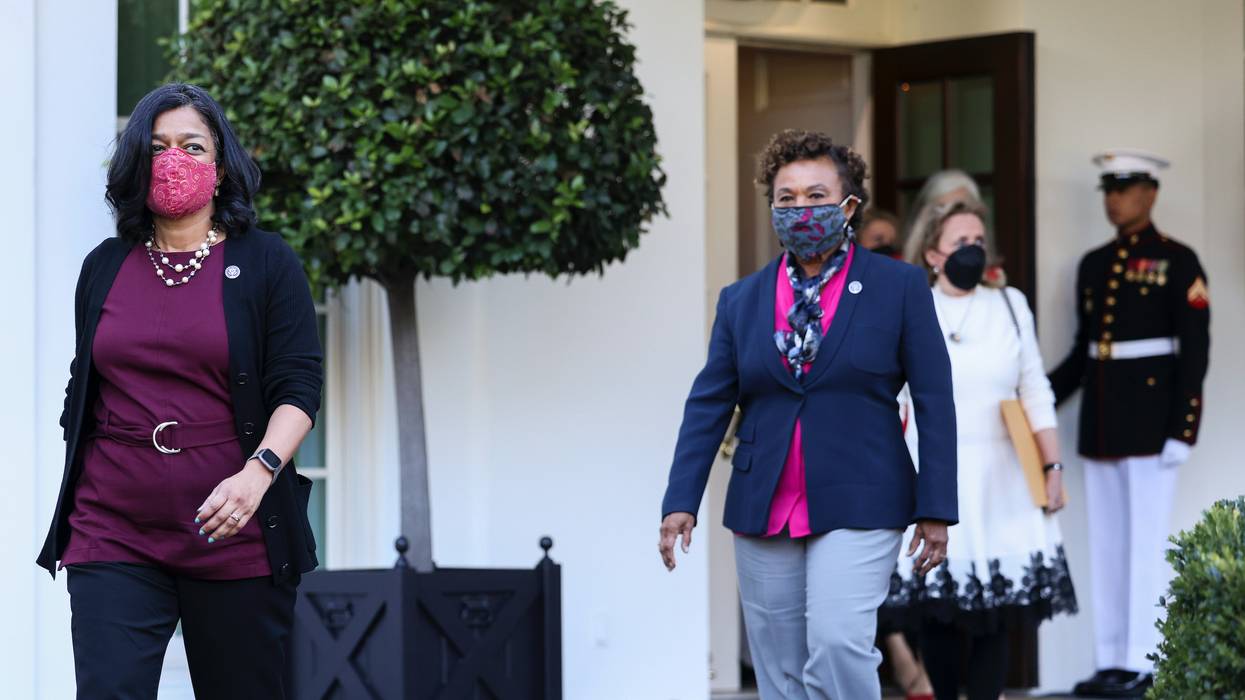
"I know she'll fight for our shared progressive values in the U.S. Senate," Rep. Pramila Jayapal said of the California congresswoman.
Congressional Progressive Caucus Chair Pramila Jayapal on Monday endorsed Rep. Barbara Lee in California's 2024 U.S. Senate race, calling the East Bay Democratic congresswoman "a champion for justice who has been a persistent progressive voice" in the House.
"As a woman of color, I know representation matters and I'm excited for Barbara to bring her voice and her lived experience as a Black woman to the chamber so all of us can have a seat at the table," Jayapal (D-Wash.) said in a statement. There are currently no Black women serving in the Senate.
"I know she'll fight for our shared progressive values in the U.S. Senate," Jayapal added.
In response to the endorsement, Lee said that she is "so grateful to have earned the trust and support of Congresswoman Jayapal."
"She is one of the strongest voices for justice in Congress and it's been my honor to fight alongside her for a more progressive future for all," Lee added. "I'm running this campaign to bring this fight to the U.S. Senate and on day one, I'm ready to use my experience and record of results to move California and our country forward."
Lee—who in 2001 was the only member of Congress to vote against authorizing the ongoing War on Terror—is widely viewed as the most progressive candidate running for the Senate seat currently held by Sen. Dianne Feinstein (D-Calif.), who says this will be her last term. Feinstein has faced growing calls to step down, with numerous commentators noting that the Senate Judiciary Committee, on which she sits, has been unable to confirm President Joe Biden's judicial nominees because the 89-year-old five-term lawmaker has missed dozens of votes.
Jayapal picked Lee over Congressional Progressive Caucus colleague Rep. Katie Porter (D-Calif.)—whose only major endorsement thus far is from Sen. Elizabeth Warren (D-Mass.), her former law school professor—and Rep. Adam Schiff (D-Calif.).
Schiff's endorsements include former House Speaker Nancy Pelosi (D-Calif.) and 19 other California congressional Democrats.
Lee, meanwhile, is backed by a wide range of Democrats, including progressive Reps. Ilhan Omar (D-Minn.) and Ro Khanna (D-Calif.)—who will co-chair Lee's campaign. Lee is also endorsed by Los Angeles Mayor Karen Bass and San Francisco Mayor London Breed, both Democrats.
"Rep. Barbara Lee has a unique perspective that is different from any other member of the U.S. Senate," Breed said Saturday at the launch of "United for Barbara Lee" in San Francisco. "California needs Barbara Lee and so does the nation."

Democrats have an opportunity "to raise the volume on bank reform and accountability—and be seen as challenging power on behalf of everyday people," the poll showed.
The largest U.S. bank collapse since the 2008 financial meltdown has left Americans especially eager for Congress to rein in Wall Street—and impatient with the power the financial sector has over lawmakers, according to polling released Monday.
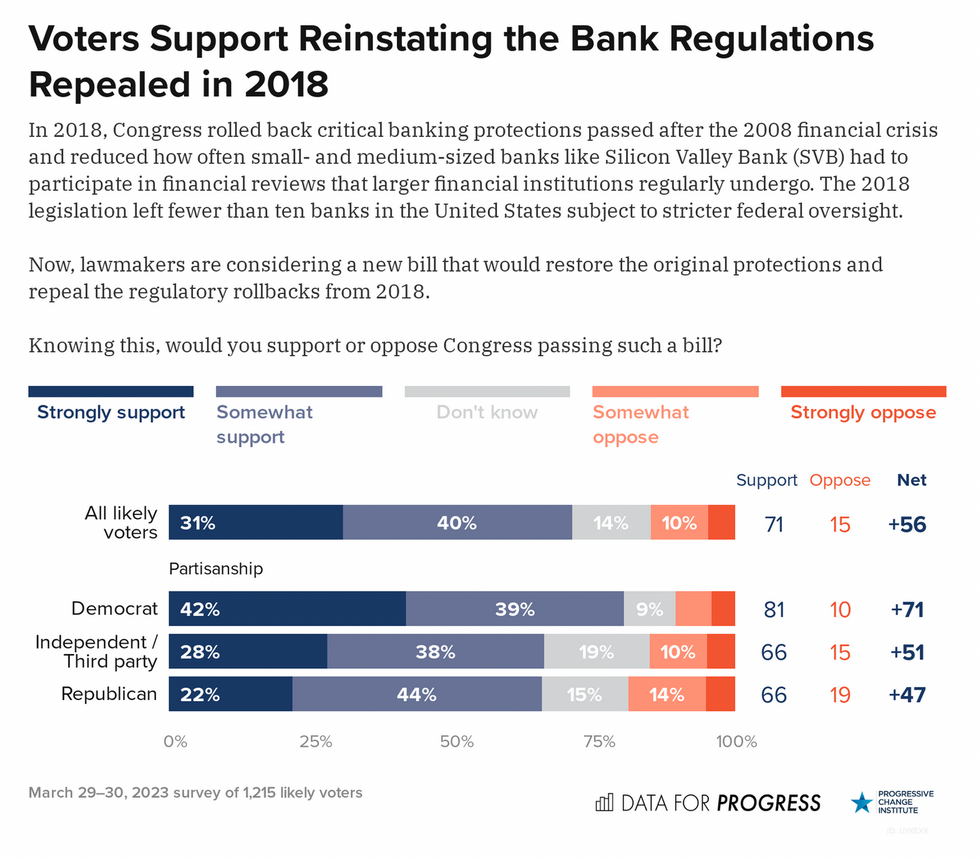
A month after Silicon Valley Bank (SVB) failed following its decision to invest $91 billion of its deposits in long-term Treasury bonds before their value plummeted as the Federal Reserve raised interest rates, progressive think tank Data for Progress joined the Progressive Change Institute in polling 1,215 likely voters about the bank and banking regulations.
Nearly 7 in 10 respondents said they were "very" or "somewhat" concerned about the health of the banking industry following SVB's collapse, and 82% said they supported Congress taking action to strengthen banking rules in order to avoid another failure.
More than 70% said they would support the reinstatement of "critical banking rules" that were rolled back in 2018. Those rules weakened regulations for banks with between $50 billion to $250 billion in assets, and Sen. Elizabeth Warren (D-Mass.) and Rep. Katie Porter (D-Calif.) said last month that their repeal was a major driver of SVB's collapse as they introduced the Secure Viable Banking Act to impose the rules once again.
The Biden administration said after the collapse that it would take steps including creating an emergency fund to make sure all SVB deposits were covered and demanded that executives be held accountable for bonuses that were handed out in the hours before the bank failed, but 90% of respondents told Data for Progress that they had heard little or nothing about the proposed reforms.
"While voters strongly support reforms in the banking sector and the actions taken by the Biden administration in the wake of SVB's collapse, these results signal that the administration has room to expand communication on the subject and claim this issue for Democrats," said Data for Progress.
The organization noted that likely voters were more supportive of President Joe Biden's plan when told the administration had created an "emergency fund" than when the fund was described as a "bailout" and when they were told that SVB's client base, made up largely of "billionaire tech investors and multimillion-dollar companies," had been helped by the fund.
The poll indicates, said the Progressive Change Campaign Committee, that Democratic leaders have an opportunity "to raise the volume on bank reform and accountability—and be seen as challenging power on behalf of everyday people."

Sanders joined Sen. Elizabeth Warren, Rep. Katie Porter, and others in questioning Cal-Maine Foods' claim that an avian flu outbreak is to blame for soaring egg prices.
U.S. Sen. Bernie Sanders this weekend renewed his call to break up agricultural monopolies after the nation's largest egg producer reported that its quarterly profits soared more than 700%.
Cal-Maine Foods, which controls about 20% of the U.S. egg market, announced last week that its revenue for the quarter ending February 25 rose 109% to $997.5 million, while profit for the same period skyrocketed 718% to $323.2 million.
In a statement, Cal-Maine president and CEO Sherman Miller attributed the company's soaring profits to "the ongoing epidemic of highly pathogenic avian influenza which has significantly reduced the nation's egg-laying capacity."
According to the United States Department of Agriculture, "U.S. egg inventories were 29% lower in the final week of December 2022 than at the beginning of the year," while "more than 43 million egg-laying hens were lost to the disease itself or to depopulation since the outbreak began in February 2022."
Sanders (I-Vt.)—who took on agricultural monopolies while campaigning for president in 2016 and 2020—questioned Cal-Maine's narrative in a tweet arguing that "we must break up Big Ag and enact a windfall profits tax."
Sanders wasn't the only congressional critic of Cal-Maine's latest profits.
"While working families paid record prices for eggs, Cal-Maine raked over 700% more in profits—without reporting a single case of avian flu," Sen. Elizabeth Warren (D-Mass.) tweeted on Thursday. "We need to crack down on corporate price gouging to provide Americans with relief at the grocery store."
Rep. Katie Porter (D-Calif.), who is running for U.S. Senate, wrote on Twitter last week that "corporate greed is driving inflation."
"We need more competition to drive down prices," she added. "In the meantime, I'm demanding answers from Cal-Maine directly."
In February, Warren and Porter wrote letters to the heads of the five biggest U.S. egg producers expressing their concern over the "massive spike" in prices and "the extent to which egg producers may be using fears about avian flu and supply shocks as a cover to pad their own profits at the expense of American families."
The advocacy group Farm Action earlier this year implored the Federal Trade Commission to investigate "apparent price gouging, price coordination, and other unfair or deceptive acts or practices by dominant producers of eggs such as Cal-Maine Foods."
"The U.S. must walk the walk on human rights—not just talk the talk," said one Democrat.
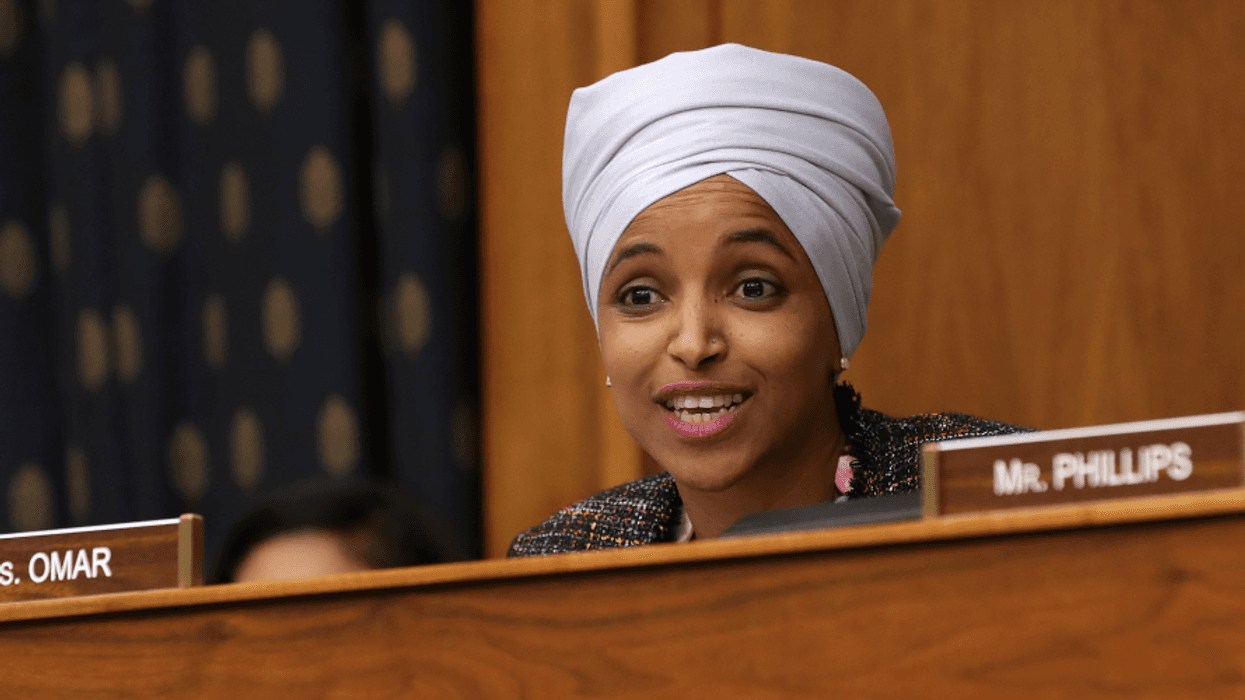
Progressive U.S. lawmakers including Reps. Rashida Tlaib, Ilhan Omar, and Katie Porter on Tuesday joined a call for the Biden administration to take steps to form a national institution that would monitor and promote human rights within the United States, noting that the U.S. considers itself an arbiter of human rights standards across the globe.
The lawmakers sent the letter ahead of second Summit for Democracy, which the U.S. it set to host this week and at which representatives from countries around the world will be asked to "highlight specific initiatives that reflect their commitment to strengthening human rights and democracy domestically and through multilateral cooperation."
A National Human Rights Institution (NHRI) in the U.S., said the lawmakers, would allow the government to promote and monitor the implementation of human rights obligations, provide a public forum for the investigation of violations, establish mechanisms to advise and inform all branches of government on meeting human rights standards, and provide guidance to state and local human rights commissions.
"The United States should be a role model for protecting human rights, and that work starts here at home," said Porter (D-Calif.). "A National Human Rights Institution will help us lead the world in promoting civil liberties and championing government accountability. I hope President [Joe] Biden will use this opportunity to reaffirm our global commitments and rebuild our country's reputation as a strong voice for universal human rights."
Other signatories of the letter include Democratic Reps. James McGovern of Massachusetts, Cori Bush of Missouri, Jill Tokuda of Hawaii, Jamie Raskin of Maryland, Ayanna Pressley of Massachusetts, and Eleanor Holmes Norton of Washington, D.C.
The letter called on the Biden administration to form a commission that would study the creation of an NHRI.
The lawmakers joined a coalition of 85 civil society groups, led by the ACLU, which in December called for the creation of an NHRI that would "offer a meaningful path to encourage U.S. institutions... to adhere to human rights commitments that our government has made and to which we routinely call on other countries to adhere."
They sent the letter a day after six people, including three nine-year-old children, were shot to death at a school in Nashville—the most recent of 130 mass shootings in 2023 so far. The country is also awaiting a ruling by a right-wing judge in a case regarding the legality of the Food and Drug Administration's approval of mifepristone—a drug commonly used in medication abortions—which could further strip Americans of the right to access abortion care.
Right-wing politicians are also moving swiftly to block adolescents and adults from accessing gender-affirming healthcare across the country, and the United Nations Refugee Agency on Monday warned that the Biden administration's plan to block asylum-seekers from entering the U.S. if they travel to the southern border through a third country is "incompatible with principles of international refugee law."
"The best way for the United States to lead on human rights is by the power of example," said McGovern. "By establishing a presidential commission to explore creating a National Human Rights Institution for the U.S., the president will be taking an important, concrete step toward ensuring that we live up to the standards we expect of other countries. The U.S. must walk the walk on human rights—not just talk the talk."
The lawmakers noted that democracies around the world, including many U.S. allies, have established NHRIs to hold their own governments accountable for adhering to human rights standards domestically and abroad.
"While the U.S. has a long tradition of supporting human rights and democracy abroad, we have often failed to practice at home what we preach overseas and neglected to translate our own international commitments into domestic policy," said Jamil Dakwar, director of the ACLU's Human Rights Program. "For too long, we've been a shameful outlier. A National Human Rights Institution would bring some much-needed structure and help bring the U.S. in line with international human rights norms and full compliance with ratified treaties."
"The time for action is now," Dakwar added.