SUBSCRIBE TO OUR FREE NEWSLETTER
Daily news & progressive opinion—funded by the people, not the corporations—delivered straight to your inbox.
5
#000000
#FFFFFF
To donate by check, phone, or other method, see our More Ways to Give page.
Daily news & progressive opinion—funded by the people, not the corporations—delivered straight to your inbox.

A video posted by US President Donald Trump to Truth Social depicts him in a crown, piloting a fighter jet emblazoned with the words "King Trump," dumping feces on "No Kings" protesters in Times Square, on October 19, 2025.
President Trump has long seemed fascinated by notions of “central casting.” Well, Donald Trump seems a more natural fit for the role of King George III than that of a framer of the Declaration of Independence.
For months President Donald Trump has been funneling money and interest toward the semi-private Freedom 250, and away from America 250, the congressionally created nonpartisan commission that has spent years preparing for the 250th anniversary of the Declaration of Independence on July 4, 2026. As a result, staggering sums of money have been contributed to Freedom 250, much of it by private companies that do business with the government or are in heavily regulated industries. It’s unsurprising that large corporations might want to seek favor from the Trump administration by opening their checkbooks, and it’s unsurprising that President Trump would welcome these checks with minimal transparency.
What is surprising is that President Trump would be keen to celebrate the Declaration of Independence at all. This document expresses the people’s desire to be free from the rule of a king, a hunger for the rule of law, and respect for an independent judiciary. Nothing could be less Trumpy.
While the Declaration announces liberation from the tyranny of monarchy, Trump seems fairly obsessed with framing himself as a king. Examples abound. In lauding his own efforts to kill a congestion pricing plan in Manhattan, Trump ended his social media post with the self-congratulatory, “LONG LIVE THE KING.” In response to historic nationwide peaceful protests, Trump posted an AI-generated video of himself wearing a crown and dumping excrement upon American demonstrators. During a recent official British state visit, the White House posted a picture of King Charles with President Trump, captioned “TWO KINGS.” And Trump’s fondness for monarchical trappings is no secret globally. For instance, while wearing a gold tie that reflected “President Trump’s taste for gold,” South Korean President Lee Jae Myung presented Trump with a golden crown that was a replica of an ancient artifact, and Trump responded by saying, “I’d like to wear it right now.”
Notably, the Declaration’s first grievance against King George III of Great Britain was his refusal to “Assent to Laws,” conveying the belief that no one—not even a nation’s highest leader—is above the law. Yet President Trump seems offended by such a notion, and he contests it regularly. Trump implies that the law does not apply to him when he posts messages like “[h]e who saves his Country does not violate any Law,” a quote often attributed to Napoleon Bonaparte, the general who declared himself emperor of France in the 1800s. And Trump has proclaimed that Article II of the Constitution grants him “the right to do whatever I want as president,” a statement that not only misreads Article II, but ignores the way presidential power operates with, and is checked by, Article I congressional power and Article III judicial power.
Thankfully, we need not look to President Trump for inspiration on how to mark the Declaration’s 250th anniversary.
Numerous high-ranking Trump administration officials, including Solicitor General John Sauer, have declined to commit to obeying court orders and the administration’s track record reflects this defiance: In just the first six months of the administration, courts in more than 12 cases determined that the administration violated court orders. More recently, a study cited hundreds of instances of administration non-compliance with court orders. The situation has become so dire that many judges have lost confidence in this administration’s representations and are reducing the deference customarily given to federal government lawyers.
Finally, further down in the Declaration’s list of grievances against King George III is that “[h]e has made Judges dependent on his Will alone.” Today, this could describe Trump’s aspirations. He has railed against judges—even those whom he appointed in his first presidential term—when they dare to rule against his administration’s policies. Trump is infuriated when judges honor their oaths of office and follow the facts and the law regardless of where this leads them. After immigration-related rulings halted Trump administration policies, US District Judge James Boasberg found himself the target of President Trump’s call for Congress to remove him from the bench. Trump railed about Boasberg on social media, calling the judge a “troublemaker and agitator,” and suggested that many other judges should be impeached as well.
Trump’s harsh rhetoric even prompted a rare statement from Chief Justice John Roberts, who explained that “[f]or more than two centuries, it has been established that impeachment is not an appropriate response to disagreement concerning a judicial decision. The normal appellate review process exists for that purpose.” And it’s not just lower court judges who find themselves targeted by Trump’s invective. After the Supreme Court struck down his administration’s tariff scheme by a 6-3 margin, Trump criticized the court and justices in strikingly personal terms, saying, “I’m ashamed of certain members of the court,” and in reference to Justices Neil Gorsuch and Amy Coney Barrett, “I think it’s an embarrassment to their families, you wanna know the truth, the two of them.”
President Trump has long seemed fascinated by notions of “central casting.” Well, Donald Trump seems a more natural fit for the role of King George III than that of a framer of the Declaration of Independence.
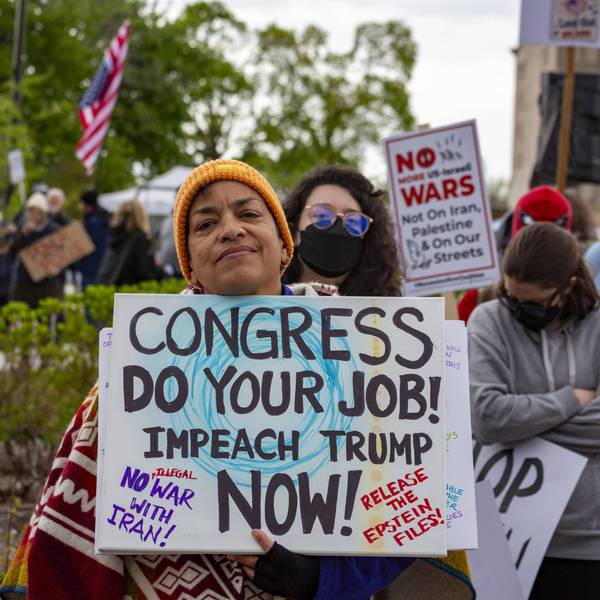
Thankfully, we need not look to President Trump for inspiration on how to mark the Declaration’s 250th anniversary. Inspiration can be found in the broad array of Americans who gathered nationwide to protest autocracy in peaceful No Kings demonstrations; the March 28, 2026 No Kings mobilizations drew an estimated 8 million participants in over 3,000 sites, arguably the largest single-day of protests in United States history.
We can be inspired by the bravery of Minnesotans killed while protesting the mistreatment of immigrant community members, and Minnesotan community-based efforts to help neighbors too frightened to leave their homes in the face of brutal abuses by immigration enforcement officers, ones that call to mind the Declaration’s complaint that King George had “sent hither swarms of Officers to harrass our people, and eat out their substance.” And who isn’t inspired by countless Americans who joined interfaith vigils to protest the inhumane and lawless detention of people at facilities like Florida’s infamous “Alligator Alcatraz”?
These members of the American family, true patriots, honor a Declaration that ends with the promise to “mutually pledge to each other our Lives, our Fortunes, and our sacred Honor.” They understand that embedded within our Declaration of Independence lies a Declaration of Interdependence. Now that’s something to celebrate.
Dear Common Dreams reader, It’s been nearly 30 years since I co-founded Common Dreams with my late wife, Lina Newhouser. We had the radical notion that journalism should serve the public good, not corporate profits. It was clear to us from the outset what it would take to build such a project. No paid advertisements. No corporate sponsors. No millionaire publisher telling us what to think or do. Many people said we wouldn't last a year, but we proved those doubters wrong. Together with a tremendous team of journalists and dedicated staff, we built an independent media outlet free from the constraints of profits and corporate control. Our mission has always been simple: To inform. To inspire. To ignite change for the common good. Building Common Dreams was not easy. Our survival was never guaranteed. When you take on the most powerful forces—Wall Street greed, fossil fuel industry destruction, Big Tech lobbyists, and uber-rich oligarchs who have spent billions upon billions rigging the economy and democracy in their favor—the only bulwark you have is supporters who believe in your work. But here’s the urgent message from me today. It's never been this bad out there. And it's never been this hard to keep us going. At the very moment Common Dreams is most needed, the threats we face are intensifying. We need your support now more than ever. We don't accept corporate advertising and never will. We don't have a paywall because we don't think people should be blocked from critical news based on their ability to pay. Everything we do is funded by the donations of readers like you. When everyone does the little they can afford, we are strong. But if that support retreats or dries up, so do we. Will you donate now to make sure Common Dreams not only survives but thrives? —Craig Brown, Co-founder |
For months President Donald Trump has been funneling money and interest toward the semi-private Freedom 250, and away from America 250, the congressionally created nonpartisan commission that has spent years preparing for the 250th anniversary of the Declaration of Independence on July 4, 2026. As a result, staggering sums of money have been contributed to Freedom 250, much of it by private companies that do business with the government or are in heavily regulated industries. It’s unsurprising that large corporations might want to seek favor from the Trump administration by opening their checkbooks, and it’s unsurprising that President Trump would welcome these checks with minimal transparency.
What is surprising is that President Trump would be keen to celebrate the Declaration of Independence at all. This document expresses the people’s desire to be free from the rule of a king, a hunger for the rule of law, and respect for an independent judiciary. Nothing could be less Trumpy.
While the Declaration announces liberation from the tyranny of monarchy, Trump seems fairly obsessed with framing himself as a king. Examples abound. In lauding his own efforts to kill a congestion pricing plan in Manhattan, Trump ended his social media post with the self-congratulatory, “LONG LIVE THE KING.” In response to historic nationwide peaceful protests, Trump posted an AI-generated video of himself wearing a crown and dumping excrement upon American demonstrators. During a recent official British state visit, the White House posted a picture of King Charles with President Trump, captioned “TWO KINGS.” And Trump’s fondness for monarchical trappings is no secret globally. For instance, while wearing a gold tie that reflected “President Trump’s taste for gold,” South Korean President Lee Jae Myung presented Trump with a golden crown that was a replica of an ancient artifact, and Trump responded by saying, “I’d like to wear it right now.”
Notably, the Declaration’s first grievance against King George III of Great Britain was his refusal to “Assent to Laws,” conveying the belief that no one—not even a nation’s highest leader—is above the law. Yet President Trump seems offended by such a notion, and he contests it regularly. Trump implies that the law does not apply to him when he posts messages like “[h]e who saves his Country does not violate any Law,” a quote often attributed to Napoleon Bonaparte, the general who declared himself emperor of France in the 1800s. And Trump has proclaimed that Article II of the Constitution grants him “the right to do whatever I want as president,” a statement that not only misreads Article II, but ignores the way presidential power operates with, and is checked by, Article I congressional power and Article III judicial power.
Thankfully, we need not look to President Trump for inspiration on how to mark the Declaration’s 250th anniversary.
Numerous high-ranking Trump administration officials, including Solicitor General John Sauer, have declined to commit to obeying court orders and the administration’s track record reflects this defiance: In just the first six months of the administration, courts in more than 12 cases determined that the administration violated court orders. More recently, a study cited hundreds of instances of administration non-compliance with court orders. The situation has become so dire that many judges have lost confidence in this administration’s representations and are reducing the deference customarily given to federal government lawyers.
Finally, further down in the Declaration’s list of grievances against King George III is that “[h]e has made Judges dependent on his Will alone.” Today, this could describe Trump’s aspirations. He has railed against judges—even those whom he appointed in his first presidential term—when they dare to rule against his administration’s policies. Trump is infuriated when judges honor their oaths of office and follow the facts and the law regardless of where this leads them. After immigration-related rulings halted Trump administration policies, US District Judge James Boasberg found himself the target of President Trump’s call for Congress to remove him from the bench. Trump railed about Boasberg on social media, calling the judge a “troublemaker and agitator,” and suggested that many other judges should be impeached as well.
Trump’s harsh rhetoric even prompted a rare statement from Chief Justice John Roberts, who explained that “[f]or more than two centuries, it has been established that impeachment is not an appropriate response to disagreement concerning a judicial decision. The normal appellate review process exists for that purpose.” And it’s not just lower court judges who find themselves targeted by Trump’s invective. After the Supreme Court struck down his administration’s tariff scheme by a 6-3 margin, Trump criticized the court and justices in strikingly personal terms, saying, “I’m ashamed of certain members of the court,” and in reference to Justices Neil Gorsuch and Amy Coney Barrett, “I think it’s an embarrassment to their families, you wanna know the truth, the two of them.”
President Trump has long seemed fascinated by notions of “central casting.” Well, Donald Trump seems a more natural fit for the role of King George III than that of a framer of the Declaration of Independence.
Thankfully, we need not look to President Trump for inspiration on how to mark the Declaration’s 250th anniversary. Inspiration can be found in the broad array of Americans who gathered nationwide to protest autocracy in peaceful No Kings demonstrations; the March 28, 2026 No Kings mobilizations drew an estimated 8 million participants in over 3,000 sites, arguably the largest single-day of protests in United States history.
We can be inspired by the bravery of Minnesotans killed while protesting the mistreatment of immigrant community members, and Minnesotan community-based efforts to help neighbors too frightened to leave their homes in the face of brutal abuses by immigration enforcement officers, ones that call to mind the Declaration’s complaint that King George had “sent hither swarms of Officers to harrass our people, and eat out their substance.” And who isn’t inspired by countless Americans who joined interfaith vigils to protest the inhumane and lawless detention of people at facilities like Florida’s infamous “Alligator Alcatraz”?
These members of the American family, true patriots, honor a Declaration that ends with the promise to “mutually pledge to each other our Lives, our Fortunes, and our sacred Honor.” They understand that embedded within our Declaration of Independence lies a Declaration of Interdependence. Now that’s something to celebrate.
For months President Donald Trump has been funneling money and interest toward the semi-private Freedom 250, and away from America 250, the congressionally created nonpartisan commission that has spent years preparing for the 250th anniversary of the Declaration of Independence on July 4, 2026. As a result, staggering sums of money have been contributed to Freedom 250, much of it by private companies that do business with the government or are in heavily regulated industries. It’s unsurprising that large corporations might want to seek favor from the Trump administration by opening their checkbooks, and it’s unsurprising that President Trump would welcome these checks with minimal transparency.
What is surprising is that President Trump would be keen to celebrate the Declaration of Independence at all. This document expresses the people’s desire to be free from the rule of a king, a hunger for the rule of law, and respect for an independent judiciary. Nothing could be less Trumpy.
While the Declaration announces liberation from the tyranny of monarchy, Trump seems fairly obsessed with framing himself as a king. Examples abound. In lauding his own efforts to kill a congestion pricing plan in Manhattan, Trump ended his social media post with the self-congratulatory, “LONG LIVE THE KING.” In response to historic nationwide peaceful protests, Trump posted an AI-generated video of himself wearing a crown and dumping excrement upon American demonstrators. During a recent official British state visit, the White House posted a picture of King Charles with President Trump, captioned “TWO KINGS.” And Trump’s fondness for monarchical trappings is no secret globally. For instance, while wearing a gold tie that reflected “President Trump’s taste for gold,” South Korean President Lee Jae Myung presented Trump with a golden crown that was a replica of an ancient artifact, and Trump responded by saying, “I’d like to wear it right now.”
Notably, the Declaration’s first grievance against King George III of Great Britain was his refusal to “Assent to Laws,” conveying the belief that no one—not even a nation’s highest leader—is above the law. Yet President Trump seems offended by such a notion, and he contests it regularly. Trump implies that the law does not apply to him when he posts messages like “[h]e who saves his Country does not violate any Law,” a quote often attributed to Napoleon Bonaparte, the general who declared himself emperor of France in the 1800s. And Trump has proclaimed that Article II of the Constitution grants him “the right to do whatever I want as president,” a statement that not only misreads Article II, but ignores the way presidential power operates with, and is checked by, Article I congressional power and Article III judicial power.
Thankfully, we need not look to President Trump for inspiration on how to mark the Declaration’s 250th anniversary.
Numerous high-ranking Trump administration officials, including Solicitor General John Sauer, have declined to commit to obeying court orders and the administration’s track record reflects this defiance: In just the first six months of the administration, courts in more than 12 cases determined that the administration violated court orders. More recently, a study cited hundreds of instances of administration non-compliance with court orders. The situation has become so dire that many judges have lost confidence in this administration’s representations and are reducing the deference customarily given to federal government lawyers.
Finally, further down in the Declaration’s list of grievances against King George III is that “[h]e has made Judges dependent on his Will alone.” Today, this could describe Trump’s aspirations. He has railed against judges—even those whom he appointed in his first presidential term—when they dare to rule against his administration’s policies. Trump is infuriated when judges honor their oaths of office and follow the facts and the law regardless of where this leads them. After immigration-related rulings halted Trump administration policies, US District Judge James Boasberg found himself the target of President Trump’s call for Congress to remove him from the bench. Trump railed about Boasberg on social media, calling the judge a “troublemaker and agitator,” and suggested that many other judges should be impeached as well.
Trump’s harsh rhetoric even prompted a rare statement from Chief Justice John Roberts, who explained that “[f]or more than two centuries, it has been established that impeachment is not an appropriate response to disagreement concerning a judicial decision. The normal appellate review process exists for that purpose.” And it’s not just lower court judges who find themselves targeted by Trump’s invective. After the Supreme Court struck down his administration’s tariff scheme by a 6-3 margin, Trump criticized the court and justices in strikingly personal terms, saying, “I’m ashamed of certain members of the court,” and in reference to Justices Neil Gorsuch and Amy Coney Barrett, “I think it’s an embarrassment to their families, you wanna know the truth, the two of them.”
President Trump has long seemed fascinated by notions of “central casting.” Well, Donald Trump seems a more natural fit for the role of King George III than that of a framer of the Declaration of Independence.
Thankfully, we need not look to President Trump for inspiration on how to mark the Declaration’s 250th anniversary. Inspiration can be found in the broad array of Americans who gathered nationwide to protest autocracy in peaceful No Kings demonstrations; the March 28, 2026 No Kings mobilizations drew an estimated 8 million participants in over 3,000 sites, arguably the largest single-day of protests in United States history.
We can be inspired by the bravery of Minnesotans killed while protesting the mistreatment of immigrant community members, and Minnesotan community-based efforts to help neighbors too frightened to leave their homes in the face of brutal abuses by immigration enforcement officers, ones that call to mind the Declaration’s complaint that King George had “sent hither swarms of Officers to harrass our people, and eat out their substance.” And who isn’t inspired by countless Americans who joined interfaith vigils to protest the inhumane and lawless detention of people at facilities like Florida’s infamous “Alligator Alcatraz”?
These members of the American family, true patriots, honor a Declaration that ends with the promise to “mutually pledge to each other our Lives, our Fortunes, and our sacred Honor.” They understand that embedded within our Declaration of Independence lies a Declaration of Interdependence. Now that’s something to celebrate.