SUBSCRIBE TO OUR FREE NEWSLETTER
Daily news & progressive opinion—funded by the people, not the corporations—delivered straight to your inbox.
5
#000000
#FFFFFF
To donate by check, phone, or other method, see our More Ways to Give page.
Daily news & progressive opinion—funded by the people, not the corporations—delivered straight to your inbox.

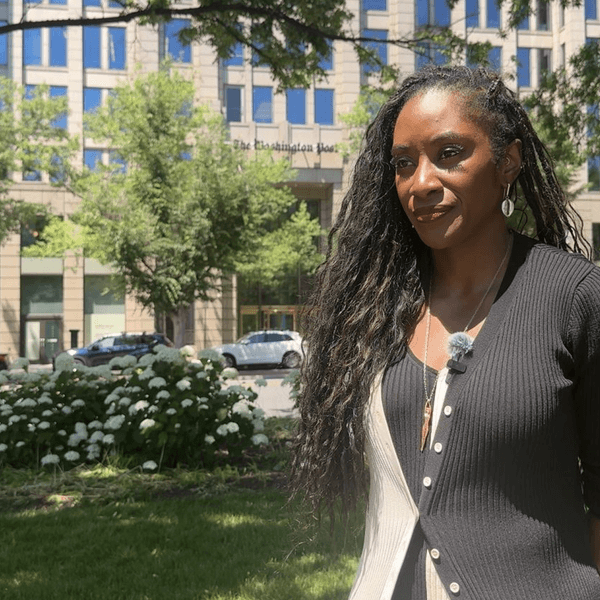
The building of the Washington Post newspaper headquarters is seen on K Street in Washington DC on May 16, 2019.
The Post layoffs are not just about one newspaper—they are about whether journalism will continue to serve the public, or retreat further into a corporate shell.
On Wednesday, the Washington Post laid off roughly a third of its staff. For one of the most powerful and historically significant newspapers in the United States to make this decision is a warning to the entire journalism industry. At a moment of political instability, rising authoritarianism, and widespread distrust in institutions, corporate media is choosing contraction over responsibility.
Under the ownership of Jeff Bezos and his puppet publisher Will Lewis, the Post has joined a growing list of outlets responding to financial pressure by hollowing out their newsrooms. These layoffs arrive amid record-breaking, industry-wide cuts that have devastated local and national media alike. Across the country, journalists are losing jobs not because their work lacks value, but because truth telling has become inconvenient for corporate owners.
This erosion of journalism is not inevitable. It is the result of deliberate choices. Bezos, whose net worth hovers around $250 billion, has the resources to preserve jobs and protect institutional integrity. The decision not to do so makes clear that political influence matters more than the labor that sustains public accountability.
In 2019, Palestinian poet Marwan Makhoul wrote, “In order for me to write poetry that isn’t political, I must listen to the birds, and in order to hear the birds, the warplanes must be silent.” Journalism, like poetry, cannot be separated from the conditions under which it is produced. Reporters cannot meaningfully tell stories of joy, culture, or community while working under constant threat of layoffs, censorship, and corporate interference. The warplanes are not silent.
The future of journalism depends on resisting this erosion. It requires sustained investment in independent and nonprofit outlets, stronger labor protections for journalists, and a collective refusal to accept mass layoffs as the cost of doing business.
As newsrooms shrink, reporters are expected to do the impossible: Cover every breaking story, every election, every conflict, every scandal. What disappears in the process are the beats deemed expendable. Coverage of racial justice, gender equity, LGBTQIA+ communities, labor organizing, and social movements is often the first to be cut. These stories are not eliminated because they lack importance, but because they challenge power and unsettle funders.
The result is a media landscape increasingly shaped by what is safest for advertisers and political elites. More coverage of markets and institutions, fewer stories about Black culture. More horse-race politics, less reporting on trans survival or grassroots organizing. Corporate media follows the wind while ignoring the warplanes overhead.
This narrowing of journalism’s mission weakens democracy itself. A press that cannot afford to tell uncomfortable truths cannot fulfill its role as a public good. When newsrooms prioritize access over accountability and profitability over people, the public loses both information and trust.
Still, journalism is not finished. Independent and nonprofit newsrooms continue to do the work that corporate outlets are abandoning, producing community-rooted reporting that centers justice, accountability, and lived experience. But these outlets operate under immense financial strain, even as corporate media continues to set the terms of what is considered legitimate or newsworthy.
The future of journalism depends on resisting this erosion. It requires sustained investment in independent and nonprofit outlets, stronger labor protections for journalists, and a collective refusal to accept mass layoffs as the cost of doing business. It also requires reporters—especially students, freelancers, and those pushed out of traditional newsrooms—to keep telling the stories that power would prefer remain untold.
The Washington Post layoffs are not just about one newspaper. They are about whether journalism will continue to serve the public, or retreat further into a corporate shell. The industry can cover tragedy while preserving joy. It can hold power accountable while documenting resistance, survival, and hope. We should not accept anything less.
Dear Common Dreams reader, It’s been nearly 30 years since I co-founded Common Dreams with my late wife, Lina Newhouser. We had the radical notion that journalism should serve the public good, not corporate profits. It was clear to us from the outset what it would take to build such a project. No paid advertisements. No corporate sponsors. No millionaire publisher telling us what to think or do. Many people said we wouldn't last a year, but we proved those doubters wrong. Together with a tremendous team of journalists and dedicated staff, we built an independent media outlet free from the constraints of profits and corporate control. Our mission has always been simple: To inform. To inspire. To ignite change for the common good. Building Common Dreams was not easy. Our survival was never guaranteed. When you take on the most powerful forces—Wall Street greed, fossil fuel industry destruction, Big Tech lobbyists, and uber-rich oligarchs who have spent billions upon billions rigging the economy and democracy in their favor—the only bulwark you have is supporters who believe in your work. But here’s the urgent message from me today. It's never been this bad out there. And it's never been this hard to keep us going. At the very moment Common Dreams is most needed, the threats we face are intensifying. We need your support now more than ever. We don't accept corporate advertising and never will. We don't have a paywall because we don't think people should be blocked from critical news based on their ability to pay. Everything we do is funded by the donations of readers like you. When everyone does the little they can afford, we are strong. But if that support retreats or dries up, so do we. Will you donate now to make sure Common Dreams not only survives but thrives? —Craig Brown, Co-founder |
On Wednesday, the Washington Post laid off roughly a third of its staff. For one of the most powerful and historically significant newspapers in the United States to make this decision is a warning to the entire journalism industry. At a moment of political instability, rising authoritarianism, and widespread distrust in institutions, corporate media is choosing contraction over responsibility.
Under the ownership of Jeff Bezos and his puppet publisher Will Lewis, the Post has joined a growing list of outlets responding to financial pressure by hollowing out their newsrooms. These layoffs arrive amid record-breaking, industry-wide cuts that have devastated local and national media alike. Across the country, journalists are losing jobs not because their work lacks value, but because truth telling has become inconvenient for corporate owners.
This erosion of journalism is not inevitable. It is the result of deliberate choices. Bezos, whose net worth hovers around $250 billion, has the resources to preserve jobs and protect institutional integrity. The decision not to do so makes clear that political influence matters more than the labor that sustains public accountability.
In 2019, Palestinian poet Marwan Makhoul wrote, “In order for me to write poetry that isn’t political, I must listen to the birds, and in order to hear the birds, the warplanes must be silent.” Journalism, like poetry, cannot be separated from the conditions under which it is produced. Reporters cannot meaningfully tell stories of joy, culture, or community while working under constant threat of layoffs, censorship, and corporate interference. The warplanes are not silent.
The future of journalism depends on resisting this erosion. It requires sustained investment in independent and nonprofit outlets, stronger labor protections for journalists, and a collective refusal to accept mass layoffs as the cost of doing business.
As newsrooms shrink, reporters are expected to do the impossible: Cover every breaking story, every election, every conflict, every scandal. What disappears in the process are the beats deemed expendable. Coverage of racial justice, gender equity, LGBTQIA+ communities, labor organizing, and social movements is often the first to be cut. These stories are not eliminated because they lack importance, but because they challenge power and unsettle funders.
The result is a media landscape increasingly shaped by what is safest for advertisers and political elites. More coverage of markets and institutions, fewer stories about Black culture. More horse-race politics, less reporting on trans survival or grassroots organizing. Corporate media follows the wind while ignoring the warplanes overhead.
This narrowing of journalism’s mission weakens democracy itself. A press that cannot afford to tell uncomfortable truths cannot fulfill its role as a public good. When newsrooms prioritize access over accountability and profitability over people, the public loses both information and trust.
Still, journalism is not finished. Independent and nonprofit newsrooms continue to do the work that corporate outlets are abandoning, producing community-rooted reporting that centers justice, accountability, and lived experience. But these outlets operate under immense financial strain, even as corporate media continues to set the terms of what is considered legitimate or newsworthy.
The future of journalism depends on resisting this erosion. It requires sustained investment in independent and nonprofit outlets, stronger labor protections for journalists, and a collective refusal to accept mass layoffs as the cost of doing business. It also requires reporters—especially students, freelancers, and those pushed out of traditional newsrooms—to keep telling the stories that power would prefer remain untold.
The Washington Post layoffs are not just about one newspaper. They are about whether journalism will continue to serve the public, or retreat further into a corporate shell. The industry can cover tragedy while preserving joy. It can hold power accountable while documenting resistance, survival, and hope. We should not accept anything less.
On Wednesday, the Washington Post laid off roughly a third of its staff. For one of the most powerful and historically significant newspapers in the United States to make this decision is a warning to the entire journalism industry. At a moment of political instability, rising authoritarianism, and widespread distrust in institutions, corporate media is choosing contraction over responsibility.
Under the ownership of Jeff Bezos and his puppet publisher Will Lewis, the Post has joined a growing list of outlets responding to financial pressure by hollowing out their newsrooms. These layoffs arrive amid record-breaking, industry-wide cuts that have devastated local and national media alike. Across the country, journalists are losing jobs not because their work lacks value, but because truth telling has become inconvenient for corporate owners.
This erosion of journalism is not inevitable. It is the result of deliberate choices. Bezos, whose net worth hovers around $250 billion, has the resources to preserve jobs and protect institutional integrity. The decision not to do so makes clear that political influence matters more than the labor that sustains public accountability.
In 2019, Palestinian poet Marwan Makhoul wrote, “In order for me to write poetry that isn’t political, I must listen to the birds, and in order to hear the birds, the warplanes must be silent.” Journalism, like poetry, cannot be separated from the conditions under which it is produced. Reporters cannot meaningfully tell stories of joy, culture, or community while working under constant threat of layoffs, censorship, and corporate interference. The warplanes are not silent.
The future of journalism depends on resisting this erosion. It requires sustained investment in independent and nonprofit outlets, stronger labor protections for journalists, and a collective refusal to accept mass layoffs as the cost of doing business.
As newsrooms shrink, reporters are expected to do the impossible: Cover every breaking story, every election, every conflict, every scandal. What disappears in the process are the beats deemed expendable. Coverage of racial justice, gender equity, LGBTQIA+ communities, labor organizing, and social movements is often the first to be cut. These stories are not eliminated because they lack importance, but because they challenge power and unsettle funders.
The result is a media landscape increasingly shaped by what is safest for advertisers and political elites. More coverage of markets and institutions, fewer stories about Black culture. More horse-race politics, less reporting on trans survival or grassroots organizing. Corporate media follows the wind while ignoring the warplanes overhead.
This narrowing of journalism’s mission weakens democracy itself. A press that cannot afford to tell uncomfortable truths cannot fulfill its role as a public good. When newsrooms prioritize access over accountability and profitability over people, the public loses both information and trust.
Still, journalism is not finished. Independent and nonprofit newsrooms continue to do the work that corporate outlets are abandoning, producing community-rooted reporting that centers justice, accountability, and lived experience. But these outlets operate under immense financial strain, even as corporate media continues to set the terms of what is considered legitimate or newsworthy.
The future of journalism depends on resisting this erosion. It requires sustained investment in independent and nonprofit outlets, stronger labor protections for journalists, and a collective refusal to accept mass layoffs as the cost of doing business. It also requires reporters—especially students, freelancers, and those pushed out of traditional newsrooms—to keep telling the stories that power would prefer remain untold.
The Washington Post layoffs are not just about one newspaper. They are about whether journalism will continue to serve the public, or retreat further into a corporate shell. The industry can cover tragedy while preserving joy. It can hold power accountable while documenting resistance, survival, and hope. We should not accept anything less.