5
#000000
#FFFFFF
To donate by check, phone, or other method, see our More Ways to Give page.
Daily news & progressive opinion—funded by the people, not the corporations—delivered straight to your inbox.
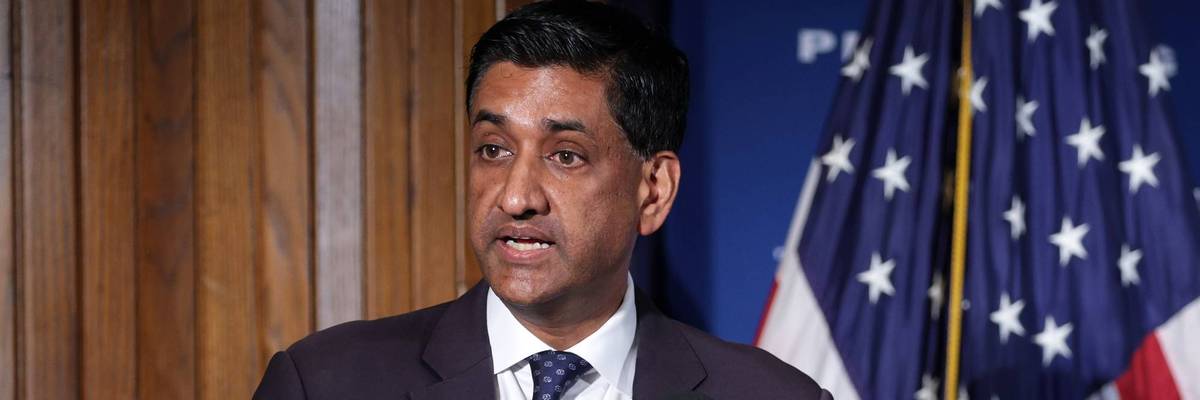
Rep. Ro Khanna (D-CA) delivers remarks during a National Press Club Headliners Newsmaker event on April 14, 2026 in Washington, DC. Rep. Khanna participated in the event titled “Beyond the Epstein Class: A New Economic Inequality.”
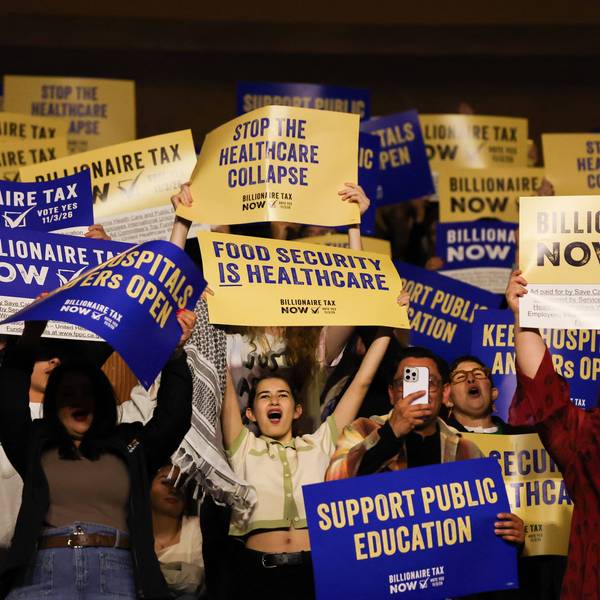
The question before us in California is not complicated. Are we going to stand with the three million people—our friends and neighbors—about to lose their health care, or with the billionaire class that would rather we looked away?
There are more billionaires in my district and the surrounding area than almost any other Member of Congress. Within fifty miles of my district sits nearly a third of the entire American stock market—over $20 trillion in value—and five companies worth more than a trillion dollars each. For years, I have fought for fairness in our tax policy. If America has been good to you, you must do good for America.
There are 938 billionaires in America. Together they are worth $8.2 trillion. The bill I wrote with Bernie Sanders asks them for 5 percent every year.
This is a simple tax on wealth. Every year, this tax evaluates the total value of a billionaire’s holdings, their stock, their companies, their real estate, and taxes 5 percent of it. Not their income, which they have arranged to be almost nothing. The wealth itself. The same way a family pays property tax on a house whether or not they sell it. We conduct this assessment on individual’s estates already when they die.
This billionaire wealth tax will raise $4.4 trillion over a decade. This is enough to establish a $60,000 salary floor for every public school teacher in America, cap child care at 7 percent of a family’s income, and restore the $1 trillion stripped from Medicaid and the ACA, with a $3,000 check left over for every household under $150,000.
California legislators have proposed a state tax to target similar excessive wealth. A proposition on the November ballot would levy a one-time 5 percent tax on the wealth of the state’s 250 billionaires. Accrued over 5 years, it would raise $100 billion to save health care for 3 million Californians. I am backing it.
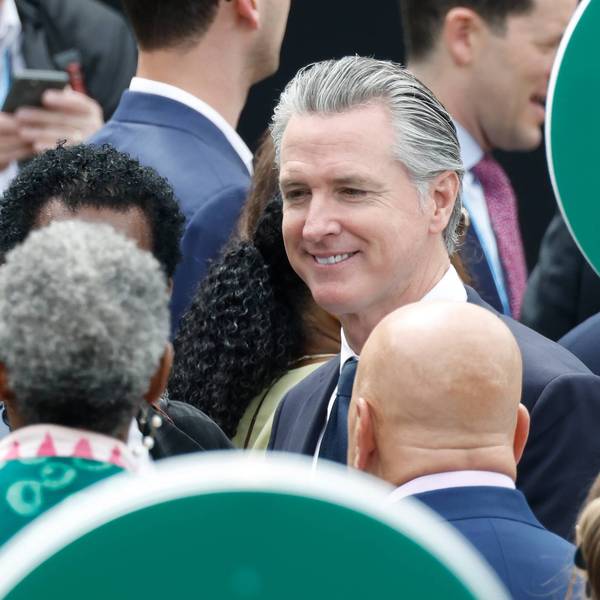
Opposing these landmark taxes, Governor Newsom has suggested a “minimum income tax”. The focus of this tax is billionaires’ reported income, as well as the loans they take out to live on. An income tax, not a wealth tax. That is the problem. Newsom goes after that income, but billionaires have very little. Most take no salary at all. They borrow against their stock, live on the loans, and pass the fortune to their children without ever selling a share. The wealth underneath goes untouched.
Bernie and I tax the wealth itself, and our bill raises $4.4 trillion. Newsom’s tax on these borrowed assets only raises 1/44th of that. That’s why the tech oligarchs support Newsom’s proposal. They hope they can trick folks into making the issue go away.
Same billionaires, forty-four times the revenue from Bernie and I’s proposal compared to Newsom’s.
Tax what they own, not what they report.
I was criticized for the bill, as well as my support of California’s proposed Billionaire Tax. Many said that the wealth flight from California would devastate our economy. They were wrong. In Q1 of 2026, California received more venture capital investment than the rest of the country combined. Then the billionaires spent millions propping up my primary challenger. He received 6 percent of the vote.
And the tax should not stop at billionaires, it must reach centimillionaires. The tax has to reach all fortunes $50 million and up, and one already does. Every year it has been introduced, I have cosponsored the Ultra-Millionaire Tax Act. It starts at $50 million: 2 percent a year on wealth above that line, And it reaches the money inside irrevocable trusts, taxed to the grantor who set them up. Moving a fortune into a trust should not take it off the books from a wealth tax.
Supporters are right to call the fight in California the reverse Proposition 13 of our generation. In 1978, California voted for Prop 13 to cap property taxes, and that anti-tax revolt carried Ronald Reagan to the presidency two years later. This is that revolt in reverse: instead of capping taxes on property, we are taxing the extreme wealth at the top. This is a philosophical fight, and California is the test case for the nation.
So the question is not complicated. Are we going to stand with the three million Californians about to lose their health care, or with the billionaire class that would rather we looked away? Are we the party of working people, or just the party of the donor class? Are we going to return to the party of FDR, or keep telling ourselves we need to do what the donors want?
Are we willing to tax extreme wealth, or only willing to talk about it?
I know my answer. We cannot have a nation where 938 people grow $1.5 trillion richer in a year while a teacher in my district takes a second job to cover rent.
Dear Common Dreams reader, It’s been nearly 30 years since I co-founded Common Dreams with my late wife, Lina Newhouser. We had the radical notion that journalism should serve the public good, not corporate profits. It was clear to us from the outset what it would take to build such a project. No paid advertisements. No corporate sponsors. No millionaire publisher telling us what to think or do. Many people said we wouldn't last a year, but we proved those doubters wrong. Together with a tremendous team of journalists and dedicated staff, we built an independent media outlet free from the constraints of profits and corporate control. Our mission has always been simple: To inform. To inspire. To ignite change for the common good. Building Common Dreams was not easy. Our survival was never guaranteed. When you take on the most powerful forces—Wall Street greed, fossil fuel industry destruction, Big Tech lobbyists, and uber-rich oligarchs who have spent billions upon billions rigging the economy and democracy in their favor—the only bulwark you have is supporters who believe in your work. But here’s the urgent message from me today. It's never been this bad out there. And it's never been this hard to keep us going. At the very moment Common Dreams is most needed, the threats we face are intensifying. We need your support now more than ever. We don't accept corporate advertising and never will. We don't have a paywall because we don't think people should be blocked from critical news based on their ability to pay. Everything we do is funded by the donations of readers like you. When everyone does the little they can afford, we are strong. But if that support retreats or dries up, so do we. Will you donate now to make sure Common Dreams not only survives but thrives? —Craig Brown, Co-founder |
There are more billionaires in my district and the surrounding area than almost any other Member of Congress. Within fifty miles of my district sits nearly a third of the entire American stock market—over $20 trillion in value—and five companies worth more than a trillion dollars each. For years, I have fought for fairness in our tax policy. If America has been good to you, you must do good for America.
There are 938 billionaires in America. Together they are worth $8.2 trillion. The bill I wrote with Bernie Sanders asks them for 5 percent every year.
This is a simple tax on wealth. Every year, this tax evaluates the total value of a billionaire’s holdings, their stock, their companies, their real estate, and taxes 5 percent of it. Not their income, which they have arranged to be almost nothing. The wealth itself. The same way a family pays property tax on a house whether or not they sell it. We conduct this assessment on individual’s estates already when they die.
This billionaire wealth tax will raise $4.4 trillion over a decade. This is enough to establish a $60,000 salary floor for every public school teacher in America, cap child care at 7 percent of a family’s income, and restore the $1 trillion stripped from Medicaid and the ACA, with a $3,000 check left over for every household under $150,000.
California legislators have proposed a state tax to target similar excessive wealth. A proposition on the November ballot would levy a one-time 5 percent tax on the wealth of the state’s 250 billionaires. Accrued over 5 years, it would raise $100 billion to save health care for 3 million Californians. I am backing it.
Opposing these landmark taxes, Governor Newsom has suggested a “minimum income tax”. The focus of this tax is billionaires’ reported income, as well as the loans they take out to live on. An income tax, not a wealth tax. That is the problem. Newsom goes after that income, but billionaires have very little. Most take no salary at all. They borrow against their stock, live on the loans, and pass the fortune to their children without ever selling a share. The wealth underneath goes untouched.
Bernie and I tax the wealth itself, and our bill raises $4.4 trillion. Newsom’s tax on these borrowed assets only raises 1/44th of that. That’s why the tech oligarchs support Newsom’s proposal. They hope they can trick folks into making the issue go away.
Same billionaires, forty-four times the revenue from Bernie and I’s proposal compared to Newsom’s.
Tax what they own, not what they report.
I was criticized for the bill, as well as my support of California’s proposed Billionaire Tax. Many said that the wealth flight from California would devastate our economy. They were wrong. In Q1 of 2026, California received more venture capital investment than the rest of the country combined. Then the billionaires spent millions propping up my primary challenger. He received 6 percent of the vote.
And the tax should not stop at billionaires, it must reach centimillionaires. The tax has to reach all fortunes $50 million and up, and one already does. Every year it has been introduced, I have cosponsored the Ultra-Millionaire Tax Act. It starts at $50 million: 2 percent a year on wealth above that line, And it reaches the money inside irrevocable trusts, taxed to the grantor who set them up. Moving a fortune into a trust should not take it off the books from a wealth tax.
Supporters are right to call the fight in California the reverse Proposition 13 of our generation. In 1978, California voted for Prop 13 to cap property taxes, and that anti-tax revolt carried Ronald Reagan to the presidency two years later. This is that revolt in reverse: instead of capping taxes on property, we are taxing the extreme wealth at the top. This is a philosophical fight, and California is the test case for the nation.
So the question is not complicated. Are we going to stand with the three million Californians about to lose their health care, or with the billionaire class that would rather we looked away? Are we the party of working people, or just the party of the donor class? Are we going to return to the party of FDR, or keep telling ourselves we need to do what the donors want?
Are we willing to tax extreme wealth, or only willing to talk about it?
I know my answer. We cannot have a nation where 938 people grow $1.5 trillion richer in a year while a teacher in my district takes a second job to cover rent.
There are more billionaires in my district and the surrounding area than almost any other Member of Congress. Within fifty miles of my district sits nearly a third of the entire American stock market—over $20 trillion in value—and five companies worth more than a trillion dollars each. For years, I have fought for fairness in our tax policy. If America has been good to you, you must do good for America.
There are 938 billionaires in America. Together they are worth $8.2 trillion. The bill I wrote with Bernie Sanders asks them for 5 percent every year.
This is a simple tax on wealth. Every year, this tax evaluates the total value of a billionaire’s holdings, their stock, their companies, their real estate, and taxes 5 percent of it. Not their income, which they have arranged to be almost nothing. The wealth itself. The same way a family pays property tax on a house whether or not they sell it. We conduct this assessment on individual’s estates already when they die.
This billionaire wealth tax will raise $4.4 trillion over a decade. This is enough to establish a $60,000 salary floor for every public school teacher in America, cap child care at 7 percent of a family’s income, and restore the $1 trillion stripped from Medicaid and the ACA, with a $3,000 check left over for every household under $150,000.
California legislators have proposed a state tax to target similar excessive wealth. A proposition on the November ballot would levy a one-time 5 percent tax on the wealth of the state’s 250 billionaires. Accrued over 5 years, it would raise $100 billion to save health care for 3 million Californians. I am backing it.
Opposing these landmark taxes, Governor Newsom has suggested a “minimum income tax”. The focus of this tax is billionaires’ reported income, as well as the loans they take out to live on. An income tax, not a wealth tax. That is the problem. Newsom goes after that income, but billionaires have very little. Most take no salary at all. They borrow against their stock, live on the loans, and pass the fortune to their children without ever selling a share. The wealth underneath goes untouched.
Bernie and I tax the wealth itself, and our bill raises $4.4 trillion. Newsom’s tax on these borrowed assets only raises 1/44th of that. That’s why the tech oligarchs support Newsom’s proposal. They hope they can trick folks into making the issue go away.
Same billionaires, forty-four times the revenue from Bernie and I’s proposal compared to Newsom’s.
Tax what they own, not what they report.
I was criticized for the bill, as well as my support of California’s proposed Billionaire Tax. Many said that the wealth flight from California would devastate our economy. They were wrong. In Q1 of 2026, California received more venture capital investment than the rest of the country combined. Then the billionaires spent millions propping up my primary challenger. He received 6 percent of the vote.
And the tax should not stop at billionaires, it must reach centimillionaires. The tax has to reach all fortunes $50 million and up, and one already does. Every year it has been introduced, I have cosponsored the Ultra-Millionaire Tax Act. It starts at $50 million: 2 percent a year on wealth above that line, And it reaches the money inside irrevocable trusts, taxed to the grantor who set them up. Moving a fortune into a trust should not take it off the books from a wealth tax.
Supporters are right to call the fight in California the reverse Proposition 13 of our generation. In 1978, California voted for Prop 13 to cap property taxes, and that anti-tax revolt carried Ronald Reagan to the presidency two years later. This is that revolt in reverse: instead of capping taxes on property, we are taxing the extreme wealth at the top. This is a philosophical fight, and California is the test case for the nation.
So the question is not complicated. Are we going to stand with the three million Californians about to lose their health care, or with the billionaire class that would rather we looked away? Are we the party of working people, or just the party of the donor class? Are we going to return to the party of FDR, or keep telling ourselves we need to do what the donors want?
Are we willing to tax extreme wealth, or only willing to talk about it?
I know my answer. We cannot have a nation where 938 people grow $1.5 trillion richer in a year while a teacher in my district takes a second job to cover rent.