SUBSCRIBE TO OUR FREE NEWSLETTER
Daily news & progressive opinion—funded by the people, not the corporations—delivered straight to your inbox.
5
#000000
#FFFFFF
To donate by check, phone, or other method, see our More Ways to Give page.
Daily news & progressive opinion—funded by the people, not the corporations—delivered straight to your inbox.
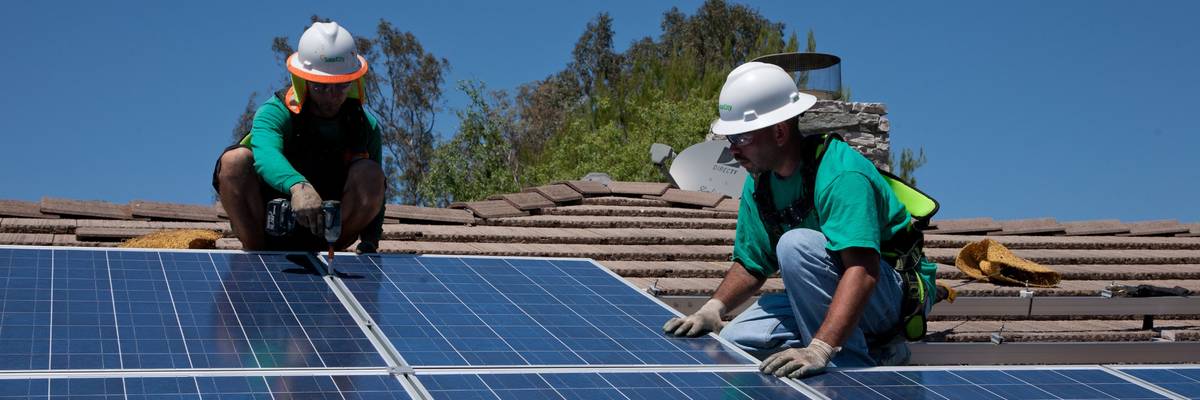
Built on a simple premise to lower energy costs, modernize the grid, and protect consumers where they are most vulnerable, the Energy Bills Relief Act is an urgent path forward that deserves swift passage by Congress.
As tensions in the Middle East once again drive oil prices upward, the ripple effects are hitting household budgets at the worst possible time. While the economy took center stage in 2024 and energy affordability was at the crux of the 2025 elections in Georgia, New Jersey, and Virginia, today, millions of Americans are still opening astronomical utility bills and struggling to make the payments. Nearly 20 million households nationwide are behind on their utility bills, and Americans collectively owe more than $20 billion in unpaid energy costs. If gas prices continue to climb, more families will have to make difficult trade-offs every month just to keep the lights on.
To make matters worse, instead of addressing the cost-of-living crisis, Congress scaled back the very policies designed to expand domestic energy supply, modernize the grid, and lower bills, despite energy prices being a bipartisan priority. Dismantling programs and incentives, such as production credits for wind and solar projects, through the One Big Beautiful Bill, has injected instability into energy markets at precisely the moment when Americans need relief most. With an aging grid that is too old to keep up with rising demand from data centers and electrification, compounded by extreme weather, states are completely unprotected, facing spiraling costs and potential blackouts.
The reality is that a majority of voters support solar energy, as demonstrated by recent polling and GoodPower’s own research, which shows broad support across the ideological spectrum. Even in today’s polarized climate, lawmakers in red and blue states alike have found common ground on protecting ratepayers. Congress came together as recently as 2021 to pass the Bipartisan Infrastructure Law, while historically, federal programs like the Weatherization Assistance Program and ENERGY STAR have drawn long-standing bipartisan support for their focus on lowering costs. We have seen how, when lowering costs is the priority, progress is possible.
That’s why the Energy Bills Relief Act isn’t just welcome, but an urgent path forward that deserves swift passage by Congress. Built on a simple premise to lower energy costs, modernize the grid, and protect consumers where they are most vulnerable, the bill was introduced by Reps. Sean Casten (D-Ill.) and Mike Levin (D-Calif.) to put workers and families at the center of America’s energy future.
The bill is built on tested programs to lower energy bills, strengthen reliability, and protect households from unfair costs.
For one, the legislation would restore incentives for domestic clean energy production, cut permitting delays that hold up critical projects, expand access to community and household solar, and invest in modernizing the grid. We know this strategy works to lower costs. A recent analysis shows that states with more renewable power didn't experience the price spikes seen elsewhere.
Just as important, the legislation cracks down on price gouging by energy companies and prevents the administration from using “energy emergencies” to prolong more expensive, outdated coal plants. It reinforces accountability, ensuring that large new energy users, including massive data centers, contribute to grid upgrades instead of shifting costs onto existing ratepayers. States such as Michigan have already moved in this direction by adopting policies to protect ratepayers from unfair cost allocation, but we need a consistent federal standard. Voters agree, with our polling showing they overwhelmingly show strong support for policies that crack down on price gouging by energy companies (74%).
Some may argue that now is not the time and that there are other policies, but the truth is, we can’t afford to wait. Every year we delay grid upgrades, households pay billions more because of grid congestion, outages, and fuel price swings. These disruptions aren’t mere inconveniences. They impact families’ livelihoods.
The bill is built on tested programs to lower energy bills, strengthen reliability, and protect households from unfair costs. Right now, families care far more about their monthly bills than about partisan victories. If lawmakers are serious about lowering energy bills and helping the American families they claim to serve, advancing this legislation would be a real step forward toward an energy system that is reliable, affordable, and built for the future.
Dear Common Dreams reader, It’s been nearly 30 years since I co-founded Common Dreams with my late wife, Lina Newhouser. We had the radical notion that journalism should serve the public good, not corporate profits. It was clear to us from the outset what it would take to build such a project. No paid advertisements. No corporate sponsors. No millionaire publisher telling us what to think or do. Many people said we wouldn't last a year, but we proved those doubters wrong. Together with a tremendous team of journalists and dedicated staff, we built an independent media outlet free from the constraints of profits and corporate control. Our mission has always been simple: To inform. To inspire. To ignite change for the common good. Building Common Dreams was not easy. Our survival was never guaranteed. When you take on the most powerful forces—Wall Street greed, fossil fuel industry destruction, Big Tech lobbyists, and uber-rich oligarchs who have spent billions upon billions rigging the economy and democracy in their favor—the only bulwark you have is supporters who believe in your work. But here’s the urgent message from me today. It's never been this bad out there. And it's never been this hard to keep us going. At the very moment Common Dreams is most needed, the threats we face are intensifying. We need your support now more than ever. We don't accept corporate advertising and never will. We don't have a paywall because we don't think people should be blocked from critical news based on their ability to pay. Everything we do is funded by the donations of readers like you. When everyone does the little they can afford, we are strong. But if that support retreats or dries up, so do we. Will you donate now to make sure Common Dreams not only survives but thrives? —Craig Brown, Co-founder |
As tensions in the Middle East once again drive oil prices upward, the ripple effects are hitting household budgets at the worst possible time. While the economy took center stage in 2024 and energy affordability was at the crux of the 2025 elections in Georgia, New Jersey, and Virginia, today, millions of Americans are still opening astronomical utility bills and struggling to make the payments. Nearly 20 million households nationwide are behind on their utility bills, and Americans collectively owe more than $20 billion in unpaid energy costs. If gas prices continue to climb, more families will have to make difficult trade-offs every month just to keep the lights on.
To make matters worse, instead of addressing the cost-of-living crisis, Congress scaled back the very policies designed to expand domestic energy supply, modernize the grid, and lower bills, despite energy prices being a bipartisan priority. Dismantling programs and incentives, such as production credits for wind and solar projects, through the One Big Beautiful Bill, has injected instability into energy markets at precisely the moment when Americans need relief most. With an aging grid that is too old to keep up with rising demand from data centers and electrification, compounded by extreme weather, states are completely unprotected, facing spiraling costs and potential blackouts.
The reality is that a majority of voters support solar energy, as demonstrated by recent polling and GoodPower’s own research, which shows broad support across the ideological spectrum. Even in today’s polarized climate, lawmakers in red and blue states alike have found common ground on protecting ratepayers. Congress came together as recently as 2021 to pass the Bipartisan Infrastructure Law, while historically, federal programs like the Weatherization Assistance Program and ENERGY STAR have drawn long-standing bipartisan support for their focus on lowering costs. We have seen how, when lowering costs is the priority, progress is possible.
That’s why the Energy Bills Relief Act isn’t just welcome, but an urgent path forward that deserves swift passage by Congress. Built on a simple premise to lower energy costs, modernize the grid, and protect consumers where they are most vulnerable, the bill was introduced by Reps. Sean Casten (D-Ill.) and Mike Levin (D-Calif.) to put workers and families at the center of America’s energy future.
The bill is built on tested programs to lower energy bills, strengthen reliability, and protect households from unfair costs.
For one, the legislation would restore incentives for domestic clean energy production, cut permitting delays that hold up critical projects, expand access to community and household solar, and invest in modernizing the grid. We know this strategy works to lower costs. A recent analysis shows that states with more renewable power didn't experience the price spikes seen elsewhere.
Just as important, the legislation cracks down on price gouging by energy companies and prevents the administration from using “energy emergencies” to prolong more expensive, outdated coal plants. It reinforces accountability, ensuring that large new energy users, including massive data centers, contribute to grid upgrades instead of shifting costs onto existing ratepayers. States such as Michigan have already moved in this direction by adopting policies to protect ratepayers from unfair cost allocation, but we need a consistent federal standard. Voters agree, with our polling showing they overwhelmingly show strong support for policies that crack down on price gouging by energy companies (74%).
Some may argue that now is not the time and that there are other policies, but the truth is, we can’t afford to wait. Every year we delay grid upgrades, households pay billions more because of grid congestion, outages, and fuel price swings. These disruptions aren’t mere inconveniences. They impact families’ livelihoods.
The bill is built on tested programs to lower energy bills, strengthen reliability, and protect households from unfair costs. Right now, families care far more about their monthly bills than about partisan victories. If lawmakers are serious about lowering energy bills and helping the American families they claim to serve, advancing this legislation would be a real step forward toward an energy system that is reliable, affordable, and built for the future.
As tensions in the Middle East once again drive oil prices upward, the ripple effects are hitting household budgets at the worst possible time. While the economy took center stage in 2024 and energy affordability was at the crux of the 2025 elections in Georgia, New Jersey, and Virginia, today, millions of Americans are still opening astronomical utility bills and struggling to make the payments. Nearly 20 million households nationwide are behind on their utility bills, and Americans collectively owe more than $20 billion in unpaid energy costs. If gas prices continue to climb, more families will have to make difficult trade-offs every month just to keep the lights on.
To make matters worse, instead of addressing the cost-of-living crisis, Congress scaled back the very policies designed to expand domestic energy supply, modernize the grid, and lower bills, despite energy prices being a bipartisan priority. Dismantling programs and incentives, such as production credits for wind and solar projects, through the One Big Beautiful Bill, has injected instability into energy markets at precisely the moment when Americans need relief most. With an aging grid that is too old to keep up with rising demand from data centers and electrification, compounded by extreme weather, states are completely unprotected, facing spiraling costs and potential blackouts.
The reality is that a majority of voters support solar energy, as demonstrated by recent polling and GoodPower’s own research, which shows broad support across the ideological spectrum. Even in today’s polarized climate, lawmakers in red and blue states alike have found common ground on protecting ratepayers. Congress came together as recently as 2021 to pass the Bipartisan Infrastructure Law, while historically, federal programs like the Weatherization Assistance Program and ENERGY STAR have drawn long-standing bipartisan support for their focus on lowering costs. We have seen how, when lowering costs is the priority, progress is possible.
That’s why the Energy Bills Relief Act isn’t just welcome, but an urgent path forward that deserves swift passage by Congress. Built on a simple premise to lower energy costs, modernize the grid, and protect consumers where they are most vulnerable, the bill was introduced by Reps. Sean Casten (D-Ill.) and Mike Levin (D-Calif.) to put workers and families at the center of America’s energy future.
The bill is built on tested programs to lower energy bills, strengthen reliability, and protect households from unfair costs.
For one, the legislation would restore incentives for domestic clean energy production, cut permitting delays that hold up critical projects, expand access to community and household solar, and invest in modernizing the grid. We know this strategy works to lower costs. A recent analysis shows that states with more renewable power didn't experience the price spikes seen elsewhere.
Just as important, the legislation cracks down on price gouging by energy companies and prevents the administration from using “energy emergencies” to prolong more expensive, outdated coal plants. It reinforces accountability, ensuring that large new energy users, including massive data centers, contribute to grid upgrades instead of shifting costs onto existing ratepayers. States such as Michigan have already moved in this direction by adopting policies to protect ratepayers from unfair cost allocation, but we need a consistent federal standard. Voters agree, with our polling showing they overwhelmingly show strong support for policies that crack down on price gouging by energy companies (74%).
Some may argue that now is not the time and that there are other policies, but the truth is, we can’t afford to wait. Every year we delay grid upgrades, households pay billions more because of grid congestion, outages, and fuel price swings. These disruptions aren’t mere inconveniences. They impact families’ livelihoods.
The bill is built on tested programs to lower energy bills, strengthen reliability, and protect households from unfair costs. Right now, families care far more about their monthly bills than about partisan victories. If lawmakers are serious about lowering energy bills and helping the American families they claim to serve, advancing this legislation would be a real step forward toward an energy system that is reliable, affordable, and built for the future.