SUBSCRIBE TO OUR FREE NEWSLETTER
Daily news & progressive opinion—funded by the people, not the corporations—delivered straight to your inbox.
5
#000000
#FFFFFF
To donate by check, phone, or other method, see our More Ways to Give page.
Daily news & progressive opinion—funded by the people, not the corporations—delivered straight to your inbox.
The plastics revolution has left devastation in its wake. We must move beyond this era of waste and toxic pollution.
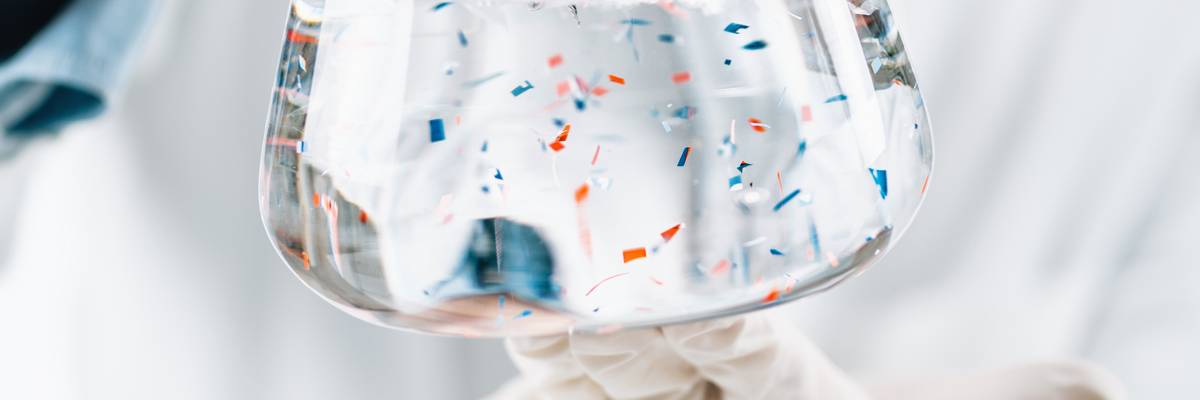
Microplastics, those miniscule particles smaller than 5 millimeters which plastics physically break down into, have now infiltrated every part of the planet – from the highest point of the Himalayas; to the deepest depths of the sea; to the snow of Antarctica. They penetrate all layers of ocean and are often mistaken for zooplankton and consumed by fish. Consequently, people of coastal countries and islands who are highly dependent on the sea for food are consuming microplastic contaminated fish.
Scientists have recently detected microplastics in human blood, breast milk, heart arteries, lungs, testicles, brains and placentas, foreboding serious human health consequences.
A 2024 study found that 99 percent of seafood samples in stores and West Coast fishing boats were contaminated with microplastics. Plastics, made from oil and gas and toxic chemicals and manufactured largely in poor, communities of color in Texas and Louisiana, are a major source of greenhouse emissions and air pollution. Plastic recycling is a master myth, given 5-6 percent are actually recycled in the U.S. as of 2021, despite a century of existence.
When I first learned that plastic flakes filled my lightweight winter jacket, I thought “great”—recycling plastic rather than throwing it away. But I have since learned what Judith Enck, author of The Problem with Plastics, and other critics prescribe: the best thing we can do is reduce the use of plastic in our lives to bring our planet back from this runaway pollution. Yes, we can re-use as much as certain plastic allows, which is not back to itself like wood, paper, metal, and glass. It is “down-cycled” at best, like the filling in my jacket, before disposed in a landfill, or incinerated, or dumped unconscionably in a poor, developing country.
Invented a century ago, plastic is now ubiquitous, having increased from about 2 million tons annually in 1950 to one half billion tons a year today, and projected to triple by 2060. Plastics are derived from fossil fuels, which are converted into chemical components such as ethylene and propylene—the building blocks for plastics. They were first manufactured as nylon and PVC, then boosted by use in WWII and subsequently Increased by the middle-class love affair with single-use products, such as straws, coffee cups, and water bottles. Agricultural fields are polluted with plastic through the use of plastic-contaminated sewage sludge. irrigation water, and plastic films to suppress weeds. These then decompose into microplastic and enter streams, rivers and, ultimately, the ocean.
With the growth of renewable technologies replacing fossil fuels, oil and gas corporations are aggressively promoting plastics, such that greenhouse gases from plastics are poised to surpass those of coal. Because of the plethora of toxic chemicals added to it, plastics are now associated with the rise of non-communicable diseases such as diabetes, reproductive cancer, and cardiovascular diseases.
The plastics industry aims to account for one-half of oil and gas demand by 2050, unless (and that is a questionable unless) the world’s countries can reverse the failed 2025 Plastics Convention.
Stop using single-use plastics, which constitute some 40 percent of plastics today. This would immediately reduce throwaway plastic, greenhouse gas emissions, our exposure to hundreds of toxic chemicals in plastic, and diminish ocean pollution. Further, critics advocate never using plastic to package food because research shows that chemicals can migrate from plastic food packaging into food.
One thousand strategies with tens of thousands of people in the lead advocating for city, state and federal bans on single-use plastics are needed. Surveys indicate that the public (both Republicans and Democrats) support ‘a pause’ in new manufacturing facilities and legislation to protect oceans from further plastic pollution.
Beyond Plastics provides a guide for Meals on Wheels, restaurants and dry cleaners to reduce use of throwaway plastics and also invites organized groups to join them as an affiliate and to use the model legislation they provide.
Women lead the charge against plastics. Author Judith Enck recounts the story of nearly a dozen women, some from Cancer Alley and the Gulf Coast, whose unstinting activism has blocked plastic industries from their neighborhoods.
For decades the US and higher-income countries have exported much of their plastic waste to low-income countries – an environmental injustice on a massive scale. Researchers found that poor people living in more than 25 developing countries burn the flammable plastic waste to cook and heat their home, making plastic pollution a “daily health and survival issue.” Women in poor countries., responsible for all the household chores and childcare, inhale disproportionately these toxic plastic fumes. Additionally, smoke from chimneys in packed slum neighborhoods contaminates everything: people, water sources, soil and crops.
Plastics, “the terrible debris of progress,” is an immense environmental injustice. We must stop this juggernaut.This country and this world are at a monumental crossroads. US voters have an opportunity to beat back the forces of fascism and confront the billionaires who are rigging the economy, our media system, and our democracy, making it increasingly impossible for ordinary people to get by. We’re not just talking about the election. We’re talking about what must be done once these fascist elements are vanquished from power. We need a bolder set of solutions than what either major party has so far been willing to offer and a working-class movement ready to fight like hell for it. Trump didn't emerge from nowhere. The conditions that fueled MAGA authoritarianism were created by decades of radical neoliberal economic policies and a corrupt political system dominated by corporate interests. They slashed taxes on the super-rich, promising that the benefits would trickle down. They said giveaways to the corporate titans would make life more affordable for the rest of us. It was all bullshit. And when a bitter, betrayed populace searches for someone to blame, right-wing demagogues have little trouble finding scapegoats. People know when they're being lied to, but you won't hear any of this from the corporate media. Only independent journalism—powered and funded by people who believe in building a better world—can deliver truly trustworthy daily news. If you share our vision, please contribute whatever you can to sustain our work. |
Microplastics, those miniscule particles smaller than 5 millimeters which plastics physically break down into, have now infiltrated every part of the planet – from the highest point of the Himalayas; to the deepest depths of the sea; to the snow of Antarctica. They penetrate all layers of ocean and are often mistaken for zooplankton and consumed by fish. Consequently, people of coastal countries and islands who are highly dependent on the sea for food are consuming microplastic contaminated fish.
Scientists have recently detected microplastics in human blood, breast milk, heart arteries, lungs, testicles, brains and placentas, foreboding serious human health consequences.
A 2024 study found that 99 percent of seafood samples in stores and West Coast fishing boats were contaminated with microplastics. Plastics, made from oil and gas and toxic chemicals and manufactured largely in poor, communities of color in Texas and Louisiana, are a major source of greenhouse emissions and air pollution. Plastic recycling is a master myth, given 5-6 percent are actually recycled in the U.S. as of 2021, despite a century of existence.
When I first learned that plastic flakes filled my lightweight winter jacket, I thought “great”—recycling plastic rather than throwing it away. But I have since learned what Judith Enck, author of The Problem with Plastics, and other critics prescribe: the best thing we can do is reduce the use of plastic in our lives to bring our planet back from this runaway pollution. Yes, we can re-use as much as certain plastic allows, which is not back to itself like wood, paper, metal, and glass. It is “down-cycled” at best, like the filling in my jacket, before disposed in a landfill, or incinerated, or dumped unconscionably in a poor, developing country.
Invented a century ago, plastic is now ubiquitous, having increased from about 2 million tons annually in 1950 to one half billion tons a year today, and projected to triple by 2060. Plastics are derived from fossil fuels, which are converted into chemical components such as ethylene and propylene—the building blocks for plastics. They were first manufactured as nylon and PVC, then boosted by use in WWII and subsequently Increased by the middle-class love affair with single-use products, such as straws, coffee cups, and water bottles. Agricultural fields are polluted with plastic through the use of plastic-contaminated sewage sludge. irrigation water, and plastic films to suppress weeds. These then decompose into microplastic and enter streams, rivers and, ultimately, the ocean.
With the growth of renewable technologies replacing fossil fuels, oil and gas corporations are aggressively promoting plastics, such that greenhouse gases from plastics are poised to surpass those of coal. Because of the plethora of toxic chemicals added to it, plastics are now associated with the rise of non-communicable diseases such as diabetes, reproductive cancer, and cardiovascular diseases.
The plastics industry aims to account for one-half of oil and gas demand by 2050, unless (and that is a questionable unless) the world’s countries can reverse the failed 2025 Plastics Convention.
Stop using single-use plastics, which constitute some 40 percent of plastics today. This would immediately reduce throwaway plastic, greenhouse gas emissions, our exposure to hundreds of toxic chemicals in plastic, and diminish ocean pollution. Further, critics advocate never using plastic to package food because research shows that chemicals can migrate from plastic food packaging into food.
One thousand strategies with tens of thousands of people in the lead advocating for city, state and federal bans on single-use plastics are needed. Surveys indicate that the public (both Republicans and Democrats) support ‘a pause’ in new manufacturing facilities and legislation to protect oceans from further plastic pollution.
Beyond Plastics provides a guide for Meals on Wheels, restaurants and dry cleaners to reduce use of throwaway plastics and also invites organized groups to join them as an affiliate and to use the model legislation they provide.
Women lead the charge against plastics. Author Judith Enck recounts the story of nearly a dozen women, some from Cancer Alley and the Gulf Coast, whose unstinting activism has blocked plastic industries from their neighborhoods.
For decades the US and higher-income countries have exported much of their plastic waste to low-income countries – an environmental injustice on a massive scale. Researchers found that poor people living in more than 25 developing countries burn the flammable plastic waste to cook and heat their home, making plastic pollution a “daily health and survival issue.” Women in poor countries., responsible for all the household chores and childcare, inhale disproportionately these toxic plastic fumes. Additionally, smoke from chimneys in packed slum neighborhoods contaminates everything: people, water sources, soil and crops.
Plastics, “the terrible debris of progress,” is an immense environmental injustice. We must stop this juggernaut.Microplastics, those miniscule particles smaller than 5 millimeters which plastics physically break down into, have now infiltrated every part of the planet – from the highest point of the Himalayas; to the deepest depths of the sea; to the snow of Antarctica. They penetrate all layers of ocean and are often mistaken for zooplankton and consumed by fish. Consequently, people of coastal countries and islands who are highly dependent on the sea for food are consuming microplastic contaminated fish.
Scientists have recently detected microplastics in human blood, breast milk, heart arteries, lungs, testicles, brains and placentas, foreboding serious human health consequences.
A 2024 study found that 99 percent of seafood samples in stores and West Coast fishing boats were contaminated with microplastics. Plastics, made from oil and gas and toxic chemicals and manufactured largely in poor, communities of color in Texas and Louisiana, are a major source of greenhouse emissions and air pollution. Plastic recycling is a master myth, given 5-6 percent are actually recycled in the U.S. as of 2021, despite a century of existence.
When I first learned that plastic flakes filled my lightweight winter jacket, I thought “great”—recycling plastic rather than throwing it away. But I have since learned what Judith Enck, author of The Problem with Plastics, and other critics prescribe: the best thing we can do is reduce the use of plastic in our lives to bring our planet back from this runaway pollution. Yes, we can re-use as much as certain plastic allows, which is not back to itself like wood, paper, metal, and glass. It is “down-cycled” at best, like the filling in my jacket, before disposed in a landfill, or incinerated, or dumped unconscionably in a poor, developing country.
Invented a century ago, plastic is now ubiquitous, having increased from about 2 million tons annually in 1950 to one half billion tons a year today, and projected to triple by 2060. Plastics are derived from fossil fuels, which are converted into chemical components such as ethylene and propylene—the building blocks for plastics. They were first manufactured as nylon and PVC, then boosted by use in WWII and subsequently Increased by the middle-class love affair with single-use products, such as straws, coffee cups, and water bottles. Agricultural fields are polluted with plastic through the use of plastic-contaminated sewage sludge. irrigation water, and plastic films to suppress weeds. These then decompose into microplastic and enter streams, rivers and, ultimately, the ocean.
With the growth of renewable technologies replacing fossil fuels, oil and gas corporations are aggressively promoting plastics, such that greenhouse gases from plastics are poised to surpass those of coal. Because of the plethora of toxic chemicals added to it, plastics are now associated with the rise of non-communicable diseases such as diabetes, reproductive cancer, and cardiovascular diseases.
The plastics industry aims to account for one-half of oil and gas demand by 2050, unless (and that is a questionable unless) the world’s countries can reverse the failed 2025 Plastics Convention.
Stop using single-use plastics, which constitute some 40 percent of plastics today. This would immediately reduce throwaway plastic, greenhouse gas emissions, our exposure to hundreds of toxic chemicals in plastic, and diminish ocean pollution. Further, critics advocate never using plastic to package food because research shows that chemicals can migrate from plastic food packaging into food.
One thousand strategies with tens of thousands of people in the lead advocating for city, state and federal bans on single-use plastics are needed. Surveys indicate that the public (both Republicans and Democrats) support ‘a pause’ in new manufacturing facilities and legislation to protect oceans from further plastic pollution.
Beyond Plastics provides a guide for Meals on Wheels, restaurants and dry cleaners to reduce use of throwaway plastics and also invites organized groups to join them as an affiliate and to use the model legislation they provide.
Women lead the charge against plastics. Author Judith Enck recounts the story of nearly a dozen women, some from Cancer Alley and the Gulf Coast, whose unstinting activism has blocked plastic industries from their neighborhoods.
For decades the US and higher-income countries have exported much of their plastic waste to low-income countries – an environmental injustice on a massive scale. Researchers found that poor people living in more than 25 developing countries burn the flammable plastic waste to cook and heat their home, making plastic pollution a “daily health and survival issue.” Women in poor countries., responsible for all the household chores and childcare, inhale disproportionately these toxic plastic fumes. Additionally, smoke from chimneys in packed slum neighborhoods contaminates everything: people, water sources, soil and crops.
Plastics, “the terrible debris of progress,” is an immense environmental injustice. We must stop this juggernaut.