

SUBSCRIBE TO OUR FREE NEWSLETTER
Daily news & progressive opinion—funded by the people, not the corporations—delivered straight to your inbox.
5
#000000
#FFFFFF
To donate by check, phone, or other method, see our More Ways to Give page.
Daily news & progressive opinion—funded by the people, not the corporations—delivered straight to your inbox.

Public could face up to a $380M bill if buyout firms leave western communities with abandoned wells as investors use greenwashing to promote fossil fuel expansion.
Investments by private equity firms in nearly 2,700 oil and gas wells on federal and tribal lands across the western United States could leave taxpayers with a cleanup bill of up to $380 million, according to a new report released today by the Private Equity Stakeholder Project and Public Citizen.
Without significant changes in financial protections mandated by the U.S. government, the drillers backed by private equity buyout firms on federal lands will only set aside $5.7 million to clean up after the wells are depleted, the study found, a meager 1.5 percent of the potential cleanup costs. The study’s scope includes wells that either have been drilled or are projected to be drilled based on federal drilling permits approved since 2017. The $380 million cleanup bill represents a slice of the total cost of cleaning up from oil and gas drilling on public lands, which has been estimated to be at least $6 billion, and potentially much more.
The involvement of an industry infamous for borrowing money to buy up assets and stripping their value should be of major concern to government officials that oversee oil and gas drilling. The U.S. Bureau of Land Management in July released a long-overdue proposal to strengthen oil and gas cleanup requirements for federal lands. These regulations, once made final, will ensure that oil and gas drillers cannot evade the cost of cleanup. Further legislation is needed to ensure that fossil fuel companies cannot use bankruptcy to ditch their responsibility to clean up oil and gas wells.
“If these companies declare bankruptcy and abandon these oil and gas wells, the public faces major costs, and buyout firms escape with their profit and zero consequences,” said Alan Zibel, an oil and gas researcher with Public Citizen who co-authored the report. “Private equity buyout firms have a history of buying up businesses in declining industries, extracting profits and then filing for bankruptcy once the assets the company owns become worthless. That means federal and state officials must be on high alert as these firms pick up and consolidate oil and gas assets discarded by oil and gas giants.”
The report identified 19 private equity firms, including Blackstone, Carlyle Group, Apollo Global Management, KKR, and Warburg Pincus, that have invested billions of dollars into fossil fuel companies in recent years. These firms have invested in 35 different oil and gas companies that received permits to drill on federal lands since 2017.
Many private equity firms pitch themselves as environmentally responsible owners and release public net-zero pledges, while much of the industry claims to focus on reducing emissions and mitigating impacts on nearby communities, according to the report. The private equity industry is also playing a key role in efforts to certify and promote methane gas. This strategy would boost production of methane gas far into the future, undermining the transition away from fossil fuels.
“The public bears great costs associated with private equity firms' expansion of their fossil fuel holdings,” said report co-author Nichole Heil, research and campaign coordinator with the Private Equity Stakeholder Project. “Private equity firms have relied heavily on institutional investors like public employee pension funds to help fund this expansion. However, they have also now shifted the burden of clean up onto taxpayers. These large opaque financial actors are not only worsening the climate crisis, but also exacerbating the state’s fiscal status and harming local communities.”
Colorado currently has the largest potential cleanup bill from private equity-backed oil and gas companies, the study found. The state could see potentially a significant shortfall of $161 million when the time comes to deal with abandoned wells on federal and tribal lands alone. More than 75 percent of Colorado’s wells on federal lands are on lands leased by private equity backed drillers.
Public Citizen is a nonprofit consumer advocacy organization that champions the public interest in the halls of power. We defend democracy, resist corporate power and work to ensure that government works for the people - not for big corporations. Founded in 1971, we now have 500,000 members and supporters throughout the country.
(202) 588-1000
“Nobody tell us that we’re going to Guantánamo Bay,” said one victim. “Just like kidnapping.”
Anger is growing this week as more details emerge about the Trump administration's detention of Somali immigrants at Guantánamo Bay, including people with no criminal records and, in at least one case, a legal US resident.
At least eight Somali men are being held at the notorious US military base in Cuba, while as many as 12 Somali deportees have passed through the facility in recent weeks, according to Sahan Journal. Seven of those still there are being held at Camp 6, which was originally opened under the George W. Bush administration during the so-called War on Terror to imprison men and at least one child in a facility rife with torture and other abuse.
“I never expected to be arrested in a prison established for the terrorists who I fled from,” 31-year-old Hassan Abdi Abtidoon told Sahan Journal's Mohamud Farah on Tuesday.
Among the other Somalis held at Guantánamo is 31-year-old Adam Abdullah, a St. Paul, Minnesota, resident who came to the United States as a legal asylum seeker in 2023. Abdullah had a work permit and Social Security number, operated an auto repair business, and had no criminal record, according to Minnesota court records. His past involvement with law enforcement appeared to include nothing more than two parking tickets.
US Immigration and Customs Enforcement (ICE) agents arrested Abdullah in December during the Trump administration's deadly Operation Metro Surge campaign, which targeted Minnesota's large Somali community amid widespread racist demonization and dehumanization by Republicans, including President Donald Trump.
After months of detention in Minnesota, Kentucky, and Louisiana, Abdullah said officials told him he was being deported to Somalia.
"From Miami, they say, 'OK, now we go to Somalia. Then, first we go to Cuba for refueling, and then we go to some other countries to Somalia,'" Abdullah told Minnesota Public Radio (MPR) earlier this month.
The flight never left Cuba. Abdullah was taken to Camp 6, where he has remained.
Another Somali detainee, Sakariye Abdi Mohamed, described Camp 6 as "the worst place ever I've been in my life."
Mother Jones reported Wednesday that Mohamed was one of 12 Somali men forced onto a plane last month by ICE agents, who told them they were being deported to Somalia.
"Nobody tell us that we're going to Guantánamo Bay," Mohamed said. "Just like kidnapping."
This is APPALLING. The Trump administration is detaining multiple random Somali immigrants with no criminal record at Guantanamo Bay, seemingly because the White House ordered ICE specifically to detain Somalis at Gitmo as part of its effort to punish an ethnic group Trump has attacked.
[image or embed]
— Aaron Reichlin-Melnick (@reichlinmelnick.bsky.social) September 16, 2026 at 12:36 PM
Seven or eight of the men reportedly remain at Guantánamo, where some of them have described being shackled and subjected to frigid temperatures. Detainees also said they are subjected to constant surveillance, including cameras inside bathrooms.
The US Department of Homeland Security claimed the flight included "some of the worst of the worst" with criminal histories including assault, weapons offenses, robbery, theft, drug charges, and drunken driving.
However, Sahan Journal reported that the attorney for six of the eight detainees had found that all had final deportation orders but no additional criminal charges. Four were recent asylum seekers, and two had lived in the United States for decades.
“The administration says we send the worst of the worst to Guantánamo,” US Sen. Tina Smith (D-Minn.) told MPR Wednesday. “Yet in the case of Mr. Abdullah, there has been no evidence presented about what he has done, no explanation for why he has been detained. I mean, there is really has been no due process.”
The Trump administration's use of Guantánamo for immigration detention is not unprecedented. The facility—which experts have placed within the centuries-long story of American concentration camps—has a long history as an offshore immigration detention site that predates the post-9/11 military prison camp.
During the George H.W. Bush administration, thousands of Haitian refugees fleeing political violence were intercepted at sea and taken to Guantánamo. The Clinton administration continued the policy and, at its peak in 1994, roughly 14,300 Haitians were held there. Clinton officials subsequently used Guantánamo for Cuban migrants, more than 30,000 of whom were jailed at the base.
The treatment of Somali immigrants at Guantánamo has also drawn renewed criticism regarding who has and has not been targeted for deportation from the United States.
Human rights activist Suleiman Bolaleh, who has documented atrocities committed under former US-backed Somali President Mohamed Siad Barre, noted in a recent social media post that Somali immigrants with no criminal records are being rounded up and sent to Guantánamo, while members of the former dictatorship's ruling family and senior figures have lived in the United States.
"Men once positioned at the heart of a regime accused of mass killings, war crimes, and ethnic cleansing continue to reside openly in American communities," Bolaleh wrote. "The contrast is jarring: An immigrant [who] has no criminal record is detained at Guantánamo, while figures tied to that dictatorship’s violent apparatus remain unexamined and unaccountable."
Multiple legal challenges to the Trump administration's use of Guantánamo Bay for immigrant detention have been launched.
Meanwhile, the longstanding habeas litigation involving War on Terror detainees at Guantánamo continues. In May, Somali national Guled Hassan Duran—who has been held at Guantánamo since 2006 without being charged—asked a federal court to order his release after years of inaction on his habeas petition.
Duran was approved for release by senior US officials in 2021, but remains imprisoned at Guantánamo along with 14 other men—none of whom has ever been convicted of any terrorism-related crimes. Former Bush administration and US military officials have said that most of the men and boys who were ever imprisoned at Guantánamo were innocent, and that senior administration officials knew it but kept them locked up for political purposes.

With that additional $930 per household spent on energy, the analysis says the total cost due to higher prices from the war is closer to $1760.
A recently published economic analysis estimates that President Donald Trump’s illegal war with Iran has cost US consumers an average of $1,760 per household—including a total of $121 billion in extra spending on energy alone—since the conflict began less than 8 months ago.
The war, which Trump launched without congressional authorization in February, has sent energy prices spiking across the world, as Iran responded to US attacks by shutting down commercial shipping traffic in the Strait of Hormuz.
According to the estimate by Moody’s Analytics, US consumers have spent over $121 billion—or $930 per household—more on energy since the start of the war, accounting for more than half of the total added expenses imposed by the conflict.
Mark Zandi, chief economist at Moody’s, told CNBC in an interview published Wednesday that the analysis reflects the fact that "consumers are under a lot of financial pressure."
The analysis also finds that the average US household has spent an additional $425 due to higher interest rates caused by the war, as well as $405 for higher military spending, which Zandi explained to CNBC would come from footing the bill through either national debt expansion or increased taxes.
Karthik Sankaran, senior research fellow in geoeconomics at the Quincy Institute for Responsible Statecraft, argued in an analysis published Thursday that relief for US energy consumers could be a long way off given recent developments in the Middle East, including Houthi fighters seizing a key port city along the Red Sea and a drone strike on a Saudi oil pipeline.
Sankaran warned that nations worldwide have far fewer options now to cushion against energy shocks than they did at the start of the war.
"Seaborne storage on tankers has been depleted," Sankaran wrote, "the US Strategic Petroleum Reserve has released about 130 million barrels, and the world’s largest importer, China, is increasing imports to 7.2 million barrels per day, up from a low of 6 million barrels in June."
Sankaran noted that, as uncomfortable as high energy prices are for Americans, the situation is even more dire in the Global South.
"The spike in diesel prices is likely to hit countries in the Global South especially hard," Sankaran explained. "The higher energy density of diesel means that it is used to power trucks, buses, and agricultural equipment, making it the most important fuel in poorer countries where individual ownership of automobiles is much less widespread."
A Tuesday report from CNN highlighted how high fuel prices have led to protests across the globe, including in Syria, Guatemala, France, Portugal, and the Philippines.
The protests in Syria have been particularly intense, CNN noted, as demonstrators on Sunday "blocked the Hasaka–Deir ez-Zor highway, where they burned tires and stopped oil tankers."
Muaz Al Abdullah, Syria analyst at global conflict monitor Armed Conflict Location and Event Data (ACLED), told CNN that "fuel availability, rising prices, falling purchasing power, and poor services are all reasons that have accumulated public resentment," which have led to demands that the country oust its energy minister.
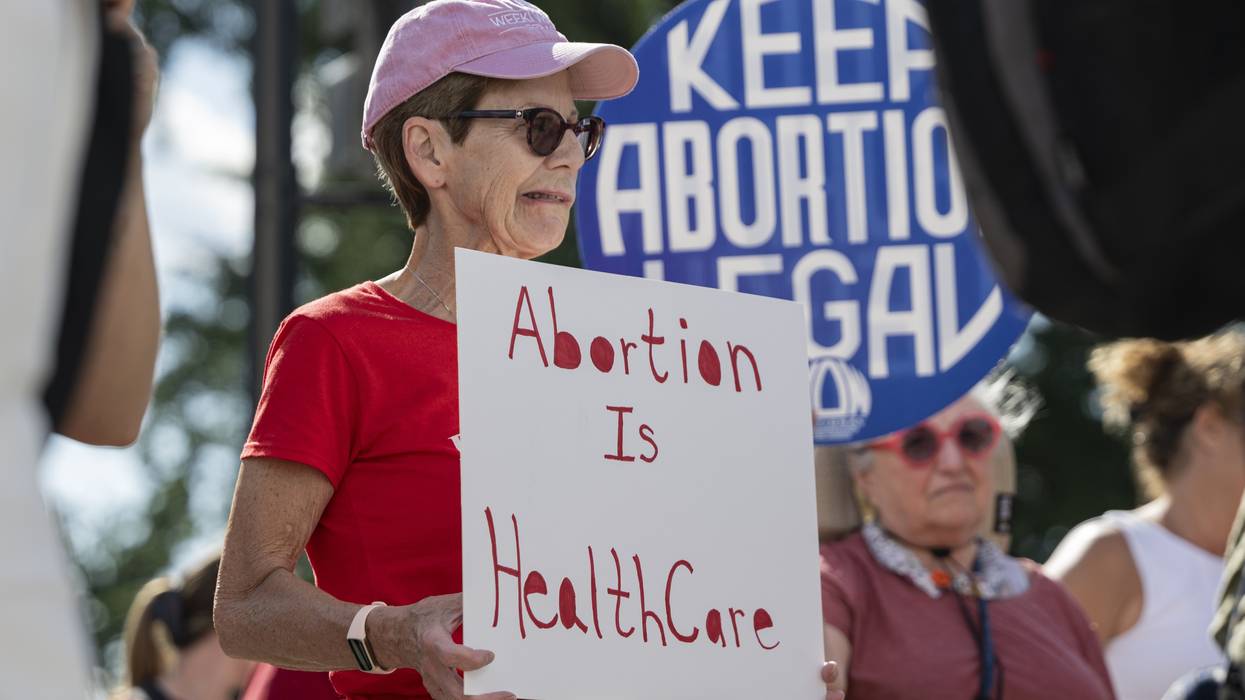
"My husband and I were crushed when we learned that we would never get to bring our daughter home. We wanted mercy for our daughter—but Oklahoma's laws denied us that."
When Sheena Hamlin found out she was pregnant with a daughter she named Ellie, she was "very excited," until her doctors discovered at around 21 weeks that the baby "might survive birth, but that her lungs were so severely underdeveloped that she would suffocate almost as soon as the umbilical cord was cut."
"The alternative would be to terminate the pregnancy," explains a lawsuit filed in state court on Wednesday, but that "was not an option in Oklahoma," where a pair of laws force patients whose "pregnancy will end in miscarriage, stillbirth, or the death of an infant shortly after birth" to leave the state if they choose abortion.
Hamlin and her husband, who have a son, "agreed that they did not want their daughter to suffer," so she flew to Illinois for care shortly before Thanksgiving in 2024, and spent nearly $4,000 out of pocket. After the "devastating" experience, the couple "underwent genetic testing and confirmed that Ellie had Meckel-Gruber syndrome."
They "pursued in vitro fertilization (IVF) and genetic counseling to ensure that they would not have another child affected by the condition," and while Hamlin is now expecting a baby, she "has found it anxiety-inducing to be pregnant in Oklahoma again, particularly in the period leading up to the anatomy scan," the suit says.
Hamlin is not alone. Magon Hoffman is also suing over the abortion bans that prevented her from receiving care. Hoffman and her husband were similarly "thrilled" to learn of her pregnancy in 2022, but a series of unfortunate revelations soon followed: a "huge blood clot," placenta previa, unusual growth measurements, and ultimately, anencephaly.
As Hoffman's doctor, a maternal-fetal medicine specialist, explained at her 19-week anatomy scan, her fetus had a "tiny bit of brain floating around," but "no skull." In other words, the complaint says, "her pregnancy was not viable. Her baby had no chance of survival. Ms. Hoffman was devastated."
Because Oklahoma only allows abortion care to save a patient's life, the doctor warned that she would have to leave the state to end the pregnancy. He then "tried to convince Ms. Hoffman to carry to term," the filing notes, even though "there was nothing they could do to help the baby survive," and if the child lived "for a few hours or a few days... she would be 'blind and 'dying.'"
Hoffman and her husband, who already had a daughter, drove eight hours and spent $3,000 to get abortion care in New Mexico. Afterward, the suit says, she "struggled with anxiety and depression from the loss of a pregnancy she desperately wanted and the stigma and fear she experienced in being forced to seek care out of state."
"In June 2024, while still using birth control, Ms. Hoffman unexpectedly became pregnant for a third time. She was terrified... At no point during the pregnancy was Ms. Hoffman able to believe she would bring home a healthy baby," the complaint continues. She was relieved to deliver another daughter—and does not want any more children, "so her husband decided to have a vasectomy, though he would have preferred to wait. Ms. Hoffman still fears another unexpected pregnancy."
The group Oklahoma Call for Reproductive Justice has joined Hoffman and Hamlin as plaintiffs, as have two of the OB-GYNs who treated them, Drs. Sarah Mashburn and Elizabeth Pinard, who were both born and raised in Oklahoma.
"I have dedicated my life to caring for women from all across our state, including those facing fatal fetal conditions. Doctors routinely provide care according to what our patients want for themselves and their families, but Oklahoma's abortion bans have left me feeling helpless," Pinard said in a statement.
"I don't want to tell my patients to leave the state when I can easily give them the care they need right here in my office," she stressed. "This is not how healthcare should work. My patients deserve access to all of their options for care, and the state needs to allow us to do our jobs."
Hamlin said that "my husband and I were crushed when we learned that we would never get to bring our daughter home. We wanted mercy for our daughter—but Oklahoma's laws denied us that."
Hoffman similarly said that "Oklahoma turned the hardest day of my life into weeks of needless suffering on top of our grief," and the state "is failing families like mine. I'm bringing this case so Oklahomans can have the power again to make the best decisions for our families."
The defendants in the case are the state attorney general and health commissioner, Oklahoma County's district attorney, and executive directors of the state's boards for medical licensing and osteopathic examiners, all of whom have yet to comment on the suit.
The plaintiffs are represented by attorneys at Herbert Smith Freehills Kramer and the Center for Reproductive Rights, a powerhouse that has fought for abortion rights in several high-profile state and federal cases. The legal group's president, Nancy Northup, said Wednesday that "it's unthinkable the pain these families went through because of Oklahoma's abortion bans."
"Forcing women to give birth knowing they won't be bringing a baby home is pure cruelty," she argued. "Every pregnant person should get to decide what is best for their family based on their own beliefs, values, and medical circumstances. The government should have no place in that. We're suing to hold the state accountable for the pain lawmakers have caused these families, and to make sure no other families suffer in this way."
Oklahoma is among the states where anti-choice policymakers have ramped up their longtime efforts to restrict reproductive freedom in the wake of the US Supreme Court's right-wing supermajority overturning Roe v. Wade. Another state on that list is Texas, whose abortion ban led to the 2022 reversal.
In Texas on Wednesday, Tierra Walker's family sued various state officials. The San Antonio woman died in December 2024, at the age of 37, after being denied an abortion. Although such denials have killed a growing number of pregnant people in Texas and beyond, this is the first case of its kind, tying a preventable death to a state abortion ban.
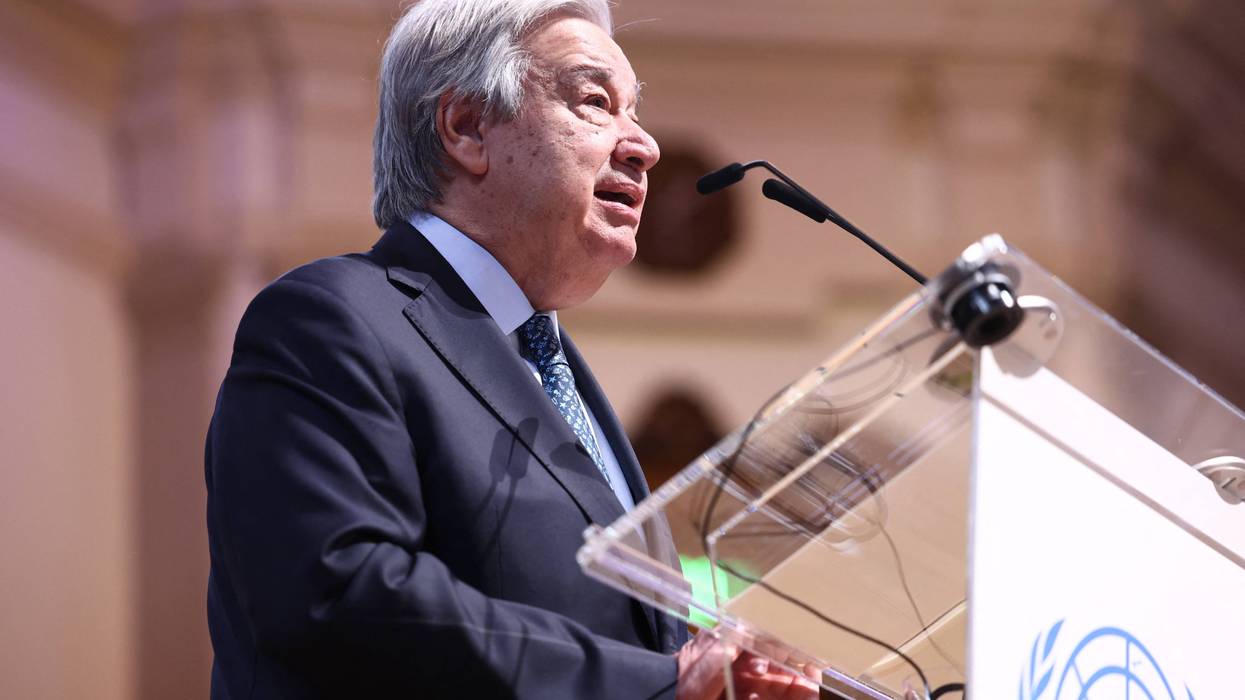
UN Secretary-General António Guterres called on leaders to work together to solve the growing problem of global inequality at the UN General Assembly.
High-level meetings at the United Nations General Assembly are set to begin next week, and they come at a time when the threats to humanity posed by the climate emergency and artificial intelligence have never been clearer.
Those crises demand that policymakers work together to prevent catastrophic, permanent planetary heating and the creation of "runaway" AI technology, suggested UN Secretary-General António Guterres on Wednesday, but he emphasized that another pernicious, destructive problem cannot be overlooked.
Guterres also named "the intolerable deepening of inequalities" as another "existential threat" that leaders must address at the upcoming meetings.
Earlier this year, the anti-poverty group Oxfam International released a report showing that combined billionaire wealth stood at $18.2 trillion in 2025, having risen from $3.6 trillion in 2009.
At the same time, the number of food-insecure people on Earth shot up to 2.2 billion in 2024, rising from 1.5 billion a decade earlier.
"Nearly half of the world lives in poverty while a select few continue to gain extreme wealth and power," said Oxfam at the time. "The amount of wealth owned by the poorest half of the world is less than the amount owned by just the 12 richest billionaires. This extreme concentration of wealth isn’t just making life less affordable for most of us, it’s creating harmful divisions. Billionaires, corporations, and politicians are taking away people’s basic ability to make choices about their futures and suppressing dissenting voices."
An analysis focused on wealth inequality in the US by the Center for American Progress (CAP) this week also showed that the gap between the ultrarich and the rest of the American public has gotten significantly wider in less than two years since President Donald Trump was reelected, with hundreds of billions of dollars in financial backing from billionaires including tech CEO Elon Musk.
"Since Trump took office, the ultrawealthy (top 0.1%) gained more than 8,000 times as much wealth per household as those in the bottom half of the wealth distribution," said CAP. "To provide an example of the extremity and exponential nature of wealth inequality in the United States, the 10 wealthiest Americans alone saw their real fortunes grow by a combined $259 billion over the same period, according to the Bloomberg Billionaires Index—about $26 billion per person, or 22 million times more than the bottom half’s $1,200 per household."
Economic experts have found that the growing inequality crisis is entirely solvable. As Common Dreams reported last year, research from the European Union Tax Observatory found that a global 2% minimum tax on billionaire wealth "would generate about $250 billion in tax revenue—from just 3,000 individuals," raising about $50 billion in Europe alone.
In 2024, finance ministers at a meeting of the Group of 20 in Rio de Janeiro agreed on the need to tax the richest people in the world at a higher rate to address persistent and worsening economic inequality.
As Common Dreams reported Tuesday, a study published in The Lancet found that the global inequality that's been worsened by Trump's foreign aid cuts could be addressed by a 3% wealth tax—raising a small amount of money compared to the total wealth of the world's richest people, but enough to save 29.5 million lives over the next four years.
Climate campaigners in Africa, who have demanded an end to French company Total Energies' East African Crude Oil Pipeline (EACOP), agreed with Guterres' point that "climate, inequality, and international cooperation are inseparable."
"People living along EACOP's path," said the group Stop EACOP, "are the first to bear the environmental and economic costs of decisions made far from their communities."

"The fact that Trump immediately resorts to new threats is further proof that stronger EU-Canada cooperation is both wise and necessary," said a Belgian member of the European Parliament.
In the wake of President Donald Trump's threats of annexation and economic warfare, Canada is distancing itself from the United States and moving toward a first-of-its-kind "associate membership" with the European Union. Trump suggested on Wednesday that this could be a "hostile act."
European Commission President Ursula von der Leyen first introduced the idea earlier that day of Canada deepening its ties with the EU economic bloc during a meeting of the European Parliament in Strasbourg, France.
"Democracies have the freedom to choose with whom to work," Von der Leyen said, suggesting that an "Alliance for the Future" between the EU and Canada would expand cooperation on technology, economic security, and military industry, among other critical areas.
She described such cooperation as a necessity in an "openly hostile world."
This was, in part, a not-so-subtle dig at Trump, who has antagonized Canada during his second term by slapping 50% tariffs on roughly $20 billion of Canadian imports and repeatedly floating the idea of making it the "51st state."
Europe, too, has been targeted by Trump's trade war, while the president has repeatedly threatened the sovereignty of Greenland, an autonomous territory of Denmark, by suggesting the United States could take control of it—including by military force.
An "associate membership" in the EU for a non-European nation has no formal basis in EU statute. One EU diplomat told Reuters that "nobody really knows what it means."
However, Trump described it as an unmistakable slight and issued more threats.
"I think it’s laughable, the whole thing with Canada," he told reporters on Wednesday. "Canada’s been a terrible trade partner."
If the two reached an agreement, Trump said he may retaliate further, heightening the tariffs that have led to sharp declines in European exports to the US and driven up costs for American consumers, especially low-income households.
"If they do that, if I think it’s at all a hostile act, I will put very serious tariffs or stop trading with Europe on many things," Trump said. "So if they do that, if Europe does that with a bad intention, if it’s a good intention, that’s fine.”
"If it’s a bad intention, we’ll put very heavy tariffs on Europe," he reiterated.
Speaking at the European Parliament on Thursday, Canadian Prime Minister Mark Carney—whose compatriots are now more inclined to view the US as an "enemy" than an "ally," according to a recent poll—said of Von der Leyen's proposal, "We welcome this ambition."
While he did not discuss the specifics of becoming an associate member, he agreed that Canada's relationship with the EU should move beyond the current Canada-European Union Comprehensive Economic and Trade Agreement (CETA).
"Canada and Europe should secure our strategic autonomy through deep cooperation in the full range of strategic capabilities, including critical minerals, defense industrial capacity, AI and compute, energy security, space, and payments," he said.
Carney stressed that the act was not one of hostility toward the United States and that he did not seek to form "a third bloc in order to become a great-power rival." But he also seemed to draw a contrast with Trump's bellicosity.
"We do not seek power to dominate others," he said. "On the contrary, we are pursuing resilience so that no one can control our open markets, impair our sovereignty, threaten our territorial integrity, or undermine our freedoms, our democracies, our rule of law."
Trump has not yet specified what tariff rate he'd seek to impose against Europe or what would signify that the alliance with Canada had a "bad intention."
But Kathleen Van Brempt, a Belgian social-democratic politician and member of the European Parliament, said that "the fact that Trump immediately resorts to new threats is further proof that stronger EU-Canada cooperation is both wise and necessary."
"He does not find the idea ridiculous; he fears it because it would weaken his divide-and-conquer tactics and his ability to wield illegal tariffs as political and economic weapons," she wrote on social media.
"He might not react when you lift a finger," she added. "But he will understand when you raise a fist."
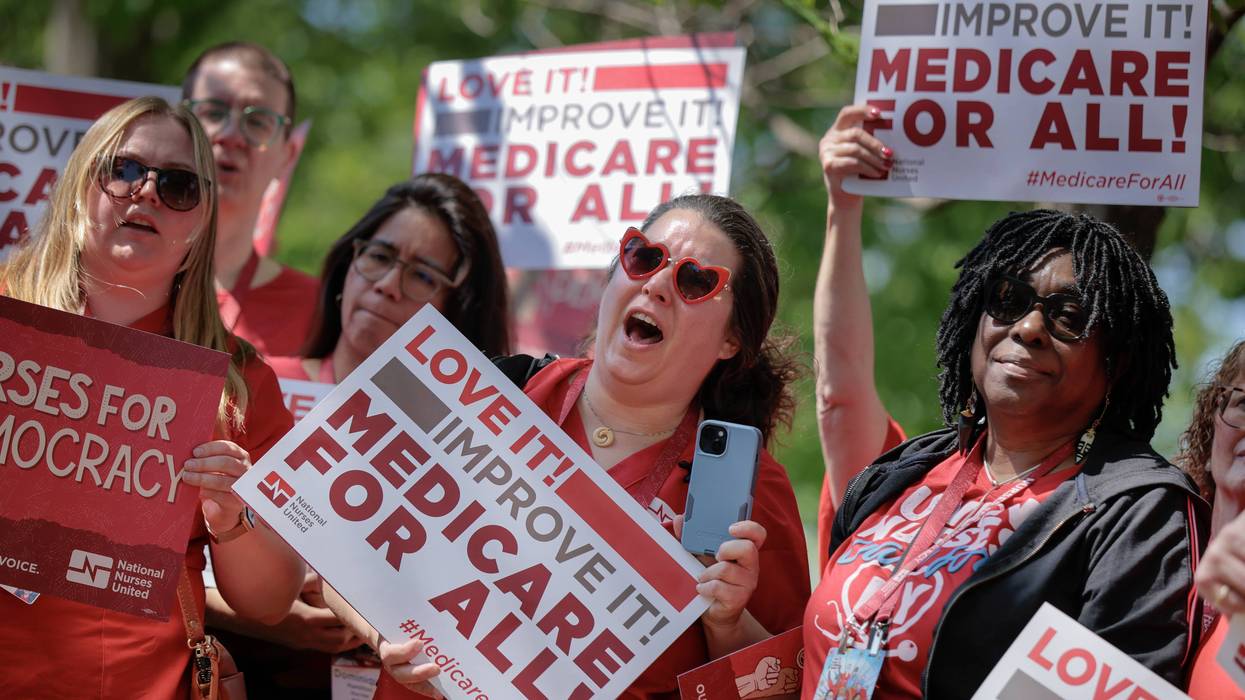
"Voters see this election not just as a referendum on Trump... but as a repudiation of the entire political system."
A poll released by the Cook Political Report on Thursday shows US voters in key swing districts overwhelmingly dislike artificial intelligence companies—but are feeling warm about Medicare for All.
In total, the poll finds that voters in 37 swing districts across the US view AI companies unfavorably by a two-to-one margin, with 64% of voters saying they're more concerned than excited about the technology, compared to just 31% who say they're more excited than concerned.
Opposition to AI data centers is even stronger, as 63% of voters say they would oppose building one in their communities, compared to just 28% in favor. Additionally, 44% express strong opposition to local data center construction, making strong opposition higher than overall support.
At the same time, the poll finds much stronger support for Medicare for All, with 62% of swing-district voters having a favorable view of the policy, compared to 34% who said they were opposed. The intensity gap is also notable, as 41% of voters sat they have a strongly favorable view of Medicare for All, while just 25% have a strongly unfavorable view.
This does not mean that these voters are socialists, however, as the poll shows just 32% expressing a positive view of socialism, compared to 58% expressing a negative view. When it comes to Democratic Socialists of America (DSA), 37% of voters say they have a favorable view of the group, compared to 56% who say they have an unfavorable view.
Regardless of specifics about policy and ideology, the poll shows a deep dissatisfaction with the American political system and an openness to major changes.
Amy Walter, editor-in-chief of the Cook Political Report, commented in a social media post that "the most interesting finding was that these voters see this election not just as a referendum on Trump (who’s underwater by 16 points), but as a repudiation of the entire political system."
Walter pointed to a striking finding among independent voters in the survey, who vastly preferred a candidate promising to change the whole political system compared to a candidate who would just be a check on Trump.
"This also suggests," Walter added, "that these voters would want a Dem-led Congress that focuses more on an agenda that tackles corruption and institutional rot than one that focuses solely on Trump and his overreach."
Yasmin Radjy, executive director of Swing Left, said that the Cook Political poll "tracks with everything we're hearing" in conversations with voters.
The idea that the "system is broken," wrote Radjy, "is overwhelmingly the top issue/theme we hear from voters across the ideological and partisan spectrum—even more than affordability!”

"Resorting to international institutions and international law is a legitimate right of the State of Palestine and a peaceful, legal means to protect the Palestinian people and their rights," said the PA Foreign Ministry.
For the second year in a row, the US government under President Donald Trump has denied diplomatic visas for Palestinian Authority leader Mahmoud Abbas and other Palestinian officials—a move condemned by the PA and outside critics as counter to international peace efforts.
Abbas, who leads both the PA and the Palestine Liberation Organization (PLO), was to attend meetings at the United Nations in New York City next week, but the move by the US State Department means he will have to deliver remarks and participate in meetings via video link.
In a statement, the foreign ministry of the PA called the refusal of visas “an unjustified measure that runs counter to efforts to rebuild trust, develop Palestinian-US relations, and create the necessary political climate for implementing the two-state solution and achieving peace and stability.”
The US State Department said the refusal of visas was justified, in part, because of the efforts by Palestinian leaders to seek redress for crimes against their people carried out by the Israeli government by pursuing actions through both the International Criminal Court (ICC) and International Court of Justice (ICJ) as well as for efforts toward "unilateral recognition" with UN members states.
Palestinian pursuits at the ICC and ICJ, the State Department charged in a statement, constitute "taking actions to internationalize the Israeli-Palestinian Conflict." While the US has steadfastly backed Israel politically and armed its military during recent years while it has carried out what experts, including those backed by the UN itself, have characterized as "genocide" in Gaza and grave crimes in the Occupied West Bank, the US accused Palestinian leaders of "glorifying terrorism" to justify the visa bans.
Critics of the US move called it a betrayal of its obligations as host nation of the United Nations General Assembly (UNGA), headquartered in New York City.
Mohammed Maree, head of media and public opinion studies at the Egyptian Center for Strategic Studies, an independent research institution, said that denying Abbas entry to attend the UNGA "confirms that Washington has effectively abandoned its supposed role in the Middle East peace process and fully embraced Israel’s agenda."
The move, added Maree, "once again exposes the stark contradiction between Washington’s rhetoric about peace and its actual policies. In the medium term, it will become clear that attempting to eliminate the two-state solution in line with Israel’s wishes will bring neither stability nor the peace the region desperately needs. Instead, it will only fuel further escalation and uncertainty."
In its statement, the PA Foreign Ministry rejected the US stance.
"Resorting to international institutions and international law is a legitimate right of the State of Palestine and a peaceful, legal means to protect the Palestinian people and their rights," it stated. "This cannot be equated with the policies of occupation, settlement expansion, annexation, displacement, and settler violence [by Israelis]—actions that pose the real threat to the two-state solution and prospects for peace."
The ministry further called for the Trump administration to reconsider its decision and "halt the policy of sanctions and restrictions, and engage in a direct, serious Palestinian-US dialogue to address any points of contention."
"The State of Palestine," the statement concluded, "will continue to fulfill its national and international obligations, pursue its reform program, and utilize peaceful political, diplomatic, and legal means to defend its people's rights, stressing that it will not relinquish their right to self-determination, freedom, and stability."
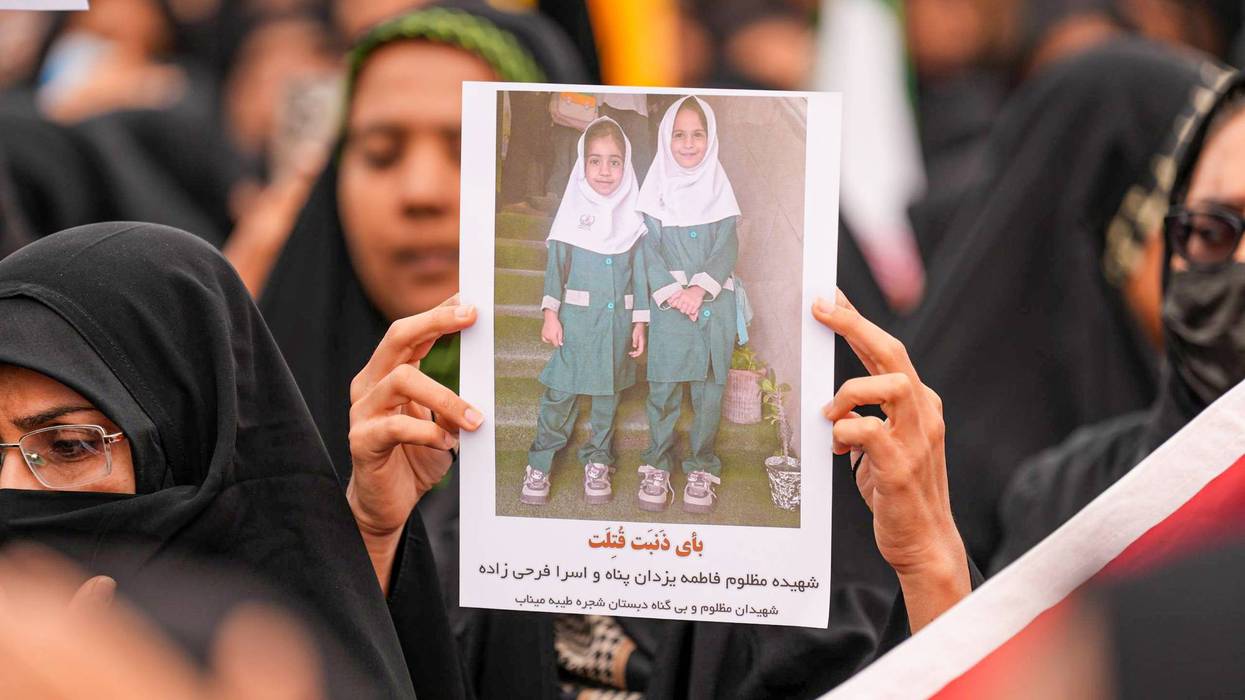
The report points to statements by Defense Secretary Pete Hegseth that signaled the "deprioritization of civilian harm mitigation and of compliance with international law."
Human rights experts who led a United Nations fact-finding mission in Iran are set to submit their findings to the UN Human Rights Council that the United States likely committed war crimes in the early days of the US-Israeli war there.
The experts examined evidence regarding two airstrikes that killed at least 178 civilians, including 120 children, according to Iranian authorities—the bombing of the Shajareh Tayyebeh School in Minab and an attack on a sports complex and residential area in Lamerd, both of which took place on February 28.
The report notes that the Pentagon has not released findings of its own investigation into the Minab school bombing and the US has not accepted responsibility for the attack, although Reuters reported on an internal probe that found US forces were likely behind the strike.
Despite the lack of a response from the US to the fact-finding mission's requests for information, the experts said they found "reasonable grounds to believe that the US committed the war crime of launching an indiscriminate attack resulting in loss of life or injury to civilians or damage to civilian objects."
The report pointed to the Trump administration's "deprioritization of civilian harm mitigation and of compliance with IHL [international humanitarian law], expressed through public statements by senior US leadership, including the president and the secretary of defense."
Secretary of Defense Pete Hegseth said early in the war that the US would dispense with “stupid rules of engagement”—which are meant to protect civilians under international law—and said US forces would rain "death and destruction from the sky all day long."
The Pentagon also relied on "outdated targeting data" when deciding to bomb the school in Minab, which was clearly identified as a school for young children, said the report.
"The mission considers that the United States' failure to update information in relation to the school in its targeting databases and to verify that the building was a military objective before launching the attack went beyond mere negligence," reads the report. "Rather, the US directed the strikes at the building of the school while being aware of a substantial risk of striking a civilian object and acting recklessly as regards the possibility that this would happen."
More than 150 people were killed in the attack, including 120 children.
The experts also said the sports complex and residential area in Lamerd on February 28 were "clearly identifiable" as civilian targets, and that the weapon used in the attack—Lockheed Martin-manufactured Precision Strike Missiles (PrSM) that disperse tungsten pellets over a wide area—show that the strike "constituted an indiscriminate attack in violation of the principle of distinction" between civilians and military targets.
The missiles, said the experts, "could not be directed at a specific military objective and their effects on civilians and civilian objects could not be limited as required by IHL. The US was under the IHL obligation to employ weapons systems and ammunition that satisfied these requirements."
The UN team said 22 civilians were killed in the attack in Lamerd, including four schoolchildren and a two-year-old girl who was killed while playing in front of her home.
US Central Command has denied responsibility for the attack, but top US officials in March boasted that the military had "made history" by using the PrSM for the first time in the war.
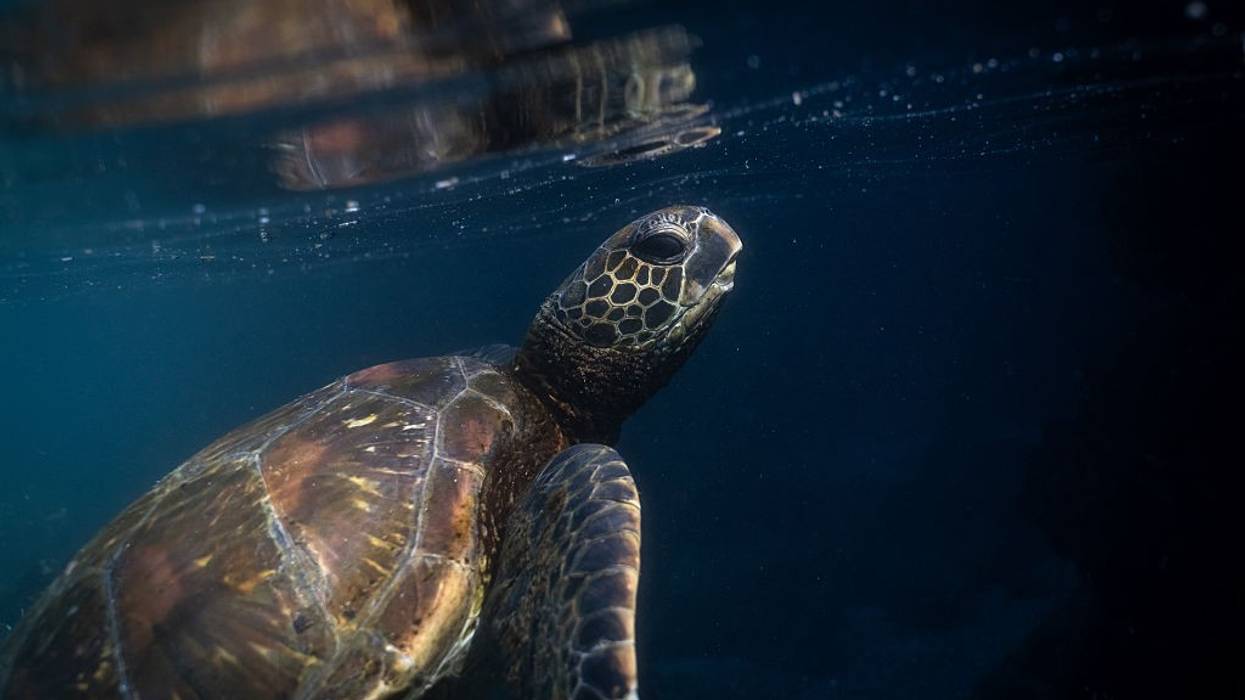
"What the administration is proposing to do is take all of the force out of what we have all understood the act to mean: Don't kill endangered species."
"Hmmmm.... I've done a lot of horrible things lately. What is another evil, cruel, nonsensical idea? Ya know, one that would have irreversible generational consequences?"
That's how University of Alberta professor Timothy Caulfield responded to The New York Times' Wednesday reporting that President Donald Trump's administration "is quietly moving to strip a core protection" of the Endangered Species Act (ESA), according to an internal memo obtained by the newspaper.
Signed by US Fish and Wildlife Service Director Brian Nesvik, the memo interprets the law to mean that only the intentional killing or wounding of a protected species is illegal. The Times explained that excluding accidental acts "would be a seismic shift," because "the killing of endangered animals almost always happens incidentally, in the course of economic activity."
The memo is dated September 14—the same day that another Trump administration attack on the ESA took effect. That legally contested earlier policy rescinds the regulatory definition of "harm" under the 1973 law so that extractive industries can degrade crucial habitats. When the move was announced in July, critics called it "a death knell for America’s wildlife."
The effort revealed by the Times goes even further. Andrew Mergen, a Harvard University law professor who previously supervised ESA litigation at the US Department of Justice, told the paper that "this is really an assault on the act like we've never seen before."
"What the administration is proposing to do is take all of the force out of what we have all understood the act to mean: Don't kill endangered species," he said. "What they seem to be saying in this document is, it doesn't matter if you killed an endangered species if you didn't mean to."
Brett Hartl, government affairs director at the Center for Biological Diversity, said in a statement that "this stabs at the very heart of the Endangered Species Act by giving federal approval to the killing of some of America's most beloved wildlife... The Trump administration is desperate to annihilate environmental protections, but this incredibly radical measure is both cruel and profoundly unlawful. Killing endangered wildlife is illegal, whether that's your purpose or not."
"If you chop down a tree full of endangered birds or race a huge ship through a pod of endangered whales, you should be held accountable for your destructive acts," Hartl added. "But this administration wants to give wildlife killers a 'Get out of jail free' card. Imposing new limitations on the entire definition of take is a flagrant and illegal attempt to rewrite the Endangered Species Act via unilateral fiat. This would drive imperiled species over the cliff to extinction."
Other opponents of the plan called it "pure evil," and blasted the "perpetual villainy" of Trump's second administration—which has continued an assault on the landmark law launched during the Republican's first presidential term. All of his previous attacks on the ESA have faced resistance from conservation organizations and many members of Congress.
The rule on harm has sparked not only legal challenges from advocacy groups and state attorneys general, but also legislative pushback. In late July, US Reps. Brian Fitzpatrick (R-Pa.) and Mike Quigley (D-Ill.), co-chairs of the Congressional Animal Protection Caucus, introduced the Safeguarding Endangered Species Act, to nullify the policy.
Then, last month, Democratic US Sens. Adam Schiff (Calif.) and Sheldon Whitehouse (RI) introduced a Congressional Review Act resolution that, if passed, would repeal the policy. As the rule took effect on Monday, a Schiff spokesperson told CNN that "the senators will look to force a vote in the coming weeks."
This article has been updated with comment for the Center for Biological Diversity.
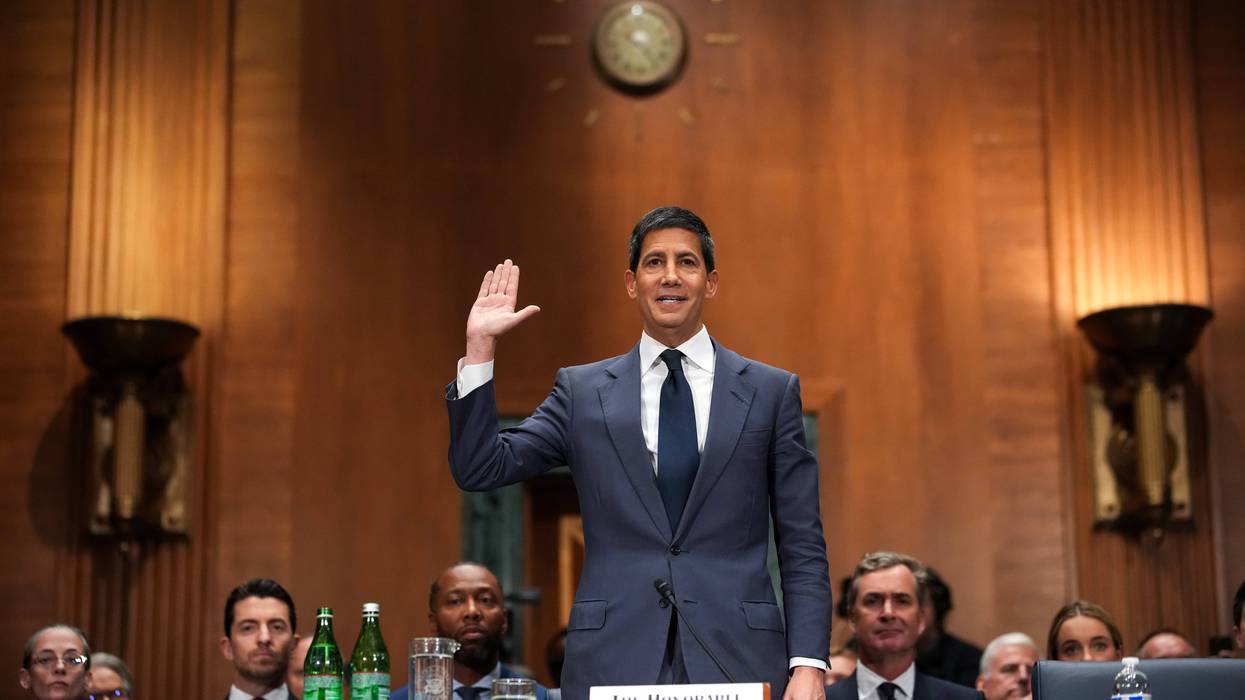
One campaigner asserted that Trump's "recklessness in the White House has pushed working families’ budgets to their breaking point."
The US Federal Reserve on Wednesday raised its benchmark interest rate for the first time since 2023, prompting renewed criticism from progressive economists and Democratic lawmakers who argue that President Donald Trump’s tariffs and warmongering are fueling inflation and further squeezing working families.
The 12-member Federal Open Market Committee unanimously lifted its federal funds target range by a quarter percentage point, to 3.75-4%, while signaling that it could raise the rate again to around 4.1% in the coming months. Fed officials cited persistently elevated inflation and said the move would support a “timelier return” to their 2% inflation target.
The increase came despite months of pressure from President Donald Trump for the central bank to cut rates. Trump has repeatedly demanded substantially lower borrowing costs, including calling for rates as low as 1%, while accusing the Fed of holding rates too high.
"Interest Rates in the United States should be 1%, or less, because we are the Best Credit in the World—BY FAR," Trump said on his Truth Social network in response to the hike. "Our Country is BOOMING with new Investment! If we stopped Trading with every country that we have a Deficit with, which is most of them, we would make, at least, 1.5 Trillion Dollars a year."
The United States is actually rated AA+ by S&P and Fitch—which is not the "best credit in the world" by any measure. Numerous nations have AAA ratings from major agencies, the highest level of creditworthiness.
"The word 'Deficit' is nothing more than a fancy word for LOSS," Trump added. "We are 'carrying' almost every country in the World, and that cannot go on any longer. LOWER THE INTEREST RATES FOR THE UNITED STATES OF AMERICA, AND FAST!"
Federal Reserve Chair Kevin Warsh—whom Trump tapped to lead the central bank—nonetheless backed the increase. The Fed's latest projections indicate that inflation will remain above its target and that most officials anticipate at least one additional rate increase before the end of the year.
The rate hike means consumers and businesses will face higher borrowing costs for mortgages, auto loans, and other debt. The average 30-year mortgage rate had already risen above 7% by Wednesday.
Referring to the worsening affordability crisis caused by Trump administration choices like tariffs and the illegal US-Israeli war on Iran, the progressive economic advocacy group Groundwork Collaborative lamented how "working families foot Trump's bill twice."
Trump's "never-ending war with Iran and his chaotic tariffs have driven inflation high enough that his own pick for chairman raised rates anyway, in a unanimous vote—a decision that will lead to higher borrowing costs for families and small businesses but does little to combat high prices from Trump’s economic mismanagement," the group said in a statement.
Groundwork Collaborative chief economist Breyon Williams said that "Trump can deny, disparage, and deflect from Americans’ economic reality all he wants, but there’s no hiding the truth: His recklessness in the White House has pushed working families’ budgets to their breaking point."
"Under his watch, inflation has skyrocketed, prices on essentials like gas and groceries have emptied wallets, and the labor market has lost steam," Williams added. "Today’s decision from the Federal Reserve confirms Americans’ fears of continued price pains to come, and its own forecast now says families will not see borrowing costs go down until 2028.”
Addressing the Fed rate hike, US Senate Minority Leader Chuck Schumer (D-NY) said Wednesday that "the chaos of Trump’s disastrous war and costly economic policies are drowning Americans in inflation. Trump has sown chaos in our economy, scared off potential investors, rattled our markets, and made it harder for American workers and businesses alike to succeed."
"Ever since taking office, Trump has taken aim at the Fed and other institutions designed to keep our economy stable and growing. That has only added to the economic chaos plaguing our country," he added. "But what does Trump care? Trump doesn’t care that Americans have to pay to more; he only cares about raking in as much money as he can off the presidency before Americans send him and his Republican Party packing."
Sen. Elizabeth Warren (D-Mass.) said during a Wednesday interview on CNN that "it's the American people who are paying the price" for Trump's policies.
"There is no happy solution at this moment based on interest rates," she added.