November, 15 2023, 12:35pm EDT
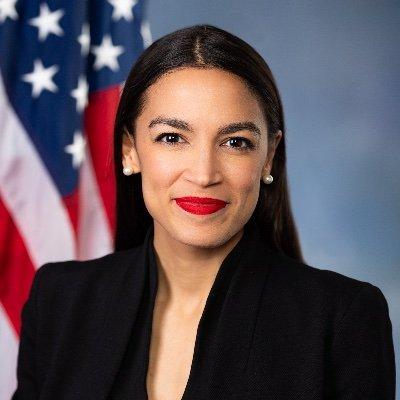
Members of Congress Call on Biden Administration to Establish a Ceasefire, Protect Children in the Gaza Strip
Today, Representatives Alexandria Ocasio-Cortez (NY-14), Mark Pocan (WI-2), and Betty McCollum (MN-4) led Members of Congress in sending a letter to President Biden, asking him to support a bilateral ceasefire in Gaza, in order to protect the one million children living there. The full letter is available here.
The letter reads in part, “We write to you to express deep concern about the intensifying war in Gaza, particularly grave violations against children, and our fear that without an immediate cessation of hostilities and the establishment of a robust bilateral ceasefire, this war will lead to a further loss of civilian life and risk dragging the United States into dangerous and unwise conflict with armed groups across the Middle East. Further, we write urging clarity on your strategic objectives for achieving de-escalation and stability in the region.”
More than 4,500 children have been killed in the Gaza Strip and another 7,695 children have sustained injuries. Additionally, at least 1,750 children have been reported missing and are presumed to be dead or trapped under rubble. Several schools in Gaza have been bombed as part of Israeli air strikes and more than half of hospitals in the Gaza Strip have completely shut down.
The letter is co-signed by Representatives Rashida Tlaib, Cori Bush, James McGovern, Mary Gay Scanlon, Raúl Grijalva, Pramila Jayapal, Joaquin Castro, Delia Ramirez, Henry Johnson, Greg Casar, Jesús “Chuy” Garcia, Bonnie Watson Coleman, Nydia Velázquez, Ayanna Pressley, Jonathan Jackson, Barbara Lee, André Carson, Jamaal Bowman, Summer Lee, Veronica Escobar, and Ilhan Omar.
The letter is endorsed by MoveOn, Amnesty International, Demand Progress, Center for International Policy, Center for Jewish Nonviolence, Churches for Middle East Peace, CIVIC, Common Defense, Friends Committee for National Legislation (FCNL), MADRE, Oxfam America, Win Without War, POMED, Working Families Party, Action Corps, Adalah Justice Project, American Friends Service Committee, Americans Justice In Palestine, Arab American Anti-Discrimination Committee (ADC), Democracy for Arab World Now, IfNotNow, Institute for Policy Studies New Internationalism Project, Jewish Voice for Peace Action, Maryknoll Office for Global Concerns, Migrant Roots Media, National Iranian American Council Action, Pax Christi Metro DC-Baltimore, Pax Christi USA, Peace Action, Peace Action Montgomery, The Duty Legacy, US Campaign for Palestinian Rights, Women for Weapons Trade Transparency and the Yemeni Alliance Committee. Quotes from those organizations follow.
“It’s welcome news that Representatives Ocasio-Cortez, Pocan, and McCollum, along with dozens of their House colleagues, are urging the Biden Administration to establish an immediate bilateral ceasefire in Israel-Palestine and asking for greater humanitarian access in all parts of Gaza,” said Hassan El-Tayyab, legislative director for Middle East policy at FCNL. “It’s critical that others follow their lead and call for a ceasefire to de-escalate this explosion of violence that has already led to the deaths of at least 11,000 civilians, including nearly 5,000 children. Every major humanitarian organization working in Gaza is pleading with the international community to reach an immediate ceasefire and open up aid access so they can continue their vital work in the Gaza Strip. It’s critical that Congress and the Administration listen before more innocent lives are lost.”
“The scale of humanitarian need in Gaza is huge – and growing exponentially by the day. Yet, right now, aid is all but impossible to deliver as bombs continue to fall. 2.2 million people are living under siege, denied safe shelter, food, water and other essentials - all while the fuel needed to deliver aid has run out,” said Scott Paul, Associate Director of Peace & Security at Oxfam America. “Israel is entitled to protect its people, but it must do so while complying with international humanitarian law. Civilians in Israel and Gaza have been paying the price for political failure and must be protected. To save lives now and in the future, we need an urgent ceasefire, an end to the siege, safe humanitarian access, and the return of all hostages.”
“This joint effort led by Representatives Ocasio-Cortez, McCollum, and Pocan urging President Biden to establish a robust bilateral ceasefire comes at a critical moment. More and more Palestinian civilians are losing their lives each day amid Israeli military operations and the unfolding of an unprecedented, man-made humanitarian catastrophe in the occupied Gaza Strip,” said Elizabeth Rghebi, Advocacy Director for the Middle East and North Africa at Amnesty International USA. “An immediate ceasefire by all parties to the conflict is the only way to prevent further loss of life, to deliver humanitarian aid to those in desperate need, and to provide an opportunity to secure the safe release of hostages.”
“We welcome this joint effort led by Representatives Ocasio-Cortez, McCollum, and Pocan calling for an urgent ceasefire to prevent further civilian deaths and deliver life-saving humanitarian aid,” said Annie Shiel, US Advocacy Director at Center for Civilians in Conflict (CIVIC). “Amid continued bombardment and ground fighting, civilians have virtually run out of options to seek safe refuge. The situation for civilians in Gaza — and especially children — is catastrophic. A ceasefire is needed immediately.”
“Over the last five weeks, Israeli airstrikes and siege have killed at least 4,609 Palestinian children, including three premature babies in Al-Shifa Hospital who had to be taken from incubators due to lack of electricity,” said Beth Miller, Political Director at Jewish Voice for Peace Action. “More children are still trapped under the rubble of buildings destroyed in Israeli bombings. No child should ever have to face the overwhelming scale and horror of the violence that Palestinian children in Gaza are experiencing. Representatives Ocasio-Cortez, McCollum, and Pocan, are pushing forward a critical demand for Palestinian children's life to be valued and protected, and for the Biden administration to finally put an end to this nightmare by calling for a ceasefire now."”
Alexandria Ocasio-Cortez is an American politician serving as the U.S. Representative for New York's 14th congressional district.
(718) 662-5970LATEST NEWS

‘Rats Run Away’: Facing Criminal Probe, Flávio Bolsonaro Flees Brazil to US After Loss to Lula
"This reveals the DNA of Bolsonarism," said one critic. "Bolsonarism is made of cowardice."
Oct 27, 2026
Just one day after vowing he would remain in Brazil to disprove allegations of money laundering, corruption, and other crimes, far-right Brazilian Sen. Flávio Bolsonaro followed in his disgraced father's footsteps by fleeing to the United States after losing a presidential election.
Bolsonaro, his wife Fernanda Bolsonaro, and their two daughters, ages 14 and 12, left Brazil for an unknown location in the United States, according to initial reporting by Isadora Teixeira at the Brasília-based news site Metrópoles, which was subsequently confirmed by other Brazilian and international media.
The Argentinian site Infobae reported that Bolsonaro and his family may have crossed into Argentina—which is run by his ally, far-right President Javier Milei—and then traveled to the US in a private jet. It is not known where the family went in the US.
Bolsonaro's brother, Eduardo Bolsonaro, lives in Texas while facing criminal punishment in Brazil after trying to use the Trump administration to pressure Brazilian authorities over the prosecution of his father, former President Jair Bolsonaro, who last year was convicted of conspiring to violently remain in power following leftist President Luiz Inácio Lula da Silva's 2022 election win.
Flávio Bolsonaro, a 45-year-old senator representing Rio de Janeiro, was defeated by Lula in Sunday's second-round election, but refused to accept the results and groundlessly demanded an annulment. The following day, Supreme Court Justice Alexandre de Moraes ordered the seizure of Bolsonaro's passport. He was supposed to have turned in the document Tuesday, but he didn't.
US President Donald Trump also cast doubt on the election's outcome, saying the contest appeared to be "rigged."
Jair Bolsonaro also fled to the United States while refusing to acknowledge his own 2022 defeat, which occurred during the administration of former President Joe Biden.
Like Trump, Bolsonaro incited a violent insurrection in his nation's capital following his loss.
Unlike Trump, Bolsonaro was held accountable for his crimes, and, in addition to a 27-year prison sentence—now being served under house arrest—is banned from running for any political office for the rest of the decade.
Now, with Trump back in the White House and Secretary of State Marco Rubio in charge at Foggy Bottom, Bolsonaro and his relatives are set to be issued US visas, a senior State Department official told The Associated Press.
The younger Bolsonaro's flight—which may have been aided by his obtaining an Italian passport in 2023—contradicts his pledge on Monday, when he said, "I have never thought about leaving the country" and "I will hand over my passports and defend myself against this travesty."
He was referring to de Morães' order to surrender his passport amid accusations of corruption, money laundering, tax evasion, and foreign currency violations.
Bolsonaro is also the subject of an inquiry pertaining to the millions of dollars he raised from a disgraced banker implicated in a massive corrupt plot to finance a biopic of Jair Bolsonaro.
The senator has not been charged and denies any wrongdoing.
Bolsonaro's flight stands in stark contrast to Lula, who spent 580 days in prison after being convicted in corruption cases stemming from the sprawling Operation Car Wash investigation.
In 2021, Brazil’s Supreme Federal Court annulled Lula’s convictions on procedural grounds, ruling that the court in Curitiba lacked jurisdiction over the cases and separately finding that former judge Sergio Moro had acted with bias in one of them. The decisions restored Lula’s political rights and eligibility to run for office, paving the way for his 2022 presidential victory over Bolsonaro.
Lula responded to the senator's departure by saying, "Unfortunately, the Bolsonaro family is like that."
"Brazil is his second homeland," the president continued, accusing Bolsonaro of "bootlicking in the United States."
Secretary-General of the Brazilian Presidency Guilherme Castro Boulos ripped Bolsonaro, saying: "Leaders face things head-on! Rats run away!”
"It is a shameful thing, which should make Brazilian society as a whole reflect, especially those who supported and voted for Flávio Bolsonaro," Boulos asserted. "He slapped his supporters in the face and left them on the side of the road."
"Almost 60 million Brazilians trusted him as political leadership to run the country, and 24 hours later, he flees," he continued. "And it's no use coming up with this talk of persecution, of dictatorship. He ran away because he must."
"This reveals the DNA of Bolsonarism," Boulos added. "Bolsonarism is made of cowardice."
Erika Hilton, a member of the Chamber of Deputies—the lower house of Brazil's Legislature—representing São Paulo for the Socialism and Liberty Party, weighed in on social media, calling Bolsonaro "a traitor to the homeland."
In the United States, Congressman Joaquin Castro (D-Texas) said on X that "losing an election is not grounds for asylum."
"Yet the Trump administration is giving Flávio Bolsonaro safe haven in the United States," he continued. "The Trump administration owes Congress answers on its role helping Bolsonaro flee Brazil in contravention of Brazilian law."
Mark Weisbrot, co-director of the Center for Economic Policy and Research (CEPR), told Common Dreams:
Trump is now the most corrupt president in US history, raking in billions from his presidency. It's no surprise when the most powerful corrupt authoritarian government in the hemisphere uses international law designed to protect the persecuted to shield another corrupt authoritarian government from criminal prosecution. Perhaps this is what is meant by the Trump-led 'Shield of the Americas.'
Francesca Emanuele, senior international policy associate at CEPR, noted that "the United States has long served as a destination for numerous right-wing Latin American political figures who fled their home countries while facing corruption allegations, criminal investigations, or accusations of grave human rights violations, including crimes against humanity."
"The list is extensive," she added, "ranging from former presidents such as Panama’s Ricardo Martinelli and Bolivia’s Gonzalo Sánchez de Lozada to dictators such as Nicaragua’s Anastasio Somoza."
Emanuele also contrasted the actions of the Bolsonaros and Lula, arguing that the latter's decision to remain in Brazil "reflected a commitment to the Brazilian people and a determination to defend his rights through the country’s own institutions, even when those institutions failed to uphold them."
"Rather than leaving Brazil," she told Common Dreams, "Lula stayed, fought to clear his name, and continued his political struggle alongside the people he sought to represent."
Keep ReadingShow Less
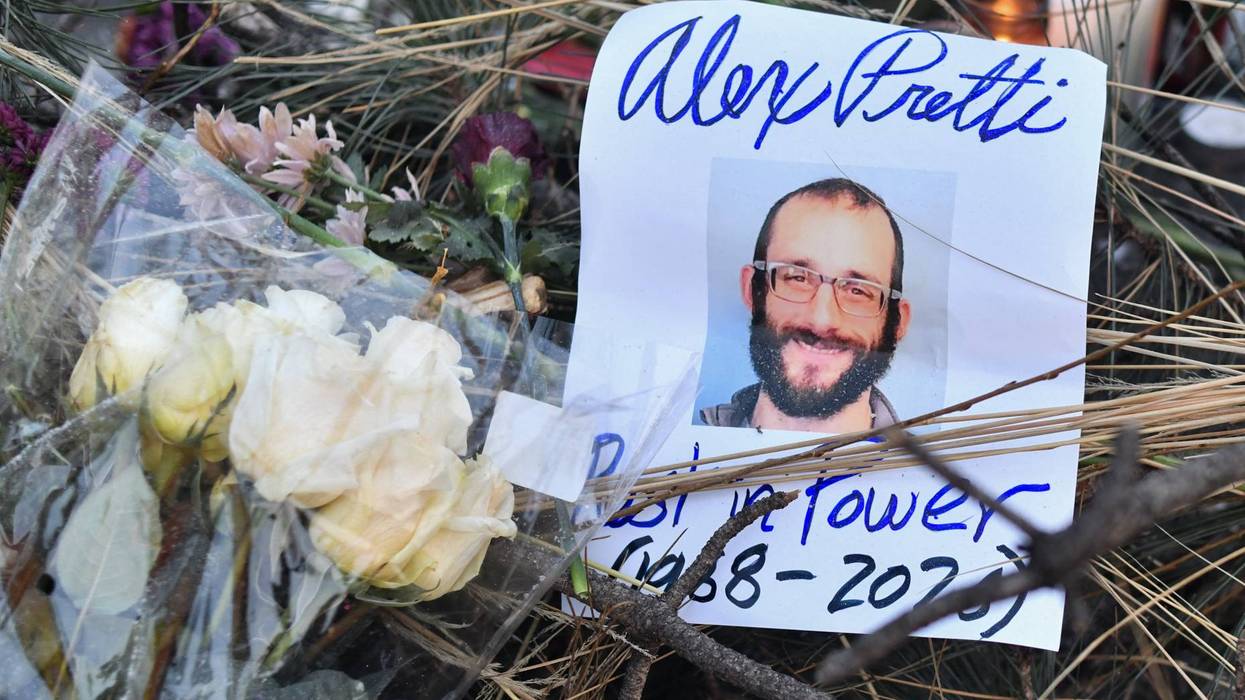
'We Want Our Son's Killers Brought to Justice,' Says Mother of Alex Pretti Months After CBP Slaying
The father of the late nurse, killed during a Trump administration crackdown on immigrants in Minnesota, urged leaders at the US Department of Justice to "do your job and stop shielding Alex's killers."
Oct 27, 2026
"I'm Michael Pretti, Alex's father. Our son Alex was shot and killed by the government—federal immigration agents—on January 24, 2026."
After thanking those gathered, that's how Michael Pretti began his remarks at a Tuesday press conference in Minneapolis, just over nine months after US Border Patrol agent Jesus Ochoa and Customs and Border Protection officer Raymundo Gutierrez fatally shot the 37-year-old intensive care nurse in the Minnesota city during President Donald Trump's "Operation Metro Surge."
Michael Pretti recalled his son's upbringing in the Midwest, and conversations about "cars, hiking, biking, or anything that came to our mind." His wife, Susan Pretti, who also spoke at the press conference, called their first-born child "exceptionally kind and caring," adding that he "did not tolerate bullies," "loved working with the veterans" he served as a nurse, and "had a deep sense of justice."
"We are not political activists," Susan Pretti stressed. Her husband pointed out that their son was observing the immigration crackdown: "He was peaceful... He was not protesting."
Federal immigration agents "executed" Alex Pretti, his father said. The family learned about his death from the media, and "that video haunts our family... I think it haunts many Americans."
After the agents "murdered our son," Susan Pretti said, "the federal government went on TV and lied about Alex. They tried to slander his memory to cover up their crime."
Members of the Trump administration have repeatedly tried to smear Pretti and others killed during the president's mass detention and deportation initiatives as "domestic terrorists" endangering agents on the ground, even as video footage has contradicted their claims.
Michael Pretti highlighted that "no one from the federal government has called us since" his son's killing. He also said that "even in our grief, we understand that investigations need to be done carefully and thoroughly. We know that the wheels of justice move slowly—but even then, there is cooperation and communication."
Instead of justice, the Pretti family has been subjected to "cruelty," he argued. "Do your job and stop shielding Alex's killers," he urged Dan Rosen, who serves as the US attorney for the District of Minnesota, and US Attorney General Todd Blanche, who leads the Department of Justice.
The parents, who live in Colorado, are "begging for the Department of Justice to do what is right," according to Susan Pretti. "We want to clear our son's name. We want the world to understand who Alex really was. We want our son's killers brought to justice once and for all."
In March, Minnesota Attorney General Keith Ellison, Hennepin County Attorney Mary Moriarty, and state Bureau of Criminal Apprehension Superintendent Drew Evans sued the Trump administration over its refusal to cooperate with state investigators probing federal immigration agents' killings of Pretti and Renee Good, both US citizens, as well as their shooting of Julio Cesar Sosa-Celis, a Venezuelan who was wounded but survived.
"The Trump administration has suggested that state prosecutors don't have jurisdiction to investigate federal officers, while Minnesota officials have said they don’t trust the federal government to investigate itself," The Associated Press noted Tuesday. "The state is still seeking the cellphones of the officers involved... and recordings of key interviews."
As The New York Times reported:
Steven L. Schleicher, a lawyer representing Mr. Pretti's parents, said the Justice Department's refusal to share basic information with the family amounted to a violation of the federal Crime Victims' Rights Act. He expressed similar sentiments in a letter he sent to Attorney General Todd Blanche in July.
Hoang Bui, a spokesman for the US attorney's office in Minnesota, did not immediately respond to a request for comment.
While the Prettis haven't yet sued over their son's homicide, their press conference comes after families of other victims launched cases in recent weeks. On October 1, Good's relatives filed a pair of lawsuits against the federal government and immigration officials over her killing and an alleged conspiracy to interfere with civil rights in Minnesota's Twin Cities.
US Immigration and Customs Enforcement agent Jonathan Ross fatally shot Good—the 37-year-old writer, poet, and mother—in her vehicle while she and her partner were observing ICE operations on January 7 in Minneapolis.
"What happened to her on January 7th and what has happened to far too many people in the last year is not what America is about," said her brother, Brent Ganger. "We can and must do better, and the Constitution must be the roadmap back to decency and the rule of law."
A week after those suits were filed, groups representing the family of Silverio Villegas González filed a legal claim against the Trump administration over an immigration agent's "execution-style killing" of the 38-year-old Mexican man in Illinois on September 12, 2025.
"We are united by the same pain that every family who has been impacted by this inhumane immigration system faces," his relatives said. "A year has not erased or diminished the ache we feel in his absence. Our family demands justice for Silverio, and we hope that those responsible for his death are held accountable."
Keep ReadingShow Less
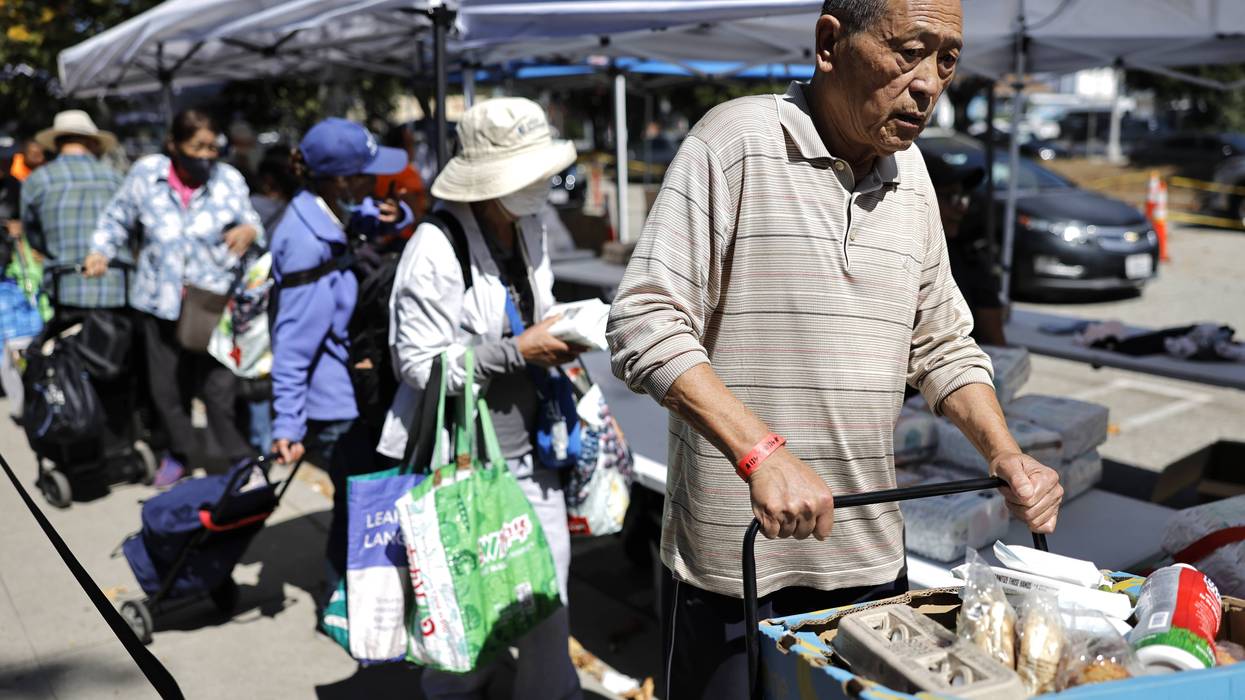
House Dems Press Trump USDA Over Aid Cuts as Seniors 'Struggle to Put Food on the Table'
"No senior should have to choose between putting food on the table, paying rent, or affording lifesaving medication."
Oct 27, 2026
A group of almost 20 Democratic lawmakers on Tuesday pressed US Agriculture Secretary Brooke Rollins to explain the adverse effects of President Donald Trump's so-called One Big Beautiful Bill Act on older Americans, including the administration's plan to eliminate a program serving nearly 700,000 low-income seniors and expanded food stamp work requirements.
"At a time when Americans continue to face elevated grocery costs, Washington Republicans enacted the One Big Beautiful Bill Act (OBBBA), which the Congressional Budget Office (CBO) estimates will reduce federal [Supplemental Nutrition Assistance Program] spending by approximately $187 billion through 2034," 18 House Democrats led by Rep. Analilia Mejia (D-NJ) wrote in a letter to Rollins.
"The law expanded SNAP’s three-month time limit and associated work requirements to certain adults ages 55 through 64, restricted states’ ability to obtain geographic waivers from those requirements, and made additional changes to state cost-sharing requirements expected to reduce SNAP participation and benefits," the letter continues.
"These cuts come as the same law provides substantial tax benefits that will help disproportionately benefit the rich, with CBO finding that the law will decrease resources available to households towards the bottom of the income distribution while increasing resources for households toward the top," the lawmakers noted.
The letter decries Trump's stated goal of eliminating the Commodity Supplemental Food Program (CSFP), which the lawmakers described as "the most extensive hunger-relief federal program for seniors and services to nearly 700,000 low-income seniors across the nation."
"The administration justified the elimination of this crucial program by focusing 'on supporting seniors through the SNAP program' as they passed a law to make SNAP more inaccessible for seniors," the letter laments. "Congress has been responsible for keeping the CSFP fully funded and maintained while the administration continues to threaten this critical federal food assistance program."
"Even so, as Americans—particularly seniors—struggle to put food on the table, you have failed to meet the urgency of this affordability crisis, even as the department you lead reports that food prices have climbed another 3% in the past year," the Democrats added.
The letter requests state-by-state figures showing how many adults ages 55 to 64 have lost or suffered reductions in SNAP benefits because of expanded work requirements, as well as how many have received exemptions. The lawmakers are also seeking data regarding the health and financial consequences of eliminating the CSFP and how the administration would ensure seniors retain access to nutritious food. The legislators requested a written response from Rollins' office by November 6.
"You have failed to meet the urgency of this affordability crisis."
According to the Center on Budget and Policy Priorities (CBPP), approximately 5.5 million people, including roughly 2 million children, have lost SNAP assistance since Trump signed the OBBBA in July 2025. This, despite more than 47 million Americans—including 1 in 5 children—living in food-insecure households.
Seniors are experiencing their own unique set of hardships, given that many of them have limited resources.
"Many seniors rely heavily on fixed or limited incomes from Social Security, retirement savings, and pensions, leaving them particularly vulnerable as the cost of living continues to rise," the letter states, adding that "rather than protect older and low-income Americans from rising costs, you and the Trump administration continue to pursue policies that threaten to make it harder for them to afford basic necessities."
Keep ReadingShow Less

Sanders: Billionaires Fighting Prop 40 Would 'Rather Poor Kids With Cancer Die Than Pay a Little More in Taxes'
The senator noted that "billionaires in California are spending $333 million to wage a war" on the proposed one-time tax.
Oct 27, 2026
As one Golden State tech billionaire suggested he wouldn't move away even if voters passed the California Billionaire Tax Act that he opposes, progressive US Sen. Bernie Sanders on Tuesday took aim at the wealthy taxpayers working to defeat Proposition 40.
"Billionaires in California are spending $333 million to wage a war," Sanders (I-Vt.) wrote on social media. "Against what? Homelessness? No. Cancer? No. Child poverty? No. They're waging war against a 5% billionaire wealth tax. They'd rather poor kids with cancer die than pay a little more in taxes. That is obscene."
Sanders, a former Democratic presidential candidate who has campaigned in California for the ballot measure that would impose a one-time 5% tax on the state's billionaires to offset healthcare funding cuts, was citing contributions to Building a Better California, a group created in January.
"Eighty or so donors have provided more than $333 million to Building a Better California, state records show, making it among the best-funded political efforts in California history," The New York Times reported Tuesday. "The donor list is a who's who of tech celebrities: the Google co-founder Sergey Brin; the former Google chief executive Eric Schmidt; the Stripe chief executive Patrick Collison; the legendary investor John Doerr."
Abby Lunardini, a spokesperson for the group, told the Times that "our supporters have created companies, entirely new industries, and hundreds of thousands of jobs here in California, and they want our state to remain the place where the future is built and where people can still afford to live, dream big, and succeed."
Lunardini claimed the wealth tax would "permanently damage the state's budget, tax base, and economy," though dozens of multimillionaire Californians have signed an open letter supporting the one-time wealth tax, Meta CEO Mark Zuckerberg—one of the richest men in the world—is preparing to potentially pay it, and Anduril co-founder Palmer Luckey said Monday that he won't leave the state.
TechCrunch reported on his latest comments, in which Luckey—whose defense company won key US military contracts after he was announced as one of the leaders of a new Pentagon project on the "future of warfare"—made clear that he opposes Prop 40:
"I think that this tax act, if you can call it a tax, is going to cause a lot of problems. It’s causing a lot of people to run who I don’t want to be running. It’s going to cause companies that I work with to leave the state, which is a problem for me. As of right now, though, I’m not running. I am staying. I think California is something special. I want to fight for California," Luckey said during an invite-only press conference on Monday.
He added that he's felt pressure from other billionaires to declare his intention to leave.
"This has been a point of friction between me and some of my other billionaire friends," he said. "They've said things like: 'Palmer, you have to have solidarity for us. You can't enable these really bad policies. If you stay and if you don't leave, it's going to show them that there's no consequences.' I empathize with that argument, but it's not one that I'm going to participate in right now because I still believe that we can fix things."
Luckey has publicly sparred with US Rep. Ro Khanna (D-Calif.)—who, like Sanders, supports Prop 40. Leading political opponents in the state include term-limited Democratic Gov. Gavin Newsom, who's expected to run for president in 2028, and former US Health and Human Services Secretary Xavier Becerra, a Democrat running to replace the governor.
Estimates vary on how much the tax—which would apply to any billionaire residing in the state as of January 1, 2026—could cost the richest Californians, if approved by voters in next week's midterm elections.
Forbes pointed to one of them on Tuesday: "$104 billion. That's how much economists Jasper Boll, Emmanuel Saez, and Gabriel Zucman estimate California's billionaires would owe if Proposition 40 is enacted, according to an analysis by the National Bureau of Economic Research. Saez and Zucman helped draft the tax proposal."
Ramesh Ponnuru, National Review editor and a fellow at the American Enterprise Institute, noted in a Tuesday column at The Washington Post—owned by Jeff Bezos, another one of the world's richest men—that "a new study by Benjamin Jaros and Joshua Rauh, two economists affiliated with the Hoover Institution, challenges that projection."
After trying to "account for the uncertainty over whether taxes can be collected from other billionaires, such as the ones who have left since the beginning of the year and may thus have a legal case for escaping the tax," Ponnuru summarized, those economists estimated Prop 40 would generate around $30 billion. The columnist also acknowledged that Zucman "has issued a barrage of attacks on that paper."
Specifically, Zucman called it "spectacularly misleading" and explained "its crucial flaw," which is that "they assume that billionaires will leave permanently, frightened by the prospects of an annual wealth tax."
"Let's be clear: This is a highly inappropriate way to model the effect of Prop 40 on taxpayer behavior. For one, it's a basic violation of rational expectations, a cornerstone of modern economics," Zucman said.
In Jaros and Rauh's world, "the billionaires act irrationally: They respond to a policy that does not exist and will never exist," he added. "Economics students around the world are taught this is not an appropriate way to model behavior—but apparently in this context (fighting Prop 40) it's OK."
Keep ReadingShow Less
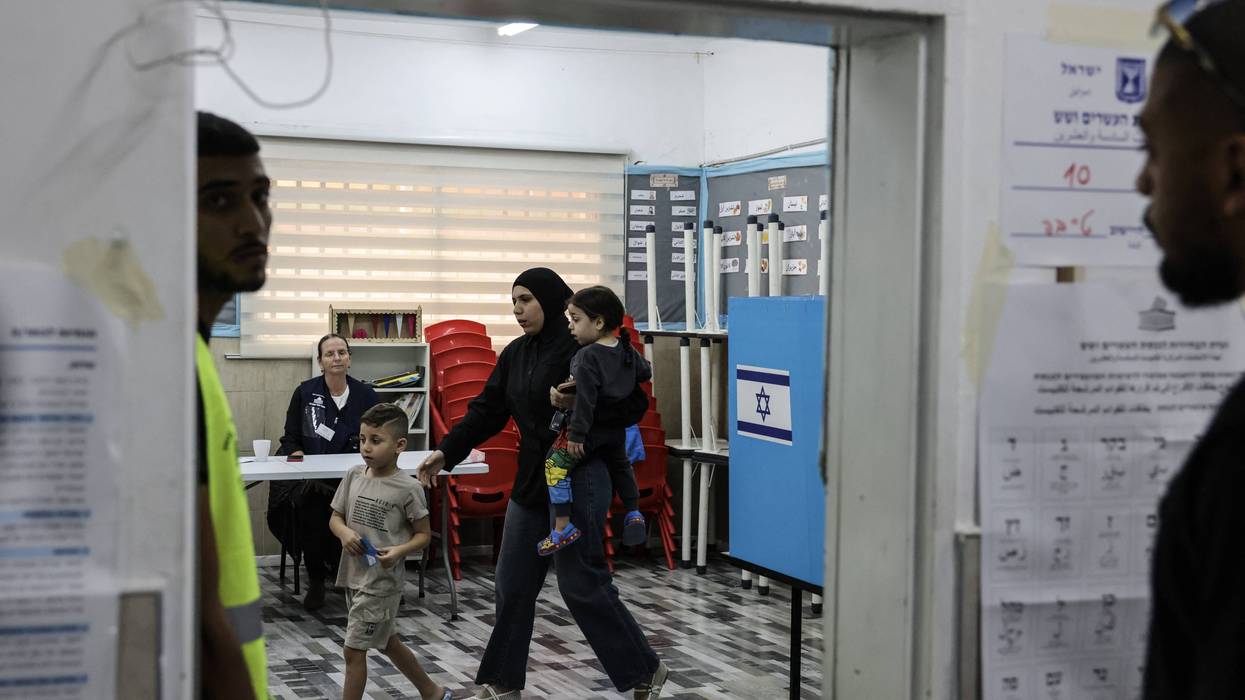
Netanyahu Accused of 'Incitement' as Arab Israelis Face Intimidation and Surveillance at Polls
The prime minister's coalition has sent around 2,000 activists, some of them armed, to surveil voters in what they called “Arab population centers.”
Oct 27, 2026
The leader of one of Israel's main Arab parties accused Prime Minister Benjamin Netanyahu of "incitement" against Arab voters, whom civil rights groups warn are facing deliberate obstruction and intimidation at the polls on Tuesday.
“Benjamin Netanyahu is lying and inciting against Ra’am, using it as a scare tactic to mobilize right-wing voters and drive them to the polls,” the party’s leader, Mansour Abbas, said in a video message Tuesday.
Abbas was responding to a video posted by Netanyahu warning supporters of his Likud party that Arab voters in the south were “racing to the ballots.” He also accused Ra’am of “trying to steal the election from us,” citing the arrest the previous night of three people on suspicion of attempting to bribe voters to cast ballots for the party. Though Netanyahu has claimed that the three were “senior Ra’am” figures, he has not provided evidence of this.
Gadi Eisenkot, the leader of the Jewish-led Change coalition seeking to oust Netanyahu, has sworn off an alliance with Arab parties. However, Ra’am is hoping for an opposition victory narrow enough that the inclusion of Arab parties will be essential to form a governing coalition in the Knesset.
Tuesday’s election is the first since Netanyahu launched Israel’s genocidal assault on Gaza and comes amid unprecedented state-backed terrorism by Israeli settlers against Palestinians in the occupied West Bank. Accusing the other side of being too soft on Palestinians has been a central campaign tactic for both Netanyahu and his opponents.
Reuters reported on Tuesday that cars flying Likud banners were seen driving through Jerusalem playing the Islamic call to prayer and warning that "Arabs are voting" and that the prime minister had shared videos of long lines at Arab polling places to frighten his supporters.
"If you want this country to be Jewish and Zionist, you must go out and vote," National Security Minister Itamar Ben-Gvir, the leader of the far-right Jewish Power party, told voters for the Likud coalition. "Don’t let them win.”
The Association for Civil Rights in Israel (ACRI) warned Tuesday of potential deliberate efforts by Israeli authorities to slow down Arab voters. In a letter demanding urgent action from the chairman of the Central Elections Committee, Judge Noam Sohlberg, the group said that in Arab communities, “the voting process is proceeding slowly, without explanation, and voters are being forced to wait for extended periods.”
ACRI reported that police and National Guard troops kept about 200 voters waiting outside a high school in the Bedouin town of Segev Shalom in southern Israel, citing overcrowding, even though relatively few voters were actually inside. Voters there had waited up to five hours before casting ballots.
The group said it received reports of long queues in other Arab communities, including Rahat, Tel Sheva, Laqiya, Umm Batin, Tira, and Tamra.
"There are numerous reports of severe slowdowns at many polling stations," Yeela Raanan, a member of a team monitoring election integrity in Bedouin communities, told Haaretz.
In many Bedouin communities, Raanan said, "people report waiting for hours, and polling station staff are taking a very long time to verify each voter's identity."
Police have been dispatched to many Arab polling places, where they've reportedly been checking voters' identification, a duty that, under the law, belongs to election officials, Haaretz reported.
Adalah, the Legal Center for Arab Minority Rights in Israel, said that at some locations, Palestinian voters were slowed down by election officials who asked them irrelevant questions, blocked doors, and suspended voting.
The group reported that at one polling station in Kafr Qara in central Israel, only one person had voted during the first three hours after polls opened.
At several other polling places in ethnically diverse and Arab cities—including in Haifa, Nazareth, I’billin, Eilabun, Shefa-Amr, and Nof HaGalil—Arab voters arrived to find that ballots printed in Arabic were not available. Adalah sent a letter to the head of Israel’s Central Elections Committee demanding that these polling centers immediately be supplied with Arabic-language ballots.
There are also reports of direct intimidation. Likud and its coalition partner, the far-right Religious Zionism party, led by Finance Minister Bezalel Smotrich, announced plans to send about 2,000 activists to what they called “Arab population centers” to observe elections, claiming without evidence that Arabs were committing fraud on a massive scale.
Israel's Supreme Court on Sunday night rejected a petition to ban firearms at polling places on Election Day. Adalah warned that the decision "allows those taking part in Netanyahu and Smotrich's provocation to show up at polling stations in Arab communities like armed militias."
The Mossawa Center, which advocates for Arab citizens’ rights in Israel, urged election officials to intervene Tuesday, saying Israeli settlers had arrived at polling stations to obstruct voting and that it had documented confrontations in Tayibe, Majd al-Krum, Shefa-Amr, Haifa, and I’billin, according to The New Arab.
The outlet separately reported that residents in Majd al-Krum stopped a right-wing activist from forcing his way into a polling station after provoking voters.
"Settlers at polling stations in Arab communities are deliberately obstructing and slowing down the voting process," said Ahmad Tibi, a Palestinian member of the Knesset. "A sick woman fainted while waiting. I'll put it this way: It won't help you. People will stay there until they cast their votes."
Haaretz reported Tuesday that Likud also paid unofficial teams “millions of shekels” to record Arab voters to help push the conspiracy theory that the election was rigged if Netanyahu’s coalition falls short.
Despite the obstacles, Arab turnout is reportedly significantly higher than during Israel's last elections in 2022, according to estimates by the coalition of Arab parties, known as the Joint List.
Joint List Chairman Yousef Jabareen predicted ahead of Tuesday’s vote that intimidation would be widespread. He said it would be answered with turnout from voters eager to oust Netanyahu.
"They will get our answer at the ballot box," he said, "when we, with our own hands, send them home.”
Keep ReadingShow Less
Rogers Cashes Checks From Anti-Abortion Extremists in Final Days of Senate Campaign
"Michigan voters fought hard to protect reproductive freedom, and these extremist groups want a senator who will help them undermine it in Washington."
Oct 27, 2026
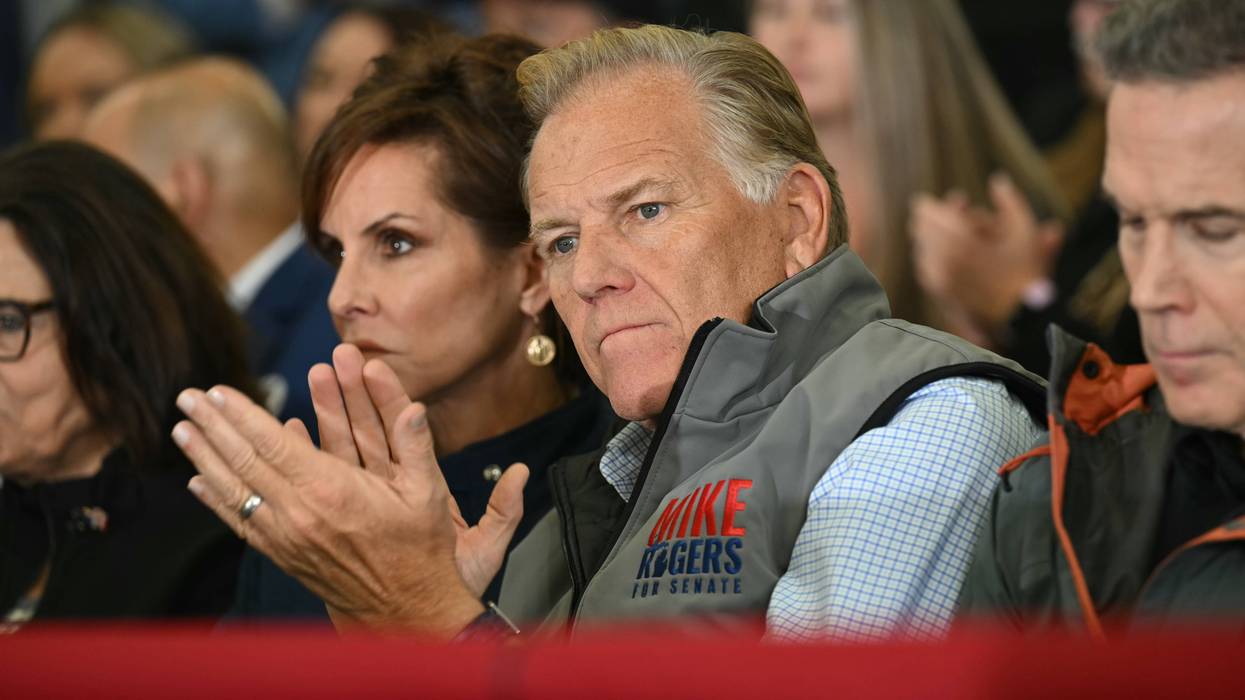
Michigan voters were clear in 2022 when they voted by a 13-point margin to codify the right to abortion care in the state constitution, and the state's Republican US Senate candidate, former Rep. Mike Rogers, claimed two years ago that he had no interest in "going back to Washington, DC to undo what the people of Michigan decided to do.”
But a recent campaign contribution from the National Pro-Life Alliance political action committee (PAC) left reproductive rights advocates warning that Rogers has shown throughout his political career that he will fight to stop Michiganders from accessing abortion care—and that extremist groups are counting on him to win the Senate race to ensure abortion is banned nationwide.
Recent filings from the Federal Election Commission show that on October 23, just before Michigan residents began voting early ahead of the November 3 midterms, the National Pro-Life Alliance PAC donated $5,000 to the Rogers for Senate campaign.
The group has lobbied for the passage of the Life at Conception Act, which would ban all abortions with no exceptions for rape, incest, or health risks for the pregnant patient, and previously donated $1,700 to Rogers between 2000-10.
In 2010, when the then-congressman received $1,000 from the group, the National Pro-Life Alliance stipulated that candidates they supported must support the Life at Conception Act.
Shanay Watson-Whittaker, director of Michigan campaigns at Reproductive Freedom for All, told Common Dreams on Tuesday that the "last-minute donation shows how desperate anti-abortion groups are to buy this election—and they’re counting on Mike Rogers to deliver for them."
"His record gives them every reason to believe he will," she added.
"We need someone who will fight for our rights, and Rogers has spent his entire career showing us he won’t.”
Despite Rogers' earlier claims that should he win the Senate seat, he would respect Michiganders' support for the right to abortion care, he spent his 14 years in office backing a constitutional amendment to enshrine "personhood" in the US Constitution, aiming to ban all abortions from the moment of conception, and supporting a national 20-week ban—"still very much a national ban that could carry disparate harm for people experiencing medical emergencies and fetal conditions," wrote Kylie Cheung at Jezebel in 2024.
"I oppose abortion at any time except to save the live [sic] of the mother," Rogers wrote in a candidate questionnaire distributed by the Michigan Catholic Conference, affirming that he supported the Human Life Amendment. He added that he opposed the use of "taxpayer funds for any abortions.”
Rogers was also a sponsor of four fetal "personhood" bills that aimed to ban nearly all abortions nationwide.
Watson-Whittaker urged Michigan voters to keep Rogers' donation from the National Pro-Life Alliance and his record in mind as they go to the polls in the coming week.
"Michigan voters fought hard to protect reproductive freedom, and these extremist groups want a senator who will help them undermine it in Washington," said Watson-Whittaker. "We need someone who will fight for our rights, and Rogers has spent his entire career showing us he won’t.”
Keep ReadingShow Less
Senators Investigate Insurance Giants for 'Quietly Colluding' With Trump to Kick People Off Healthcare
"Insurance companies chose to participate in a collaborative effort with the Trump administration to inject yet more chaos and damage into the ACA marketplace."
Oct 27, 2026
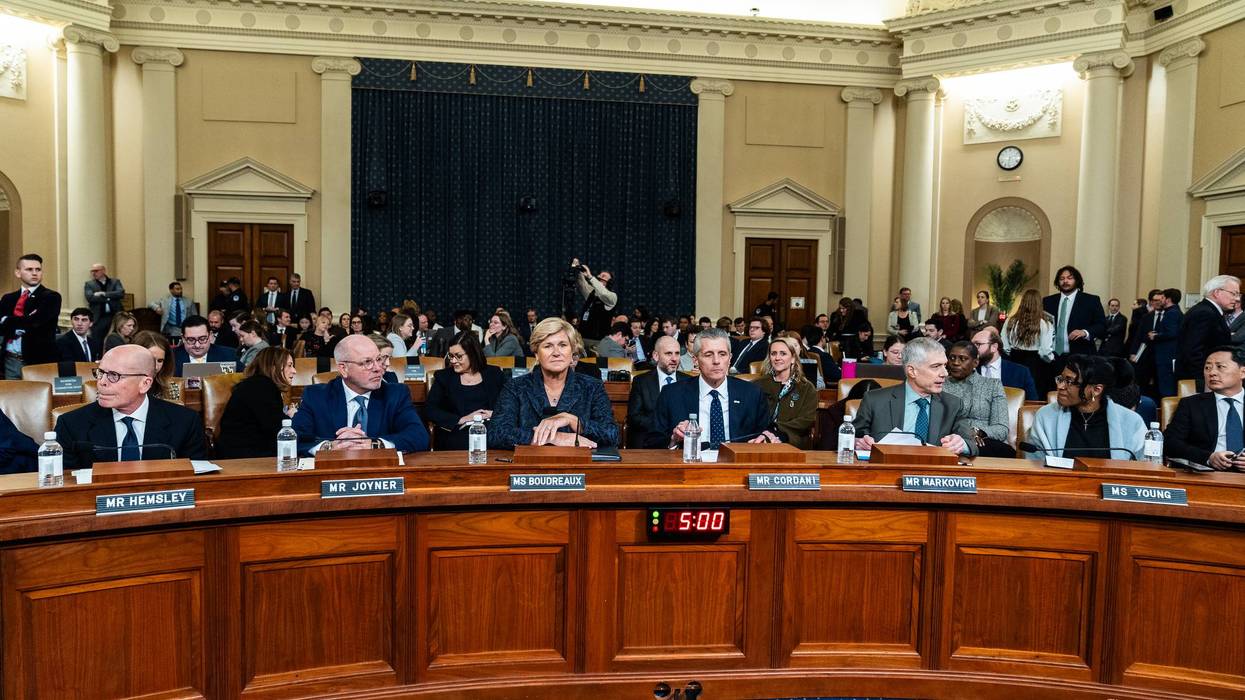
US Sen. Bernie Sanders and a dozen of his Democratic colleagues are investigating the roles that Cigna, UnitedHealthcare, and other leading private insurance companies are playing in the Trump administration's ongoing efforts to strip health coverage from millions of Americans.
On Monday, the lawmakers sent letters to the chief executives of 10 top insurance companies demanding answers on the firms' cooperation with the Trump administration in its recent removal of around 760,000 Affordable Care Act (ACA) enrollees, citing alleged fraud.
"Aligning with Republicans and their so-called ‘war on fraud,’ insurance companies chose to participate in a collaborative effort with the Trump administration to inject yet more chaos and damage into the ACA marketplace,” the senators wrote. “This year, nearly 3 million people have lost coverage while millions more are paying sky-high premiums and higher deductibles for insurance that covers less."
The lawmakers noted that the 760,000 coverage terminations "would not have been possible without the cooperation of insurance companies that have been quietly colluding with the Trump administration" for months. The senators disclosed in their letters that the ten largest insurance companies in the ACA marketplaces "received, and voluntarily complied with, a Centers for Medicare & Medicaid Services (CMS) data request designed to terminate coverage for hundreds of thousands of enrollees."
The letters characterize the CMS requests as "potentially unlawful" and take insurers to task for readily obeying the administration. The insurance companies that received letters from the senators are Cigna, UnitedHealthcare, AmeriHealth Caritas, Centene, Elevance, Florida Blue, Health Care Service Corporation, Imperial Insurance Companies, Oscar Health, and Molina Healthcare.
"Issuers, including Cigna, took specific steps to assist CMS in their efforts, including sending unsolicited communications to enrollees asking them to verify their Social Security numbers," the senators observed. "Issuers provided CMS with lists of enrollees who did not receive or respond to this unsolicited outreach asking for personally identifiable information. Those enrollees were deemed presumptively fraudulent, so-called 'phantom enrollees' and their coverage was terminated retrospectively, effective August 31, 2026."
The lawmakers added that "enrollees were identified as being subject to coverage termination based on metrics such as whether their projected income made them eligible for tax credits that cover the full premium of their plan, and whether they sought care during the 2026 plan year."
"As you know, there is no credible research or evidence in support of the longstanding Republican conspiracy theory that zero-dollar premium plans and zero-claims enrollment are reliable proxies for fraud," the senators wrote.
Analysts said in response to the administration's September announcement of mass coverage terminations that while fraud certainly exists in the ACA marketplaces, many of the people who lost coverage as part of the purge were likely enrolled legitimately. KFF Health News reported earlier this month that CMS has already "reinstated a small number of people whose coverage should not have been canceled."
"More could follow in the coming weeks if enrollees discover they are uninsured when they go to use their coverage," the outlet noted. "Overall, however, the administration is providing few details about the cancellations, such as how robust the outreach was to those it targeted, how long it takes for people to get reinstated after discovering their coverage was wrongly canceled, and how many such cancellations have been reversed."
The senators demanded answers from the 10 insurance company executives to a series of questions, including when the Trump administration first contacted them about its purported anti-fraud effort in the ACA marketplaces and what steps the firms took to ensure that eligible enrollees were not impacted.
The lawmakers contrasted the companies' voluntary cooperation with the Trump administration with their refusal to act on requests from Democrats last year to increase outreach to ACA enrollees amid relentless Republican attacks on the program.
"Insurance companies almost universally declined to perform any additional direct enrollee outreach, citing the cost and complexity associated with doing so outside the issuer renewal notice process," the senators wrote. "Issuers also expressed concern about being put at a competitive disadvantage should their enrollees choose to shop for more affordable coverage in light of rising premiums."
Keep ReadingShow Less

After Silencing by NFL Owner, Macklemore Opens 'Free Palestine' Tour With Sold-Out Dublin Show
The concert garnered rave reviews, with The Guardian calling it a five-star "triumph," and The Irish Times praising the “courage of Macklemore's convictions.”
Oct 27, 2026
In a metaphorical middle finger to billionaire NFL owner Robert Kraft's effort to get Macklemore booted from Ed Sheeran’s US stadium tour over his outspoken support for Palestinian liberation, the rapper opened his "Free Palestine" benefit tour Monday with a critically acclaimed sold-out show in Dublin.
More than 13,000 fans packed Dublin's 3Arena, waving Palestinian flags and wearing keffiyehs as the crowd repeatedly chanted “Free Palestine" throughout the show.
“I am proud to stand here on stage in solidarity with the Palestinian people,” Macklemore told the audience. “We will continue to fight for collective liberation until our last breath."
"Six weeks ago, it was two words. Two words is all that it took. Two words that are rooted in love and liberation. Not against anybody, not divisive, not a call for hatred, but a call to recognize our shared humanity. 'Free Palestine.' I said 'Free Palestine,'" the Seattle native said.
He was referring to his removal from Sheeran's Loop Tour amid pressure from Kraft—who owns the New England Patriots and Gillette Stadium in Foxborough, Massachusetts—after the rapper condemned Israel's genocidal assault on Gaza and illegal occupation and apartheid in the West Bank during a September performance at MetLife Stadium in New Jersey.
"While the world debates those words, we see the videos, we see the footage, we see parents pulling their children out of the rubble, families erased, devastation beyond our imagination," Macklemore, whose real name is Benjamin Hammond Haggerty, continued.
"And somehow," he added, "those words have become more controversial than the suffering that made them necessary."
Kraft's pressure backfired spectacularly as every other opening artist on Sheeran's tour withdrew in solidarity with Macklemore, while the rapper launched his own benefit shows in larger European venues than he had played on his previous tour.
In addition to Macklemore—who rose to prominence in 2012 with his multiplatinum hit "Thrift Shop"—the concert featured performances by Irish artist Hozier, trio Kneecap, and folk band Beoga; Palestinian singer Lina Makoul; Palestinian American DJ Habibeats; and US political hip-hop duo Dead Prez.d
Actors Mark Ruffalo and Cynthia Nixon and Strokes frontman Julian Casablancas also appeared via video messages.
Macklemore has paid more than just lip service to the Palestinian cause, pledging $1 million to aid groups. Children's educator and YouTube star Ms. Rachel subsequently vowed to match the donation, declaring, “We have a moral obligation to use our privilege and platforms to protect children and human rights.”
The proceeds of the "Free Palestine" tour—which also has scheduled shows in London and Paris—will support organizations providing Palestinians with medical care, humanitarian assistance, education, and community services.
The tour's opening show garnered rave reviews, with The Guardian calling it a five-star "triumph," and The Irish Times giving the concert four stars and praising the “courage of Macklemore's convictions.”
Keep ReadingShow Less
'Another Year, Another New Record': UN Highlights Rising Greenhouse Gas Levels Ahead of COP31
"We are supercharging the ocean and the atmosphere," said one WMO leader. "That means that heatwaves, tropical cyclones, and rainstorms are intensifying faster than our historical baselines prepared us for."
Oct 27, 2026
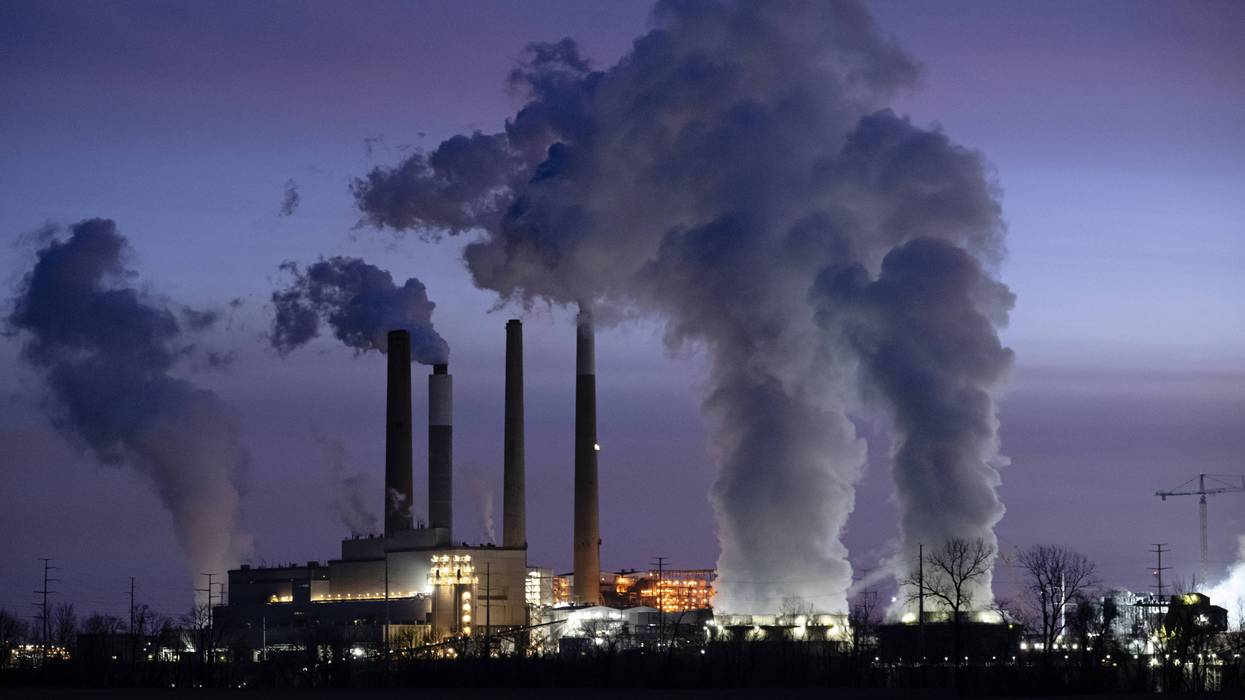
With the next United Nations Climate Change Conference less than two weeks away, a UN agency confirmed Tuesday that levels of three key greenhouse gases in the atmosphere "reached unprecedented highs in 2025, locking in more long-term temperature increase for the planet."
“Another year, another new record," World Meteorological Organization (WMO) Deputy Secretary-General Ko Barrett said in a statement. "The past 11 years have been the warmest on record, and this trend is set to continue."
"The big three are carbon dioxide, methane, and nitrous oxide. Since the 1960s, growth rates of CO2 have tripled," Barrett told journalists during a press briefing about the "Greenhouse Gas Bulletin of 2025," which is published annually.
Global greenhouse gas concentrations reach record highs in 2025. The unprecedented atmospheric levels of carbon dioxide and methane lock in severe climate impacts and temperature increases for centuries ahead of the upcoming United Nations climate summit in Turkey.www.france24.com/en/live-news...
[image or embed]
— Flingjore (@flingjore.com) October 27, 2026 at 11:12 AM
"When the bulletin was first published in 2004, the annual level of carbon dioxide was 377.5 parts per million. In 2025, it was 426.8 parts per million," Barrett noted. Methane, or CH4, hit 1,948 parts per billion, while nitrous oxide, or N2O, was 339.1 ppb.
"Every additional part per million matters because it traps additional heat," she stressed. "In effect, we are supercharging the ocean and the atmosphere. That means that heatwaves, tropical cyclones, and rainstorms are intensifying faster than our historical baselines prepared us for."
While carbon dioxide is "the most abundant long-lived gas," Barrett also addressed "gases which are present in much lower concentrations but are of potential concern," such as sulfur hexafluoride, or SF6—which "is closely related to electricity production and distribution, and has been rising over the past three decades because of the switch to global electrification."
"Sulfur hexafluoride concentration in 2025 have increased by 249% relative to 1995 levels. They are measured in parts per trillion—not million. So why should we be concerned?" she said. "Because SF6 has an atmospheric lifetime of up to 3,200 years. Its global warming potential is more than 24,000 times that of CO2."
"The energy transition is essential and welcome," Barrett added. "But as with every transition, it has to be done in a smart way and informed by environmental observations."
The WMO bulletin follows a series of recent UN reports showing the Paris Agreement's goal of limiting global temperature rise this century to 1.5°C above preindustrial levels is no longer possible without an overshoot, but getting back to that level is, with ambitious action to phase out fossil fuels.
Additionally, before the ongoing biodiversity summit in Yerevan, Armenia, the UN warned that the world is not on track to meet any of the targets from the Kunming-Montreal Global Biodiversity Framework, or the "Paris Agreement for Nature."
While that event on the global biodiversity crisis—which is linked to the worsening climate emergency—is set to conclude in a few days, world leaders are scheduled to convene again on November 9 in Antalya, Türkiye for the next climate conference, or COP31.
Although the United States is the world's biggest historical climate polluter, and one of the recently released UN reports repeatedly calls out US emissions, Big Oil-backed President Donald Trump has ditched the Paris Agreement, again, and is not expected to send a delegation to Antalya.
"The rest of the world is exhausted when it comes to counting the damage that the US is willingly doing to allies, multilateral structures, economic cooperation, disaster relief," Australian climate scientist Malte Meinshausen told The Associated Press earlier this month. "The rest of the world should probably continue to focus even less on the US."
There is hope in the elections taking place around the world and how they may usher in new leadership in many countries. Even with those changes, we all are in for a warm ride filled with climate shocks until we stabilize the concentrations of greenhouse gases in the atmosphere.
— Dana R. Fisher (aka the Apocalyptic Optimist) (@fisherdanar.bsky.social) October 27, 2026 at 6:37 AM
In the United States, University of Pennsylvania professor Michael Mann said Tuesday that "there is a lot of support among the public for a clean energy transition. The problem is that the fossil fuel industry currently owns our government. But there are reasons for optimism that we might begin to turn the corner, with the midterm elections" on November 3.
"If they return one or both houses of Congress to the Democrats, there will be the possibility of Congress acting as a check on the destructive policies of the Trump administration and in a couple of years, with new leadership at the presidential level, the US could once again reassert leadership on climate," the climatologist told writer Brian McHugh.
"We have to transition rapidly away from fossil fuel burning," Mann emphasized. "There's simply no other way. Without regulating them and imposing an incentive structure that leads them to move toward clean energy, nothing else is really going to matter."
Keep ReadingShow Less
RFK Jr. Condemned Over Baseless and 'Nakedly Racist' Anti-Arab Rant at Rogers Event in Michigan
"Every day, a prominent Republican... says something insanely racist about Muslims or Arabs," said one journalist, while many Democrats are silent about "out-of-control Islamophobia from the GOP."
Oct 27, 2026
Visiting the state with the highest percentage of Arab Americans to campaign for the Republican US Senate candidate, a week before the midterm elections during a campaign in which people from across the political spectrum have recoiled at the GOP's racist, misogynist rhetoric, the Trump administration's top health official opted to share a fact-free non sequitur about hundreds of millions of Arabs across the globe.
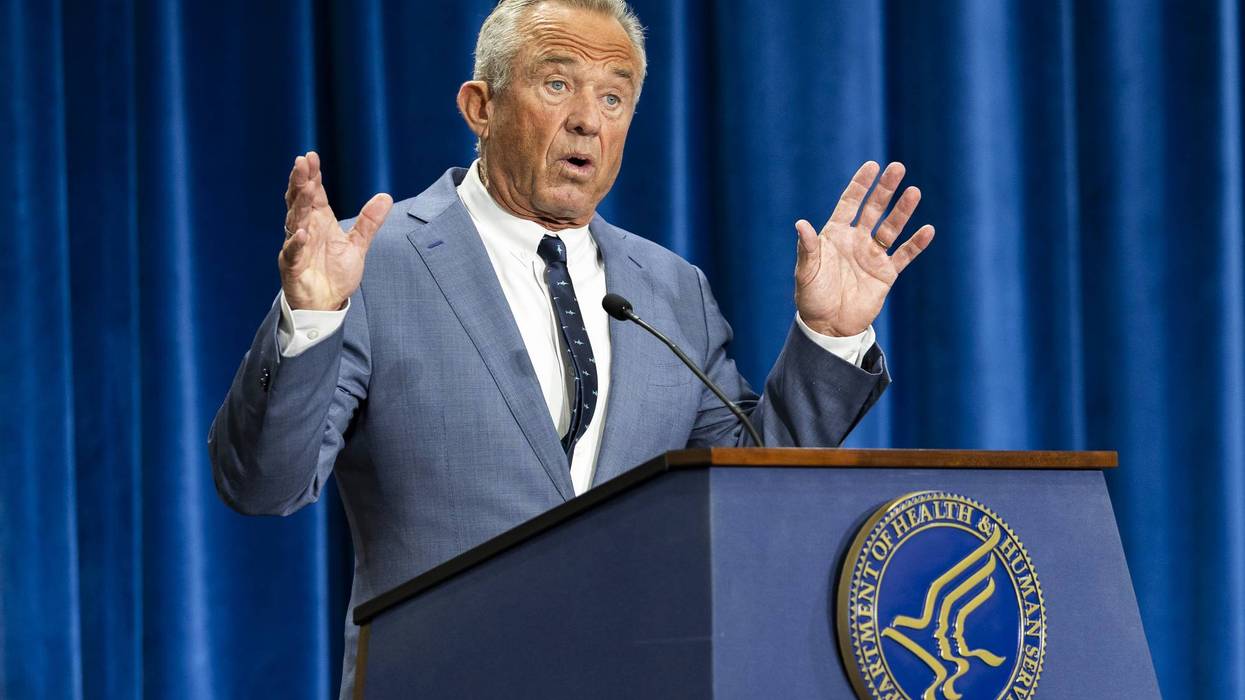
Apparently trying to sell voters in Michigan on Republican former Rep. Mike Rogers, who was behind Democratic candidate Abdul El-Sayed by two points in a recent Marist poll—and by six points among independents—Health and Human Services Secretary Robert F. Kennedy Jr. opined on "500 million Arabs in the world," a vast population that he suggested contributes little to the global community.
"They don’t produce science, they don’t win the Nobel Prize, they don’t win the Fields prize, they don’t win the Wolf Prize, they don’t produce literature," declared Kennedy at a campaign event in Grand Rapids.
RFK: "There's five hundred million Arabs in the world. And yet they don't produce science. They don't win the Novel Prize. They don't win the Fields Prize. They don't win the Wolf Prize. They don't produce literature." https://t.co/ikZHqklQjE
— Bulwark Clips (@BulwarkClips) October 26, 2026
The comments provoked horror among numerous Democratic lawmakers, advocacy groups, scientists, and journalists, many of whom were quick to point out that Kennedy's racist rant had no basis in reality.
"Besides being nakedly racist and bigoted, this is just hilariously wrong on all levels," said Justin Baragona of Zeteo News.
Baragona was among the observers who did not have reach far back in history to prove Kennedy, who has been widely condemned for his rejection of scientific evidence as he has questioned the safety of vaccines, entirely wrong about Arab people's contributions to the field.
Just last year, Omar Yaghi won the Nobel Prize in chemistry for the development of metal-organic frameworks. Yaghi was born in Jordan to Palestinian refugee parents. He also won the Wolf Prize, an international award for achievements in sciences and the arts, in 2018, for his contributions to the field of reticular chemistry.
Vaccine scientist Peter Hotez expressed relief that his late colleague and "brilliant co-US Science Envoy," the Egyptian-American chemist Ahmed Zewail, "didn’t have to endure" listening to Kennedy's comments. Zewail won the Nobel Prize in chemistry in 1999.
Entrepreneur Saad Mohseni listed a number of other "Arab science giants" who came to mind.
Baragona also pointed to two winners of the National Book Award just last year—the Lebanese writer and painter Rabih Alameddine and Egyptian-American journalist Omar El Akkad.
But US Sen. Chris Murphy (D-Conn.) suggested that beyond debunking Kennedy's wholly inaccurate claim, "everyone needs to pay attention" to what his comments were part of: a "coordinated campaign to delegitimize Muslim Americans—not just as citizens but as humans."
"These increasingly hysterical attacks are a prelude to Republicans bringing us to a very, very dark place after the election," said Murphy.
The Council on American Islamic Relations demanded that Kennedy be removed from his Cabinet position in light of the remarks, which they called "a textbook display of unvarnished racism and bigotry."
"To stand on a public stage as a sitting US Cabinet official and dehumanize half a billion people—and millions of Muslim and Christian Arab Americans—with fabricated, white supremacist talking points is utterly disqualifying for public office," said the group. "His sweeping erasure of Arab contributions to humanity is not only maliciously false, but it also fans the flames of anti-Arab and anti-Muslim hate at a time when communities are already vulnerable to bigoted attacks from other public officials nationwide. Anyone who holds such blatant contempt for an entire ethnicity has no business leading a federal agency meant to serve all Americans."
Journalist Mehdi Hasan, the founder of Zeteo News, suggested that the Democratic Party and liberal commentators deserve a large share of the blame for a political environment in which a top US official felt comfortable openly degrading hundreds of millions of people of Arab descent, including an estimated 3.7 million Arab Americans, as non-contributing members of society.
"Every day, a prominent Republican—the president, a Cabinet official, a primetime Fox host, the Michigan Senate candidate—says something insanely racist about Muslims or Arabs. Meanwhile, my timeline is full of prominent Democrats and liberals getting mad about a random ad attacking Israel and screaming about antisemitism," he said, referring to an ad recently released by Rebellion political action committee, which criticized US aid to Israel and tied it to Americans' struggles with the rising cost of living.
From many liberal commentators, said Hasan, he has heard "crickets... on the out-of-control Islamophobia from the GOP."
Kennedy's anti-Arab comments were hardly an outlier in the Michigan Senate campaign. Rogers and President Donald Trump have both accused El-Sayed of supporting the Muslim Brotherhood, despite the fact that in 2012, as a congressman, Rogers himself said he was willing to work with the movement. The president has openly called the Michigan-born El-Sayed a "jihadist," and a speaker at one Rogers rally over the weekend said the candidate's birth certificate did not make him an American.
But prominent Democrats have also had a hand in pushing the narrative that El-Sayed is a risky choice for Michiganders. Former state Democratic Party chair Lon Johnson accused El-Sayed of “extremism” last week and said his criticism of Israel threatens Jewish communities, calling on Democrats in the state to “leave the Senate race blank." During the primary, the centrist think tank Third Way spent months attacking El-Sayed for campaigning with popular streamer Hasan Piker, who once said that the US "deserved" the September 11 attacks—a comment he later clarified and apologized for.
At Protect Our Care, an advocacy group that typically focuses on Kennedy's attacks on public health, president Brad Woodhouse said Tuesday that with his remarks in Grand Rapids, the health secretary had "laid bare how small and ignorant he really is."
“Fear and racism are the crutch of pathetic political hacks with absolutely nothing to offer or progress to point to," said Woodhouse. "This is his closing argument for why Republicans need more power, smearing an entire people with gross and instantly disprovable lies? Really?"
"Secretary Kennedy thinks spewing hate will distract people from his multiple corruption scandals and starring role in the historic measles and food-borne illness crises Americans have suffered through this year," he added. "This wasn’t the first time RFK Jr has trafficked in racism, but it may be his ugliest episode yet. It’s an indictment of both Mike Rogers and [Republican US Rep.] John James that they haven’t condemned the remarks. They’d rather clap like seals and hope RFK’s racist ‘hail mary’ pays off for them politically. That makes them just as weak, pathetic, and un-American.”
Keep ReadingShow Less
See More
Most Popular