SUBSCRIBE TO OUR FREE NEWSLETTER
Daily news & progressive opinion—funded by the people, not the corporations—delivered straight to your inbox.
5
#000000
#FFFFFF
To donate by check, phone, or other method, see our More Ways to Give page.


Daily news & progressive opinion—funded by the people, not the corporations—delivered straight to your inbox.
Mana Mostatabi, 202.386.6325 x103, mmostatabi@niacouncil.org
Jamal Abdi, President of the National Iranian American Council (NIAC), issued the following statement after the U.S. Treasury Department's Office of Foreign Assets Control (OFAC) issued General License M to broaden exemptions for Iranian students enrolled in U.S. academic institutions who are in Iran for the pandemic and whose classes moved online.
This follows a call from NIAC and a coalition of academics urging OFAC to facilitate online learning for students barred from entering the U.S. under new DHS restrictions enacted over the summer:
"We appreciate that OFAC has taken this initial step to broaden its exemptions for Iranian students, recognizing that online learning for many Iranian students was rendered impossible by far-reaching sanctions. In particular, broadening exemptions for graduate students and online platforms needed for academic studies are important steps that can help prevent many Iranian students from falling further behind. We hope that further efforts to address the shortcomings in U.S. sanctions policy that hurt ordinary Iranians and undermine American interests will be forthcoming, particularly under a new administration.
"It is a shame that this exemption was even necessary. The Department of Homeland Security is consistently narrowing the path for Iranian students to study in the United States by barring new international students whose classes are online only and pursuing a new rule to limit the stay of Iranian students to no more than two years. We fear that this trend may continue, further turning off Iranians from even applying to American universities..
"Unfortunately, while exemptions like the one issued today can narrowly reduce some seen and unforeseen costs that sanctions have imposed on the Iranian people, they are all but completely drowned out by the flood of sanctions that continues to drive our Iran policy. For instance, this exemption does not include the many Iranians studying in STEM fields, in keeping with a policy first put in place by Congress prior to the Obama Administration's diplomacy with Iran. Moreover, the arduous process to produce this exemption means it is only now available, mid-way through the fall semester. As a result, while exemptions like this are welcome, they are often too narrow and too late amidst a backdrop of broad sanctions.
"What is needed instead is a policy that halts the punishment of the Iranian people, lifts bans that block Iranians from studying in the United States and broadens the scope of exchange between the American and Iranian people."
NIAC Action is the grassroots, civic action organization committed to advancing peace and championing the priorities of the Iranian-American community. We are a nonpartisan nonprofit and the 501(c)4 sister organization of the National Iranian American Council, which works to strengthen the Iranian-American community and promote greater understanding between the American and Iranian people.
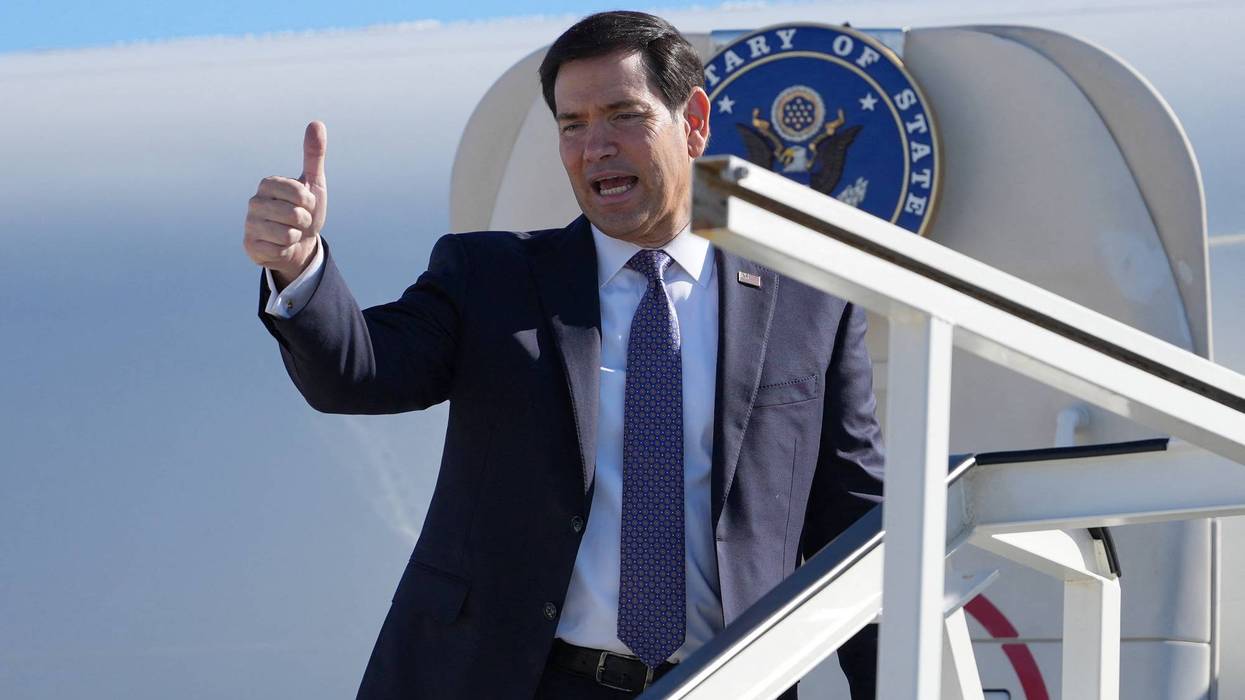
"Trump loves putting his name on things, but this should be the only building for which he is remembered by history."
The bombing of a primary school by US-Israeli coalition forces in southern Iranian town of Minab that killed an estimated 160 or more civilians—mostly children—on February 28 should be investigated as a possible war crime, Human Rights Watch said on Saturday.
After reviewing satellite footage from before and after the strike on the Shajareh Tayyebeh school—as well as reviewing video taken in the wake of the bombing and other materials—the international human rights group said the available evidence indicates "that the attack was carried out by highly accurate, guided munitions, rather than errant weapons whose guidance or propulsion systems failed or were otherwise disrupted and randomly struck the area."
The attack on the school would be among the deadliest war crimes against civilians by US forces in years. Occurring on the first day of bombings of what President Donald Trump and US Defense Secretary Pete Hegseth dubbed Operation Epic Fury, the slaughter of schoolchildren—though the US has denied responsibility thus far—coincides with Hegseth repeatedly bragging that the US military would no longer follow "stupid rules of engagement" in the execution of its operations.
"The school was in use, and children were in attendance on the day of the attack," the group said. "Human Rights Watch found no evidence that would indicate that the school was being used for military purposes, though researchers were not able to speak to witnesses of the strikes, families of those killed, or other informed sources."
President Trump should hold Secretary Hegseth and everyone else responsible for killing Iranian children accountable, and bring this illegal, unnecessary war of choice to an end.”
According to HRW:
The United States should immediately assess its responsibility for this strike and make the findings public. If the US military carried out the strike, it should conduct a full investigation into the operational and policy failures that led it to strike a school, fully account for the civilian harm caused, hold those responsible accountable including through prosecution, and commit to changes that would ensure such failures will not be repeated in future operations.
Analyses of the bombing by various news outlets have provided strong evidence that US forces were the most likely culprits of the attack. HRW was told by an Israeli military spokesperson that it was “not aware of any [Israeli military] strikes in the area.” Hegseth said during a Wednesday press conference that the Pentagon was investigating the matter, but offered no further indication of concern in the matter.
During that same press briefing, as HRW notes in its analysis of the attack, the chairman of the Joint Chiefs of Staff, Gen. Dan Caine, said that US forces from the USS Abraham Lincoln strike group were providing “pressure” in preceding days along the “southeastern side" of the Iranian coast as he pointed to an area of a map showing coalition bombings that included Minab.
“A prompt and thorough investigation is needed into this attack, including if those responsible should have known that a school was there and that it would be full of children and their teachers before midday,” said Sophia Jones, open source researcher with the Digital Investigations Lab at Human Rights Watch. “Those responsible for an unlawful attack should be held to account, including prosecutions of anyone responsible for war crimes.”
“Allies of the US and Israel should insist on accountability for the Shajareh Tayyebeh school attack and for an end to attacks on civilian infrastructure in all of their operations across the region, before more civilians, including children, are unlawfully killed,” she added.
Human Rights Watch is not the only one demanding an independent investigation.
"This mass killing of children is unconscionable. It bears the hallmarks of a war crime," said Sen. Chris Van Hollen (D-Md.) on Friday after a New York Times investigation found that US forces were likely behind the strike. "Trump and Hegseth must answer for the US's role and they must be held accountable. People deserve the full truth. There must be an immediate and transparent investigation."
On Friday, as Common Dreams reported, another school in Iran was struck by US-Israel bombings, bringing the total number of schools hit to four in the first six days of the unprovoked military attack.
"The American people do not want their tax dollars spent on killing children in Iran, just as they did not want their tax dollars spent on killing children in Gaza," said the Council on American Islamic Relations (CAIR) in a statement. "The latest U.S.-Israel attacks on schools in Iran are blatant war crimes. So was the original slaughter of 180 schoolgirls that the Pentagon refuses to take responsibility for."
“Every child murdered or injured in these indiscriminate US-Israel bombing attacks is a sign that the Pentagon under Pete Hegseth is mimicking the tactics of the cowardly and genocidal Israeli military, which has mastered the art of bombing men, women, and children from afar," the group added. "The American people expect better from our armed forces. President Trump should hold Secretary Hegseth and everyone else responsible for killing Iranian children accountable, and bring this illegal, unnecessary war of choice to an end.”
While the war continues and Trump on Saturday said the people of Iran should expect bombing and destruction to increase not decrease over the weekend, voices for peace continued to demand a swift end to the violence and said the US president should forever be held responsible for unleashing such unnecessary bloodshed—including the specific devastation unleashed on the school in Minab.
"Trump loves putting his name on things, but this should be the only building for which he is remembered by history," said Dylan Williams, vice president for government affairs at the Center for International Policy, referencing the school where the massacre took place.
"The American people do not want more war in the Middle East. No boots on the ground. No more war."
A report late Friday that US President Donald Trump is more bullish in private about putting American soldiers on the ground in Iran than he has been publicly stirred immediate condemnation among lawmakers opposed to the illegal military attack, now entering its second week of destructive and deadly operations.
"This is madness," declared Rep. Pramila Jayapal (D-Wash.) in response to NBC News reporting, which cited unnamed sources familiar with the conversations, that stated Trump "has privately expressed serious interest in deploying US troops on the ground inside of Iran."
While the White House pushed back on the contents of the reporting, Trump himself has said that he does not hold reservations about deploying ground troops if he deems it necessary.
“I don’t have the yips with respect to boots on the ground," Trump told the New York Post on Monday. "Like every president says, ‘There will be no boots on the ground.’ I don’t say it. I say, ‘probably don’t need them,’ [or] ‘if they were necessary.’”
Senate Minority Leader Chuck Schumer (D-N.Y.) also reacted to the new reporting.
" Donald Trump is hellbent on escalating his reckless war and is now considering putting US boots on the ground in Iran," said Schumer in an online statement. "The American people do not want more war in the Middle East. No boots on the ground. No more war."
Early morning on Saturday, Trump issued a fresh threat to the people of Iran, declaring in a social media post: "Today Iran will be hit very hard!"
In the same post, the US president falsely claimed that Iran had "surrendered" to neighboring countries in the region following a series of missile attacks over recent days by Islamic Revolutionary Guard Corps units on select targets in Saudi Arabia, Bahrain, the United Arab Emirates, and others.
What Trump was referring to was a video message issued by Iranian President Masoud Pezeshkian earlier in the day in which he apologized for the strikes—carried out by IRGC commanders operating independently in the wake of the killing of Supreme Leader Ayatollah Ali Khamenei in a US-Israeli strike earlier this week—and said that no further such attacks would take place “unless those countries launch an attack on us."
In his remarks, Pezeshkian rejected Trump's insistence on Friday for an "unconditional surrender" by Iran. “That we surrender unconditionally is a dream that they must take with themselves to the grave," he said. "What we adhere to are international laws and humanitarian framework."
Pezeshkian called for diplomacy to bring the war of aggression by the US and Israel to an end. "We aim to work hand‑in‑hand with our dear brothers and neighbors in the region to establish lasting peace and stability, and we hope this goal will be achieved,” he said.
However, if hostilities launched from factions in neighboring countries resumed, Pezeshkian warned, "all military bases and interests of criminal America and the fake Zionist regime on land, at sea, and in the air across the region will be considered primary targets and will come under the powerful and crushing strikes of the mighty armed forces of the Islamic Republic of Iran.”
In remarks on Thursday, after Trump previously refused to rule out boots on the ground, Iranian Foreign Minister Foreign Minister Abbas Araghch told NBC News that the country's armed forces are prepared.
“We are waiting for them,” Araghchi said. “Because we are confident that we can confront them, and that would be a big disaster for them.”
Foreign policy experts warn that Trump has created an untenable situation for himself by demanding the "unconditional surrender" as well as stating that he must personally be involved in the choosing the next leader of Iran—an overt call for regime change in a nation of 90 million people.
"No country surrenders from airpower alone," said Ryan Costello, policy director for the National Iranian American Council, a Washington DC-based think tank, on Friday. "Trump has created a trap for himself: either he backs down on his unattainable goal to dictate Iran, or he climbs up the escalation ladder, considering even more disastrous steps like boots on the ground."
The president and Lockheed Martin said that the expansion began months ago, but his comments followed a White House meeting held amid a US-Israeli assault on Iran and mounting threats against Cuba.
After meeting with several chief executives at the White House on Friday—while also bombing Iran with Israel and threatening Cuba—US President Donald Trump said that top military contractors "have agreed to quadruple Production of the 'Exquisite Class' Weaponry in that we want to reach, as rapidly as possible, the highest levels of quantity."
Trump said on his Truth Social platform that he met with the CEOs of BAE Systems, Boeing, Honeywell Aerospace, L3Harris Missile Solutions, Lockheed Martin, Northrop Grumman, and RTX—formerly Raytheon.
"Expansion began three months prior to the meeting, and Plants and Production of many of these Weapons are already underway," he wrote, adding that another meeting is scheduled in two months.
In the lead-up to Friday, Reuters noted that the meeting "underscores the urgency felt in Washington to shore up weapons stocks after the Iran operation drew heavily on munitions. Since Russia invaded Ukraine in 2022 and Israel began military operations in Gaza, the US has drawn down billions of dollars' worth of weapons stockpiles, including artillery systems, ammunition, and anti-tank missiles. The conflict in Iran has consumed longer-range missiles than those furnished to Kyiv."
The news agency also reported that "Deputy Defense Secretary Steve Feinberg has been leading Pentagon work in recent days on a supplemental budget request of around $50 billion" that "would pay for replacing the weapons used in recent conflicts," including the assault on Iran that has involved "Tomahawk cruise missiles, F-35 stealth fighters, and low-cost one-way attack."
Critics of Trump's deadly foreign policy have argued that the estimated $1 billion-per-day cost of his war on Iran could provide food and healthcare assistance to tens of millions of Americans, and have urged voters to call their members of Congress and pressure them to reject any further funding for the US-Israeli attack.
As Breaking Defense highlighted Friday:
It was not immediately clear whether the meeting... resulted in any new agreements to boost production beyond those previously announced by the Pentagon since the beginning of the year.
Those agreements include a multiyear deal to triple PAC-3 production and quadruple THAAD interceptor production with Lockheed. It also included separate multiyear deals with RTX to boost production for the Tomahawk, AMRAAM air-to-air missile, Standard Missile-3 IIA and IB, and Standard Missile-6, with production for certain of those munitions set to double or quadruple, RTX said at the time.
Those deals, announced as "framework agreements," have yet to translate into definitized contracts.
Some companies confirmed their participation in the Friday meeting but offered limited details beyond that.
Northrop Grumman said in a statement that "we support the president's focus on speed and investment to deliver military capabilities. With our industry-leading levels of investment and decades of proven performance, we continue to grow production capacity and deliver mission-ready technologies for the nation's warfighters."
Using Trump's preferred name for the Pentagon, an RTX spokesperson said the company "is proud to support the administration's goals of defending the US and its allies at this critical moment and committed to accelerating the production of five key munitions in accordance with the historic frameworks reached with the War Department last month."
Defense Secretary Pete Hegseth also joined the meeting, according to White House press secretary Karoline Leavitt. After Hegseth shared Trump's Truth Social post on the platform X, Lockheed Martin replied, saying that it began working with the Pentagon chief and Feinberg "months ago," and the company has "agreed to quadruple critical munitions production."
The company's post quickly drew criticism. Drop Site News' Ryan Grim quipped: "Lockheed selflessly and patriotically agrees to quadruple its production. What would we do without our military-industrial complex?"
In comments about the meeting this week, Trump and Leavitt have insisted that the Unites States is already equipped with what it needs for "Operation Epic Fury" in Iran, which has already killed 1,332 people, including key political leaders, according to the Iranian government.
The president said in his Truth Social post that "we have a virtually unlimited supply of Medium and Upper Medium Grade Munitions, which we are using, as an example, in Iran, and recently used in Venezuela."
Trump sent troops into Venezuela in early January to abduct President Nicolás Maduro and his wife, who have pleaded not guilty to narco-terrorism charges in US court. The South American nation's government is now led by Maduro's former deputy, Delcy Rodríguez, who has agreed to let the Trump administration control the country's nationalized oil industry.
The White House has ramped up a decadeslong economic embargo against Cuba in recent months by cutting off its supply of Venezuelan oil. This week, while waging a war on Iran widely condemned as illegal and blatantly motivated by regime change, Trump has told multiple journalists that the island nation is also going to "fall."