

SUBSCRIBE TO OUR FREE NEWSLETTER
Daily news & progressive opinion—funded by the people, not the corporations—delivered straight to your inbox.
5
#000000
#FFFFFF
To donate by check, phone, or other method, see our More Ways to Give page.
Daily news & progressive opinion—funded by the people, not the corporations—delivered straight to your inbox.
Anthony Torres, Communications Director, press@bytheppl.us, 631-255-4740
Statement by Alexandra Flores-Quilty, Executive Director of By the People, regarding today's final vote by the Senate in the impeachment trial of President Trump.
Statement by Alexandra Flores-Quilty, Executive Director of By the People, regarding today's final vote by the Senate in the impeachment trial of President Trump.
"Today, by voting to cover up Trump's crimes, the Senate declared that our Constitution does not apply to the powerful few and granted this lawless president unrestricted power. Those Senators who voted to acquit have exposed themselves as traitors to democracy and have consented to further abuses of power by Trump at the expense of our rights and our lives. This is a crisis of democracy. Our institutions have failed us and so, we, the people must take responsibility for our safety, for our liberty, and for our country's future.
We know these truths to be self evident: Trump is guilty, removal is our only option for dealing with dangerous leaders in power, and removal will allow us to move closer to making our country's revolutionary promise of liberty and justice a reality for all. This fight has never been about Democrats vs Republicans. Over many months, our movement built an American majority across race, gender, class, generation, political party, and geography to support impeachment and removal. Through sustained public pressure and hundreds of mobilizations, we, the people, impeached him and, despite the results of this sham trial, we, the people, still have the power and duty to remove Trump and every one of his cronies from office. The day we stop fighting for democracy is the day we lose it. Every American must make a choice: will you fight for democracy or submit to dictatorship?
This trial may close, but this movement continues. We will rise alongside those elected representatives like Representatives Rashida Tlaib and Al Green who responded early on to our calls to action and acted with moral courage and we will replace those who violated their oath and betrayed their country. We will sustain our resistance to the abuses and atrocities that we cannot tolerate from this Administration. We will be vigilant in securing free and fair elections. We will combat rising white nationalism and fascism. We will sound the alarm as Trump strives to expand his authority. Just as past Americans came together to defeat kings and Jim Crow, we will unite to make this country what it should be: a government of, by, and for the people."
By the People is a movement fighting for an America that prioritizes the freedom and dignity of all of its people and fighting for a democracy that reflects the beauty of who we've become as a nation--starting first with removing the Trump administration.
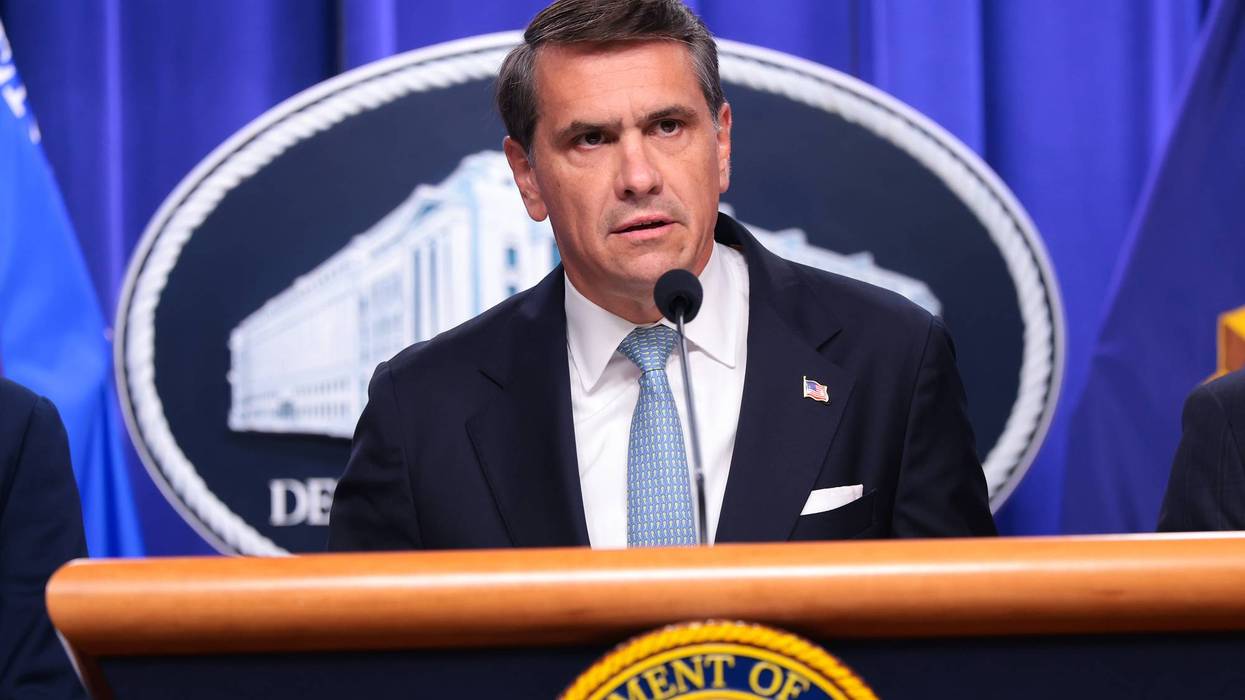
"There's no circumstance under which we shouldn't expect Blanche to seize ballots and seize voting machines and try to interfere in the process of the upcoming election."
One of the many questions swirling around new US Attorney General Todd Blanche is whether he'd go along with President Donald Trump's efforts to subvert the result of another election.
In 2020, when Trump attempted to overturn his loss to former President Joe Biden, his attempts to claim the result was marred by systemic fraud were met with resistance from then-Attorney General William Barr.
But under Blanche, who served for two years as Trump's personal defense attorney, things may be very different.
That's according to another of Trump's former lawyers, Ty Cobb, who served as White House special counsel for nearly a year during Trump's first term, as he came under investigation by then-special counsel Robert Mueller over his campaign's alleged coordination with the Russian government.
Cobb, who has been an outspoken critic of both Trump and his appointment of Blanche, appeared for an interview released Saturday on Zeteo's "Mehdi Unfiltered." Host Mehdi Hasan asked Cobb, "Come 2028, does American democracy survive Donald Trump?"
"I’m not sure they survive it in 2026,” Cobb responded.
Meet the Former Trump White House Lawyer Who Says Our Democracy Could Be ‘Screwed’ in 2026 by Mehdi Hasan
Ty Cobb, who represented the Trump White House during the Mueller investigation, questions whether democracy will survive the midterms and accuses Trump of 'unprecedented' corruption.
Read on SubstackNoting Barr's resistance to Trump in 2020, Hasan asked: "If the midterms don’t go Trump’s way this fall, is there any world in which Todd Blanche stands up to Trump if he’s asked to find some fake evidence of voter fraud, or are we screwed now?”
“We’re screwed,” Cobb said bluntly.
“Great,” Hasan said. “That’s what I suspected.”
Trump has, on multiple occasions, floated the idea of canceling the midterm elections outright and has enacted measures aimed at blocking mail-in voting and seizing voter information from states. He has also said he wants Republicans to "nationalize" elections in Democratic-leaning locales.
Cobb noted that Blanche "has already echoed [former Trump chief strategist] Steve Bannon's view that [Immigration and Customs Enforcement] should be on the street during the election," adding, "I think we'll almost certainly see that."
Hasan pointed out that the administration has routinely ignored court orders, especially with regard to its immigration enforcement. Cobb predicted that "the level of noncompliance" so far "is nothing compared to what we're about to see."
He said that if Democrats take the US House of Representatives and begin pursuing investigations, he suspects there will be "a number of contemptuous acts" by the administration. "We can count on the Justice Department to pursue zero of those referrals."
"That's assuming that the midterms actually produce a Democratic Congress," he continued, noting that even if one were elected legitimately, "whether they get seated or not by [Republican House Speaker] Little Mikey Johnson and his service to the president, that remains to be seen."
Cobb said that's in addition to other "dangers" around the election, including the presence of ICE agents. "Blanche has suggested that people should be happy to see ICE at the polls."
Where Barr refused Trump's requests to do so in 2020, Cobb said, "There's no circumstance under which we shouldn't expect Blanche to seize ballots and seize voting machines and try to interfere in the process of the upcoming election."
"I think that the president has made it very clear that he doesn't want immigrants or people of color to have the ability to go to the polls," Cobb said. "He's going to do everything he can in blue states and elsewhere to try to prevent this election from going smoothly."

"Israeli-occupied territory is not a 'safe place' for all Jews," said one Jewish American activist.
The Israeli government is closing its doors to some Jewish Americans. Their crime? Volunteering to protect Palestinians in the occupied West Bank from violence by illegal settlers.
The Forward reported on Friday that at least seven young American Jews have had their electronic travel authorization (ETA) revoked over their involvement with activist groups involved with "protective presence." This practice involves unarmed nonviolent activists, often Israelis or other Jewish volunteers from abroad, accompanying Palestinians at risk of being attacked by Israeli settlers.
None of the seven Americans who spoke with The Forward had been arrested or charged with crimes.
One activist from New York, Sam Sherman, said he and some other volunteers received emails informing them that their status had been revoked while they were in the West Bank with a program known as Hineinu, started by the Center for Jewish Nonviolence in 2021.
The program places Jewish volunteers within Palestinian communities for around three months, where they participate in protective presence, accompany Palestinians at risk of attack, and document human rights abuses with the hope of deterring them.
Sherman said that while he was volunteering in Masafer Yatta in the Southern West Bank, he was harassed by a group of soldiers, police, and armed settlers who photographed his passports.
“We were just there hanging out with people, essentially,” he said. “But we were treated as if it was almost criminal for us to be there.”
Other activists explained that once Sherman left, he likely would not be allowed to return unless he immigrated there permanently.
"If I’m the wrong kind of Jew for Israel,” he said, “Sure. Great.”
Increasingly, the Israeli government seems to believe that people like Sherman are the wrong kinds of Jews for Israel.
In April 2024, Israel's far-right national security minister created a police task force aimed at handling foreign and Israeli left-wing activists. He has taken credit for having dozens of activists deported from the country.
As +972 Magazine reported back in October 2024, the task force was set up after the Biden administration began imposing sanctions on violent Israeli settlers and settler organizations.
Activists detained and deported by the task force have described being threatened, intimidated, and falsely accused of crimes like terrorism during interrogations by soldiers.
According to the Center for Jewish Nonviolence, dozens of its foreign volunteers in Hineinu and other protective-presence initiatives have had their entry permits revoked over the past two years.
News of Israel's efforts to keep out Jewish American activists comes amid an extraordinary surge of settler violence in the West Bank that the United Nations recently said had reached an “all-time high."
As of Late July, the UN Office for the Coordination of Humanitarian Affairs reported that 18 Palestinians have been killed this year in incidents involving settler attacks, already surpassing the total killed all of last year. About 900 Palestinians have been injured this year in settler attacks, representing more than half of all the Palestinian injuries documented in the West Bank this year.
Cameron Kasky, a Jewish American activist who was recently detained by armed settlers in the West Bank while visiting with US Rep. Ro Khanna (D-Calif.), said Israel's treatment of Jews who show solidarity with Palestinians calls into question its purported commitment to Jewish safety.
"Israeli-occupied territory is not a 'safe place' for all Jews," Kasky said. "Jewish American, Israeli, and European activists are frequently brutalized by Jewish settlers and soldiers."

"Let nobody think Trump has given up on taking Greenland," warned one professor of European politics.
After appearing to back off earlier this year, President Donald Trump this week renewed his threats to seize Greenland. A Saturday report that a Texas oil company with ties to Trump had begun preparing to drill in the Arctic territory without permission has raised fresh concerns that his push for control of the island may already be moving beyond rhetoric.
As The Guardian reported, Greenland’s government issued a “strong warning” last week after learning that a Texas oil company called Greenland Energy had begun making unauthorized preparations for oil extraction in Jameson Land, a remote area of eastern Greenland, including bringing drilling materials ashore.
The company, founded last year, has claimed that Jameson Land may contain $1 trillion worth of crude oil and announced plans to drill two wells there—a project that requires approval from Greenland’s government.
The company also has ties to several Trump allies and associates. According to The Guardian:
Greenland Energy has retained Phil McGraw, better known as Dr. Phil, a prominent right-wing former chatshow host who served on Trump’s religious freedom commission, to make a documentary series that will “capture the mission of these modern-day wildcatters.”
It has also appointed as a director a US Navy veteran who is working on Golden Dome, the missile defense plan for which Trump says controlling Greenland is “vital.”
Larry Swets, Greenland Energy’s chair and a big shareholder, appears to enjoy access to Trump’s circle. He has said the oil project is “not related to American annexation.”
A Greenland Energy representative falsely claimed in June that the company had permission to place equipment on Jameson Land, before later saying there had been confusion.
But the following month, residents saw a barge arrive with drilling equipment. A Danish outlet confirmed that the delivery was intended for Greenland Energy.
Following the delivery, Greenland’s government said on July 30 that the company "did not have the necessary approvals from the mineral resources authority" and would receive a warning that "all future logistical matters must be advised and approved by the mineral resources authority—before they are carried out."
Two days later, Trump posted an ominious digitally altered image to Truth Social depicting himself as a giant looming over a Greenlandic town, captioned "Hello, Greenland!"
A day earlier, Trump had appeared on the right-wing network Real America’s Voice, where host Steve Gruber reminded him that he had predicted Greenland would be under US control by the time he leaves office in 2029.
“You’ll be right," Trump replied. "Greenland is important. Not from their standpoint, from our standpoint. You should make that bet.”
Before this week’s comments, Trump had spoken far less publicly about Greenland since January, when he threatened to use military force to take over the island if Denmark did not cede it. To pressure NATO allies, Trump threatened steep tariffs on several European countries, but backed off after Europe pledged retaliatory tariffs, causing panic in the financial markets.
"Let nobody think Trump has given up on taking Greenland," said John O’Brennan, professor of European politics at Maynooth University in Ireland. He added that Greenland Energy’s unauthorized activity "is the latest act of lawlessness his acolytes are engaged in."
Kenneth Roth, the former executive director of Human Rights Watch, responded to the story by asking, "Has Trump’s invasion of Greenland already begun?"
Historian Ruth Ben-Ghiat suggested it was possible. "Invasions," she said, "often start with 'technical' projects that justify the presence of operatives and 'technical experts' who are also doing recon and advance prep."
The Greenlandic government ultimately said it “would not be proportionate” to order Greenland Energy to remove the drilling equipment, a decision that The Guardian said underscored the difficult position facing its officials.
"They could grant permission for oil drilling, even though the planned wells appear to fall within a conservation area protected by the Ramsar convention on wetlands," the report explained. "Or they could refuse and, some worry, give Trump a pretext to advance his imperialist agenda."
Although the project has not been approved, a Greenland Energy representative said a vessel carrying additional drilling equipment would depart Canada in September, with drilling set to begin in October.
Jessica Berlin, a senior fellow at the Center for European Policy Analysis, warned that allowing the equipment to remain would signal weakness that Trump could exploit.
"Don’t even think about allowing this," she wrote in a post directed to the Greenlandic and Danish governments. "If you give them an inch, they’ll take 100 miles. Kick them out now or accept that you just opened the floodgates."
"Like Putin, you can’t negotiate with Trump," she added. "Showing weakness will just guarantee the next outrage."
As part of the Kingdom of Denmark, Greenland is covered by NATO’s Article 5 collective-defense clause, which obligates member nations to defend one another from armed attack. But NATO has no precedent for how Article 5 would apply if one member—the US—attacked another.
O'Brennan warned, "Europe—you are about to be seriously tested."
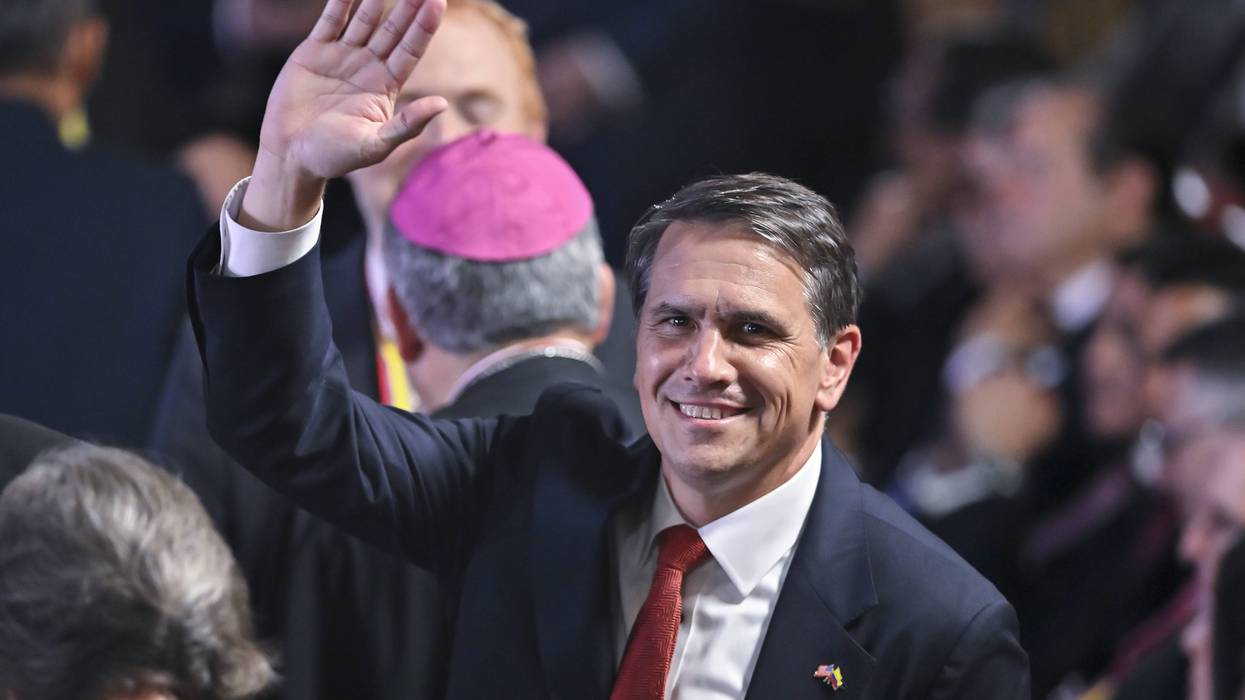
"If he is tasked with leading Trump’s revenge agenda against his political enemies and critics, we have every reason to believe he will execute this mission with eagerness and fealty."
Early Saturday, outgoing Sen. Bill Cassidy cast the deciding vote to confirm Todd Blanche as US Attorney General shortly after outlining a litany of reservations about the nominee.
Around 4:30 am ET, the US Senate voted 50-49 to confirm Blanche, President Donald Trump's former personal attorney and acting attorney general since April, as the nation's chief law enforcement officer. It did so despite widespread concerns, including among some Republicans, that he would use the office primarily to carry out the president's whims.
Sen. Lisa Murkowski (Alaska), one of two Republicans who voted against Blanche, outlined her concerns in a social media post Friday ahead of the vote, saying Trump had "accelerated" the "politicization—even weaponization" of the US Department of Justice (DOJ) and that Blanche had played a part.
"I take issue with the handling of the release of the Epstein files; the sweeping immunity protections granted to the president, his family, and their businesses; the statements that have been made to anti-abortion groups; and the repeated targeting of individuals ranging from former administration staff to sitting US senators," Murkowski said.
Murkowski also expressed doubt about Blanche's promise to eliminate the department's so-called $1.8 billion "weaponization fund" for Trump's supporters and allies—including January 6 Capitol insurrectionists. Referring to it as a "slush fund," she said confirming Blanche would cost the Senate any "leverage" to prevent it from being revived.
In a speech Friday ahead of the vote, Cassidy (R-La.)—who lost his Senate primary in May after being attacked by Trump as "disloyal"—raised similar concerns about Blanche, but ultimately said they did not prevent him from supporting the nominee.
"Mr. Blanche showed poor judgment in approving the anti-weaponization slush fund and exempting the president from [Internal Revenue Service] audits," Cassidy said on the Senate floor. "Mr. Blanche said these were mistakes and has made efforts to kill the slush fund."
To secure his confirmation, Blanche struck a deal with Republican holdouts, including Sens. Thom Tillis (NC) and John Cornyn (Texas), earlier last week and issued an order to eliminate the $1.8 billion fund, but did not agree to end the exemption from tax audits of Trump's past activity.
Cassidy also said he was concerned about "DOJ bringing suits against political enemies," but argued that Trump's "unrelenting" targeting of his foes meant any attorney general he appointed would face the same pressure.
To address the allegation that Blanche would act as a "yes-man" for Trump, Cassidy quoted William Barr, who served as attorney general during Trump's first term: "Because of his previous client-attorney relationship with President Trump, Mr. Blanche would be precisely the person to push back on President Trump."
Sen. Chris Coons (D-Del.), who sits on the Senate Judiciary Committee, said on CNN Friday night that the Republicans who were voting to confirm Blanche despite their reservations "know better" than to trust him and would ultimately "regret" the decision.
"He advanced... this $1.8 billion slush fund. That's a terrible idea. And frankly, that my colleagues and friends, John Cornyn and Bill Cassidy, accept this paper-thin excuse of a signed deal by Todd Blanche doesn't pass the smell test because, frankly, President Trump is the one who continues to berate and push for that weaponization fund," he said. "I have no confidence that Todd Blanche won't just turn around and give it to him once confirmed."
Asked about Cassidy's reasoning that Blanche, as Trump's former attorney, would be more willing and able to constrain the president, Coons said, "I don't buy that at all."
"What I've seen from Todd Blanche in the role of [acting] attorney general and in his confirmation hearing was that he still thinks of himself as President Trump's personal lawyer, not the person who is trying to protect the Department of Justice and the Constitution from presidential overreach," Coons said.
Ultimately, just two Republicans joined every Democrat to vote against confirming Blanche—Murkowski and Sen. Susan Collins, who faces a difficult reelection battle against Democratic nominee Troy Jackson in Maine. Cassidy, Tillis, and Cornyn all voted yes.
Former Ambassador Norm Eisen, the co-founder and board member of Democracy Defenders Action, said that Blanche's confirmation was "a dark day for the rule of law."
"Senate Republicans sounded the alarm, rightfully so, calling out the ‘fund that would pay people who beat police officers,’ and exposing a nominee who has never stopped serving the personal and political interests of Donald Trump. Yet, at the precipice, they lost their nerve and the majority voted for him anyway."
Praveen Fernandes, vice president of the Constitutional Accountability Center, said that approving the slush fund was "one of the most brazen attempts to circumvent the law and benefit Trump and his cronies."
She added that every senator who voted for Blanche "cast a vote in support of the Blanche-led Department of Justice’s continued failure to comply with the Epstein Files Transparency Act and its unconscionable treatment of Epstein survivors, its efforts to wipe clean the records of those who participated in January 6th violence against lawmakers and law enforcement officers, its record of weaponized prosecutions, and its brazen rejection of the notion of prosecutorial independence from White House pressure."
Lisa Gilbert, co-president of the watchdog group Public Citizen, said that "Moving forward, our country has to contend with an attorney general who sees himself as a personal servant to Donald Trump instead of a public servant to the American people."
"If he is tasked with leading Trump’s revenge agenda against his political enemies and critics, as he likely will be," she said, "we have every reason to believe he will execute this mission with eagerness and fealty."

US Ambassador to Israel Mike Huckabee—who last year admitted Gazans were starving—was among those noting a new global hunger report by the UN agency that reported the 2025 famine as it unfolded.
For nearly three years, Israeli officials and their US backers have denounced United Nations agencies reporting the facts of Israel's genocidal assault on Gaza as lies, but now many of them are citing the latest global hunger study by the United Nations Children's Fund as proof that last year's famine that killed at least hundreds of Palestinians in the coastal exclave was a "hoax."
The UNICEF-led State of Palestine Nutrition Cluster Coordination Meeting report, published on July 22, shows decreased hunger rates in areas of Gaza accessible to those conducting the survey. With Israeli forces controlling the majority of Gaza's territory and much of the strip flattened and inaccessible, the report's authors warned that "the survey findings should therefore be interpreted as representative."
This did not stop the Israeli government and media, and Israel's supporters and sympathetic media abroad, from citing UNICEF—which on Thursday said that Israel is killing about one child a day in Gaza despite a so-called ceasefire—and the broader UN, which they formerly accused of "lies," "antisemitism," "blood libels," and "hoaxes" throughout a war that a UN commission of inquiry called a genocide.
"Once again, facts prevail over fiction," Israeli Ambassador to the United Nations Danny Danon said. "UN bodies are acknowledging that the false narrative against Israel is falling apart."
US Ambassador to Israel Mike Huckabee may have forgotten his acknowledgement last year—along with President Donald Trump and Vice President JD Vance—that Palestinians were "starving" in Gaza, aspersing the media for reporting on the starvation.
Eylon Levy—the British-Israeli former spokesperson for Israel known for purveying disinformation like the infamous October 7 "beheaded babies" lie—also ran with the narrative, posting on X that "the 'Gaza Famine' was always a hoax."
Except it wasn't.
UN agencies and other humanitarian groups started sounding the alarm on looming starvation in Gaza in the weeks after Israel began annihilating the strip in retaliation for the Hamas-led attack of October 7, 2023. By February 2024, UNICEF warned that "famine is imminent" in Gaza as the UN Office for the Coordination of Humanitarian Affairs cited the deaths of six infants from malnutrition and dehydration.
As Gaza's hunger crisis worsened under Israel's "complete siege," UN agencies, including UNICEF, regularly warned about starvation in the strip. In February 2024, UN officials were accusing Israel of using starvation as a weapon of war—one of the alleged crimes against humanity and war crimes for which Israeli Prime Minister Benjamin Netanyahu and Yoav Gallant, his former defense minister, are wanted by the International Criminal Court in The Hague. Michael Fakhri, the top UN expert on the right to food, accused Israel of genocidal forced starvation of Gazans.
In August 2025, the Integrated Food Security Phase Classification (IPC)—the UN-aided top global authority on hunger crises—declared a Phase 5, or "catastrophic," famine in Gaza as at least hundreds of Palestinians perished from malnutrition and related causes.
“Famine is now a grim reality for children in Gaza," UNICEF executive director Catherine Russell said at the time. “As we have repeatedly warned, the signs were unmistakable: children with wasted bodies, too weak to cry or eat; babies dying from hunger and preventable disease; parents arriving at clinics with nothing left to feed their children."
The IPC lifted Gaza's famine designation in December 2025, citing improved—but still highly restricted—access of humanitarian aid into Gaza following a nominal ceasefire agreement reached two months earlier. However, last month the IPC published an analysis showing that from mid-April to the end of June, more than 1.2 million people, or 59% of Gaza’s population, were experiencing Phase 3 (crisis) or worse levels of food insecurity. This included about 212,000 people in Phase 4 (emergency).
"The situation remains fragile," IPC warned.
Many of the people who deny that Israeli forces have killed or wounded a quarter million Palestinians in Gaza or that Israel is committing genocide there—a conclusion reached by numerous UN officials, scholars, jurists, rights groups, and the approximately 20 nations that formally joined South Africa's pending genocide case against Israel at the International Court of Justice—are the same ones who have denied not only the Gaza famine, but that anyone was ever starving there.
They asked to see photos of starving Palestinians, and when shown them, they, and corporate media outlets including The New York Times, attempted to explain or even dismiss the evidence by claiming the emaciated—or often dead—children suffered from preexisting conditions, as if that somehow absolved Israel for their deaths. Others posted images of a Gaza market stocked with food or overweight Palestinians in a bid to debunk the fact of starvation in Gaza.
Still others dismissed images of starving Gazans as Hamas propaganda, with US media personality Megyn Kelly opining that Palestinians are "fine having their own children starve just as long as they can put them on camera."

"These are the first smart glasses guaranteed to never record nude videos of you and send them to random people. I never thought I’d have to guarantee that, but here we are.”
As Meta faces heat for selling artificial intelligence-powered sunglasses that record people without their knowledge, the web browser DuckDuckGo responded with what it called "the world's most innovative anti-surveillance sunglasses"... otherwise known as normal sunglasses.
Meta, the Big Tech behemoth that owns Facebook and Instagram, likely did not expect to become the subject of relentless scorn and mockery over its new line of "Meta Glasses," which retail for upwards of $299 and have been plugged by the likes of Kylie Jenner.
But internet users have saddled the shades with the nickname "pervert glasses." For good reason: among other high-tech bells and whistles, the latest version is equipped with photo and video technology that some of the clientele have used to discreetly film strangers.
As the Los Angeles Times chronicles, some women have been approached by bespectacled creeps only to later find a recording of the encounter posted online, entirely without their consent. Although the glasses have a white light to indicate that recording is in progress, some elite-tier perverts have found ways to disable it.
DuckDuckGo, a company that has billed itself as an alternative to its data-mining, privacy-violating competitors, responded to the backlash against Meta by partnering with the eyewear company Knockaround and selling its own pair of glasses whose primary gimmick is that they do absolutely nothing but sit on your face.
"No camera, no microphone, no AI, no battery, no electronics of any kind," reads the website, "Just a beautifully crafted pair of matte black sunglasses with a glossy DuckDuckGo logo, designed to block the sun and never send data to the cloud."
“We’re obsessed with innovation. So when Big Tech started putting cameras in smart glasses, we asked ourselves a radical question: What if we just didn’t do that?” a July 30 social media post from DuckDuckGo said. “These are the first smart glasses guaranteed to never record nude videos of you and send them to random people. I never thought I’d have to guarantee that, but here we are.”
This was not merely a hyperbolic what-if. It's been reported that Meta's AI glasses have recorded videos of users having sex and using the bathroom that were then viewed by Kenyan subcontractors involved in manually training Meta's AI systems.
Internal documents have also revealed plans by Meta to embed facial recognition technology into the glasses, which dozens of rights groups, including the American Civil Liberties Union, warned "would allow anyone wearing them to identify by name any strangers in their vicinity—including at protests, medical clinics, and businesses."
After being secretly implemented for a brief period without being accessible to consumers, the technology was rolled back. But concerns remain that it could be added again, and there have been growing calls from lawmakers and privacy groups in the US and Europe to ban the glasses.
One British activist group called Everyone Hates Elon has begun a viral guerrilla marketing campaign against the Meta glasses.
One satirical ad, placed at a bus stop in London, shows the infamous sex criminal Jeffrey Epstein wearing the frames, with the tagline "glasses for people who don't do consent" next to the Meta logo.
"These glasses feel like they’re making perverts’ and abusers’ lives easier when we should actually be making women’s lives easier. They are pervert glasses," a spokesperson for the group told The Times of London. "We wanted to use Jeffrey Epstein to highlight who these glasses will be used by, and it’s powerful men and abusers.”
In this environment, it's perhaps not a surprise that DuckDuckGo's tech-free alternative has been a hit. The company said that within a week, the shades, which cost $35 a pair, had sold out.

"We cannot allow Meta to put its short-term profits above the emotional well-being of our kids," said Sen. Bernie Sanders.
A New Mexico court on Thursday ruled that Meta must pay an additional $567 million fine on top of the $375 million a jury fined the tech giant in March for harms caused to teens and children who use its Instagram and Facebook social media platforms.
First Judicial District Judge Bryan Biedscheid said in his 68-pager ruling that "significant numbers of people in New Mexico experience harm from Meta’s products due to risks of sexual exploitation, interference with education, and adverse mental health outcomes."
"The harm to the impacted New Mexicans is not doubtful, eventual, or contingent, but an immediate, temporally connected, and highly probable result of Meta’s actions," he continued.
"The youth mental health crisis has inflicted significant and widespread harm in New Mexico in terms of the number of youth suffering mental health harms, the profound suffering they and those in their families suffer, and the resulting interferences with the functioning of the schools, law enforcement, [and] healthcare systems in New Mexico," the judge added.
The case centered on allegations that Meta knowingly designed and operated Facebook and Instagram in ways that exposed children to harmful content, encouraged excessive use, and failed to adequately protect minors from exploitation. New Mexico officials argued that internal company knowledge and outside warnings showed Meta was aware of risks associated with its platforms but did not act sufficiently to address them.
Most of the new fine—$420 million—will go toward funding youth treatment services, while the rest is designated for awareness and prevention, screening services, and other costs.
Biedscheid's order also compels Meta to make changes to its platforms in New Mexico, including removing "like" counts and only showing them to minors with parental consent, and prohibiting overnight push notifications for users under age 18.
"Regardless of whether it is labeled as an 'addiction' or 'problematic use,' the evidence at trial proved that design elements, such as autoplay, infinite scroll, 'like counts,' and push notifications create a product that, particularly for adolescent users, is highly rewarding psychologically and neurochemically," he wrote. "As a result, for many, it is irresistibly compelling to start scrolling and very difficult to stop or abstain from its use."
"In addition," the judge added, "algorithmic content recommendations can create harmful feedback loops and 'rabbit hole' users. Within a similar vein, 'like counts'... can provide a potentially harmful focus for adolescent users."
Meta spokesperson Andy Stone said the company would appeal the ruling, claiming: “We work hard to keep people safe on our platforms and have been transparent about the challenges of identifying and removing bad actors and harmful content. We remain confident in our record of protecting teens online and will continue to defend ourselves against claims that misrepresent the facts."
New Mexico Attorney General Raúl Torrez hailed the ruling, saying that “Meta built products it knew would fuel addiction, deepen a youth mental health crisis, and expose children to sexual exploitation, then lied to parents and policymakers about the danger. Today, it pays for that choice.”
At Fairplay—a children's advocacy group—executive director Josh Golin hailed the "landmark ruling" as "the clearest indication yet that the tide is turning when it comes to protecting kids from social media."
"For the first time, Meta is being compelled by a court to change its dangerous and harmful design," he continued. "And with so many states lined up to sue Meta and other social media companies, we should expect to see a lot more injunctive relief to make online platforms used by young people safer."
“This ruling also clearly indicates why families need the Kids Online Safety Act," Golin added, referring to a controversial bill advanced this week by the Senate Commerce Committee. "The judge said it was up to Congress to address the addictive features on Instagram and other social media platforms. KOSA’s duty of care against compulsive use is the key to ensuring that Meta and other social media companies stop designing for addiction, as addictive design is the root of all social media harms.”
Justin Mazzola, deputy director of research at Amnesty International USA, said in a statement: "This verdict is an important step towards creating safer social media for children and young people. For years, Amnesty International has warned that major social media platforms have been designed to maximize engagement and profit, while failing to adequately protect children’s rights."
“Crucially, the court went beyond imposing a financial penalty," he continued. "By ordering changes to platform features, including removing 'like' counts for people under 18 and restricting overnight notifications, the ruling recognizes that the harms children experience online are often the result of deliberate design choices."
“Amnesty has been calling for exactly this kind of action," Mazzola added. "Child safety must be built into platforms from the start, not added as an afterthought once harms are identified. This decision sends a clear message that social media companies cannot continue to prioritize engagement at the expense of children’s well-being and rights.”
Congresswoman Pramila Jayapal (D-Wash.) said on Bluesky: "This is good news. For far too long, Big Tech corporations have put their bottom lines ahead of the health and safety of kids on their platforms."
"Congress must continue to push for accountability and real guardrails for companies like Meta as tech giants continue to grow," added Jayapal, who was critical of the Kids Internet and Digital Safety Act approved by the House of Representatives in June.
US Sen. Bernie Sanders (I-Vt.) also welcomed the ruling, posting on X that billionaire Meta CEO Mark Zuckerberg's "greed is fueling a youth mental health crisis in America."
"Today, a judge ordered Meta to pay a $567 million fine for the damage it has done to our kids," Sanders added. "Good start. We cannot allow Meta to put its short-term profits above the emotional well-being of our kids."
"It's past time that we fix our broken, profit-centered healthcare system that leaves many of us struggling to get care, and most of us struggling to pay for it when we do," said the US Senate candidate.
Democratic US Senate candidate Troy Jackson on Friday was among the Maine leaders expressing anger over the decision by MaineHealth, the state's largest nonprofit healthcare system, to close a labor and delivery unit that's crucial to families in three counties after local residents organized a monthslong grassroots effort to keep the department open.
"I'm angry," said Jackson, the former state Senate president who officially became the Democratic candidate last month. "This marks the 12th labor and delivery ward we've lost in this state since 2015."
With rural hospitals across Maine expected to continue closing—partially due to nearly $3 billion in Medicaid cuts over the next decade, which were included in President Donald Trump's One Big Beautiful Bill Act along with tax cuts for the wealthy—Jackson repeated his call for a government-funded universal healthcare system.
"It's past time that we fix our broken, profit-centered healthcare system that leaves many of us struggling to get care, and most of us struggling to pay for it when we do," said Jackson. "We must pass Medicare for All."
MaineHealth's Board of Trustees voted Thursday in favor of closing the labor and delivery unit at Lincoln Hospital on the health network's Miles Campus in the coastal town of Damariscotta. The decision leaves Lincoln, Waldo, and Sagadahoc counties without any labor and delivery units, and leaves half of the state's 34 hospitals without birthing wards.
The hospital system said it had reached the decision because it cannot "continue providing safe, reliable care for every mother and every baby, every day and every night," according to CEO Andrew Mueller.
Labor and delivery "requires highly specialized teams that are available around the clock and prepared to respond immediately to routine deliveries and unexpected emergencies," said Mueller. "We concluded that we could no longer consistently ensure that level of staffing and clinical coverage at Lincoln Hospital over the long term.”
Cindy Wade, president of Lincoln Hospital, told community members ahead of the vote that the potential closure was "not driven by finance," while acknowledging that staffing is a problem for the facility.
The day before the decision was announced, a woman named Corinna Stum, who had been set to deliver her baby at Miles in January—a month after the unit is set to close—filed a lawsuit in an effort to stop the closure. Stum requested an emergency injunction while the court determines whether MaineHealth violated its obligation to serve the public and be transparent in its review process
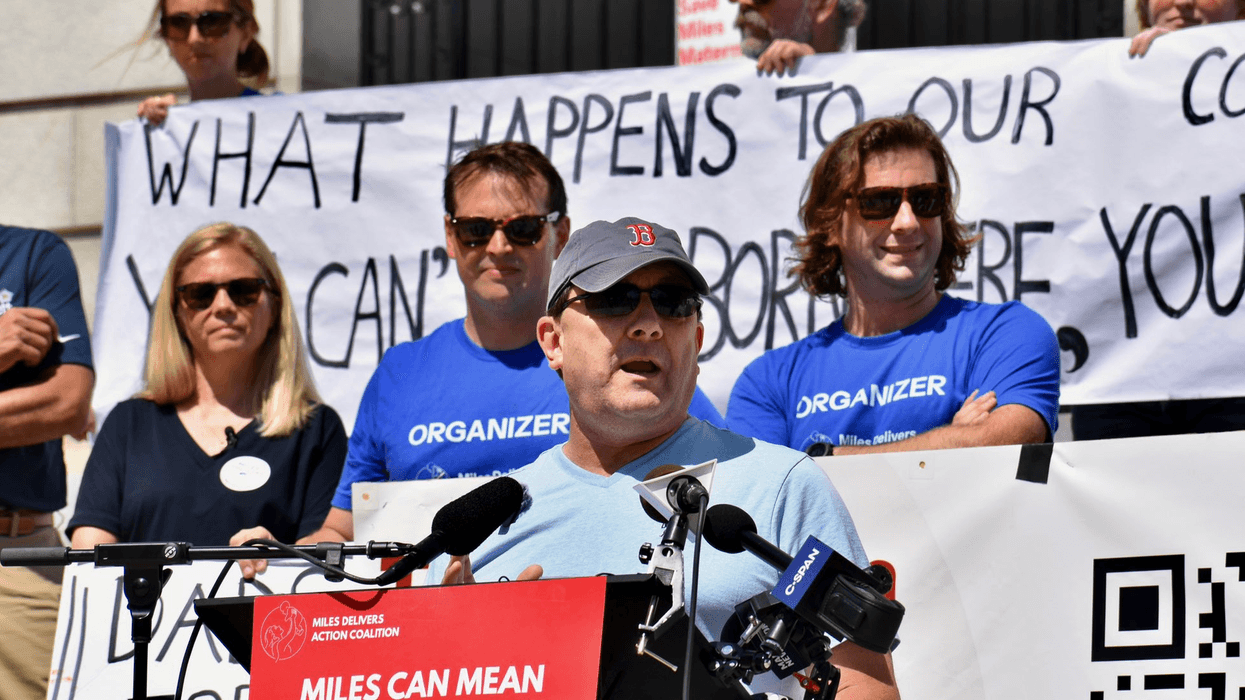
A grassroots organization called Miles Delivers Action Coalition, started by three women from the area, has held rallies alongside Jackson, Democratic gubernatorial candidate Hannah Pingree, and other local leaders, as well as working with clinicians to determine how the Miles Campus could deliver sustainable care for parents and babies and finding obstetricians who would be willing to work at the hospital.
The group also examined the finances of the $4 billion healthcare network, finding that the Miles Campus outperformed its parent system in terms of profitability and that deliveries at the hospital are on the rise, despite declining birth rates nationwide.
"A CEO paid $2.2 million should be expected to find solutions, not simply eliminate services," said the coalition as it rallied 10,000 supporters in a matter of months to help convince the hospital to keep the unit open.
When the coalition reached out to MaineHealth with its ideas for continuing to provide maternity services, the company argued that pregnant patients will be able to travel to Mid Coast Hospital for their deliveries—a 26-mile, 43-minute drive from Damariscotta.
When announcing the closure, MaineHealth also suggested families could also transfer their obstetrical care to Pen Bay Hospital, which is roughly the same distance from the town.
Dr. Tim Goltz, a family physician at Miles, told NPR earlier this week: "There's no doubt in my mind that if OB goes away at Miles, that there will be mothers and babies who die because of that decision. The literature is very clear that the further you have to travel to deliver a baby, the higher the risk is of serious complications and death. "
Miles Delivers Action Coalition said the vote on Thursday resulted in "one of the most harmful decisions our community will ever see," and accused MaineHealth of "cowardice."
“They have ignored the voice of our governor, politicians on all sides, the local ambulance service, businesses, far and wide, and they are creating a maternity desert in Lincoln County,” the group said. “This isn’t a hospital, it’s a morgue.”
Former US Senate candidate and organizer Jordan Wood, also an advocate for Medicare for All, said decisions like MaineHealth's would lead Mainers to "lose trust and faith in democracy."
"Millennials, women, moms, young moms, pregnant women organized in our community the minute that news broke that there was a possibility that Miles would close," said Wood. "It can feel like a failure, but it's not... We will fix this problem. This is a setback, it's not a failure."
MaineHealth just voted to close labor and delivery at Miles. The last birthing unit in Lincoln County. You can't make a birth profitable. So this system cuts it. Every time.
This isn’t the end of our fight. pic.twitter.com/fpXLzkAYKi
— Jordan Wood (@JordanWood) August 7, 2026
"There is no way to make labor and delivery profitable," said Wood. "We are living in an absolutely broken healthcare system by profit. By for-profit health insurance companies and pharmaceutical companies that only make money off of us being sick... This is the reminder for so many of us about why this healthcare system is so corrupt and broken and in need of a total overhaul."
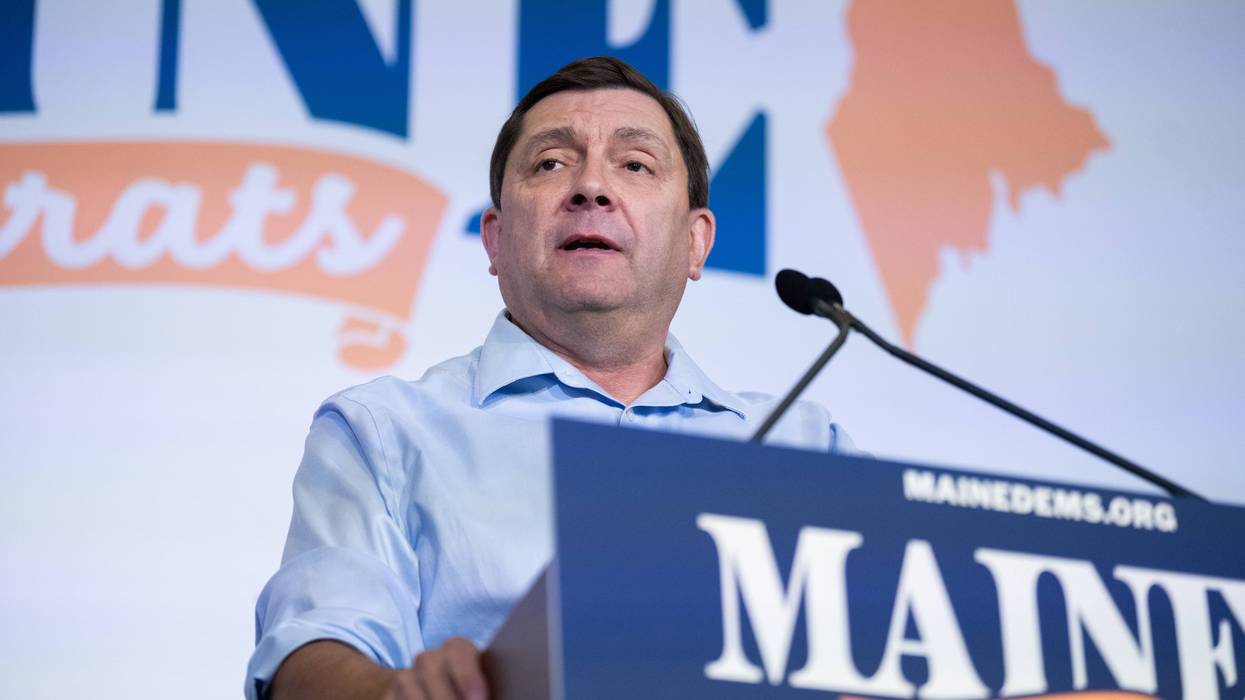
"Susan has voted with Trump 96% of the time. The other 4%? She waits until her vote won’t change the outcome."
Democratic US Senate candidate Troy Jackson on Friday accused rival Sen. Susan Collins of trying to pull the wool over Maine voters' eyes with her decision to vote against confirming Todd Blanche as the next US attorney general.
In a social media post, Jackson pointed to a statement from right-wing radio host John Fredericks praising Collins' (R-Maine) "very savvy team" for having her vote against Blanche while already knowing the former personal attorney for President Donald Trump would have enough support in the US Senate to be confirmed.
"They know that even without her, Blanche has the votes to get confirmed," Fredericks said. "So this was a vote to help her get elected, to help her with Maine voters, but it does nothing to hurt Todd Blanche because he’s already got the votes."
Jackson accused his Republican opponent of participating in a shell game where she arranged to be shielded from what would have been a very damaging vote.
"Weak sauce," wrote Jackson. "Susan has voted with Trump 96% of the time. The other 4%? She waits until her vote won’t change the outcome."
Jackson, the former president of the Maine state Senate, predicted that voters would see right through Collins' ploy.
"Mainers aren’t stupid," wrote Jackson. "We deserve a fighter who will actually stand up to Trump."
Collins earlier this week announced her intention to vote against Blanche, who as assistant attorney general orchestrated Trump's widely criticized $1.8 billion slush fund for political allies.
On Friday morning, Sen. Bill Cassidy (R-La.) announced he would be the final vote needed to drag Blanche's confirmation over the finish line, which led some critics to speculate that Collins knew all along that her vote would not be needed.
Collins in 2018 was a decisive vote in favor of confirming US Supreme Court Justice Brett Kavanaugh. During her speech announcing her vote for Kavanaugh, she insisted that he would uphold the precedent set by Roe v. Wade establishing the constitutional right to an abortion.
Four years later, however, Kavanaugh joined the Supreme Court majority in overturning Roe, and Jackson has been hammering Collins' decisive confirmation vote as a major reason why she must be unseated this fall.
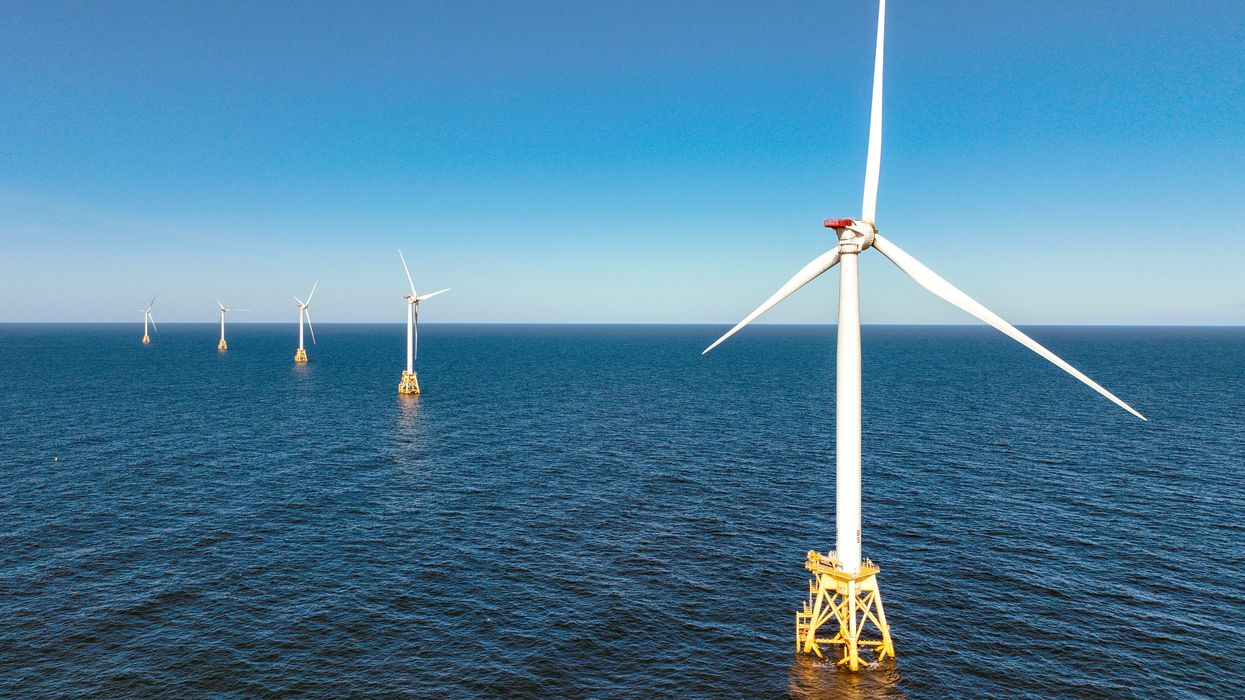
After RWE disclosed its new gas investments as part of the deal, one climate campaigner declared that "committing to reinvest over $1 billion in fossil fuels is a disastrous mistake."
Despite climate concerns and high prices from President Donald Trump's illegal war on Iran, his administration continued its assault on offshore wind this week, using another "taxpayer-funded bribe" to convince a company to instead invest in fossil fuels.
The German company RWE announced Thursday that it had reached a settlement with the US Department of the Interior to relinquish offshore wind leases off the coasts of New York, California, and Louisiana for $1.22 billion.
"After careful consideration, it was determined there is no path forward to permit these projects in the US for the foreseeable future," the firm said in a statement. "The company determined that this resolution best serves the interests of its stakeholders and allows it to direct resources toward energy projects that can be advanced with certainty."
RWE also disclosed that it would put $900 million toward an indirect 16% stake in a Louisiana liquefied natural gas project, and $300 million toward turbines for a pipeline of 15 natural gas peaking projects across target US markets.
Reuters reported that the deal is "the fifth, and largest, the administration has entered into this year as part of its wide-ranging effort to stop development of US offshore wind projects," which Trump has fought against since before becoming president. His current term has featured various moves collectively condemned as a "war against renewables."
The RWE deal was ripped by climate and labor advocates, as well as Senate Minority Leader Chuck Schumer (D-NY), who said that "everything the Trump administration does can be summed up in four words: CORRUPTION AT YOUR EXPENSE."
"Trump is again spending billions of taxpayer money to limit the US energy supply in favor of exporting more energy to countries like China," Schumer wrote on social media. "This will only make your utility bill MORE expensive."
Interior Secretary Doug Burgum fired back at Schumer, claiming that "your climate extremist energy 'transition' was actually energy SUBTRACTION," and "ZERO taxpayer money will be spent. It's a dollar-for-dollar repurposing of RWE's own money."
RWE explained that it had "invested more than $1 billion toward the leases and the development of these projects," and the new agreement resolves the company's "legal claims and provides $1.22 billion in settlement funds."
House Natural Resources Committee Democrats Ranking Member Jared Huffman (D-Calif.) joined Schumer and other critics in railing against the deal, saying Friday: "Trump just paid RWE over $1 BILLION in taxpayer money to walk away from offshore wind projects—including a project off Humboldt in my district—and invest in fossil fuels instead."
"This fake, illegal settlement kills good-paying jobs, raises electricity costs, and rewards Big Oil with taxpayer dollars," he continued. "When the accountability comes, and I promise you it's coming, everyone involved in these deals will answer for it."
This potential settlement has been feared for months. In May, over 50 US groups "alarmed to learn that RWE was contemplating a deal" sent a letter urging CEO Mark Krebber to resist the Trump administration's "bullying" and "vendetta against offshore wind."
Among those organizations was Friends of the Earth US, whose senior energy campaigner Raena Garcia declared Friday that "committing to reinvest over $1 billion in fossil fuels is a disastrous mistake."
"The Trump administration won't be around forever, and any company that cuts a deal like this should expect accountability eventually," Garcia added.
The BlueGreen Alliance, which brings together environmental groups and labor unions, has a webpage tracking the costs of the buyouts, which so far include $3.9 billion in taxpayer money, 21.15 gigawatts of anticipated energy, and over 57,000 projected jobs.
"The Trump administration is relentless in its war on offshore wind," alliance executive director Jason Walsh said of the latest deal. "Billions of taxpayers' dollars have gone to waste along with tens of thousands of lost potential jobs. At a time when energy demand and costs are rising, we are disheartened by this latest buyout. Now working people on three coasts will no longer get to reap the benefits of the clean and reliable energy that would have come from these projects."
The settlements still face legal hurdles. New York Attorney General Letitia James announced in June that she is leading a coalition that includes AGs from Connecticut, Maine, Massachusetts, New Jersey, Rhode Island, and Vermont in a lawsuit seeking to block one of them. California Attorney General Rob Bonta has sent a notice of intent to sue over another deal.
Despite Big Oil-backed Trump's attacks on renewables and support for climate-wrecking fossil fuels, new data shows that the United States is generating more power from the sun and wind than ever, as Common Dreams reported earlier Friday.
For example, in May, solar generation eclipsed every other source of electricity in Utah for the first time. Weber State University physics professor Dan Schroeder said that is "wonderful news for air quality, it's wonderful news for the climate, and it's wonderful news for jobs and the economy."