

SUBSCRIBE TO OUR FREE NEWSLETTER
Daily news & progressive opinion—funded by the people, not the corporations—delivered straight to your inbox.
5
#000000
#FFFFFF
To donate by check, phone, or other method, see our More Ways to Give page.
Daily news & progressive opinion—funded by the people, not the corporations—delivered straight to your inbox.

Today, Bold Nebraska, 350.org, Indigenous Environmental Network, CREDO, and Oil Change International launched a campaign, called "Solar XL," to build solar arrays along the route of the proposed Keystone XL pipeline in Nebraska. The solar panels, which will be installed in several locations along the route, will help power the farms and ranches threatened by TransCanada's use of eminent domain for private gain. The campaign will focus on crowdfunding through Bold Nebraska to support installation of the solar panels.
View fundraising campaign online: https://actionnetwork.org/fundraising/solar-xl-resisting-keystone-xl-by-building-clean-energy-in-the-pipelines-path
Download photos of landowners for media use with attribution: https://www.flickr.com/photos/350org/sets/72157683761876090/with/34935558323/
The Solar XL campaign is launching one month before the Nebraska Public Service Commission (PSC) is expected to hold the main legal hearing for TransCanada's Keystone XL pipeline. Nebraska is the last state to review the pipeline and the PSC has the ability to approve, reject or alter TransCanada's proposed route. Tens of thousands of comments have been submitted to the PSC from across the country, urging Commissioners to reject the permit.
The Keystone XL pipeline would carry 830,000 barrels a day of foreign tar sands from Canada through Montana, South Dakota and Nebraska then on to the export market. The pipeline would pass through farms, ranches, and Indigenous land, posing a threat to the Ogallala Aquifer and other water sources that could be contaminated by spills and leaks. A worst-case spill study showed the Platte River could be polluted with almost 6 million gallons of tar sands and chemicals like benzene.
The Solar XL campaign will put renewable energy directly in Keystone XL's path, underscoring the need to center solutions to climate change while resisting the expansion of the fossil fuel industry. Pipelines like Keystone XL would lock in disastrous levels of warming, exacerbating the climate crisis. With the Trump administration attempting to undermine U.S. action on climate, the need for a just transition to 100% renewable energy has never been greater.
The campaign will focus on crowdfunding through Bold Nebraska to support the installation of the solar panels in the lead up to the Nebraska Public Service Commission hearings on Keystone XL in August. On August 6th, one day before the hearings begin, pipeline opponents will march through the streets of Lincoln and urge commissioners to reject the Keystone XL permit and deny the use of eminent domain for private gain.
The solar panels will serve not only as a form of clean energy, but as a symbol of job creation and job growth in renewable energy, making a just transition away from fossil fuels all the more urgent. In 2016, solar power employed more people than oil, coal and gas combined, according to a report from the U.S. Department of Energy. These findings starkly contrast Trump's promises to "bring back" coal jobs, and his administration's work to dismantle climate protections. If permits are granted for Keystone XL construction in Nebraska, TransCanada will have to tear down homegrown clean energy in order to build, and will galvanize people across the country to fight back.
Quotes from landowners building clean solar energy in the path of Keystone XL:
"I am vehemently opposed to the Keystone XL pipeline mainly because of the properties of the contents of the tar sands oil it will carry -- this is not your Mother's crude oil, it is the Devil's, and it can kill," said Nebraska landowner Jim Carlson. "We must be focused on clean, renewable energy and America can get along just fine without this foul concoction they call bitumen that TransCanada wants to pipe across our precious soil and water."
"The need for the KXL pipeline product is non-existent in the United States," said Nebraska landowner Bob Allpress. "The monetary benefit to the peoples of Nebraska will be gone in 7 years, while the risks to our state are for the life of this pipeline. The installation of wind and solar production in Nebraska will provide many good Nebraska jobs and provide years of cheap electricity for everyone in our great state."
Partner quotes:
"Building America means relying on energy that protects our property rights and ensures we have clean drinking water. Foreign tarsands in the Keystone XL pipeline, that would flow to the export market, is not in our public or our state's interest," said Bold Alliance president Jane Kleeb. "When faced with challenges, Nebraskans find solutions together to show our communities' values and the bond to the land that TransCanada cannot break or buy."
"If Nebraska grants a permit to TransCanada, people across the country will be ready to defend this renewable energy project from the fossil fuel industry's grasp," said Sara Shor, 350.org Keep it in the Ground Campaign Manager. "Putting solar panels in the path of Keystone XL is a local effort that mirrors the future we want to see at a massive scale. Fossil fuel pipelines like Keystone XL are driving us towards disastrous levels of warming, and we're already seeing its effects. Meanwhile the pipeline route continues to cut through indigenous lands that are calling for alternatives. With a complete lack of leadership in the highest levels of government, it's up to us to fight for and build the renewable energy future we need."
"As protectors of the water, Mother Earth, and our communities, our resolute stance against dirty projects like the Keystone XL pipeline must be equally founded upon a belief in good projects like renewable, sustainable energy," said Dallas Goldtooth, Indigenous Environmental Network Campaign Organizer. "It's time to see a Just Transition away from fossil fuels, and like any tremendous moments of social change, it's frontline communities, leading the way. With these solar systems we are building literal beacons of change along the proposed route of what needs to end, the KXL pipeline and the fossil fuel regime it represents."
"Our fight against Keystone XL is two-fold: we're working to stop the pipeline from being built and to create the renewable energy solutions we need for a livable future," said Wayne Frederick, member of the Rosebud Sioux Tribe. "On the Rosebud reservation in South Dakota, renewable energy projects are already serving Indigenous peoples, and more are being planned. From Nebraska to Alberta, Indigenous peoples, farmers, and communities along Keystone XL's route know that our best resistance is through putting the answers in the path of the problem."
"The Keystone XL pipeline is an even worse idea now than it was nearly a decade ago when it was first proposed," said CREDO Deputy Political Director Josh Nelson. "By building solar panels directly in the proposed pipeline's path, the Solar XL project will serve as a powerful reminder that the future belongs to clean sources of energy like wind and solar, not dirty tar sands pipelines like Keystone XL."
"Keystone XL is yesterday's pipeline to transport yesterday's energy that even the Wall St. Journal now notes is no longer needed or wanted by oil companies" said Stephen Kretzmann, Executive Director of Oil Change International. "KXL is the 21st century version of the C&O Canal, which was made obsolete before it even opened by the new technology of railroads. The SolarXL project will amplify community and native concerns with the pipelines of the past, and light the way for all of us towards a clean energy future."
350 is building a future that's just, prosperous, equitable and safe from the effects of the climate crisis. We're an international movement of ordinary people working to end the age of fossil fuels and build a world of community-led renewable energy for all.

"The death penalty on its own is morally indefensible," said one critic. "Turning it into a public spectacle is an abomination."
The Pentagon on Thursday confirmed plans to livestream an execution by firing squad in December—a revelation that came amid fresh calls for the United States to end the death penalty after Tennessee botched two attempts to kill Christa Pike with injections of pentobarbital.
The US Army announced Wednesday that Nidal Hasan—a former military psychiatrist convicted of killing 13 people and injuring 32 more in a 2009 mass shooting at Fort Hood—will be executed at the Texas base at 1:00 pm Central Standard Time on December 3.
Secretary of Defense Pete Hegseth told the right-wing outlet Real America's Voice News that "we'll make sure that people are able to watch it, that it's public, because people need to understand that... there's serious consequences for these types of things."
Then, other outlets, including The Associated Press, reported that "officials in the Pentagon clarified Thursday that the execution would be livestreamed and that more details would follow."
The Washington Post reported that "if Hasan's execution is carried out, it would mark the first US military execution since April 13, 1961, when Army Pvt. John A. Bennett was hanged after being convicted of rape and attempted murder, according to the nonprofit Death Penalty Information Center, which monitors capital punishment. The military's last known firing squad execution was carried out by 'musketry' on November 9, 1945."
Hegseth's comments and the subsequent confirmation from the US Department of Defense were met with disgust and outrage.
"What a sick man," former National Nurses United communications director Charles Idelson said of the Pentagon chief on social media. "A. Executions have never been proven to be a deterrent to capital crimes. B. The spectacle of a public execution is morbid, it recalls the public lynchings so common during the Jim Crow era. C. If the shooter was white, I don't believe this would be public."
Hasan is a US citizen born to Palestinian immigrant parents. Just before he opened fire on soldiers who were set to deploy to Afghanistan, he shouted "Allahu akbar," an Arabic phrase commonly used by Muslims that translates to "God is great!"
While some critics called out Hesgeth, Obama administration speechwriter-turned-podcaster Jon Favreau took aim at Vice President JD Vance, who recently published a book about his faith journey, including his conversion to Catholicism. Favreau said that "I would like to hear our Catholic vice president explain why they're intentionally choosing to broadcast the death of a human being for the entire world to see, including children."
Producer and journalist Simon Thompson wrote: on social media: "Just when I think this administration couldn't get any worse. Livestreaming executions by firing squad? This administration, a Christian administration apparently, is making a snuff movie and treating it like a [pay-per-view] event."
Journalist Séamus Malekafzali similarly said, "Content with having desensitized the American public by broadcasting faceless images of Iranian sailors dying and buildings full of people leveled to the soundtrack to Halo, the government is now moving to live-streaming snuff films, faces and all."
"I know people hate when people make comparisons to American adversaries, but this is literally what ISIS did, save for the live aspect," he added. "Those executions were also done on camera under the auspices of nominally government institutions, just a different kind of government."
Although Trump left office the first time after overseeing a federal execution spree, American Immigration Council senior fellow Aaron Reichlin-Melnick said Thursday, "Jesus Christ, I didn't think we'd actually get to the 'public executions' stage of Trump's project to roll back the last 100 years of societal development."
Corbin Trent, co-founder of Justice Democrats, suggested it could backfire for the Republican administration. He wrote: "I'm completely in favor of this. I think more of this would go a long way to ending the death penalty."
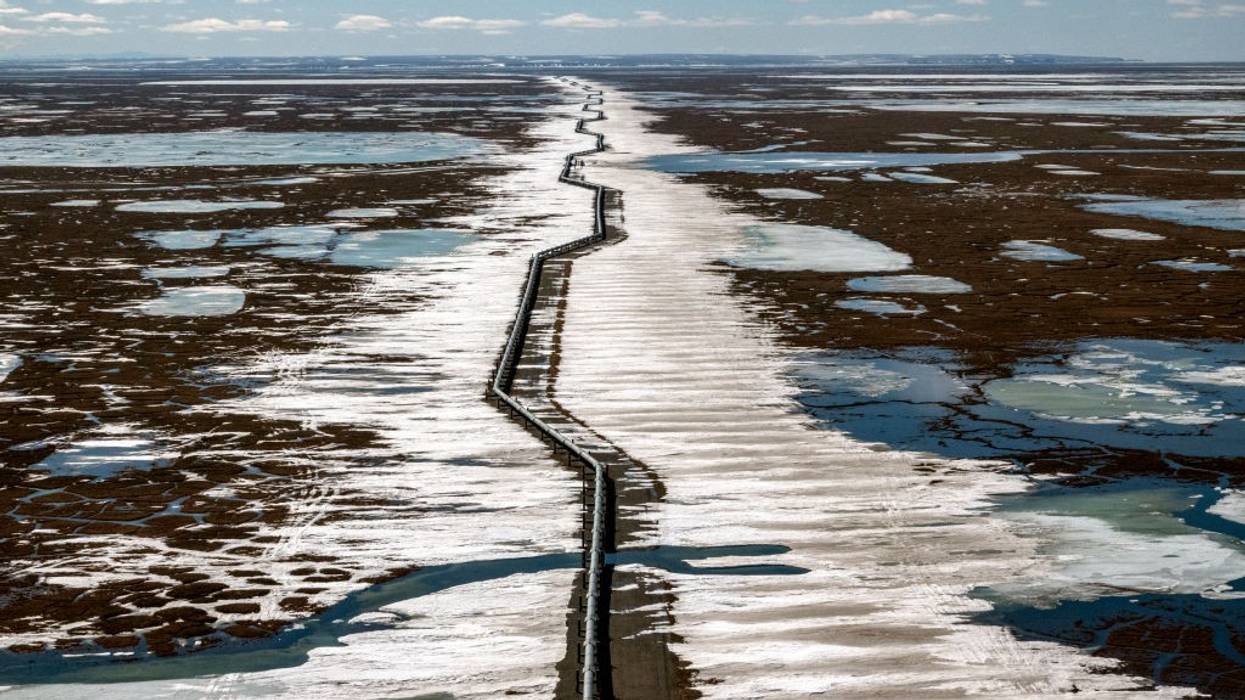
"The Trump administration is putting corporate profits ahead of people and the planet, and the Western Arctic will pay the price."
Just over a week after a leading US Senate Democrat described President Donald Trump's relationship with fossil fuel giants as "old-fashioned corruption, by a thuggish government and a desperate industry," his administration on Thursday announced yet another giveaway to climate polluters who want to exploit the Arctic.
The US Department of the Interior is moving forward with a plan to allow oil and gas companies to conduct certain wintertime activities at the National Petroleum Reserve in Alaska without reviews generally required by the National Environmental Policy Act—a landmark law long targeted by Trump's Republican Party.
"In issuing this categorical exclusion, this administration is seeking to fast-track large-scale oil drilling and seismic exploration without any further environmental analysis or public input," warned Earthjustice attorney Janet Bering. "It is cutting the public out of this decision and future decisions."
"The administration finalized this new approach with zero public input," Bering noted. "Combined with a similar proposal that rubber-stamps new oil production, this is a one-two punch. It's bad policy, and it is unlawful."
The 60-day public comment period is ongoing for the earlier proposal she cited, which is designed to streamline decision-making for construction and operation of oil and gas production sites in the same 23-million-acre Alaska reserve.
When the Interior Department unveiled that policy in early September, Earthjustice Attorney Erik Grafe declared that "what we're seeing here is a concerted attack by the Trump administration to greenlight oil and gas drilling in the Western Arctic while ignoring the harm it will cause to these irreplaceable public lands and also the government's obligation to protect these lands for wildlife and future generations."
"These are large-scale, industrial activities that cause permanent damage to sensitive Arctic ecosystems, nearby communities, and the climate," Grafe stressed. "The administration's proposal flaunts basic environmental laws meant to protect land, wildlife, and people and allow for fully informed decision-making."
Earthjustice is far from alone in blasting Trump's recent attacks on the Arctic. Dan Ritzman, director of Sierra Club's conservation campaign, condemned last month's proposal as "another piece of the administration’s relentless effort to expand drilling across Alaska's public lands."
"The Western Arctic is home to caribou, migratory birds, and countless other wildlife, and decisions about its future deserve careful scrutiny—not a permitting process designed around the demands of the oil and gas industry," Ritzman said at the time.
His colleague Mike Scott, Sierra Club's national oil and gas campaign manager, was similarly critical of Thursday's announcement.
"The Trump administration is handing Big Oil another free pass to exploit America’s public lands, this time by gutting environmental oversight in one of the most fragile ecosystems on the planet," said Scott. "Oil companies have already shown the risks they pose to the Western Arctic, and now this administration wants to make it even easier for them to drill without scrutiny."
"This isn't about lowering energy costs or helping Alaskans," he continued—as the president drives up fuel costs with an illegal war on Iran. "It's about doing the fossil fuel industry's bidding at the expense of wildlife, Alaska Native communities, and our public lands. The Trump administration is putting corporate profits ahead of people and the planet, and the Western Arctic will pay the price."
Trump campaigned for a second term on a pledge to serve fossil fuel interests—even telling industry executives that he'd roll back climate policies if they poured $1 billion into his campaign. Last week, US Senate Minority Leader Chuck Schumer (D-NY) and Committee on Environment and Public Works Ranking Member Sheldon Whitehouse (D-RI) released a report detailing how the president has delivered on that promise since returning to power last year.
"The fossil fuel industry and their allies bought their way into the Trump White House with hundreds of millions of dollars in political donations, after Trump promised fossil fuel bigwigs at a Mar-a-Lago fundraiser that he'd do anything and everything they wanted, for the right price," Whitehouse said. "Now, their minions run the government from the inside, driving up energy bills to deliver payouts to the donors that put Trump back in office."
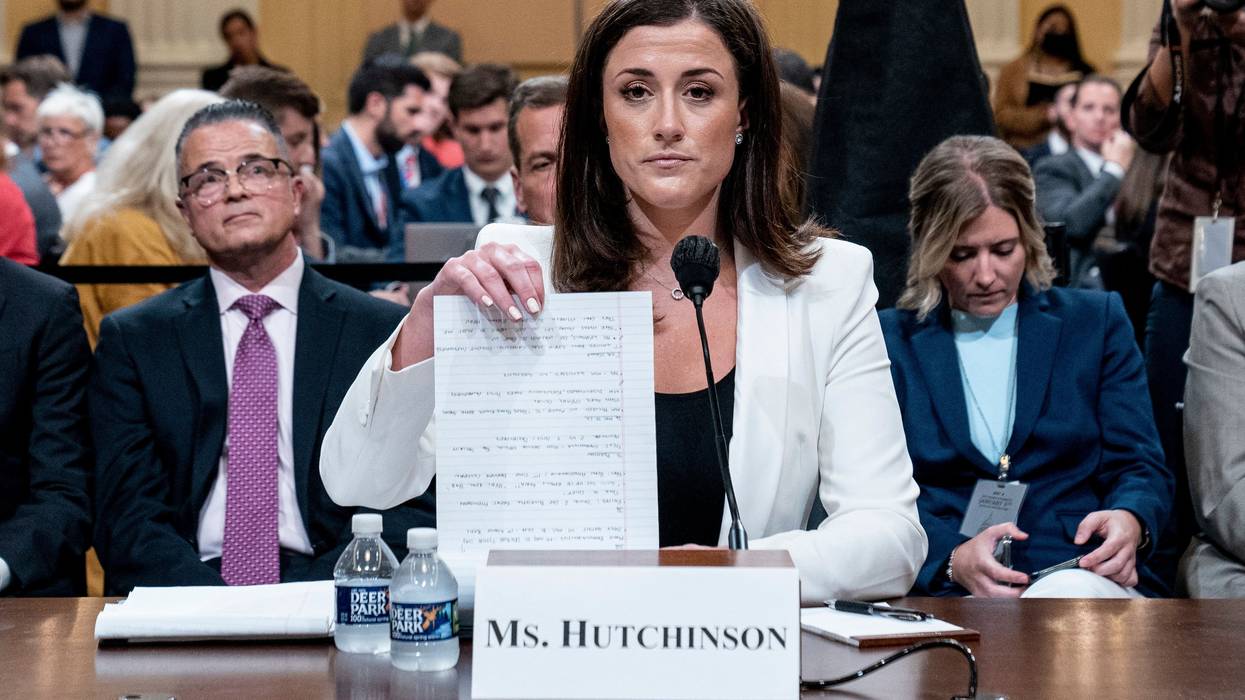
One lawyer called the targeting of ex-White House aide Cassidy Hutchinson "a chilling and corrupt indictment" but also "yet another opportunity for the Trump DOJ to shit its pants in court."
In what appears to be its latest effort to target President Donald Trump's political foes, the US Department of Justice is reportedly seeking criminal charges against former White House aide Cassidy Hutchinson, who served as a star witness in Congress' investigation of the January 6, 2021 Capitol insurrection.
Punchbowl News reported on Thursday that the DOJ is pursuing federal criminal charges against Hutchinson for allegedly making false statements during her bombshell testimony in June 2022, in which she claimed that Trump attempted to assist the rioters as they tried to violently overturn his loss in the 2020 election.
Hutchinson, who was an aide to then-White House chief of staff Mark Meadows, told Congress she overheard Trump demand the removal of metal detectors at his rally near the White House before the riot, despite knowing that some attendees were armed. She quoted him saying, "They're not here to hurt me."
She also relayed information she claimed to have learned secondhand from others in the Trump White House. She said that Anthony Ornato, the deputy White House chief of staff for operations, told her that Trump tried to grab the steering wheel of his SUV away from the Secret Service agent driving it so he could join supporters at the Capitol.
Ornato has since said he does not recall recounting this incident to Hutchinson, and the agents in the vehicle have denied that it took place, according to a subsequent investigation by Republicans in the House of Representatives. However, other witnesses have testified more broadly to Trump's anger that he could not join his supporters at the Capitol.
Hutchinson also said Meadows was reluctant to intervene as rioters threatened to hang then-Vice President Mike Pence. She claimed Meadows told her that Trump believed Pence—who'd refused to assist his efforts to overturn the election result—deserved the threats and that the rioters had done nothing wrong.
Trump has since pardoned every one of the more than 1,500 people convicted of offenses related to the Capitol attack, including those who committed violent felonies.
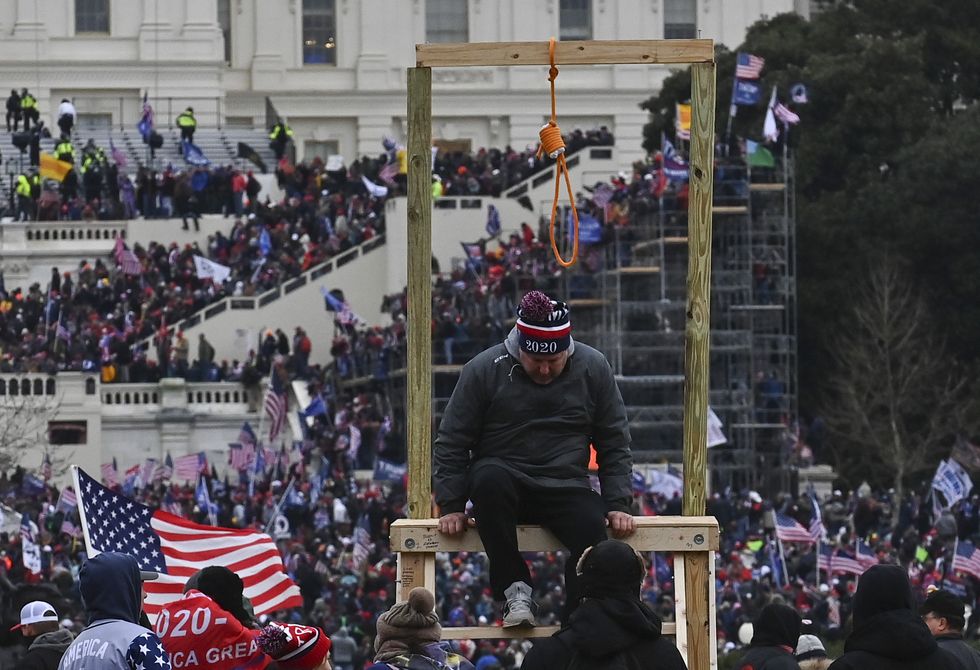 A man climbs down after being photographed with a noose during a protest calling for legislators to overturn the election results in President Donald Trump's favor at the US Capitol on January 6, 2021 in Washington, DC. (Photo by Ricky Carioti/The Washington Post via Getty Images)
Asked about plans to bring charges against Hutchinson, a DOJ spokesperson said, "The department does not confirm or deny the existence of investigations, or the lack thereof."
But the department's pursuit of Hutchinson has been public knowledge since at least April, when The New York Times reported that a criminal investigation into the former White House aide had been opened.
The Times noted that it was highly unusual for such a probe to be undertaken by the Civil Rights Division—which usually handles cases of discrimination—rather than the US attorney for the District of Columbia.
Efforts to prosecute Hutchinson follow attempts by the DOJ to bring charges against the president's other perceived enemies, including former FBI Director James Comey and New York Attorney General Letitia James, both of which have been thrown out of court.
In a post on social media, Andrew Fleischman, a Georgia-based trial and appeals lawyer, decried the targeting of Hutchinson as "a chilling and corrupt indictment of a woman who told the truth," but also "yet another opportunity for the Trump DOJ to shit its pants in court."
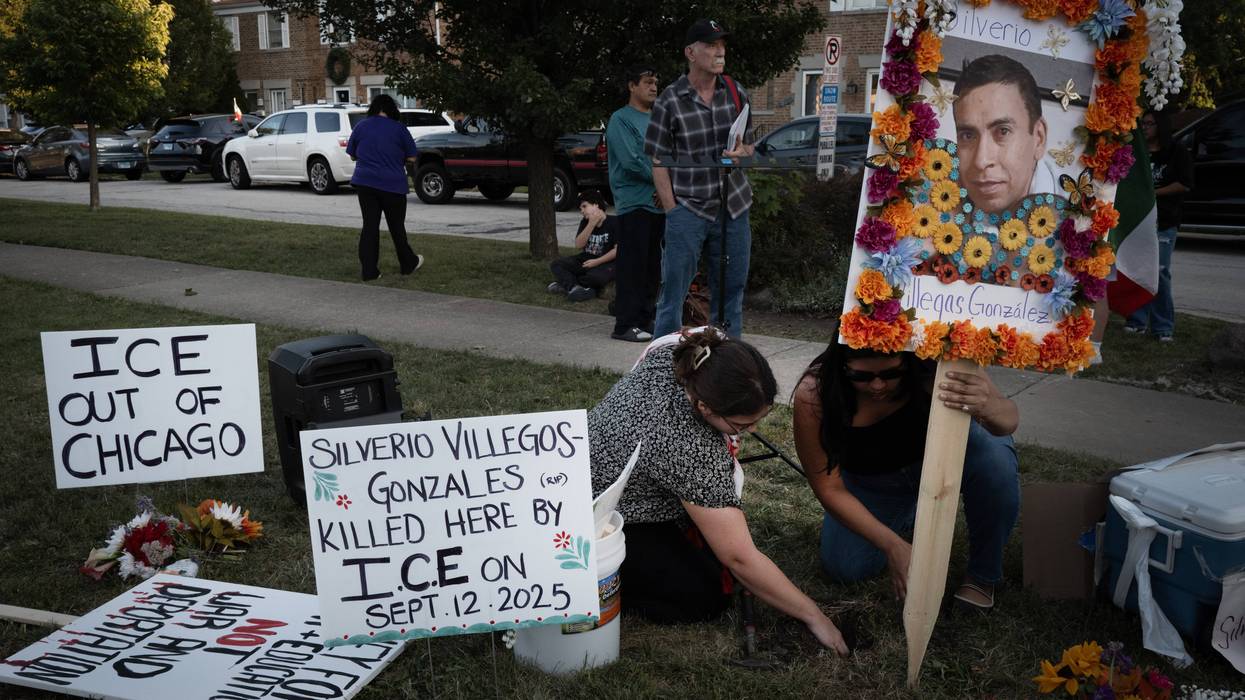
"Silverio was a loving father, brother, and son. He worked hard to raise his sons and to protect them. His life was cut short senselessly and unnecessarily by our government," said one lawyer.
Organizations representing the family of Silverio Villegas González filed a legal claim against President Donald Trump's administration on Thursday over an immigration agent's "execution-style killing" of the 38-year-old Mexican man in Illinois last year.
Trump deployed agents from the US Department of Homeland Security (DHS) to Chicago and its suburbs, including Franklin Park, in September 2025 for "Operation Midway Blitz," part of the president's mass detention and deportation agenda.
Shortly after Villegas González dropped off his young sons at school and daycare on September 12, 2025, a team stopped their vehicle in front of his, and an unidentified Immigration and Customs Enforcement (ICE) agent fatally shot him. Video footage has contradicted DHS claims that he refused to follow commands and "drove his car at law enforcement officers."
Villegas González's family said in a statement that "we want his name to be cleared. The administration has tried to justify his death by smearing his good name with lies and false narratives, but here is the truth: After Silverio was shot, two innocent children were left without their father, and we were left without a brother and son."
"We are united by the same pain that every family who has been impacted by this inhumane immigration system faces," the family continued. "A year has not erased or diminished the ache we feel in his absence. Our family demands justice for Silverio, and we hope that those responsible for his death are held accountable."
Filing a Federal Tort Claims Act (FTCA) complaint "is an initial step to ensure the truth comes out and the government is held accountable," explained Mark Fleming, director of Litigation at the National Immigrant Justice Center. It starts the clock for launching a lawsuit in six months, if a settlement cannot be reached before then.
"The government has failed Silverio and his family, but we will not let Silverio be forgotten," pledged Fleming, whose group is representing the family alongside the MacArthur Justice Center.
Jonathan Manes, an attorney with the MacArthur Justice Center, told the Chicago Sun-Times that they expect to seek "a very large sum of money," but "we're not focused on the number at this point."
As the newspaper reported: "The compensation would benefit Villegas González's children and spouse, not his brother, Manes said. The claim describes Villegas González as his sons' primary parent. After his death, the children were placed in foster care in Idaho, far from their Chicago-area relatives."
José Villegas González is representing his brother's estate in the case—and, according to the Chicago Tribune, he and his wife, "both US citizens living in the Chicago area, are pursuing adoption of the boys."
Manes stressed that "Silverio was a loving father, brother, and son. He worked hard to raise his sons and to protect them. His life was cut short senselessly and unnecessarily by our government. His death shattered a family and has caused untold trauma that will last a lifetime."
DHS told the Sun-Times earlier this year that federal prosecutors declined to charge the agent who killed Villegas González, without offering a public explanation, and the Tribune pointed out on Thursday that an ongoing Illinois probe has run into issues:
Illinois State Police announced in May that the Franklin Park Police Department requested that its Public Integrity Task Force investigate the shooting. Once completed, the investigation is expected to be turned over to the Cook County State's Attorney's Office.
But Gov. JB Pritzker said that the federal government’s refusal to provide requested evidence and make agents available for interviews has made the state investigation "near impossible to complete."
The federal government, he said, has not provided information Illinois requested about the shooting or made agents available to give testimony.
"It has been more than a year and yet there has been zero accountability for Silverio's unjustified death from the federal government," Manes highlighted. "Even after Silverio was senselessly killed, immigration officers have continued shooting at people inside their cars and have killed several other victims."
The FTCA filing comes a week after relatives of Renee Good—a 37-year-old US citizen fatally shot by ICE agent Jonathan Ross in Minnesota on January 7—filed a pair of lawsuits against the federal government and immigration officials.
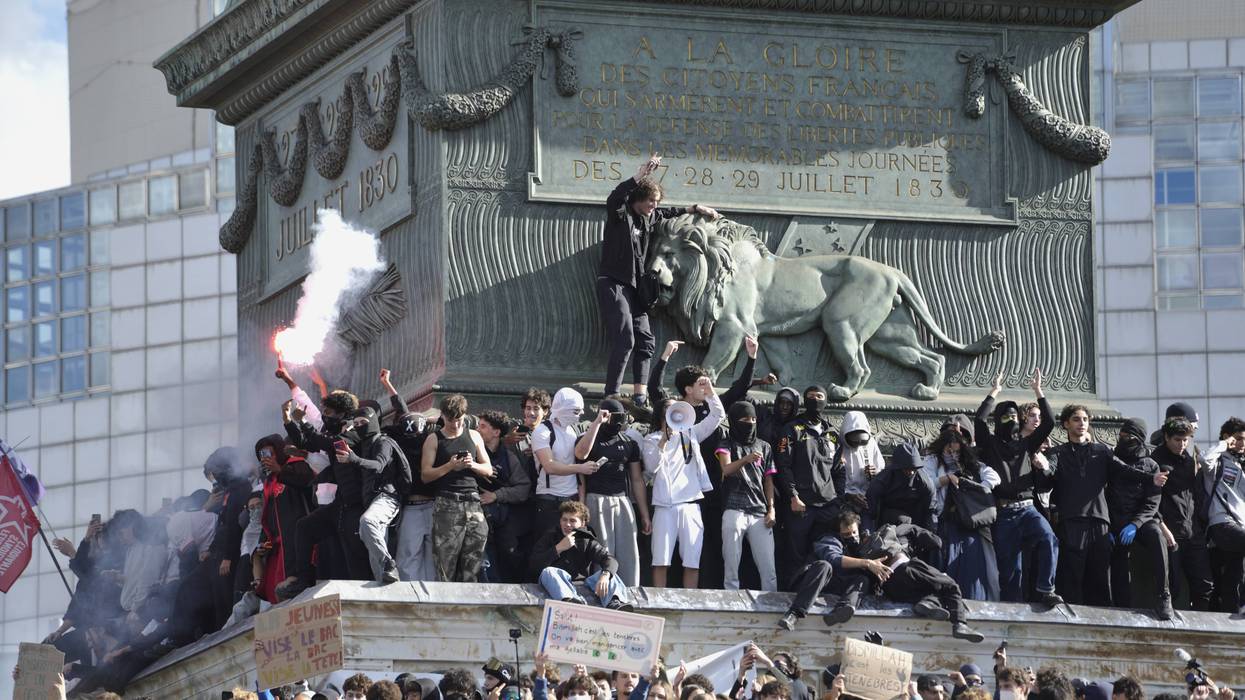
"There's rats in the schools. There's holes in the windows... it's not suitable conditions to study," said one French student.
High school students across France on Thursday once again took to the streets to protest against against the state of the country's schools.
Euronews, citing information from France's Interior Ministry, reported that 71,500 people took part in Thursday's protests.
Students taking part in the nationwide protests have been joined by teachers and parents, as well as members of labor unions who earlier this week marched in solidarity.
The demonstrations began in the suburbs of Paris last month, where students blockaded their schools to protest staffing shortages, dilapidated buildings, and a university application system that has been criticized for keeping students in the dark for months about their acceptance into programs.
In an interview with NPR published Thursday, 19-year-old French student Clara Houssain described the conditions of schools that were leading to the demonstrations.
"There's rats in the schools," said Houssain. "There's holes in the windows... it's not suitable conditions to study. They don't have a French teacher for six months. And then we're asked to pass an exam, and that exam is supposed to be fair. But it's not fair if you haven't had a teacher for six months."
Jean-Luc Mélenchon, leader the left-wing France Unbowed party, took to social media on Thursday to celebrate the success of the student demonstrations.
"The Bastille has been retaken," he wrote, while posting a video of demonstrators at the July Column in Paris, built to commemorate the Revolution of 1830. "Powerful demonstration by the youth who carry their demands in the most beautiful way possible! Immense pride."
La Bastille est reprise. Démonstration puissante de la jeunesse qui porte ses revendications de la plus belle façon qui soit ! Fierté immense. Rendez-vous mardi 13 octobre à l'appel des syndicats de jeunes et des salariés. https://t.co/5SYLDREZam
— Jean-Luc Mélenchon (@JLMelenchon) October 8, 2026
The Guardian reported on Thursday that Édouard Geffray, the French education minister, met with students and teachers in the city of Reims and pledged to implement "an emergency plan to ensure absent teachers can be replaced on a long-term basis," and to initiate a review of the university application system.
However, high school student union leaders who spoke with The Guardian said they were underwhelmed by the government's promises so far.
Student leader Ryad Rani told the newspaper that the demonstrations "will continue," accusing the government of offering "no concrete measures whatsoever, no response to our demands."
Sabrine Kharbach similarly said that the protests would not stop "for as long as €10 billion hasn’t been put on the table," a reference to the amount of money organizers say is needed for education investment.
A Paris secondary school teacher identified as Cathy said in an interview with Euronews that the student revolt had been brewing for a long time.
"The students have demands that are very close to the ones teachers have been putting forward years," she explained. "The system is degraded and it's because there has been no response for so long, that this is happening."
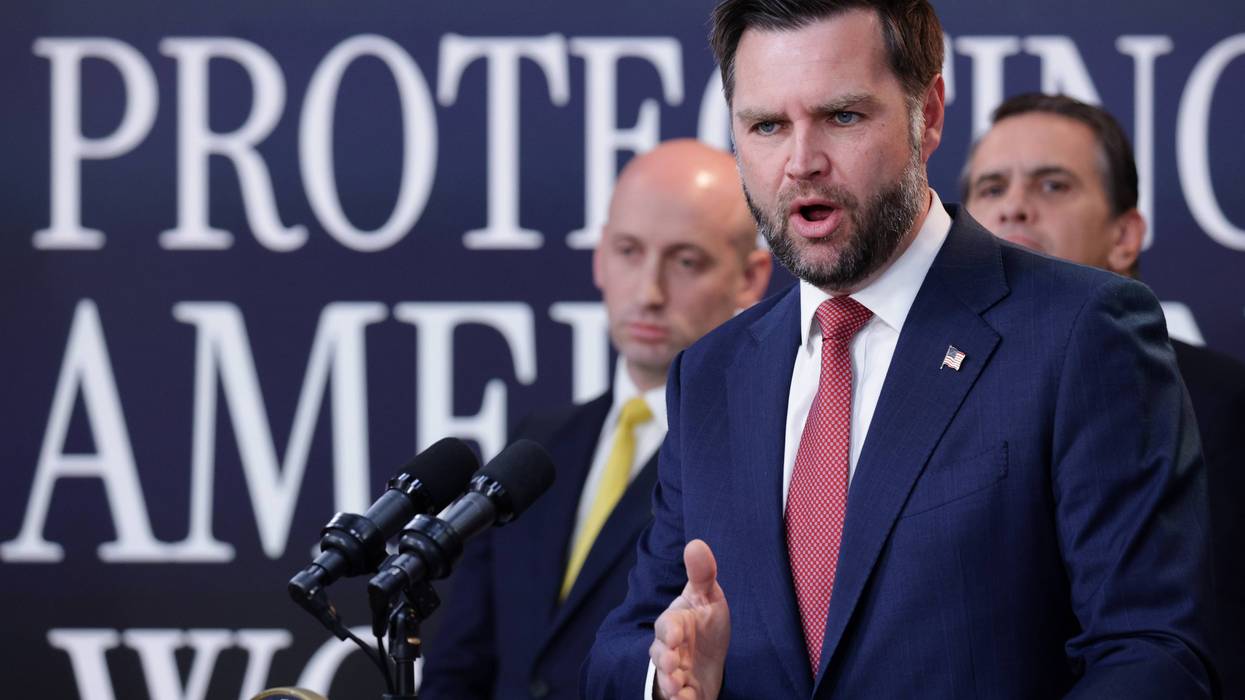
"JD is the most irritating of Trump’s acolytes because he spouts absurd MAGA bullshit, knowing full well how stupid it is," said one critic.
As Republicans struggle to convince Americans to vote for the party whose policies have made workers' lives more difficult and expensive, they've increasingly invoked the tried-and-true bogeyman of socialism—a word for which Vice President JD Vance offered a bizarrely inaccurate definition during a Thursday press conference.
Asked at the White House how he defines socialism "personally" and why he thinks "socialist candidates are popping up everywhere across the country," Vance replied, "Oh man, you know, I guess, it's honestly, it's a hard term to define these days."
"Because very often socialism, you know, classically, you would think socialism is about prioritizing workers, and yet in reality I guarantee that most of the self-described socialists running across the United States of America are going to howl about this announcement today, which is prioritizing American workers over foreign workers," the vice president said, referring to President Donald Trump's new actions targeting alleged fraud and abuse in the H-1B/J-1 visa system.
"So I don't know what the term means anymore," Vance added. "I think in reality what it actually means in the American context is that you want to replace American workers with foreign workers and you want boys to play in girls' sports. That's what unites the socialists that I see running across the United States of America today."
Vance's apparent inability to define socialism, whose fundamental characteristic is collective ownership and control of the means of production—something very few, if any, Democrats are openly advocating—drew ridicule from across the political spectrum.
The vice president's comments came after multiple democratic socialist and other progressive congressional candidates—running on issues including Medicare for All, imposing higher taxes on the rich, and ending US support for military violence in the Middle East—won primary races to face off against Republicans in the November midterm elections.
"This is what they say when they're scared of people learning the real definition, when they're scared of people demanding more from their government and an economy that actually works for everybody," the nonprofit progressive news organization More Perfect Union said on social media.
New Republic writer Malcolm Ferguson said: "Vice President JD Vance was asked to define socialism on Thursday. Instead of even trying to sincerely engage with the concept, the [Yale]-educated lawyer and author offered a brain-dead, tailored-for Fox News answer."
"Regardless of what you think socialism means, it is certainly not 'replacing American workers with foreign workers and wanting boys to play girls’ sports," he added. "This was a confusing, unintelligent answer from a man who’s supposed to be quite smart."
Ryan Knight, better known as "Proud Socialist" on social media, said that Vance "almost told the truth (socialism is about prioritizing workers and more specifically about workers, not billionaires, owning the means of production), but then quickly remembered he serves the billionaires so started lying and fearmongering about foreigners."
What a stupid and intellectually dishonest answer by JD Vance. He defines socialism as anything that's icky. Under that definition, I think lima beans are socialist.
[image or embed]
— Mark Jacob (@markjacob.bsky.social) October 8, 2026 at 8:30 AM
Right-wing policy expert Jessica Riedl said that "JD Vance defines 'socialism' as... the free movement of labor and capital across borders, and transgender girls playing on girls' sports teams."
"In other words, anything he personally finds icky," Riedl added. "And he's supposed to represent the highly educated, intellectual wing of MAGA."
Billy Binion, a reporter at the libertarian site Reason, called Vance's comments "laughably dishonest," invoking an ethos that former US Labor Secretary Robert Reich once described as "socialism for the rich, brutal capitalism for the rest of us."
"The Trump administration," Binion said, "would like to change the definition of socialism because it's *engaging in it* and has bought stakes in dozens of private companies."
Heather Parton, who publishes the progressive blog "Digby's Hullabaloo," wrote:b "First of all, you don’t get to 'personally' define socialism. It has a definition, and that ain’t it."
"Second, forgetting his fatuous suck-up to MAGA culture war nonsense in that comment, it must be noted that his Dear Leader is strong-arming one corporation into another into giving up pieces of their companies to the government," she continued, referring to Trump.
"JD is the most irritating of Trump’s acolytes because he spouts absurd MAGA bullshit, knowing full well how stupid it is," Parton added.
Reich also weighed in on the vice president's remarks, writing on social media that "Trump, Vance, and Republicans are terrified of policies that curb their own wealth and power, and the wealth and power of the oligarchs that bankroll them."
"That's why they're amping up the fearmongering about 'socialism,'" he added. "They've run out of cards to play."
“To avoid repeating this descent into authoritarianism," he said, "we must study this corrupt president’s actions and allow the public to learn about the numerous tools he deployed."
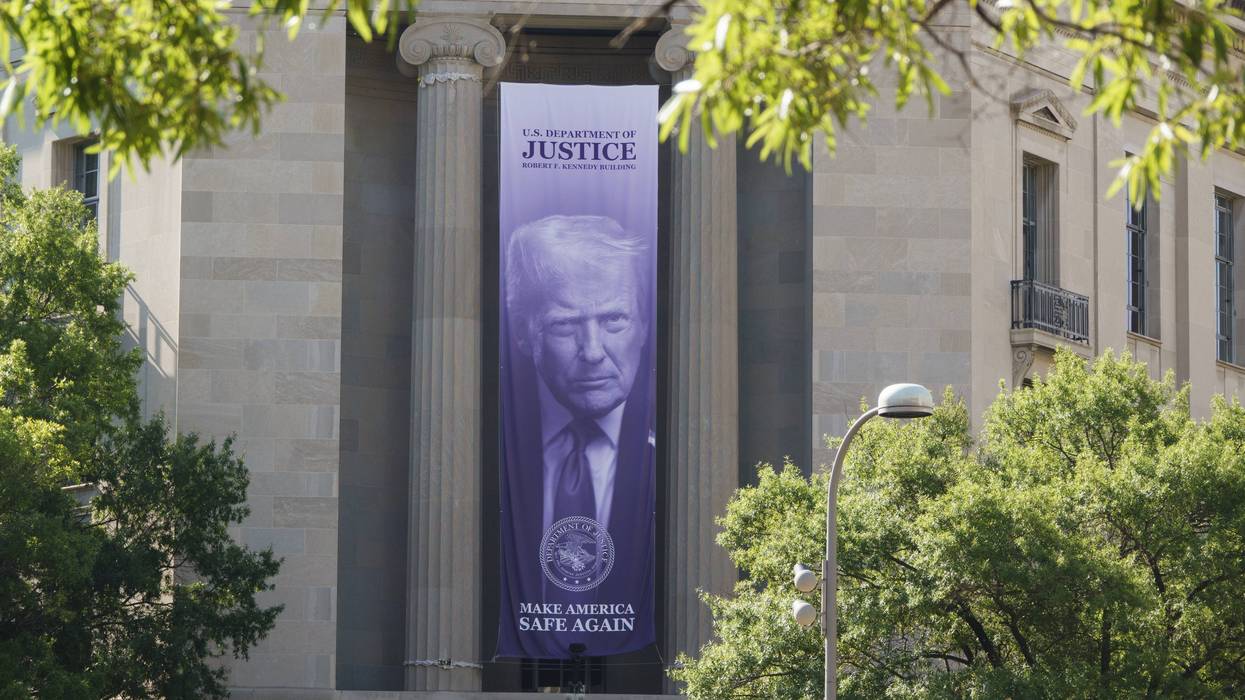
President Donald Trump stands apart from his predecessors with his use of government resources to glorify himself. During his second presidency, he has used taxpayer funds to blast the airwaves with ads singing his praises, drape giant banners of his face from agency buildings, and mint coins bearing his image.
Rep. Jamie Raskin (D-Md.) said the Smithsonian National Museum of American History—which houses some of the nation's most significant historical collections—should preserve artifacts like these as evidence of what he calls Trump's official "governmental propaganda" for future generations.
On Wednesday, Raskin announced a bill that would compel the Smithsonian to collect and preserve objects "reflecting the rise of governmental propaganda, corruption, and authoritarianism" under Trump's two presidencies.
 The 2026 America the Beautiful annual national parks pass features President Donald Trump alongside George Washington. (Photo from the US Department of the Interior via Wikimedia Commons)
The legislation comes amid Trump's attempts to warp the Smithsonian's content to reflect his personal view of the nation's history. In July, he signed an executive order directing the Interior Department to erect signs along the walkway warning that it contained exhibits that reflect the “personal, radical ideologies" of the curators.
The language is pulled from a 162-page report released that same month objecting to exhibits that it claims demonstrate "extreme political activism"—including some which highlight the experiences of immigrants, LGBTQ+ people, Native Americans, and other historically marginalized groups. It also claims that the museum does not adequately venerate the nation's founders, while accentuating their faults, including participation in slavery and other historic injustices.
Raskin said that the signs warning passersby of the Smithsonian's dangerous content—which are expected to cost $84,000 to install—are among the artifacts that should be preserved as an example of how authoritarians seek to control media, government, and culture.
He said the signs should be among several other "manifestations of authoritarian narcissism" that the museum should put on display, as well as the "Stalinist" banners of Trump's face that have adorned the departments of Agriculture, Labor, Justice, and Interior.
 The inner cover of an official commemorative passport for the 250th anniversary of the United States, which featured the image of President Donald Trump. (Photo from the US Department of State via Wikimedia Commons)
In addition, Raskin said the exhibition should include other photos and videos captured by journalists and private citizens documenting the Trump era, as well as personal testimonials from Americans who "resisted and opposed the rise in authoritarianism," including those who participated in protest movements.
In March 2025, Trump signed an executive order directing the Smithsonian to purge its halls of what he called "improper ideology" or risk losing funding, which was followed by sweeping content reviews.
Earlier this week, The Atlantic reported that the White House had conditioned nearly $190 million in Smithsonian funding on its adherence to the order's vague ban on "exhibits or programs that degrade shared American values, divide Americans based on race, or promote programs or ideologies inconsistent with Federal law and policy.”
The museum has bowed to the pressure sometimes in ways that critics deemed "Orwellian," such as when references to Trump were scrubbed from an exhibit on presidential impeachments before being restored following backlash.
In January, a Smithsonian staff member told The Guardian that administrators had objected to the description of the World War II-era internment of Japanese Americans as "unjust" because the label could appear partisan. Another said they changed "diversity" to "variety" in text discussing astronomical objects, fearing that the administration might flag the word during its content reviews.
Raskin said his legislation is aimed at making sure this sort of heavy-handed censorship is not forgotten.
“To avoid repeating this descent into authoritarianism," he said, "we must study this corrupt president’s actions and allow the public to learn about the numerous tools he deployed while attempting to remake American history in his own image and according to his own autocratic and white nationalist beliefs.”

"Allowing corporations to make political payments in order to make enforcement go away is hardly a model for governing that supposedly prioritizes 'law and order,'" said one researcher.
The Trump administration's canceled enforcement actions against at least 205 corporations accused of wrongdoing have been cases of powerful companies "getting what they paid for," according to a new report by government watchdog Public Citizen.
Building on an analysis it released earlier this week regarding hundreds of canceled investigations and dismissed lawsuits against companies, many of which have ties to the administration, the group on Thursday published a follow-up report detailing just how much some of the corporations paid to have their legal troubles wiped away.
Companies that have benefited from the cancellation of enforcement have given $210.5 million in contributions and pledges to MAGA, Inc. and other super political action committees (PACs) that worked to elect President Donald Trump and other Republicans in 2024 and are continuing to back right-wing candidates in the midterms.
As Common Dreams reported Wednesday, SpaceX and Tesla CEO Elon Musk has benefited from at least eight canceled actions, with lawsuits filed against the former company by the Department of Justice’s Civil Rights Division and the National Labor Relations Board dismissed and an investigation into data center pollution presumably closed. Tesla has avoided three investigations that the National Highway Traffic Safety had begun and one that the Department of Labor has opened into contract compliance.
The cancellations didn't come for free, Public Citizen said. Musk—who also served in the administration last year and is now helping with a Pentagon project—donated $5 million to MAGA, Inc. and has pledged to spend $100 million to help elect Republicans this year.
“Corporations and ultrawealthy executives with enormous financial interests before the federal government are pouring extraordinary sums into the president’s political operation,” said Public Citizen co-president Robert Weissman. “Once the check is cashed, the administration is pulling back enforcement actions meant to punish corporate misconduct. It’s a great deal for the corporate wrongdoers—at the expense of their victims and the American people.”
Crypto.org is another top beneficiary of Trump's favorable treatment of the cryptocurrency industry, Wall Street, Big Tech, and large corporations that have pledged to help push his far-right agenda in the elections.
The Securities and Exchange Commission had been investigating allegations that the crypto platform was trading unregistered securities. The probe was abruptly closed in March 2025, after the company gave $35 million to MAGA, Inc. and $2 million to Keep America Great, another super PAC aligned with the president.
“Once the check is cashed, the administration is pulling back enforcement actions meant to punish corporate misconduct."
Gemini, co-founded by Tyler and Cameron Winklevoss, had been facing a similar investigation, but it was also closed after the company gave $20 million to MAGA, Inc.—on top of $10 million each that the two founders personally donated.
"Allowing corporations to make political payments in order to make enforcement go away is hardly a model for governing that supposedly prioritizes 'law and order,'" wrote Rick Claypool, research director for Public Citizen, in the report. "On the contrary, it is indicative of a profoundly unjust and arbitrary mode of enforcement organized around the principles of rewarding insiders, punishing outsiders, and concentrating power in the hands of an increasingly authoritarian president."
He noted that while the Trump administration has demonstrated little interest in addressing corporate wrongdoing, "enforcement personnel and resources are being channeled toward punishing immigrants, activists, and perceived political opponents."
"Restoring the rule of law will be a challenge for the future," wrote Claypool, "and the path forward will require a rebalance of priorities that ensures that corporations and the powerful cannot pay to protect themselves from federal enforcement that holds them accountable when they break the law."
"That to me is a part of what it means to believe in a sense of humanity, that we need not choose between which death we will mourn and which we will ignore."
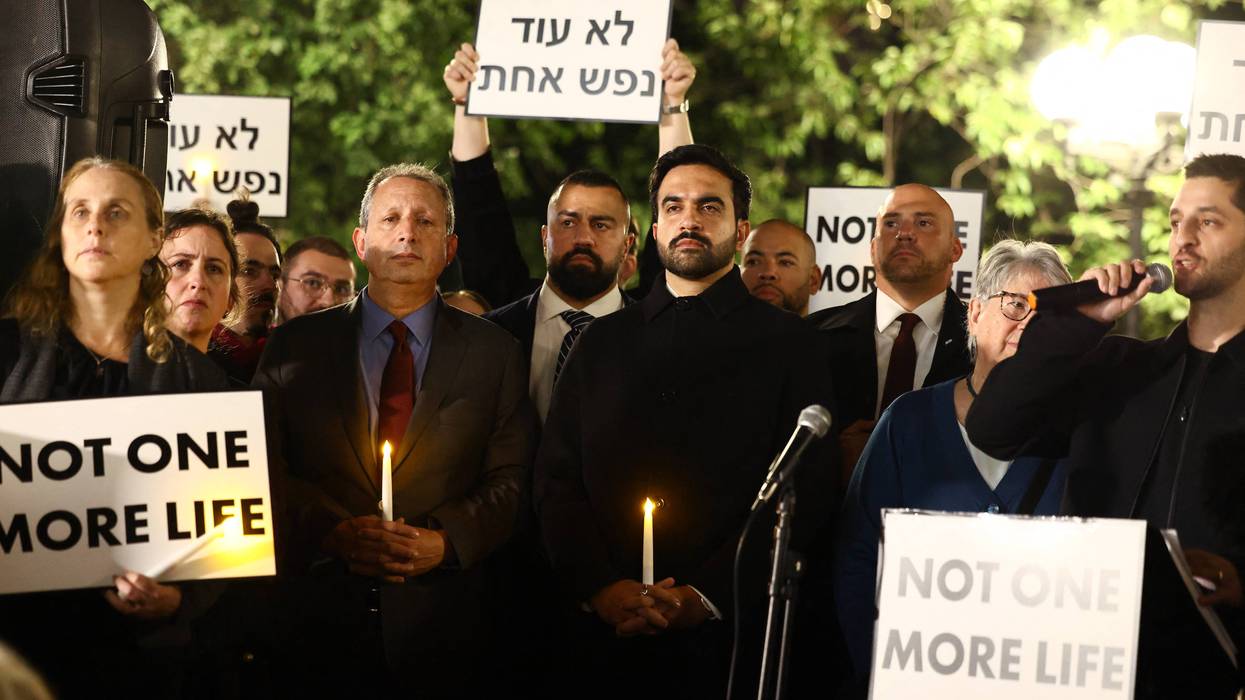
New York City Mayor Zohran Mamdani said during a press conference on Thursday that "there must be room to mourn" both the Israelis killed during the Hamas-led October 7 attack three years ago and the Palestinians killed in the Israeli government's subsequent genocidal assault on Gaza.
“I believe that there must be room to mourn every single life," said Mamdani, echoing the sentiment he expressed in a statement 24 hours earlier marking the three-year anniversary of the October 7 attack—and the start of Israel's military response.
At Thursday's press conference, a reporter noted that Mamdani "got it from both sides yesterday," referring to criticism the New York City mayor received from both pro-Israel and pro-Palestinian voices in response to his statement. Mamdani's statement described the Hamas-led attacks as "horrific war crimes" and the Israeli government's response as a "devastating, ongoing genocide."
Asked if he "made any missteps that inflamed tensions" and whether he would, in hindsight, alter the language of his statement or decide against attending a vigil hosted by the anti-occupation group Israelis for Peace—where the mayor faced jeers from protesters accusing him of complicity in genocide—Mamdani responded: "There must be room to mourn the lives of the more than 1,100 Israelis that Hamas killed there years ago. There must be room to mourn the 74,000 Palestinians that the Israeli government has killed since."
"There must be room to reckon with the ways in which so many New Yorkers' lives have been shattered," he continued. "And that to me is a part of what it means to believe in a sense of humanity, that we need not choose between which death we will mourn and which we will ignore. That we can reckon with the fact that all of it is to be opposed."
Video footage from the Wednesday night vigil shows Mamdani standing expressionless alongside Brad Lander, a Democratic congressional candidate who is Jewish, as protesters shout at the mayor, calling him a "traitor."
Lander, the former New York City comptroller, told reporters that protesters at the vigil sometimes drowned out the reading of testimony from loved ones of people killed in the October 7, 2023 attack and in the Israeli government's assault on Gaza.
“From where I sit, Mamdani is a very strong supporter of Palestinian freedom and human rights,” said Lander. “I don’t know what world leaders have done more.”
During his press conference on Thursday, Mamdani said of those protesting him, "This is what I signed up for."
Mamdani is stone-faced as the protesters call him a traitor and sellout. https://t.co/oXducpYsMR
— Peter Sterne (@petersterne) October 8, 2026
Mamdani also faced hysterical backlash from pro-Israel members of his party. Rep. Dan Goldman (D-NY), who lost to Lander in the Democratic primary for New York's 10th congressional district, denounced Mamdani's statement as "reprehensible" and declared that it would "offend and further upset those same people he pretends to grieve with."
Rep. Debbie Wasserman Schultz (D-Fla.) falsely accused Mamdani of "desecrating the memory of murdered, innocent Jews" and "refusing to even condemn Hamas."
Mamdani didn't back away from his criticism of the Israeli government in response to such attacks.
"The Israeli government used and continues to use that day, those war crimes, as a justification for an ongoing genocide against Palestinians," Mamdani told reporters on Thursday. The mayor also stressed "our federal government's complicity in funding so much of the weaponry" that has been used by the Israeli military in Gaza.
"We have to extend human rights to all people," said Mamdani, "and that has to include Palestinians."
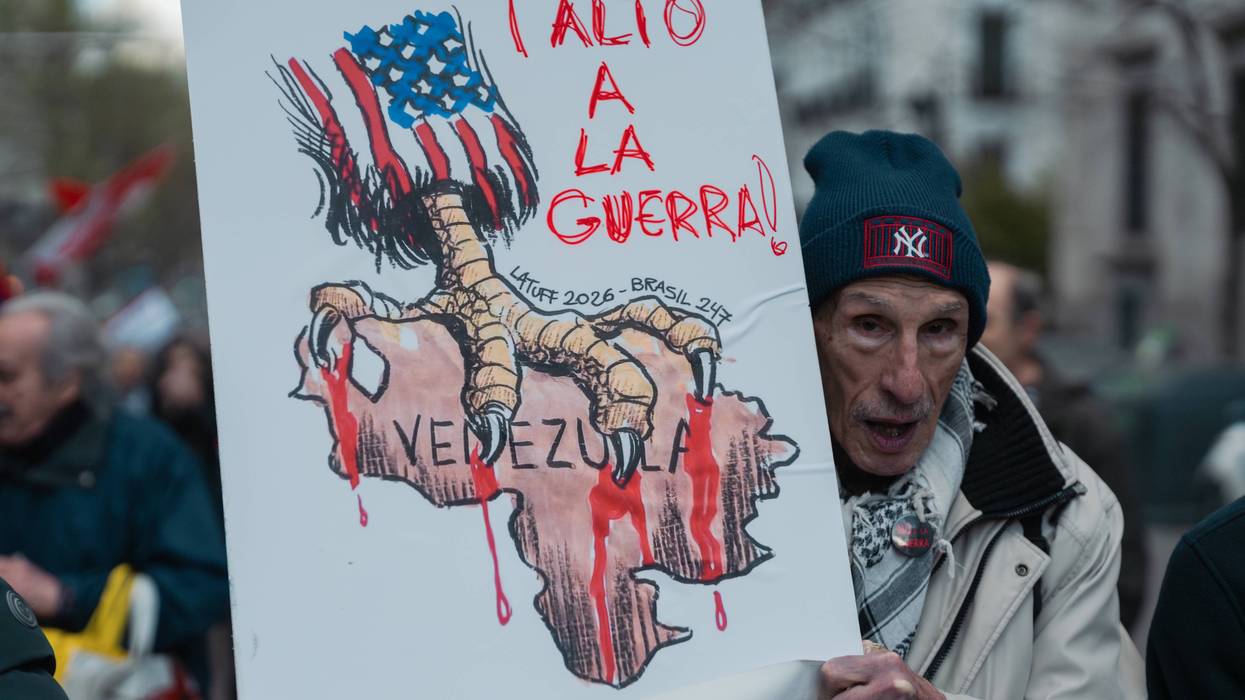
The indictment claims he and others "presided over a system of repression that relied on violence against political opposition, arbitrary detention, and the torture of detainees, including United States citizens."
Former US President George W. Bush, Vice President Dick Cheney, and officials in their administration were never prosecuted for the torture that was infamously part of their global War on Terror, but the United States on Thursday hit deposed Venezuelan leader Nicolás Maduro and his wife, Cilia Flores, with a conspiracy to commit torture charge.
The couple has spent months in Brooklyn's Metropolitan Detention Center since being abducted from the Venezuelan capital, Caracas, in early January by American forces, at the direction of US President Donald Trump—who is now controlling the South American country's oil industry. They have pleaded not guilty to previous federal charges, including narco-terrorism conspiracy. Their joint trial in the Southern District of New York is scheduled for June.
As CNN previewed late Wednesday, the superseding indictment released Thursday alleges that, "to undermine Venezuelan democracy and entrench themselves in power," the couple and other leaders "presided over a system of repression that relied on violence against political opposition, arbitrary detention, and the torture of detainees, including United States citizens."
"That torture included electric shock, asphyxiation, rape, forced nudity, prolonged isolation, starvation, punishment cells, and psychological torture, such as threats to harm and kill victims' families, including children," the filing says. Maduro, now 63, "presided over this system of repression and torture, commanded the law enforcement and military units and officers responsible for committing torture, ordered that particular individuals be illegally detained and tortured, and received updates on the torture of specific prisoners."
CNN noted that "Maduro's lawyer is challenging the legality of the arrest and argues the former president should have immunity since the alleged conduct occurred while he was in office. The Venezuelan government is not joining in claiming immunity on his behalf, according to the prosecution."
The updated indictment also claims that Flores, a 69-year-old former National Assembly president and attorney general, "helped develop this system of repression and ordered that individuals be tortured to protect her family members' illegal activities."
As Trump carries out a murderous bombing campaign against boats allegedly trafficking drugs that experts have denounced as blatantly unlawful, US Attorney General Todd Blanche wrote on social media Thursday that "these additional charges reflect the dedication of this administration to delivering justice for the victims of torture, narcoterrorism, and organized crime."
According to The Associated Press, "A message seeking comment was sent to Maduro's lawyer; Flores was in court for a previously scheduled hearing, where her attorney said he hadn’t yet had time to review the new allegations."
At that hearing, her attorney sought to move her from the Brooklyn jail to house arrest, citing health issues. However, US District Court Senior Judge Alvin Hellerstein, an appointee of former President Bill Clinton, denied that request, determining that Flores was a flight risk.
Meanwhile, Cheney died last year, at the age of 84, and 80-year-old Bush recently marked the 25th anniversary of the September 11 terrorist attacks with a new series of paintings. Shortly before that, in late August, the US Court of Appeals for the 4th Circuit dismissed a historic verdict against military contractor CACI Premier Technology for torture at Abu Ghraib in Iraq.