May, 05 2017, 03:00pm EDT

Analysis Uncovers "Nearly $2 Billion in Errors" in Peabody's Misleading Study About the Future of NGS
Continuing to run the biggest coal-burning power plant in the West is a far greater economic threat than Peabody’s “wishful thinking” led decision-makers to believe
WASHINGTON
A detailed analysis of a presentation made by Peabody Energy at an April 7 meeting of the Arizona Corporation Commission highlights major discrepancies and misleading information about the reality of continuing to run the largest coal-burning power plant in the West past the 2019 closure date set by its owners.
The analysis was conducted by utility research firm Synapse Energy Economics at the request of the Sierra Club to evaluate questionable claims made by Peabody and its consultant, Navigant Research, about the future of the 2,250-megawatt Navajo Generating Station in northern Arizona.
"Navigant's assessment of the economic viability of Navajo is opaque, and relied on overstated market energy prices and substantially understated fuel prices for Navajo. Reviewing the elements of Navigant's assessment, we find substantial problems mounting up to nearly $2 billion in errors, faulty assumptions and exclusions."
After reverse-engineering key assumptions in their study, Synapse determined that Peabody and Navigant:
Relied on overblown assumptions about coal and market energy prices in 2030, when in fact, Navigant's own analysis shows little benefit for NGS unless the coal market recovers, which most energy industry analysts consider highly unlikely.
Consistently underpriced coal in their calculations. Using more realistic coal pricing projections through 2040 would add about $620 million in costs to running NGS, "completely erasing Navigant's assumed benefit for Navajo."
Completely ignored operations and maintenance expenses tied to running NGS as if they didn't exist, when in fact industry norms and actual operator data from the past five years show that O&M costs can be quite substantial.
Aggressively over-inflated market energy prices starting in 2030 to make NGS electricity seem more lucrative. Navigant and Peabody unrealistically project that energy prices will rise roughly three times faster than inflation.
Applied market dynamics that are not at all relevant to Western energy markets. The North American Reliability Council expects Arizona and New Mexico to remain flush with energy capacity through at least the mid-2020s, meaning there simply is no liquid market for capacity in the West, unlike the Midwest and East Coast. Yet Peabody and Navigant inexplicably applied market pricing that is 46 times higher than actual market prices in the Midwest, where there actually is a market based on constrained capacity.
Peabody's hasty and unsubstantiated Powerpoint presentation was delivered to the ACC just three days after the company exited from bankruptcy. It claimed that all four utility owners of NGS - Salt River Project, Arizona Public Service, Tucson Electric Power and NV Energy - were misguided in announcing their intention earlier this year to retire the plant at the end of 2019, and possibly as soon as this year. The owners have concluded that they can acquire power far more cheaply on the open market and that they risk losing hundreds of millions of dollars a year if they continue to operate NGS.
Peabody operates the Kayenta mine, the sole supplier of coal for NGS, and is searching for ways to keep its mine open in the wake of its bankruptcy, including using taxpayer subsidies to lower the costs of running NGS. Despite repeated requests, it has yet to share the underlying analysis it used in its ACC presentation to sidestep the fundamental economic problems facing coal, which is in sharp decline as cleaner and cheaper energy sources replace it in the market.
The Arizona Corporation Commission is scheduled to hold its next open hearing on May 9-10. This meeting is open to the public and can be streamed from: https://www.azcc.gov/divisions/broadcastservices/livebroadcast.htm
Sandy Bahr, director of the Sierra Club's Grand Canyon Chapter, issued the following statement:
"Arizonans want public officials and coal companies to be honest with them about the future of the Navajo Generating Station and the Kayenta Mine. Peabody's unsubstantiated statements that the coal plant is an economic and reliable source of energy for the region going forward is simply not true. It's time to be realistic about the future of coal in Arizona so that the Navajo and Hopi people are not left behind or left with a big mess when coal inevitably leaves the communities."
Percy Deal, from Navajo group Dine CARE, issued the following statement:
"Continuing to operate the Navajo Generating Station is not a long-term solution for the Navajo and Hopi, who for the last 50 years have seen this plant wreck the environment, rob us of our water, and leave us without the resources to build a sustainable economy. Peabody is obviously only interested in its own corporate bottom line and not in the economic and environmental wellbeing of the Navajo and Hopi."
Nicole Horseherder, of To Nizhoni Ani, issued the following statement:
"The only real path to support the Navajo Nation long-term is to back a transition plan that invests in renewable energy and job creation, cleans up and remediates the pollution the plant and mine have left behind, takes care of our water and environment, and addresses the health impacts our families have suffered as a result of using coal. Using an intentionally misleading analysis to argue for the plant to stay open is the opposite of helping the Navajo and Hopi."
The Sierra Club is the most enduring and influential grassroots environmental organization in the United States. We amplify the power of our 3.8 million members and supporters to defend everyone's right to a healthy world.
(415) 977-5500LATEST NEWS
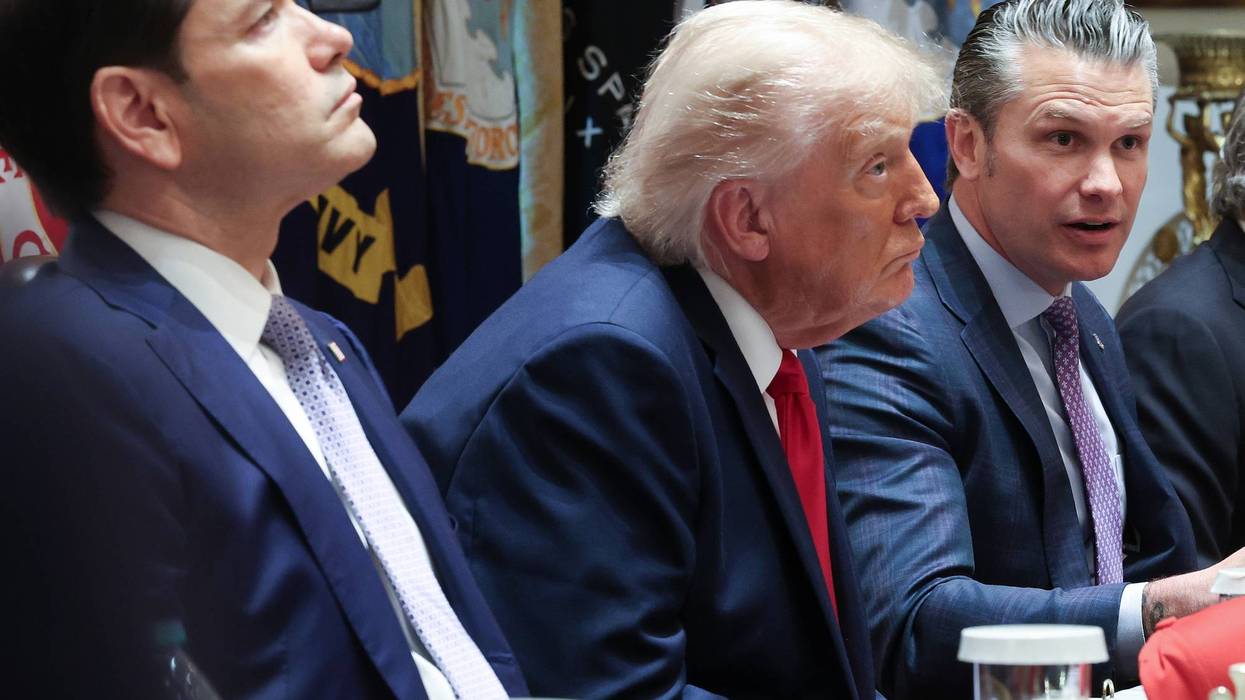
In 'Most Serious Test Yet' of Ceasefire Deal, Trump Bombs Iran After Strike on Cargo Ship in Strait
The US attack came as Secretary of State Marco Rubio announced a trilateral agreement with Israel and Lebanon, which Israeli forces have bombed and occupied throughout the Iran War.
Jun 26, 2026
US President Donald Trump resumed bombing Iran on Friday, a day after an Iranian attack on a cargo ship in the Strait of Hormuz, elevating concerns about the future of a ceasefire agreement just as Israel and Lebanon signed a related deal.
The Trump administration—which partnered with Israel to launch an illegal war on Iran in late February—and the Iranian government agreed on a memorandum of understanding (MOU) earlier this month. On Thursday, Iran attacked the Singapore-flagged commercial vessel, the Ever Lovely, in the strait, a key trade waterway.
"The Islamic Republic of Iran shot at least four One Way Attack Drones at Ships transversing the Strait of Hormuz," Trump wrote on his Truth Social platform Friday morning. "One of the Drones solidly hit the upper deck of a large and very expensive Cargo Carrying Ship. Damage was done, but the Ship was able to proceed on its way. We knocked down three other Drones. Obviously, this is a foolish violation of our Ceasefire Agreement."
Responding on the social media network X, Ebrahim Azizi, who heads the Iranian Parliament's Commission on National Security and Foreign Policy, said: "The reality in the Persian Gulf has changed. The Strait of Hormuz is governed by Iran, so: Respect the rules. Use secure routes. Do not mistake control for escalation. If you do not learn the rules, the Iranian armed forces will teach them to you. This is not a violation of the ceasefire; it is ceasefire management."
Later Friday, US Central Command (CENTCOM) announced that "as a powerful response to yesterday's attack on a commercial ship that was transiting the Strait of Hormuz," American aircraft "struck Iranian missile and drone storage locations and coastal radar sites."
"The unwarranted aggression against commercial shipping by Iranian forces clearly violated the ceasefire," CENTCOM said. "Furthermore, Iran's dangerous behavior undermined freedom of navigation as commerce increasingly flows through the vital international trade corridor."
"CENTCOM forces continue to provide safe passage coordination and support to commercial vessels transiting the strait," Central Command added. "The US military remains present and vigilant to ensure all aspects of the agreement with Iran are adhered to, obeyed, and in full force and effect."
Flagging CENTCOM's announcement, the National Iranian American Council (NIAC) pointed out that "this marks the first publicly acknowledged US military action against Iran since the recent ceasefire agreement, potentially representing the most serious test yet of the fragile understanding between Tehran and Washington."
"Notably, the alleged violation of the MOU resulted in military retaliation," NIAC added, "contra coordination via the executive mechanism that was supposed to be established to monitor implementation of the deal."
Al Jazeera reported late Friday that Iran's Islamic Revolutionary Guard Corps (IRGC) released a statement saying it has responded with fire:
The IRGC said its Navy targeted locations in the region where US forces are deployed, without specifying where or providing additional details.
It condemned the US strikes on Iran, saying Washington, "as always, violated its commitments and launched an airstrike” on the Iranian coast.
"According to Article 5 of the memorandum of understanding, Islamabad has arrangements for controlling traffic in the Strait of Hormuz with the Islamic Republic of Iran," the IRGC said.
"However, the US, by inciting various parties, sought to violate this commitment, which was met with the necessary response," the statement continued. "If the aggression is repeated, our response will be more extensive."
As for the administration's supposedly diplomatic efforts, US Secretary of State Marco Rubio announced that the United States, Israel, and Lebanon—which Israeli forces have been bombing throughout the Iran War—had signed a trilateral framework that he claimed "builds a realistic path out of endless conflict."
"This agreement establishes a clear and structured process to restore Lebanon’s sovereignty, disarm Hezbollah, and dismantle its terrorist infrastructure, and enable Israel to return to its borders once that threat to its citizens is removed," Rubio said. "It also creates a trilateral Military Coordination Group for Lebanon (MCG4L), facilitated by the United States, allowing the two sides to implement this framework. For Lebanon, this framework provides a genuine pathway out of a long crisis. For Israel, it creates a verifiable path to removing the persistent threat on its northern border."
The framework was met with protests in the Lebanese capital. Lebanon's National News Agency reported that Hezbollah supporters gathered on motorcycles in Beirut to oppose the deal.
Keep ReadingShow Less
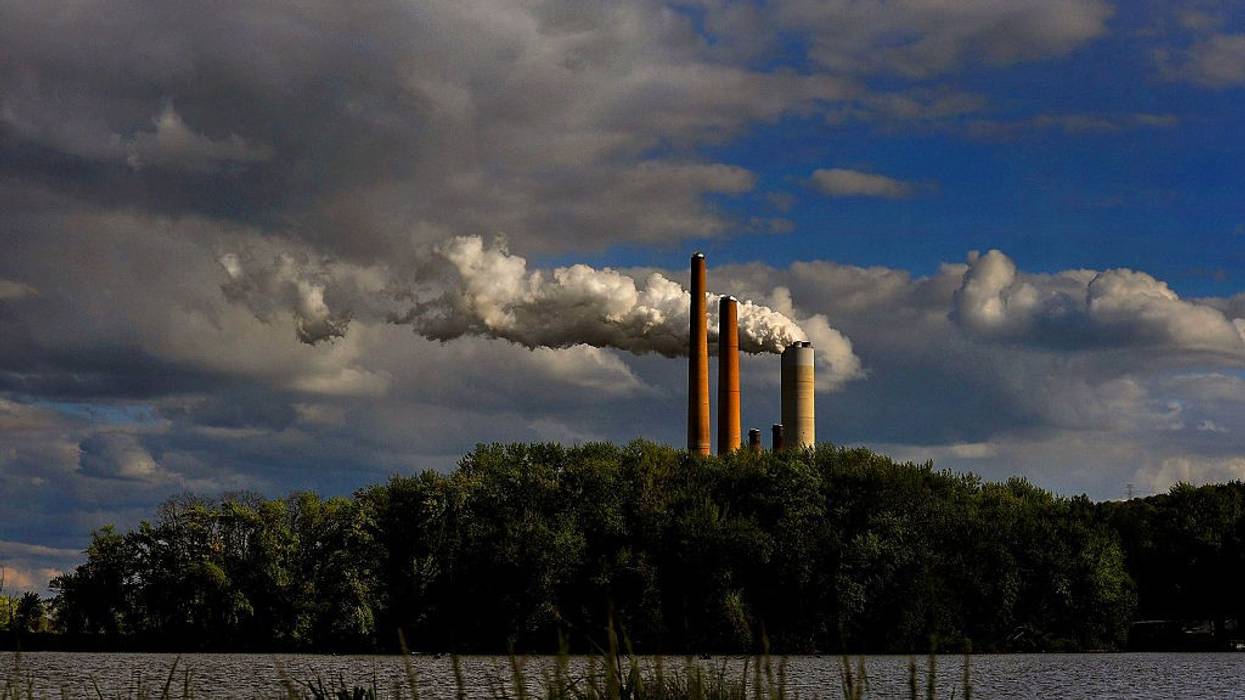
'Good News for Clean Air' as Court Rejects Trump EPA Bid to Ditch Coal Plant Soot Rule
"The court’s rejection of the Trump administration’s attempt to eliminate our national health standards for soot will mean healthier, longer lives for people across the country," said one advocate.
Jun 26, 2026
A federal appeals court on Friday rejected the US Environmental Protection Agency's attempt to scrap a Biden-era rule tightening limits on harmful soot pollution spewed from coal-fired power plants and other sources.
In a unanimous ruling, a three-judge panel of the US Court of Appeals for the District of Columbia Circuit dealt a blow to President Donald Trump's deregulatory agenda by leaving intact a national soot standard enacted in 2024 that lowers the amount of fine particulate matter from power plants, factories, and vehicles from 12 to 9 micrograms per cubic meter.
"Soot, made up of tiny toxic particles that lodge deep in the lungs, results in severe health harms, including premature death, and comes from sources like vehicle exhaust pipes, power plants, and factories," the legal advocacy group Earthjustice explained.
The Environmental Protection Agency (EPA) under Administrator Lee Zeldin last year asked the appellate court to invalidate the soot rule, claiming that the Biden administration exceeded its authority and failed to take into account the economic cost of implementing the policy.
“Clean air is not a luxury. We are thrilled these vital air quality standards have been upheld by a federal court,” said Patrice Simms, vice president of Healthy Communities at Earthjustice. “The 2024 soot standard is a critical advancement for public health, projected to save thousands of lives every year. Lee Zeldin’s EPA must stop catering to polluters and must instead fulfill its mission to protect public health. The time for implementing the 2024 soot standard is now.”
Clean Air Task Force senior director of legal advocacy Shaun Goho also welcomed the ruling, saying: "Fine particulate matter standards provide critical public health protections. The court correctly rejected EPA’s about-face on the need for a stronger standard."
Katie Huffing, executive director of the Alliance of Nurses for Healthy Environments, called Friday's decision "a win for public health."
“Every day in practice, nurses witness and treat conditions made worse by soot pollution," she said. "From asthma exacerbations and chronic obstructive pulmonary disease to heart disease and preterm birth, nurses see the real-world health implications of toxic air pollution."
"The science shows stronger limits to reduce dangerous soot pollution provide significant health benefits for Americans, especially for those most vulnerable and those exposed to higher levels of particulate matter pollution," Huffing added. "We now urge EPA to fully implement the strengthened standard to ensure those health benefits are realized.”
Noha Haggag, senior attorney for the Environmental Defense Fund, said that “today’s federal court decision is good news for clean air in America and for the millions of people harmed by deadly soot."
“Soot can cause asthma attacks, lung cancer, and premature deaths," Haggag added. "The court’s rejection of the Trump administration’s attempt to eliminate our national health standards for soot will mean healthier, longer lives for people across the country.”
Keep ReadingShow Less
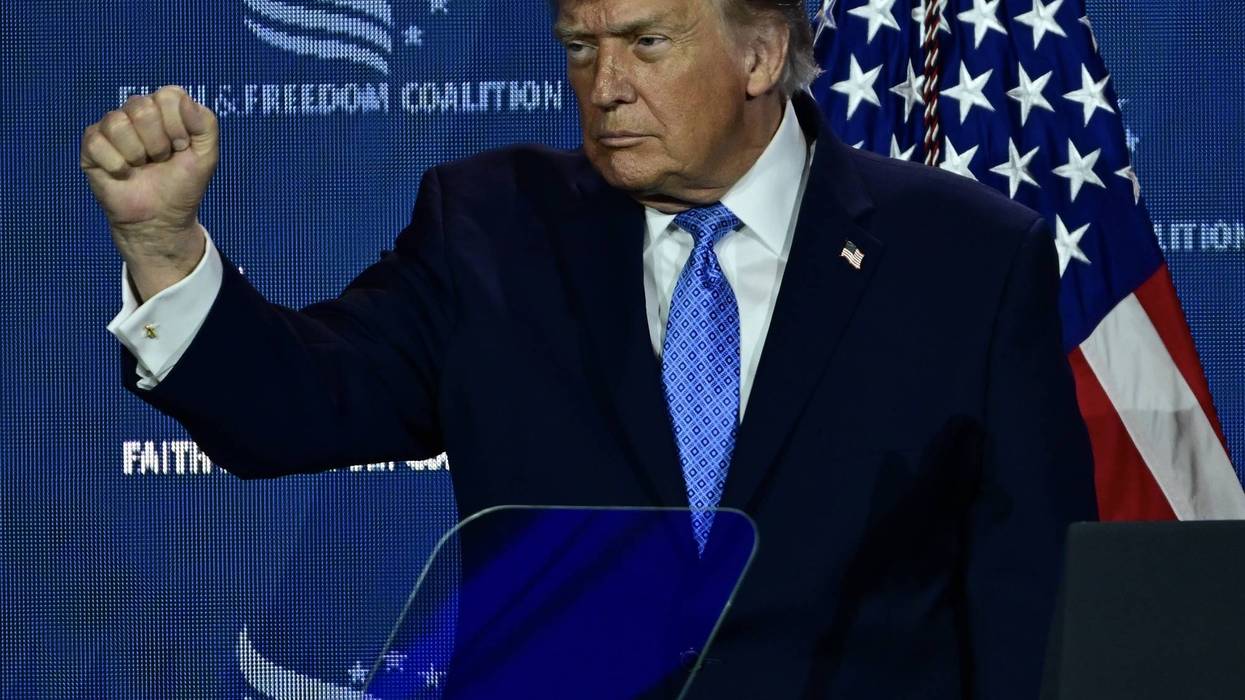
Unhinged Trump Calls US Progressives Communist 'Animals' Who Will 'Close Your Churches' and 'Kill Your People'
The president complained about primary victories of progressives backed by New York City's democratic socialist mayor, who this week secured a rent freeze for a million units and put $15 million toward gender-affirming care.
Jun 26, 2026
After a series of electoral victories for democratic socialists and legal blows to President Donald Trump's authoritarian agenda this week, the Republican on Friday ranted to a Christian conference that progressives—whom he called "hardcore, godless communists"—are "the most serious threat to our country since its existence, in my opinion, 250 years ago."
Trump previewed his nearly 50-minute speech to the Faith and Freedom Coalition's policy conference with a lengthy post on his Truth Social platform in which he wrote: "I'd be the Greatest Communist in History. I'd give free rent, free houses, free food, everything is free. Unfortunately, after two or three years, the Country where this is taking place would fail. It always does, and then you'll start living in squalor. There will be no food, there will be no housing, there will be no Military, there will be no nothing."
In a signal that he was specifically targeting the left flank of the Democratic Party, Trump said: "They're animals! In many cases, not smart but, in some cases, they are. It's easy for them to get followers because they make promises that they know they can't keep, and the Dumocrats aren't fighting back. In many ways, they're allowing them to go their own way. They’re afraid they will lose their Election, they're afraid of conflict. They’re not smart enough or tough enough to fight this plague."
"These are not social Dumocrats, these are hardcore, godless Communists," the president continued. "Isn't it ironic, we're celebrating a very important Birthday, and instead of speaking about Christ, Freedom, and Victories of all different kinds, we're speaking about yet another threat to the Foundations of America. These ruthless Communists will attack all Religions but, in particular, Christianity—They always do. All Communist Countries attack Religions violently."
"As you know, we recently struck Nigeria, and largely ended the slaughter of their Great Christian population," he added. "They know that if they go further, the attack will be far greater and, in that, they don't want to get involved. I am saving Christians throughout the World, even though we are not in those various Countries, by hitting these Terrorists violently and hard. They will close your Churches, they will kill your people. This is what they're about."
During the actual speech, Trump specifically took aim at "the communists elected in New York City recently," who he claimed "want to completely destroy the traditional American way of life," an apparent jab at a slate of candidates who won their Democratic primaries earlier this week: Claire Valdez in New York’s 7th Congressional District, Brad Lander in the 10th District, and Darializa Avila Chevalier in the 13th District.
By contrast, US Sen. Bernie Sanders (I-Vt.), a democratic socialist who ran for president in 2016 and 2020, called the trio's victories proof that Americans "are sick and tired of status quo politics" and "want to end the corrupt campaign finance system, which enables billionaires to spend huge amounts of money to elect candidates who will represent their interests and go to war against working-class people."
All three campaigned on progressive policies including more affordable housing, Medicare for All, stronger union protections, and an end to US military support for Israel’s genocidal assault on Palestinians—and they were backed by New York City Mayor Zohran Mamdani, a democratic socialist who continued delivering on his campaign promises on Thursday, when the NYC Rent Guidelines Board approved a two-year rent freeze affecting roughly a million apartments.
While Trump complained about that NYC development in his Friday speech, others have celebrated it. Melanie D'Arrigo, executive director of the Campaign for New York Health, which advocates for universal single-payer healthcare, said that "the real threat Zohran Mamdani poses is to the career politicians who've spent decades making promises, then making excuses, then telling people to vote harder next time. He's showing people that elected officials can actually do things that help them in their everyday lives."
Shortly before Trump's swipe at the New York progressives running for Congress, he claimed that left-leaning Democrats "want to resume the transgender 'mutilization' of our children." In addition to attacking lifesaving gender-affirming healthcare for trans youth, the president has restricted abortion access and signed legislation that's already led to millions losing insurance coverage.
Meanwhile, Mamdani on Friday announced a $15 million plan to expand access to gender-affirming care for youth and adults across the city, which includes a direct care access fund, a call and text line, and funding for research. He said that "as the federal government attacks transgender people and attempts to intimidate patients, families, and providers, New York City is stepping up."
Despite Trump's claim that the Democratic Party establishment isn't fighting back against ascendant progressives and democratic socialists, Axios reporting from Thursday suggests centrist Democrats are, in fact, gearing up to do so—and over a dozen have endorsed the "Promise to America" manifesto, emphasizing their support for capitalism, "fiscal discipline," and law enforcement.
Ripping the manifesto, D'Arrigo said: "'Centrism' is just performative compromise devoid of critical thinking, policy, or ideology. It’s a political vehicle that gives permission to do nothing in service of protecting a status quo that benefits large corporate donors and special interest groups who fund both parties."
In addition to serving the corporate interests that bankrolled his return to power, Trump has also served himself during his second term, growing the wealth of his family by billions of dollars and even accepting a luxury plane from Qatar.
Trump has also made a range of other moves that demonstrate his contempt for US law—from pardoning donors and other supporters, including insurrectionists who stormed the US Capitol, to weaponizing the Department of Justice against his enemies, to carrying out multiple illegal military actions, such as his invasion of Venezuela and abduction of its president, the ongoing war on Iran, and deadly bombings of boats his administration claims were trafficking drugs.
The president's violent and authoritarian agenda has faced some setbacks in court this week: Federal judges ruled against the administration's policy pushing US Immigration and Customs Enforcement (ICE) arrests at courthouses, as well as a pair of Trump executive orders that attacked voting rights.
However, those cases are ongoing, plus another federal judge issued lengthy prison sentences for a group of activists who protested outside an ICE detention center and were falsely accused by the administration of being members of a nonexistent "North Texas Antifa Cell." Trump has also continued his assault on voting rights this week, scrapping plans to sign a bipartisan housing bill in a bid to pressure Congress to pass the so-called Safeguard American Voter Eligibility Act.
With the November elections just over four months away, Ron Filipkowski, editor-in-chief of MeidasTouch, also took Trump's Friday Truth Social comments as a threat, saying, "This sounds a lot to me like Trump laying the groundwork to steal the midterms."
Keep ReadingShow Less
Most Popular