

SUBSCRIBE TO OUR FREE NEWSLETTER
Daily news & progressive opinion—funded by the people, not the corporations—delivered straight to your inbox.
5
#000000
#FFFFFF
To donate by check, phone, or other method, see our More Ways to Give page.
Daily news & progressive opinion—funded by the people, not the corporations—delivered straight to your inbox.
Liz Rose 202 587-1638 lrose@ourfuture.org
Today's bleak unemployment numbers for August demonstrate that President Obama must put forward a big, bold program for job creation when he addresses the nation next Thursday, said Roger Hickey, co-director of the Campaign for Americas Future in response to today's data from the Labor Department.
Hickey said, "These numbers, with no net job creation at all -- and 14 million people officially unemployed -- show that the economy is dead in the water." Hickey noted that government policy, which is still focused on deficit reduction and austerity measures, forcing layoffs of teachers, firefighters and other public employees at the federal, state and local level, is systematically damaging employment and growth. This report shows that since employment peaked in September 2008, local government has lost 550,000 jobs. "The policy of our government is systematically undermining the recovery. Public sector layoffs are undermining consumer buying power, crippling the ability of the private sector to sell products and services. Clearly, President Obama must reverse this downward spiral by creating jobs directly, putting money in consumer's pockets, and helping small and large companies to find buyers and invest in growth," Hickey said.
Hickey renewed the call to President Obama asking him for a bold jobs plan that will put Americans back to work. "The Campaign for America's Future on Aug. 30 joined with Rebuild the Dream, MoveOn, NOW and 80 other groups to send a letter to President Obama. The groups told Obama, "A problem this serious needs a plan to match it in scope. Tax cuts and incentives for corporations have repeatedly failed to put Americans back to work. It is time to move beyond these half measures designed to appeal to a narrow ideological minority who have repeatedly shown their unwillingness to negotiate and their disinterest in real solutions. History--and proven economics--tells us that any plan to solve our job crisis needs to be big, bold, and create jobs directly."
Hickey said "With Labor Day around the corner, it is time for the President Obama and Congress to act. Everyone knows that Republicans in the Congress are demanding policies that are crippling growth - and they are even resisting small measures, like extending unemployment insurance and continuing Social Security the tax holiday. The President should push Republicans to vote for these small measures, which they used to support routinely but now oppose. However, President Obama must go beyond what might be able to pass today and present a bold jobs program that is big enough to revive the economy and create jobs. If he does this can rally the country and revive hope that the over 25 million unemployed or underemployed Americans will soon have new opportunities. If the President doesn't acknowledge that we are in an unemployment crisis - and advance a serious plan to create growth and jobs - the country will lose hope and our economic crisis will only get worse."
Note: Over the past several weeks the Campaign for America's Future has advanced a series of proposals called Big Ideas to Get America Working. These proposals can be found at https://www.ourfuture.org/report/bigideas
The Campaign for America's Future is the strategy center for the progressive movement. Our goal is to forge the enduring progressive majority needed to realize the America of shared prosperity and equal opportunity that our country was meant to be.
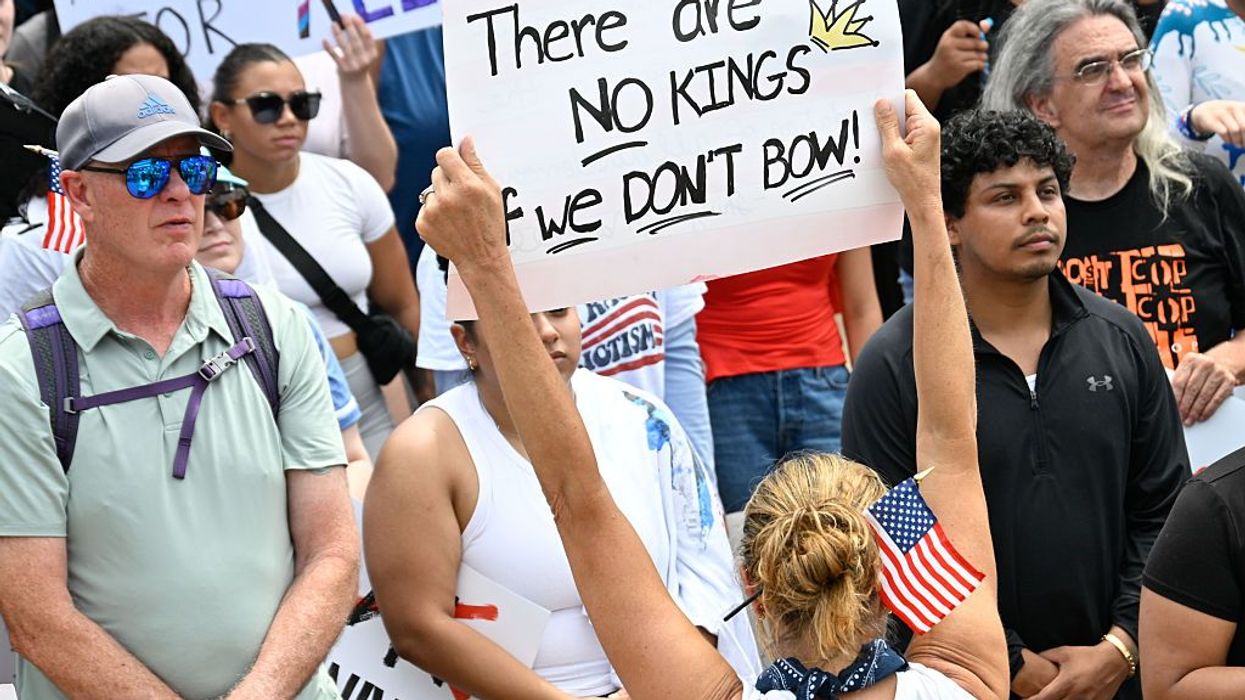
"The politicians attacking voting rights today are clinging to a shrinking vision of America rooted in fear, exclusion, and minority rule."
Republican state lawmakers are seizing on the US Supreme Court's recent gutting of the Voting Rights Act to continue President Donald Trump's gerrymandering spree, including in Alabama, where "All Roads Lead to the South," the No Kings coalition, community members, faith leaders, and other organizations plan to come together on Saturday, May 16, in protest.
They are set to start at 9:00 am CT at Selma's Edmund Pettus Bridge, named for a former Ku Klux Klan grand dragon and the site of Bloody Sunday, "for prayer and remembrance—on sacred ground, in reverence for those who marched in 1965, in gratitude for the moral courage they showed the nation, and in faith that the same spirit that moved them still moves in us."
The organizers then intend to hold a rally at the Alabama State Capitol in Montgomery from 1:00-5:00 pm. People across the United States outraged by GOP attacks on voting rights are also planning solidarity actions throughout the day.
"Sixty years after Bloody Sunday, we are once again being called to meet this moment with collective action. The attacks on voting rights across the South are not isolated incidents, they are part of a coordinated effort to weaken Black political power," said Cliff Albright and LaTosha Brown, co-founders of Black Voters Matter Fund, a leading partner organization of All Roads Lead to the South, in a Tuesday statement.
"But we have faced these challenges before, and we know our power," the pair continued. "Alabama has always been sacred ground in the fight for freedom, and this moment demands that we rise together once again. We are proud to stand with the No Kings coalition and people across the nation to make clear that our communities will not be pushed backward, our voices will not be silenced, and our power will not be denied."
Since Trump returned to office last year, the No Kings movement has organized three national days of action—in June, October, and March. Americans also held thousands of protests nationwide on May Day, or International Workers' Day, earlier this month.
"What is happening right now is deliberate, coordinated, and being driven by Republican politicians committed to abusing power and rigging the system to hold control for themselves and silence Black voters," the No Kings Steering Committee said Tuesday. "They plan on overturning every protection available for Black voters and will not be satisfied until they reinstate every Jim Crow-era law."
"That's why the No Kings coalition is joining in solidarity with All Roads Lead to the South this Saturday in Alabama and across the country for an emergency national protest against the attacks on voting rights by the Supreme Court and the swift effort by Republican-controlled states to disenfranchise millions of Black voters," the committee continued.
On May 16th, join civil and voting rights groups in a National day of Action in Montgomery, Alabama. Go to allroadsleadtothesouth.com for more details. #votingrights #50501movement
[image or embed]
— 50501: The People’s Movement ❌👑 (@50501movement.bsky.social) May 9, 2026 at 12:48 PM
GOP state lawmakers in Florida, North Carolina, Missouri, Tennessee, and Texas have already responded to demands from Trump and fears of losing a slim majority in the US House of Representatives by redrawing their congressional districts to favor Republicans in the November midterm elections.
Democratic state leaders in California and Virginia have tried to fight the Trump-led GOP's mid-decade redistricting by enacting new voter-approved congressional districts that favor Democrats, though both of those maps face legal challenges. Party leaders in Virginia on Monday asked the US Supreme Court to block a recent ruling against the Democratic effort.
In a case about Louisiana's districts that predated Trump's push, the US Supreme Court last month found that the state map was an "unconstitutional racial gerrymander" and eviscerated Section 2 of the Voting Rights Act, leading Republican Gov. Jeff Landry to suspend primary elections, even though absentee ballots had already gone out.
Tennessee lawmakers swiftly took advantage of an opportunity from that ruling by targeting their state's only majority-Black congressional district, in Memphis. As Tennesseans sued over the new map on Monday, the US Supreme Court's right-wing justices cleared the way for Alabama legislators to break up their state's majority-Black district.
"The politicians attacking voting rights today are clinging to a shrinking vision of America rooted in fear, exclusion, and minority rule. They are trying to preserve a past this country has already rejected," said the No Kings panel. "In this country, we do not answer to kings—not in the White House and not in our state houses. Power belongs to the people, and we the people will decide."
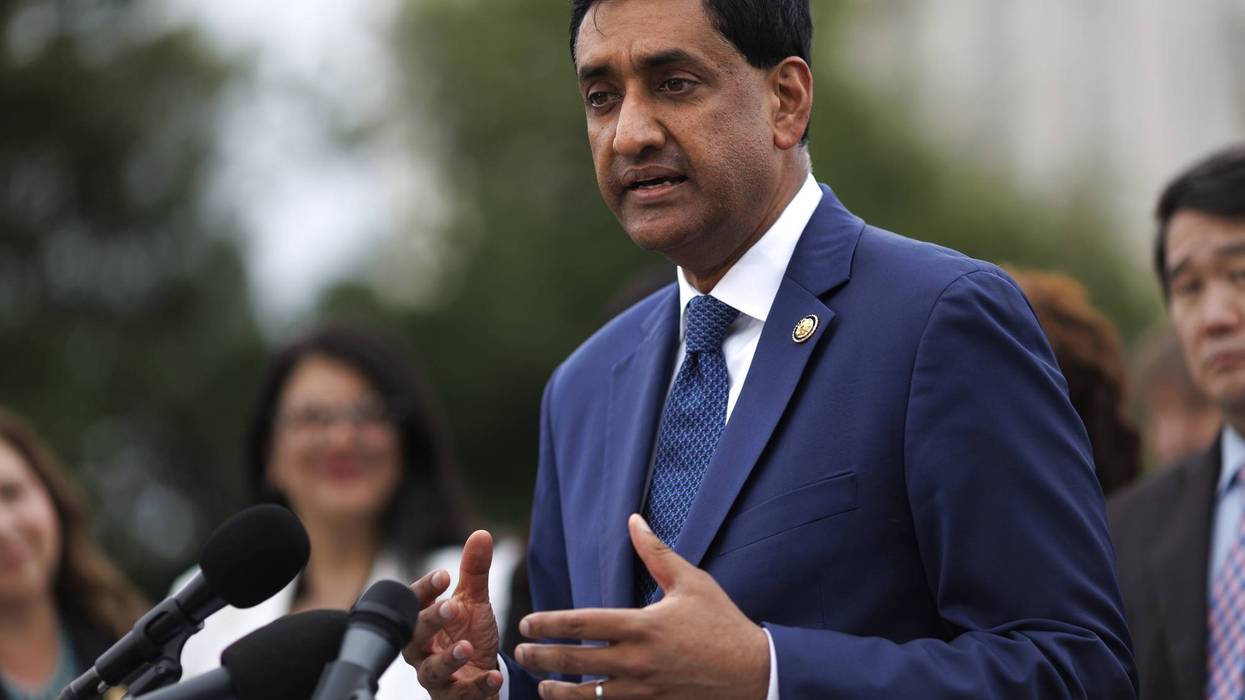
"The next Democratic White House does not need a court reform commission like some college seminar," said the California Democrat.
With a right-wing supermajority controlling the US Supreme Court, and the recent ruling in Louisiana v. Callais yet again displaying the court's "war on constitutional democracy," as one legal expert put it, US Rep. Ro Khanna is pushing for Democrats to move with just as much certainty as the far-right justices as soon as the party is able to reform the court.
In a social media post Tuesday morning, Khanna (D-Calif.) suggested the Democratic Party has all the information it needs to take decisive action to rein in the court as soon as it controls the White House once again—instead of simply "exploring" the possibility of judicial reform.
"The next Democratic White House does not need a court reform commission like some college seminar," said Khanna, who has been named a potential 2028 presidential contender. "We need action. We need term limits for justices. We need to expand this morally bankrupt court from nine to 13."
Khanna is among the progressive lawmakers who have previously expressed support for replacing Supreme Court justices' lifetime appointments with term limits and for expanding the court, which polls have found the majority of Americans support.
The congressman's comments came three days after House Minority Leader Hakeem Jeffries (D-NY) was interviewed by Ali Velshi on MS NOW about the Democratic Party's plans to reform the federal government, should it retake the US House of Representatives and Senate after the November midterm elections and the White House in 2028.
Jeffries called for "nationwide judicial reform," without mentioning specific actions the party should take to reform the court following multiple corruption and ethics scandals involving right-wing Justices Clarence Thomas and Samuel Alito as well as rulings like Callais, which eviscerated Section 2 of the Voting Rights Act and cleared the way for Republican legislatures to redraw congressional maps and eliminate the electoral power of Black communities in the South and across the country.
The ruling of the supposedly nonpartisan high court appeared timed to allow the GOP to redraw districts before the midterms, maximizing their chances of winning seats.
"We are going to have to explore massive judicial reform, state by state and at the federal level, and everything should be on the table, as far as I'm concerned," said Jeffries.
Democrat Judicial Takeover?!
Hakeem Jeffries just proposed a left-wing takeover of the U.S. court system NATIONWIDE if Democrats regain power:
"We're going to have to explore judicial 'reform' state by state and at the federal level...everything should be on the table as far as… pic.twitter.com/yUBN2Wy9Zu
— Conservative Brief (@ConservBrief) May 11, 2026
Ahead of the Callais ruling late last month, the Brennan Center for Justice published a report on several actions Congress could take "to fix the Supreme Court," which currently "wields vast power with minimal accountability" and has the confidence of less than a quarter of Americans, according to polling. Lawmakers, said the group, should take actions including:
Advocacy groups including Demand Justice have called for expanding the court from nine to 13 seats, a move that the group says is "straightforward, constitutional, and grounded in history," with Congress having changed the number of justices that sit on the court six times in the past. A number of Democratic lawmakers have expressed support for court expansion, and former President Joe Biden convened a commission to study reforms in 2021.
At The Guardian on Tuesday, Austin Sarat, a professor of jurisprudence and political science at Amherst College, recalled the historian Henry Steele Commager's 1943 warning that the Supreme Court "had never been a friend to US democracy, and it never would be."
"For anyone committed to the advancement of majority rule, he added, judicial review 'is wrong in theory and dangerous in practice,'" wrote Sarat, who said the Callais ruling put the danger Commager warned of "on full display"—as have a number of rulings since the court allowed unlimited corporate spending on elections in 2010 with its Citizens United ruling.
"Commager would not have been surprised by what has unfolded since 2010, but he would have warned Americans against despair," wrote Sarat. "He would want us to get busy trying to save what is left of our democracy by using our votes and our voices. There is no time to waste."

"It’s not a big deal," Landry said after casually announcing that legally cast ballots were "discarded" after he suspended elections.
Louisiana's Republican Gov. Jeff Landry is facing criticism over his blasé admission that tens of thousands of Louisianans would have their legally cast ballots thrown out after he suspended the state's primary elections.
Landry signed an executive order suspending the state's May 16 and June 27 primaries immediately after the US Supreme Court’s landmark decision in late April, which held that the state’s maps guaranteeing districts representing the state's Black residents constituted “an unconstitutional racial gerrymander."
The ruling in Louisiana v. Callais effectively destroyed Section 2 of the 1965 Voting Rights Act and set the stage for the GOP to draw new districts that could totally wipe out the electoral power of Louisiana's Black population, which makes up about one-third of the state, and do the same across the country.
Declaring a "state of emergency," the governor announced that elections were suspended just as early voting was set to begin, leading many to conclude that the right-wing high court's ruling was timed to allow Republicans to maximize their power as they enter this year's midterms.
In an interview with "60 Minutes" on Sunday night, Landry was asked by anchor Cecilia Vega about the unprecedented decision to suspend the election and what would happen to the roughly 45,000 mail ballots cast before the order went into effect.
Landry contended that he had no choice but to suspend the elections because "we don't have a map that our voters can vote on" as a result of the court's ruling.
Vega noted that during times of much greater strife, including "during the Civil War, during two world wars, elections still went on."
"We'll have an election, and we're actually going to have an election on Election Day," Landry responded, in an apparent shot at those who cast their votes early.
"But voting was already happening," Vega said. "More than 45,000 ballots have been returned. What happens to those?"
Landry said, "Those ballots are discarded, and those voters will vote again in November." (Notably, Landry's order does not delay primary elections until November, but until July 15 or whenever the legislature enacts new maps.)
Vega responded with incredulity at the governor's casual acknowledgment that the state would simply throw out tens of thousands of legally cast votes.
“You say that like it’s not a big deal,” she said.
“Well, it’s not a big deal,” Landry responded. “It’s not my fault. If anyone has a grievance, take it to the United States Supreme Court.”
The voting rights-focused news outlet Democracy Docket responded to Landry on social media: "It is a big deal to the 45,000 voters whose ballots you trashed. It’s also your fault."
They echoed the words of Rep. Cleo Fields (D-La.), whose majority Black 6th congressional district in Baton Rouge is expected to be chopped up by the GOP, and who has joined a lawsuit with other candidates hoping to stop Landry's suspension of elections.
“The Supreme Court ruled that the map that you created, that this legislature created, and this governor signed, was illegal,” Fields said to Landry on Monday. "The Supreme Court did not say, ‘Throw away those ballots.’"
The decision to suspend Louisiana’s primary comes amid a multi-pronged assault on voting rights coming from the administration of President Donald Trump, who has himself repeatedly floated the idea of canceling elections and praised Landry for “moving so quickly” to block his constituents from voting.
But many were particularly shocked at Landry's apparent ho-hum attitude toward mass disenfranchisement.
Civil rights attorney and public defender Scott Hechinger marveled at the “governor of Louisiana throwing out 45,000 votes with a smug smirk and a chuckle.”