

SUBSCRIBE TO OUR FREE NEWSLETTER
Daily news & progressive opinion—funded by the people, not the corporations—delivered straight to your inbox.
5
#000000
#FFFFFF
To donate by check, phone, or other method, see our More Ways to Give page.
Daily news & progressive opinion—funded by the people, not the corporations—delivered straight to your inbox.

Chris Pincetich, 415.663.8590 x102, chris@tirn.net
Dustin Cranor, 202.341.2267, 954.348.1314 or dcranor@oceana.org
Catherine Kilduff, 415.644.8580 or ckilduff@biologicaldiversity.org
The U.S. government failed to meet its legal deadline Wednesday for issuing a final rule providing additional protections for loggerhead sea turtles, whose populations have faced severe declines over the past decade. The rule is required as a result of 2007 legal petitions by Oceana, the Center for Biological Diversity and the Turtle Island Restoration Network urging the National Marine Fisheries Service and the Fish and Wildlife Service to change the status of North Pacific and northwest Atlantic loggerheads from "threatened" to the more protective "endangered" classification under the Endangered Species Act.
"It is disgraceful that after more than three years and in the face of overwhelming evidence the government has yet to address this critical issue," said Eric Bilsky, assistant general counsel and senior litigator at Oceana.
On March 16, 2010, the government proposed to list loggerheads as endangered in response to a court-ordered settlement over prior delays. It has now failed to take timely action by missing the legal deadline to issue a final rule within one year.
"While the government dragged its feet, loggerhead sea turtles have drowned in fishing gear and oil from the BP spill. Meanwhile, larger threats from global warming and sea-level rise are mounting," said Catherine Kilduff, an attorney at the Center for Biological Diversity. "Endangered Species Act protections are needed to promote the recovery of loggerheads and protect nesting beaches from rising seas. Delaying these additional protections only puts these rare turtles at increased risk of extinction."
While critical habitat is not currently designated for loggerheads, the final rule would trigger its identification, an important step toward achieving improved protections for key nesting beaches and migratory and feeding habitat in the ocean.
"Every day of delay is another loggerhead drowned or injured in deadly fisheries," said Dr. Chris Pincetich, marine biologist with the Sea Turtle Restoration Project of the Turtle Island Restoration Network.
Loggerheads have declined by at least 80 percent in the North Pacific and could become functionally or ecologically extinct by the mid-21st century if additional protections are not put into place. Florida beaches, which host the largest nesting population of loggerheads in the northwest Atlantic, have seen more than a 25 percent decline in nesting since 1998. Human activities, including commercial fishing and habitat degradation, are pushing loggerheads towards extinction. Climate change threatens to make the situation even worse.
In addition to demanding that the government protect sea turtles and their habitat under existing law, the groups are calling for comprehensive legislation that would protect U.S. sea turtles in ocean waters as well as on land.
At the Center for Biological Diversity, we believe that the welfare of human beings is deeply linked to nature — to the existence in our world of a vast diversity of wild animals and plants. Because diversity has intrinsic value, and because its loss impoverishes society, we work to secure a future for all species, great and small, hovering on the brink of extinction. We do so through science, law and creative media, with a focus on protecting the lands, waters and climate that species need to survive.
(520) 623-5252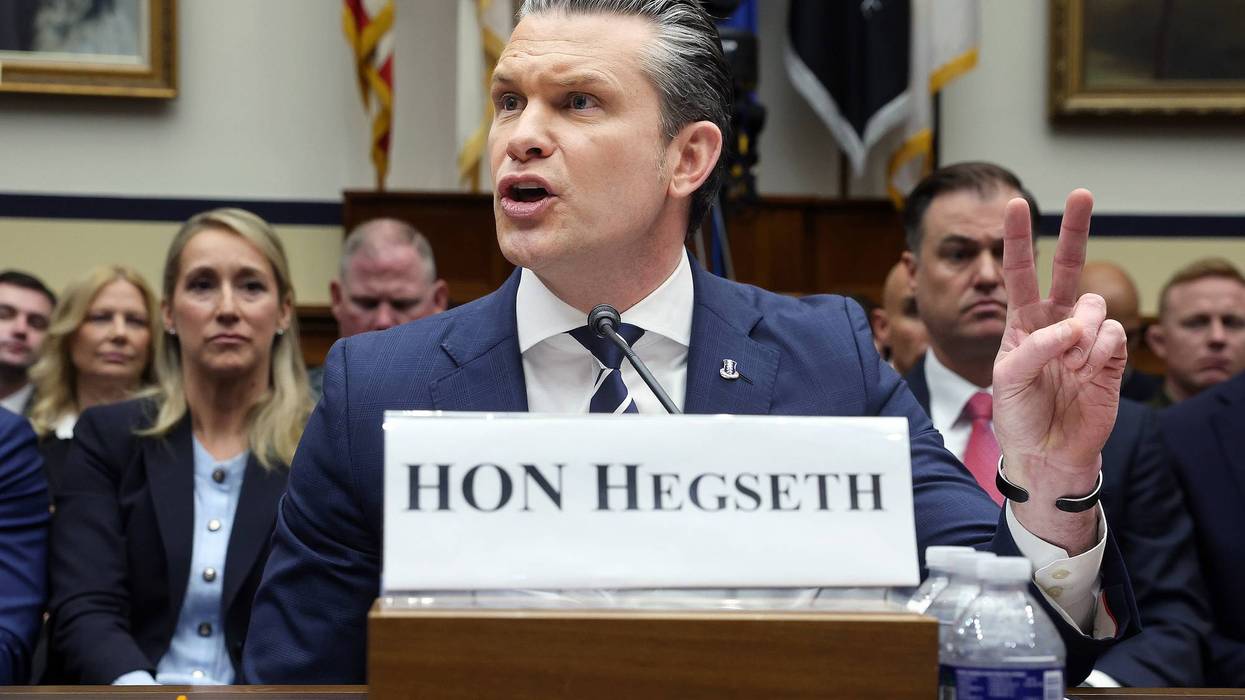
White House officials "just straight up fabricated shit," said the Democratic senator from Connecticut.
Just hours before the Trump administration conducted what it claimed were "self-defense strikes" against "Iranian military facilities," The Washington Post reported Thursday that the Central Intelligence Agency concluded that "Iran can survive the US naval blockade for at least three to four months before facing more severe economic hardship."
Citing four unnamed officials familiar with the analysis, the newspaper highlighted that "the CIA analysis might even be underestimating Iran's economic resilience if Tehran is able to smuggle oil via overland routes."
Militarily, "Iran retains about 75% of its prewar inventories of mobile launchers and about 70% of its prewar stockpiles of missiles," the Post added. "There is evidence that the regime has been able to recover and reopen almost all of its underground storage facilities, repair some damaged missiles, and even assemble some new missiles that were nearly complete when the war began."
Drop Site News' Murtaza Hussain responded that if this assessment along with a previous one from the Center for Strategic and International Studies about "remaining US munitions and interceptor capacity are even approximately correct, it goes a long way to explaining why Trump seems so eager to end the war whereas the Iranians have either dug in or escalated their negotiating positions. The missile math of continuing the conflict would be much more favorable to the Iranians, especially if the war continued for a significant time."
"Prior to the war, interceptor capacity compared to the size of the Iranian missile stockpile seemed like the most rationally incontrovertible reason to avoid fighting such a conflict, even for people who found it politically desirable," he added. "This also might explain why the US and Israel pivoted towards the end to threatening countervalue strikes against civilian targets if attempts to destroy the underground missile cities by air were ineffective."
The Post's reporting came one month into a fragile ceasefire and starkly contrasts the recent framing of conditions in Iran from President Donald Trump and others in his administration, including Defense Secretary Pete Hesgeth.
Sen. Chris Murphy (D-Conn.) responded to the Post's reporting by quoting Hegseth, who said in March that "never before has a modern, capable military, which Iran used to have, been so quickly destroyed and made combat ineffective."
Murphy declared: "They lied through their teeth. Just straight up fabricated shit."
Still, White House spokesperson Anna Kelly stuck to the administration's framing in a Thursday statement to the Post.
"During Operation Epic Fury, Iran was crushed militarily," Kelly said. "Now, they are being strangled economically by Operation Economic Fury and losing $500 million per day thanks to the United States military's successful blockade of Iranian ports. The Iranian regime knows full well their current reality is not sustainable, and President Trump holds all the cards as negotiators work to make a deal."
Meanwhile, some experts were unsurprised that the CIA privately delivered a "sober" assessment contradicting the administration's public commentary on the conflict—which it now claims is no longer an active "war," seemingly to dodge a key congressional deadline.
"Nice to know that a confidential CIA analysis is confirming what close observers of the Iranian economy have been saying publicly for weeks! Intelligent policymakers rely on intelligence. But Trump jeopardized diplomacy by instigating a blockade that was never going to work," said Esfandyar Batmanghelidj, an adjunct professor at Johns Hopkins University's School of Advanced International Studies in Europe and founder of the think tank Bourse & Bazaar Foundation.
Sharing the reporting on social media, Jennifer Kavanagh, a senior fellow and director of military analysis at the think tank Defense Priorities, wrote: "As I argued a week into the U.S. blockade, Iran can hold out for months without economic collapse. The costs for the US and the world are increasingly unsustainable, however."
Earlier this week, Stephen Semler, a senior fellow at the Center for International Policy, estimated that the US government spent $71.8 billion on the Iran War during its first 60 days, an average of $1.2 billion daily. The International Monetary Fund warned last month that the conflict could cause a global recession.
Last Friday, Trump responded to the War Powers Act's 60-day deadline by claiming to Congress that his war—which already violated US and international law—had been "terminated." The White House said at the time that no fire had been exchanged since April 7, when a ceasefire deal was reached just hours after the president issued a genocidal threat against the Iranian people.
However, on Thursday evening, United States Central Command announced that Iran "launched multiple missiles, drones, and small boats" at American warships. CENTCOM added that it "eliminated inbound threats and targeted Iranian military facilities responsible for attacking US forces, including missile and drone launch sites; command and control locations; and intelligence, surveillance, and reconnaissance nodes."
"Local hospitals and emergency rooms could shut their doors forever because billionaires insist on paying less than the rest of us," said Emmanuel Saez, the French economist who designed California's wealth tax proposal.
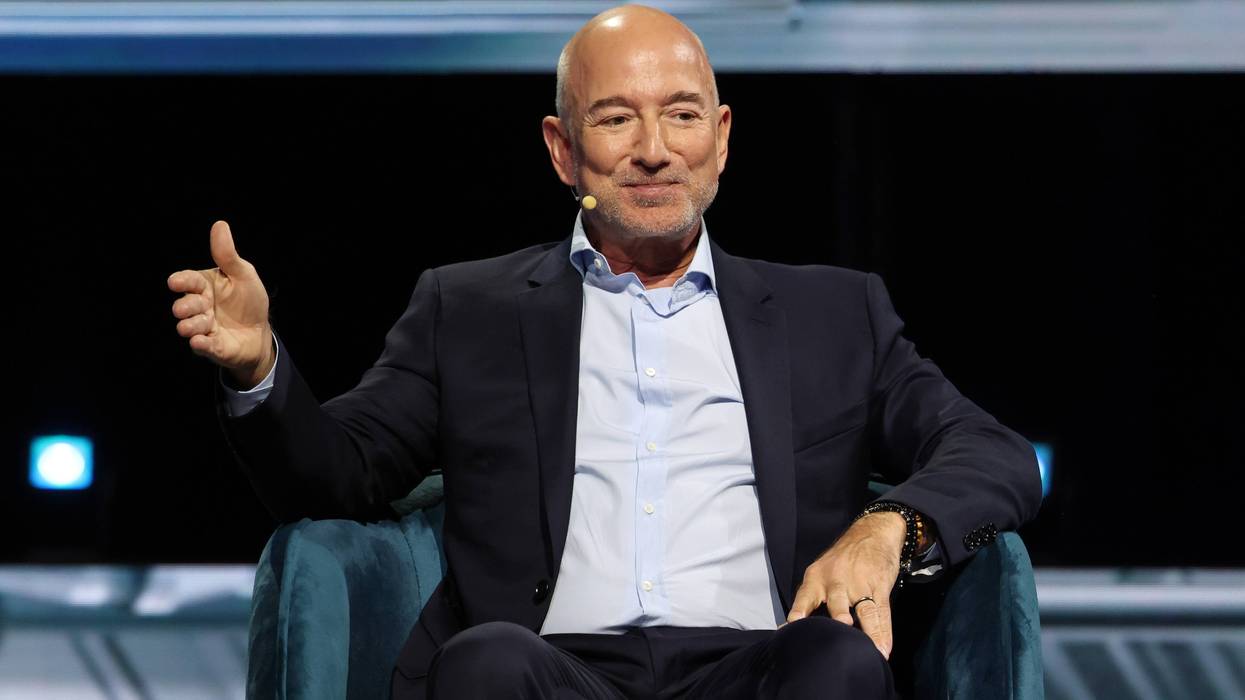
The architect of California's wealth tax proposal called out The Washington Post and its multibillionaire owner, Amazon founder Jeff Bezos, on Thursday for peddling what he said is "misinformation" to readers.
Emmanuel Saez, a French economist and professor at the University of California, Berkeley, who was tapped by California's largest union to design the tax proposal, singled out an opinion piece by the Washington Post editorial board from earlier this week that argues the proposal would backfire and cost California billions of dollars in tax revenue each year.
Saez said the article contains glaring falsehoods and omits key information about the proposal, which aims to create a one-time tax of 5% on the total assets of California's roughly 200 billionaire residents in order to recoup about $100 billion in revenue for healthcare, food assistance, and education stripped from the state by last year's Republican federal budget legislation, which will hand $1 trillion in tax breaks to the wealthiest 1% of Americans over the next 10 years.
The piece, published on Monday with the headline "California already losing with billionaire tax referendum," argues that even if California voters don't ultimately approve the measure, "the specter of such a wealth tax has already cost the state more in lost future revenue from income taxes than it would raise" due to an exodus of wealthy people from the state—an oft-used but weakly substantiated talking point by opponents of the measure.
The Post cited a paper by Jared Walczak, a visiting fellow at the California Tax Foundation, which it said demonstrates that billionaire flight "will cost California’s state government somewhere between $3.5 billion and $4.5 billion every year in other tax collections, and up to $19 billion in lost [gross domestic product]."
But Saez argued that his study makes a "basic mistake" by "modeling a mobility response of billionaires to a permanent annual and recurrent 5% wealth tax." In reality, though, the tax would be imposed only once and would apply to any billionaires who resided in the state after January 1, 2026, which has already passed, so it no longer creates an incentive to move.
Saez argued that in any case, "Walczak’s estimation of the California income tax paid by billionaires who have threatened to leave is also wildly exaggerated."
Walczak's figure for lost tax revenue, he said, hinges on the idea that the three richest men who've threatened to leave the state, Google co-founders Sergey Brin and Larry Page, and Meta CEO Mark Zuckerberg, pay $1.7 billion in California income taxes each year.
"If only they paid so much!" Saez quipped.
"In reality, using Securities and Exchange Commission data on stock sales, stock donations, dividends, and executive compensation, we can directly estimate that they paid only [$269 million] in California income tax in 2025, 6.3 times less than Walczak’s assumption," he said, citing a paper he co-wrote in March responding to a similar argument by a conservative think tank.
He cited tax data showing that the tech tycoons—who own a combined $810 billion according to Forbes—only collectively paid about [$22 million] per year on average between 2019-25, with Brin and Page paying no taxes on their wealth from stock in Google's parent company Alphabet during three of those years because they didn't sell stock, get dividends, or receive executive compensation. This is despite 90% of their wealth coming from those holdings.
"The one-time wealth tax finally makes them contribute in proportion to their enormous wealth gains," Saez said.
The Post also claimed that the Service Employees International Union (SEIU) United Healthcare Workers West, the union leading the charge in support of the referendum, is "pretend[ing] that the tax is needed to save California’s health system from 'collapse'" and is instead dishonestly using that framing to covertly pursue the "redistribution of wealth."
But Saez said that the federal cuts of roughly $20 billion annually are already having devastating effects on Californians that could be alleviated with more tax revenue.
As a result of the cuts, "more than 400 California hospitals have already laid off more than 3,400 healthcare workers as of mid-March, with a second wave of layoffs expected as funding cuts tied to recent federal policy changes are phased in over the next several years," he said. "Statewide, projections show the cuts could result in the loss of up to 145,000 healthcare jobs, impacting hospitals, clinics, and home care providers alike."
Eighty-three more hospitals in California may be at risk of closing due to the federal funding cuts, according to a recent nationwide analysis by Public Citizen. But Saez said the billionaire's tax would go a long way toward closing the gap.
"Right now, California’s billionaires pay much lower tax rates than what working families pay out of every paycheck," Saez said.
Despite claims otherwise by the Post editorial board—which last month ran another piece arguing that due to progressive taxation, "the rich already pay more than their fair share"—according to the Institute on Taxation and Economic Policy, at all levels of government from 2018-20, billionaires paid just 24% of their total income in taxes, while the US-wide average was 30%. This disparity arises largely due to loopholes that allow the rich to avoid taxes on business and investment gains that are not sold.
"Local hospitals and emergency rooms could shut their doors forever because billionaires insist on paying less than the rest of us," Saez said.
Debru Carthan, the executive vice president of SEIU-United Healthcare Workers West, said it was not surprising that the Post "completely ignores that the billionaire tax would keep hospitals from closing and healthcare costs from skyrocketing for millions of Californians" because it is "a crisis that comes as a direct result of the tax breaks handed out to Jeff Bezos and his buddies."
Since the return of Donald Trump to the presidency, the Amazon founder has taken a much heavier hand over the content of his flagship paper, including its opinion section, which he last year mandated to exclusively publish pieces on economics that promote “personal liberties and free markets," leading to the resignation of opinion editor David Shipley.
But Saez marveled at how blatant Bezos' thumb on the scale has appeared in his paper's coverage of California's billionaire wealth tax and similar proposals, which it has denounced on several other occasions.
“Are readers meant to take this seriously?" Saez asked. "‘Board of billionaire-owned paper comes out against tax on billionaires’? Everyone knows this board makes political decisions at the behest of Jeff Bezos, but this one is the most transparent of them all."
"Saying so privately to some big donors is very different than publicly calling for transparency from the DNC, which is badly needed," said Norman Solomon of RootsAction, which has led calls for the release.
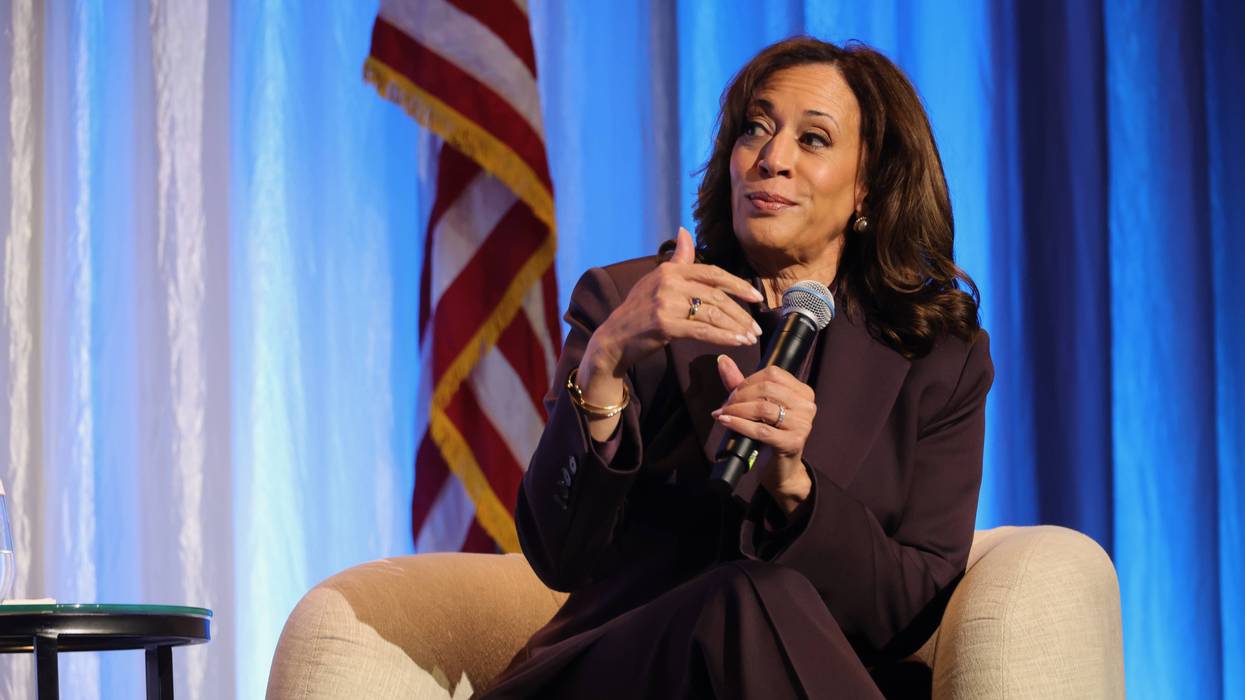
Even former Vice President Kamala Harris reportedly "has no problem with a public airing" of the Democratic National Committee's internal "autopsy" report on her 2024 loss to Republican President Donald Trump—which the DNC has continued to conceal, despite mounting demands for transparency.
Harris' position was reported Thursday by NBC News, which noted that "while she indicated to donors that she had no issue with releasing it, Harris has not discussed the postmortem with DNC Chairman Ken Martin and did not know about his decision to keep it under wraps until it happened."
NBC cited "a person who has heard the conversations," one of multiple sources journalists Jonathan Allen and Natasha Korecki spoke with for their broader report exploring "turmoil over the Democratic Party’s future" and Harris' consideration of a 2028 run.
For months, Martin has resisted pressure to release the autopsy—which, as Axios revealed in February, found that the Biden administration's support for Israel's genocidal assault on Palestinians in the Gaza Strip contributed to Harris' defeat.
Citing a "person close to Harris," NBC also reported Thursday that the former VP "is signaling privately that she has more to say about the Middle East now that she is freed from the Biden White House policy," and "she is likely to do so after the midterm elections," either "from the perspective of a party elder or from the perspective of a candidate seeking votes."
While touring the country for the book she wrote after her loss, Harris has publicly acknowledged that she is weighing another White House run. Though the 2028 election is two and a half years away, she has led early polling. However, the party's potential primary field is incredibly crowded, featuring dozens of current or former governors and members of Congress.
Potential contenders include governors from the Trump 2.0 era—such as Gavin Newsom of California, JB Pritzker of Illinois, Andy Beshear of Kentucky, and Gretchen Whitmer of Michigan—as well as leading progressive voices in Congress, such as Reps. Ro Khanna (D-Calif.) and Alexandria Ocasio-Cortez (D-NY).
Norman Solomon, national director of RootsAction, which has spearheaded calls for publishing the full postmortem, wrote in a recent opinion piece for Common Dreams that "Martin's concealment of the autopsy report puts a thumb on the scale for one candidate: Kamala Harris."
Solomon highlighted the DNC's reported conclusion about the role of the Gaza genocide in the election result, and suggested that "renewed attention to the Harris 2024 finances would also be unwelcome."
In response to Harris' reported remarks to donors, Solomon said Thursday that "more than four months have passed since Martin announced he was reneging on his promise to release the autopsy.
"But Harris still hasn't made any public statement that she believes it should be released," he added. "Saying so privately to some big donors is very different than publicly calling for transparency from the DNC, which is badly needed."