

SUBSCRIBE TO OUR FREE NEWSLETTER
Daily news & progressive opinion—funded by the people, not the corporations—delivered straight to your inbox.
5
#000000
#FFFFFF
To donate by check, phone, or other method, see our More Ways to Give page.
Daily news & progressive opinion—funded by the people, not the corporations—delivered straight to your inbox.
More than 150 people gathered outside the RBC Annual General
Shareholder Meeting today to protest the bank's leading role in funding
the contentious Alberta tar sands. People concerned with the impact of
tar sands projects on First Nations, water quality and the climate came
from every corner of Canada to ensure that the bank heard the message:
'stop bankrolling the tar sands.'
Outside the shareholder
meeting school children, bank customers of every age, First Nations
community representatives and leading environmental groups rallied with
brightly colored signs and chants. Inside the shareholder meeting,
Chief Al Lameman of Beaver Lake Cree Nation of Alberta, Vice Chief
Terry Teegee of the Carrier Sekani Tribal Council of BC, and Hereditary
Chief Toghestiy (Warner Naziel) of the Wet'suwe'ten First Nation of BC
addressed RBC CEO Gordon Nixon directly about the way tar sands
extraction projects have jeopardized their health and their rights.
"RBC
has a decision to make. They can continue to align themselves with the
tar sands, a project that is single-handedly compromising the climate,
drinking water and the health of First Nations," said Brant Olson of
the Rainforest Action Network (RAN), which has been running a campaign
to clean up RBC since its shareholder meeting last year. "Or they can
lead Canada's economy toward clean energy and socially responsible
development."
RBC is clearly feeling the public pressure over
their tar sands financing. Recently, the bank convened a high-level
meeting with more than a dozen international banks for a "day of
learning" about the reputational risks associated with the tar sands.
In addition, according to information the bank provided to RAN during a
February meeting in San Francisco, RBC is currently evaluating new
lending criteria that would apply to the oil and gas sector, in
particular to the tar sands. However, the bank has been reticent to
include Free, Prior and Informed Consent in its policy, which would
ensure that First Nations communities are respected in lending
practices.
"RBC's significant financial relationship with
companies pursuing tar sands development activities within our
traditional territory and without consent warrants close attention,"
said Chief Al Lameman of Beaver Lake First Nation. "RBC should update
their policies to include a recognition of Free, Prior and Informed
consent for Indigenous communities; this globally recognized concept
was adopted by TD Bank Financial Group in 2007 and is endorsed by
Indigenous communities across the political spectrum."
Internationally,
tar sands financing is gaining tremendous negative attention. An
increasingly vocal group of shareholders and environmentalists turned
last month's BP, Shell and Royal Bank of Scotland annual meetings into
a referendum on the oil extraction projects.
"It is unacceptable
that RBC is a major financier of the Alberta tar sands, one of the most
environmentally destructive projects in the world," said Maryam
Adrangi, a member of Rainforest Action Network Toronto and a lead
organizer of today's rally. "We will not stop until RBC adopts a
socially responsible banking policy that includes respect for
Indigenous rights and the phasing out financing for dirty fossil fuels
like the tar sands."
According to Bloomberg, since 2007, RBC has
backed $16.9 billion in loans to companies operating in the tar sands
and has earned more than $132 million in underwriting fees. As a
result, RBC has enabled the production of the world's dirtiest oil. Oil
extraction from the tar sands generates three times the CO2 emissions
as conventionally extracted oil, and will soon make Canada the biggest
contributor to global warming.
Mining oil from tar sands
requires churning up huge tracts of ancient boreal forest and polluting
so much clean water with poisonous chemicals that the resulting waste
ponds can be seen from outer space. The health impacts to Alberta's
First Nation communities are severe, with cancer rates up in some
communities as much as 400 times its usual frequency. In addition,
communities living near oil refineries face increased air and water
pollution from tar sands oil, which contains 11 times more sulfur and
nickel and five times more lead than conventional oil.
The
Rainforest Action Network campaign to Clean Up RBC has been demanding
that RBC take responsibility for its lending in the tar sands by
meeting basic standards set by other leading banks on Indigenous
rights, water and habitat impacts, and climate change.
For more information on RBC and the tar sands, visit: https://understory.ran.org/tag/rbc/
To
see how RBC stacks up to other banks on financing in the tar sands see:
https://understory.ran.org/2010/01/31/banks-ranked-and-spanked-on-tar-sands/
Rainforest Action Network (RAN) is headquartered in San Francisco, California with offices staff in Tokyo, Japan, and Edmonton, Canada, plus thousands of volunteer scientists, teachers, parents, students and other concerned citizens around the world. We believe that a sustainable world can be created in our lifetime and that aggressive action must be taken immediately to leave a safe and secure world for our children.
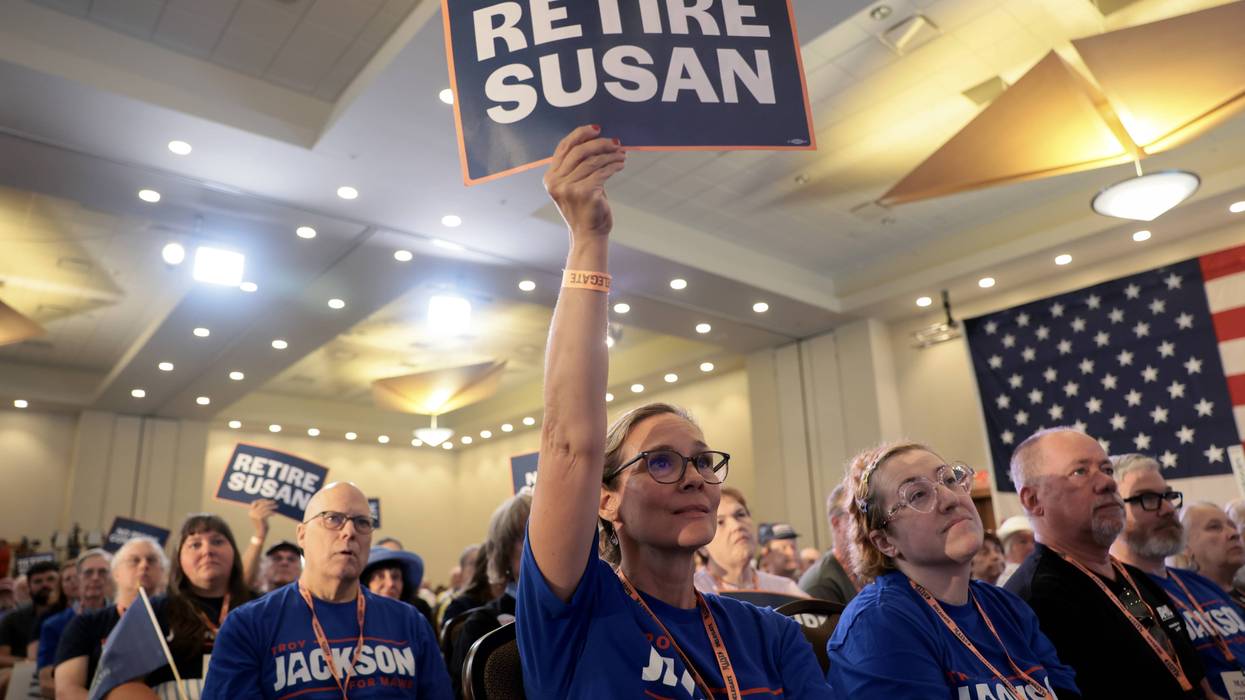
"Typical Susan Collins: Votes against Trump when her vote doesn't change the outcome but lock-in-step when it does."
After Senate Judiciary Committee Republicans advanced Todd Blanche's nomination to be US attorney general, attention shifted to a few GOP senators, including Maine's Susan Collins, who—as she faces a formidable Democratic challenger in November—said late Tuesday that she would vote against President Donald Trump's former personal lawyer leading the Department of Justice.
Collins has been in office for nearly three decades and often played the part of a "concerned moderate" while voting with her party when it needs her. Perhaps the most notable example was when the senator, who claims to support abortion rights, helped confirm US Supreme Court Justice Brett Kavanaugh—and then he helped overturn Roe v. Wade.
Now Collins—along with some other Republicans, such as Sens. Lisa Murkowski (Alaska) and Bill Cassidy (La.), who lost his May primary to a Trump-backed candidate—must contend with a DOJ nominee who, in a recent phone call hosted by the White House Faith Office, said that "we have a lot of work to do" rolling back the Biden administration's progress on abortion rights, and "some of that is taking longer than we want."
Blanche, who is currently acting AG, assured those on the call—a recording of which was posted online by the religious group Intercessors for America, according to Politico—that the DOJ is "working hand in hand" with the White House, Department of Health and Human Services, and Food and Drug Administration to ensure that the Dobbs v. Jackson Women's Health Organization ruling, which reversed Roe and let states enact total abortion bans, "becomes permanent in every single state," promising "victory."
Politico reported that when "asked to explain what Blanche meant by 'victory' and by making the high court decision 'permanent in every single state,' the Justice Department said his comments were made solely 'with respect to mail order abortion drugs' and did not elaborate further."
Collins, who is running against former Democratic state Senate President Troy Jackson, had not said how she planned to vote on Blanche before the panel weighed in on Tuesday; he advanced out of committee after striking a deal with a pair of GOP senators on blocking the so-called "Anti-Weaponization Fund" sought by Trump for his allies, including January 6, 2021 insurrectionists.
A spokesperson for the Maine Republican told the Bangor Daily News on Monday that she was waiting for the results of the panel's vote and "also holding off on a decision until confirming all the details of the agreement hammered out between Blanche and the two senators who were previously holding out, Sens. John Cornyn of Texas and Thom Tillis of North Carolina."
There are 53 Senate Republicans, and although Sen. Darline Graham (R-SC) has taken over for her late brother, former Majority Leader Mitch McConnell (R-Ky.) remains hospitalized, meaning that with otherwise full attendance, losing three GOP votes could block Blanche's path to the permanent post.
In a lengthy statement on social media Tuesday evening, Collins said that "I have carefully reviewed Todd Blanche's qualifications," and "while I believe Mr. Blanche is a capable lawyer, the Department of Justice has become increasingly political."
"Mr. Blanche has taken several actions that have further eroded the department's independence, and that is the basis for my vote to oppose his confirmation," she continued, citing his approval of an immunity deal for the Trump family and the Anti-Weaponization Fund, his promise to "prohibit the mailing of abortion medication to women nationwide," attempted indictments of Democratic senators over their video encouraging resistance to unlawful military orders, and opposition to Blanche within the DOJ.
Brendan Duke, a former Biden administration economic adviser who's now senior director at the Center on Budget and Policy Priorities, responded, "Guess Senate republicans have the votes."
Collins said less than two months ago that "I do not regret" voting for Kavanaugh, despite the fallout that followed. At the time, she was running against Democrat Graham Platner, who had responded to the senator, "You should." Like the Supreme Court Justice, Platner was accused of sexual assault, which he denied; unlike Kavanaugh, Platner stepped aside. He was recently replaced on the ballot with Jackson, via a convention process.
Jackson, a 58-year-old logger by trade, "began his political career as an abortion opponent, having grown up in a Catholic family in the socially conservative St. John’s Valley area of Aroostook County," the Portland Press Herald noted last month. The Democrat has talked openly about his transformation on the issue, influenced by conversations with women, doctors, and rights advocates.
In a July opinion piece endorsing Jackson, Andrea Tirrell and Amanda Gavin, University of Maine PhD candidates who have volunteered at Bangor's Mabel Wadsworth Center, a reproductive healthcare nonprofit, wrote for the Press Herald opinion that "his seven-year streak (2018-2024) of 100% ratings from Planned Parenthood shows a track record we can trust."
Appearing on MS NOW's "Morning Joe" last week, Jackson touted that record and called out Collins for her contribution to the Roe reversal, as well as GOP attacks on healthcare access more broadly.
"When Susan Collins was helping overturn Roe v. Wade,” Jackson highlighted, "here in Maine... I co-sponsored one of the most progressive reproductive rights bills in the country—fought incredibly hard for it."
"I was wrong" to oppose abortion rights many years ago, he said. "But I'm very proud of my record over the past decade or more fighting for access across the state."

"Americans deserve a government that works for them, not one that’s for sale to hedge funds and Wall Street banks."
US Sen. Alex Padilla on Tuesday introduced legislation aimed at blocking President Donald Trump, Vice President JD Vance, and future occupants of their offices from profiting by selling early access to official or personal social media posts that could move financial markets, calling the practice a blatant abuse of public office for private gain.
Padilla's (D-Calif.) Stop Corrupt Trading Act would prohibit any sitting president or vice president—and any business in which they hold a substantial financial interest—from selling advance or exclusive access to presidential social media announcements. It would also establish civil penalties for the sale of nonpublic government information through such services.
“This is out in the open—Donald Trump is the most corrupt president in American history," Padilla said in a statement introducing the legislation. "Despite already being the richest president in history, President Trump’s number one priority in office is to make himself richer while everyday Americans struggle to make ends meet."
“Selling access to his market-moving social media posts is just one example of the brazen corruption we’ve seen coming out of the Oval Office—and I am fighting back to put a stop to it," he added. "Americans deserve a government that works for them, not one that’s for sale to hedge funds and Wall Street banks that can afford the subscription fee.”
Padilla's bill comes days after the Trump Media & Technology Group (TMTG) launched a premium service offering subscribers expedited access to the president's Truth Social posts, a move that ethics watchdogs and government accountability advocates have warned could provide wealthy investors with an unfair advantage if presidential statements affect stock prices, tariffs, or other market-sensitive policies.
US House Judiciary Committee Ranking Member Jamie Raskin (D-Md.) responded to TMTG's move by announcing an investigation into what he called an "insider-information scheme."
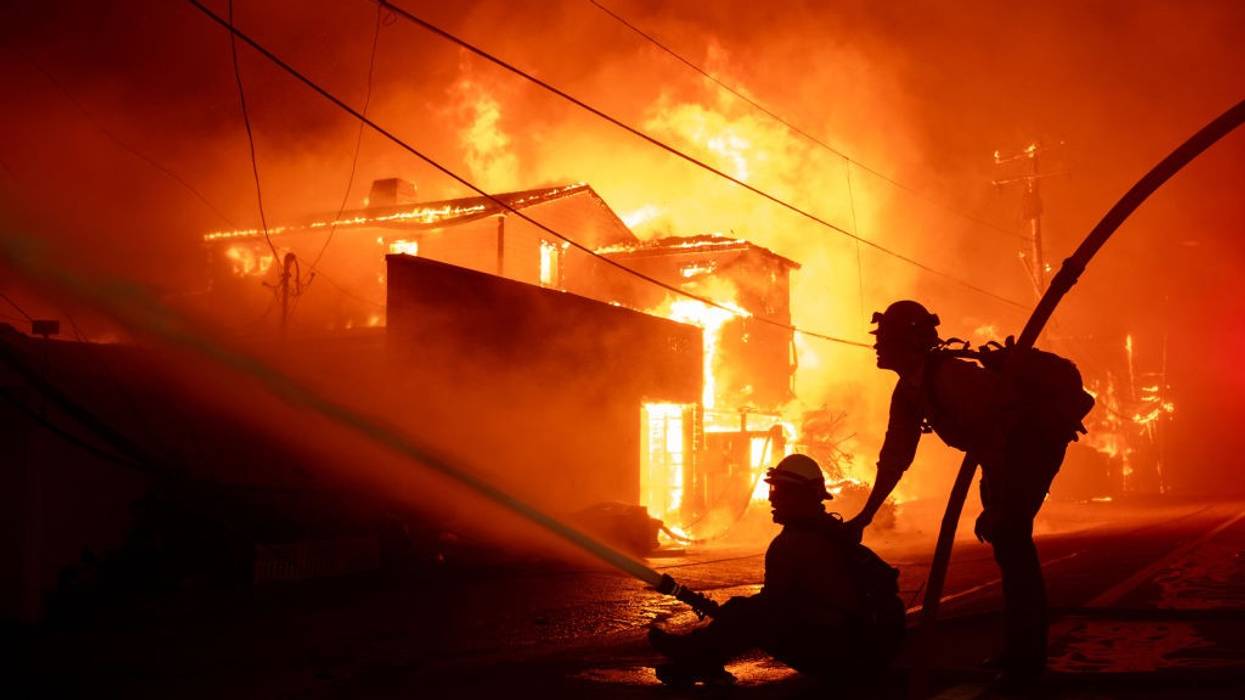
"These markets risk creating perverse incentives, undermining public trust, and commodifying human suffering in ways that warrant careful scrutiny."
As wildfires ravaged large swaths of the Western US, a group of Democratic senators on Monday called on federal regulators to rein in prediction markets offering contracts tied to such disasters, warning that turning climate-fueled extreme weather into financial wagers creates "perverse incentives" that could motivate arson and other crimes.
In a letter to Commodity Futures Trading Commission (CFTC) Chair Michael Selig, Sens. Jeff Merkley (Ore.), Alex Padilla (Calif.), Jeanne Shaheen (NH), Adam Schiff (Calif.), Jacky Rosen (Nevada), Catherine Cortez Masto (Nevada), Martin Heinrich (NM), Ron Wyden (Ore.), and Amy Klobuchar (Minn.) wrote that "prediction markets have been enabled to expand rapidly, increasingly inviting speculation on war, political violence, disasters, and public emergencies that raise ethical and public policy concerns."
"These markets risk creating perverse incentives, undermining public trust, and commodifying human suffering in ways that warrant careful scrutiny," the lawmakers continued. "Recent public reports have highlighted how Polymarket—the largest prediction market platform in the world—accepted more than $1.2 million in bets surrounding the Palisades and Eaton fires in January 2025. These fires devastated the Los Angeles area, claiming the lives of 31 people and destroying more than 16,000 structures."
"Offering bets on destructive wildfires threatens to minimize communities’ suffering all so the rich and powerful can profit," the letter argues. "There’s also the heightened risk—according to state and local fire officials—that individuals could be tempted to commit arson in order to make sure their bets are successful."
"By offering contracts on fires, prediction market sites run the risk of encouraging people to influence fires that have already started, creating additional concerns around public safety and insider trading," the senators added.
The CFTC controversially considers Polymarket and Kalshi designated contract markets (DCMs)—over which the federal agency has control versus state gambling regimes—and is currently developing nationwide rules.
The letter's signers asked Selig:
"As the United States faces yet another record-breaking fire season this year, the [CFTC] cannot allow these prediction markets to offer unrestricted betting on wildfires," the senators stressed. "While these bets appear to be offered only on the offshore Polymarket site, it is only a matter of time before other US-based designated contract markets try to offer these. The CFTC must lead the charge to rein in these contracts in the US and offshore and put in place commonsense guardrails to prevent people from profiting as wildfires threaten communities."
In addition to wildfires, Polymarket users can place wagers related to earthquakes, hurricanes, and volcanic eruptions.
Polymarket responded to the senators' letter in a statement to Claims Journal saying, "When tragedy unfolds, people turn to the news for commentary and to Polymarket for information.”
"While we recognize the risks associated with these markets, removing them does not prevent a tragedy," the company added. "It only makes timely, market-based information less accessible to those seeking to understand what may happen next.”
The senators' letter came days after Democratic New York Attorney General Letitia James announced a lawsuit targeting Polymarket competitor Kalshi for operating as “an illegal gambling operation" in "flagrant disregard” for the Empire State’s “Constitution, penal laws, and other statutes.”
Last month, a coalition of consumer advocacy groups condemned the CFTC's attempt to allow platforms like Kalshi and Polymarket “a green light to bypass state gambling regimes.”
“Calling a sports wager an ‘event contract’ does not transform it into a legitimate tool for managing economic risk,” said Eric Naing, communications director for Demand Progress Education Fund, one of the groups decrying the regulator's approach to such companies.
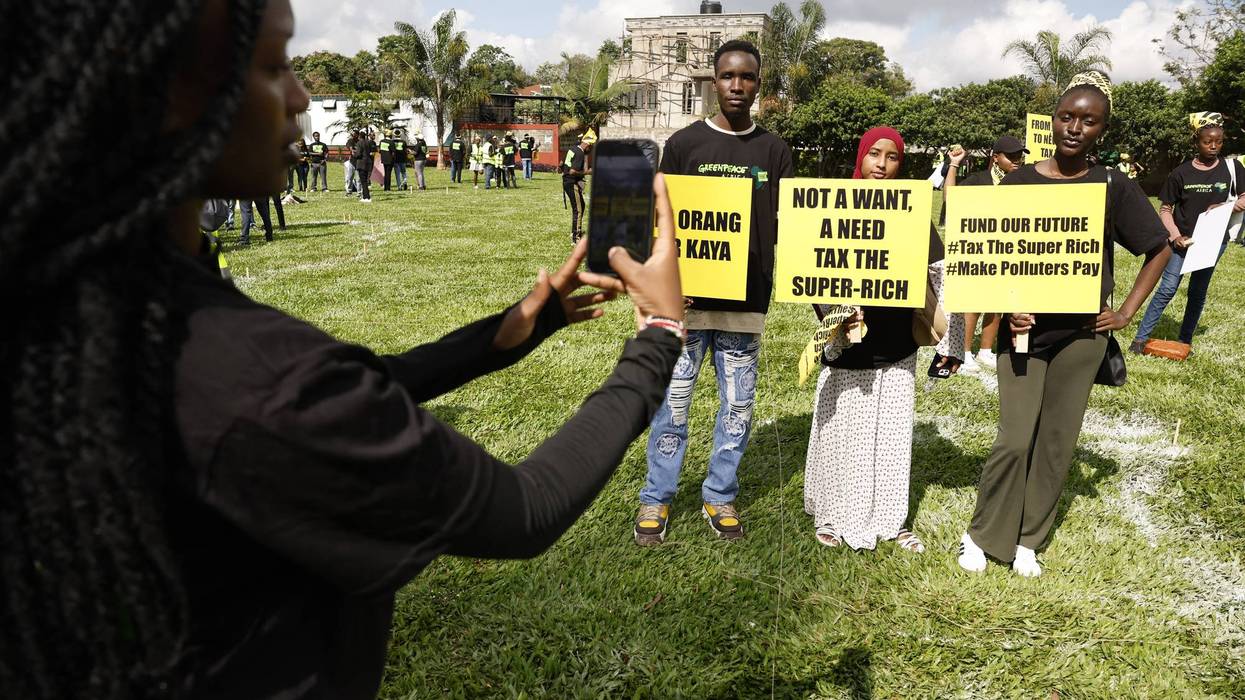
A Greenpeace representative urged governments to recognize the "once-in-a-generation opportunity to make those most responsible for the climate, nature, and inequality crises we are facing pay their share.”
As world governments meet at the United Nations for another round of negotiations on a first-of-its-kind "Global Tax Treaty," economic justice campaigners are urging them to think big or risk leaving on the table trillions of dollars that could help alleviate global inequality and the climate crisis.
The fifth round of negotiations for the treaty began in New York on Monday, with countries ironing out its language line by line as they seek a global framework to more fairly tax the rich and multinational corporations and crack down on tax avoidance.
Jenny Ricks, the general secretary of the Fight Inequality Alliance—a global coalition of anti-inequality groups—said the framework, which was first conceived in 2022 at the urging of poorer nations in Africa, "aims to make global tax governance more inclusive, transparent, and equitable, shifting it away from the Organization for Economic Cooperation and Development (OECD) and giving the global majority a genuine say in rules that have long been set by wealthy states."
The first drafts of the proposed tax convention were released in late July in advance of this month's negotiations. Advocates at Greenpeace International, however, argue that they contain many gaps that fail to adequately tax fossil fuel companies driving the climate crisis or other multinational corporations and extremely wealthy individuals.
In a briefing document released to media organizations, Greenpeace argued that the text lacks clear language linking taxation to sustainable development, despite it being demanded by 24 countries, and that it lacks provisions requiring polluters to bear the public cost of environmental damage.
The group also criticized the weakening of an article covering taxes on high-net-worth individuals, the lack of a minimum tax on multinational profits, and the absence of specific rules for taxing extractive industries such as oil, gas, and mining.
The oil and gas industry, the group pointed out, is in the midst of a boom, with companies reporting record profits as President Donald Trump's war against Iran drives global oil prices higher.
"The money is right there," said Nina Stros, Greenpeace International's global senior policy expert. "It is about time governments recognized this once-in-a-generation opportunity to make those most responsible for the climate, nature, and inequality crises we are facing pay their share, and reclaim trillions of dollars to invest in our shared future.”
An open letter from Tax and Fiscal Justice Asia, a group of over 50 civil society organizations across 13 Asian countries, emphasized many of the same concerns that the conference could end up merely affirming broad principles without creating concrete rules.
They said representatives of Asian nations at the negotiating table needed to push for a shift in taxing power away from wealthy countries where corporate headquarters are located and toward poorer ones where much of the workforce and resources are concentrated. They also argued for a move away from regressive consumption taxes that disproportionately fall on lower-income people.
"The majority of states in Asia were among the 125 states that voted in November 2023 to adopt a resolution for a UN Framework Convention on International Tax Cooperation (UNFCITC)," the letter said. "The vote has brought forth a historic opportunity to leave behind unjust systems and build a new global tax architecture."
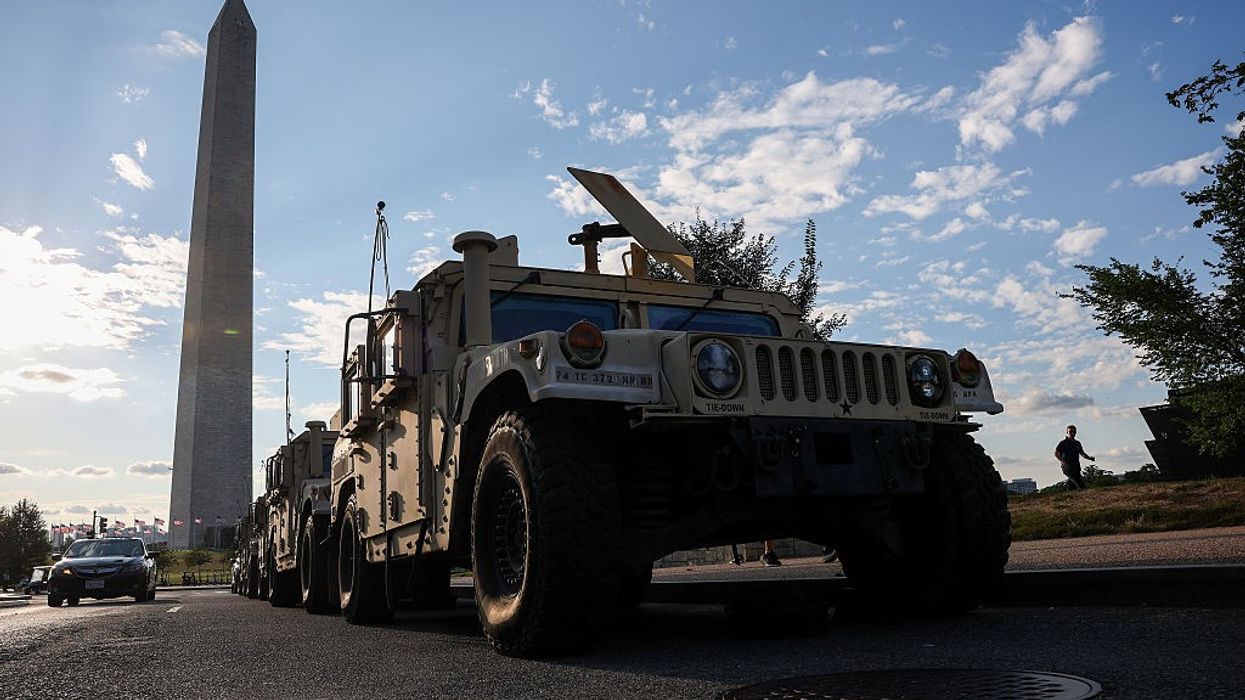
"The National Guard are not pawns, and taxpayer dollars are not a piggy bank for Trump’s political stunts."
Information provided to Sen. Elizabeth Warren's office revealed that the deployment of the National Guard in Washington, DC is projected to cost taxpayers an extra $1.4 billion through the end of President Donald Trump's term.
As The Washington Post reported on Tuesday, Warren (D-Mass.) obtained the cost estimate for the National Guard deployment from Jules Hurst III, who is Trump’s nominee to become the comptroller for the US Department of Defense.
Hurst's estimate assumes there will be roughly 2,500 National Guard personnel deployed in the city through January 2029, when Trump is constitutionally mandated to leave office.
The estimate imagines a drawdown from the current 4,600 National Guard members deployed in the nation's capital, many of whom were sent to the city to oversee security at the 250th anniversary of the signing of the Declaration of Independence.
In a social media post, Warren slammed the Trump administration for continuing to spend money on deploying the National Guard in the capital while ignoring the economic pain being felt across the country.
"While American families are getting flattened by skyrocketing costs, Donald Trump is spending $1.4 billion to keep troops on the streets in Washington for years on end," wrote Warren. "The National Guard are not pawns, and taxpayer dollars are not a piggy bank for Trump’s political stunts."
Rep. Shontel Brown (D-Ohio) also pointed to the opportunity cost of the service members' deployment.
"Trump says there's no money for healthcare or childcare," wrote Brown, "but he wants to spend billions to have the National Guard roaming around DC."
The Free DC campaign, which was founded last year to oppose the National Guard deployment in the city, warned that the continued presence of military forces was an ominous sign for Trump's future intentions.
"Trump is entrenching his power," the group wrote. "This is what that looks like in real time. It's tempting to call this money 'a waste,' but Trump has a clear reason he wants to spend this money on the National Guard's presence in DC. When January 6 comes around again, this time he'll have an army on call."
Unite for Veterans, an advocacy organization focused on defending the US Department of Veterans Affairs, also condemned Trump's use of the National Guard as a domestic law enforcement group.
"Spending $1.4 billion on a deployment that shouldn't be is not spending taxpayer money wisely or is it serving the military well," the group wrote. "The National Guard should not be policing the streets of America's cities. That is not their purpose. Let's send them home."
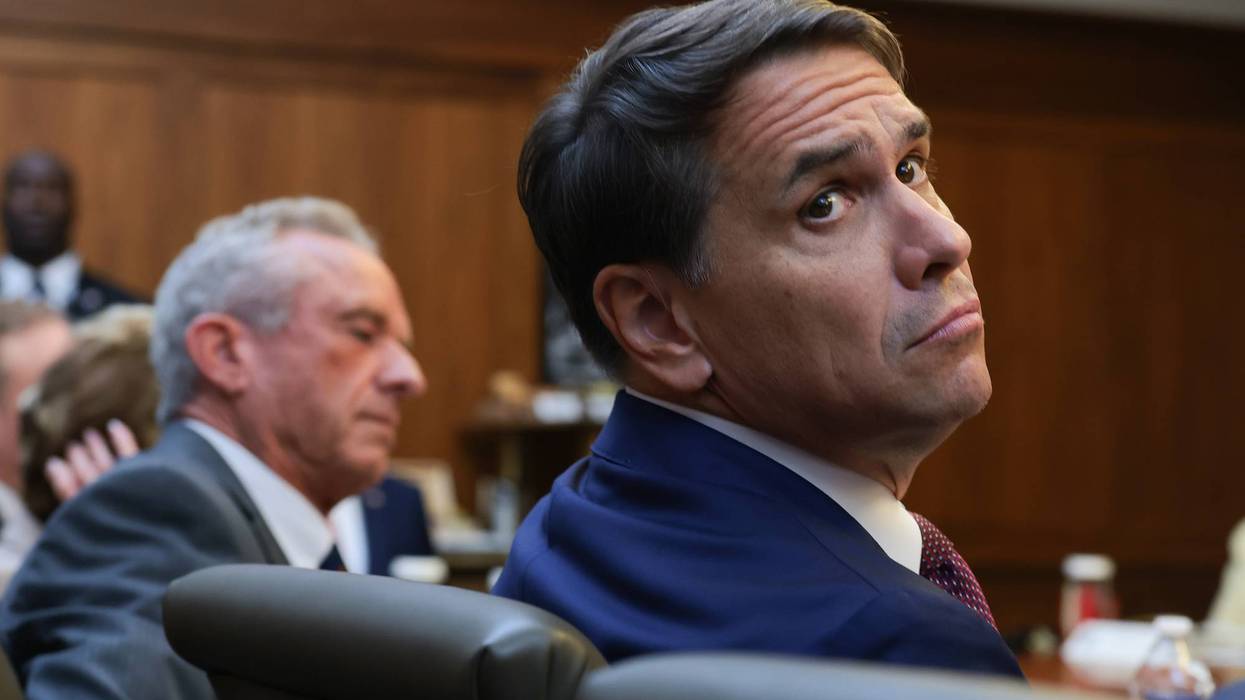
"Todd Blanche has one client, and it’s not the American people," said one coalition of advocacy groups.
Senate Democrats and advocacy groups are making the case for the full Senate to block Todd Blanche from being confirmed as US attorney general after Republicans on the Senate Judiciary Committee voted to advance his nomination Tuesday along party lines.
Sen. Dick Durbin (D-Ill.) said Blanche, currently President Donald Trump's acting attorney general, "has aided and abetted the most corrupt administration in the history of the United States."
Democratic colleagues described Blanche's support for Trump's $1.8 billion "weaponization fund," his neglect of survivors abused by Jeffrey Epstein, and his obstruction of investigations into killings and misconduct by immigration agents, as evidence that he is, in the words of Sen. Sheldon Whitehouse (D-RI), "probably the most discreditable person ever to seek the office of attorney general."
Their criticisms were echoed by anticorruption watchdogs and rights groups, who argued that Blanche, who was previously Trump's personal lawyer, was still acting like it even while serving as Acting Attorney General.
“Senators must urgently do the right thing and block Blanche," said Lisa Gilbert, the president of the watchdog group Public Citizen, who referred to him as a "Trump crony."
"If we make Todd Blanche America’s lawyer at the head of the Justice Department," Gilbert said, "we are accepting a man... who rubberstamped the corrupt IRS deal that Trump made with himself to shield all the Trumps and their businesses, not only from enforcement of any taxes they may have dodged or any fines or payments they may owe to American taxpayers, but from ‘any and all’ related consequences for violating any federal criminal or civil law."
In recent days, Blanche committed to kill the so-called "slush fund" in exchange for support from Republican holdouts like Sens. John Cornyn (Texas) and Thom Tillis (NC).
Gilbert and other co-chairs of the Not Above the Law Coalition—a collective of anticorruption advocacy groups—said that the agreement was "an unenforceable piece of paper that Trump never signed" and have warned that Blanche will revive efforts to pay government funds to Trump supporters, including those who took part in the January 6, 2021 Capitol insurrection, as soon as he is confirmed.
Following Tuesday's vote, Cornyn said that Blanche "gave us the assurances that [the fund] was dead and would not be revived, and in this case we have no alternative but to take his word."
Arisha Hatch, the executive director of the women's organization UltraViolet, said the Republicans who voted for Blanche had also sided against "the majority of the American people, who demand integrity from our elected leaders and want everyone involved in Jeffrey Epstein's network—including those who enabled it—to be held accountable."
Epstein survivors have criticized Blanche for his role in overseeing the DOJ’s highly scrutinized release of files related to his alleged crimes, including the department's exposure of victims’ private information and intimate photos while omitting information that identified prominent associates, including Trump himself.
At the urging of Tillis, Blanche held an hour-long meeting where he met with victims of Epstein's abuse, who said in a letter published Tuesday that he appeared dismissive of their concerns.
"When we met with Todd Blanche, he interrupted us. He told us to 'get to the point.' He told us to report what happened to us to the FBI. We already have," the survivors said. "Some of us have been reporting these crimes for decades. This was a check-the-box meeting designed to secure Senator Tillis' vote."
Maya Wiley, the president of the Leadership Conference on Civil and Human Rights, added that Blanche had "pursued baseless claims against civil rights organizations, sought sweeping access to state voter data, permitted a lawless [Immigration and Customs Enforcement]," echoing criticisms about the DOJ’s withholding of evidence from Minnesota prosecutors related to the killings of Renee Good and Alex Pretti by federal agents.
Republicans control the Senate by a margin of 53-47 and are down a vote with Sen. Mitch McConnell (R-Ky.) currently absent, meaning that just three defectors could be enough to block Blanche's confirmation, which could come to a vote within days.
"The Senate doesn’t need unanimous courage to block Blanche," said Brett Edkins, managing director for policy and political affairs at the progressive advocacy group Stand Up America. "It needs a few Republicans willing to put country over party.”
Gilbert, Edkins, and the other co-chairs of the Not Above the Law coalition—Praveen Fernandes, vice president of the Constitutional Accountability Center and Kelsey Herbert, campaign director at MoveOn—noted Blanche's own statements that the DOJ, long described as a politically neutral agency, was not independent from the president, and a slip-up during a confirmation hearing during which he referred to himself as Trump's lawyer.
"Todd Blanche has one client, and it’s not the American people," the advocates said. "Committee Republicans just chose not to see it. The full Senate now has the final word, and every senator should use it to reject this nomination.”
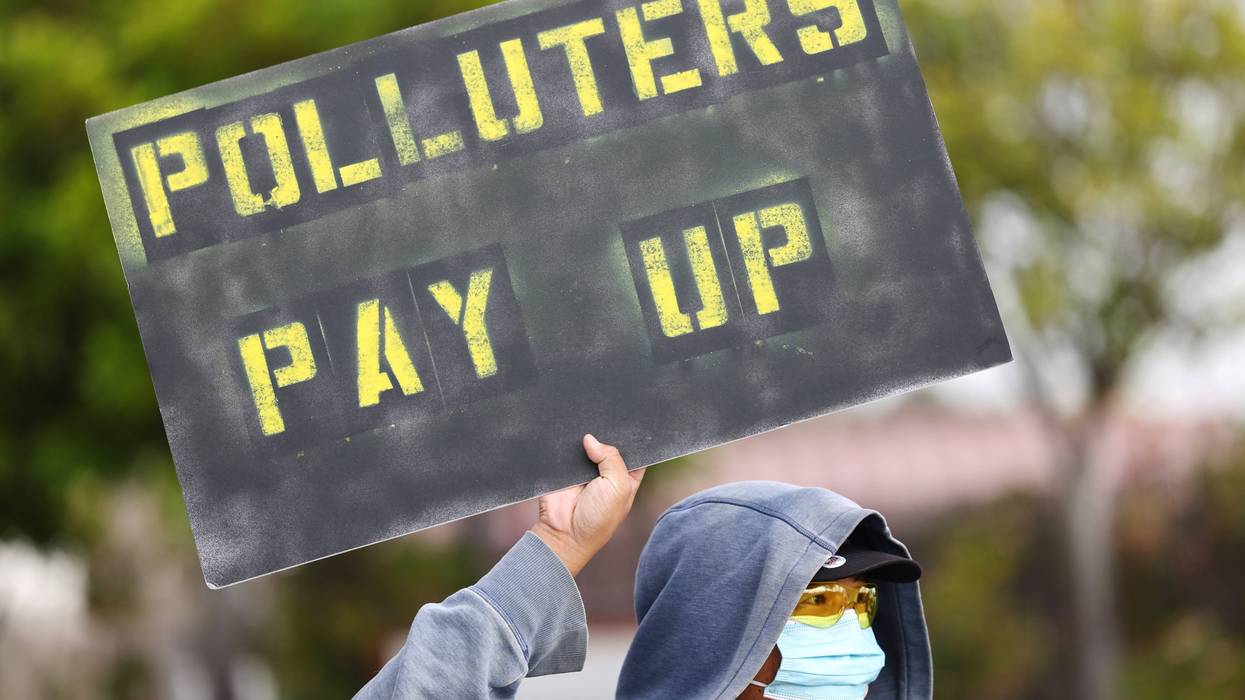
"If this is a genuine change of heart from a president whose budget bill included $18 billion in taxpayer handouts to Big Oil, we welcome it," said one organizer. "But talk is cheap, here's the real test."
After President Donald Trump echoed climate campaigners' longtime condemnation of fossil fuel giants' massive profits—uttering "the only thing" the climate-denying president "has said about energy policy since taking office that makes any sense," according to one advocate, organizers on Tuesday urged him to put his money where his mouth is by backing a windfall profits tax for companies like Chevron and Exxon Mobil.
In the Oval Office on Monday, Trump called on those corporations and others to slash prices and give some of their record-breaking profits—specifically those made since the president joined Israel in waging an unprovoked war against Iran on Feb. 28—"back to the public.”
"They're making too much money, based on a shortage," said Trump, while noting that he is a "big free enterprise guy."
"I don't like it... Chevron, too much money. Exxon Mobil, too much money," he said. "When you look at one company, they made 12 times what they made the year before? Give some of that back to the public, and they'd better cut the retail price."
“Too much money.”
“Chevron too much money.”
“Exxon Mobil too much money.”
President Donald Trump attacked oil majors ExxonMobil and Chevron for earning windfall profits from energy shortages created by the U.S.-Iran war, demanding that both companies cut prices and return… pic.twitter.com/I3CfmmQlqv
— Drop Site (@DropSiteNews) August 3, 2026
With oil and consumer gas prices skyrocketing since Trump and Israel started the war, resulting in Iran's retaliatory measure of effectively closing the Strait of Hormuz, which a fifth of the world's oil supply ordinarily travels through, Exxon reported that its second-quarter profits more than doubled compared with last year. The company took in $14.5 billion, while Chevron reported profits of $12 billion compared with $2.5 billion in 2025—nearly a 400% increase.
BP also reported profits that were $2.35 billion higher than last year.
An analysis by the Guardian published Tuesday showed that eight of the world's largest oil companies made nearly $93 billion in profits in the three months following the invasion.
Chevron just announced its highest quarterly earnings ever. Shell clocked its second-highest quarterly profits. ExxonMobil doubled its earnings.Combined, the three companies raked in, on average, some $404 million in profits every day for the last three months.
[image or embed]
— Make Polluters Pay (@polluterspay.bsky.social) August 3, 2026 at 12:16 PM
The climate action group 350.org noted that the record profits of oil and gas giants come as "communities across the world endure record-breaking heatwaves, wildfires, and rising living costs"—and as governments from around the world prepare to resume negotiations on a United Nations Framework Convention on International Tax Cooperation, where a "mandatory surtax on highly polluting industries is gaining support as part of that process."
Two Democratic lawmakers in the US, Rep. Ro Khanna of California and Sen. Sheldon Whitehouse of Rhode Island, introduced the Big Oil Windfall Profits Tax Act in March.
“From Bordeaux to Phoenix to Mumbai, families are living through the cost of climate delay, while the companies most responsible bank blockbuster bonanzas," said Anna Jellema, executive director of 350.org. "That is not a coincidence; it is a business model. Governments meeting in New York this month have a genuine opportunity to change it. Calls are growing across the political spectrum for a proper global profits tax, so the industry that helped cause these disasters pays towards the recovery, the solutions and the protection people need. It’s simple fairness: Those who caused the damage and profited from it should pay to fix it.”
Candice Fortin, US campaign manager for 350.org, emphasized that the latest comments from Trump, whose Interior Department just moved to weaken restrictions on Arctic drilling, must be taken with a grain of salt.
In the same Oval Office statement on Monday, said Fortin, "Trump criticized countries championing wind energy and supported more oil extraction in the North Sea."
"We don't just need to tax fossil fuels' windfall profits now, to be then forget about later," said Fortin. "We need to end our dependence on oil, gas, and coal—and we need a permanent mechanism to make the fossil fuel industry pay its fair share and redirect those revenues towards protecting people and communities from the climate and cost-of-living crises."
"If this is a genuine change of heart from a president whose budget bill included $18 billion in taxpayer handouts to Big Oil, we welcome it," added Fortin. "But talk is cheap, here's the real test: Will Trump throw his weight behind the Big Oil Windfall Profits Tax bill, which his party has been stonewalling in Congress since March?"

“This report is a ready-made roadmap for prosecutors, investigators, and members of Congress to finally start holding the Epstein class accountable," said Sen. Ron Wyden.
A yearslong Senate investigation released on Tuesday revealed how some of the world's largest banks allegedly broke federal money laundering laws by failing to stop or promptly report financial transactions that allegedly helped sustain the sex trafficking of children and young women by Jeffrey Epstein, the late billionaire and former friend of President Donald Trump.
Released by Senate Finance Committee Ranking Member Ron Wyden (D-Ore.), "Looking the Other Way" examines "how years of complicity by top officials at multiple Wall Street Banks enabled Jeffrey Epstein to transfer hundreds of millions of dollars around the world to finance his sex trafficking operation."
"Major compliance failures at several Wall Street banks enabled Epstein for years," the publication states. "By failing to report—or choosing not to report—his suspicious financial transactions to federal law enforcement, these banks allowed Epstein to send cash payments and wire transfers to his victims, friends, and collaborators around the world. The bankers who needed to be asking questions didn’t ask them. Jeffrey Epstein’s crimes were hiding in plain sight."
"The investigation found significant evidence that JPMorgan Chase (JPMC), Deutsche Bank, and Bank of America violated federal anti-money laundering laws by failing to screen and report Epstein’s suspicious financial transactions in a timely manner," the report continues.
"A review by Sen. Wyden’s staff of records housed at the US Department of the Treasury as well as internal bank records determined that top executives at major Wall Street banks were aware of Epstein’s suspicious financial activity for years but withheld information from the US government and protected Epstein from federal scrutiny," the publication says.
According to the report:
Wall Street banks looked the other way as Epstein withdrew millions of dollars in cash with no clear business purpose and was party to thousands of suspicious wire transfers worth more than $1 billion. These banks failed to conduct appropriate due diligence on more than $170 million in payments to Epstein from billionaire Leon Black. In fact, documents reviewed during this investigation demonstrate that JPMC’s senior leadership repeatedly protected Epstein as a client despite repeated warnings from internal compliance personnel.
The documents also show that even after JPMC formally terminated Epstein as a client due to human trafficking concerns, the bank still waited years to report his activity to regulators, and top bankers eagerly continued to work with him informally and through other channels where he could continue to be a source of referrals for other ultrawealthy clients.
The three banks were among four financial institutions from which House Judiciary Committee Ranking Member Jamie Raskin (D-Md.) last year demanded records concerning over $1.5 billion in “suspicious” financial transactions tied to Epstein’s trafficking ring.
“I said from the start that if you want to get to the bottom of the Jeffery Epstein cover-up, you had to follow the money," Wyden said Tuesday in a statement announcing the report's publication.
"My small team of investigators did what Trump’s attorney general and treasury secretary said was impossible: They connected the dots and found evidence of multiple crimes related to Epstein’s associates," the senator continued. "Bank records they reviewed, along with public court filings, detail a shocking pattern of the biggest Wall Street banks in the country choosing to ignore clear evidence of sex trafficking and money laundering, just to keep a wealthy client on the books."
"This report is a ready-made roadmap for prosecutors, investigators, and members of Congress to finally start holding the Epstein class accountable," Wyden added.
That's highly unlikely to happen under the current Republican-controlled Congress. Republicans spent years insisting the Epstein case exposed elite corruption, promising full transparency, and rallying behind Trump's 2024 reelection bid in part because he vowed to release every file.
Trump, former Attorney General Pam Bondi, FBI Director Kash Patel, and others promised transparency. Instead, the Trump administration has missed legal deadlines, released heavily redacted records, and withheld millions of pages in what critics say are violations of the bipartisan Epstein Files Transparency Act. Signed by the president last year, the law compelled the Department of Justice (DOJ) to publish all unclassified Epstein-related records within 30 days and explain every omission to Congress.
Acting US Attorney General Todd Blanche, Trump's former personal attorney, angered many Epstein victims and others by announcing that there was no evidence of a secret client list, by falsely claiming that the DOJ was fully complying with the law, and by meeting with Epstein’s co-conspirator Ghislaine Maxwell in prison shortly before she was suspiciously transferred to a lower-security prison.
The Senate Judiciary Committee voted 12–10 Tuesday along party lines to advance Blanche's nomination to become permanent attorney general, sending it to the full upper chamber for a confirmation vote expected later this week.
As the Trump administration fails to fully comply with the Epstein Files Transparency Act, its authors—Reps. Ro Khanna (D-Calif.) and Thomas Massie (R-Ky.)—recently proposed an updated version of the legislation, which strengthens the original by allowing state attorneys general, Epstein victims, members of Congress, and certain prosecutors to sue the DOJ if it fails to release required records.
The business-focused news site Bloomberg sought comment from the three banks. Deutsche Bank declined to respond, JPMC said it began notifying regulators “after the full scope of [Epstein's] crimes became public in 2019," and a spokesperson for Bank of America said that "we take our legal and regulatory responsibilities seriously and, as we have previously said, the bank did not facilitate wrongdoing.”
An attorney for Black told Bloomberg that the report's assertions “outrageous and false.”
Wyden's report came on the same day that The New Republic's Ellie Quinlan Houghtaling revealed that CBS' "60 Minutes" killed its own scoop on Wall Street's long-standing financial ties to Epstein after the network's incoming Trump-aligned boss, Bari Weiss, fired correspondent Sharyn Alfonsi, who led the investigative report. Alfonsi had interviewed Wyden for the segment.
Yep. Earlier this year I was interviewed by Sharyn Alfonsi of 60 Minutes about my Epstein investigation. Subsequently, CBS pulled the segment and fired the reporter. The MAGA buyout of media is aiding the Trump administration’s Epstein cover up.
[image or embed]
— Senator Ron Wyden (@wyden.senate.gov) August 4, 2026 at 7:17 AM
"Yep," Wyden said on Bluesky, confirming his interview with Alfonsi. "The MAGA buyout of media is aiding the Trump administration’s Epstein cover-up."

"O nation, why are children getting killed in Gaza? Why are women getting killed in Gaza?" asked a Civil Defense spokesperson at the service. "Why are massacres committed against innocents in Gaza?"
Palestinians on Tuesday held a mass funeral in the Gaza Strip for more than 100 people killed in a 2023 Israeli attack as the local Ministry of Health's confirmed death toll for Israel's genocidal assault climbed to at least 73,377.
Since Israel launched its war on Gaza after the October 7, 2023 Hamas-led attack, experts have warned the true toll could be much higher, with an unknown number of remains trapped beneath the ruins of the besieged territory.
Tuesday's funeral in Gaza City was for 112 people, including 40 children, who were among the over 300 killed in a November 22, 2023 Israeli attack on the Sabra neighborhood, in which "warplanes flattened a residential block," according to The Associated Press.
For the funeral, the bodies were wrapped in Palestinian flags, with photos of the dead attached.
As CBS News detailed:
One mourner showered flower petals over the covered bodies of the Hassayna and Abu Sharia clan as women and children watched from atop partly demolished buildings around the earthen square. A banner with the faces of dozens of children served as the backdrop of a speech from the spokesperson of Gaza's Civil Defense.
"O nation, why are children getting killed in Gaza? Why are women getting killed in Gaza?" asked Mahmoud Basal at the service. "Why are massacres committed against innocents in Gaza?"
The words "Stop the genocide in Gaza," in both Arabic and English, had been scrawled on the podium he spoke from.
Mourners also held signs with messages in both languages. One said in English, "Children of Gaza have the right to live."
Gaza's Civil Defense said that while these remains were found in wrecked buildings in the area, as part of a search operation launched nearly two weeks ago that involved 136 hours of "arduous" work, at least 157 others are still missing.
Given the limited equipment in Gaza, despite months of a supposed ceasefire, "the crews were digging with their hands through masses of reinforced concrete," said Mohammed Abu Dan, who supervised the operation, according to Reuters.
"Many bodies disintegrated and evaporated because of the intensity of the explosion," he explained.
After the funeral prayers, one relative, Taysir al-Hassayna, told the AP, "The only crime of these martyrs was that they remained steadfast and resilient in their homes, believing that these homes would protect them."
For those who haven't been found, al-Hassayna added, it's "as if their bodies had evaporated without a trace."
Al Jazeera reported that surviving relatives used the funeral "to renew accusations that Israel committed war crimes in Gaza and demanded international investigations into the attack and the hundreds of bodies still believed to be buried under rubble across the territory."
The International Criminal Court in November 2024 issued arrest warrants for Israeli Prime Minister Benjamin Netanyahu and Yoav Gallant, his former defense minister, citing alleged crimes against humanity and war crimes, and Israel faces a genocide case led by South Africa at the International Court of Justice.
The latter tribunal has directed Israel to "take effective measures to prevent the destruction and ensure the preservation of evidence related to allegations" of violations of the Genocide Convention, but a report published Monday details how Israeli soldiers and civilian contractors are systematically removing potential proof from Gaza.
Specifically, the Geneva-based Euro-Mediterranean Human Rights Monitor said that at least 10 million tons of rubble "have been removed, crushed, or moved from their original sites within the areas under Israel's unlawful military control, which encompass about 66% of the Gaza Strip."
Meanwhile, as Common Dreams reported earlier Tuesday, US President Donald Trump's Board of Peace for Gaza appears to be going back on the disarmament deal it reached last week with Hamas, potentially jeopardizing the entire process—a development that didn't surprise Tariq Kenney-Shawa, the associate director of editorial for the Institute for Middle East Understanding.
"The Board of Peace is just the administrative and fundraising arm of Israel's occupation of Gaza," he said. "It exists to facilitate Gaza's ethnic cleansing and concentration camps in a way that is palatable and profitable for the international community."
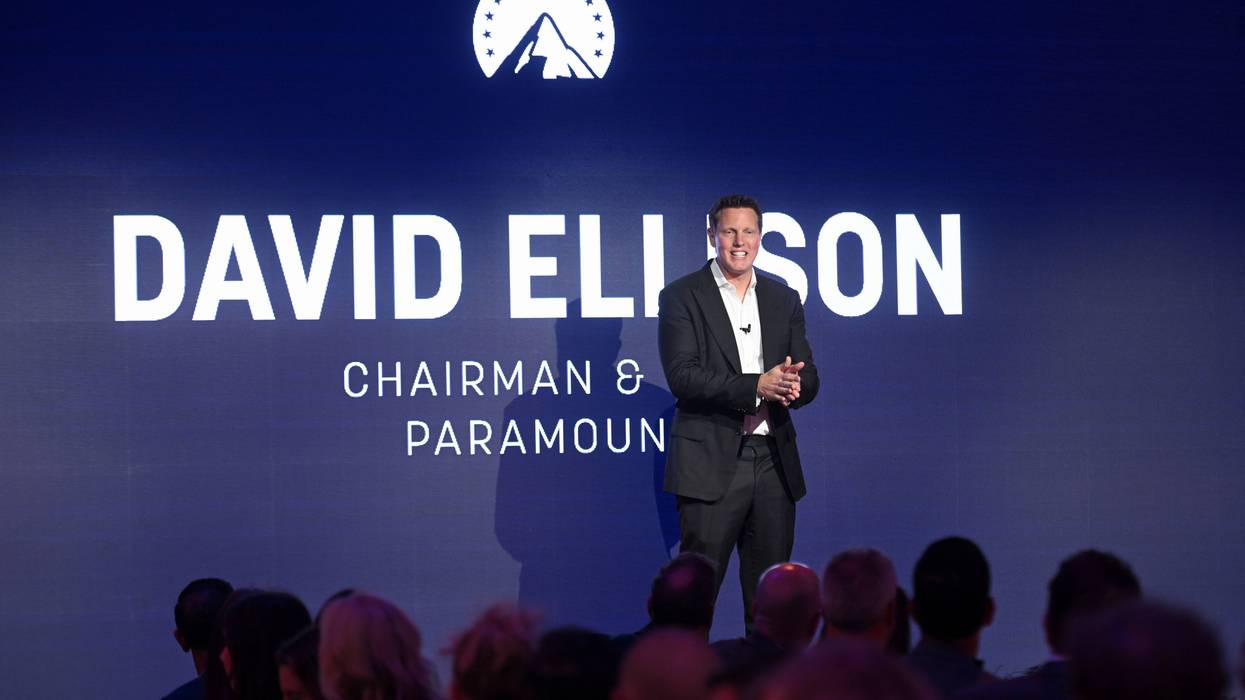
Wyden's claims about CBS came on the same day its parent company's CEO, David Ellison, defended the proposed megamerger between Paramount and Warner Bros.
Sen. Ron Wyden on Tuesday charged that the takeover of CBS by David Ellison, the son of right-wing billionaire Larry Ellison, helped President Donald Trump's White House cover up information about the late billionaire sex offender Jeffrey Epstein.
Wyden's (D-Ore.) claims about CBS came on the same day his office released a report alleging that top Wall Street banks "looked the other way and allowed Epstein to have ready access to the mountains of cash he used to lure, harbor, and transport his victims."
In a social media post, Wyden revealed that he was interviewed several months ago by former "60 Minutes" correspondent Sharyn Alfonsi, where he presented evidence his office had gathered about big banks' role in facilitating Epstein's illicit activities.
The interview never aired, Wyden said, because CBS "subsequently... pulled the segment and fired the reporter."
Wyden added that "the MAGA buyout of media has unquestionably aided the Trump administration’s cover up here."
David Ellison, whose father was a megadonor to Trump's 2024 campaign, assumed control of CBS last year after his media company Skydance merged with Paramount, the network's parent company.
Shortly afterward, Ellison hired right-wing commentator Bari Weiss to serve as CBS News' editor-in-chief, and she has since gone on a firing spree of several longtime "60 Minutes" producers and journalists, including Alfonsi, Scott Pelley, Tanya Simon, and Cecelia Vega.
The Paramount CEO's ambitions for controlling media properties extend well beyond CBS, as his company is currently in the process of acquiring Warner Bros. Discovery, the parent company of both CNN and HBO.
A federal judge last month paused the $110 billion megamerger between Paramount and Warner Bros., citing “compelling evidence that the combined firm resulting from the transaction will possess substantial market share in the wide-release theatrical distribution market,” making it “likely to violate antitrust laws.”
The New York Times on Tuesday published an editorial by Ellison in which he defended the merger and insisted that he could be trusted as a good steward of CNN, vowing to give its news team "independence."
"Our journalists will continue to answer to the facts and to all the people they serve—not to any party or cause," Ellison wrote. "These were founding principles for both CNN and CBS News, for legends like Ted Turner and Edward R. Murrow, and it is exactly that kind of independence that has always fueled the greatness of '60 Minutes.'"
However, CNN media reporter Brian Stelter noted in a Tuesday news analysis that Ellison's Times op-ed made no mention about "upheaval" that Weiss has caused at CBS News, which has led to a decline in ratings at both the network's evening news program and its morning show.
"His first year owning CBS News has been defined by ratings struggles, shakeups, and controversies, mostly stemming from his appointment of Weiss as editor-in-chief," Stelter explained. "I don't hear anyone making the case that CBS News has earned back a whole lot of trust... Ellison's op-ed sidesteps the debate altogether."
Former CNN anchor Jim Acosta similarly expressed skepticism of Ellison's claims in a social media post.
"Ellison appointed Bari Weiss to run CBS News and look at the damage done there," Acosta wrote. "Stands to reason he’ll do the same at CNN. Watch what they do. Not what they say or write."