January, 04 2010, 01:22pm EDT

For Immediate Release
Contact:
Shaye Wolf, Center for Biological Diversity, (415) 632-5301
Todd Steiner or Teri Shore, Turtle Island Restoration Network, (415) 663-8590 x 103 or 104
Suit to Be Filed Over Delay in Protection for Penguins Hurt by Climate Change and Industrial Fisheries
SAN FRANCISCO
The Center for Biological Diversity and Turtle Island
Restoration Network filed a formal notice today that they intend to sue the
Obama administration for illegally delaying protection of penguins under the
Endangered Species Act. The Department of the Interior failed to meet the
December 19, 2009 legal deadline to finalize the listings of seven penguin
species that are threatened by climate change and industrial fisheries. Until
the listings are finalized, these penguins will not receive the Endangered
Species Act protections they need to recover.
"While
sea ice melts away and the oceans warm, the Obama administration is frozen in
inaction. Instead of protecting penguins and taking meaningful steps to address
global warming," said Shaye Wolf, a biologist with the Center for
Biological Diversity, "our government is dragging its feet while penguins
are marching toward extinction."
"Penguins
face a double whammy from the threats brought by climate change and industrial
fisheries that deplete the penguins' food supply and entangle and drown
the penguins in longlines and other destructive fishing gear. They deserve
protection under the Endangered Species Act," said Todd Steiner,
executive director of Turtle Island Restoration Network.
In 2006 the Center filed a petition to list 12 penguin
species under the U.S. Endangered Species Act. In December 2008, the Interior
Department proposed listing seven penguin species as threatened or endangered
- African, Humboldt, yellow-eyed, white-flippered, Fiordland crested, and
erect-crested penguins and a few populations of the southern rockhopper penguin
- while denying listing to emperor and northern rockhopper penguins
despite scientific evidence that these penguins are threatened by climate
change.
While today's notice challenges the Interior
Department's illegal delay in finalizing the listing of seven penguin
species, the Center and Turtle Island Restoration Network also intend to file
suit against the Interior Department for unlawfully denying Endangered Species
Act protections to emperor and rockhopper penguins.
"So far the Obama administration has done even less
for penguins than Bush did," said Wolf. "Interior Secretary Salazar
seems unwilling to complete the final steps to protect some penguin species
started by the Bush administration, let alone correct the Bush
administration's illegal denial of protection to the emperor penguin.
Where's the change we were promised?"
Climate
change and industrial fisheries pose the primary threats to penguins, although
many species of these charismatic birds also face threats from oil pollution,
predators, and habitat destruction. Warming oceans and diminished sea ice have
wreaked havoc on penguin food availability. For example, krill, an essential
food source not just for penguins but also for whales and seals, has declined
by as much as 80 percent since the 1970s over large areas of the Southern Ocean
with the loss of sea ice. Less food has led to population declines in species
ranging from the southern rockhopper and Humboldt penguins of the islands off
South America to the African penguin in southern Africa.
Ocean
acidification, resulting from the ocean's absorption of human-produced
carbon dioxide, is expected to produce lethal conditions for key marine
organisms at the base of the Southern Ocean food web as early as 2030, which
will have cascading effects on penguins. Industrial fisheries that deplete the
penguins' food supply and entangle and drown the penguins in fishing gear
also pose a significant threat to these unique animals.
Listing
under the Endangered Species Act would provide broad protection to penguins
from a variety of threats, raise awareness of their urgent plight, and increase
research funding. Federal approval of fishing permits for U.S.-flagged vessels
operating on the high seas would require analysis and minimization of impacts
on the listed penguins. The Act also has an important role to play in reducing
greenhouse gas pollution by compelling federal agencies to look at the impact
of the emissions generated by their activities on listed penguins and to adopt
solutions to reduce emissions.
Protecting
penguins will require national and international action to slow climate change.
Leading climate scientists have concluded that the atmospheric CO2
level must be reduced to less than 350 parts per million to prevent dangerous
climate change and protect vulnerable species like penguins. Doing so will
require the United States to cut its greenhouse gas emissions to 45 percent or
more below 1990 levels by 2020. However, President Obama pledged an
insufficient 3-percent reduction in the Copenhagen Accord.
For
more information on penguins and a link to the federal petition, please see: https://www.biologicaldiversity.org/species/birds/penguins/index.html
For
information on how penguins are harmed by climate change and on the importance
of reducing atmospheric CO2 to less than 350 parts per million, see
our "350 Reasons to Get to 350" Web page:
https://www.biologicaldiversity.org/programs/climate_law_institute/350_reasons/index.html
At the Center for Biological Diversity, we believe that the welfare of human beings is deeply linked to nature — to the existence in our world of a vast diversity of wild animals and plants. Because diversity has intrinsic value, and because its loss impoverishes society, we work to secure a future for all species, great and small, hovering on the brink of extinction. We do so through science, law and creative media, with a focus on protecting the lands, waters and climate that species need to survive.
(520) 623-5252LATEST NEWS
As Deadly Heatwave Scorches Europe, Fossil Fuel Giants 'Have Blood on Their Hands'
"Stop fossil fuel giants from turning up the heat on our planet—and make them pay for the damage they are causing," one campaigner told lawmakers.
Jun 23, 2026
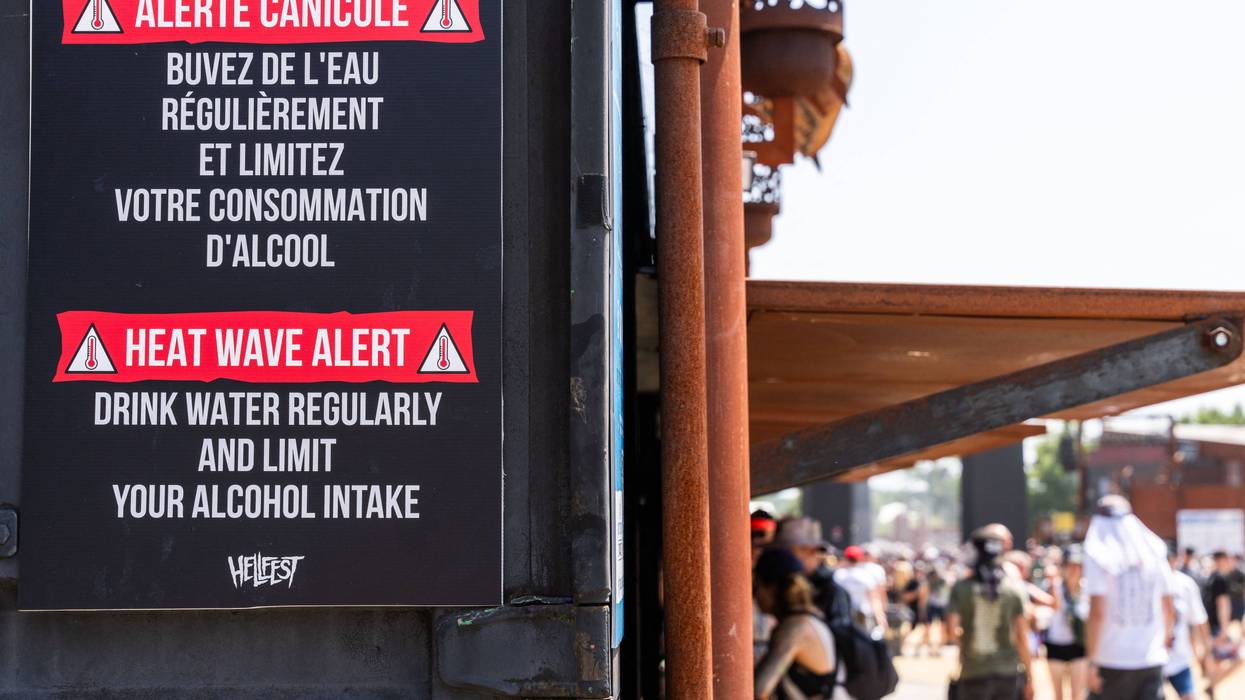
Germany, Switzerland, France, Spain, Belgium, and other European countries were under red-alert warnings on Tuesday as an alarmingly early heatwave continued to scorch the continent, underscoring the threat posed by the fossil fuel-driven climate crisis.
Météo-France, the country's official meteorological administration, said Tuesday that "further record-breaking temperatures are expected, including some that could surpass all previous records, regardless of the time of year," as "sunshine continues to dominate across France, maintaining oppressive and exhausting heat throughout the country." In recent days, France has recorded dozens of deaths linked to the extreme temperatures, including two were children who died in a hot car and 40 people who drowned seeking relief from the heat.
“Heat is hurting children across Europe," Matilde Angeltveit, senior adviser and global climate advocacy lead at Save the Children, said Tuesday. "It affects their health and it is disrupting their education and the impact can sometimes be long term. This should be a joyous time as many children across Europe wrap up the school year, but for many it is not."
Europe's Copernicus Climate Change Service said that while the ongoing heatwave is "remarkable for occurring so early in the year, this event is consistent with Europe’s rapid warming and with the increasing frequency and intensity of heatwaves already observed in summer."
"Europe is the fastest-warming continent, with temperatures rising by approximately 0.56°C per decade since the mid-1990s, more than double the global average," Copernicus noted.
Reuters observed Tuesday that Europe "was the continent furthest above its historic temperature norm on Monday."
"Heatwaves are no longer freak weather anomalies. They are now a recurring crisis inflicting suffering, claiming lives and fracturing our health systems and infrastructure," said Hans Kluge, European regional director for the World Health Organization, which estimates that extreme heat has killed more than 200,000 people across Europe over the past four years.
Campaigners said the current heatwave marks the latest evidence of governments' failure to rein in the fossil fuel industry, which has raked in massive profits this year thanks to the US-Israeli war on Iran.
"This isn’t a natural disaster," said Aaron Regunberg, director of the Climate Accountability Project at the US-based advocacy group Public Citizen, which declared in response to the European heatwave that oil giants "have blood on their hands."
"The fossil fuel industry’s pollution and decades of deception about the impact of burning fossil fuels has spurred this extreme heat, which has already killed multiple people," said Regunberg. "Decades ago, scientists at Exxon were discussing with other oil companies research connecting climate change with ‘suffering and death due to thermal extremes.’ These companies knew of evidence that their conduct would cause these harms, and orchestrated campaigns of climate denial to undermine that evidence. They should be held accountable.”
Areeba Hamid, the co-executive director of Greenpeace UK, said political leaders "need to stop winging it on extreme weather and start treating it as the security and public health challenge it is."
"When classrooms become ovens, care homes overheat, transport starts to buckle and workers are forced to toil in dangerous temperatures, it’s clear the country isn’t ready," said Hamid. "Adaptation alone won’t be enough. Ministers must also stop fossil fuel giants from turning up the heat on our planet—and make them pay for the damage they are causing."
Keep ReadingShow Less
'Humiliating String of Defeats' Threatens Trump's Plot to Rig 2026 Midterms: Election Expert
"As Republican electoral prospects wane, Trump will grow more desperate, and that desperation will lead to even more extreme actions by the administration."
Jun 23, 2026
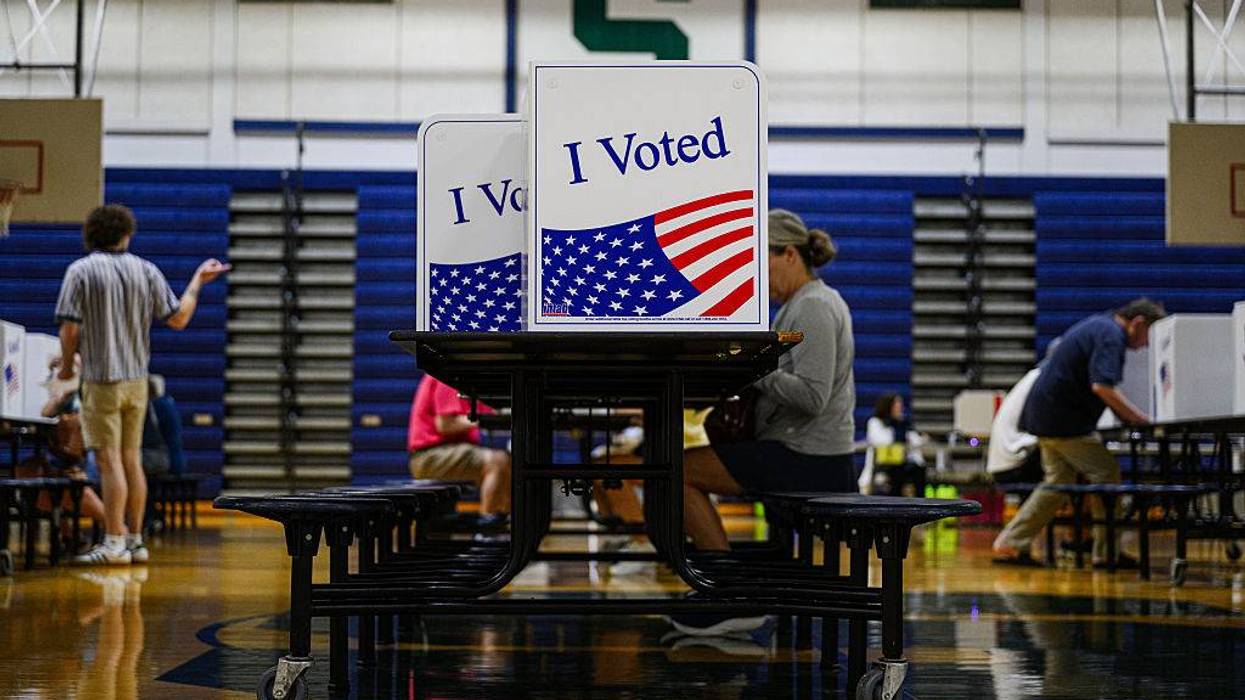
President Donald Trump's unprecedented efforts to rig the 2026 midterm elections are on thin ice after having been repeatedly thwarted by courts, according to election law attorney Marc Elias.
In a Monday analysis published by Democracy Docket, Elias noted that the US Department of Justice has seen its attempts to obtain states' voter files shot down in court nine different times, most recently by a federal judge in Maryland who ruled the state was under no obligation to hand its voter file to the federal government.
Elias wrote that Trump needs states' voter files to build a national voter database, which would allow his administration to pick and choose which voters are eligible to participate in future elections and which should be purged.
"The problem for Trump is that his Department of Justice keeps losing cases that it needs to access this critical data," Elias explained. "This humiliating string of defeats threatens to derail Trump’s signature plan to subvert the 2026 midterm elections."
Trump will also have difficulty blaming these court losses on left-wing judges, Elias added, because Trump-appointed judges have been responsible for more than half of the defeats the DOJ has suffered, which he described as "nothing short of a debacle."
Elias, whose law firm has been involved in trying to block the DOJ from accessing voter files, said it was worth celebrating the latest victory over the Trump administration, but he warned that more fights are coming.
"As Republican electoral prospects wane, Trump will grow more desperate," he wrote, "and that desperation will lead to even more extreme actions by the administration. It will also require much more litigation."
Trump earlier this year signed an executive order instructing the United States Postal Service to not deliver ballots in any states that have not given the federal government access to its voter lists.
The order, currently being challenged in court by congressional Democrats and all 23 Democratic state attorneys general, could essentially eliminate mail-in voting in the US, opponents have warned.
CNN on Monday reported that the administration is also trying to squeeze states into changing their election laws by withholding "tens of millions of dollars in federal homeland security funds" from states unless they phase out specified electronic voting systems and move back to relying on paper ballots.
States wanting to receive funding must also "run their voter rolls through a controversial Department of Homeland Security citizenship verification database," CNN reported.
Keep ReadingShow Less
Platner Says Collins Is 'Lying Through Her Teeth' in Her Latest Defense of Kavanaugh Vote
Republican Sen. Susan Collins falsely said the Supreme Court's decision to overturn Roe v. Wade was a 6-3 vote.
Jun 23, 2026
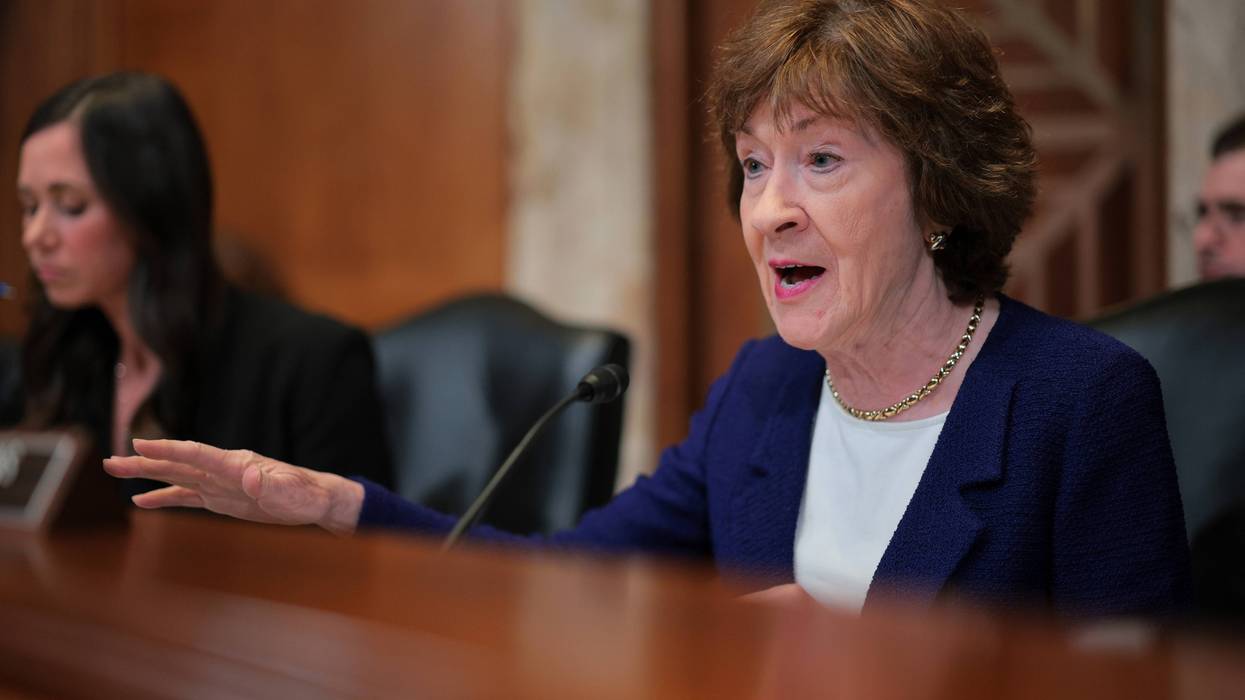
US Sen. Susan Collins on Monday faced backlash, including from the Democratic candidate trying to unseat her, for falsely stating that the Supreme Court ruling overturning the federal right to abortion was decided 6-3 and that Justice Brett Kavanaugh was not a pivotal vote.
In a newly aired Fox News interview, Collins (R-Maine) said she "disagreed with the Supreme Court's 6-3 decision overturning Roe v. Wade, but the fact is, whether Justice Kavanaugh were confirmed or not, Roe v. Wade would have been overturned, given the 6-3 vote." The vote to overturn Roe, ending the constitutional right to abortion, was in fact 5-4, with Kavanaugh joining the majority despite Collins' repeated insistence during the judge's Senate confirmation process that he would not support toppling critical precedents.
“Susan Collins is lying through her teeth," Graham Platner, the Republican incumbent's Democratic challenger, said in a statement. "Roe v. Wade was not overturned 6-3. That is a lie. It was 5-4. Brett Kavanaugh was the deciding vote to overturn Roe v. Wade, and Susan Collins was the deciding vote to confirm Brett Kavanaugh to a lifetime appointment on the Supreme Court."
"And let’s be very clear: Everyone knew that Brett Kavanaugh would overturn Roe," Platner continued. "She can lie and say she was misled. She can claim she’s disappointed. But the reality is, she knew exactly why Donald Trump nominated Kavanaugh—and she voted to confirm him anyway."
She's lying. Roe was overturned 5-4. Kavanaugh was the deciding vote. Susan Collins is responsible. https://t.co/kV0viaPq9t
— Demand Justice (@WeDemandJustice) June 22, 2026
Collins said last week that she doesn't regret voting to confirm Kavanaugh in 2018, despite the devastating impact of the high court's ruling in Dobbs v. Jackson Women's Health Organization. A new analysis by the National Partnership for Women & Families found that "more than 47 million women of reproductive age live in states with clinic closures" or "states that have attacked access to medication abortion" in the aftermath of Dobbs.
Earlier on Monday, the Planned Parenthood Action Fund (PPAF) endorsed Platner's campaign to deny Collins a sixth Senate term, noting that "in the four years since the Supreme Court ended the federal right to an abortion, the Trump administration and its backers in Congress and the states have repeatedly weaponized Dobbs and attacked reproductive healthcare."
“President Trump and his allies are using every lever of power at their disposal to make it harder for people to get the care they need, including by attempting to permanently ‘defund’ Planned Parenthood," said Alexis McGill Johnson, PPAF's president and CEO. "Mainers deserve a senator they can trust to have their backs at every turn. It is clear that is not Susan Collins."
Keep ReadingShow Less
Most Popular