SUBSCRIBE TO OUR FREE NEWSLETTER
Daily news & progressive opinion—funded by the people, not the corporations—delivered straight to your inbox.
5
#000000
#FFFFFF
To donate by check, phone, or other method, see our More Ways to Give page.
Daily news & progressive opinion—funded by the people, not the corporations—delivered straight to your inbox.
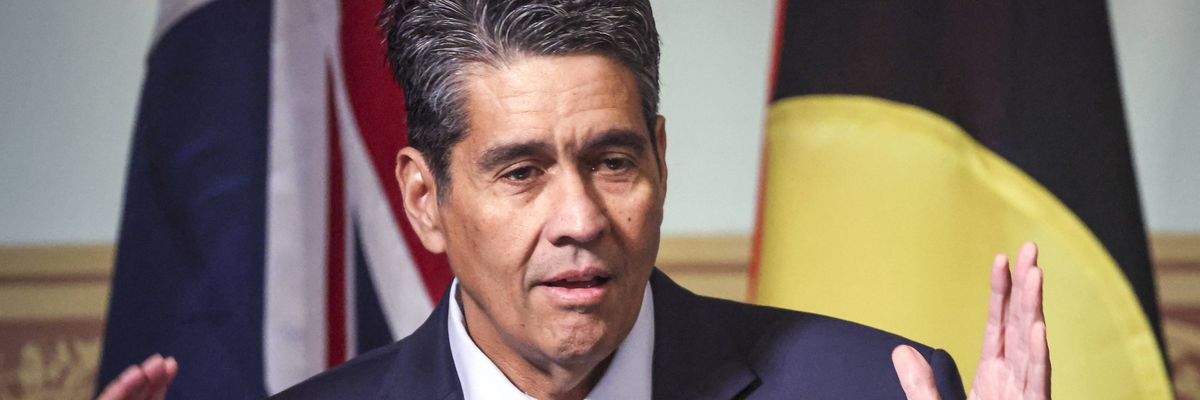
Palauan President Surangel Whipps Jr. speaks in Sydney, Australia on April 10, 2025.
"What if we spent the $100,000 per person in America setting them up with housing assistance, healthcare, education, etc?" asked one critic.
Palau said Wednesday that it has agreed to take in up to 75 people deported from the United States during President Donald Trump's purge of unauthorized immigrants in exchange for millions of dollars in financial assistance—a move that has sparked considerable opposition among the Pacific archipelago nation's roughly 18,000 inhabitants.
The office of Palauan President Surangel Whipps Jr. announced a memorandum of understanding with the United States under which the country will receive $7.5 million in assistance in exchange for taking in 75 third-country deportees who cannot be repatriated to their countries of origin.
Earlier this week, US State Department Principal Deputy Spokesperson Tommy Pigott said the people who will be sent to Palau have “no known criminal histories," as is the case with the vast majority of unauthorized immigrants in the United States, who have committed no crime other than the mere misdemeanor of entering the country illegally.
However, Palauans have voiced concerns over US Secretary of State Marco Rubio's remarks during a Cabinet meeting earlier this year in which he said that, “We want to send some of the most despicable human beings—perverts, pedophiles, and child rapists—to your countries as a favor to us."
Whipps said Wednesday that the relocation plan involves “people seeking safety and stability."
“These are not criminals,” the president said during earlier debate on the proposal. “Their only offense was entering the United States illegally and working without proper permits.”
However, Palau's Congress and its influential Council of Chiefs have twice rejected the transfers.
Piggot's statement "highlighted US commitments to partner with Palau on strengthening the country’s healthcare infrastructure, increasing Palau’s capacity to combat transnational crime and drug trafficking, and bolstering Palau’s civil service pension system."
Palau, which was administered by the US from 1947-94 and is now associated with the United States under the 1994 Compact of Free Association, which guaranteed the country nearly $900 million economic aid over 20 years in exchange for exclusive US military access.
The country's foreign policy often tracks closely to that of the US. For example, Palau is sometimes among the handful of usually similarly small nations that vote along with the United States and Israel against United Nations resolutions condemning Israeli crimes or affirming Palestinian rights.
Other developing nations including Eswatini, Rwanda, South Sudan, and Uganda have also agreed to take in US deportees or are considering doing so.
Reactions to the US-Palau agreement drew criticism on social media, where one X user called the deal a "bribe" and another popular Bluesky account asked, "What if we spent the $100,000 per person in America setting them up with housing assistance, healthcare, education, etc?"
Dear Common Dreams reader, It’s been nearly 30 years since I co-founded Common Dreams with my late wife, Lina Newhouser. We had the radical notion that journalism should serve the public good, not corporate profits. It was clear to us from the outset what it would take to build such a project. No paid advertisements. No corporate sponsors. No millionaire publisher telling us what to think or do. Many people said we wouldn't last a year, but we proved those doubters wrong. Together with a tremendous team of journalists and dedicated staff, we built an independent media outlet free from the constraints of profits and corporate control. Our mission has always been simple: To inform. To inspire. To ignite change for the common good. Building Common Dreams was not easy. Our survival was never guaranteed. When you take on the most powerful forces—Wall Street greed, fossil fuel industry destruction, Big Tech lobbyists, and uber-rich oligarchs who have spent billions upon billions rigging the economy and democracy in their favor—the only bulwark you have is supporters who believe in your work. But here’s the urgent message from me today. It's never been this bad out there. And it's never been this hard to keep us going. At the very moment Common Dreams is most needed, the threats we face are intensifying. We need your support now more than ever. We don't accept corporate advertising and never will. We don't have a paywall because we don't think people should be blocked from critical news based on their ability to pay. Everything we do is funded by the donations of readers like you. When everyone does the little they can afford, we are strong. But if that support retreats or dries up, so do we. Will you donate now to make sure Common Dreams not only survives but thrives? —Craig Brown, Co-founder |
Palau said Wednesday that it has agreed to take in up to 75 people deported from the United States during President Donald Trump's purge of unauthorized immigrants in exchange for millions of dollars in financial assistance—a move that has sparked considerable opposition among the Pacific archipelago nation's roughly 18,000 inhabitants.
The office of Palauan President Surangel Whipps Jr. announced a memorandum of understanding with the United States under which the country will receive $7.5 million in assistance in exchange for taking in 75 third-country deportees who cannot be repatriated to their countries of origin.
Earlier this week, US State Department Principal Deputy Spokesperson Tommy Pigott said the people who will be sent to Palau have “no known criminal histories," as is the case with the vast majority of unauthorized immigrants in the United States, who have committed no crime other than the mere misdemeanor of entering the country illegally.
However, Palauans have voiced concerns over US Secretary of State Marco Rubio's remarks during a Cabinet meeting earlier this year in which he said that, “We want to send some of the most despicable human beings—perverts, pedophiles, and child rapists—to your countries as a favor to us."
Whipps said Wednesday that the relocation plan involves “people seeking safety and stability."
“These are not criminals,” the president said during earlier debate on the proposal. “Their only offense was entering the United States illegally and working without proper permits.”
However, Palau's Congress and its influential Council of Chiefs have twice rejected the transfers.
Piggot's statement "highlighted US commitments to partner with Palau on strengthening the country’s healthcare infrastructure, increasing Palau’s capacity to combat transnational crime and drug trafficking, and bolstering Palau’s civil service pension system."
Palau, which was administered by the US from 1947-94 and is now associated with the United States under the 1994 Compact of Free Association, which guaranteed the country nearly $900 million economic aid over 20 years in exchange for exclusive US military access.
The country's foreign policy often tracks closely to that of the US. For example, Palau is sometimes among the handful of usually similarly small nations that vote along with the United States and Israel against United Nations resolutions condemning Israeli crimes or affirming Palestinian rights.
Other developing nations including Eswatini, Rwanda, South Sudan, and Uganda have also agreed to take in US deportees or are considering doing so.
Reactions to the US-Palau agreement drew criticism on social media, where one X user called the deal a "bribe" and another popular Bluesky account asked, "What if we spent the $100,000 per person in America setting them up with housing assistance, healthcare, education, etc?"
Palau said Wednesday that it has agreed to take in up to 75 people deported from the United States during President Donald Trump's purge of unauthorized immigrants in exchange for millions of dollars in financial assistance—a move that has sparked considerable opposition among the Pacific archipelago nation's roughly 18,000 inhabitants.
The office of Palauan President Surangel Whipps Jr. announced a memorandum of understanding with the United States under which the country will receive $7.5 million in assistance in exchange for taking in 75 third-country deportees who cannot be repatriated to their countries of origin.
Earlier this week, US State Department Principal Deputy Spokesperson Tommy Pigott said the people who will be sent to Palau have “no known criminal histories," as is the case with the vast majority of unauthorized immigrants in the United States, who have committed no crime other than the mere misdemeanor of entering the country illegally.
However, Palauans have voiced concerns over US Secretary of State Marco Rubio's remarks during a Cabinet meeting earlier this year in which he said that, “We want to send some of the most despicable human beings—perverts, pedophiles, and child rapists—to your countries as a favor to us."
Whipps said Wednesday that the relocation plan involves “people seeking safety and stability."
“These are not criminals,” the president said during earlier debate on the proposal. “Their only offense was entering the United States illegally and working without proper permits.”
However, Palau's Congress and its influential Council of Chiefs have twice rejected the transfers.
Piggot's statement "highlighted US commitments to partner with Palau on strengthening the country’s healthcare infrastructure, increasing Palau’s capacity to combat transnational crime and drug trafficking, and bolstering Palau’s civil service pension system."
Palau, which was administered by the US from 1947-94 and is now associated with the United States under the 1994 Compact of Free Association, which guaranteed the country nearly $900 million economic aid over 20 years in exchange for exclusive US military access.
The country's foreign policy often tracks closely to that of the US. For example, Palau is sometimes among the handful of usually similarly small nations that vote along with the United States and Israel against United Nations resolutions condemning Israeli crimes or affirming Palestinian rights.
Other developing nations including Eswatini, Rwanda, South Sudan, and Uganda have also agreed to take in US deportees or are considering doing so.
Reactions to the US-Palau agreement drew criticism on social media, where one X user called the deal a "bribe" and another popular Bluesky account asked, "What if we spent the $100,000 per person in America setting them up with housing assistance, healthcare, education, etc?"