SUBSCRIBE TO OUR FREE NEWSLETTER
Daily news & progressive opinion—funded by the people, not the corporations—delivered straight to your inbox.
5
#000000
#FFFFFF
To donate by check, phone, or other method, see our More Ways to Give page.
Daily news & progressive opinion—funded by the people, not the corporations—delivered straight to your inbox.
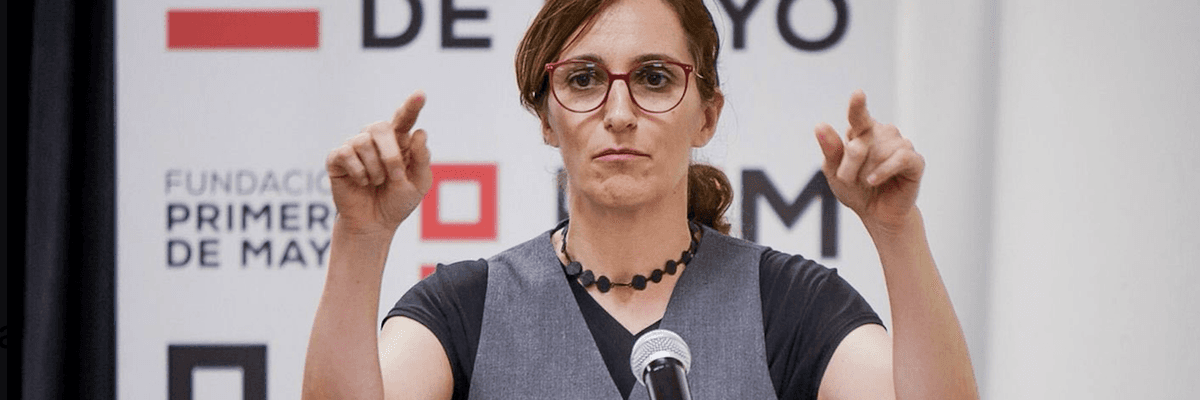
Spanish Health Minister Mónica García speaks at the Analysis and Advocacy of the Welfare State conference in Madrid on June 4, 2026.
"Trump calls Spain a 'terrible partner' because it accepts neither blackmail nor threats. Because we are a sovereign, democratic country that defends multilateralism and peace."
US President Donald Trump's call on Wednesday to "cut off all trade with Spain" over what he said is the NATO ally's failure to pull its own weight in the alliance was shrugged off by Spanish Prime Minister Pedro Sánchez as "business as usual," but a member of the leftist leader's Cabinet responded to the largely infeasible threat by declaring that her government will not succumb to bullying.
Sitting alongside NATO Secretary-General Mark Rutte at the alliance's summit in the Turkish capital Ankara, Trump told reporters that “Spain is a wasted cause."
"We don’t want to do any trade business with Spain anymore, by the way,” the Republican president continued. “Spain is a terrible partner in NATO. They don’t participate. They don’t pay. I don’t want anything to do with Spain. Cut off all trade with Spain, please, including visits. Watch them come running back. Oh, they’ll come running back."
President Trump says he is "not happy" with NATO and demands to cut trade ties with Spain: "I don't want anything to do with Spain... cut off all trade with Spain please, including visits... watch them come running back." pic.twitter.com/3WCTAZU5mA
— CSPAN (@cspan) July 8, 2026
According to NATO's official estimates for 2025, Spain spends 2% of its gross domestic product (GDP) on defense, equivalent to about $35.7 billion, the seventh-highest amount in the alliance. Five other NATO members—Belgium, Czechia, Luxembourg, North Macedonia, and Portugal—also spend 2% of their GDP on their militaries, the lowest percentage in the alliance. NATO members have agreed to meet a defense spending goal of 3.5% of GDP by 2035, while Trump has repeatedly urged alliance nations to budget 5%.
Sánchez brushed off Trump's tirade as "business as usual" while touting Spain's "excellent" trade relations with the United States and vowing to respond "with calm and patience" to the president's threat.
"When you step back a bit from these kinds of actions, what you see is that relations between the United States and Spain are very, very positive socially, culturally, economically, and politically," he said.
"Spain is a country that strives to maintain the best possible relations with all countries, especially allied countries, with whom we have very consolidated ties that have transcended the ideological orientation of the administrations that have governed Spain or the United States over the decades," Sánchez added.
Spanish Health Minister Mónica García was more blunt in her response to Trump's remarks.
"Trump calls Spain a 'terrible partner' because it accepts neither blackmail nor threats," she said on social media. "Because we are a sovereign, democratic country that defends multilateralism and peace. What's terrible is confusing diplomacy with bullying."
Experts say that while the International Emergency Economic Powers Act grants US presidents broad authority to block or limit trade with countries, they must prove that targeted nations pose an "unusual or extraordinary threat" to national or economic security, which Spain clearly does not. Furthermore, as a European Union member, any trade negotiations must be conducted via Brussels, not Madrid.
This isn't the first time that Trump has floated cutting off commercial relations with Spain. Earlier this year, he threatened a full trade embargo on Spain over its refusal to allow use of its military bases to wage the illegal US-Israeli war on Iran. Spain's rejection of Trump's call for NATO members to spend 5% of their GDPs on defense, its formal support for South Africa's Gaza genocide case against Israel at the International Court of Justice, and its broader pro-Palestine stance have also angered the US leader.
Responding to Trump's renewed airstrikes on Iran and apparent abandonment of a frayed three-month ceasefire, Sánchez said Wednesday that "what we want is to avoid war."
"Wars are always bad news," the prime minister added, "especially for civilians, particularly children and women."
Dear Common Dreams reader, It’s been nearly 30 years since I co-founded Common Dreams with my late wife, Lina Newhouser. We had the radical notion that journalism should serve the public good, not corporate profits. It was clear to us from the outset what it would take to build such a project. No paid advertisements. No corporate sponsors. No millionaire publisher telling us what to think or do. Many people said we wouldn't last a year, but we proved those doubters wrong. Together with a tremendous team of journalists and dedicated staff, we built an independent media outlet free from the constraints of profits and corporate control. Our mission has always been simple: To inform. To inspire. To ignite change for the common good. Building Common Dreams was not easy. Our survival was never guaranteed. When you take on the most powerful forces—Wall Street greed, fossil fuel industry destruction, Big Tech lobbyists, and uber-rich oligarchs who have spent billions upon billions rigging the economy and democracy in their favor—the only bulwark you have is supporters who believe in your work. But here’s the urgent message from me today. It's never been this bad out there. And it's never been this hard to keep us going. At the very moment Common Dreams is most needed, the threats we face are intensifying. We need your support now more than ever. We don't accept corporate advertising and never will. We don't have a paywall because we don't think people should be blocked from critical news based on their ability to pay. Everything we do is funded by the donations of readers like you. When everyone does the little they can afford, we are strong. But if that support retreats or dries up, so do we. Will you donate now to make sure Common Dreams not only survives but thrives? —Craig Brown, Co-founder |
US President Donald Trump's call on Wednesday to "cut off all trade with Spain" over what he said is the NATO ally's failure to pull its own weight in the alliance was shrugged off by Spanish Prime Minister Pedro Sánchez as "business as usual," but a member of the leftist leader's Cabinet responded to the largely infeasible threat by declaring that her government will not succumb to bullying.
Sitting alongside NATO Secretary-General Mark Rutte at the alliance's summit in the Turkish capital Ankara, Trump told reporters that “Spain is a wasted cause."
"We don’t want to do any trade business with Spain anymore, by the way,” the Republican president continued. “Spain is a terrible partner in NATO. They don’t participate. They don’t pay. I don’t want anything to do with Spain. Cut off all trade with Spain, please, including visits. Watch them come running back. Oh, they’ll come running back."
President Trump says he is "not happy" with NATO and demands to cut trade ties with Spain: "I don't want anything to do with Spain... cut off all trade with Spain please, including visits... watch them come running back." pic.twitter.com/3WCTAZU5mA
— CSPAN (@cspan) July 8, 2026
According to NATO's official estimates for 2025, Spain spends 2% of its gross domestic product (GDP) on defense, equivalent to about $35.7 billion, the seventh-highest amount in the alliance. Five other NATO members—Belgium, Czechia, Luxembourg, North Macedonia, and Portugal—also spend 2% of their GDP on their militaries, the lowest percentage in the alliance. NATO members have agreed to meet a defense spending goal of 3.5% of GDP by 2035, while Trump has repeatedly urged alliance nations to budget 5%.
Sánchez brushed off Trump's tirade as "business as usual" while touting Spain's "excellent" trade relations with the United States and vowing to respond "with calm and patience" to the president's threat.
"When you step back a bit from these kinds of actions, what you see is that relations between the United States and Spain are very, very positive socially, culturally, economically, and politically," he said.
"Spain is a country that strives to maintain the best possible relations with all countries, especially allied countries, with whom we have very consolidated ties that have transcended the ideological orientation of the administrations that have governed Spain or the United States over the decades," Sánchez added.
Spanish Health Minister Mónica García was more blunt in her response to Trump's remarks.
"Trump calls Spain a 'terrible partner' because it accepts neither blackmail nor threats," she said on social media. "Because we are a sovereign, democratic country that defends multilateralism and peace. What's terrible is confusing diplomacy with bullying."
Experts say that while the International Emergency Economic Powers Act grants US presidents broad authority to block or limit trade with countries, they must prove that targeted nations pose an "unusual or extraordinary threat" to national or economic security, which Spain clearly does not. Furthermore, as a European Union member, any trade negotiations must be conducted via Brussels, not Madrid.
This isn't the first time that Trump has floated cutting off commercial relations with Spain. Earlier this year, he threatened a full trade embargo on Spain over its refusal to allow use of its military bases to wage the illegal US-Israeli war on Iran. Spain's rejection of Trump's call for NATO members to spend 5% of their GDPs on defense, its formal support for South Africa's Gaza genocide case against Israel at the International Court of Justice, and its broader pro-Palestine stance have also angered the US leader.
Responding to Trump's renewed airstrikes on Iran and apparent abandonment of a frayed three-month ceasefire, Sánchez said Wednesday that "what we want is to avoid war."
"Wars are always bad news," the prime minister added, "especially for civilians, particularly children and women."
US President Donald Trump's call on Wednesday to "cut off all trade with Spain" over what he said is the NATO ally's failure to pull its own weight in the alliance was shrugged off by Spanish Prime Minister Pedro Sánchez as "business as usual," but a member of the leftist leader's Cabinet responded to the largely infeasible threat by declaring that her government will not succumb to bullying.
Sitting alongside NATO Secretary-General Mark Rutte at the alliance's summit in the Turkish capital Ankara, Trump told reporters that “Spain is a wasted cause."
"We don’t want to do any trade business with Spain anymore, by the way,” the Republican president continued. “Spain is a terrible partner in NATO. They don’t participate. They don’t pay. I don’t want anything to do with Spain. Cut off all trade with Spain, please, including visits. Watch them come running back. Oh, they’ll come running back."
President Trump says he is "not happy" with NATO and demands to cut trade ties with Spain: "I don't want anything to do with Spain... cut off all trade with Spain please, including visits... watch them come running back." pic.twitter.com/3WCTAZU5mA
— CSPAN (@cspan) July 8, 2026
According to NATO's official estimates for 2025, Spain spends 2% of its gross domestic product (GDP) on defense, equivalent to about $35.7 billion, the seventh-highest amount in the alliance. Five other NATO members—Belgium, Czechia, Luxembourg, North Macedonia, and Portugal—also spend 2% of their GDP on their militaries, the lowest percentage in the alliance. NATO members have agreed to meet a defense spending goal of 3.5% of GDP by 2035, while Trump has repeatedly urged alliance nations to budget 5%.
Sánchez brushed off Trump's tirade as "business as usual" while touting Spain's "excellent" trade relations with the United States and vowing to respond "with calm and patience" to the president's threat.
"When you step back a bit from these kinds of actions, what you see is that relations between the United States and Spain are very, very positive socially, culturally, economically, and politically," he said.
"Spain is a country that strives to maintain the best possible relations with all countries, especially allied countries, with whom we have very consolidated ties that have transcended the ideological orientation of the administrations that have governed Spain or the United States over the decades," Sánchez added.
Spanish Health Minister Mónica García was more blunt in her response to Trump's remarks.
"Trump calls Spain a 'terrible partner' because it accepts neither blackmail nor threats," she said on social media. "Because we are a sovereign, democratic country that defends multilateralism and peace. What's terrible is confusing diplomacy with bullying."
Experts say that while the International Emergency Economic Powers Act grants US presidents broad authority to block or limit trade with countries, they must prove that targeted nations pose an "unusual or extraordinary threat" to national or economic security, which Spain clearly does not. Furthermore, as a European Union member, any trade negotiations must be conducted via Brussels, not Madrid.
This isn't the first time that Trump has floated cutting off commercial relations with Spain. Earlier this year, he threatened a full trade embargo on Spain over its refusal to allow use of its military bases to wage the illegal US-Israeli war on Iran. Spain's rejection of Trump's call for NATO members to spend 5% of their GDPs on defense, its formal support for South Africa's Gaza genocide case against Israel at the International Court of Justice, and its broader pro-Palestine stance have also angered the US leader.
Responding to Trump's renewed airstrikes on Iran and apparent abandonment of a frayed three-month ceasefire, Sánchez said Wednesday that "what we want is to avoid war."
"Wars are always bad news," the prime minister added, "especially for civilians, particularly children and women."