
A shopper looks at eggs in a New York City grocery store on February 25, 2025.
Inflation Numbers Don't Alter Fears That Trump Has US Economy 'Barreling Toward Recession'
"Instead of trying to lower the cost of living, he's doubling down on his plans to give massive tax breaks to billionaires and giant corporations," said one Trump critic.
As the U.S. Department of Labor released its monthly consumer price index report on Wednesday, President Donald Trump's new tariffs for steel and aluminum imports took effect, highlighting his threat to the economy and working-class Americans.
The CPI, "a key gauge of inflation, showed that prices rose by 2.8% in February from a year earlier, driven by price relief from airfares and gas," The Washington Post reported. "That was cooler than the 3% annual gain reported for January and an unexpected signal of progress in combating high inflation."
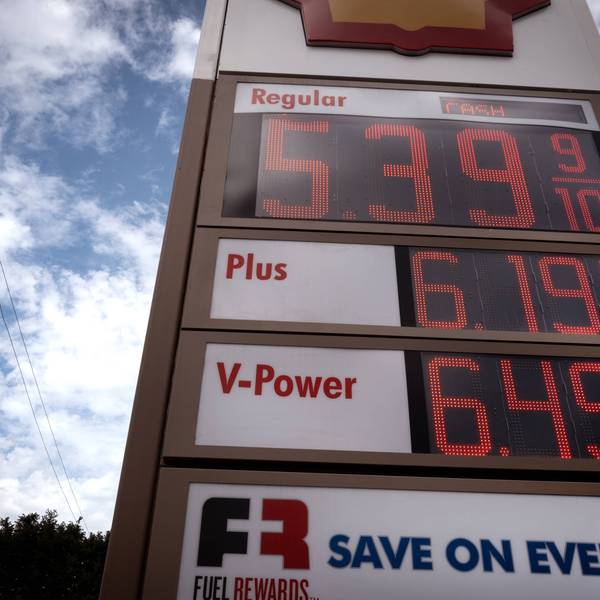
While gasoline prices fell 1.0% and airline fares dropped 4%, the cost of food and shelter rose 0.2% and 0.3% respectively. The bird flu continued to drive up egg prices, which jumped 10.4%. The report adds, "Indexes that increased over the month include medical care, used cars and trucks, household furnishings and operations, recreation, apparel, and personal care."
The White House celebrated the inflation data, but economists were quick to point out that the numbers don't account for the latest developments in Trump's trade war: the new tariffs taking effect on Wednesday—after chaos-causing mixed messages from the president on Tuesday—and Canada and Europe's swift retaliatory measures.
"It's a classic head fake," Joe Brusuelas, chief economist at RSM, told the Post. "Going forward, tariffs are going to increase the costs of manufacturing in general and autos in particular."
Chris Low, chief economist at FHN Financial, similarly told Reuters that "trade wars are expected to raise prices in future inflation reports," though he also said the odds that the Federal Reserve can cut interest rates "again this year once the smoke from the tariff back-and-forth clears increased today nonetheless."
Trump's trade policies and other recent decisions, including letting billionaire Elon Musk gut the federal government, have elevated fears of a recession—which one economist suggested naming after the president—and even sparked speculation that he is tanking the economy on purpose.
In a Wednesday statement about the CPI report, Groundwork Collaborative chief of policy and advocacy Alex Jacquez said that "while families are still struggling to put food on the table and a roof over their head, the administration's response is that they should raise their own chickens in their backyards."
"Every economic indicator suggests that President Trump has us barreling toward a recession and stagflation. But instead of trying to lower the cost of living, he's doubling down on his plans to give massive tax breaks to billionaires and giant corporations," Jacquez added, referring to congressional Republicans' efforts to send Trump legislation that would fund tax giveaways by slashing Medicaid and the Supplemental Nutrition Assistance Program (SNAP).
In addition to Jacquez's comments, Groundwork and Data for Progress also released a poll showing that over a fifth of U.S. voters across the political spectrum are most frustrated with rising grocery costs. Another 10% are most frustrated with high bills for utilities like electricity, gas, and water. They were followed by around voters frustrated with out-of-pocket healthcare costs, rent or mortgage, or health insurance premiums.
Groundwork Collaborative warned that "Trump's threat of new tariffs risks making the housing crisis worse. By driving up the cost of construction materials, his trade war with Canada could shrink the supply of new housing, keeping overall prices high. That, in turn, forces the Federal Reserve to keep interest rates elevated, making mortgages more expensive."
The think tank also stressed that the Trump administration is "destroying affordable healthcare" by fighting to cut Medicaid and Medicare, reinstate work requirements, and limit Affordable Care Act enrollment; "raising energy bills" by freezing funds for clean energy projects while advocating for planet-wrecking fossil fuels; and "making groceries more unaffordable" by pushing SNAP cuts "instead of tackling corporate price gouging and market consolidation in the food industry."
Food & Water Watch similarly responded to the new CPI data by calling out failures to crack down on corporate price gouging—as detailed in the group's report from last week titled, The Rotten Egg Oligarchy.
"Record-high egg prices have everything to do with corporate greed," Food & Water Watch research director Amanda Starbuck said Wednesday. "While skyrocketing prices transform eggs into a luxury item, the food monopolies are seeing green. President Trump needs to get serious about lowering American food prices—starting with cracking down on the food monopolies exploiting the worsening bird flu crisis for profit."
We are at a crossroads
This country and this world are at a monumental crossroads. In a few short weeks, US voters will have an opportunity to beat back the forces of fascism and confront the billionaires who are rigging the economy, our media system, and our democracy, making it increasingly impossible for ordinary people to get by. We’re not just talking about the election. We’re talking about what must be done once these fascist elements are vanquished from power. We need a bolder set of solutions than what either major party has so far been willing to offer and a working-class movement ready to fight like hell for it. Trump didn't emerge from nowhere. The conditions that fueled MAGA authoritarianism were created by decades of radical neoliberal economic policies and a corrupt political system dominated by corporate interests. They slashed taxes on the super-rich, promising that the benefits would trickle down. They said giveaways to the corporate titans would make life more affordable for the rest of us. It was all bullshit. And when a bitter, betrayed populace searches for someone to blame, right-wing demagogues have little trouble finding scapegoats. People know when they're being lied to, but you won't hear any of this from the corporate media. Only independent journalism—powered and funded by people who believe in building a better world—can deliver truly trustworthy daily news. Our Fall Campaign is underway, and we need your help. To power our newsroom through the rest of the year, we need to raise $125,000 by midnight on October 31. So if you share our vision, please contribute whatever you can to sustain our work. |
As the U.S. Department of Labor released its monthly consumer price index report on Wednesday, President Donald Trump's new tariffs for steel and aluminum imports took effect, highlighting his threat to the economy and working-class Americans.
The CPI, "a key gauge of inflation, showed that prices rose by 2.8% in February from a year earlier, driven by price relief from airfares and gas," The Washington Post reported. "That was cooler than the 3% annual gain reported for January and an unexpected signal of progress in combating high inflation."
While gasoline prices fell 1.0% and airline fares dropped 4%, the cost of food and shelter rose 0.2% and 0.3% respectively. The bird flu continued to drive up egg prices, which jumped 10.4%. The report adds, "Indexes that increased over the month include medical care, used cars and trucks, household furnishings and operations, recreation, apparel, and personal care."
The White House celebrated the inflation data, but economists were quick to point out that the numbers don't account for the latest developments in Trump's trade war: the new tariffs taking effect on Wednesday—after chaos-causing mixed messages from the president on Tuesday—and Canada and Europe's swift retaliatory measures.
"It's a classic head fake," Joe Brusuelas, chief economist at RSM, told the Post. "Going forward, tariffs are going to increase the costs of manufacturing in general and autos in particular."
Chris Low, chief economist at FHN Financial, similarly told Reuters that "trade wars are expected to raise prices in future inflation reports," though he also said the odds that the Federal Reserve can cut interest rates "again this year once the smoke from the tariff back-and-forth clears increased today nonetheless."
Trump's trade policies and other recent decisions, including letting billionaire Elon Musk gut the federal government, have elevated fears of a recession—which one economist suggested naming after the president—and even sparked speculation that he is tanking the economy on purpose.
In a Wednesday statement about the CPI report, Groundwork Collaborative chief of policy and advocacy Alex Jacquez said that "while families are still struggling to put food on the table and a roof over their head, the administration's response is that they should raise their own chickens in their backyards."
"Every economic indicator suggests that President Trump has us barreling toward a recession and stagflation. But instead of trying to lower the cost of living, he's doubling down on his plans to give massive tax breaks to billionaires and giant corporations," Jacquez added, referring to congressional Republicans' efforts to send Trump legislation that would fund tax giveaways by slashing Medicaid and the Supplemental Nutrition Assistance Program (SNAP).
In addition to Jacquez's comments, Groundwork and Data for Progress also released a poll showing that over a fifth of U.S. voters across the political spectrum are most frustrated with rising grocery costs. Another 10% are most frustrated with high bills for utilities like electricity, gas, and water. They were followed by around voters frustrated with out-of-pocket healthcare costs, rent or mortgage, or health insurance premiums.
Groundwork Collaborative warned that "Trump's threat of new tariffs risks making the housing crisis worse. By driving up the cost of construction materials, his trade war with Canada could shrink the supply of new housing, keeping overall prices high. That, in turn, forces the Federal Reserve to keep interest rates elevated, making mortgages more expensive."
The think tank also stressed that the Trump administration is "destroying affordable healthcare" by fighting to cut Medicaid and Medicare, reinstate work requirements, and limit Affordable Care Act enrollment; "raising energy bills" by freezing funds for clean energy projects while advocating for planet-wrecking fossil fuels; and "making groceries more unaffordable" by pushing SNAP cuts "instead of tackling corporate price gouging and market consolidation in the food industry."
Food & Water Watch similarly responded to the new CPI data by calling out failures to crack down on corporate price gouging—as detailed in the group's report from last week titled, The Rotten Egg Oligarchy.
"Record-high egg prices have everything to do with corporate greed," Food & Water Watch research director Amanda Starbuck said Wednesday. "While skyrocketing prices transform eggs into a luxury item, the food monopolies are seeing green. President Trump needs to get serious about lowering American food prices—starting with cracking down on the food monopolies exploiting the worsening bird flu crisis for profit."
- 'The Next Recession Starts Here': Trump Team Weighs Abolishing Bank Regulators ›
- Call What's Coming the 'Donald J. Trump Recession,' Says Economist ›
- Critics Ask If Trump and Musk Are 'Intentionally Crashing the Economy' ›
- Economist Says Fed Warning Shows Trump Driving US Economy 'Toward Disaster' | Common Dreams ›
- Chances of a Recession Hiked to 35% as Trump's 'Liberation Day' Tariffs Loom | Common Dreams ›
- Opinion | ‘I Couldn’t Care Less’: Trump Reveals His True Stance on Inflation | Common Dreams ›
- 'There Will Be Blood': JPMorgan Hikes Odds of Trump-Triggered Recession to 60% | Common Dreams ›
- Key Inflation Indicator Comes in ‘Scorching Hot’ Just as Trump Tariffs Hit | Common Dreams ›
- Economic Pain 'Just Beginning' as Key Index Shows More Inflation From Trump's Iran War | Common Dreams ›