SUBSCRIBE TO OUR FREE NEWSLETTER
Daily news & progressive opinion—funded by the people, not the corporations—delivered straight to your inbox.
5
#000000
#FFFFFF
To donate by check, phone, or other method, see our More Ways to Give page.
Daily news & progressive opinion—funded by the people, not the corporations—delivered straight to your inbox.
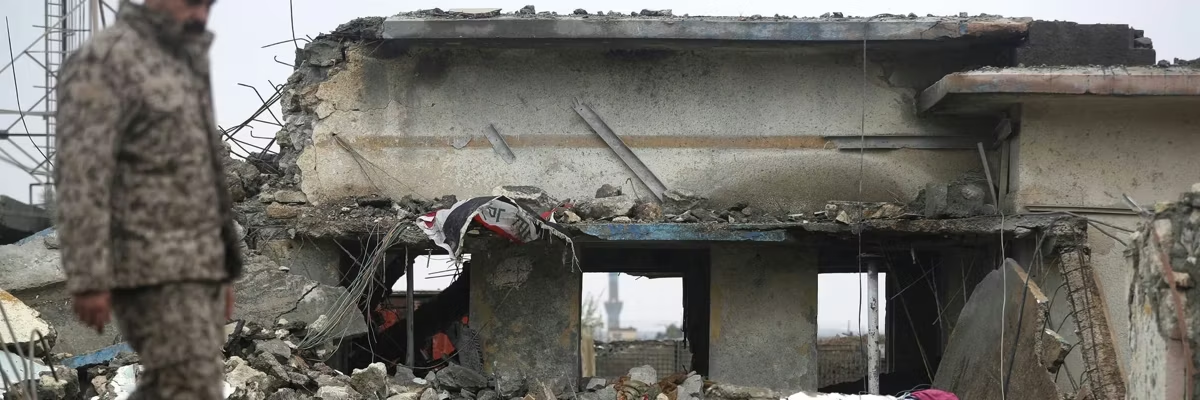
Iraqi soldiers inspect the site of a destroyed healthcare center in the Habbaniyah military base west of Baghdad on March 26, 2026.
"The US war in Iran is going so badly that it’s restarted the US war in Iraq."
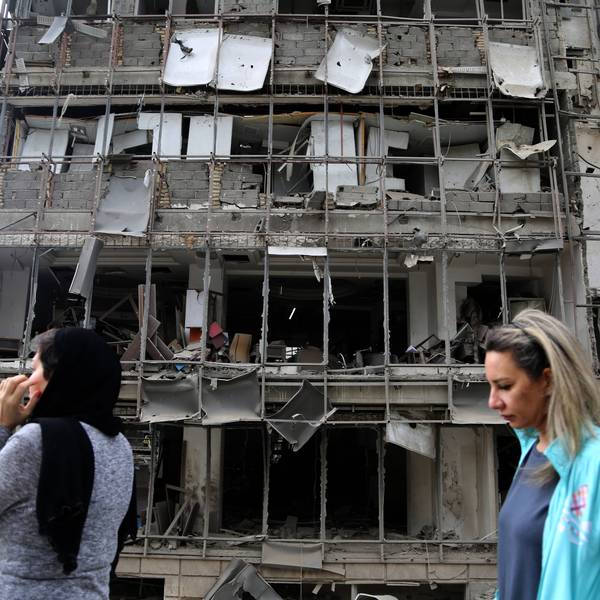
The Iraqi government on Wednesday issued a scathing statement accusing the US of bombing a medical clinic situated in a military base west of Baghdad, killing seven members of Iraq's armed forces and wounding more than a dozen others.
Sabah Al-Numan, a spokesperson for the Iraqi Prime Minister Mohammed Shia' al-Sudani, called the attack an act of "heinous aggression" and a "crime." The US said it is "aware of the reports" of the strike on the clinic at Habbaniyah military base, but denied targeting the facility. Asked about the strike during a briefing on Wednesday, White House Press Secretary Karoline Leavitt told reporters that she would "have to check with the Pentagon on that."
The Iraqi prime minister's office said the nation's government and military "possess the right to respond by all available means in accordance with the Charter of the United Nations," calling the clinic attack a "violation of international law and the established norms governing relations between states" and warning that it "undermines the relationship between the peoples of Iraq and the United States of America."
Iraq's immediate response to the attack was to summon the US Embassy's chargé d’affaires in Baghdad and deliver "a strongly worded official note of protest." The prime minister's office said it also intends to file a formal complaint with the United Nations Security Council.
"The US war in Iran is going so badly that it’s restarted the US war in Iraq," Dylan Williams, vice president for government affairs at the US-based Center for International Policy, wrote in response to the developments.
Dan Caine, chairman of the US Joint Chiefs of Staff, acknowledged during a press conference last week that American attack helicopters "have been striking against Iranian-aligned militia groups" in Iraq "to make sure that we suppress any threat in Iraq against US forces or US interests. The US is known to have roughly 2,500 troops stationed in Iraq, which American forces invaded with catastrophic consequences in 2003.
The bombing of the Iraqi clinic came as the US-Israeli war on Iran—and the massive regional conflagration sparked by the illegal assault—headed toward its fifth week with no end in sight.
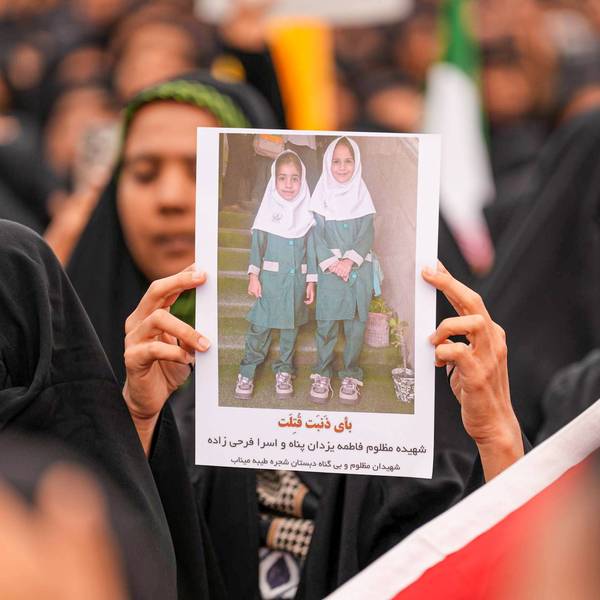
On the first day of the war, an elementary school in the southern Iranian city of Minab was bombed, killing around 170 people—mostly young children. Trump administration officials have publicly denied targeting civilians—and the US president initially blamed Iran for the school bombing—but preliminary findings by the US military reportedly found that American forces were responsible for the attack.
Dear Common Dreams reader, It’s been nearly 30 years since I co-founded Common Dreams with my late wife, Lina Newhouser. We had the radical notion that journalism should serve the public good, not corporate profits. It was clear to us from the outset what it would take to build such a project. No paid advertisements. No corporate sponsors. No millionaire publisher telling us what to think or do. Many people said we wouldn't last a year, but we proved those doubters wrong. Together with a tremendous team of journalists and dedicated staff, we built an independent media outlet free from the constraints of profits and corporate control. Our mission has always been simple: To inform. To inspire. To ignite change for the common good. Building Common Dreams was not easy. Our survival was never guaranteed. When you take on the most powerful forces—Wall Street greed, fossil fuel industry destruction, Big Tech lobbyists, and uber-rich oligarchs who have spent billions upon billions rigging the economy and democracy in their favor—the only bulwark you have is supporters who believe in your work. But here’s the urgent message from me today. It's never been this bad out there. And it's never been this hard to keep us going. At the very moment Common Dreams is most needed, the threats we face are intensifying. We need your support now more than ever. We don't accept corporate advertising and never will. We don't have a paywall because we don't think people should be blocked from critical news based on their ability to pay. Everything we do is funded by the donations of readers like you. When everyone does the little they can afford, we are strong. But if that support retreats or dries up, so do we. Will you donate now to make sure Common Dreams not only survives but thrives? —Craig Brown, Co-founder |
The Iraqi government on Wednesday issued a scathing statement accusing the US of bombing a medical clinic situated in a military base west of Baghdad, killing seven members of Iraq's armed forces and wounding more than a dozen others.
Sabah Al-Numan, a spokesperson for the Iraqi Prime Minister Mohammed Shia' al-Sudani, called the attack an act of "heinous aggression" and a "crime." The US said it is "aware of the reports" of the strike on the clinic at Habbaniyah military base, but denied targeting the facility. Asked about the strike during a briefing on Wednesday, White House Press Secretary Karoline Leavitt told reporters that she would "have to check with the Pentagon on that."
The Iraqi prime minister's office said the nation's government and military "possess the right to respond by all available means in accordance with the Charter of the United Nations," calling the clinic attack a "violation of international law and the established norms governing relations between states" and warning that it "undermines the relationship between the peoples of Iraq and the United States of America."
Iraq's immediate response to the attack was to summon the US Embassy's chargé d’affaires in Baghdad and deliver "a strongly worded official note of protest." The prime minister's office said it also intends to file a formal complaint with the United Nations Security Council.
"The US war in Iran is going so badly that it’s restarted the US war in Iraq," Dylan Williams, vice president for government affairs at the US-based Center for International Policy, wrote in response to the developments.
Dan Caine, chairman of the US Joint Chiefs of Staff, acknowledged during a press conference last week that American attack helicopters "have been striking against Iranian-aligned militia groups" in Iraq "to make sure that we suppress any threat in Iraq against US forces or US interests. The US is known to have roughly 2,500 troops stationed in Iraq, which American forces invaded with catastrophic consequences in 2003.
The bombing of the Iraqi clinic came as the US-Israeli war on Iran—and the massive regional conflagration sparked by the illegal assault—headed toward its fifth week with no end in sight.
On the first day of the war, an elementary school in the southern Iranian city of Minab was bombed, killing around 170 people—mostly young children. Trump administration officials have publicly denied targeting civilians—and the US president initially blamed Iran for the school bombing—but preliminary findings by the US military reportedly found that American forces were responsible for the attack.
The Iraqi government on Wednesday issued a scathing statement accusing the US of bombing a medical clinic situated in a military base west of Baghdad, killing seven members of Iraq's armed forces and wounding more than a dozen others.
Sabah Al-Numan, a spokesperson for the Iraqi Prime Minister Mohammed Shia' al-Sudani, called the attack an act of "heinous aggression" and a "crime." The US said it is "aware of the reports" of the strike on the clinic at Habbaniyah military base, but denied targeting the facility. Asked about the strike during a briefing on Wednesday, White House Press Secretary Karoline Leavitt told reporters that she would "have to check with the Pentagon on that."
The Iraqi prime minister's office said the nation's government and military "possess the right to respond by all available means in accordance with the Charter of the United Nations," calling the clinic attack a "violation of international law and the established norms governing relations between states" and warning that it "undermines the relationship between the peoples of Iraq and the United States of America."
Iraq's immediate response to the attack was to summon the US Embassy's chargé d’affaires in Baghdad and deliver "a strongly worded official note of protest." The prime minister's office said it also intends to file a formal complaint with the United Nations Security Council.
"The US war in Iran is going so badly that it’s restarted the US war in Iraq," Dylan Williams, vice president for government affairs at the US-based Center for International Policy, wrote in response to the developments.
Dan Caine, chairman of the US Joint Chiefs of Staff, acknowledged during a press conference last week that American attack helicopters "have been striking against Iranian-aligned militia groups" in Iraq "to make sure that we suppress any threat in Iraq against US forces or US interests. The US is known to have roughly 2,500 troops stationed in Iraq, which American forces invaded with catastrophic consequences in 2003.
The bombing of the Iraqi clinic came as the US-Israeli war on Iran—and the massive regional conflagration sparked by the illegal assault—headed toward its fifth week with no end in sight.
On the first day of the war, an elementary school in the southern Iranian city of Minab was bombed, killing around 170 people—mostly young children. Trump administration officials have publicly denied targeting civilians—and the US president initially blamed Iran for the school bombing—but preliminary findings by the US military reportedly found that American forces were responsible for the attack.