

SUBSCRIBE TO OUR FREE NEWSLETTER
Daily news & progressive opinion—funded by the people, not the corporations—delivered straight to your inbox.
5
#000000
#FFFFFF
To donate by check, phone, or other method, see our More Ways to Give page.
Daily news & progressive opinion—funded by the people, not the corporations—delivered straight to your inbox.
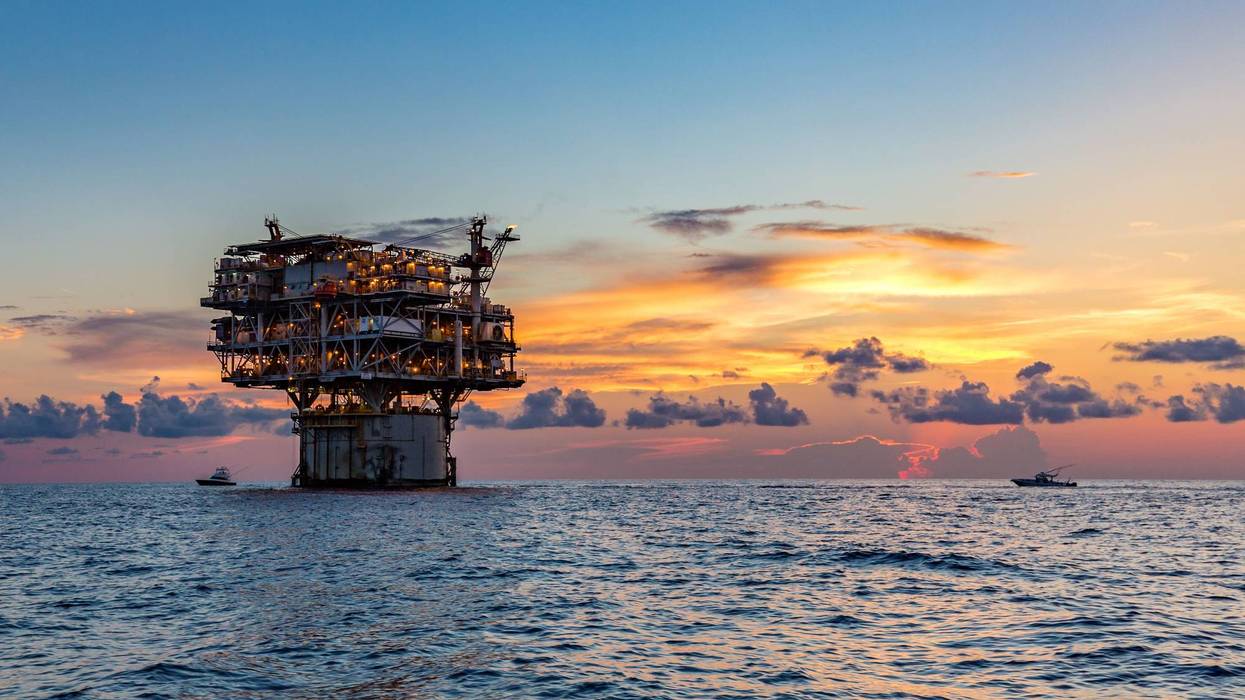
"Ultra-deep-water drilling is ultradangerous, full stop," said an attorney with the Center for Biological Diversity.
Determined to prevent a "sequel" to the worst oil spill in US history, BP's deadly Deepwater Horizon disaster in the Gulf of Mexico in 2010, six environmental protection groups on Monday sued the Trump administration over what they said was its illegal approval of the British fossil fuel giant's $5 billion plan to drill in the body of water's lowest depths off the coast of Louisiana.
BP has boasted that its planned Kaskida oil field is a "world-class project that reflects decades of technological innovation," but environmental legal firm Earthjustice argued that the company has failed to prove its has the "experience, expertise, and certified equipment to conduct safe drilling under extreme conditions" in waters deeper than 5,600 feet, where opponents of the plan say extreme pressure and temperatures will make a blowout and oil spill more likely than they'd be in a typical drilling project.
A "loss of well control" was blamed for the Deepwater Horizon explosion and spill that killed 11 people, harmed and killed more than 100,000 birds and marine animals as well as untold numbers of fish, and devastated local economies—and that type of accident is 6-7 times more likely in an ultra-deep drilling project like Kaskida, according to Earthjustice.
The organization wrote in a regulatory filing last year when it was trying to block the project that "deep-water and ultra-deep-water oil spills and accidents are also much more difficult to respond to and contain.”
"BP did not show in its proposals that it will have the necessary containment capabilities in case the company needs to stop a blown-out well from spilling 4.5 million barrels of oil or more across the Gulf."
The group is representing Healthy Gulf, Turtle Island Restoration Network, Habitat Recovery Project, Sierra Club, and Center for Biological Diversity in the lawsuit, which argues that President Donald Trump's Interior Department adopted in its environmental analysis of Kaskida a severe underestimation—by about half a million barrels of oil—of what a worst-case scenario oil spill would look like.
"BP did not show in its proposals that it will have the necessary containment capabilities in case the company needs to stop a blown-out well from spilling 4.5 million barrels of oil or more across the Gulf," said Earthjustice.
Rachel Mathews, a senior attorney with the Center for Biological Diversity, said it was "appalling that the Trump administration has authorized this deep-water drilling project without having information critical to preventing harm to marine life."
“This will put Rice’s whales, sea turtles, and other Gulf wildlife at terrible risk," said Mathews. "Ultra-deep-water drilling is ultradangerous, full stop.”
The Bureau of Ocean Energy Management's (BOEM) approval of the Kaskida project was preceded by several industry-friendly actions by the Trump administration, including a meeting last month of the federal Endangered Species Committee, which voted to exempt fossil fuel companies from following policies intended to protect endangered species in the Gulf. Advocates argued that the decision was made illegally because the panel is required to meet publicly.
The administration has also proposed weakening "well control" rules for offshore drilling operations, and the White House is consolidating the BOEM and the Bureau of Safety and Environmental Enforcement—two agencies that were intentionally separated following the Deepwater Horizon disaster after an investigative commission found that conflicts of interest were created when they acted as one regulatory agency.
“Kaskida is emblematic of a new era in offshore oil extraction: corporate hoarding of risky, ultra-deep water leases in an attempt to monopolize the future of oil production, with little to no oversight from the Trump administration. We, as citizens of the Gulf South, are not standing for it,” said Martha Collins, executive director of Healthy Gulf. “BP has shown how they handle oil spills on this anniversary of the Deepwater Horizon disaster—their risky drilling and inexperience at this great depth will ensure their continued legacy of the Gulf never being the same again.”
Despite the fact that the Trump administration has taken numerous actions to ramp up oil and gas production—as the US already produces record amounts of fossil fuels—those measures are doing little to reduce oil prices, noted Earthjustice.
“Offshore drilling is one of the riskiest kinds of oil extraction, but the Trump administration is ignoring the law to allow Big Oil CEOs to endanger coastal communities for the sake of corporate profit,” said Devorah Ancel, senior attorney at Sierra Club’s Environmental Law Program. “This permit would allow BP to develop multiple ultra-deep high-pressure wells, which is already exceptionally risky, and with BP’s track record in the Gulf, coastal ecosystems face extraordinary danger. We’re suing the Trump administration to ensure the coastal communities that would suffer the consequences of BP’s actions get their day in court.”
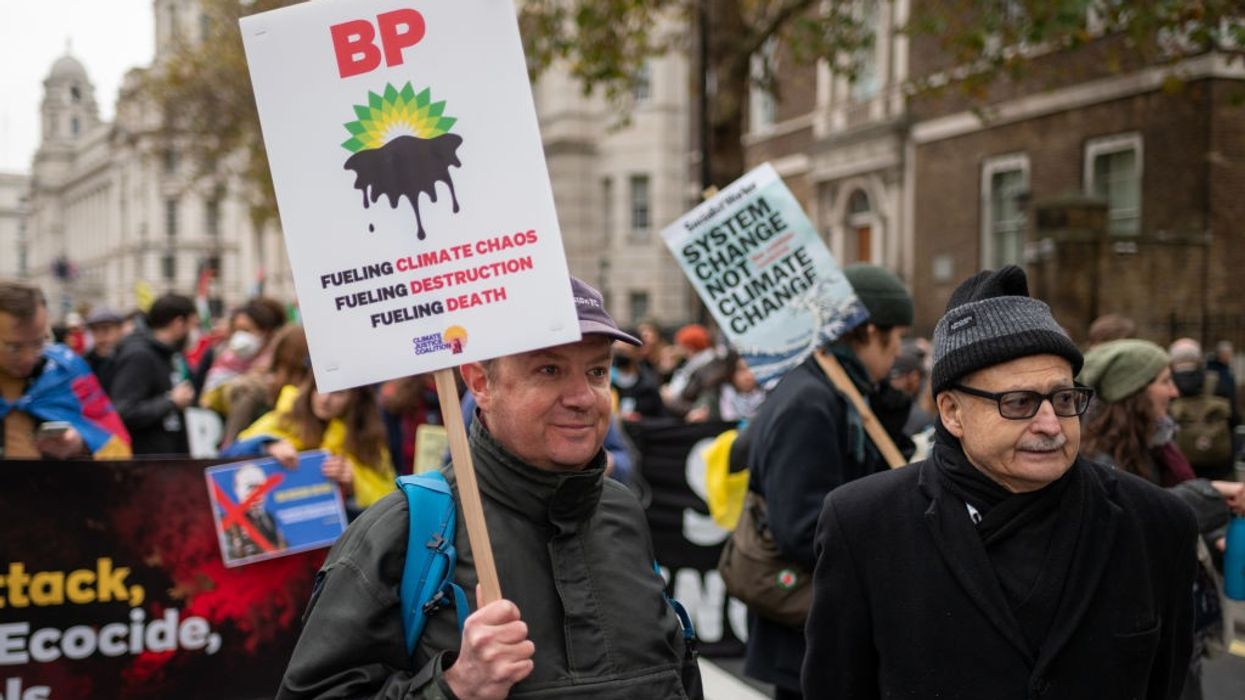
"By facilitating the transport of oil that fuels military operations in Gaza, BP has contributed to the humanitarian catastrophe unfolding in the region," said the director of the organization backing the claimants.
A group of Palestinians whose family members have been killed in Israeli attacks on the Gaza Strip over the past 14 months have initiated legal action in the United Kingdom against the British fossil fuel giant BP, arguing the company is aiding the assault on the enclave via its ownership of a pipeline that provides Israel with crude oil.
In a 36-page letter before claim, the group contends that BP's role in supplying oil to Israel violates the company's stated commitments to human rights, including its expressed support for the United Nations Guiding Principles on Business and Human Rights.
"Israel relies heavily on crude oil and refined petroleum imports to run its large fleet of fighter jets, tanks, and other military vehicles and operations, as well as the bulldozers implicated in clearing Palestinian homes and olive groves to make way for unlawful Israeli settlements," the letter notes. "Some fuel from refineries goes directly to the armed forces, while much of the rest appears to go to ordinary gas stations where military personnel can refuel their vehicles under a government contract."
The group demands from BP an "immediate cessation of oil supply to Israel and facilitation through" the Baku-Tbilisi-Ceyhan pipeline as well as an "admission liability and a commitment to mediation for assessing damages."
"Our clients seek justice for the profound suffering and loss they have endured and call on BP to act responsibly by immediately halting its involvement."
Tayab Ali, head of international law at Bindmans LLP and director of the International Centre of Justice for Palestinians (ICJP)—which is supporting the group of claimants—said in a statement Monday that "this legal action marks a new phase in accountability for those that are complicit in alleged war crimes and crimes against humanity."
"The evidence against BP demonstrates a clear failure to adhere to its own human rights policies and international law," said Ali. "By facilitating the transport of oil that fuels military operations in Gaza, BP has contributed to the humanitarian catastrophe unfolding in the region. Our clients seek justice for the profound suffering and loss they have endured and call on BP to act responsibly by immediately halting its involvement."
According to ICJP, the claimants include "a British citizen of Palestinian origin who lost 16 family members to Israeli airstrikes," "a second British Palestinian claimant whose relatives in Gaza have suffered fatalities and displacement," and "additional claimants who have endured catastrophic physical and psychological harm including amputations and loss of family members."
The group sent its legal letter just over a month after a coalition of environmental groups published a report identifying BP as one of the "top corporate suppliers of oil to Israel."
"The major international oil companies, including BP, Chevron, Eni, ExxonMobil, Shell, and TotalEnergies, may be linked to 35% of
the crude oil supplied to Israel since October [2023]," the report states. "These companies, as well as state-owned entities and other private and publicly traded oil producers, profit from supplying oil to Israel's refineries, where a proportion is likely refined into fuels for Israel's war machine."
Last week, the Centre for Research on Multinational Corporations argued that "foreign governments have an obligation" under international law "to end the supply of fuel to Israel unless they can guarantee it will only be used for nonmilitary purposes."
"This includes both a ban on the export of crude oil, military jet fuel, and other fuels, as well as a prohibition on the transport of these commodities through their territory," the group said.

"The complicity of international corporations and governments in fueling Israel's war machine represents the latest chapter in a long history of fossil fuel companies enabling genocide and mass atrocities," said one campaigner.
On the fourth day of the United Nations Climate Change Conference, or COP29, in Azerbaijan, green groups highlighted how fossil fuel companies "enable and profit from Israel's genocide in Gaza," continuing "a long history of the industry's complicity in mass atrocities worldwide."
"The fossil fuel industry is culpable in death and destruction around the world, not only through the climate crisis they cause but through the violence they fuel," Oil Change International said in a statement Thursday.
"Every shipment of oil to Israel carries the weight of Palestinian lives."
The group—along with others including Friends of the Earth Palestine/PENGON and Tipping Point U.K.—is seizing the opportunity presented by COP29 to draw attention to an aspect of the Gaza war often overlooked amid the staggering death and destruction wrought by Israel's 13-month onslaught, which a United Nations panel on Thursday
said is consistent with the "characteristics of genocide."
"Investor-owned and private oil companies supply 66% of oil to Israel—more than a third of that from major oil companies like Chevron, Shell, and BP—despite genocide warnings from the International Court of Justice," Oil Change said. "BP is among the top corporate suppliers of oil to Israel. It operates and is the largest owner of the BTC pipeline, which transports Azeri oil that is ultimately sent to Israel."
The BTC pipeline runs from Baku—the Azeri capital and COP29 host city on the Caspian Sea—through Azerbaijan, Georgia, and Turkey and, according to Oil Change, supplies Israel with 28% of its oil, belying Thursday's claim by Turkish President Recep Tayyip Erdoğan that the country has severed all ties with Israel.
An
investigation published in September by Energy Embargo for Palestine showed how oil transported via the BTC pipeline is refined into jet fuel for Israel Defense Forces warplanes.
Oil Change continued:
BP has also been granted gas exploration licenses in occupied Palestinian waters. By providing it with fuel, BP enables the Israeli government to commit genocide in Gaza. Chevron operates and partially owns the two largest Israeli-claimed fossil gas fields, Tamar and Leviathan, making it the main international actor extracting fossil gas claimed by Israel in the Mediterranean. In 2022, 70% of Israel's power was generated from fossil gas extracted by Chevron. Through the millions of dollars it pays Israel for its gas extraction licenses, Chevron is also directly contributing to financing Israel's regime of genocide, apartheid, settler colonialism, and occupation.
"The complicity of international corporations and governments in fueling Israel's war machine represents the latest chapter in a long history of fossil fuel companies enabling genocide and mass atrocities,"
Mohammed Usrof, a member of the Palestinian Youth Climate Negotiation Team at COP29 who lost 21 relatives to Israel's onslaught, said in a statement Thursday. "Every shipment of oil to Israel carries the weight of Palestinian lives."
Tipping Point U.K. organizer Sadie DeCost said that "BP originated as a key enabler of the British empire, and continues as one of the top 10 largest carbon emitters in the world."
"It operates and is the largest owner of the BTC pipeline, which ships Azeri oil to fuel Israel's genocide in Gaza," DeCost added. "BP's historic colonial harms continue through its support of violent regimes. Its emissions are estimated to cause hundreds of billions of dollars of loss and damage. We must shut down BP to end this injustice, and demand climate reparations for impacted communities around the world."
Mahmoud Nawajaa, general coordinator of the Boycott, Divestment, and Sanctions movement for Palestinian rights, lamented that "criminal fossil fuel companies that have shamefully been invited to join COP29 are not only responsible for destroying the planet, they are also responsible for fueling genocide and other atrocity crimes around the world, from Gaza to Myanmar to the Amazon region."
"Prime among these is Chevron, [which] continues to supply Israel and its military with energy and millions of dollars in tax revenues through fossil fuel extraction activities in the Mediterranean," Nawajaa added.
Oil Change International U.S. campaign manager Allie Rosenbluth asserted Thursday that "the fossil fuel industry is not just destroying our climate—it's actively profiting from genocide."
"These companies and the governments enabling them know exactly how their supplies are being used against Palestinian civilians," she continued. "Palestinian groups and their allies around the world have called for an energy and arms embargo demanding governments and companies cease all fuel and arms shipments to Israel until it ends the genocide and its regime of apartheid against the Palestinian people."
"The fossil fuel industry is not just destroying our climate—it's actively profiting from genocide."
"Despite these strong demands, the U.S. continues to be a key supplier of JP8 jet fuel to Israel, which is crucial for its military operations," Rosenbluth added. "This isn't just business—it's complicity in mass atrocities."
Oil Change noted that while many governments have prioritized profit and national interest over human rights in Palestine, Colombia—which is led by leftist President Gustavo Petro—"has set a strong precedent and issued an embargo on coal exports to Israel" as part of a broader suspension of relations due to the Gaza onslaught.
This is more than just a symbolic move, as Israel imports more than half of its coal from Colombia.
"Others must follow suit," Oil Change stressed.
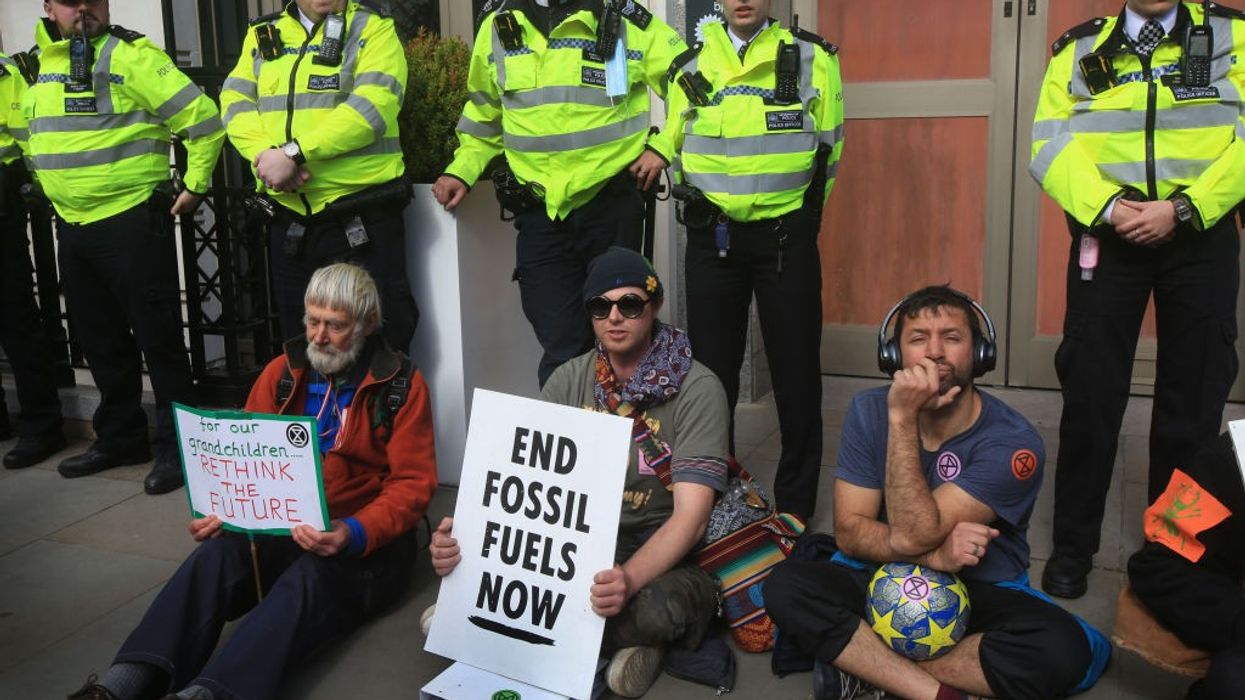
"Fossil fuel companies have embedded themselves in universities across the U.S., U.K., Canada, Australia, and beyond."
The fossil fuel industry seeks to obstruct climate action by using money to influence research and establish ties at Western universities, raising concerns about academic independence and the integrity of scientific inquiry, according to a study published Thursday.
The study, published in the peer-reviewed journal WIREs Climate Change, was authored by researchers at six universities who conducted the first-ever literature review of academic papers and civil society investigations into Big Oil's links to higher education.
"We find that universities are an established yet under-researched vehicle of climate obstruction by the fossil fuel industry," the authors wrote.
"Fossil fuel companies have embedded themselves in universities across the U.S., U.K., Canada, Australia, and beyond," they concluded.
"Everything that's been done so far by researchers on this indicates an emerging consensus... that this is a really serious and significant problem that needs to be taken a lot more seriously," Geoffrey Supran, director of the Climate Accountability Lab at the University of Miami and a co-author of the review, told Financial Times.
Jennie Stephens, a professor at the ICARUS Climate Research Center at Maynooth University in Ireland who also co-authored the study, told DeSmog that "when you pull it all together, you realize how pervasive a strategy this has been."
"The science has been telling us that fossil fuel phaseout is the number one thing that we need to focus on, but within our universities, there's very little research on how to do fossil fuel phaseout," Stephens told The Guardian. "This provides some explanation for why society has been so ineffective and inadequate in our responses to the climate crisis."
NEW: In @WIREs_Reviews today, our latest peer-reviewed research shows fossil fuel companies have systematically infiltrated academia, threatening to bias research and undermine meaningful climate action. THREAD.
📰Open access: https://t.co/S2Kzaq6HGt
— Geoffrey Supran (@GeoffreySupran) September 5, 2024
Research on the links between Big Oil and universities in the U.S., U.K., Canada, and Australia has indeed been limited. The authors could only find 14 peer-reviewed papers and 21 civil society reports published in English between 2003 and 2023.
The studies they did find document the strong influence of the industry on institutions of higher education. They cite a number of examples, many of which are from elite universities. BP contributed between $2.1 million and $2.6 million to Princeton University's Carbon Mitigation Initiative between 2012 and 2017 and remains a sponsor. In 2017, a public relations firm working with BP wrote in an internal memo that partnership with Princeton was a way of "authenticating BP's commitment to low carbon."
An influential 2011 study by industry-linked researchers at the Massachusetts Institute of Technology's Energy Initiative helped persuade policymakers that natural gas was a helpful "bridge" fuel—which effectively became Obama administration policy. Lead author Ernest Moniz became the U.S. Secretary of Energy in 2013.
These outcomes indicated the success of an industry strategy to influence university research and debate. A leaked 1998 internal memo from American Petroleum Institute, a lobby group, the subject matter of which was "build[ing] a case against precipitous action on climate change," recommended fostering "cooperative relationships with all major scientists whose research in this field supports our position."
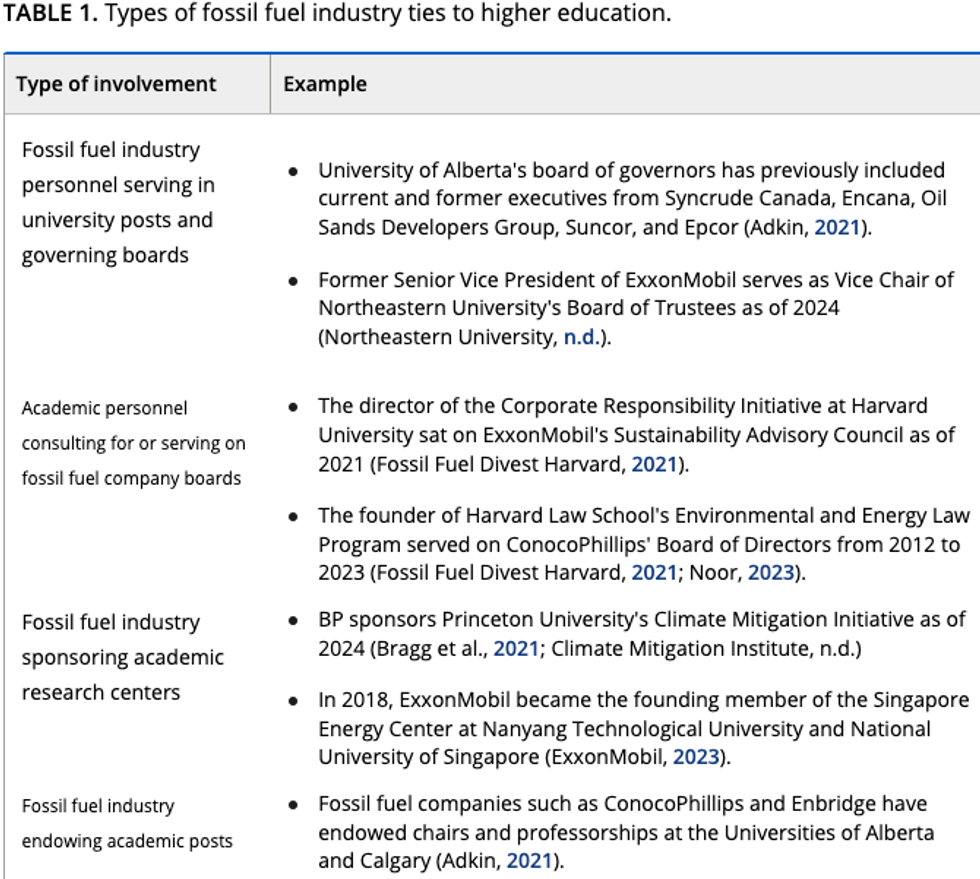 These are a few of the examples of Big Oil's links to universities cited in a study in WIREs Climate Change published on September 5, 2024.
Fossil fuel industry influence hasn't been studied nearly as thoroughly as other potential conflicts of interest or sources of bias in the research process, the authors wrote. Their literature review found that many academics had drawn comparisons to tobacco and pharmaceutical meddling in academia. They wrote:
The studies reviewed here revealed parallels between fossil fuel industry strategies and those of industries like tobacco and pharmaceuticals. For example, fossil fuel companies have supported research that had commercial applications (e.g., hydraulic fracturing) or was otherwise favorable to their legal and policy positions (e.g., anti-punitive-damages law review articles)... Previous [conflict of interest] research has noted how the pharmaceutical industry stands out for arguing that it produces beneficial products, whereas industries like tobacco and lead seek to minimize the apparent harms of their products. The fossil fuel industry today appears to do both, and notably positions itself as an innovator of purportedly beneficial climate solutions, such as natural gas and carbon capture and storage.
The authors of the review also drew attention to universities' opacity in dealings with Big Oil, writing that there's a "widespread lack of transparency on funding ties, amounts, and contract details."
They wrote that, though academics have not devoted much attention to industry influence on higher education, some activists and NGOs have long tried to raise the issue. Campaigners seconded that fact in responding to the study on Thursday.
"This literature review confirms what students in our movement have known for years," said Jake Lowe, executive director of Campus Climate Network, told The Guardian. "Big Oil has infiltrated academia in order to gain undue credibility and obstruct climate action."
Lowe's group is one of many that's calling for universities to "dissociate" from fossil fuel interests—a movement that Supran, the Miami professor, called "basically divestment 2.0."
The problem is by no means limited to English-speaking countries. An investigation by Investigate Europe and openDemocracy last year found that European universities are also rife with Big Oil influence.
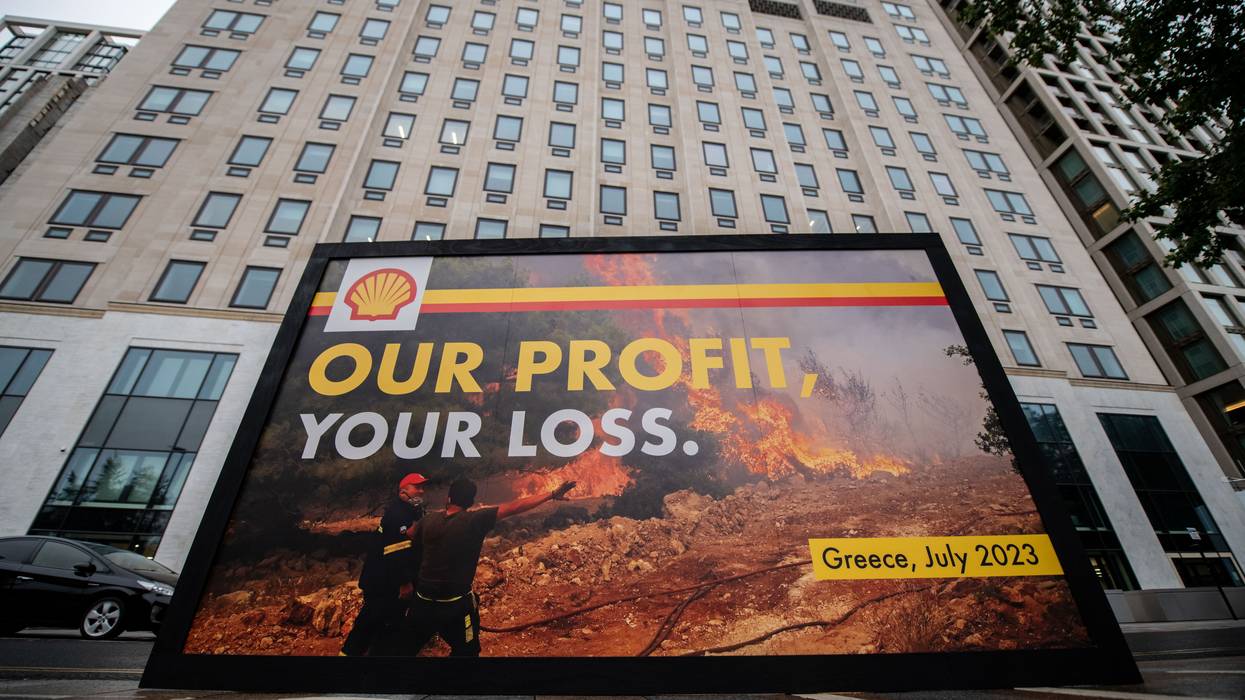
"We cannot let countries and communities that have done the least to cause climate change pay the price for Shell's greed," one green group said.
A little more than a week after Earth endured its four hottest days on record, fossil fuel giant Shell announced higher second-quarter profits than expected at $6.3 billion.
The company also announced a new share buyback program worth $3.5 billion through September, CNBC reported.
"It is shameful that Shell, as one of the world's largest and most profitable fossil fuel companies, continues to reap billions in profits off the back of its planet-wrecking oil and gas operations," Chiara Liguori, the senior climate justice policy adviser at Oxfam Great Britain, said in response to the news. "At a time when the company should be taking strong action to cut emissions it is instead weakening its climate targets and continues to invest in new oil and gas projects, in favor of short-term shareholder returns."
"That the profits of two companies alone can outweigh the GDP of six countries already being battered by the climate crisis lays bare the shameful inequity at the heart of the fossil fuel economy."
Shell's announcement covers the months of April through June 2024. While the company made 19% less than it did during the first three months of the year, it made $400 million more than London Stock Exchange Group predicted for the quarter, according to CNBC.
A Global Witness analysis concluded that Shell paid $23 billion to shareholders since June 2023. Every month in that same 13-month period saw temperatures averaging 1.5°C or more above preindustrial levels—the more ambitious temperature goal enshrined in the Paris agreement. Each month in that stretch was also the hottest of its kind on record.
"Wildfires raging across the Arctic Circle and temperature records breaking by the day should be a wake-up call," Greenpeace U.K. said on social media. "But Shell continues to bank billions from digging up climate-wrecking fossil fuels."
Shell's announcement caps a month in which high global temperatures fueled a number of extreme weather events. July began with Hurricane Beryl forming as the earliest ever Category 4 and Category 5 Atlantic hurricane on record, before it devastated several Caribbean islands. Last week, a fast-moving wildfire forced more than 20,000 people to flee historic Jasper in the Canadian Rockies before it destroyed nearly a third of the town. The same week, Typhoon Gaemi dumped more than 1,000 millimeters of rain on Taiwan in less than 24 hours.
"As people flee wildfires in Canada, floods in Taiwan, and rebuild in the wake of Storm Beryl, Shell is doubling down on fossil fuels, U-turning on renewables, and profiting to the tune of billions from an intensifying climate crisis," Alice Harrison, head of Fossil Fuel Campaigns at Global Witness, said in a statement.
Shell's announcement also comes days after BP posted $2.8 billion in second-quarter profits.
Global Witness calculated that BP and Shell's second-quarter profits combined would be enough to pay one-tenth of the $100 billion in climate-related loss and damage money that developing nations have requested by 2030.
At the same time, the two oil giants' profits over the past year—£31.2 billion ($39.8 billion)—exceed the £27.7 ($35.3) billion combined gross domestic products of the six nations most impacted by Beryl: Barbados, the Cayman Islands, Dominica, Jamaica, St. Vincent and the Grenadines, and Grenada, according to Global Justice Now.
"That the profits of two companies alone can outweigh the GDP of six countries already being battered by the climate crisis lays bare the shameful inequity at the heart of the fossil fuel economy," Izzie McIntosh, climate campaigner at Global Justice Now, said in a statement. "People in the Caribbean devastated by the impacts of Hurricane Beryl are left to pick up the pieces, while rich shareholders and fossil fuel CEOs get to rake in the profits, removed from the chaos they've played a leading role in creating."
The climate justice organizations called for governments to take action to stop fossil fuel companies before they can further destabilize Earth's climate.
"We need accountability and a government that isn't afraid to stand up to them—it can start by introducing measures to make these polluting megacorporations pay up for the climate damage they've caused in the Global South, as well as a fossil fuel phaseout," McIntosh continued.
Harrison agreed: "We can't keep letting polluters off the hook. Governments should be holding fossil fuel majors to account for the crisis they created and forcing them to pay for the damage they are inflicting on millions of families around the world."
Oxfam G.B. and Greenpeace U.K. recommended policies for the United Kingdom—where Shell and BP are headquartered—specifically.
"As global temperatures and the huge costs of tackling the climate crisis continue to rise, the U.K. government has a chance to ensure those most responsible for contributing to global greenhouse gas emissions, like Shell, are held to account by taxing them more," Liguori said. "This could help raise the vital funds needed to ensure a fair switch to clean, renewable energy in the U.K. as well as fulfilling our international commitments to support communities worst-hit by climate change to adapt and recover."
Greenpeace concluded: "We cannot let countries and communities that have done the least to cause climate change pay the price for Shell's greed. The new Labour government must prove it is different to its predecessor by reining in the fossil fuel giants and imposing bold new taxes on polluters to force them to pay their climate debts at home and abroad."
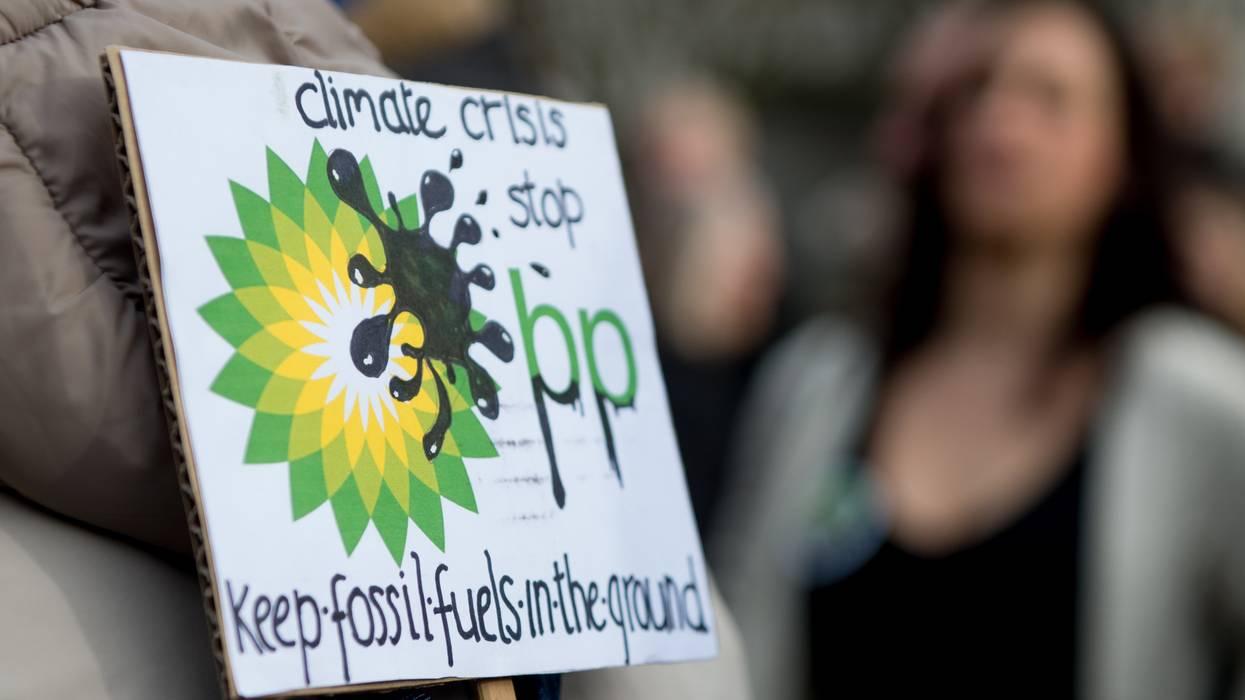
"The world can no longer afford fossil fuel companies putting short-term profits above people and planet."
The London-based oil giant BP announced Tuesday that it hauled in $2.8 billion in profit during the second quarter of the year as the world faced the consequences of the fossil fuel industry's business model in the form of record-shattering heat, devastating wildfires, and other weather extremes.
The company's second-quarter profit surpassed analysts' expectations and brought its total profit for the first half of 2024 to $5.5 billion. BP on Tuesday also announced a 10% dividend increase, an expansion of its stock buyback program, and a green light for a new drilling platform in the Gulf of Mexico, even as international scientists say any new fossil fuel production is incompatible with critical warming targets set out by the Paris climate accord.
BP said that once completed, the new floating platform would have the capacity to produce 80,000 barrels of crude oil daily.
Chiara Liguori, Oxfam Great Britain's senior climate justice policy adviser, said in a statement that "the world can no longer afford fossil fuel companies putting short-term profits above people and planet."
"It is inexcusable that BP, one of the world's most polluting and profitable fossil fuel companies, continues to rake in billions of pounds while low-income countries are in urgent need of funds to tackle the devastating impacts of the climate crisis despite doing the least to cause it," said Liguori. "The costs of inaction are already here with deadly heat waves, wildfires, flooding, and drought, but it is people living in poverty who are left paying the highest price."
BP's profit report came weeks after the company, now under the leadership of CEO Murray Auchincloss, announced it would pause new offshore wind projects and put fresh "emphasis on oil and gas amid investor discontent over its energy transition strategy," as Reuters reported last month. The move came over a year after the company rolled back its plan to curtail oil and gas production.
Extreme weather driven by the burning of fossil fuels, meanwhile, continued to wreak havoc across the globe.
"As global temperatures spiked to their highest levels in recorded history [last Monday], ambulances were screaming through the streets of Tokyo, carrying scores of people who had collapsed amid an unrelenting heat wave," wrote The Washington Post's Sarah Kaplan over the weekend. "A monster typhoon was emerging from the scorching waters of the Pacific Ocean, which were several degrees warmer than normal. Thousands of vacationers fled the idyllic mountain town of Jasper, Canada ahead of a fast-moving wall of wildfire flames."
"By the end of the week—which saw the four hottest days ever observed by scientists—dozens had been killed in the raging floodwaters and massive mudslides triggered by Typhoon Gaemi," Kaplan continued. "Half of Jasper was reduced to ash. And about 3.6 billion people around the planet had endured temperatures that would have been exceedingly rare in a world without burning fossil fuels and other human activities, according to an analysis by scientists at the group Climate Central."
Izzie McIntosh, a climate campaigner at the United Kingdom-based advocacy group Global Justice Now, said Tuesday that BP's "mammoth profits" come "at the expense of our climate, communities, and the Global South facing the most brutal impacts of a climate crisis they did not cause."
"Labour has made some promising signals about a move toward green energy—it now needs to throw its weight behind tackling the rampant profiteering of oil and gas companies," McIntosh said of the newly elected U.K. government. "It can do this by introducing a windfall tax and other measures to fund the U.K.'s contribution to a globally just fossil fuel phaseout that works for workers and communities in the U.K. and around the world."
The report details a "campaign of deception, disinformation, and doublespeak waged using dark money, phony front groups, false economics, and relentless exertion of political influence."
Two U.S. congressional committees on Tuesday released a report that "provides a rare glimpse into the extensive efforts undertaken by fossil fuel companies to deceive the public and investors about their knowledge of the effects of their products on climate change and to undermine efforts to curb greenhouse gas emissions."
The report—titled Denial, Disinformation, and Doublespeak: Big Oil's Evolving Efforts to Avoid Accountability for Climate Change—was released after nearly three years of investigation by the Democratic staffs of the House Committee on Oversight and Accountability and the Senate Budget Committee.
"For decades, the fossil fuel industry has known about the economic and climate harms of its products but has deceived the American public to keep collecting more than $600 billion each year in subsidies while raking in record-breaking profits," said Senate Budget Committee Chair Sheldon Whitehouse (D-R.I.).
"As this joint report makes clear, the industry's outright denial of climate change has evolved into a green-seeming cover for its ongoing covert operation—a campaign of deception, disinformation, and doublespeak waged using dark money, phony front groups, false economics, and relentless exertion of political influence—to block climate progress," the senator added.
Big Oil’s 4 phases on climate change:
1.Learn of the danger posed by climate change from their own scientists
2.Form an armada of front groups to cover it up
3.Deny a problem exists
4.Engage in doublespeak by pretending to care for a solution
Now we're holding them accountable. pic.twitter.com/YlqztAZgo1
— Senate Budget Committee (@SenateBudget) April 30, 2024
In a statement welcoming the report, Richard Wiles, president of the Center for Climate Integrity, said that "this new evidence of Big Oil's climate lies will likely be used to hold these companies accountable in court—and it should generate renewed calls for the U.S. Department of Justice to finally open its own investigation into the fossil fuel industry."
The congressional probe targeted four companies and two industry allies: BP America, Chevron, ExxonMobil, and Shell USA as well as the American Petroleum Institute (API) and the Chamber of Commerce. As the report details, the committee staffers found:
The report was released on the eve of a Wednesday morning Senate hearing hosted by Whitehouse. The House panel's ranking member, Rep. Jamie Raskin (D-Md.)—who participated in a related October 2021 event in the lower chamber—is expected to join multiple experts in testifying.
"We applaud Sen. Whitehouse, Rep. Raskin, and their committees for helping to shine further light on Big Oil's ongoing climate deception," said Wiles. "Communities across the country are already taking these polluters to court to make them pay for their deceit, and many of their lawsuits have cited documents unearthed by Congress as evidence."
"Big Oil's concerted efforts to mislead the public about their destructive industry are the most consequential corporate fraud in history," he continued. "Tomorrow's hearing should make clear that it's time for the U.S. Justice Department to get off the sidelines and take action to hold Big Oil accountable for lying to the American people for decades."
Wiles was far from alone in demanding action from the Biden administration based on the committees' findings.
"This report is a scathing indictment of the fossil fuel industry's lies and corruption," declared Cassidy DiPaola, a spokesperson for the Make Polluters Pay campaign. "As the impacts of the climate crisis worsen, from deadly heatwaves to devastating floods and wildfires, it's never been more important to hold polluters accountable for the damage they've knowingly caused. The Senate Budget Committee's investigation is a critical step towards justice, and it's time the Biden administration follows suit."
Sunrise Movement executive director Aru Shiney-Ajay urged President Joe Biden—who is seeking reelection in November—to "fight for young people by holding companies like Exxon accountable for their climate lies."
"President Biden must hold Big Oil responsible by declaring a climate emergency and suing fossil fuel companies for creating the climate crisis and lying to the public about it," Shiney-Ajay said. "For too long we've seen fossil fuel companies like Exxon and Chevron deny the cause of the climate crisis and pretend to fight for climate action, all the while lining their pockets with bigger and bigger returns. This must stop and the president can do something about it."
"Biden must direct the Department of Justice to investigate and prosecute fossil fuel companies like Exxon for their disinformation," she argued. "Until the administration starts treating Big Oil like Big Tobacco, everyday Americans will continue to pay for their lies with flooded homes, hotter summers, and more extreme weather."
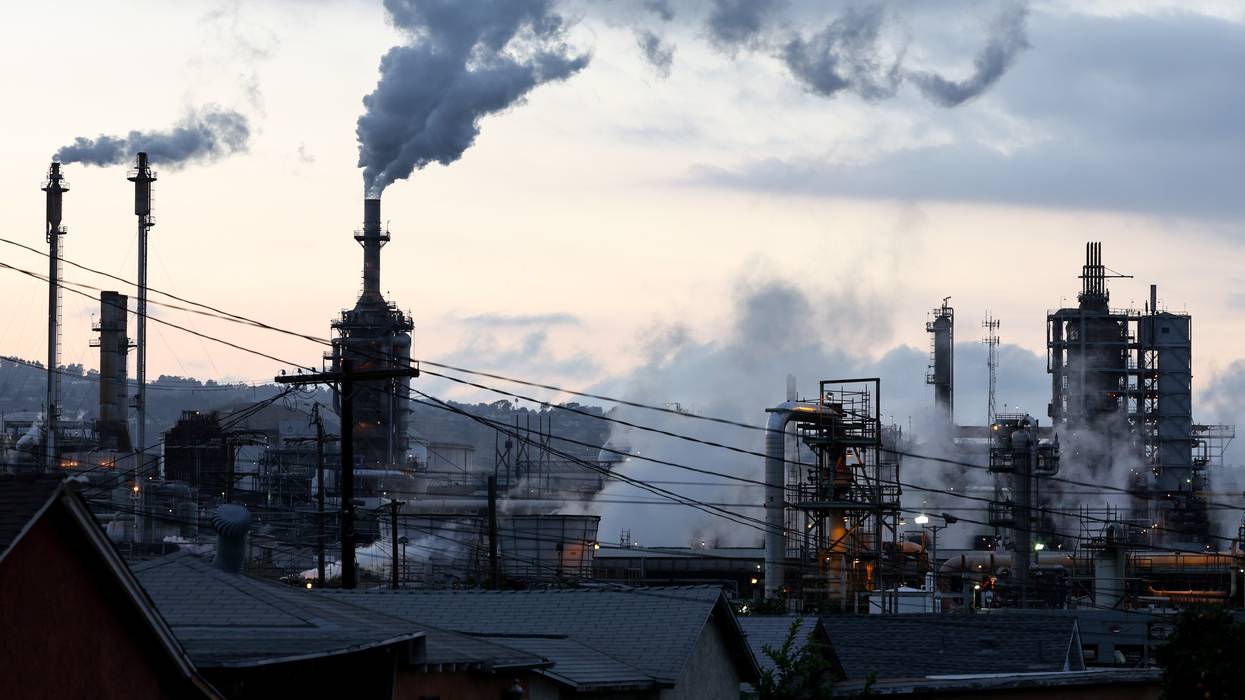
"It is morally reprehensible for companies to continue expanding exploration and production of carbon fuels in the face of knowledge now for decades that their products are harmful," said Richard Heede, who established the Carbon Majors dataset.
A report released by Carbon Majors on Thursday says that 57 companies were responsible for 80% of the world's CO2 emissions from fossil fuel and cement production between 2016 and 2022.
Saudi Aramco, Russia's state-owned energy company Gazprom, and state-owned producer Coal India were at the top of the list. Carbon Majors has been keeping track of which companies are contributing the most to the climate crisis since 2013.
"The Carbon Majors research shows us exactly who is responsible for the lethal heat, extreme weather, and air pollution that is threatening lives and wreaking havoc on our oceans and forests," Tzeporah Berman, international program director at Stand.earth and chair at Fossil Fuel Non-Proliferation Treaty, said in a statement. "These companies have made billions of dollars in profits while denying the problem and delaying and obstructing climate policy."
📢 @InfluenceMap's latest report using #CarbonMajors database found 57 fossil fuel and cement producers linked to 80% of global fossil CO2 emissions since the #ParisAgreement
Read the full report ⬇️ https://t.co/GB8FOrrcSE
— InfluenceMap (@InfluenceMap) April 4, 2024
The report states that nation-state producers account for 38% of CO2 emissions in the database. That's the highest percentage of any of the types of companies listed in the database.
"The Carbon Majors database finds that most state- and investor-owned companies have expanded their production operations since the Paris agreement. Fifty-eight out of the 100 companies were linked to higher emissions in the seven years after the Paris agreement than in the same period before," the report reads.
In terms of investor-owned companies, Chevron, ExxonMobil, and BP contributed the most to CO2 emissions. ExxonMobil alone was responsible for 3.6 gigatons of CO2 emissions over a seven-year period.
"It is morally reprehensible for companies to continue expanding exploration and production of carbon fuels in the face of knowledge now for decades that their products are harmful," said Richard Heede, who established the Carbon Majors dataset, told The Guardian. "Don't blame consumers who have been forced to be reliant on oil and gas due to government capture by oil and gas companies."
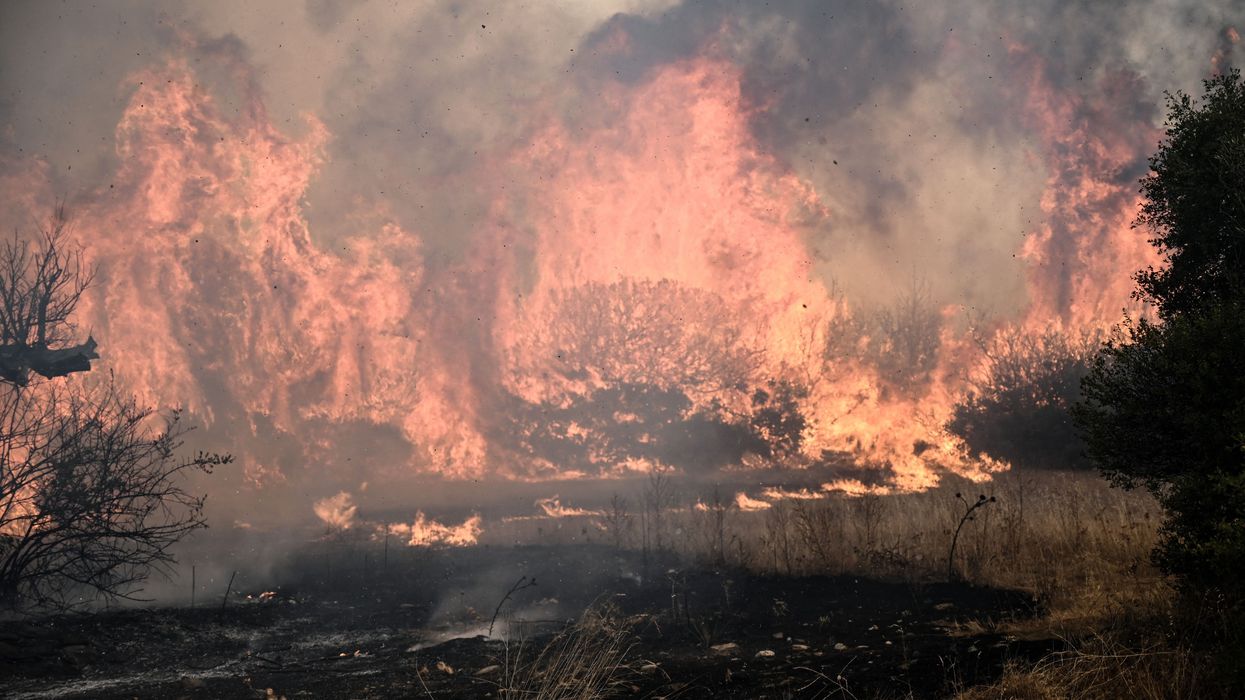
"Heat isn't a new phenomenon," said Global Witness. "But as the planet gets hotter because of human-caused emissions, scientists are detecting more heat-related deaths."
A new report released Wednesday details how the emissions of just five big fossil fuel companies could lead to 11.5 million premature deaths by 2100 as continued oil and gas extraction and consumption heats the planet and sparks extreme heatwaves across the globe.
The analysis by Global Witness focused on the emissions of Shell, TotalEnergies, ExxonMobil, BP, and Chevron—all of which have "defied calls from scientists to rapidly reduce emissions and continue to increase oil and gas production."
ExxonMobil and Chevron have announced investments of more than $100 billion in new oil and gas reserves in recent months, even as the companies eye 2050 as the year they'll reach net zero emissions. The United Nations' Global Stocktake last September showed the five companies targeted in the report "are forecast to spend a staggering $3.1 trillion by 2050, on both existing and new oil and gas extraction"—despite the fact that the U.N. and the International Energy Agency have both warned that no new extraction is compatible with limiting global temperature rise to 1.5°C.
Global Witness cross-referenced the oil companies' plans with research out of Columbia University, which estimated that every 1 million metric tonnes of carbon dioxide emitted in 2020 will cause 226 excess heat-related deaths over the next 80 years.
The analysis "suggests that these five companies will dig up oil and gas, which when burned, will add 51 billion tonnes of carbon dioxide emissions to the atmosphere between now and 2050," said Global Witness. "Using Columbia's mortality cost of carbon methodology, we calculate that emissions from the supermajors' oil and gas would kill an additional 11.5 million people due to heat by 2100."
Global Witness focused on heat-related deaths specifically; a study by Greenpeace Southeast Asia and the Center for Research on Energy and Clean Air in 2020 found that air pollution from fossil fuel combustion was responsible for 4.5 million premature deaths worldwide each year.
Global Witness notes that the deaths of at least 61,000 people were linked to "searing heat across Europe" in 2022, and recent heatwaves have proven deadly in the United States, China, and South America in the past two years.
"Heat isn't a new phenomenon," said Global Witness. "But as the planet gets hotter because of human-caused emissions, scientists are detecting more heat-related deaths."
Extreme heat puts people—particularly children, elderly people, pregnant people, and outdoor workers—at risk for heat stroke, heart attacks, and exhaustion.
"Behind these figures are people," noted the group, pointing to the deaths of 72-year-old Gwendolyn Osborne in Chicago during a record-breaking heatwave in 2022 and of a 13-year-old girl who suffered deadly heat stroke in Japan last summer. "These are just a few stories from the massive and growing wave of heat-caused deaths around the world. Unless the supermajors change course quickly, the death toll will be comparable to some of history's most brutal wars."
The companies have an opportunity to save millions of lives, Global Witness noted, as the Columbia research found that with dramatically reduced emissions, the death toll from the oil giants' emissions would be cut by more than half.
Global Witness included in its analysis the companies' scope 3 emissions, which are produced when people and entities use the firms' products.
When approached by the organization, TotalEnergies objected to the inclusion of scope 3 emissions, saying fossil fuel companies are only responsible for scope 1 (the direct emissions from their facilities) and 2 (emissions from the company's use of electricity, heat, and other utilities).
The companies' net zero pledges for 2050 pertain only to scopes 1 and 2.
Global Witness compared TotalEnergies's claim to those of drug dealers who say "they aren't to blame for drug addictions" or arms dealers who "claim that they don't kill people—that they're simply supplying people with products they want."
"Oil and gas companies are solely responsible for digging up these fossil fuels, and they're doing it eyes wide open in the face of a mountain of evidence documenting the suffering and death that fossil fuels cause, while failing to make even the most basic investments in green energy," said the group.
The analysis came as The Guardian reported on consumer advocacy group Public Citizen's campaign to hold fossil fuel companies legally liable for people's deaths from extreme temperatures, climate-related hunger and disease, flooding, and wildfires.
Public Citizen has been holding events at Yale, Harvard, and New York University to discuss the idea with legal experts, and has reportedly gained some traction.
"Once I read it, I thought that it was more compelling than I had guessed it would be," former Department of Justice prosecutor Cindy Cho told The Guardian of Public Citizen's proposal. "I think that prosecutors should actively consider pursuing the theory, especially if they walk into the investigation with an understanding of the intense challenges."
Global Citizen compared the millions of deaths the oil firms are projected to cause to a chemical spill.
"When a company spills lethal chemicals into a river, and harms people, we hold it legally responsible," said the group. "The American chemical company DuPont has paid out hundreds of millions of dollars for polluting drinking water with chemicals. Will this responsibility extend to carbon emissions, which we can increasingly link to the deaths of millions of people? Certainly, it's an argument the supermajors and their legal teams will be extremely concerned about."
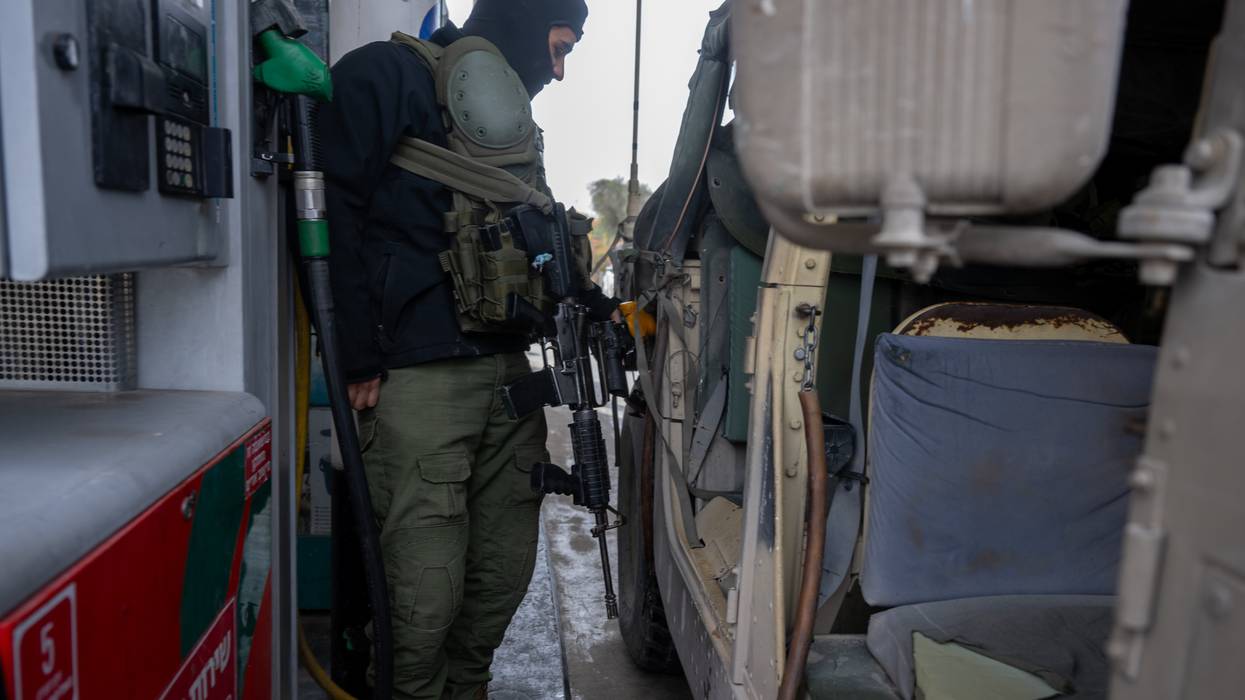
Chevron, Exxon, BP, and other major oil and gas companies own stakes in pipelines that are helping Israel fuel its catastrophic assault on Gaza, new research shows.
A report published Thursday shows that major fossil fuel companies such as Chevron, ExxonMobil, Shell, and BP are playing a key role in propelling Israel's devastating military assault on Gaza, facilitating the country's supply of energy that powers Israeli jets and tanks as they bomb and shell civilians.
The new research, conducted by Data Desk and commissioned by the advocacy group Oil Change International, examines the sources of Israeli jet fuel and crude imports in an effort to shine light on the web of countries and corporations implicated in the war on the Gaza Strip.
Israel, which relies heavily on oil imports, has received at least three tankers of jet fuel from the United States since the start of the war, the research shows. A number of countries—including nations whose leaders have criticized the assault on Gaza—have continued supplying Israel with crude oil during its military campaign, which has killed more than 31,000 people in less than six months and sparked a horrific humanitarian crisis.
Israel gets "relatively small but regular shipments of crude oil via the SUMED pipeline," which "receives crude oil from Saudi Arabia, the United Arab Emirates (UAE) and Iraq, and from Egypt through which the pipeline travels," the report notes.
"Countries and major oil companies fueling Israel's war machine are complicit in the ongoing genocide of the Palestinian people."
Data Desk's analysis confirms that the diesel and gasoline Israel uses to fuel its tanks and other military vehicles are generated by the country's own refineries, but those facilities rely on imports from Russia, Brazil, Azerbaijan, and elsewhere.
"Major international oil and gas companies complicit in facilitating these supplies of crude oil include: BP, Chevron, ExxonMobil,
Shell, Eni, and TotalEnergies," the report says.
The research points to several specific pipelines that deliver crude to Israel, including Baku-Tbilisi-Ceyhan (BTC) and the Caspian Pipeline Consortium (CPC).
BP operates the BTC pipeline and Exxon, TotalEnergies, and other prominent oil companies are shareholders. Chevron owns the largest stake in the CPC pipeline.
🚨 NEW: Our latest analysis tracks the trail of death and destruction along the supply chains that bring fossil fuels to Israel. Read about who is supplying the oil fueling the ongoing genocide against the Palestinian people.⬇️ #CeasefireNOW #OilFuelsWar 🇵🇸https://t.co/P0Z3yQx3dJ pic.twitter.com/x1vwDFXPzs
— Oil Change International (@PriceofOil) March 14, 2024
Allie Rosenbluth, U.S. program manager at Oil Change International, urged countries to "leverage their oil supply as a means to demand an immediate cease-fire and an end to the occupation."
"Countries and major oil companies fueling Israel's war machine are complicit in the ongoing genocide of the Palestinian people," said Rosenbluth. "By directly fueling Israel's military, on top of over a hundred other weapons sales, the U.S. in particular must be held accountable for potential violations of international law."
Human rights organizations have been calling for an arms embargo on Israel for months, but less attention has been paid to the country's energy supply.
In late February, a coalition of Palestinian advocacy organizations stressed that "energy supplies are instrumental to Israel's war machine: to operate its army tanks, armored personnel carriers, ships, and military bulldozers, including specialist jet fuel that allows Israeli jets to rain death and destruction down on Gaza."
The groups called on governments around the world to immediately halt all energy exports to Israel and implored workers and activists to do everything in their power to "disrupt the flow of energy making Israel's genocide possible."
Mahmoud Nawajaa, general coordinator of the Palestinian BDS National Committee, said in response to the new report Thursday that "states and companies that continue to provide Israel with fuel for its military forces are directly complicit in supporting its ongoing genocide."
"The BDS movement, which is already targeting Chevron with a growing global boycott and divestment campaign, will expose and target the complicit states and corporations mentioned in this valuable report," Nawajaa added.