SUBSCRIBE TO OUR FREE NEWSLETTER
Daily news & progressive opinion—funded by the people, not the corporations—delivered straight to your inbox.
5
#000000
#FFFFFF
To donate by check, phone, or other method, see our More Ways to Give page.
Daily news & progressive opinion—funded by the people, not the corporations—delivered straight to your inbox.
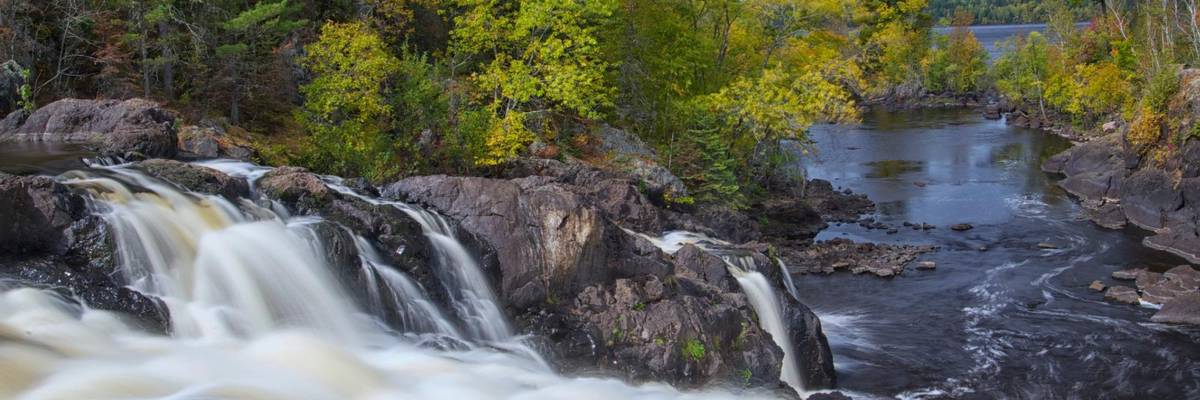
A view of Kawishiwi Waterfall, near Winton, Minnesota. This picture was taken from the top of the falls and looks towards Falls Lake, part of the Boundary Waters Canoe Area Wilderness. (Photo: Jim Liestman/Flickr/cc)
Environmentalists on Wednesday cheered a "huge win" as the Biden administration announced it would pause all new mining activity in an unspoiled region of northern Minnesota pending a lengthy review that could ultimately lead to a 20-year mineral extraction ban.
"The Boundary Waters is a paradise of woods and water."
"The Boundary Waters is too special to be threatened by toxic sulfide-ore copper mining," said the Alaska Wilderness League, praising the administration's "critical step toward permanent protections to safeguard this pristine wilderness."
The U.S. Interior and Agriculture departments issued a joint statement announcing "actions to protect the Boundary Waters Canoe Area Wilderness and surrounding watershed in northeastern Minnesota, a unique natural wonder and one of the jewels of the National Wilderness Preservation System."
The statement continued:
In response to broad concerns about potential impacts of mining on the wilderness area's watershed, fish and wildlife, tribal trust and treaty rights, and the nearly $100 million annual local recreation economy, the administration is initiating consideration of a 20-year withdrawal of key portions of the national forest lands from disposition under the mineral and geothermal leasing laws, which would temporarily prohibit the issuance of new prospecting permits and leases in the area.
The U.S. Bureau of Land Management (BLM) will now "initiate a two-year segregation that will prohibit the issuance of new federal mineral leases within 225,378 acres within the Rainy River Watershed," the statement added.
"During this time, the BLM and the Forest Service will seek public comment and conduct a science-based environmental analysis to evaluate the potential impacts of mining on the important natural and cultural resources of the Rainy River Watershed," the agencies said.
U.S. Interior Secretary Deb Haaland said in a statement that "a place like the Boundary Waters should be enjoyed by and protected for everyone, not only today but for future generations."
"Today the Biden administration is taking an important and sensible step to ensure that we have all the science and the public input necessary to make informed decisions about how mining activities may impact this special place," she added.
Mining companies and Republican lawmakers lamented the economic cost of the decision. According to the Star Tribune:
If it takes effect, the moratorium could jeopardize the $1.7 billion Twin Metals copper-nickel mine that Chilean copper king Antofogasta wants to build next to the Boundary Waters. But Wednesday's announcement did not clarify the exact impact on that project...
Twin Metals already holds two federal mineral leases renewed under the Trump administration, after the Obama administration canceled them. And a moratorium would not affect existing leases. However, the renewal and reinstate[ment] of those leases remains in litigation and under review. The action could affect any additional mining leases Twin Metals might seek.
Progressive politicians and activists applauded the administration's move.
"Today's science-based decision is a significant win for Boundary Waters protection," Becky Rom, national chair of the Campaign to Save the Boundary Waters, said in a statement. "You don't allow America's most toxic industry next to America's most popular wilderness."
"The Boundary Waters is a paradise of woods and water," she added. "It is an ecological marvel, a world-class outdoor destination, and an economic engine for hundreds of businesses and many thousands of people. This is a great first step on the pathway to permanent protection. The appropriate next step for the administration is to revoke the two Twin Metals leases that the Trump administration unlawfully reinstated."
U.S. Rep. Betty McCollum (D-Minn.)--who earlier this year introduced the Boundary Waters Protection and Pollution Prevention Act in a bid to protect over 230,000 acres of federal lands and waters from sulfide-ore copper mining--said in a statement that "today's action by the Biden administration is a welcome return to the science-based decision making that should govern the management of our public lands."
McCollum added that "all of us who care deeply about protecting the pristine Boundary Waters and its watershed for future generations look forward to seeing the results of this comprehensive study."
Dear Common Dreams reader, It’s been nearly 30 years since I co-founded Common Dreams with my late wife, Lina Newhouser. We had the radical notion that journalism should serve the public good, not corporate profits. It was clear to us from the outset what it would take to build such a project. No paid advertisements. No corporate sponsors. No millionaire publisher telling us what to think or do. Many people said we wouldn't last a year, but we proved those doubters wrong. Together with a tremendous team of journalists and dedicated staff, we built an independent media outlet free from the constraints of profits and corporate control. Our mission has always been simple: To inform. To inspire. To ignite change for the common good. Building Common Dreams was not easy. Our survival was never guaranteed. When you take on the most powerful forces—Wall Street greed, fossil fuel industry destruction, Big Tech lobbyists, and uber-rich oligarchs who have spent billions upon billions rigging the economy and democracy in their favor—the only bulwark you have is supporters who believe in your work. But here’s the urgent message from me today. It's never been this bad out there. And it's never been this hard to keep us going. At the very moment Common Dreams is most needed, the threats we face are intensifying. We need your support now more than ever. We don't accept corporate advertising and never will. We don't have a paywall because we don't think people should be blocked from critical news based on their ability to pay. Everything we do is funded by the donations of readers like you. When everyone does the little they can afford, we are strong. But if that support retreats or dries up, so do we. Will you donate now to make sure Common Dreams not only survives but thrives? —Craig Brown, Co-founder |
Environmentalists on Wednesday cheered a "huge win" as the Biden administration announced it would pause all new mining activity in an unspoiled region of northern Minnesota pending a lengthy review that could ultimately lead to a 20-year mineral extraction ban.
"The Boundary Waters is a paradise of woods and water."
"The Boundary Waters is too special to be threatened by toxic sulfide-ore copper mining," said the Alaska Wilderness League, praising the administration's "critical step toward permanent protections to safeguard this pristine wilderness."
The U.S. Interior and Agriculture departments issued a joint statement announcing "actions to protect the Boundary Waters Canoe Area Wilderness and surrounding watershed in northeastern Minnesota, a unique natural wonder and one of the jewels of the National Wilderness Preservation System."
The statement continued:
In response to broad concerns about potential impacts of mining on the wilderness area's watershed, fish and wildlife, tribal trust and treaty rights, and the nearly $100 million annual local recreation economy, the administration is initiating consideration of a 20-year withdrawal of key portions of the national forest lands from disposition under the mineral and geothermal leasing laws, which would temporarily prohibit the issuance of new prospecting permits and leases in the area.
The U.S. Bureau of Land Management (BLM) will now "initiate a two-year segregation that will prohibit the issuance of new federal mineral leases within 225,378 acres within the Rainy River Watershed," the statement added.
"During this time, the BLM and the Forest Service will seek public comment and conduct a science-based environmental analysis to evaluate the potential impacts of mining on the important natural and cultural resources of the Rainy River Watershed," the agencies said.
U.S. Interior Secretary Deb Haaland said in a statement that "a place like the Boundary Waters should be enjoyed by and protected for everyone, not only today but for future generations."
"Today the Biden administration is taking an important and sensible step to ensure that we have all the science and the public input necessary to make informed decisions about how mining activities may impact this special place," she added.
Mining companies and Republican lawmakers lamented the economic cost of the decision. According to the Star Tribune:
If it takes effect, the moratorium could jeopardize the $1.7 billion Twin Metals copper-nickel mine that Chilean copper king Antofogasta wants to build next to the Boundary Waters. But Wednesday's announcement did not clarify the exact impact on that project...
Twin Metals already holds two federal mineral leases renewed under the Trump administration, after the Obama administration canceled them. And a moratorium would not affect existing leases. However, the renewal and reinstate[ment] of those leases remains in litigation and under review. The action could affect any additional mining leases Twin Metals might seek.
Progressive politicians and activists applauded the administration's move.
"Today's science-based decision is a significant win for Boundary Waters protection," Becky Rom, national chair of the Campaign to Save the Boundary Waters, said in a statement. "You don't allow America's most toxic industry next to America's most popular wilderness."
"The Boundary Waters is a paradise of woods and water," she added. "It is an ecological marvel, a world-class outdoor destination, and an economic engine for hundreds of businesses and many thousands of people. This is a great first step on the pathway to permanent protection. The appropriate next step for the administration is to revoke the two Twin Metals leases that the Trump administration unlawfully reinstated."
U.S. Rep. Betty McCollum (D-Minn.)--who earlier this year introduced the Boundary Waters Protection and Pollution Prevention Act in a bid to protect over 230,000 acres of federal lands and waters from sulfide-ore copper mining--said in a statement that "today's action by the Biden administration is a welcome return to the science-based decision making that should govern the management of our public lands."
McCollum added that "all of us who care deeply about protecting the pristine Boundary Waters and its watershed for future generations look forward to seeing the results of this comprehensive study."
Environmentalists on Wednesday cheered a "huge win" as the Biden administration announced it would pause all new mining activity in an unspoiled region of northern Minnesota pending a lengthy review that could ultimately lead to a 20-year mineral extraction ban.
"The Boundary Waters is a paradise of woods and water."
"The Boundary Waters is too special to be threatened by toxic sulfide-ore copper mining," said the Alaska Wilderness League, praising the administration's "critical step toward permanent protections to safeguard this pristine wilderness."
The U.S. Interior and Agriculture departments issued a joint statement announcing "actions to protect the Boundary Waters Canoe Area Wilderness and surrounding watershed in northeastern Minnesota, a unique natural wonder and one of the jewels of the National Wilderness Preservation System."
The statement continued:
In response to broad concerns about potential impacts of mining on the wilderness area's watershed, fish and wildlife, tribal trust and treaty rights, and the nearly $100 million annual local recreation economy, the administration is initiating consideration of a 20-year withdrawal of key portions of the national forest lands from disposition under the mineral and geothermal leasing laws, which would temporarily prohibit the issuance of new prospecting permits and leases in the area.
The U.S. Bureau of Land Management (BLM) will now "initiate a two-year segregation that will prohibit the issuance of new federal mineral leases within 225,378 acres within the Rainy River Watershed," the statement added.
"During this time, the BLM and the Forest Service will seek public comment and conduct a science-based environmental analysis to evaluate the potential impacts of mining on the important natural and cultural resources of the Rainy River Watershed," the agencies said.
U.S. Interior Secretary Deb Haaland said in a statement that "a place like the Boundary Waters should be enjoyed by and protected for everyone, not only today but for future generations."
"Today the Biden administration is taking an important and sensible step to ensure that we have all the science and the public input necessary to make informed decisions about how mining activities may impact this special place," she added.
Mining companies and Republican lawmakers lamented the economic cost of the decision. According to the Star Tribune:
If it takes effect, the moratorium could jeopardize the $1.7 billion Twin Metals copper-nickel mine that Chilean copper king Antofogasta wants to build next to the Boundary Waters. But Wednesday's announcement did not clarify the exact impact on that project...
Twin Metals already holds two federal mineral leases renewed under the Trump administration, after the Obama administration canceled them. And a moratorium would not affect existing leases. However, the renewal and reinstate[ment] of those leases remains in litigation and under review. The action could affect any additional mining leases Twin Metals might seek.
Progressive politicians and activists applauded the administration's move.
"Today's science-based decision is a significant win for Boundary Waters protection," Becky Rom, national chair of the Campaign to Save the Boundary Waters, said in a statement. "You don't allow America's most toxic industry next to America's most popular wilderness."
"The Boundary Waters is a paradise of woods and water," she added. "It is an ecological marvel, a world-class outdoor destination, and an economic engine for hundreds of businesses and many thousands of people. This is a great first step on the pathway to permanent protection. The appropriate next step for the administration is to revoke the two Twin Metals leases that the Trump administration unlawfully reinstated."
U.S. Rep. Betty McCollum (D-Minn.)--who earlier this year introduced the Boundary Waters Protection and Pollution Prevention Act in a bid to protect over 230,000 acres of federal lands and waters from sulfide-ore copper mining--said in a statement that "today's action by the Biden administration is a welcome return to the science-based decision making that should govern the management of our public lands."
McCollum added that "all of us who care deeply about protecting the pristine Boundary Waters and its watershed for future generations look forward to seeing the results of this comprehensive study."