

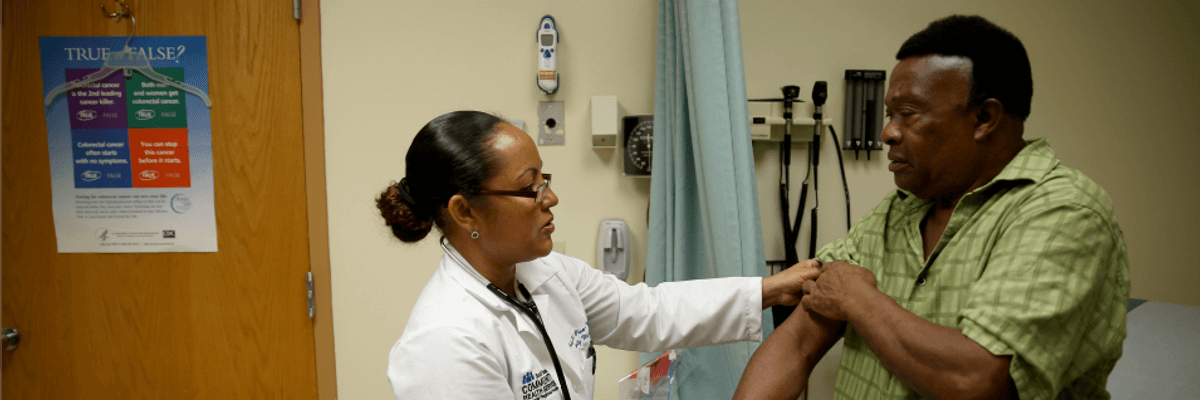
A majority of personal bankruptcy cases examined in a new study were brought about by high medical bills--just as most bankruptcy cases were before the passage of the Affordable Care Act. (Photo: Joe Raedle/Getty Images)
Despite Promises of ACA, Study Shows Two-Thirds of Personal Bankruptcies Still Caused by Illness and Medical Bills
"We need to move ahead from the ACA to a single-payer, Medicare for All system that assures first-dollar coverage for everyone."
A new study shows how the Affordable Care Act (ACA) has failed to solve one of the major crises in the American for-profit health insurance system that it was supposed to help eradicate: bankruptcies related to high medical bills and other healthcare-related costs.
The Consumer Bankruptcy Project (CBP) examined 910 bankruptcies that were filed between 2013 and 2016 and found that, similarly to before the ACA was passed in 2010, 66.5 percent of the bankruptcies were brought about by medical bills families were unable to afford or income loss due to illnesses.
"Unless you're Bill Gates, you're just one serious illness away from bankruptcy." --Dr. David Himmelstein
About 530,000 American households continue to see their finances wiped out each year due to medical costs, according to the report, which was published in the American Journal of Public Health.
"Unless you're Bill Gates, you're just one serious illness away from bankruptcy," said Dr. David Himmelstein, the study's lead author. "For middle-class Americans, health insurance offers little protection. Most of us have policies with so many loopholes, copayments, and deductibles that illness can put you in the poorhouse. And even the best job-based health insurance often vanishes when prolonged illness causes job loss--just when families need it most."
The only solution to medical bankruptcies is a Medicare for All system, said Physicians for a National Health Plan (PNHP), one of several national organizations that have led the fight for universal, government-funded healthcare for decades.
"The ACA was a step forward, but 29 million remain uncovered, and the epidemic of under-insurance is out of control," said Dr. Steffie Woolhandler, a member of PNHP's Board of Directors, in a statement. "We need to move ahead from the ACA to a single-payer, Medicare for All system that assures first-dollar coverage for everyone."
The study came out a day after the Commonwealth Fund released its own findings on the post-ACA healthcare system--namely, that more Americans with employer-based healthcare plans are under-insured, without continuous coverage all year, than were before the law was passed.
Medical bills contributed to about 58 percent of bankruptcies between 2013 and 2016, while income loss due to illnesses or injuries were to blame for about 44 percent; many bankruptcy filers cited both as causes. The study's results were "virtually unchanged" from a similar report the CBP compiled from 2001 to 2007, PNHP said.
The report "found no evidence that the ACA reduced the proportion of bankruptcies driven by medical problems: 65.5 percent of debtors cited a medical contributor to their bankruptcy in the period prior to the ACA's implementation as compared to 67.5 percent in the three years after the law came into effect," PNHP said in a statement.
On social media, PNHP pointed out that the high prevalence of medical cost-related bankruptcies was often cited as a reason to urgently pass the ACA during congressional debates over the the law in 2010.
Medicaid expansion under the ACA also did not improve the number of medical-related bankruptcies, the report showed, with people filing even in states that expanded the program. Middle-class households made up most of the filers, owing to skyrocketing premiums and copays for many.
On PNHP's Twitter feed, one user shared a firsthand account of how the ACA has made health coverage more expensive for many American families--and thus put just as many people at risk for medical bankruptcy as there were before the law was passed.
The ACA has also been left vulnerable to attacks from President Donald Trump and the Republican Party due to its high costs for families, noted Woolhandler.
Instead of moving toward a Medicare for All system, she said, "The Trump administration and Republicans in several states are taking us in reverse: cutting Medicaid, threatening to gut protections for the more than 61 million Americans with pre-existing conditions, and allowing insurers to peddle stripped-down policies that offer no real protection."
Bankruptcy can provide relief for families, study co-author Robert Lawless said, but like the relief the ACA provided to many Americans who were able to sign up for insurance after the law was passed, bankruptcy is a temporary and insufficient fix.
"Bankruptcy may provide a fresh start, but it comes at a high financial and emotional cost for those who file," Lawless said. "Filing for bankruptcy can stop the financial bleeding that the healthcare system imposes, but curing that system's ills is the only lasting solution."
We are at a crossroads
This country and this world are at a monumental crossroads. In a few short weeks, US voters will have an opportunity to beat back the forces of fascism and confront the billionaires who are rigging the economy, our media system, and our democracy, making it increasingly impossible for ordinary people to get by. We’re not just talking about the election. We’re talking about what must be done once these fascist elements are vanquished from power. We need a bolder set of solutions than what either major party has so far been willing to offer and a working-class movement ready to fight like hell for it. Trump didn't emerge from nowhere. The conditions that fueled MAGA authoritarianism were created by decades of radical neoliberal economic policies and a corrupt political system dominated by corporate interests. They slashed taxes on the super-rich, promising that the benefits would trickle down. They said giveaways to the corporate titans would make life more affordable for the rest of us. It was all bullshit. And when a bitter, betrayed populace searches for someone to blame, right-wing demagogues have little trouble finding scapegoats. People know when they're being lied to, but you won't hear any of this from the corporate media. Only independent journalism—powered and funded by people who believe in building a better world—can deliver truly trustworthy daily news. Our Fall Campaign is underway, and we need your help. To power our newsroom through the rest of the year, we need to raise $125,000 by midnight on October 31. So if you share our vision, please contribute whatever you can to sustain our work. |
A new study shows how the Affordable Care Act (ACA) has failed to solve one of the major crises in the American for-profit health insurance system that it was supposed to help eradicate: bankruptcies related to high medical bills and other healthcare-related costs.
The Consumer Bankruptcy Project (CBP) examined 910 bankruptcies that were filed between 2013 and 2016 and found that, similarly to before the ACA was passed in 2010, 66.5 percent of the bankruptcies were brought about by medical bills families were unable to afford or income loss due to illnesses.
"Unless you're Bill Gates, you're just one serious illness away from bankruptcy." --Dr. David Himmelstein
About 530,000 American households continue to see their finances wiped out each year due to medical costs, according to the report, which was published in the American Journal of Public Health.
"Unless you're Bill Gates, you're just one serious illness away from bankruptcy," said Dr. David Himmelstein, the study's lead author. "For middle-class Americans, health insurance offers little protection. Most of us have policies with so many loopholes, copayments, and deductibles that illness can put you in the poorhouse. And even the best job-based health insurance often vanishes when prolonged illness causes job loss--just when families need it most."
The only solution to medical bankruptcies is a Medicare for All system, said Physicians for a National Health Plan (PNHP), one of several national organizations that have led the fight for universal, government-funded healthcare for decades.
"The ACA was a step forward, but 29 million remain uncovered, and the epidemic of under-insurance is out of control," said Dr. Steffie Woolhandler, a member of PNHP's Board of Directors, in a statement. "We need to move ahead from the ACA to a single-payer, Medicare for All system that assures first-dollar coverage for everyone."
The study came out a day after the Commonwealth Fund released its own findings on the post-ACA healthcare system--namely, that more Americans with employer-based healthcare plans are under-insured, without continuous coverage all year, than were before the law was passed.
Medical bills contributed to about 58 percent of bankruptcies between 2013 and 2016, while income loss due to illnesses or injuries were to blame for about 44 percent; many bankruptcy filers cited both as causes. The study's results were "virtually unchanged" from a similar report the CBP compiled from 2001 to 2007, PNHP said.
The report "found no evidence that the ACA reduced the proportion of bankruptcies driven by medical problems: 65.5 percent of debtors cited a medical contributor to their bankruptcy in the period prior to the ACA's implementation as compared to 67.5 percent in the three years after the law came into effect," PNHP said in a statement.
On social media, PNHP pointed out that the high prevalence of medical cost-related bankruptcies was often cited as a reason to urgently pass the ACA during congressional debates over the the law in 2010.
Medicaid expansion under the ACA also did not improve the number of medical-related bankruptcies, the report showed, with people filing even in states that expanded the program. Middle-class households made up most of the filers, owing to skyrocketing premiums and copays for many.
On PNHP's Twitter feed, one user shared a firsthand account of how the ACA has made health coverage more expensive for many American families--and thus put just as many people at risk for medical bankruptcy as there were before the law was passed.
The ACA has also been left vulnerable to attacks from President Donald Trump and the Republican Party due to its high costs for families, noted Woolhandler.
Instead of moving toward a Medicare for All system, she said, "The Trump administration and Republicans in several states are taking us in reverse: cutting Medicaid, threatening to gut protections for the more than 61 million Americans with pre-existing conditions, and allowing insurers to peddle stripped-down policies that offer no real protection."
Bankruptcy can provide relief for families, study co-author Robert Lawless said, but like the relief the ACA provided to many Americans who were able to sign up for insurance after the law was passed, bankruptcy is a temporary and insufficient fix.
"Bankruptcy may provide a fresh start, but it comes at a high financial and emotional cost for those who file," Lawless said. "Filing for bankruptcy can stop the financial bleeding that the healthcare system imposes, but curing that system's ills is the only lasting solution."
A new study shows how the Affordable Care Act (ACA) has failed to solve one of the major crises in the American for-profit health insurance system that it was supposed to help eradicate: bankruptcies related to high medical bills and other healthcare-related costs.
The Consumer Bankruptcy Project (CBP) examined 910 bankruptcies that were filed between 2013 and 2016 and found that, similarly to before the ACA was passed in 2010, 66.5 percent of the bankruptcies were brought about by medical bills families were unable to afford or income loss due to illnesses.
"Unless you're Bill Gates, you're just one serious illness away from bankruptcy." --Dr. David Himmelstein
About 530,000 American households continue to see their finances wiped out each year due to medical costs, according to the report, which was published in the American Journal of Public Health.
"Unless you're Bill Gates, you're just one serious illness away from bankruptcy," said Dr. David Himmelstein, the study's lead author. "For middle-class Americans, health insurance offers little protection. Most of us have policies with so many loopholes, copayments, and deductibles that illness can put you in the poorhouse. And even the best job-based health insurance often vanishes when prolonged illness causes job loss--just when families need it most."
The only solution to medical bankruptcies is a Medicare for All system, said Physicians for a National Health Plan (PNHP), one of several national organizations that have led the fight for universal, government-funded healthcare for decades.
"The ACA was a step forward, but 29 million remain uncovered, and the epidemic of under-insurance is out of control," said Dr. Steffie Woolhandler, a member of PNHP's Board of Directors, in a statement. "We need to move ahead from the ACA to a single-payer, Medicare for All system that assures first-dollar coverage for everyone."
The study came out a day after the Commonwealth Fund released its own findings on the post-ACA healthcare system--namely, that more Americans with employer-based healthcare plans are under-insured, without continuous coverage all year, than were before the law was passed.
Medical bills contributed to about 58 percent of bankruptcies between 2013 and 2016, while income loss due to illnesses or injuries were to blame for about 44 percent; many bankruptcy filers cited both as causes. The study's results were "virtually unchanged" from a similar report the CBP compiled from 2001 to 2007, PNHP said.
The report "found no evidence that the ACA reduced the proportion of bankruptcies driven by medical problems: 65.5 percent of debtors cited a medical contributor to their bankruptcy in the period prior to the ACA's implementation as compared to 67.5 percent in the three years after the law came into effect," PNHP said in a statement.
On social media, PNHP pointed out that the high prevalence of medical cost-related bankruptcies was often cited as a reason to urgently pass the ACA during congressional debates over the the law in 2010.
Medicaid expansion under the ACA also did not improve the number of medical-related bankruptcies, the report showed, with people filing even in states that expanded the program. Middle-class households made up most of the filers, owing to skyrocketing premiums and copays for many.
On PNHP's Twitter feed, one user shared a firsthand account of how the ACA has made health coverage more expensive for many American families--and thus put just as many people at risk for medical bankruptcy as there were before the law was passed.
The ACA has also been left vulnerable to attacks from President Donald Trump and the Republican Party due to its high costs for families, noted Woolhandler.
Instead of moving toward a Medicare for All system, she said, "The Trump administration and Republicans in several states are taking us in reverse: cutting Medicaid, threatening to gut protections for the more than 61 million Americans with pre-existing conditions, and allowing insurers to peddle stripped-down policies that offer no real protection."
Bankruptcy can provide relief for families, study co-author Robert Lawless said, but like the relief the ACA provided to many Americans who were able to sign up for insurance after the law was passed, bankruptcy is a temporary and insufficient fix.
"Bankruptcy may provide a fresh start, but it comes at a high financial and emotional cost for those who file," Lawless said. "Filing for bankruptcy can stop the financial bleeding that the healthcare system imposes, but curing that system's ills is the only lasting solution."