SUBSCRIBE TO OUR FREE NEWSLETTER
Daily news & progressive opinion—funded by the people, not the corporations—delivered straight to your inbox.
5
#000000
#FFFFFF
To donate by check, phone, or other method, see our More Ways to Give page.
Daily news & progressive opinion—funded by the people, not the corporations—delivered straight to your inbox.
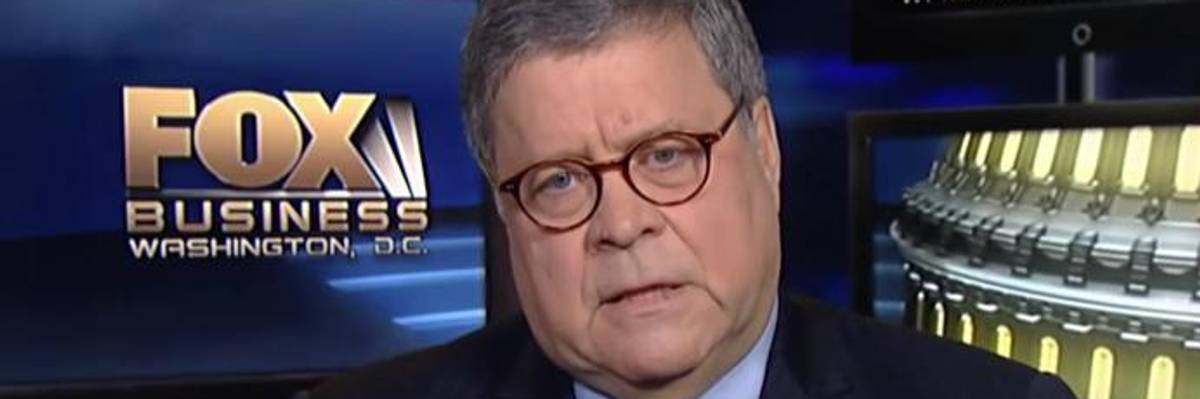
"As attorney general, [William] Barr could defund or shut down Mueller's investigation," Public Citizen warned on Twitter. "That's what's at risk if we don't push the Senate to act. Call your senators and demand a vote on legislation to protect Mueller." (Photo: Fox Business/Screengrab)
After spending much of his morning hysterically attacking Special Counsel Robert Mueller's ongoing investigation, President Donald Trump announced on Friday that he will nominate William Barr--a frequent critic of the Mueller probe who holds an expansive view of executive power--to be the next U.S. attorney general.
"As attorney general, Barr could defund or shut down Mueller's investigation," Public Citizen warned on Twitter. "That's what's at risk if we don't push the Senate to act. Call your senators and demand a vote on legislation to protect Mueller."
Indivisible echoed this warning in a tweet of its own following Trump's announcement:
In a statement, Common Cause president Karen Hobert Flynn argued that Barr must not be confirmed by the Senate unless he makes "a public commitment not to interfere in Special Counsel Robert Mueller's investigation."
"It's hard to imagine an attorney general as bad as Jeff Sessions when it comes to criminal justice and the drug war, but Trump seems to have found one."
--Michael Collins, Drug Policy Alliance
"Barr must commit to safeguarding the investigation as the president has not been shy about pressuring members of his administration to curb the probe," Flynn added. "Despite the president's constant criticisms, the investigation has led to a parade of convictions and indictments and must be allowed to proceed without interference."
Immediately following the president's announcement, reporters and commentators began pointing to Barr's record as attorney general under former President George H.W. Bush as a possible guide to how he will act as the nation's top law enforcement official under Trump.
As The Intercept's Jeremy Scahill and others pointed out, Barr advised Bush to pardon several officials who were charged with crimes for their roles in the Iran-Contra scandal.
Barr, Scahill argued, is a "fanatic who believes in a dictatorship of executive power."
If confirmed, Barr would be the successor to Jeff Sessions, who Trump fired hours after November's midterm elections. Immediately after ousting Sessions, Trump installed loyalist Matthew Whitaker as acting attorney general, a move Democratic lawmakers and legal experts decried as illegal.
In addition to his sweeping view of executive power, the ACLU pointed out that Barr's "record suggests that he will follow Jeff Sessions' legacy of hostility to civil rights and civil liberties."
Michael Collins, director of national affairs for the Drug Policy Alliance, added in a statement: "It's hard to imagine an attorney general as bad as Jeff Sessions when it comes to criminal justice and the drug war, but Trump seems to have found one."
Dear Common Dreams reader, It’s been nearly 30 years since I co-founded Common Dreams with my late wife, Lina Newhouser. We had the radical notion that journalism should serve the public good, not corporate profits. It was clear to us from the outset what it would take to build such a project. No paid advertisements. No corporate sponsors. No millionaire publisher telling us what to think or do. Many people said we wouldn't last a year, but we proved those doubters wrong. Together with a tremendous team of journalists and dedicated staff, we built an independent media outlet free from the constraints of profits and corporate control. Our mission has always been simple: To inform. To inspire. To ignite change for the common good. Building Common Dreams was not easy. Our survival was never guaranteed. When you take on the most powerful forces—Wall Street greed, fossil fuel industry destruction, Big Tech lobbyists, and uber-rich oligarchs who have spent billions upon billions rigging the economy and democracy in their favor—the only bulwark you have is supporters who believe in your work. But here’s the urgent message from me today. It's never been this bad out there. And it's never been this hard to keep us going. At the very moment Common Dreams is most needed, the threats we face are intensifying. We need your support now more than ever. We don't accept corporate advertising and never will. We don't have a paywall because we don't think people should be blocked from critical news based on their ability to pay. Everything we do is funded by the donations of readers like you. When everyone does the little they can afford, we are strong. But if that support retreats or dries up, so do we. Will you donate now to make sure Common Dreams not only survives but thrives? —Craig Brown, Co-founder |
After spending much of his morning hysterically attacking Special Counsel Robert Mueller's ongoing investigation, President Donald Trump announced on Friday that he will nominate William Barr--a frequent critic of the Mueller probe who holds an expansive view of executive power--to be the next U.S. attorney general.
"As attorney general, Barr could defund or shut down Mueller's investigation," Public Citizen warned on Twitter. "That's what's at risk if we don't push the Senate to act. Call your senators and demand a vote on legislation to protect Mueller."
Indivisible echoed this warning in a tweet of its own following Trump's announcement:
In a statement, Common Cause president Karen Hobert Flynn argued that Barr must not be confirmed by the Senate unless he makes "a public commitment not to interfere in Special Counsel Robert Mueller's investigation."
"It's hard to imagine an attorney general as bad as Jeff Sessions when it comes to criminal justice and the drug war, but Trump seems to have found one."
--Michael Collins, Drug Policy Alliance
"Barr must commit to safeguarding the investigation as the president has not been shy about pressuring members of his administration to curb the probe," Flynn added. "Despite the president's constant criticisms, the investigation has led to a parade of convictions and indictments and must be allowed to proceed without interference."
Immediately following the president's announcement, reporters and commentators began pointing to Barr's record as attorney general under former President George H.W. Bush as a possible guide to how he will act as the nation's top law enforcement official under Trump.
As The Intercept's Jeremy Scahill and others pointed out, Barr advised Bush to pardon several officials who were charged with crimes for their roles in the Iran-Contra scandal.
Barr, Scahill argued, is a "fanatic who believes in a dictatorship of executive power."
If confirmed, Barr would be the successor to Jeff Sessions, who Trump fired hours after November's midterm elections. Immediately after ousting Sessions, Trump installed loyalist Matthew Whitaker as acting attorney general, a move Democratic lawmakers and legal experts decried as illegal.
In addition to his sweeping view of executive power, the ACLU pointed out that Barr's "record suggests that he will follow Jeff Sessions' legacy of hostility to civil rights and civil liberties."
Michael Collins, director of national affairs for the Drug Policy Alliance, added in a statement: "It's hard to imagine an attorney general as bad as Jeff Sessions when it comes to criminal justice and the drug war, but Trump seems to have found one."
After spending much of his morning hysterically attacking Special Counsel Robert Mueller's ongoing investigation, President Donald Trump announced on Friday that he will nominate William Barr--a frequent critic of the Mueller probe who holds an expansive view of executive power--to be the next U.S. attorney general.
"As attorney general, Barr could defund or shut down Mueller's investigation," Public Citizen warned on Twitter. "That's what's at risk if we don't push the Senate to act. Call your senators and demand a vote on legislation to protect Mueller."
Indivisible echoed this warning in a tweet of its own following Trump's announcement:
In a statement, Common Cause president Karen Hobert Flynn argued that Barr must not be confirmed by the Senate unless he makes "a public commitment not to interfere in Special Counsel Robert Mueller's investigation."
"It's hard to imagine an attorney general as bad as Jeff Sessions when it comes to criminal justice and the drug war, but Trump seems to have found one."
--Michael Collins, Drug Policy Alliance
"Barr must commit to safeguarding the investigation as the president has not been shy about pressuring members of his administration to curb the probe," Flynn added. "Despite the president's constant criticisms, the investigation has led to a parade of convictions and indictments and must be allowed to proceed without interference."
Immediately following the president's announcement, reporters and commentators began pointing to Barr's record as attorney general under former President George H.W. Bush as a possible guide to how he will act as the nation's top law enforcement official under Trump.
As The Intercept's Jeremy Scahill and others pointed out, Barr advised Bush to pardon several officials who were charged with crimes for their roles in the Iran-Contra scandal.
Barr, Scahill argued, is a "fanatic who believes in a dictatorship of executive power."
If confirmed, Barr would be the successor to Jeff Sessions, who Trump fired hours after November's midterm elections. Immediately after ousting Sessions, Trump installed loyalist Matthew Whitaker as acting attorney general, a move Democratic lawmakers and legal experts decried as illegal.
In addition to his sweeping view of executive power, the ACLU pointed out that Barr's "record suggests that he will follow Jeff Sessions' legacy of hostility to civil rights and civil liberties."
Michael Collins, director of national affairs for the Drug Policy Alliance, added in a statement: "It's hard to imagine an attorney general as bad as Jeff Sessions when it comes to criminal justice and the drug war, but Trump seems to have found one."