SUBSCRIBE TO OUR FREE NEWSLETTER
Daily news & progressive opinion—funded by the people, not the corporations—delivered straight to your inbox.
5
#000000
#FFFFFF
To donate by check, phone, or other method, see our More Ways to Give page.
Daily news & progressive opinion—funded by the people, not the corporations—delivered straight to your inbox.
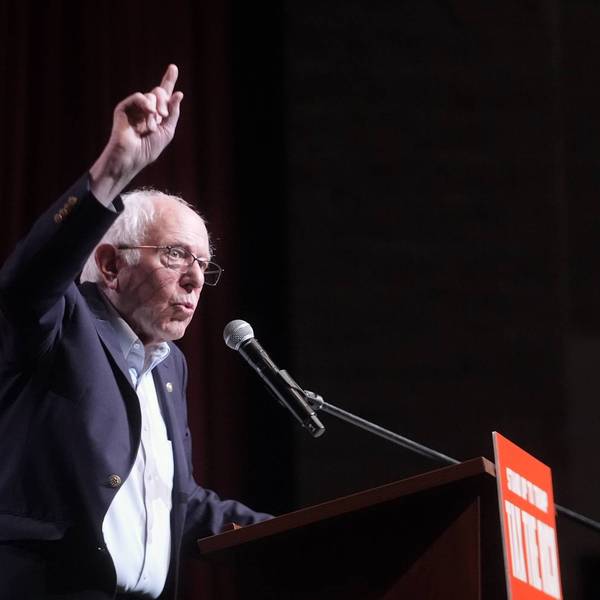
Responding to the results of the U.K. election, which commentators have already deemed a "political upset" for the ages and a stunning backfire for Prime Minister Theresa May, Sen. Bernie Sanders (I-Vt.) on Thursday congratulated Labour leader Jeremy Corbyn and the British people for "rising up against austerity and massive levels of income and wealth inequality."
" Globalization has left far too many people behind." --Sen. Bernie SandersPeople "all over the world" are fighting the same battle, Sanders added, concluding:
People in the U.K., the U.S. and elsewhere want governments that represent all the people, not just the 1%. I congratulate Jeremy Corbyn for running a very positive and effective campaign.
Corbyn's strong run--which culminated in an additional 31 seats for Labour and a hung parliament--was, in many ways, reminiscent of the Sanders "revolution" in the United States, which posed a stark challenge to "the billionaire class" and a political establishment flush with corporate money. Sanders himself drew the comparison between his campaign and Corbyn's recently on a three-day U.K. speaking tour, during which he praised the Labour leader's "willingness to talk about class issues."
"These problems are not unique to the U.S.," Sanders noted. "Globalization has left far too many people behind. Workers all over the world are seeing a decline in their standard of living. Unfettered free trade has allowed multinational corporations to enjoy huge profits and make the very rich even richer while workers are sucked into a race for the bottom."
Corbyn utilized similar messaging. Under his leadership, the Labour Party this year published one of the most left-wing manifestos in its history, adopting a slogan Sanders backers surely recognized: "For the many, not the few."
It is unsurprising, then, that British voters were seen donning Sanders apparel as they cast their ballots for Labour.
Peter Bloom, writing for Common Dreams, argued the campaigns of Sanders and Corbyn both successfully harnessed similar forces, and thus "exposed the beginnings of a potentially new political mainstream."
Bloom concluded:
Corbyn's strong campaign is no small political achievement. Historically, he has altered the public discussion on major issues of the economy and foreign policy. He has also shown that a full throttled progressive agenda is not only not suicidal but potentially downright popular.
For many, Corbyn's remarkable surge in recent weeks and his performance in an election that was prematurely viewed as a landslide opportunity for the Conservatives is a strong indicator of the electoral viability of left populism and of the strong desire for systemic change.
Pollsters and analysts--even those who had for weeks closely documented Corbyn's rapid rise in the polls--were openly startled by the results.
"No major left-wing politician had been so often accused of being unelectable--not even Sanders," wrote the Washington Post's Dave Weigel. "All through election night, the BBC and other organs of an infamously Corbyn-skeptical media marveled at how Labour had gained ground."
In a triumphant rally on Thursday, Corbyn argued that his party's gains portend a seismic shift in the landscape of British politics.
"Politics has changed," Corbyn declared as the results rolled in. "Politics isn't going back into the box where it was before. What's happened is people have said they've had quite enough of austerity politics."
Dear Common Dreams reader, It’s been nearly 30 years since I co-founded Common Dreams with my late wife, Lina Newhouser. We had the radical notion that journalism should serve the public good, not corporate profits. It was clear to us from the outset what it would take to build such a project. No paid advertisements. No corporate sponsors. No millionaire publisher telling us what to think or do. Many people said we wouldn't last a year, but we proved those doubters wrong. Together with a tremendous team of journalists and dedicated staff, we built an independent media outlet free from the constraints of profits and corporate control. Our mission has always been simple: To inform. To inspire. To ignite change for the common good. Building Common Dreams was not easy. Our survival was never guaranteed. When you take on the most powerful forces—Wall Street greed, fossil fuel industry destruction, Big Tech lobbyists, and uber-rich oligarchs who have spent billions upon billions rigging the economy and democracy in their favor—the only bulwark you have is supporters who believe in your work. But here’s the urgent message from me today. It's never been this bad out there. And it's never been this hard to keep us going. At the very moment Common Dreams is most needed, the threats we face are intensifying. We need your support now more than ever. We don't accept corporate advertising and never will. We don't have a paywall because we don't think people should be blocked from critical news based on their ability to pay. Everything we do is funded by the donations of readers like you. When everyone does the little they can afford, we are strong. But if that support retreats or dries up, so do we. Will you donate now to make sure Common Dreams not only survives but thrives? —Craig Brown, Co-founder |
Responding to the results of the U.K. election, which commentators have already deemed a "political upset" for the ages and a stunning backfire for Prime Minister Theresa May, Sen. Bernie Sanders (I-Vt.) on Thursday congratulated Labour leader Jeremy Corbyn and the British people for "rising up against austerity and massive levels of income and wealth inequality."
" Globalization has left far too many people behind." --Sen. Bernie SandersPeople "all over the world" are fighting the same battle, Sanders added, concluding:
People in the U.K., the U.S. and elsewhere want governments that represent all the people, not just the 1%. I congratulate Jeremy Corbyn for running a very positive and effective campaign.
Corbyn's strong run--which culminated in an additional 31 seats for Labour and a hung parliament--was, in many ways, reminiscent of the Sanders "revolution" in the United States, which posed a stark challenge to "the billionaire class" and a political establishment flush with corporate money. Sanders himself drew the comparison between his campaign and Corbyn's recently on a three-day U.K. speaking tour, during which he praised the Labour leader's "willingness to talk about class issues."
"These problems are not unique to the U.S.," Sanders noted. "Globalization has left far too many people behind. Workers all over the world are seeing a decline in their standard of living. Unfettered free trade has allowed multinational corporations to enjoy huge profits and make the very rich even richer while workers are sucked into a race for the bottom."
Corbyn utilized similar messaging. Under his leadership, the Labour Party this year published one of the most left-wing manifestos in its history, adopting a slogan Sanders backers surely recognized: "For the many, not the few."
It is unsurprising, then, that British voters were seen donning Sanders apparel as they cast their ballots for Labour.
Peter Bloom, writing for Common Dreams, argued the campaigns of Sanders and Corbyn both successfully harnessed similar forces, and thus "exposed the beginnings of a potentially new political mainstream."
Bloom concluded:
Corbyn's strong campaign is no small political achievement. Historically, he has altered the public discussion on major issues of the economy and foreign policy. He has also shown that a full throttled progressive agenda is not only not suicidal but potentially downright popular.
For many, Corbyn's remarkable surge in recent weeks and his performance in an election that was prematurely viewed as a landslide opportunity for the Conservatives is a strong indicator of the electoral viability of left populism and of the strong desire for systemic change.
Pollsters and analysts--even those who had for weeks closely documented Corbyn's rapid rise in the polls--were openly startled by the results.
"No major left-wing politician had been so often accused of being unelectable--not even Sanders," wrote the Washington Post's Dave Weigel. "All through election night, the BBC and other organs of an infamously Corbyn-skeptical media marveled at how Labour had gained ground."
In a triumphant rally on Thursday, Corbyn argued that his party's gains portend a seismic shift in the landscape of British politics.
"Politics has changed," Corbyn declared as the results rolled in. "Politics isn't going back into the box where it was before. What's happened is people have said they've had quite enough of austerity politics."
Responding to the results of the U.K. election, which commentators have already deemed a "political upset" for the ages and a stunning backfire for Prime Minister Theresa May, Sen. Bernie Sanders (I-Vt.) on Thursday congratulated Labour leader Jeremy Corbyn and the British people for "rising up against austerity and massive levels of income and wealth inequality."
" Globalization has left far too many people behind." --Sen. Bernie SandersPeople "all over the world" are fighting the same battle, Sanders added, concluding:
People in the U.K., the U.S. and elsewhere want governments that represent all the people, not just the 1%. I congratulate Jeremy Corbyn for running a very positive and effective campaign.
Corbyn's strong run--which culminated in an additional 31 seats for Labour and a hung parliament--was, in many ways, reminiscent of the Sanders "revolution" in the United States, which posed a stark challenge to "the billionaire class" and a political establishment flush with corporate money. Sanders himself drew the comparison between his campaign and Corbyn's recently on a three-day U.K. speaking tour, during which he praised the Labour leader's "willingness to talk about class issues."
"These problems are not unique to the U.S.," Sanders noted. "Globalization has left far too many people behind. Workers all over the world are seeing a decline in their standard of living. Unfettered free trade has allowed multinational corporations to enjoy huge profits and make the very rich even richer while workers are sucked into a race for the bottom."
Corbyn utilized similar messaging. Under his leadership, the Labour Party this year published one of the most left-wing manifestos in its history, adopting a slogan Sanders backers surely recognized: "For the many, not the few."
It is unsurprising, then, that British voters were seen donning Sanders apparel as they cast their ballots for Labour.
Peter Bloom, writing for Common Dreams, argued the campaigns of Sanders and Corbyn both successfully harnessed similar forces, and thus "exposed the beginnings of a potentially new political mainstream."
Bloom concluded:
Corbyn's strong campaign is no small political achievement. Historically, he has altered the public discussion on major issues of the economy and foreign policy. He has also shown that a full throttled progressive agenda is not only not suicidal but potentially downright popular.
For many, Corbyn's remarkable surge in recent weeks and his performance in an election that was prematurely viewed as a landslide opportunity for the Conservatives is a strong indicator of the electoral viability of left populism and of the strong desire for systemic change.
Pollsters and analysts--even those who had for weeks closely documented Corbyn's rapid rise in the polls--were openly startled by the results.
"No major left-wing politician had been so often accused of being unelectable--not even Sanders," wrote the Washington Post's Dave Weigel. "All through election night, the BBC and other organs of an infamously Corbyn-skeptical media marveled at how Labour had gained ground."
In a triumphant rally on Thursday, Corbyn argued that his party's gains portend a seismic shift in the landscape of British politics.
"Politics has changed," Corbyn declared as the results rolled in. "Politics isn't going back into the box where it was before. What's happened is people have said they've had quite enough of austerity politics."