Amid West's Silence, Groups Call for Saudi Arms Embargo to Stem Carnage in Yemen
Human rights groups and others call for arms embargo, accuse US, UK, France, and Canada of complicity in war crimes
The flow of weapons to Saudi Arabia over the past year has "facilitated appalling crimes," according to leading international human rights groups, which argue that the United States and other western nations are thus complicit in the killing of thousands of Yemeni civilians.
To mark the nearly one year since the Saudi-led coalition began bombing Yemen, Amnesty International and Human Rights Watch are renewing the call for an international arms embargo on Saudi Arabia, while singling out the U.S., the United Kingdom, and France for their "complicity in the unlawful airstrikes."
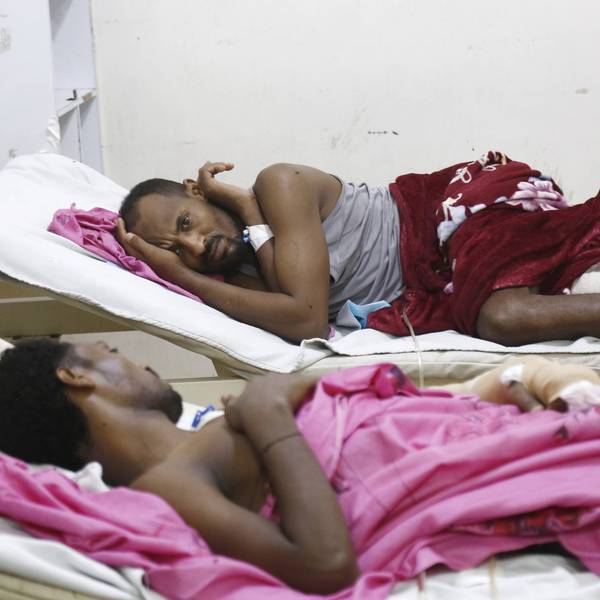
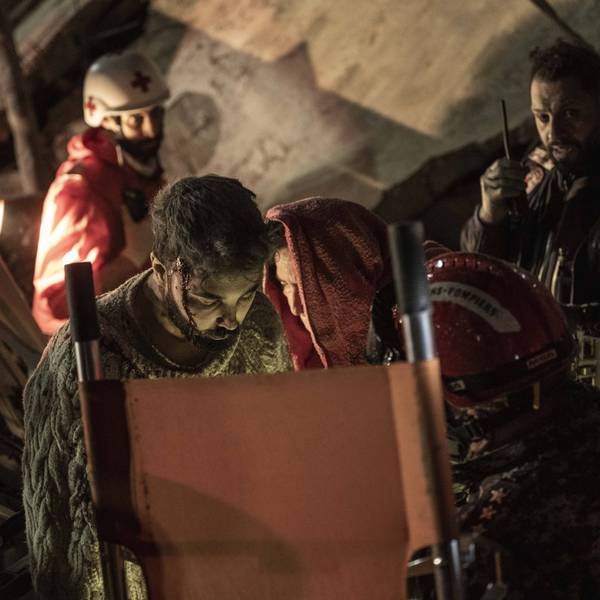
Since March 25, 2015, when the Arab state coalition began its air assault, Amnesty estimates that more than 3,000 civilians including 700 children have been killed and at least 2.5 million people have been displaced from their homes. The United Nations puts the death toll much higher, estimating as many as 6,200 civilians killed by the coalition fighting.
The anniversary of the bombing campaign falls less than two weeks after perhaps the deadliest attack yet, during which fighter jets bombed a market in Yemen's northern province of Hajjah, killing about 120 people including more than 20 children.
As Intercept journalist Mohammed Ali Kalfood wrote on Tuesday, after a series of bombings killed roughly 30 people in Brussels, Belgium: "While the horrific terrorist attacks against civilians in Europe receive extensive media coverage, the U.S.-supported bombings of civilians in Yemen get scant attention."
James Lynch, deputy Middle East and North Africa director at Amnesty International, declared in a statement, "the international community's response to the conflict in Yemen has been deeply cynical and utterly shameful."
As Common Dreams previously reported, the U.S.-backed bombing campaign has repeatedly targeted critical civilian infrastructure, including markets, schools, hospitals, power plants, refugee camps, and warehouses storing humanitarian aid.
Despite this, the groups charge, western nations continue to ignore the deadly impact of the arms trade.
Philippe Bolopion, deputy global advocacy director for Human Rights Watch, said that "governments that arm Saudi Arabia have rejected or downplayed compelling evidence that the coalition's airstrikes have killed hundreds of civilians in Yemen."
"By continuing to sell weapons to a known violator that has done little to curtail its abuses," Bolopion continued, "the U.S., UK, and France risk being complicit in unlawful civilian deaths."
"The irresponsible and unlawful flow of arms to the warring parties in Yemen has directly contributed to civilian suffering on a mass scale," Lynch continued. "It's time for world leaders to stop putting their economic interests first, and for the UN Security Council to impose a full, comprehensive embargo on transfers of arms for use in Yemen."
The call came the same day that a University of Montreal professor, with support from his students, filed a lawsuit in Federal Court arguing that the Trudeau government is failing to uphold both Canadian export law and the Geneva Conventions by going ahead with a $15 billion arms deal with Saudi Arabia.
"The armoured vehicles to be delivered by General Dynamics Land Systems Canada to Saudi Arabia may be used against the civilian population and therefore, the issuance of export permits ... would not respect the guidelines Canada imposed on itself and would be contrary to the Geneva Conventions Act," states the application for judicial review, which was filed by Dr. Daniel Turp, a professor of international and constitutional law. "For those reasons, issuing those permits would be illegal."
As the Globe and Mail reports, "Prime Minister Justin Trudeau has stood by the massive contract, which was signed by the former Harper government, saying Canada's reputation as a fair dealer would be injured if Ottawa walked away from a signed deal."
Urgent. It's never been this bad.
Dear Common Dreams reader, It’s been nearly 30 years since I co-founded Common Dreams with my late wife, Lina Newhouser. We had the radical notion that journalism should serve the public good, not corporate profits. It was clear to us from the outset what it would take to build such a project. No paid advertisements. No corporate sponsors. No millionaire publisher telling us what to think or do. Many people said we wouldn't last a year, but we proved those doubters wrong. Together with a tremendous team of journalists and dedicated staff, we built an independent media outlet free from the constraints of profits and corporate control. Our mission from the outset was simple. To inform. To inspire. To ignite change for the common good. Building Common Dreams was not easy. Our survival was never guaranteed. When you take on the most powerful forces—Wall Street greed, fossil fuel industry destruction, Big Tech lobbyists, and uber-rich oligarchs who have spent billions upon billions rigging the economy and democracy in their favor—the only bulwark you have is supporters who believe in your work. But here’s the urgent message from me today. It’s never been this bad out there. And it’s never been this hard to keep us going. At the very moment Common Dreams is most needed and doing some of its best and most important work, the threats we face are intensifying. Right now, with just two days to go in our Spring Campaign, we're falling short of our make-or-break goal. When everyone does the little they can afford, we are strong. But if that support retreats or dries up, so do we. Can you make a gift right now to make sure Common Dreams not only survives but thrives? There is no backup plan or rainy day fund. There is only you. —Craig Brown, Co-founder |
The flow of weapons to Saudi Arabia over the past year has "facilitated appalling crimes," according to leading international human rights groups, which argue that the United States and other western nations are thus complicit in the killing of thousands of Yemeni civilians.
To mark the nearly one year since the Saudi-led coalition began bombing Yemen, Amnesty International and Human Rights Watch are renewing the call for an international arms embargo on Saudi Arabia, while singling out the U.S., the United Kingdom, and France for their "complicity in the unlawful airstrikes."
Since March 25, 2015, when the Arab state coalition began its air assault, Amnesty estimates that more than 3,000 civilians including 700 children have been killed and at least 2.5 million people have been displaced from their homes. The United Nations puts the death toll much higher, estimating as many as 6,200 civilians killed by the coalition fighting.
The anniversary of the bombing campaign falls less than two weeks after perhaps the deadliest attack yet, during which fighter jets bombed a market in Yemen's northern province of Hajjah, killing about 120 people including more than 20 children.
As Intercept journalist Mohammed Ali Kalfood wrote on Tuesday, after a series of bombings killed roughly 30 people in Brussels, Belgium: "While the horrific terrorist attacks against civilians in Europe receive extensive media coverage, the U.S.-supported bombings of civilians in Yemen get scant attention."
James Lynch, deputy Middle East and North Africa director at Amnesty International, declared in a statement, "the international community's response to the conflict in Yemen has been deeply cynical and utterly shameful."
As Common Dreams previously reported, the U.S.-backed bombing campaign has repeatedly targeted critical civilian infrastructure, including markets, schools, hospitals, power plants, refugee camps, and warehouses storing humanitarian aid.
Despite this, the groups charge, western nations continue to ignore the deadly impact of the arms trade.
Philippe Bolopion, deputy global advocacy director for Human Rights Watch, said that "governments that arm Saudi Arabia have rejected or downplayed compelling evidence that the coalition's airstrikes have killed hundreds of civilians in Yemen."
"By continuing to sell weapons to a known violator that has done little to curtail its abuses," Bolopion continued, "the U.S., UK, and France risk being complicit in unlawful civilian deaths."
"The irresponsible and unlawful flow of arms to the warring parties in Yemen has directly contributed to civilian suffering on a mass scale," Lynch continued. "It's time for world leaders to stop putting their economic interests first, and for the UN Security Council to impose a full, comprehensive embargo on transfers of arms for use in Yemen."
The call came the same day that a University of Montreal professor, with support from his students, filed a lawsuit in Federal Court arguing that the Trudeau government is failing to uphold both Canadian export law and the Geneva Conventions by going ahead with a $15 billion arms deal with Saudi Arabia.
"The armoured vehicles to be delivered by General Dynamics Land Systems Canada to Saudi Arabia may be used against the civilian population and therefore, the issuance of export permits ... would not respect the guidelines Canada imposed on itself and would be contrary to the Geneva Conventions Act," states the application for judicial review, which was filed by Dr. Daniel Turp, a professor of international and constitutional law. "For those reasons, issuing those permits would be illegal."
As the Globe and Mail reports, "Prime Minister Justin Trudeau has stood by the massive contract, which was signed by the former Harper government, saying Canada's reputation as a fair dealer would be injured if Ottawa walked away from a signed deal."
The flow of weapons to Saudi Arabia over the past year has "facilitated appalling crimes," according to leading international human rights groups, which argue that the United States and other western nations are thus complicit in the killing of thousands of Yemeni civilians.
To mark the nearly one year since the Saudi-led coalition began bombing Yemen, Amnesty International and Human Rights Watch are renewing the call for an international arms embargo on Saudi Arabia, while singling out the U.S., the United Kingdom, and France for their "complicity in the unlawful airstrikes."
Since March 25, 2015, when the Arab state coalition began its air assault, Amnesty estimates that more than 3,000 civilians including 700 children have been killed and at least 2.5 million people have been displaced from their homes. The United Nations puts the death toll much higher, estimating as many as 6,200 civilians killed by the coalition fighting.
The anniversary of the bombing campaign falls less than two weeks after perhaps the deadliest attack yet, during which fighter jets bombed a market in Yemen's northern province of Hajjah, killing about 120 people including more than 20 children.
As Intercept journalist Mohammed Ali Kalfood wrote on Tuesday, after a series of bombings killed roughly 30 people in Brussels, Belgium: "While the horrific terrorist attacks against civilians in Europe receive extensive media coverage, the U.S.-supported bombings of civilians in Yemen get scant attention."
James Lynch, deputy Middle East and North Africa director at Amnesty International, declared in a statement, "the international community's response to the conflict in Yemen has been deeply cynical and utterly shameful."
As Common Dreams previously reported, the U.S.-backed bombing campaign has repeatedly targeted critical civilian infrastructure, including markets, schools, hospitals, power plants, refugee camps, and warehouses storing humanitarian aid.
Despite this, the groups charge, western nations continue to ignore the deadly impact of the arms trade.
Philippe Bolopion, deputy global advocacy director for Human Rights Watch, said that "governments that arm Saudi Arabia have rejected or downplayed compelling evidence that the coalition's airstrikes have killed hundreds of civilians in Yemen."
"By continuing to sell weapons to a known violator that has done little to curtail its abuses," Bolopion continued, "the U.S., UK, and France risk being complicit in unlawful civilian deaths."
"The irresponsible and unlawful flow of arms to the warring parties in Yemen has directly contributed to civilian suffering on a mass scale," Lynch continued. "It's time for world leaders to stop putting their economic interests first, and for the UN Security Council to impose a full, comprehensive embargo on transfers of arms for use in Yemen."
The call came the same day that a University of Montreal professor, with support from his students, filed a lawsuit in Federal Court arguing that the Trudeau government is failing to uphold both Canadian export law and the Geneva Conventions by going ahead with a $15 billion arms deal with Saudi Arabia.
"The armoured vehicles to be delivered by General Dynamics Land Systems Canada to Saudi Arabia may be used against the civilian population and therefore, the issuance of export permits ... would not respect the guidelines Canada imposed on itself and would be contrary to the Geneva Conventions Act," states the application for judicial review, which was filed by Dr. Daniel Turp, a professor of international and constitutional law. "For those reasons, issuing those permits would be illegal."
As the Globe and Mail reports, "Prime Minister Justin Trudeau has stood by the massive contract, which was signed by the former Harper government, saying Canada's reputation as a fair dealer would be injured if Ottawa walked away from a signed deal."