SUBSCRIBE TO OUR FREE NEWSLETTER
Daily news & progressive opinion—funded by the people, not the corporations—delivered straight to your inbox.
5
#000000
#FFFFFF
To donate by check, phone, or other method, see our More Ways to Give page.
Daily news & progressive opinion—funded by the people, not the corporations—delivered straight to your inbox.
White House press secretary Sean Spicer reopened his propaganda playbook on Tuesday, telling reporters that President Donald Trump's executive order blocking entry to the U.S. for refugees, visitors, and green card holders from majority-Muslim countries was "not a travel ban."
"It's not a Muslim ban. It's not a travel ban," Spicer told reporters in a heated, Orwellian exchange. "It's a vetting system to keep America safe."
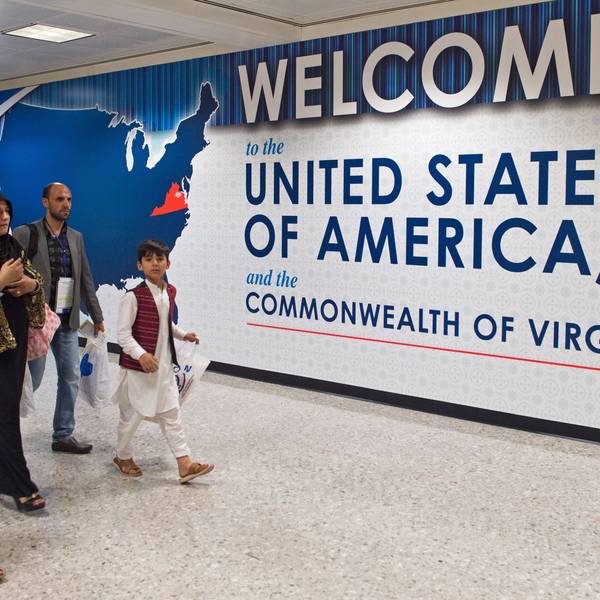
The order, signed last Friday, blocks Syrian refugees from entering the U.S. indefinitely and puts a temporary hold on travelers from Iran, Iraq, Yemen, Libya, Somalia, and Sudan.
Its immediate implementation saw dozens of individuals being detained at airports across the country over the weekend, prompting widespread, ongoing protests and legal actions that secured an 11th-hour victory for civil liberties lawyers when federal judges in four states temporarily blocked parts or all of the order.
Spicer's comments on Tuesday prompted a flurry of questions from journalists, who pointed to Trump's own tweets referring to the order as a ban. Spicer blamed that on the press, claiming that the president had only used the term to reference the media's adopted frame.
"He's using the words that the media is using," Spicer said, as another reporter shouted back, "It's his words!"
NBC News White House correspondent Kristen Welker said, "The president himself called it a ban."
Spicer replied, "I understand."
"Is he confused," Welker continued, "or are you confused?"
"No, I'm not confused," Spicer insisted. "I think that the words being used to describe it are derived from what the media is calling this. ... [Trump] has been very clear that it is extreme vetting."
"You have been part of the confusion," he said to the press pool.
Trump has called the order a ban on more than one occasion, including on Saturday, when he defended the policy at a photo op in the Oval Office by saying, "We're going to have a very, very strict ban and we're going to have extreme vetting, which we should have had in this country for many years."
Spicer's comments echoed those of Trump's chief strategist and national security adviser Steve Bannon, who earlier this month called the media "the opposition party," and the president himself, who made similar remarks in a later interview.
Dear Common Dreams reader, It’s been nearly 30 years since I co-founded Common Dreams with my late wife, Lina Newhouser. We had the radical notion that journalism should serve the public good, not corporate profits. It was clear to us from the outset what it would take to build such a project. No paid advertisements. No corporate sponsors. No millionaire publisher telling us what to think or do. Many people said we wouldn't last a year, but we proved those doubters wrong. Together with a tremendous team of journalists and dedicated staff, we built an independent media outlet free from the constraints of profits and corporate control. Our mission has always been simple: To inform. To inspire. To ignite change for the common good. Building Common Dreams was not easy. Our survival was never guaranteed. When you take on the most powerful forces—Wall Street greed, fossil fuel industry destruction, Big Tech lobbyists, and uber-rich oligarchs who have spent billions upon billions rigging the economy and democracy in their favor—the only bulwark you have is supporters who believe in your work. But here’s the urgent message from me today. It's never been this bad out there. And it's never been this hard to keep us going. At the very moment Common Dreams is most needed, the threats we face are intensifying. We need your support now more than ever. We don't accept corporate advertising and never will. We don't have a paywall because we don't think people should be blocked from critical news based on their ability to pay. Everything we do is funded by the donations of readers like you. When everyone does the little they can afford, we are strong. But if that support retreats or dries up, so do we. Will you donate now to make sure Common Dreams not only survives but thrives? —Craig Brown, Co-founder |
White House press secretary Sean Spicer reopened his propaganda playbook on Tuesday, telling reporters that President Donald Trump's executive order blocking entry to the U.S. for refugees, visitors, and green card holders from majority-Muslim countries was "not a travel ban."
"It's not a Muslim ban. It's not a travel ban," Spicer told reporters in a heated, Orwellian exchange. "It's a vetting system to keep America safe."
The order, signed last Friday, blocks Syrian refugees from entering the U.S. indefinitely and puts a temporary hold on travelers from Iran, Iraq, Yemen, Libya, Somalia, and Sudan.
Its immediate implementation saw dozens of individuals being detained at airports across the country over the weekend, prompting widespread, ongoing protests and legal actions that secured an 11th-hour victory for civil liberties lawyers when federal judges in four states temporarily blocked parts or all of the order.
Spicer's comments on Tuesday prompted a flurry of questions from journalists, who pointed to Trump's own tweets referring to the order as a ban. Spicer blamed that on the press, claiming that the president had only used the term to reference the media's adopted frame.
"He's using the words that the media is using," Spicer said, as another reporter shouted back, "It's his words!"
NBC News White House correspondent Kristen Welker said, "The president himself called it a ban."
Spicer replied, "I understand."
"Is he confused," Welker continued, "or are you confused?"
"No, I'm not confused," Spicer insisted. "I think that the words being used to describe it are derived from what the media is calling this. ... [Trump] has been very clear that it is extreme vetting."
"You have been part of the confusion," he said to the press pool.
Trump has called the order a ban on more than one occasion, including on Saturday, when he defended the policy at a photo op in the Oval Office by saying, "We're going to have a very, very strict ban and we're going to have extreme vetting, which we should have had in this country for many years."
Spicer's comments echoed those of Trump's chief strategist and national security adviser Steve Bannon, who earlier this month called the media "the opposition party," and the president himself, who made similar remarks in a later interview.
White House press secretary Sean Spicer reopened his propaganda playbook on Tuesday, telling reporters that President Donald Trump's executive order blocking entry to the U.S. for refugees, visitors, and green card holders from majority-Muslim countries was "not a travel ban."
"It's not a Muslim ban. It's not a travel ban," Spicer told reporters in a heated, Orwellian exchange. "It's a vetting system to keep America safe."
The order, signed last Friday, blocks Syrian refugees from entering the U.S. indefinitely and puts a temporary hold on travelers from Iran, Iraq, Yemen, Libya, Somalia, and Sudan.
Its immediate implementation saw dozens of individuals being detained at airports across the country over the weekend, prompting widespread, ongoing protests and legal actions that secured an 11th-hour victory for civil liberties lawyers when federal judges in four states temporarily blocked parts or all of the order.
Spicer's comments on Tuesday prompted a flurry of questions from journalists, who pointed to Trump's own tweets referring to the order as a ban. Spicer blamed that on the press, claiming that the president had only used the term to reference the media's adopted frame.
"He's using the words that the media is using," Spicer said, as another reporter shouted back, "It's his words!"
NBC News White House correspondent Kristen Welker said, "The president himself called it a ban."
Spicer replied, "I understand."
"Is he confused," Welker continued, "or are you confused?"
"No, I'm not confused," Spicer insisted. "I think that the words being used to describe it are derived from what the media is calling this. ... [Trump] has been very clear that it is extreme vetting."
"You have been part of the confusion," he said to the press pool.
Trump has called the order a ban on more than one occasion, including on Saturday, when he defended the policy at a photo op in the Oval Office by saying, "We're going to have a very, very strict ban and we're going to have extreme vetting, which we should have had in this country for many years."
Spicer's comments echoed those of Trump's chief strategist and national security adviser Steve Bannon, who earlier this month called the media "the opposition party," and the president himself, who made similar remarks in a later interview.