
SUBSCRIBE TO OUR FREE NEWSLETTER
Daily news & progressive opinion—funded by the people, not the corporations—delivered straight to your inbox.
5
#000000
#FFFFFF
To donate by check, phone, or other method, see our More Ways to Give page.


Daily news & progressive opinion—funded by the people, not the corporations—delivered straight to your inbox.
This seems like a strange moment to be writing about "the deep state" with the country entering a new phase of open and obvious aboveground chaos and instability. Just as we had gotten used to the fact that the president is, in effect, under congressional indictment, just as we had settled into a more or less stable stalemate over when (and if) the Senate will hold an impeachment trial, the president shook the snow globe again, by ordering the assassination of foreign military officials and threatening the destruction of Iran's cultural sites. Nothing better than the promise of new war crimes to take the world's attention away from a little thing like extorting a U.S. ally to help oneself get reelected.
On the other hand, maybe this is exactly the moment to think about the so-called deep state, if by that we mean the little-noticed machinery of governance that keeps dependably churning on in that same snow globe's pedestal, whatever mayhem may be swirling around above it. Maybe this is even the moment to be grateful for those parts of the government whose inertia keeps the ship of state moving in the same general direction, regardless of who's on the bridge at any given time.
However, that sometimes benign inertia is not what the people who coined that term meant by deep state.
What Is a "Deep State"?
The expression is actually a translation of the Turkish phrase derin devlet. As historian Ryan Gingeras has explained, it arose as a way of describing "a kind of shadow or parallel system of government in which unofficial or publicly unacknowledged individuals play important roles in defining and implementing state policy." In the Turkish case, those "unacknowledged persons" were, in fact, agents of organized criminal enterprises working within the government.
Gingeras, an expert on organized crime in Turkey, has described how alliances between generals, government officials, and "narcotic traffickers, paramilitaries, terrorists, and other criminals" allowed the creation and execution of "policies that directly contravene the letter and spirit of the law." In the Turkish case, the history of such alliances can be traced to struggles for power in the first decades of the previous century, following the collapse of the Ottoman Empire.
The interpenetration of the drug cartels and government in Mexico is another example of a deep state at work. The presence of cartel collaborators in official positions and in the police hierarchy at all levels makes it almost impossible for any president, even the upright Andres Manuel Lopez Obrador, to defeat them.
The term "deep state" has also been used to characterize the role of the military in Egypt. As Sarah Chayes has written in Thieves of State: Why Corruption Threatens Global Security, Egypt's military has long been a state-within-a-state with its own banking and business operations that constitute 25%-40% of the Egyptian economy. It's the country's largest landowner and the ultimate maker and breaker of Egyptian presidents. In 2011, at the height of the Arab Spring, a popular uprising forced President Hosni Mubarak, who had run the country for 30 years, to resign. The military certainly had something to do with that resignation, since he handed over power to Egypt's Supreme Council of the Armed Forces.
When, however, a nascent democracy brought their longtime opponent, the Muslim Brotherhood, to power with the election of Mohamed Morsi, that was too much for the generals. It helped that Morsi made his own missteps, including the repression of peaceful protesters. So there wasn't much objection when, in 2012, his own minister of defense, Abdel Fattah el-Sisi, led a military coup against Morsi. Sisi and the Egyptian military have run the country directly ever since, making the state and the deep state one and the same.
Donald Trump and the "Deep State"
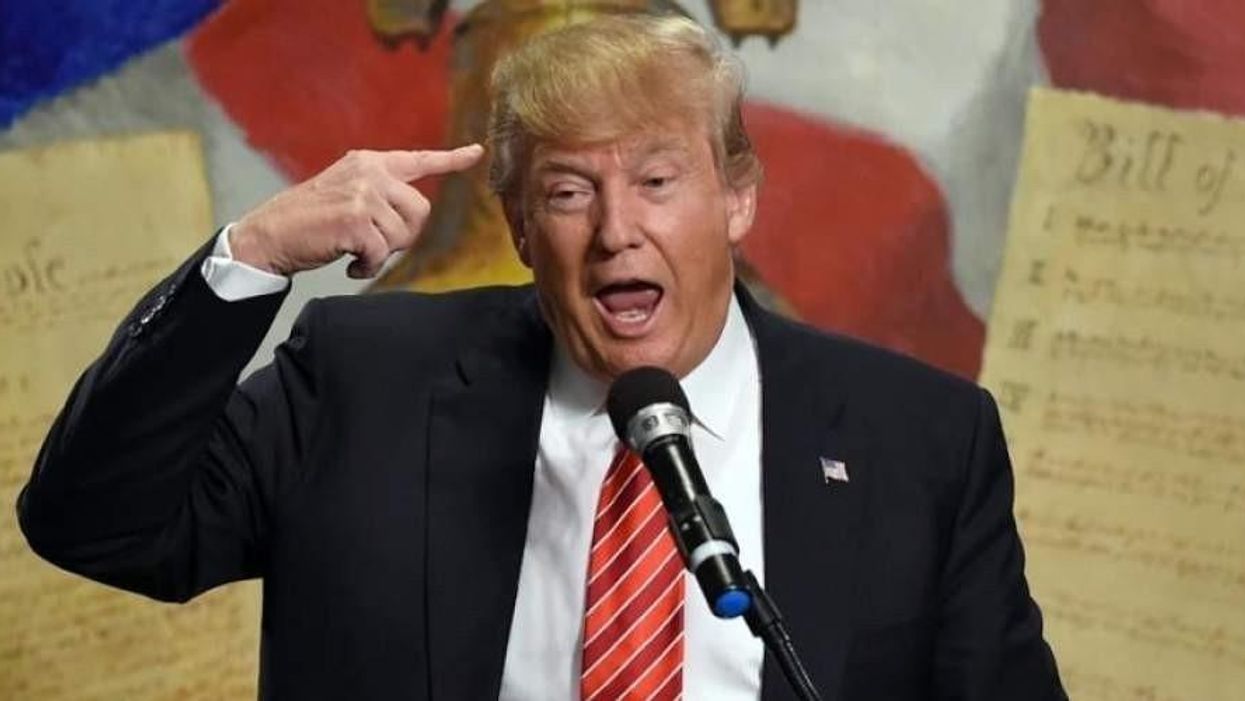
From his earliest days in the White House, Donald Trump and his officials have inveighed against what the president has regularly labeled the "deep state." What he's meant by the term, though, is something different from its more traditional use. Rather than referring to a "shadow or parallel system of government" operating outside official channels, for Trump the deep state is the government--or at least those parts of it that frustrate him in any way.
When, for example, the judicial system throws up barriers to government by fiat, that's the deep state at work as far as he's concerned. Want to proclaim "a total and complete shutdown of Muslims entering the United States" but the courts put a hold on your executive order? Blame the deep state.
Did anonymous government officials tell the press that your National Security Advisor, Michael Flynn, lied about his contacts with Russian officials? Blame the deep state for the leaks.
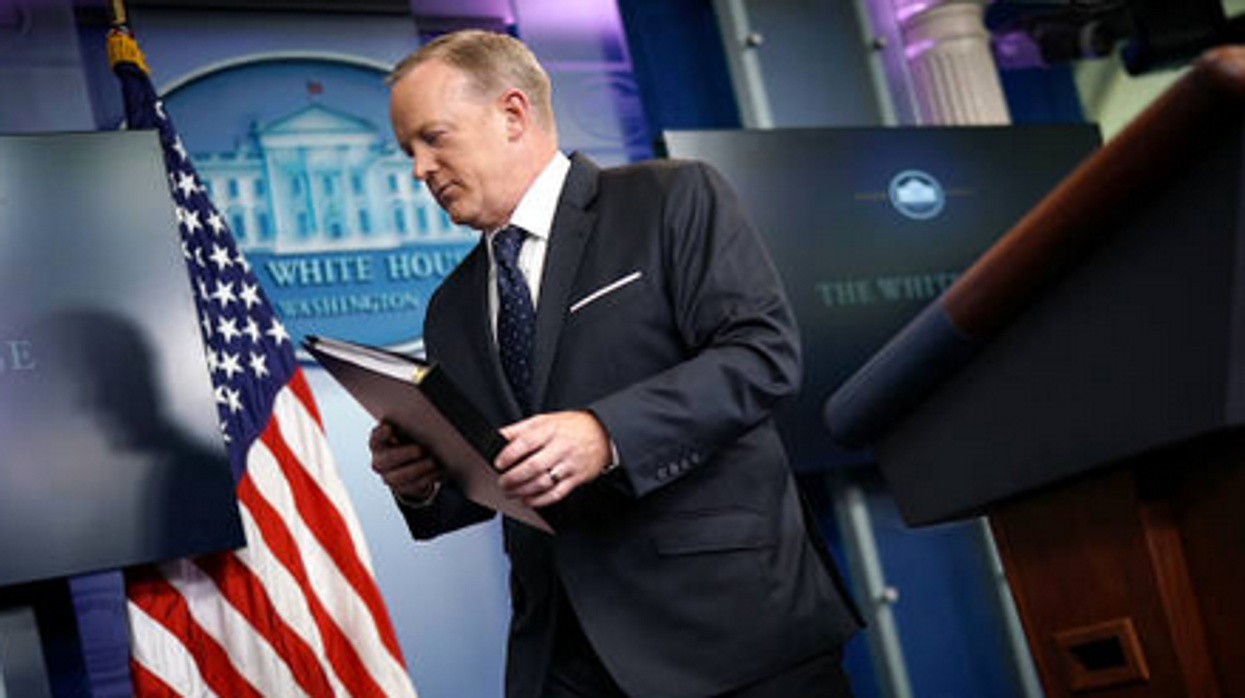
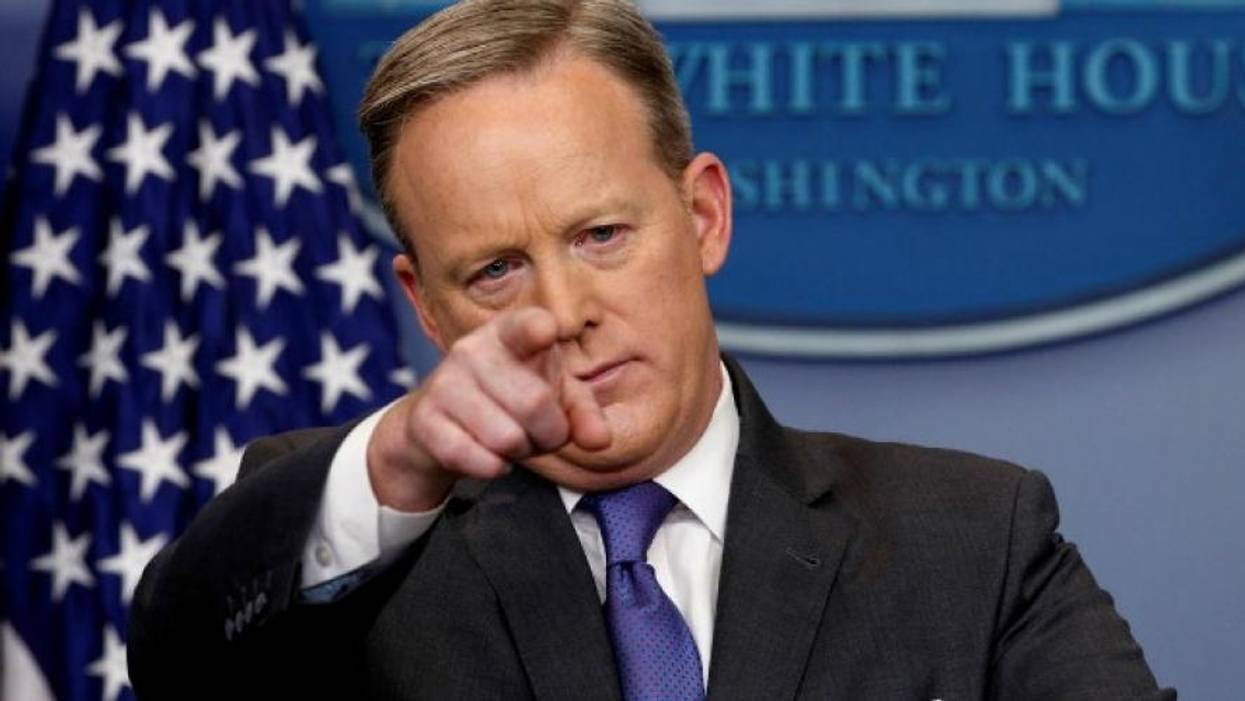
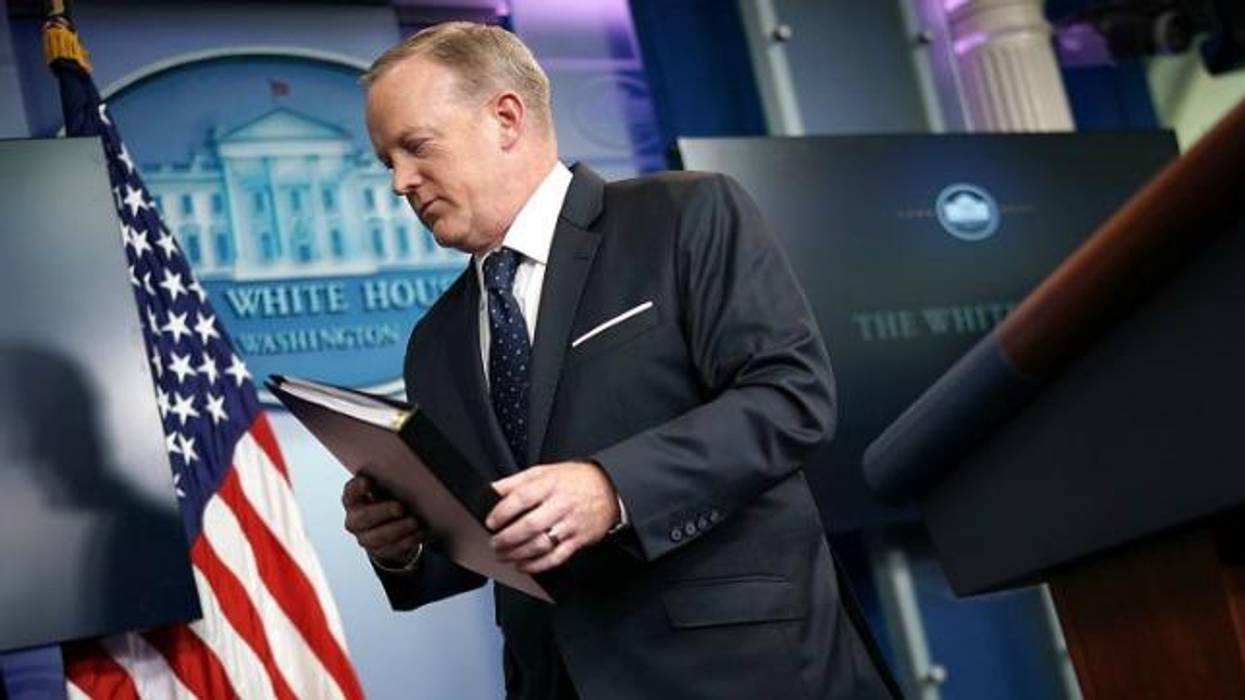
As early as March 2017, White House Press Secretary Sean Spicer acknowledged that the administration did indeed believe in the existence of a deep state, a shadow operation that had infiltrated many of the offices and activities of the federal government. A reporter asked him, "Does the government believe that there is such a thing as a 'deep state' that is actively working to undermine the president?"
Spicer replied:
"I think that there's no question when you have eight years of one party in office that there are people who stay in government--affiliated with, joined--and continue to espouse the agenda of the previous administration, so I don't think it should come to any surprise that there are people that burrowed into government during the eight years of the last administration and may have believed in that agenda and want to continue to seek it."
In other words, for the Trump administration and its supporters, the deep state is any part of the apparatus of government itself that doesn't do their absolute bidding.
The Huffington Post has assembled a convenient list of some of Trump's tweets invoking the "deep state." Here's a summary:
Trump, in other words, sees the U.S. government as infected by "Unelected, deep state operatives who defy the voters, to push their own secret agendas." Those "operatives," he told a rally in 2018, are "truly a threat to democracy itself."
Does the United States Have a Deep State?
The November House impeachment hearings brought us the testimony of a number of career diplomats and civil servants like Marie Yovanovich, the former ambassador to Ukraine, and Lieutenant Colonel Alexander Vindman, a Ukraine specialist on the National Security Council. Their appearance led John McLaughlin, a former deputy director of the CIA, to exclaim in a speech at George Mason University, "Thank God for the deep state."
He meant it as a joke, but he was also pointing out that their dignified testimony might serve as a reminder of the value of government service. "Everyone here has seen this progression of diplomats, and intelligence officers and White House people trooping up to Capitol Hill right now," he explained. Those who watched that progression, he said, certainly recognized that "these are people who are doing their duty." McLaughlin told National Public Radio's Greg Myre and Rachel Treisman that he had received some "blowback" from his joke, and added:
"I think it's a silly idea. There is no 'deep state.' What people think of as the 'deep state' is just the American civil service, social security, the people who fix the roads, health and human services, Medicare."
I'll give one cheer for that kind of deep state: not a secret, extra-official shadow government, but the actual workings of government itself for the benefit of the people it's meant to serve. Personally, I'm all for people who devote their lives to making sure our food is as safe as possible, the cars we drive won't kill us, our planes stay up in the air, and roads and railways are built and maintained to connect us, not to speak of having clean air and water, public schools and universities to educate our young people, and a social security system to provide a safety net for people of my age--all of which, by the way, is in danger from this president, his administration, and the Republican party.
But there's another way of thinking about the deep state, one that suggests an ongoing threat not to Donald Trump and his pals but to this democracy and the world. I'm thinking, of course, of that vast--if informal, complex, and sometimes internally competitive--consortium composed of the industries and government branches that make up what President Dwight Eisenhower famously called the "military-industrial complex." This was exactly the "state" that I think President Obama encountered when he decided to shut down the George W. Bush-era CIA torture program and found that the price for compliance was a promise not to prosecute anyone for crimes committed in the so-called war on terror. January 2009 was, as he famously said, a time to "look forward as opposed to looking backwards."
Here is Mike Lofgren, a long-time civil servant and aide to many congressional Republicans, writing in 2014 about that national security machine for BillMoyers.com. In "Anatomy of the Deep State," he described the power and reach of this apparatus in chilling terms:
"There is the visible government situated around the Mall in Washington, and then there is another, more shadowy, more indefinable government that is not explained in Civics 101 or observable to tourists at the White House or the Capitol...
"Yes, there is another government concealed behind the one that is visible at either end of Pennsylvania Avenue, a hybrid entity of public and private institutions ruling the country according to consistent patterns in season and out, connected to, but only intermittently controlled by, the visible state whose leaders we choose."
Lofgren was not describing "a secret, conspiratorial cabal." Rather, he was arguing that "the state within a state is hiding mostly in plain sight, and its operators mainly act in the light of day." This has certainly been the experience of those who have, in particular, opposed U.S. military adventures abroad. They discover that many of the lies, deceptions, and crimes of that "state within a state" are openly there for all to see and are being committed in the equivalent of broad daylight with utter impunity.
This, by the way, creates certain obvious problems for those of us who oppose the presidency and the striking new militarism of Donald Trump--if, at least, it means embracing such representatives of Lofgren's deep state as that old war criminal, John Bolton. He has not become a progressive hero just because he's suddenly proclaimed himself ready, if subpoenaed, to testify in the Senate impeachment trial of his former boss. If Bolton chooses to do so, you can be sure that he will not be motivated by a devotion to democratic government or the rule of law
Trump's own relationship to the national security deep state has been ambivalent at best. It's clear that many of those officials initially thought he might be a weapon they could aim and shoot at will, but he's turned out to be far more bizarre and unpredictable than any of them expected. There's evidence, for example, that the assassination of Iranian Major General Qassem Suleimani was presented to Trump as the most extreme option possible--in a bid to convince him to act against Iran, but in a less drastic way. As the New York Times reported recently, "Pentagon officials have often offered improbable options to presidents to make other possibilities appear more palatable," but they don't expect presidents to choose the decoy. Donald Trump is clearly not one of those presidents.
There is a sense, however, in which the United States under Trump does resemble the original Turkish conception of a deep state, that "kind of shadow or parallel system of government in which unofficial or publicly unacknowledged individuals play important roles in defining and implementing state policy." That's a pretty apt description, for instance, of the actions of the president's personal lawyer, Rudy Giuliani, in relation to U.S. policy towards Ukraine, which he's been coordinating and in some sense directing for some time.
The only difference in this case is that Trump has been fool enough to acknowledge his personal lawyer's role. May that foolishness get him turned out of office, one way or another. In the meantime, I'll keep giving my one cheer for the civil servants who keep the wheels turning. I suspect, however, that as the world awaits developments in the Middle East now that Trump has followed 18 years of U.S. state (and deep state) disaster there with his own impetuous intervention, few people will be offering many cheers for the United States of America.
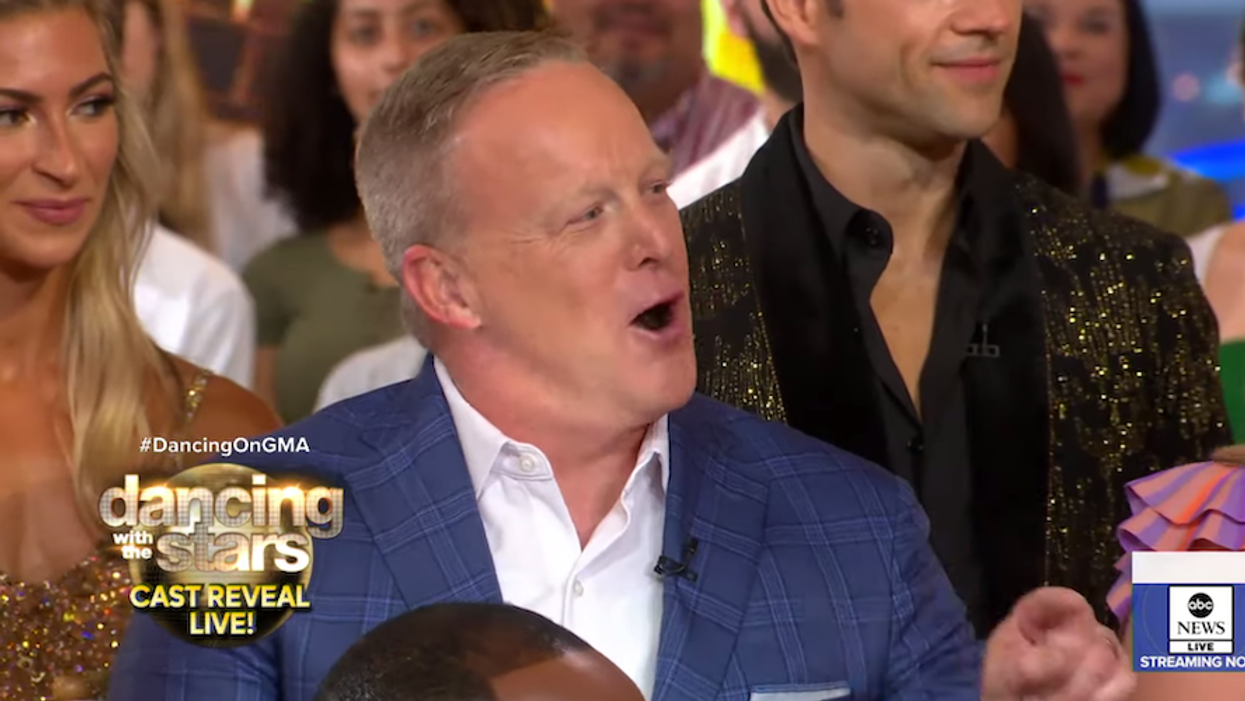
The announcement Wednesday morning on "Good Morning America" by ABC that former White House press secretary Sean Spicer will compete in the network's popular "Dancing With The Stars" reality show was met with mockery and disgust from progressives over popular culture's latest laundering of a right-wing political figure.
Spicer's role in delivering President Donald Trump's message to the American people--replete with lies and misstatements--during Spicer's six months in office between January 20, 2017 and July 21, 2017 make putting the former White House aide in the show an insult to the public, critics argued.
"Hard pass with extra no way on the side," journalist Tabetha Wallace said on Twitter.
"Love to normalize the spokespeople of fascism," said Boston-based activist Jonathan Cohn.
Among Spicer's many gaffes while sparring with the press corps in 2017 were statements inflating the crowd size at Trump's inauguration, casting doubt on the popular vote total in 2016, and claiming that Nazi leader Adolf Hitler never used chemical weapons.
"Sean Spicer told the American people hundreds of lies, including several that cast doubt on the legitimacy of the 2016 vote count," tweeted HuffPost editor George Zornick. "He also did that weird Hitler apologia. ABC should be ashamed."
Misleading the public continued after Spicer left office, said CSPAN social media specialist Jeremy Art. Art pointed to a July 24, 2018 appearance CSPAN's "Book TV" in which Spicer claimed he would not appear on, specifically, "Dancing With The Stars."
"It's no," said Spicer. "Zero on the rhythm. I wouldn't do that to viewers."
The appearance was another indication to observers that any hope of consequences for Trump or his people after they leave the White House is likely just a dream.
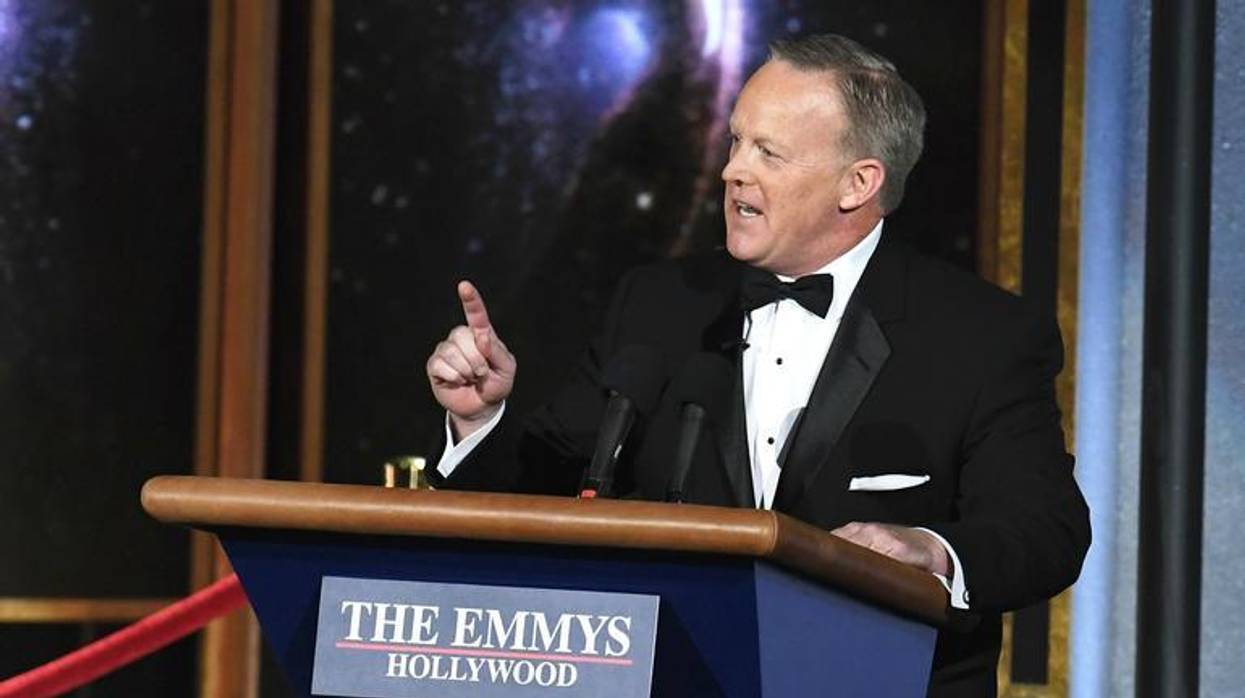
In 2018, Spicer acted as a guest host at the Emmys for a brief gag. That appearance also generated outrage from progressives, particularly around a picture of host James Corden kissing Spicer on the cheek.
And the left has watched in recent years as members of the once-disgraced George W. Bush administration--including the former president--have found warm welcomes across the media.
Thus, New York Times opinion writer Wajahat Ali said in a tweet, it's safe to say that Spicer's new gig is "an example of what will happen to every Trump enabler."
"They will all fail up," said Ali. "Every single one. It's shameful and people will hate reading that but that's how D.C. works. It's a revolving door. You'll see a rehabilitation tour of every one within two years."
Buzzfeed editor David Mack tweeted his anger over Spicer's reward.
"The punishment for over a year of lying to reporters and the American public is one of the country's top networks and morning shows doing whatever the fuck this is," said Mack.
Amid new rounds of reporting about the breadth of information being sought from current and former White House officials by Robert Mueller, the special counsel now probing possible ties between President Donald Trump's campaign and Russia, political reporter and Axios co-founder Mike Allen suggests that a potential "honey pot" of information might also be found in the copious notes taken by former press secretary Sean Spicer.
As Allen reports Thursday, "Former colleagues of [Spicer] tell Axios that he filled 'notebook after notebook' during meetings at the Republican National Committee, later at the Trump campaign, and then at the White House."
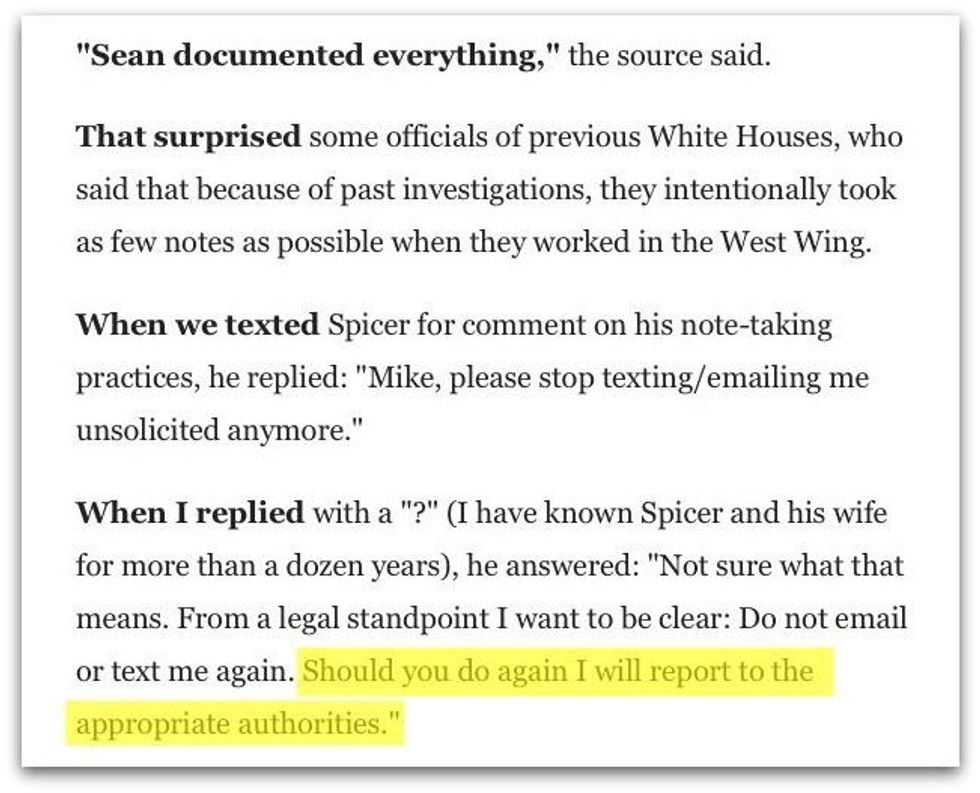
But after reaching out to Spicer himself for comment on the existence of his notebooks, Allen--instead of a "no comment"--was given a cease and desist.

In a subsequent email, sent in response to an earlier request for comment, Spicer accuses Allen of "harrassment" and repeats his warning that if contacted again he "contact the appropriate legal authorities."
And while Allen is not without critics for his style of political journalism, it seemed clear from social media postings that Spicer was taking the brunt for this exchange.
When Stephen Colbert introduced a surprise guest at the end of his Emmys opening monologue on Sunday night, the audience didn't seem to expect to see former Trump administration press secretary Sean Spicer. The Late Night host shocked most of the crowd--Veep actress Anna Chlumsky was particularly amazed--with the selection of one of comedy's favorite targets of the last year.
Colbert brought on Spicer, complete with the rolling press office podium that Melissa McCarthy made famous in her Saturday Night Live impression, to mock President Donald Trump. From the New York Times transcript:
SPICER: This will be the largest audience to witness an Emmys, period. Both in person and around the world.
COLBERT: Wow, that really soothes my fragile ego. I can understand why you would want one of these guys around.
As the night went on, pictures emerged on social media of Spicer enjoying himself backstage and at parties. Spicer was photographed schmoozing with late night hosts Seth Meyers and James Corden (the latter was caught giving Spicer a kiss on the cheek), actor Alec Baldwin (who won an Emmy for his performance on Saturday Night Live mocking Spicer's former boss) and other entertainment industry figures. By Monday night, Late Night With Stephen Colbert was using the gag in sponsored posts on Facebook. It was quite the turnaround for Spicer, whose reputation for lying in service of the president included downplaying the Holocaust and defending the administration's Muslim ban.
Given Spicer's recent history representing Trump, reaction to the joke decidedly mixed. On Monday morning, New York Times columnist Frank Bruni (9/18/17) frowned on the whole affair, writing that "Colbert abetted Spicer's image overhaul and probably upped Spicer's speaking fees by letting him demonstrate what a self-effacing sport he could be."
An unnamed source close to the decision to include Spicer told entertainment outlet Vulture (9/18/17) that it was only a joke, though one not intended for everyone: "There was no expectation everyone would love this," the source said.
Yet for all the outrage over the appearance, and for all the distaste over Spicer's relatively quick public rehabilitation (Spicer left the White House less than three weeks ago, on August 31), the fact is that it's par for the course in how the corporate media--both in news and entertainment--treat those in power when they leave Washington.
Slate's Jamelle Bouie pointed out as much on Twitter on Monday. "The expectation this time will be different is wrong," Bouie said, debunking the idea that that Trump was too toxic to preclude his acolytes from being offered redemption. And MSNBC's Chris Hayes tweeted on Sunday night shortly after Spicer's appearance that "power is all about who gets forgiven. Who gets fresh starts."
Hayes should know. The network he works for has repeatedly given airtime to George W. Bush administration speechwriter and Iraq War booster David Frum, whose image has undergone its own rehabilitation since the advent of the Obama administration. And it's not only Frum who's benefited from MSNBC's selective memory of the early 2000s. Bush White House communications director Nicolle Wallace hosts a show, Deadline: White House, on the network every weekday; officials like Bush Chief of Staff Andrew Card and election strategist Steve Schmidt frequently appear on any one of the shows that fill out the week's lineup.
Of course, MSNBC isn't alone in scrubbing clean the images of those whose political careers have resulted in war, austerity and mass surveillance. In March, FAIR (3/7/17) reported on how George W. Bush was being feted by newspapers and morning television-- and how the nostalgia around Bush's time in office was part of a longstanding media tradition of normalization for political figures.
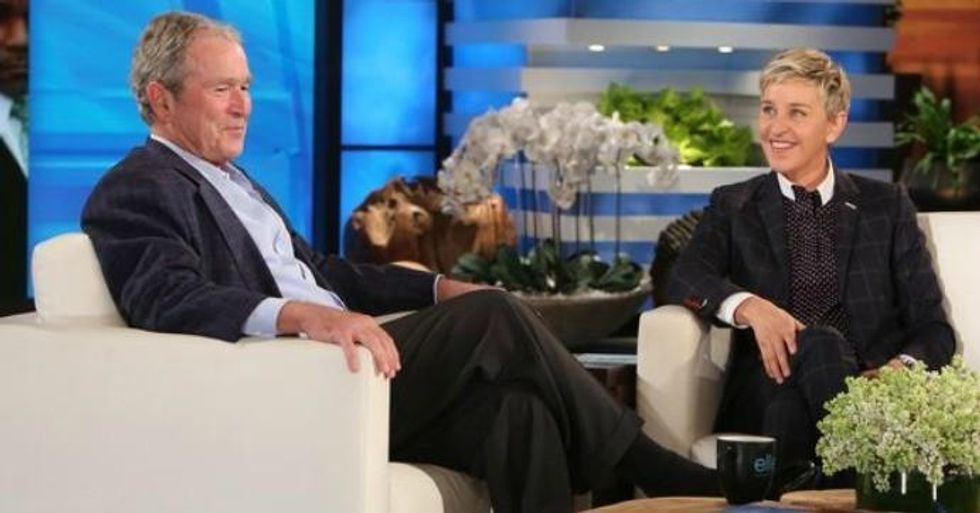
During Bush's book tour, he was welcomed with delight by Ellen Degeneres, a woman whose marriage would have been impossible under Bush's administration. As the host of the satirical Colbert Report, Colbert in 2013 included war criminal Henry Kissinger--conservatively estimated to be responsible for at least 3 million deaths--in a quirky dance video. Kissinger appeared on the Report for a softball interview the following year. Trump himself appeared on SNL in late 2015, well after his racist and misogynistic comments had become part and parcel of his campaign.
But even though this practice is a time-honored tradition, the 17 days between Spicer leaving the White House and his arrival onstage at one of Hollywood's biggest events is notable for how swiftly the worm has turned for the former press secretary. If this is what Spicer's post-White House career looks like, expect Trump to be back on the Tonight Show With Jimmy Fallon less than 48 hours after he resigns from office.
"It's a big club," the late comedian George Carlin once said of the elite in America, "and you ain't in it!" It's hard to imagine looking at Spicer's appearance at the Emmys, and the intersection between the entertainment industry and the politicians they claim to #resist, and not understand that the world the corporate media inhabit is a world where the regular social and moral rules don't apply. Once you're in, you're in.
Though some jaws dropped, many laughed, and former White House press secretary was applauded for having a "sense of humor" about the work he did for President Donald Trump, there should be nothing suprising about Sean Spicer's on-stage appearance at Sunday night's Emmy Awards.
And so while some jeered the Emmy's producers for trying to make a cheap joke or "normalize" Spicer, it was clear that many didn't find the gag particularly funny.
But taking the criticism a step further, journalist Glenn Greenwald makes the point, in a post at The Intercept Monday morning, that there is nothing shocking--and much that's very predictable--about a man like Spicer being welcomed into the circles of the elite.
Noting the mix of "shock and indignation" his appearance generated, Greenwald argues there "should be nothing whatsoever surprising about any of this, as it is the logical and necessary outcome of the self-serving template of immunity which DC elites have erected for themselves." He continues:
The Bush administration was filled with high-level officials who did not just lie from podiums but did so in service of actual war crimes. They invaded and destroyed a country of 26 million people based on blatant falsehoods and relentless propaganda. They instituted a worldwide torture regime by issuing decrees that purported to re-define what that term meant. They spied on the communications of American citizens without the warrants required by law. They kidnapped innocent people from foreign soil and sent them to be tortured in the dungeons of the world's worst regimes, and rounded up Muslims on domestic soil with no charges. They imprisoned Muslim journalists for years without a whiff of due process. And they generally embraced and implemented the fundamental tenets of authoritarianism by explicitly positioning the President and his White House as above the law.
We're supposed to all forget about that, or at least agree to minimize it, in service of this revisionist conceit that the United States has long been governed by noble, honorable and decent people until Donald Trump defaced the sanctity of the Oval Office with his band of gauche miscreants and evil clowns. Many of the same people who, just a decade ago, were depicting Dick Cheney, Karl Rove and Paul Wolfowitz - remember them? - as monsters of historic proportions are today propagating the mythology that Trump is desecrating what had always been sacred and benevolent American civic space.
Not only were all Bush officials fully immunized from the legal consequences of their crimes - in DC, that's a given - but they were also fully welcomed back into decent elite society with breakneck speed, lavished with honors, rewards, lucrative jobs and praise. Those same Bush officials responsible for the most horrific crimes are now beloved by many of the same circles which, today, are expressing such righteous rage that Sean Spicer is allowed onto the Emmy stage and a classroom at Harvard.
And Christian Christensen, journalism professor at Stockholm University and a frequent Common Dreams contributor, put it this way:
And so while George W. Bush, as Greenwald noted in his column, has appeared with smiles on Ellen Degeneres' daytime show and high-level people who served under him, including press secretary Ari Fleischer and speechwriter, are now embraced by mainstream news outlets and polite members of "liberal" society, there's little that should be shocking when Spicer drives out on the Emmy's stage in a motorized podium.

"If you're someone who employs David Frum or hires Ari Fleischer or treats Bush-era war criminals as respectable and honored sources," concludes Greenwald, "you really have no standing to object to the paradigm that has ushered Spicer into the halls of elite power. This is the precedent of elite immunity that has been created, often by the same people who are now so upset that Sean Spicer and his fellow Trump functionaries are the beneficiaries of the framework they helped to install."
President Donald Trump's new communications director says he's "personally" in favor of on-camera White House briefings, but ultimately the decision will be up to the president.
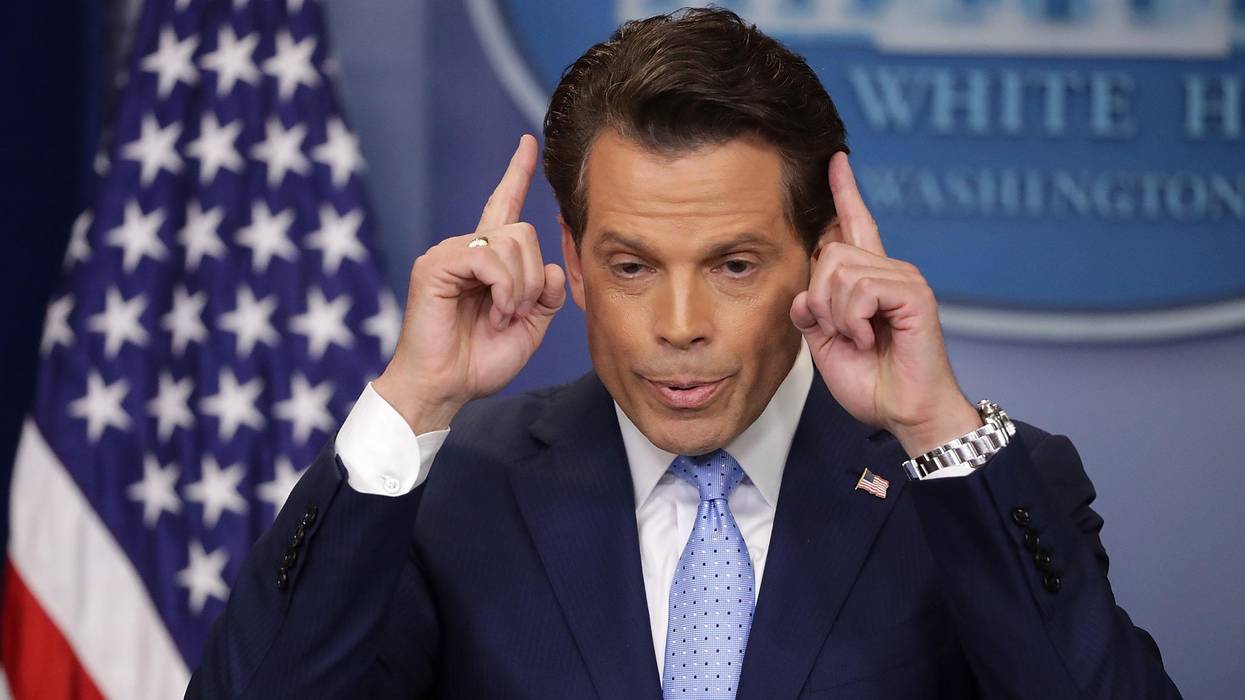
On CNN's "State of the Union" Sunday, Wall Street financier-turned-White House communications director Anthony Scaramucci told host Jake Tapper:
If you're asking me for my personal opinion--and maybe the president will be upset for giving my personal--we should put the cameras on. That's no problem. I don't think we need to have the cameras off.
But if the president doesn't want the cameras on, guess what? We're not going to have the cameras on. It's going to really be up to him. But I think we should put the cameras on.
Watch Scaramucci on CNN:
His apparently relaxed attitude toward cameras marks a startling departure from the Trump administration's hostile and increasingly restrictive interactions with the media. In the past six months, the administration has frequently banned television and audio broadcasting of briefings. Scaramucci, who officially joined Trump's communication team Friday, also reminded Tapper that Sarah Huckabee Sanders is the newly-appointed press secretary. Scaramucci said he'd given her "the big office" and encouraged her to invite members of the press to her office.
Huckabee Sanders has defended the White House's shift toward more off-camera briefings. During her recent off-camera briefing to address the Don Jr. email scandal, she said: "We're always looking at different approaches and different ways to communicate the president's message and talk about the agenda. This is one of the many ways we choose to do that."
Last month, then-press secretary Sean Spicer said the shift was, in part, because members of the press pool "want to become YouTube stars and ask some snarky question that's been asked eight times," and that the reporters "are more focused about getting their clip on air than they are of actually taking the time to understand an issue."
In May, the president threatened to cancel all press briefings, "and hand out written responses for the sake of accuracy." Just a few months earlier, the administration's engagement with reporters was decried as "undemocratic and unacceptable," "chilling" and "totalitarian" when, in February, the White House unexpectedly barred four news outlets from an off-camera briefing with Spicer.
Spicer resigned Friday, reportedly in response to Scaramucci's appointment. Later Friday, the White House held its first on-camera briefing in nearly a month.
There are two things I decline to do about the departure of Sean Spicer from behind his White House podium: 1) Care, and 2) Sympathize.
As to the first, it doesn't matter a damn to the country who the next marquee liar representing Camp Runamuck is. Any TV reporter who starts talking about how the "messaging" will now change under the watchful eye of Anthony Scaramucci is telling you that they think the administration's lying will now be smoother and more telegenic. The president will continue to be an unqualified, undereducated dolt. The policies, such as they are, will continue to be retrograde and cruel. Bob Mueller will shrug and get back to work until El Caudillo del Mar-a-Lago fires him. The public face of this particular administration is doomed always to be more of a useless bobo than all the press secretaries who have come before. None of that will change.
(The new guy, Anthony Scaramucci, came out on Friday afternoon and said thatDonald Trump had "some of the best political instincts in the world." Aces, all of them, all the way down.)
As to the second, we're already starting to hear folks talk about what a good guy Spicer is, and how he can get back to being the good guy he always was. The hell with that. Spicer took the Dolt's Shilling. On his first day on the gig, he willingly lied about the size of the inaugural crowd because the president*'s ego couldn't handle its actual size. He then repeated whatever nonsense he was told to repeat until he became a figure of fun and ridicule. And how are we supposed to believe he left because he was dissatisfied with the fact that he has a new supervisor?
"I will lie and degrade the public discourse more than any living human being, but I cannot work with THAT MAN." (Sean Spicer's Last Lament, 2017.)
Yeah, that'll fly.
I still think they should have let him meet the pope, though. That was unkind.
The Trump administration on Friday officially announced that Anthony Scaramucci--a former Goldman Sachs executive who describes himself simply as an "American entrepeneur"--will be the new White House communications director.
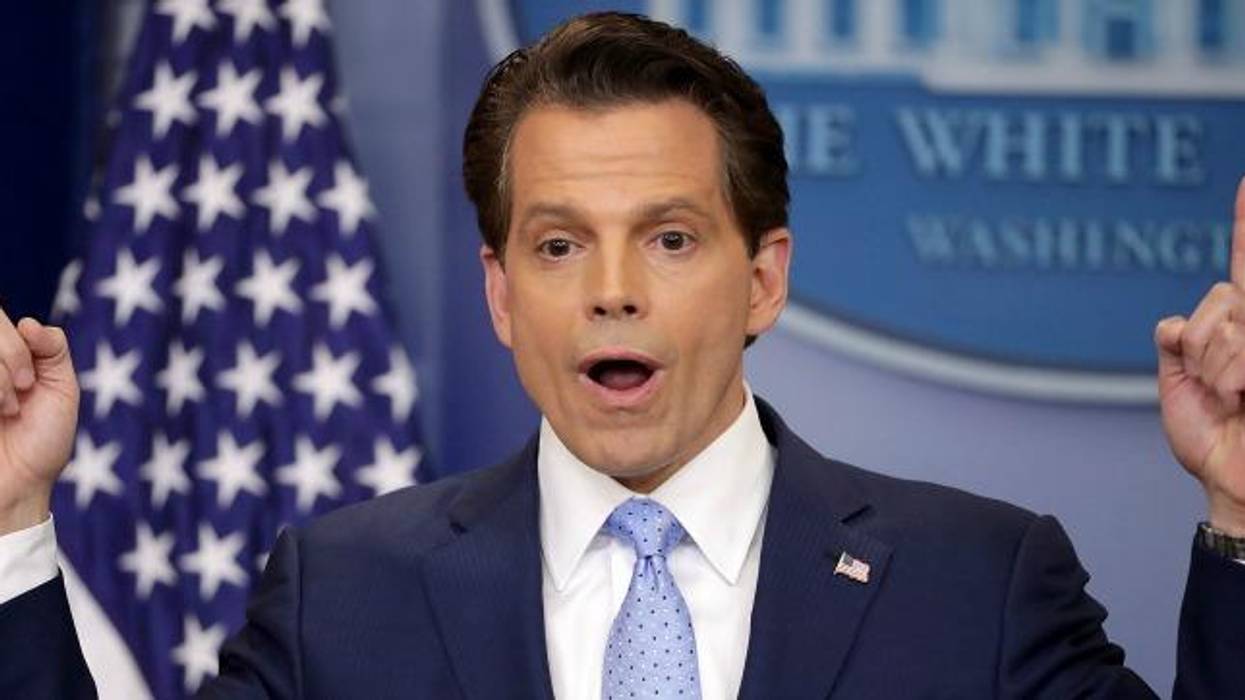
At an afternoon briefing, Scaramucci spoke with reporters for the first time and announced that Sarah Huckabee Sanders will be taking over as White House press secretary in the wake of Sean Spicer's resignation earlier in the day. Spicer, according to reports, resigned from his post at least partially due to Trump's decision to bring Scaramucci on board to lead the communication's team.
Not widely known, here are at least a few things you should know about Scaramucci, including a few highlights from Friday's briefing.
First of all, Scaramucci loves literature
In 2012, "The Mooch" tweeted, "Dance like no one is watching. Sing like no one is listening. Love like you've never been hurt and live like its heaven on earth," and falsely attributed the quote to Mark Twain.
White House press secretary Sean Spicer resigned on Friday, the New York Times first reported.
His departure was reportedly in response to President Donald Trump's appointment of Anthony Scaramucci to White House communications director.
Scaramucci is a Wall Street financier and was a campaign fundraiser for Trump. He'd fill the position left vacant by Mike Dubke, who resigned in May. Spicer had been carrying out the responsibilities of communications director since.
Spicer's short,yet "eventful" tenure as press secretary was notable for tense press briefings in which frequently attacked journalists, deviated from the facts, and dodged simple questions.
The Toronto Star's Daniel Dale argues that Spicer "was the perfect face for the Donald Trump administration," as he was "laughably dishonest, relentlessly combative, and impossible to not watch." In his brief role "as the president's chief public propagandist," Dale writes, Spicer also suffered "a long string of Trump-inflicted and self-inflicted humiliations."
The development prompted some Democratic politicians to lament that Melissa McCarthy would not longer be delighting Saturday Night Live views with her impression of Spicer. Still, Esquire's Charles Pierce argues that there will be no real messaging change from the White House. "The president will continue to be an unqualified, undereducated dolt. The policies, such as they are, will continue to be retrograde and cruel," he writes.
Spicer for his part, tweeted Friday afternoon that it "has been an honor and a privilege to serve" Trump, and said he would continue in his role as press secretary through August.
Speaking at the White House press briefing Friday afternoon, Scaramucci told reporters that Deputy White House Press Secretary Sarah Huckabee Sanders would be the new press secretary. He also called Spicer "a true American patriot" who "has done an amazing job," and said he hopes Spicer "goes on to earn a tremendous amount of money."
If there were ever a doubt that a traitor now occupies the Oval Office, Tuesday's assault on the exercise of a free press, guaranteed by the Constitution of the United States, should dispel it.
This particular attack was prompted by a screw-up at CNN, a favorite punching-bag for President Donald J. Trump, but was quickly extended to the whole of the political press. It's a timeworn strategy of authoritarian regimes. As Jill Lepore recounted in the June 5 issue of the The New Yorker, Edmund Taylor, writing in 1940 of Nazi strategy in France, reported on "the propaganda campaign waged by Nazi agents to divide the French people, by leaving them uncertain about what to believe, or whether to believe anything at all."
CNN's June 24 retraction of a story about Anthony Scaramucci, a hedge fund billionaire and member of the Trump transition team whom the president recently appointed to a senior role at the Export-Import Bank, reportedly happened after Scaramucci, now a member of the government, threatened CNN with a $100 million lawsuit. At issue was CNN's report--since removed from its website--that the Treasury Department and the Senate Intelligence Committee was looking into a meeting Scaramucci had taken, while a member of the Trump transition team, with the head of Russian investment fund that is currently chafing against U.S. sanctions. CNN reporter Thomas Frank relied on a single anonymous source for the claim of the senators' inquiry, and he and his editor, according to CNN sources cited in a New York Times report, failed to subject the story to the news outlet's protocol for vetting prior to publication.
In making the retraction, CNN also issued an apology. It did not, however, issue a correction. In other words, the story may not have risen to the news organization's standards for sourcing, but it wasn't necessarily untrue. Nonetheless, Frank resigned, as did his editor, Eric Lichtblau, and investigative unit chief Lex Haris.
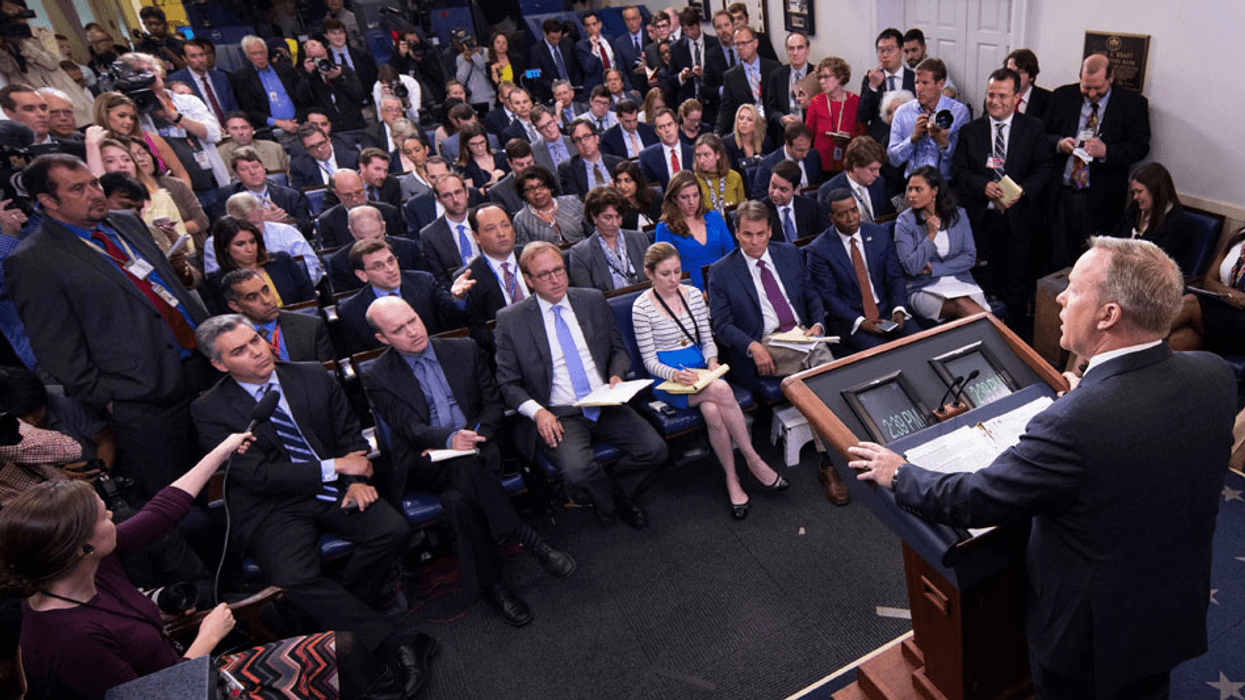
Briefings from the White House podium in the press room are no longer a daily affair, and the White House recently forbade reporters to shoot video footage, take photos, or to sometimes even capture audio from the most recent briefings conducted by White House Press Secretary Sean Spicer. (Note: This is not normal.) But Tuesday was different. Reporters should have known something was up when they were invited to come equipped with the usual tools of their trade: The White House wanted to be on the record, in living color, for this.
Occupying the podium was Deputy Press Secretary Sarah Huckabee Sanders, who upheld the president's tweets decrying CNN as the "Fake News Network," and virtually all the major news outlets as purveyors of the same. "I think that we have gone to a place where, if the media can't be trusted to report the news, then that's a dangerous place for America," she said.
She then advised reporters to view a video by proven prevaricator James O'Keefe, in which a journalist for CNN's medical unit complains that CNN hypes the Trump-Russia stories for the ratings, which might sound to some like sour grapes.
"Whether it's accurate or not, I don't know," Sanders said of the O'Keefe video, "but I would encourage everybody in this room and, frankly, everybody across the country to take a look at it."
Now, one could argue that Trump and his minions aren't exactly stopping the media from publishing and broadcasting what they care to; they're simply issuing lies about the nature of what the news media do, and upholding the work of O'Keefe, a man who once apparently tried to illegally access the phone lines of a U.S. senator by having a member of his team pose as a telephone repairman. (He was sentenced to three years' probation for "entering real property belonging to the United States under false pretenses.") But when one issues such lies from the presidential podium and from the president's Twitter account, that slaps the imprimatur of the United States Government on those lies. And when the tax revenues collected from the American people are used to lie to the American people--for the purpose of obscuring behavior by administration figures that is, at best, of questionable ethics, and at worst, egregiously corrupt--the exercise of a free press can be fairly said to be impaired.
Trump's most recent assault on the press may be seen as just another episode in a long saga, going back to the campaign. At Trump rallies, the press were penned in, sometimes in the center of an arena, and the candidate would invite the crowd to turn toward them and jeer. Cries of "Lugenpresse!"--German for "lying press"--were sometimes heard. Only a anesthetized journalist would remain unnerved while trapped in a cage with a crowd roaring insults at her. And that's partly the point. Bully the media--members of a profession that requires risk-taking--into self-doubt. The other part is to set the narrative of disbelief, so that when the real stuff hits the fan, the partisans are primed to see the journalists who expose bad actions by their man as "enemies of the people," as the president has called the media.
And make no mistake, the Republican Congress is complicit in these attacks, which amount to an assault on democracy.
On June 22, Bernie Sanders, the independent U.S. senator from Vermont, addressed the Carnegie Endowment for International Peace about the signs of authoritarianism he saw creeping into American politics. He recounted a chilling January 25 quote from Representative Lamar Smith of Texas, who suggested that the American people should get their news straight from the president--not the media. "In other words, according to a member of the United States Congress, there is one person in this country who can tell us the truth," Sanders said. It's not gonna be in your newspapers; it's not gonna be on TV; it's not gonna be in books. There's one person who can tell you the truth. And that is President Trump. Now, what does that tell us about the future of American democracy?"
There's a reason, he concluded, that "our Founders enshrined the press as the one profession specifically protected in the Bill of Rights. A well-informed citizenry is necessary for democracy to function correctly."
And if Trump has anything to say about it, it won't.