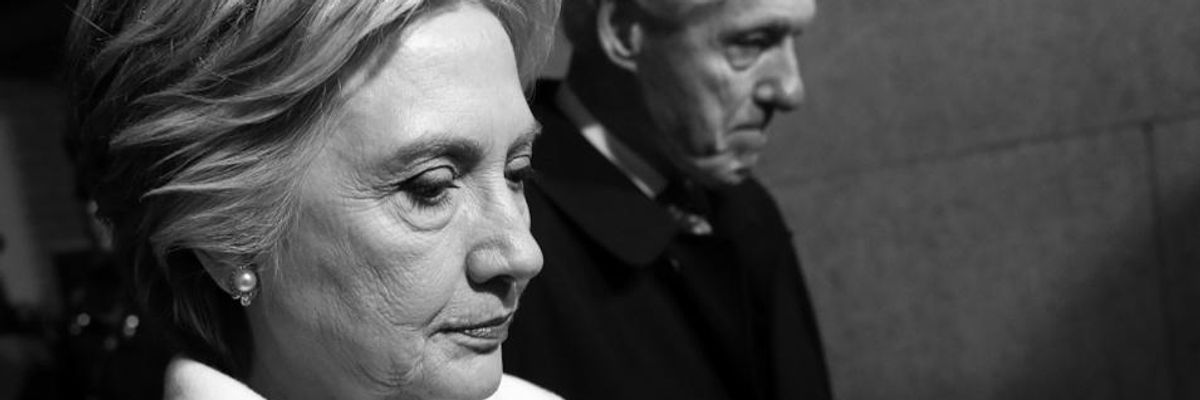
Former Democratic presidential nominee Hillary Clinton (L) and former President Bill Clinton arrive on the West Front of the U.S. Capitol on January 20, 2017 in Washington, DC. In today's inauguration ceremony Donald J. Trump becomes the 45th president of the United States. (Photo: Win McNamee/Getty Images)
What It Means That Hillary Clinton Might Run for President in 2020
The only way to overcome the corporatism that ultimately delivered the nation to Donald Trump, is for social movements to fight more resolutely and effectively for progressive change, including in the Democratic Party
Twenty-five years ago--when I wrote a book titled "False Hope: The Politics of Illusion in the Clinton Era"--I didn't expect that the Democratic Party would still be mired in Clintonism two and a half decades later. But such approaches to politics continue to haunt the party and the country.
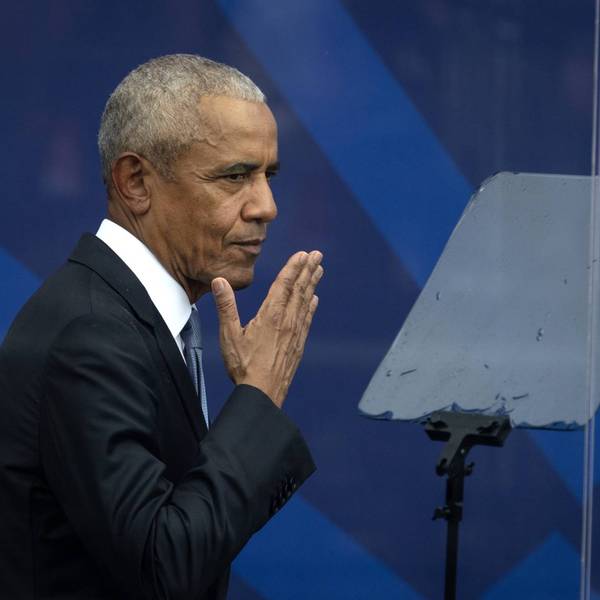
The last two Democratic presidencies largely involved talking progressive while serving Wall Street and the military-industrial complex. The obvious differences in personalities and behavior of Bill Clinton and Barack Obama diverted attention from their underlying political similarities. In office, both men rarely fought for progressive principles--and routinely undermined them.
Clinton, for example, brought the country NAFTA, welfare "reform" that was an assault on low-income women and families, telecommunications "reform" that turned far more airwaves over to media conglomerates, repeal of Glass-Steagall regulation of banks that led to the 2007-8 financial meltdown, and huge increases in mass incarceration.
"What scares me the most is Hillary's smug certainty of her own virtue as she has become greedy and how typical that is of so many chic liberals who seem unaware of their own greed. They don't really face the complicity of what's happened to the world, how selfish we've become and the horrible damage of screwing the workers and causing this resentment that the Republicans found a way of tapping into."
--Charles Peters, Washington MonthlyObama, for instance, bailed out big banks while letting underwater homeowners sink, oversaw the launching of more missiles and bombs than his predecessor George W. Bush, ramped up a war on whistleblowers, turned mass surveillance and the shredding of the Fourth Amendment into bipartisan precedent, and boosted corporate privatization of public education.
It wasn't only a congressional majority that Democrats quickly lost and never regained under President Obama. By the time he left the White House (immediately flying on a billionaire's jet to his private island and then within months starting to collect giant speaking fees from Wall Street), nearly 1,000 seats in state legislatures had been lost to Democrats during the Obama years.
Thanks to grassroots activism and revulsion toward President Trump, Democrats not only won back the House last month but also recaptured one-third of the state legislative seats that had been lost while Obama led the party and the nation.
During the last two years, progressive momentum has exerted major pressure against the kind of corporatist policies that Bill Clinton set into cement atop the Democratic Party. But today, the party's congressional leaders like Nancy Pelosi and Chuck Schumer are still in a mode loosely replicating Clinton's sleight-of-tongue formulas that have proved so useful--and extremely profitable--for corporate America, while economic inequality has skyrocketed.
As 2018 nears its end, the top of the Democratic Party is looking to continue Clintonism without the Clintons.
Or maybe Clintonism with the Clintons.
A real possibility is now emerging that Hillary Clinton will run for the 2020 Democratic presidential nomination. On Sunday, the New York Times printed a Maureen Dowd column that reported: "Some in Clintonworld say Hillary fully intends to be the nominee.... And Bill has given monologues to old friends about how Hillary knows how she'd have to run in 2020, that she couldn't have a big staff and would just speak her mind and not focus-group everything. (That already sounds focus-grouped.)"
Dowd provided a helpful recap: "After the White House, the money-grubbing raged on, with the Clintons making over 700 speeches in a 15-year period, blithely unconcerned with any appearance of avarice or of shady special interests and foreign countries buying influence. They stockpiled a whopping $240 million. Even leading up to her 2016 presidential run, Hillary was packing in the speeches, talking to the Institute of Scrap Recycling Industries, the American Camp Association, eBay, and there was that infamous trifecta of speeches for Goldman Sachs worth $675,000."
A cogent sum-up in the column came from former Washington Monthly editor Charles Peters: "What scares me the most is Hillary's smug certainty of her own virtue as she has become greedy and how typical that is of so many chic liberals who seem unaware of their own greed. They don't really face the complicity of what's happened to the world, how selfish we've become and the horrible damage of screwing the workers and causing this resentment that the Republicans found a way of tapping into."
That's where we are now--not only with the grim prospect that Hillary Clinton might run for president again, but more fundamentally with corporate allegiances still dominating the Democratic Party leadership.
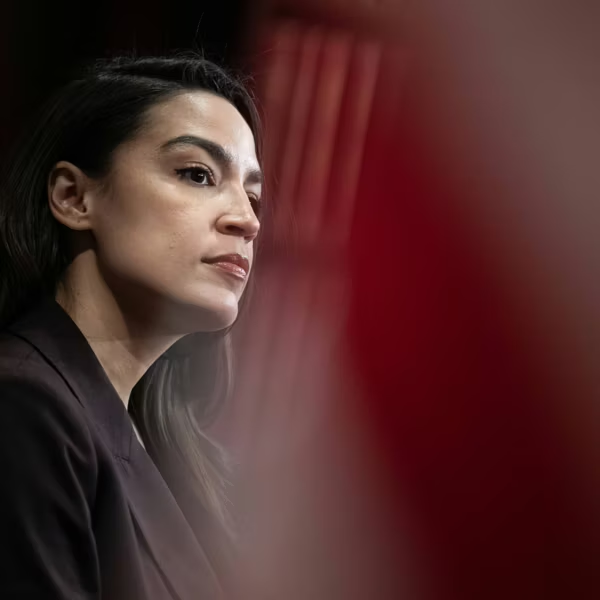
The only way to overcome such corporatism is for social movements to fight more resolutely and effectively for progressive change, including in the Democratic Party. If you don't think that's a path to real breakthroughs, consider Alexandria Ocasio-Cortez, Ilhan Omar, Rashida Tlaib and Ayanna Pressley, winners of Democratic primaries this year who'll be sworn in as members of Congress next month. (Compare those successes to two decades of Green Party candidates running for Congress and never coming close.)
Whether or not Hillary Clinton runs for president again, Clintonism is a political blight with huge staying power. It can be overcome only if and when people at the grassroots effectively insist on moving the Democratic Party in a genuinely progressive direction.
We are at a crossroads
This country and this world are at a monumental crossroads. In a few short weeks, US voters will have an opportunity to beat back the forces of fascism and confront the billionaires who are rigging the economy, our media system, and our democracy, making it increasingly impossible for ordinary people to get by. We’re not just talking about the election. We’re talking about what must be done once these fascist elements are vanquished from power. We need a bolder set of solutions than what either major party has so far been willing to offer and a working-class movement ready to fight like hell for it. Trump didn't emerge from nowhere. The conditions that fueled MAGA authoritarianism were created by decades of radical neoliberal economic policies and a corrupt political system dominated by corporate interests. They slashed taxes on the super-rich, promising that the benefits would trickle down. They said giveaways to the corporate titans would make life more affordable for the rest of us. It was all bullshit. And when a bitter, betrayed populace searches for someone to blame, right-wing demagogues have little trouble finding scapegoats. People know when they're being lied to, but you won't hear any of this from the corporate media. Only independent journalism—powered and funded by people who believe in building a better world—can deliver truly trustworthy daily news. Our Fall Campaign is underway, and we need your help. To power our newsroom through the rest of the year, we need to raise $125,000 by midnight on October 31. So if you share our vision, please contribute whatever you can to sustain our work. |
Norman Solomon is the national director of RootsAction.org and executive director of the Institute for Public Accuracy. The paperback edition of his latest book, War Made Invisible: How America Hides the Human Toll of Its Military Machine, includes an afterword about the Gaza war.
Twenty-five years ago--when I wrote a book titled "False Hope: The Politics of Illusion in the Clinton Era"--I didn't expect that the Democratic Party would still be mired in Clintonism two and a half decades later. But such approaches to politics continue to haunt the party and the country.
The last two Democratic presidencies largely involved talking progressive while serving Wall Street and the military-industrial complex. The obvious differences in personalities and behavior of Bill Clinton and Barack Obama diverted attention from their underlying political similarities. In office, both men rarely fought for progressive principles--and routinely undermined them.
Clinton, for example, brought the country NAFTA, welfare "reform" that was an assault on low-income women and families, telecommunications "reform" that turned far more airwaves over to media conglomerates, repeal of Glass-Steagall regulation of banks that led to the 2007-8 financial meltdown, and huge increases in mass incarceration.
"What scares me the most is Hillary's smug certainty of her own virtue as she has become greedy and how typical that is of so many chic liberals who seem unaware of their own greed. They don't really face the complicity of what's happened to the world, how selfish we've become and the horrible damage of screwing the workers and causing this resentment that the Republicans found a way of tapping into."
--Charles Peters, Washington MonthlyObama, for instance, bailed out big banks while letting underwater homeowners sink, oversaw the launching of more missiles and bombs than his predecessor George W. Bush, ramped up a war on whistleblowers, turned mass surveillance and the shredding of the Fourth Amendment into bipartisan precedent, and boosted corporate privatization of public education.
It wasn't only a congressional majority that Democrats quickly lost and never regained under President Obama. By the time he left the White House (immediately flying on a billionaire's jet to his private island and then within months starting to collect giant speaking fees from Wall Street), nearly 1,000 seats in state legislatures had been lost to Democrats during the Obama years.
Thanks to grassroots activism and revulsion toward President Trump, Democrats not only won back the House last month but also recaptured one-third of the state legislative seats that had been lost while Obama led the party and the nation.
During the last two years, progressive momentum has exerted major pressure against the kind of corporatist policies that Bill Clinton set into cement atop the Democratic Party. But today, the party's congressional leaders like Nancy Pelosi and Chuck Schumer are still in a mode loosely replicating Clinton's sleight-of-tongue formulas that have proved so useful--and extremely profitable--for corporate America, while economic inequality has skyrocketed.
As 2018 nears its end, the top of the Democratic Party is looking to continue Clintonism without the Clintons.
Or maybe Clintonism with the Clintons.
A real possibility is now emerging that Hillary Clinton will run for the 2020 Democratic presidential nomination. On Sunday, the New York Times printed a Maureen Dowd column that reported: "Some in Clintonworld say Hillary fully intends to be the nominee.... And Bill has given monologues to old friends about how Hillary knows how she'd have to run in 2020, that she couldn't have a big staff and would just speak her mind and not focus-group everything. (That already sounds focus-grouped.)"
Dowd provided a helpful recap: "After the White House, the money-grubbing raged on, with the Clintons making over 700 speeches in a 15-year period, blithely unconcerned with any appearance of avarice or of shady special interests and foreign countries buying influence. They stockpiled a whopping $240 million. Even leading up to her 2016 presidential run, Hillary was packing in the speeches, talking to the Institute of Scrap Recycling Industries, the American Camp Association, eBay, and there was that infamous trifecta of speeches for Goldman Sachs worth $675,000."
A cogent sum-up in the column came from former Washington Monthly editor Charles Peters: "What scares me the most is Hillary's smug certainty of her own virtue as she has become greedy and how typical that is of so many chic liberals who seem unaware of their own greed. They don't really face the complicity of what's happened to the world, how selfish we've become and the horrible damage of screwing the workers and causing this resentment that the Republicans found a way of tapping into."
That's where we are now--not only with the grim prospect that Hillary Clinton might run for president again, but more fundamentally with corporate allegiances still dominating the Democratic Party leadership.
The only way to overcome such corporatism is for social movements to fight more resolutely and effectively for progressive change, including in the Democratic Party. If you don't think that's a path to real breakthroughs, consider Alexandria Ocasio-Cortez, Ilhan Omar, Rashida Tlaib and Ayanna Pressley, winners of Democratic primaries this year who'll be sworn in as members of Congress next month. (Compare those successes to two decades of Green Party candidates running for Congress and never coming close.)
Whether or not Hillary Clinton runs for president again, Clintonism is a political blight with huge staying power. It can be overcome only if and when people at the grassroots effectively insist on moving the Democratic Party in a genuinely progressive direction.
Norman Solomon is the national director of RootsAction.org and executive director of the Institute for Public Accuracy. The paperback edition of his latest book, War Made Invisible: How America Hides the Human Toll of Its Military Machine, includes an afterword about the Gaza war.
Twenty-five years ago--when I wrote a book titled "False Hope: The Politics of Illusion in the Clinton Era"--I didn't expect that the Democratic Party would still be mired in Clintonism two and a half decades later. But such approaches to politics continue to haunt the party and the country.
The last two Democratic presidencies largely involved talking progressive while serving Wall Street and the military-industrial complex. The obvious differences in personalities and behavior of Bill Clinton and Barack Obama diverted attention from their underlying political similarities. In office, both men rarely fought for progressive principles--and routinely undermined them.
Clinton, for example, brought the country NAFTA, welfare "reform" that was an assault on low-income women and families, telecommunications "reform" that turned far more airwaves over to media conglomerates, repeal of Glass-Steagall regulation of banks that led to the 2007-8 financial meltdown, and huge increases in mass incarceration.
"What scares me the most is Hillary's smug certainty of her own virtue as she has become greedy and how typical that is of so many chic liberals who seem unaware of their own greed. They don't really face the complicity of what's happened to the world, how selfish we've become and the horrible damage of screwing the workers and causing this resentment that the Republicans found a way of tapping into."
--Charles Peters, Washington MonthlyObama, for instance, bailed out big banks while letting underwater homeowners sink, oversaw the launching of more missiles and bombs than his predecessor George W. Bush, ramped up a war on whistleblowers, turned mass surveillance and the shredding of the Fourth Amendment into bipartisan precedent, and boosted corporate privatization of public education.
It wasn't only a congressional majority that Democrats quickly lost and never regained under President Obama. By the time he left the White House (immediately flying on a billionaire's jet to his private island and then within months starting to collect giant speaking fees from Wall Street), nearly 1,000 seats in state legislatures had been lost to Democrats during the Obama years.
Thanks to grassroots activism and revulsion toward President Trump, Democrats not only won back the House last month but also recaptured one-third of the state legislative seats that had been lost while Obama led the party and the nation.
During the last two years, progressive momentum has exerted major pressure against the kind of corporatist policies that Bill Clinton set into cement atop the Democratic Party. But today, the party's congressional leaders like Nancy Pelosi and Chuck Schumer are still in a mode loosely replicating Clinton's sleight-of-tongue formulas that have proved so useful--and extremely profitable--for corporate America, while economic inequality has skyrocketed.
As 2018 nears its end, the top of the Democratic Party is looking to continue Clintonism without the Clintons.
Or maybe Clintonism with the Clintons.
A real possibility is now emerging that Hillary Clinton will run for the 2020 Democratic presidential nomination. On Sunday, the New York Times printed a Maureen Dowd column that reported: "Some in Clintonworld say Hillary fully intends to be the nominee.... And Bill has given monologues to old friends about how Hillary knows how she'd have to run in 2020, that she couldn't have a big staff and would just speak her mind and not focus-group everything. (That already sounds focus-grouped.)"
Dowd provided a helpful recap: "After the White House, the money-grubbing raged on, with the Clintons making over 700 speeches in a 15-year period, blithely unconcerned with any appearance of avarice or of shady special interests and foreign countries buying influence. They stockpiled a whopping $240 million. Even leading up to her 2016 presidential run, Hillary was packing in the speeches, talking to the Institute of Scrap Recycling Industries, the American Camp Association, eBay, and there was that infamous trifecta of speeches for Goldman Sachs worth $675,000."
A cogent sum-up in the column came from former Washington Monthly editor Charles Peters: "What scares me the most is Hillary's smug certainty of her own virtue as she has become greedy and how typical that is of so many chic liberals who seem unaware of their own greed. They don't really face the complicity of what's happened to the world, how selfish we've become and the horrible damage of screwing the workers and causing this resentment that the Republicans found a way of tapping into."
That's where we are now--not only with the grim prospect that Hillary Clinton might run for president again, but more fundamentally with corporate allegiances still dominating the Democratic Party leadership.
The only way to overcome such corporatism is for social movements to fight more resolutely and effectively for progressive change, including in the Democratic Party. If you don't think that's a path to real breakthroughs, consider Alexandria Ocasio-Cortez, Ilhan Omar, Rashida Tlaib and Ayanna Pressley, winners of Democratic primaries this year who'll be sworn in as members of Congress next month. (Compare those successes to two decades of Green Party candidates running for Congress and never coming close.)
Whether or not Hillary Clinton runs for president again, Clintonism is a political blight with huge staying power. It can be overcome only if and when people at the grassroots effectively insist on moving the Democratic Party in a genuinely progressive direction.