SUBSCRIBE TO OUR FREE NEWSLETTER
Daily news & progressive opinion—funded by the people, not the corporations—delivered straight to your inbox.
5
#000000
#FFFFFF
To donate by check, phone, or other method, see our More Ways to Give page.
Daily news & progressive opinion—funded by the people, not the corporations—delivered straight to your inbox.
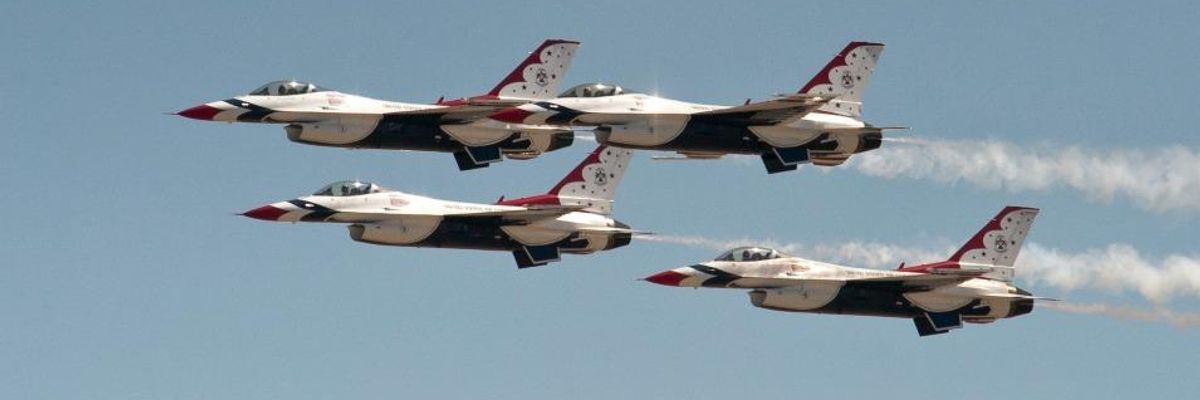
President Donald Trump's recent selection of hard-liners including John Bolton as national security adviser and Mike Pompeo as Secretary of State have led to concerns about potential U.S. military action against Iran or North Korea. (Photo: Travis AFB/Flickr/cc)
On Thursday, President Trump moved one step closer to completing his preferred cabinet. General H.R. McMaster, whom Trump called boring, was replaced as national security advisor by ultra-hawk John Bolton. This is the same John Bolton who wrote the forward for Pamela Geller's hate-filled book about President Obama, called on Israel to nuke Iran, urged the United States to bomb Iran and North Korea,abused a female USAID employee, advocated on behalf of the NRA for more gun rights for Russian citizens, and still defends the Iraq war. I could go on.
Trump's other appointments have similar attributes. Mike Pompeo, set to take over in Foggy Bottom, compared Iran to the Islamic State and called it a "thuggish police state" that is "intent [on] destroying America." Lastly, Gina Haspel, set to take over the CIA, has a history of torturing detainees under the Bush administration. She even destroyed the recordings taken of the torture years later. Meanwhile, John Kelley remains in a precarious position as chief of staff.
This team constitutes a gang of evil. The anti-diplomacy, pro-torture, pro-war initiatives they have supported have cost lives and created instability in the Middle East to the detriment of U.S. national security and international standing. Additionally, Bolton and Pompeo have ties to hate groups that promote division at home (no wonder Trump likes them). Also, some of the initial appointments belong to the same gang, including UN Ambassador Nikki Haley and Michael D'Andrea, the head of the CIA's Iran operations.
Three upcoming dates likely encouraged Trump to make these rapid changes.
North Korea and Iran
Trump is slated to meet directly with Kim Jong Un by this coming May. The changes in Trump's cabinet have put a damper on the preparations as the deadline approaches. However, the changes are no accident. Trump has used bellicose language towards North Korea from early on in his presidency. By having a like-minded secretary of state and national security advisor in place, he is sending a deliberate signal to Kim Jong Un. If Trump is going to play lead diplomat, he still has threatening cabinet members in place as a counterforce. But with such a high-level start to the talks, as many analysts have repeated, there's little room for diplomatic recourse should the Trump-Kim discussions fail. Bolton would be the ideal person to game the next move in such a situation and show an aggressive posture. That some in the president's own party don't seem to care about the consequences of war or even the consequences of a limited strike does not bode well should the talks fail (or fail to happen).
The Iran nuclear deal is another worrying case. On May 12, Trump must decide whether the deal should be recertified. The International Atomic Energy Agency, assigned to overlook the implementation of the deal, has said that Iran has complied to the benefit of the international community. Meanwhile, the Europeans and the Iranians have grown frustrated regarding Washington's threats to tear up the deal. The Europeans have proposed adding an addendum regarding Iran's ballistic missiles, but the Iranians are not having it. Iran remains irritated by the lack of investment from foreign businesses and banks, which they blame on Trump's bellicose language.
The recent hiring of Bolton sends a major signal to Iran's leadership that the United States is doubling down on its aggressive posture. Again, this is by design. Trump wants either to provoke Iran to withdraw from the deal first--thus shifting blame away from Washington--or to add sanctions in May in direct violation of the deal and thereby killing it. Either way, Bolton's presence increases the chance of a conflict that already has concerned U.S. allies.
Several regional enemies of Iran would support an American intervention. The overlap of the Bolton announcement with the visit to Washington of hawkish Saudi Crown Prince Mohammed bin Salman, responsible for the deadly Yemen intervention, is likely no coincidence.
The Blue Wave
Everything points toward November. The president and the Republican Party know that they are likely to suffer a "blue wave" on election night. This is the third date likely inspiring Trump's recent moves. The president is a showman at heart. He is more timing and appearance than substance. Trump is likely to ratchet up tensions with Iran and North Korea in reaction to, or in prevention of, a blue wave. Of course, Trump would need the unlikely approval of Congress for any major intervention, but the intervention does not have to be on a regular armed conflict. It could also be in the cyber realm. Or it could be clandestine, which requires less congressional oversight.
During the campaign, Trump loved to say that he was against the Iraq war, which he called a "disaster." Apparently during negotiations with Bolton, Trump had him promise that he "wouldn't start any wars." However, this is the same Trump who has continued America's war for the Greater Middle East despite lamenting the "trillions of dollars spent and thousands of lives lost" in the region.
The president has many attributes, but consistency is not one of them. Putting Pompeo and Bolton in such major positions of power suggests that Trump and his gang of evil are preparing for the very conflicts that he promised to avoid.
Dear Common Dreams reader, It’s been nearly 30 years since I co-founded Common Dreams with my late wife, Lina Newhouser. We had the radical notion that journalism should serve the public good, not corporate profits. It was clear to us from the outset what it would take to build such a project. No paid advertisements. No corporate sponsors. No millionaire publisher telling us what to think or do. Many people said we wouldn't last a year, but we proved those doubters wrong. Together with a tremendous team of journalists and dedicated staff, we built an independent media outlet free from the constraints of profits and corporate control. Our mission has always been simple: To inform. To inspire. To ignite change for the common good. Building Common Dreams was not easy. Our survival was never guaranteed. When you take on the most powerful forces—Wall Street greed, fossil fuel industry destruction, Big Tech lobbyists, and uber-rich oligarchs who have spent billions upon billions rigging the economy and democracy in their favor—the only bulwark you have is supporters who believe in your work. But here’s the urgent message from me today. It's never been this bad out there. And it's never been this hard to keep us going. At the very moment Common Dreams is most needed, the threats we face are intensifying. We need your support now more than ever. We don't accept corporate advertising and never will. We don't have a paywall because we don't think people should be blocked from critical news based on their ability to pay. Everything we do is funded by the donations of readers like you. When everyone does the little they can afford, we are strong. But if that support retreats or dries up, so do we. Will you donate now to make sure Common Dreams not only survives but thrives? —Craig Brown, Co-founder |
On Thursday, President Trump moved one step closer to completing his preferred cabinet. General H.R. McMaster, whom Trump called boring, was replaced as national security advisor by ultra-hawk John Bolton. This is the same John Bolton who wrote the forward for Pamela Geller's hate-filled book about President Obama, called on Israel to nuke Iran, urged the United States to bomb Iran and North Korea,abused a female USAID employee, advocated on behalf of the NRA for more gun rights for Russian citizens, and still defends the Iraq war. I could go on.
Trump's other appointments have similar attributes. Mike Pompeo, set to take over in Foggy Bottom, compared Iran to the Islamic State and called it a "thuggish police state" that is "intent [on] destroying America." Lastly, Gina Haspel, set to take over the CIA, has a history of torturing detainees under the Bush administration. She even destroyed the recordings taken of the torture years later. Meanwhile, John Kelley remains in a precarious position as chief of staff.
This team constitutes a gang of evil. The anti-diplomacy, pro-torture, pro-war initiatives they have supported have cost lives and created instability in the Middle East to the detriment of U.S. national security and international standing. Additionally, Bolton and Pompeo have ties to hate groups that promote division at home (no wonder Trump likes them). Also, some of the initial appointments belong to the same gang, including UN Ambassador Nikki Haley and Michael D'Andrea, the head of the CIA's Iran operations.
Three upcoming dates likely encouraged Trump to make these rapid changes.
North Korea and Iran
Trump is slated to meet directly with Kim Jong Un by this coming May. The changes in Trump's cabinet have put a damper on the preparations as the deadline approaches. However, the changes are no accident. Trump has used bellicose language towards North Korea from early on in his presidency. By having a like-minded secretary of state and national security advisor in place, he is sending a deliberate signal to Kim Jong Un. If Trump is going to play lead diplomat, he still has threatening cabinet members in place as a counterforce. But with such a high-level start to the talks, as many analysts have repeated, there's little room for diplomatic recourse should the Trump-Kim discussions fail. Bolton would be the ideal person to game the next move in such a situation and show an aggressive posture. That some in the president's own party don't seem to care about the consequences of war or even the consequences of a limited strike does not bode well should the talks fail (or fail to happen).
The Iran nuclear deal is another worrying case. On May 12, Trump must decide whether the deal should be recertified. The International Atomic Energy Agency, assigned to overlook the implementation of the deal, has said that Iran has complied to the benefit of the international community. Meanwhile, the Europeans and the Iranians have grown frustrated regarding Washington's threats to tear up the deal. The Europeans have proposed adding an addendum regarding Iran's ballistic missiles, but the Iranians are not having it. Iran remains irritated by the lack of investment from foreign businesses and banks, which they blame on Trump's bellicose language.
The recent hiring of Bolton sends a major signal to Iran's leadership that the United States is doubling down on its aggressive posture. Again, this is by design. Trump wants either to provoke Iran to withdraw from the deal first--thus shifting blame away from Washington--or to add sanctions in May in direct violation of the deal and thereby killing it. Either way, Bolton's presence increases the chance of a conflict that already has concerned U.S. allies.
Several regional enemies of Iran would support an American intervention. The overlap of the Bolton announcement with the visit to Washington of hawkish Saudi Crown Prince Mohammed bin Salman, responsible for the deadly Yemen intervention, is likely no coincidence.
The Blue Wave
Everything points toward November. The president and the Republican Party know that they are likely to suffer a "blue wave" on election night. This is the third date likely inspiring Trump's recent moves. The president is a showman at heart. He is more timing and appearance than substance. Trump is likely to ratchet up tensions with Iran and North Korea in reaction to, or in prevention of, a blue wave. Of course, Trump would need the unlikely approval of Congress for any major intervention, but the intervention does not have to be on a regular armed conflict. It could also be in the cyber realm. Or it could be clandestine, which requires less congressional oversight.
During the campaign, Trump loved to say that he was against the Iraq war, which he called a "disaster." Apparently during negotiations with Bolton, Trump had him promise that he "wouldn't start any wars." However, this is the same Trump who has continued America's war for the Greater Middle East despite lamenting the "trillions of dollars spent and thousands of lives lost" in the region.
The president has many attributes, but consistency is not one of them. Putting Pompeo and Bolton in such major positions of power suggests that Trump and his gang of evil are preparing for the very conflicts that he promised to avoid.
On Thursday, President Trump moved one step closer to completing his preferred cabinet. General H.R. McMaster, whom Trump called boring, was replaced as national security advisor by ultra-hawk John Bolton. This is the same John Bolton who wrote the forward for Pamela Geller's hate-filled book about President Obama, called on Israel to nuke Iran, urged the United States to bomb Iran and North Korea,abused a female USAID employee, advocated on behalf of the NRA for more gun rights for Russian citizens, and still defends the Iraq war. I could go on.
Trump's other appointments have similar attributes. Mike Pompeo, set to take over in Foggy Bottom, compared Iran to the Islamic State and called it a "thuggish police state" that is "intent [on] destroying America." Lastly, Gina Haspel, set to take over the CIA, has a history of torturing detainees under the Bush administration. She even destroyed the recordings taken of the torture years later. Meanwhile, John Kelley remains in a precarious position as chief of staff.
This team constitutes a gang of evil. The anti-diplomacy, pro-torture, pro-war initiatives they have supported have cost lives and created instability in the Middle East to the detriment of U.S. national security and international standing. Additionally, Bolton and Pompeo have ties to hate groups that promote division at home (no wonder Trump likes them). Also, some of the initial appointments belong to the same gang, including UN Ambassador Nikki Haley and Michael D'Andrea, the head of the CIA's Iran operations.
Three upcoming dates likely encouraged Trump to make these rapid changes.
North Korea and Iran
Trump is slated to meet directly with Kim Jong Un by this coming May. The changes in Trump's cabinet have put a damper on the preparations as the deadline approaches. However, the changes are no accident. Trump has used bellicose language towards North Korea from early on in his presidency. By having a like-minded secretary of state and national security advisor in place, he is sending a deliberate signal to Kim Jong Un. If Trump is going to play lead diplomat, he still has threatening cabinet members in place as a counterforce. But with such a high-level start to the talks, as many analysts have repeated, there's little room for diplomatic recourse should the Trump-Kim discussions fail. Bolton would be the ideal person to game the next move in such a situation and show an aggressive posture. That some in the president's own party don't seem to care about the consequences of war or even the consequences of a limited strike does not bode well should the talks fail (or fail to happen).
The Iran nuclear deal is another worrying case. On May 12, Trump must decide whether the deal should be recertified. The International Atomic Energy Agency, assigned to overlook the implementation of the deal, has said that Iran has complied to the benefit of the international community. Meanwhile, the Europeans and the Iranians have grown frustrated regarding Washington's threats to tear up the deal. The Europeans have proposed adding an addendum regarding Iran's ballistic missiles, but the Iranians are not having it. Iran remains irritated by the lack of investment from foreign businesses and banks, which they blame on Trump's bellicose language.
The recent hiring of Bolton sends a major signal to Iran's leadership that the United States is doubling down on its aggressive posture. Again, this is by design. Trump wants either to provoke Iran to withdraw from the deal first--thus shifting blame away from Washington--or to add sanctions in May in direct violation of the deal and thereby killing it. Either way, Bolton's presence increases the chance of a conflict that already has concerned U.S. allies.
Several regional enemies of Iran would support an American intervention. The overlap of the Bolton announcement with the visit to Washington of hawkish Saudi Crown Prince Mohammed bin Salman, responsible for the deadly Yemen intervention, is likely no coincidence.
The Blue Wave
Everything points toward November. The president and the Republican Party know that they are likely to suffer a "blue wave" on election night. This is the third date likely inspiring Trump's recent moves. The president is a showman at heart. He is more timing and appearance than substance. Trump is likely to ratchet up tensions with Iran and North Korea in reaction to, or in prevention of, a blue wave. Of course, Trump would need the unlikely approval of Congress for any major intervention, but the intervention does not have to be on a regular armed conflict. It could also be in the cyber realm. Or it could be clandestine, which requires less congressional oversight.
During the campaign, Trump loved to say that he was against the Iraq war, which he called a "disaster." Apparently during negotiations with Bolton, Trump had him promise that he "wouldn't start any wars." However, this is the same Trump who has continued America's war for the Greater Middle East despite lamenting the "trillions of dollars spent and thousands of lives lost" in the region.
The president has many attributes, but consistency is not one of them. Putting Pompeo and Bolton in such major positions of power suggests that Trump and his gang of evil are preparing for the very conflicts that he promised to avoid.