

SUBSCRIBE TO OUR FREE NEWSLETTER
Daily news & progressive opinion—funded by the people, not the corporations—delivered straight to your inbox.
5
#000000
#FFFFFF
To donate by check, phone, or other method, see our More Ways to Give page.
Daily news & progressive opinion—funded by the people, not the corporations—delivered straight to your inbox.

"Children are not incidental victims; they are directly affected, facing forced recruitment, sexual violence, unlawful detention, torture, and a lack of medical care," Amnesty International USA stressed.
Demands for a ceasefire in Sudan's three-year civil war mounted this week amid reports that more than 300 children have been killed or injured in the northeastern African nation this year alone, mostly by drone strikes.
The United Nations Children's Fund (UNICEF) said Modaysu that "children across Sudan continue to bear the brunt of a war that is becoming increasingly deadly, with at least 330 children reported killed or injured during the first six months of 2026. Darfur and Kordofan states continued to record the highest levels of child casualties."
"The situation in and around al-Obeid, and more broadly across North Kordofan, is particularly alarming," UNICEF continued. "Since May 2026, drone strikes and other attacks have reportedly resulted in more than 35 child casualties in the state, including at least 18 children killed and more than 17 injured. The affected children ranged in age from just 2 months to 17 years. According to reports, drone attacks accounted for 60% of these casualties, highlighting the growing impact of this method of warfare on children and families."
"Repeated drone strikes and shelling have also damaged civilian infrastructure, including homes, schools, health facilities, water systems, and markets; disrupted supply routes; and placed essential services under increasing strain," the agency added. "With an estimated 500,000 civilians at risk in and around al-Obeid and across North Kordofan, any further deterioration could expose even more children to death, injury, displacement, and other grave protection risks."
Amnesty International USA said Monday that both the Sudanese Armed Forces (SAF) and Rapid Support Forces (RSF) rebels "have committed numerous human rights violations, including deliberate attacks on civilians."
"Ethnic targeting has resulted in assaults on non-Arab communities, with women and girls subjected to sexual violence and exploitation," Amnesty added. "Children are not incidental victims; they are directly affected, facing forced recruitment, sexual violence, unlawful detention, torture, and a lack of medical care."
On Monday, the United Nations Human Rights Council approved a measure proposed by five European countries—Germany, Ireland, the Netherlands, Norway, and the United Kingdom—condemning escalating RSF-led violence in and around al-Obeid.
While both the SAF adnd RSF have committed documented human rights crimes, an independent United Nations panel released a report earlier this year detailing allegedly genocidal crimes committed by RSF rebels during last October's offensive in Darfur, where thousands of people were killed and others tortured, raped, and starved during the capture of el-Fasher.
The UN experts found that “genocidal intent is the only reasonable inference that can be drawn” from RSF's actions.
The ceasefire demands from UNICEF and Amnesty follow similar calls from governments, including France and the United Arab Emirates, as well as other UN agencies.
On Friday, UN High Commissioner for Human Rights Volker Türk warned that "another human rights catastrophe is unfolding" in al-Obeid.
"The signs from #ElObeid are clear & unmistakable: another human rights catastrophe is unfolding in #Sudan," @volker_turk told the @UN Human Rights Council.
"This is not a drill. It is a red alert that needs to land on the desks of Heads of State & Government around the world." pic.twitter.com/zH3bVIpX34
— UN Human Rights Council (@UN_HRC) July 3, 2026
“Civilians have been subjected to siege-like conditions for 18 months, battered by relentless drone attacks as the Sudanese Armed Forces and the Rapid Support Forces battle for control over areas surrounding the city," Türk noted.
“Some people are selling their belongings to finance their escape from the city," he continued. "For many, the exorbitant cost of transport and constant attacks on vehicles along exit routes, make leaving impossible."
"We have documented patterns of summary executions, abductions, torture and ill-treatment, sexual violence, and looting along the routes taken by displaced people across the Kordofan region," Türk added. "This is not a drill. It is a red alert that needs to land on the desks of heads of state and government around the world."
Since April 2023, Sudan's conflict has killed at least 59,000 people, displaced around 13 million others, and fueled famine in different parts of the country of approximately 52 million inhabitants. More than 30 million Sudanese are also in need of humanitarian assistance.

"Without decisive global engagement, violent conflict in Sudan threatens to destabilize the entire region, with devastating implications for countless lives and communities," argued Lee and two other Democrats.
With only a few weeks left of President Joe Biden's administration, the progressive Squad member Rep. Summer Lee (D-Pa.) is spearheading a call urging Biden to increase U.S. humanitarian aid to the war-torn country of Sudan, among other requests.
In a letter sent Monday, Lee—as well as Reps. Gregory Meeks (D-N.Y.) and Barbara Lee (D-Calif.)—warned that "without decisive global engagement, violent conflict in Sudan threatens to destabilize the entire region, with devastating implications for countless lives and communities."
Sudan has been racked by violence since fighting erupted between the between the Sudanese Armed Forces (SAF)—the nation's official military—and the paramilitary Rapid Support Forces (RSF) in April 2023. The civil war has also led to widespread hunger in the country. According to the letter, roughly half of Sudan's population is in acute need of food, and over the summer, famine was declared in a refugee camp in Sudan's Darfur region. The letter notes that nearly 12 million people have been displaced due to the conflict.
The letter writers are asking Biden to act swiftly, including through "multilateral fora" to protect civilians by establishing safe zones and setting up humanitarian corridors. They are requesting an increase in U.S. humanitarian aid, specifically that a portion of that funding go toward supporting Sudanese organizations and entities that are aiding civilians on the ground.
The trio is also urging the U.S. to renew Temporary Protected Status for Sudan, a program that gives migrants whose home countries are deemed unsafe the ability to live and work in the U.S. for a period of time, and are asking for an update to the December 2023 "atrocity determination" to include new crimes committed by both the RSF and SAF.
The atrocity determination that the three lawmakers reference was issued by Secretary of State Antony Blinken in December 2023, declaring "that members of the SAF and the RSF have committed war crimes in Sudan. I have also determined that members of the RSF and allied militias have committed crimes against humanity and ethnic cleansing."
Lee of Pennsylvania, Meeks, and Lee of California are not the only leaders urging more action. In September, Tedros Adhanom Ghebreyesus, director-general of the World Health Organization, said during a visit to Sudan that "the scale of the emergency is shocking, as is the insufficient action being taken to curtail the conflict, and respond to the suffering it is causing."
The insufficient global action in the face of such warnings has caused many observers to call the conflict the world's "forgotten war," according to the think tank the Council on Foreign Relations (CFR). "As the humanitarian situation deteriorates, sorely needed aid is not arriving, signaling a historic failure in the global aid system," wrote CFR in September 2024.
The three Democratic lawmakers also point out that "the massive refugee flows from Sudan have placed extraordinary burdens on neighboring countries—Chad, Egypt, Kenya, Uganda, South Sudan, and Ethiopia—each already struggling with their own domestic challenges."
"We therefore believe it is critical to continue our diplomatic work to secure a cease-fire, protect civilians, and ensure unobstructed humanitarian access," they conclude. "We urge you to take these bold and immediate actions."
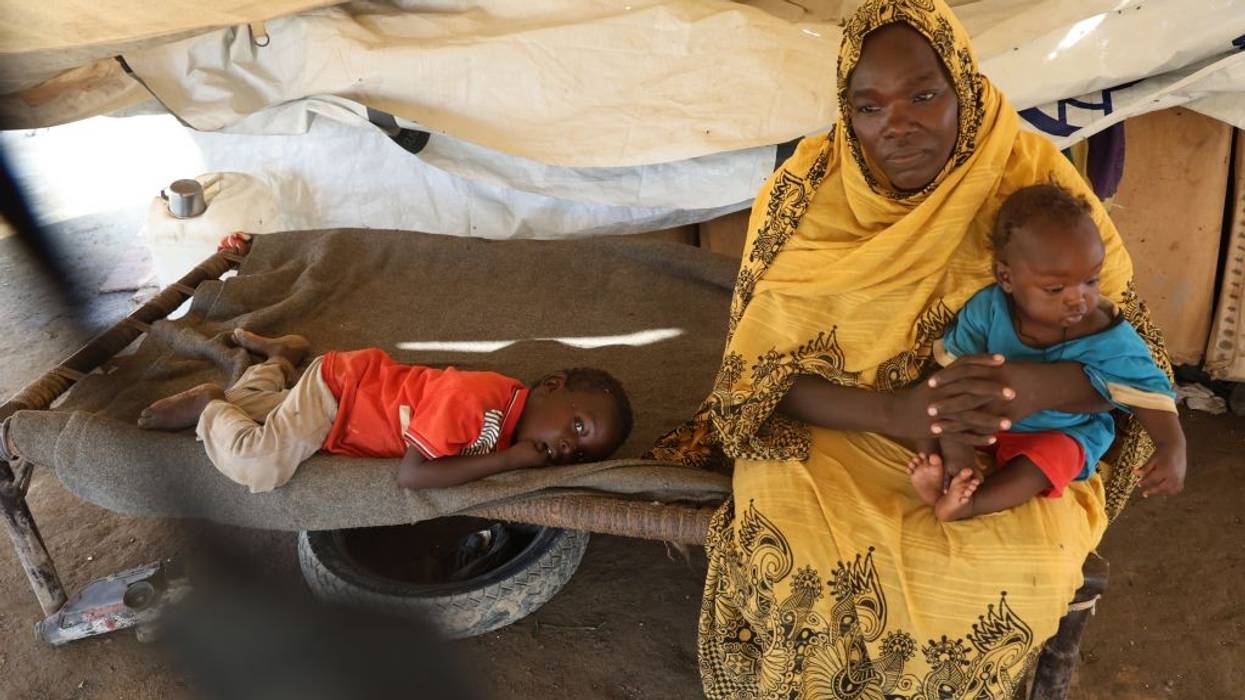
The government accused the monitor of "issuing unreliable reports that undermine Sudan's sovereignty and dignity" as aid and human rights experts called for global action to boost humanitarian assistance.
The Sudanese government suspended cooperation with a global hunger monitor on Monday, on the eve of the initiative announcing that the African country's civil war has driven the expansion of a famine first declared at a refugee camp earlier this year and expected to keep growing next year without a cease-fire.
Alarm over widespread
hunger in Sudan has mounted since fighting erupted between the Sudanese Armed Forces (SAF)—the nation's official military—and the Rapid Support Forces (RSF) in April 2023. The famine declaration for Zamzam camp, which houses hundreds of thousands of internally displaced persons (IDPs) in North Darfur, came in August.
Reuters—which reported on Sudan's Monday letter to the Integrated Food Security Phase Classification (IPC) and its Famine Review Committee (FRC)—noted that its "investigation found that the Sudanese government obstructed the IPC's work earlier this year, delaying by months a famine determination for the sprawling Zamzam camp."
The government's new letter accuses the monitor of "issuing unreliable reports that undermine Sudan's sovereignty and dignity," according to Reuters. "It says the forthcoming IPC report lacks updated malnutrition data and assessments of crop productivity during the recent summer rainy season. The growing season was successful, the letter says. It also notes 'serious concerns' about the IPC's ability to collect data from territories controlled by the RSF."
The IPC report, released Tuesday, states that "the FRC classifies famine (IPC phase 5) for the period of October to November 2024 in Zamzam, Abu Shouk, and Al Salam camps, as well as in the Western Nuba Mountains, affecting both residents and IDPs. Between December 2024 and May 2025, famine (IPC phase 5) is projected to continue in the same areas and expand in the North Darfur localities of Um Kadadah, Melit, El Fasher, At Tawisha, and Al Lait."
"There is a risk of famine in the Central Nuba Mountains and in areas likely to experience high influxes of IDPs in North and South Darfur," the report notes. It adds that "the population in areas of intense conflict in Khartoum (Mayo and Alingaz in Jebel Awlia) and Al Jazirah (Medani Al Kubra and Sharg Al Jazirah) might be experiencing the same conditions as that of the areas classified in famine," but "the lack of recent data prevents the FRC from confirming whether famine thresholds have been surpassed."
The document stresses that "the current analysis reflects the situation during the harvest period, a time when hunger and acute malnutrition are typically at their lowest. From December onwards, there will be few seasonal mitigating factors that could improve conditions on the ground. Only a halt to the conflict, and significant scale-up and scale-out of assistance can prevent an even greater catastrophe."
According to experts, 24.6 million people in Sudan—or half the nation's population—face "high levels of acute food insecurity (IPC phase 3 or above)" and more than 12 million have been displaced by the current conflict, including over 3.2 million who have fled to neighboring countries.
Leaders at the United Nations Children's Fund (UNICEF), Food and Agriculture Organization (FAO), and World Food Program (WFP) expressed concern over the Tuesday report and renewed calls for action.
"We must stop famine in the Sudan—it can be done," said Rein Paulsen, FAO's director of emergencies and resilience. "We need immediate and unimpeded humanitarian access to deliver food, water, health, and lifesaving emergency agricultural assistance to pull people from the brink. Above all, the immediate cessation of hostilities is an essential first step. We must act now, collectively, and at scale, for the sake of millions of people whose lives are at risk."
Jean-Martin Bauer, WFP's director of food security and nutrition analysis, emphasized that across Sudan, "people are getting weaker and weaker and are dying as they have had little to no access to food for months and months."
"WFP is doing everything we can to get a steady and constant flow of food assistance to the hungriest and hardest-to-reach places in Sudan," Bauer continued. "We are constantly adapting our operations as the conflict evolves, delivering assistance where and when we can. But recent operational progress is fragile as the situation on the ground is volatile and dangerous."
UNICEF's director of emergency operations, Lucia Elmi, pointed out that "the ongoing conflict, continuous displacements, and recurrent disease outbreaks have created a dangerous breeding ground for malnutrition in Sudan."
"Millions of young lives hang in the balance," Elmi warned. "The delivery of lifesaving therapeutic food, water, and medicine can help stop the deadly malnutrition crisis in its tracks, but we need safe, sustained, and unimpeded access to reach the most vulnerable children and save lives."
Human Rights Watch also took note of the new data and called out the warring parties for "willfully" obstructing aid. As Belkis Wille, an associate director in the crisis, conflict, and arms division of the U.S.-based group, wrote Tuesday:
In South Kordofan's Nuba Mountains, we witnessed famine for ourselves.
In October, we traveled to the Nuba Mountains to interview people displaced by attacks by the RSF and its allies. Witnesses described killings, rape, and destruction in the South Kordofan towns of Habila and Fayu, just 20 km away.
The impact of starvation was clear to see. Almost every person we spoke to bore the marks of hunger. One 8-year-old boy I met, died of starvation during our five-day visit. We saw no international organizations or U.N. agencies providing food assistance during our time there and kept wondering whether some of the people would survive more than a couple of months without aid.
"Before more civilians, including children, die of starvation in Sudan, governments should impose consequences on those responsible. The U.N. Security Council meeting on Sudan on December 19 again contained powerful speeches but little in the way of concrete action," Willie added. "The U.N. and donors should make a concerted push for immediate aid access throughout Sudan and massively increase support to local responders. The U.N. should also be much clearer and public about the scale of the challenges they face. Civilians in the Nuba Mountains and North Darfur cannot wait till the new year."
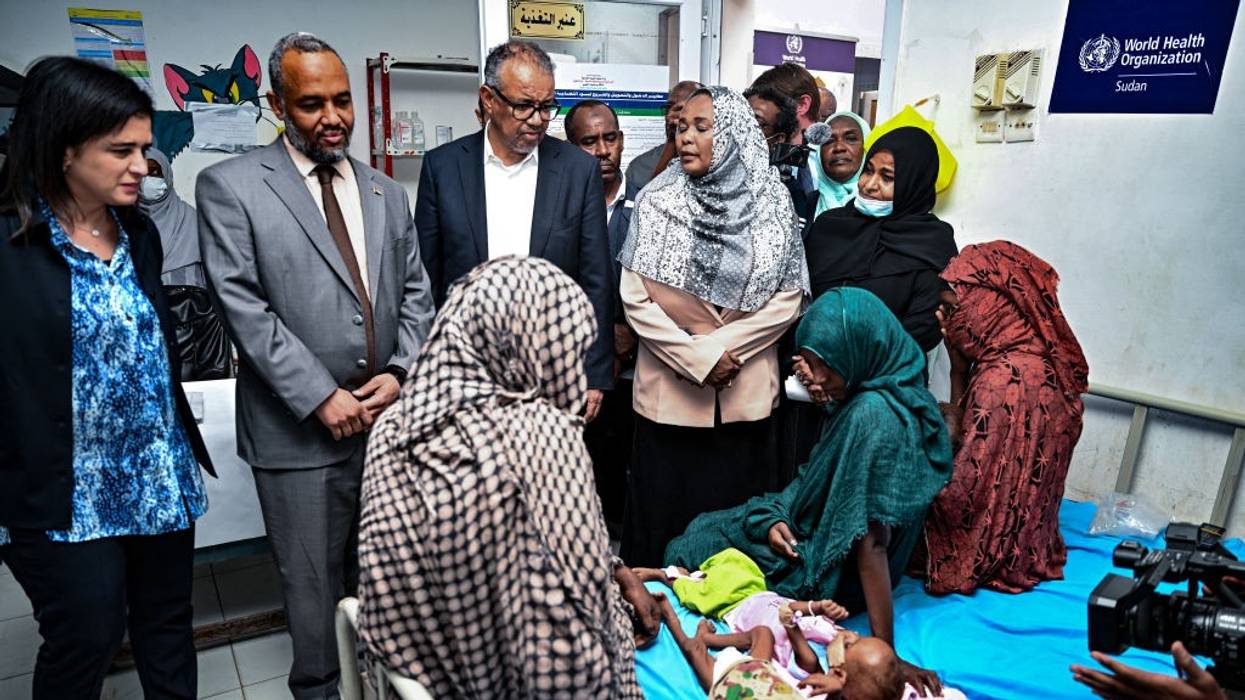
"The international community has seemingly forgotten about Sudan, and is paying little heed to the conflict tearing it apart."
The head of the World Health Organization on Sunday warned of a devastating set of crises in war-torn Sudan and called for a stronger international response.
Tedros Adhanom Ghebreyesus, director-general of the WHO, a United Nations agency, delivered remarks from the city of Port Sudan following visits to health facilities in the country, which is locked in civil war and faces the prospect of a large-scale famine.
"I was shaken by the state of many of the tiny, wasted children," Ghebreyesus said.
"The scale of the emergency is shocking, as is the insufficient action being taken to curtail the conflict, and respond to the suffering it is causing," he added.
Ghebreyesus said he'd come to Sudan to draw attention to the dire situation there.
"The international community has seemingly forgotten about Sudan, and is paying little heed to the conflict tearing it apart, with repercussions in the region," he said.
#Sudan’s health system is on the verge of collapse after 16 months of war, with over 25M people in dire need of aid. “The scale of the emergency is shocking,” warns WHO chief @DrTedros. The world must wake up and act now to prevent further catastrophe.https://t.co/uuebggGhMG
— Africa Renewal, UN (@africarenewal) September 9, 2024
The two main parties in the civil war are the Sudanese Armed Forces (SAF), the country's official military, and the Rapid Support Forces (RSF), a paramilitary group. The two groups shared power for two years before the civil war erupted in April 2023.
The war's death toll is above 20,000, and that's an underestimate, Ghebreyesus said. Both sides have been accused of atrocities and of obstructing international aid. Parts of Sudan are facing famine and others are at risk of it; overall, 25.6 million Sudanese are expected to face high levels of food insecurity, Ghebreyesus warned.
A report issued last week by U.N. agencies and partner groups found that as of August, 8.5 million Sudanese faced "Emergency" conditions of food insecurity, the second-highest level, while 750,000 faced "Catastrophe/Famine," the highest level.
Last week, three international humanitarian groups warned that Sudan faced a hunger crisis of "historic proportions."
Dire warnings have been issued for many months but the international community has been slow to act. At a conference in Paris in April, rich countries did pledge $2.1 billion in support for Sudan, a bit less than the $2.7 billion the U.N. had sought; in any case, only $1.1 billion has actually been received in Sudan, as of the end of August.
Sudan faces the world's worst displacement crisis, with more than 10 million people having been forced to move within the country, and 2 million having left its borders, according to data cited by Ghebreyesus.
Ghebreyesus, an Ethiopian public health official who's led the WHO since 2017, said he felt a close affinity with Sudan—it's "like my home," he said—and was deeply saddened by the situation there. He described the following "perfect storm of crises":
One of the most conflict-stricken areas of the country is Darfur, which became a cause célèbre during a war in the 2000s but hasn't received the same level of international attention this time.

Both parties in Sudan's civil war are to blame for a looming mass famine, experts say, and the military's blocking of U.N. aid at a border crossing with Chad exacerbates the problem.
Sudan's military is blocking United Nations aid trucks from entering at a key border crossing, causing severe disruptions in aid in a country that experts fear may be on the brink of one of the worst famines the world has seen in decades, The New York Times reported Friday.
The border city of Adré in eastern Chad is the main international crossing into the Darfur region of Sudan, but the Sudanese Armed Forces (SAF), the state's official military, which is engaged in a civil war with a paramilitary group called the Rapid Support Forces (RSF), has refused to issue permits for U.N. trucks to enter there, as it's an RSF-controlled area.
U.S. and international officials have issued increasingly alarmed calls for steady aid access to help feed the millions of severely malnourished people in Darfur and other areas of Sudan.
Last week, Linda Thomas-Greenfield, the United States ambassador to the U.N., said that the SAF's obstruction of the border was "completely unacceptable."
Both warring parties in Sudan continue to perpetrate brazen atrocities, including starvation of civilians as a method of warfare. This piece focuses on the SAF's ongoing obstruction of essential aid. The situation is catastrophic. The policy is criminal. https://t.co/FKhqQh3EI9.
— Tom Dannenbaum (@tomdannenbaum) July 26, 2024
The Sudanese who've made it out of the country and into Adré reported dire and unsafe conditions in their home country.
"We had nothing to eat," Bahja Muhakar, a Sudenese mother of three, told the Times after she crossed into Chad, following a harrowing six-day journey from Al-Fashir, a major city in Darfur. She said the family often had to live off of one shared pancake per day.
Another mother, Dahabaya Ibet, said that her 20-month-old boy had to bear witness to his grandfather being shot and killed in front of his eyes when the family home in Darfur was attacked by gunmen late last year.
Now the mothers and their families are refugees in Adré, where 200,000 Sudanese are living in an overcrowded, under-resourced transit camp.
In addition to those that have made it out of the country, there are 11 million people internally displaced within Sudan, most of whom have become displaced since the civil war began in April 2023.
An unnamed senior American official told the Times that the looming famine in Sudan could be as bad as the 2011 famine in Somalia or even the great Ethiopian famine of the 1980s.
In April, Reuters reported that people in Sudan were eating soil and leaves to survive, and The Washington Post called it a nation in "chaos," reporting that World Food Program trucks had been "blocked, hijacked, attacked, looted, and detained."
In late June, a coalition of U.N. agencies, aid groups, and governments warned that 755,000 people in Sudan faced famine in the coming months.
The U.S. last week announced $203 million in additional aid to Sudan—part of a $2.1 billion pledge that world leaders made in April, which some countries have not yet delivered on.
Some officials including Thomas-Greenfield, who has dubbed the situation in Sudan "the worst humanitarian crisis in the world," have called for the U.N. Security Council to allow aid delivery into the country even in the absence of SAF approval; it's believed that Russia would veto such a measure.
Sudan's civil war has seen a great deal of international interference. Amnesty International on Thursday published an investigatory briefing showing that weapons from Russia, China, Serbia, Turkey, Yemen, and the United Arab Emirates (UAE) had been identified in the country. And The Guardian on Friday reported that the passports of Emirati citizens had been found among wreckage in Sudan, indicating the UAE may have troops or intelligence officers on the ground, though the UAE denied the accusation.
The International Service for Human Rights on Friday warned that both the SAF and RSF were engaged in wrongful killings and arrests, especially targeted at lawyers, doctors, and activists. The group called for an immediate cease-fire.
The SAF and Sudanese government figures have cast doubt on international experts' claims about famine in the country.

"Extreme hunger is unfolding" as a civil war enters its second year and funding is slow to arrive, the agencies warned.
A group of United Nations agencies and humanitarian groups sounded the alarm Friday that 18 million Sudanese are acutely hungry as a civil war that began in April 2023 continues to ravage the country.
The Inter-Agency Standing Committee (IASC), a group of 12 U.N. agencies and 7 humanitarian organizations, issued a statement on the staggering scale of hunger and insecurity in Sudan, including in the Darfur region in the country's west. They called for an immediate influx of international funding—billions of dollars of which has already been pledged, but not yet delivered—so that food could be planted before the rainy season.
"Extreme hunger is unfolding, and the outlook for food production in 2024 is bleak," according to the statement. "We have a rapidly shrinking window to get seeds to farmers before the main planting season ends and the rainy season begins."
At a conference in Paris last month, following an earlier cry for action, countries pledged a total of $2.7 billion in aid for Sudan, but so far only 16% of that money has been disbursed, according to IASC. The food shortage has been worsened by drought and flooding, likely exacerbated by climate change.
A major obstacle to aid delivery is not just lack of funds but also the civil war, which has seriously impeded the IASC organizations aid efforts.
"If they continue to be prevented from providing aid in Sudan rapidly and at scale, a famine will likely take hold in large parts of the country," Jens Laerke, spokesperson for the U.N. Office for Coordination for Humanitarian Affairs (OCHA), one of the IASC agencies, said Friday in Geneva, according to Voice of America. "More people will flee to neighboring countries. Children will succumb to disease and malnutrition, and women and girls will face even greater suffering and dangers."
Sudan has one of the highest numbers of internally displaced people of any country in the world, roughly 10 million, and the number continues to climb as the war goes on. Al-Fashir, the capital of North Darfur, has been a somewhat safe zone that many displaced people have moved to, but as the two sides in the conflict jockey for position there, that status is in jeopardy. A fragile truce in the city fell apart on May 10 and a battle there is already underway, according to The Economist. IASC warned that it may only get worse.
"More than 800,000 civilians [in Al-Fashir] are bracing for an imminent large-scale attack, which would unleash catastrophic humanitarian consequences both in the city and across Darfur," the authors of the statement said, warning that the effects of the war on everyday people are dire. "Horrific attacks against civilians—including sexual violence—as well as hospitals and schools are multiplying," they also said.
Clementine Nkweta-Salami, U.N. resident and humanitarian coordinator for Sudan, also warned in a statement Thursday that "the noose of war is tightening its stranglehold on a civilian population that is under attack from all sides."
You will never understand the pains, the agony, the fear and the suffering until war comes to your doorstep.
Here is what people in Sudan 🇸🇩 are going through where people are being killed tortured and a looming famine have left Millions of people hungry in Sudan. Since a power… pic.twitter.com/UA2bZkt0Je
— Typical African (@Joe__Bassey) May 30, 2024
The civil war pits the Sudanese Armed Forces (SAF) against the Rapid Support Forces (RSF), a paramilitary group. The two sides shared power over the country for two years before the war began. Their rivalry has been fueled in part by outside forces: both SAF and RSF have international backers, making this a regional proxy war, according to Foreign Policy.
In the 2000s, Darfur became a cause célèbre, but the current crisis has been overlooked, especially given international attention on Gaza and Ukraine, Foreign Policy reported.
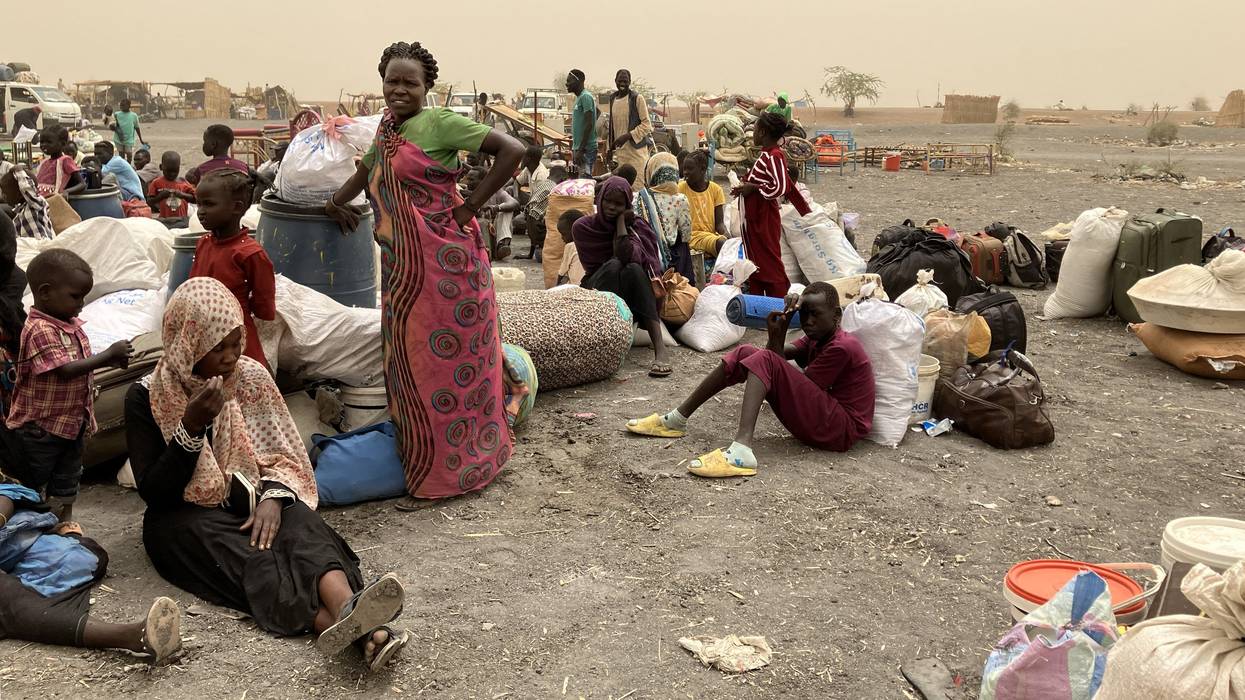
Warring factions in North Darfur state must "avoid locating military installations within or near densely populated areas, including towns and camps for internally displaced people," said one U.N. official.
The United Nations' top humanitarian affairs officials on Friday called for an immediate deescalation of hostilities in Sudan, where rival factions in the military government have been fighting for a year and where an attack on the city of El Fasher is reportedly imminent.
About 800,000 people in the city, the capital of North Darfur state, are in "extreme and immediate danger," U.N. aid operations director, Edem Wosornu, told the U.N. Security Council earlier this week, as she reported that clashes between the Rapid Support Forces (RSF), a paramilitary group, and the Sudanese Armed Forces (SAF) are nearing El Fasher.
Fighting between the two groups has intensified in recent weeks, forcibly displacing an estimated 40,000 people.
The U.N. Office for the Coordination of Humanitarian Affairs said Friday that the security situation in North Darfur has left more than a dozen aid trucks with relief supplies for 122,000 people stranded in neighboring Northern state, unable to proceed into the only capital city in Darfur that is not controlled by RSF.
"A patchwork of armed actors, including the Darfur Joint Protection Forces, the SAF, and the RSF control different parts of the El Fasher area," Human Rights Watch reported this week. "Tense calm alternating with episodic fighting has prevailed for months."
Since April 14, when RSF began to push into El Fasher, at least 43 people—including women and children—have been killed due to fighting between the SAF and RSF.
"Civilians are trapped in the city, afraid of being killed should they attempt to flee," said Seif Magango, spokesperson for the U.N. high commissioner for human rights, Volker Türk. "This dire situation is compounded by a severe shortage of essential supplies as deliveries of commercial goods and humanitarian aid have been heavily constrained by the fighting, and delivery trucks are unable to freely transit through RSF-controlled territory."
The lack of humanitarian aid in North Darfur has pushed the state toward a famine, with one child dying of starvation every two hours, according to a February report by Doctors Without Borders.
In December, the U.S. State Department announced an $85 million sale of radar and other military equipment to the United Arab Emirates (UAE), which The New York Times reported last year has been covertly supporting the RSF.
U.S. Rep. Ilhan Omar (D-Minn.) proposed a joint resolution to block arms sales to the UAE in January, in light of its support for the paramilitary group.
Omar was among several lawmakers who wrote to President Joe Biden and Secretary of State Antony Blinken earlier this week, urging them to "deliver urgently-needed humanitarian assistance" and to help end the hostilities.
Sudanese-Australian writer Yassmin Abdel-Magied urged Americans on Friday to pressure lawmakers and the White House to take more action.
"There is a tiny window of opportunity for us to find a way to get the UAE... to make the RSF to stop in their tracks," said Abdel-Magied. "Maybe there's a way that we can avoid this massacre."
OCHA called on the warring parties to "take constant care to spare civilians and civilian objects in the conduct of military operations."
"They must, to the extent possible, avoid locating military installations within or near densely populated areas, including towns and camps for internally displaced people," said the office. "It is also imperative that the parties allow safe passage for civilians to leave El Fasher for safer areas."
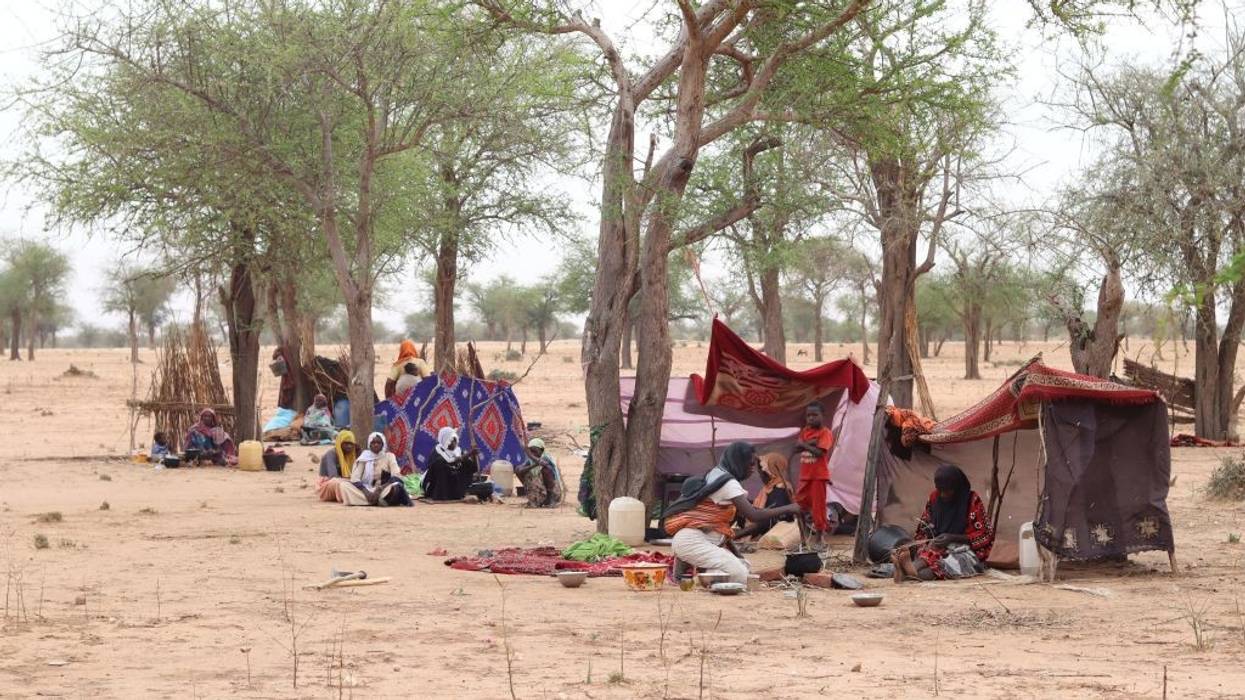
White Europeans now being killed, wounded, or rendered homeless by Russian troops are victims worthy of media attention, while Sudanese facing similar fates aren’t.
It’s been devastating, even if no one’s paying attention.
Three months of fighting in Sudan between the army and a paramilitary group called the Rapid Support Force (RSF) has left at least 3,000 people dead and wounded at least 6,000 more. Over 2 million people have been displaced within the country, while another 700,000 have fled to neighboring nations. According to the World Health Organization, two-thirds of the health facilities in Khartoum, the capital, and other combat zones are now out of service, so the numbers of dead and injured are believed to be far higher than recorded, and bodies have been rotting for days in the streets of the capital, as well as in the towns and villages of the Darfur region.
Almost all foreign nationals, including diplomats and embassy staff, are long gone and so, according to Al Jazeera, hundreds or thousands of Sudanese who had visa applications pending have instead found themselves marooned in the crossfire with their passports locked away inside now-abandoned embassies. In the Darfur region, according to non-Arab tribal leaders, the RSF and local Arab militias have been carrying out mass killings, raping women and girls, and looting and burning homes and hospitals. Earlier this month, United Nations humanitarian chief Martin Griffiths told The Associated Press, “If I were Sudanese, I’d find it hard to imagine that this isn’t a civil war… of the most brutal kind.”
We’ve had to do a lot of searching to find significant information in the U.S. major media about the struggle in Sudan, no less the plight of its refugees.
According to the United Nations, half the country’s population, a record 25 million people, is now in need of humanitarian aid. And worse yet, half of those are children, many of whom were in dire need even before this war broke out. Tragically, global warming will only compound their misery. Among 185 nations ranked by the Notre Dame Global Adaptation Initiative, Sudan is considered the sixth most susceptible to harm from climate change.
Heat waves, drought, and flooding are projected to become ever more frequent and intense as the atmosphere above Sudan warms further. This summer war and weather have been converging in strikingly deadly ways. With cloudless skies, water and electricity services largely knocked out, and daily temperature highs in the capital recently ranging from 109° to 111°F, the misery is only intensifying. Meanwhile, in the Darfur region and across the border in eastern Chad, the season of torrential rains is about to begin. The country director for Concern Worldwide in Chad says that many of the quarter-million Sudanese refugees there “are living in makeshift tents made from sticks and any material they can find, which means they are not protected from the heavy rains. The situation is catastrophic.”
Among the refugees from this war are some of our own relatives and in-laws, part of an extended Indian-Sudanese family who have lived in Khartoum all their lives. In May, they fled the escalating violence, some via a perilous, hair-raising 500-mile road trip across the Nubian Desert to Port Sudan. There, they caught a ship across the Red Sea to Jeddah, Saudi Arabia. Their goal, as they informed us in June through voice messages, was Egypt—so far, the most common destination for Sudanese refugees over the past three months. And mind you, desperate as they may be, our relatives are in a far less perilous situation than people fleeing the Darfur region for Chad. Still, they are leaving behind a life built up over decades, without knowing if they will ever be able to return to Khartoum.
And here—for us—is a disturbing reality. We’ve had to do a lot of searching to find significant information in the U.S. major media about the struggle in Sudan, no less the plight of its refugees—though recently there were finally substantive reports at NPR and in The Washington Post. Still, the contrast with 16 months of breathless, daily, top-of-the-hour reporting on the Ukraine war and the millions of people it’s displaced has been striking indeed.
There’s a major difference as well between Washington’s responses to each of those wars. Before the fighting broke out in Sudan, the country had about 30% fewer people living in need of humanitarian assistance than Ukraine. Now, it has almost 50% more than Ukraine. Given those relative needs, U.S. humanitarian aid to Sudan in Fiscal Year 2023 ($536 million) was not all that skimpy compared with the humanitarian aid going to Ukraine ($605 million)—not, at least, until you add in the $49 billion in military aid Washington has been sending to Kyiv—80 times the civilian aid, to which has only recently been added fundamentally anti-humanitarian cluster bombs. In the past year, in other words, Ukraine got 13% more humanitarian aid than Sudan but 93 times more total aid when you count war assistance.
And the U.S. is not alone. The entire world is lagging badly in its response to the humanitarian tragedy in Sudan. William Carter of the Norwegian Refugee Council recently lamented, “I haven’t seen it treated with urgency. It’s not ignorance; it’s a case of apathy.” Admittedly, conditions in Sudan and Chad make aid delivery difficult now, but Western powers, Carter pointed out, are simply “not willing to stick their necks out.”
Washington has assisted Ukraine massively since the war there began. In contrast, its actions in the months leading up to Sudan’s current conflict were not only ineffective but may even have made war more likely.
Some background: Four years ago, a popular uprising overthrew the country’s longtime autocratic president, Omar al-Bashir. A Sovereignty Council was formed to negotiate a transition to democracy. Susan Page, who served as the first U.S. ambassador to the Republic of South Sudan, has written that the council’s designation as a “civilian-led transitional government” was “always a bit of a fig leaf,” given that its membership included more military officials than civilians. The transition was even led by military officials, including the two men who command the forces now locked in battle, Sudanese army chief General Abdel-Fattah Burhan and General Mohamed Hamdan, who leads the RSF paramilitary group.
After two years of obstructing the work of the Sovereignty Council, that odd duo joined forces in an October 2021 coup and took control of Sudan. The negotiations over a democratic transition, mediated by the United States, Great Britain, the United Arab Emirates, and Saudi Arabia nonetheless went on for another 18 months, while those generals continued to stonewall. According to Democratic Senator Chris Coons of Delaware, the generals even stooped to outright extortion, hinting that if they didn’t get full backing from the West, they’d create a fresh migration crisis in Europe by kicking out hundreds of thousands of their fellow Sudanese and sending them northward. Still, last February, with military-civilian negotiations bogged down, Coons remained hopeful, writing,
“The Sudanese people… are not backing down in the defense of their political gains. Even in the face of persistent killings, sexual violence, and arrests by the regime, a massive, nationwide pro-democracy movement has for months maintained nonviolent street protests. The determination these thousands of people have shown as they risk their lives against heavily armed security forces should serve as a reminder the world over of how precious democracy truly is.”
Coons urged the Biden administration to throw its weight behind the pro-democracy movement, with sanctions that would hit the military leaders hard while sparing civil society: “A modern, comprehensive set of sanctions on the coup leaders and their networks,” he wrote, “will disrupt the military’s revenue streams and their grip on power, creating an opening for the nation’s nascent democracy movement to grow.” As is now painfully obvious, Biden didn’t take Coons’s advice and, six weeks later, the shooting started.
In an article published soon after the outbreak of fighting, Edward Wong and three colleagues at The New York Times reported that some of the people who played a part in the negotiations told them “the Biden administration, rather than empowering civilian leaders, prioritized working with the two rival generals,” even after they’d seized power in that coup. A high-level government adviser assured the Times that senior American diplomats “made the mistake of coddling the generals, accepting their irrational demands, and treating them as natural political actors. This fed their lust for power and their illusion of legitimacy.”
The broad lack of concern for the Sudanese people in the U.S. and other rich countries also contrasts sharply with the intense geopolitical interest in Sudan of certain regional powers. Mohammad Salami of the International Institute for Global Strategic Analysis observes that Washington’s Persian Gulf allies have big plans for Sudan, thanks to its strategically important Red Sea coastline, its wealth in mineral resources, and its potential for tourism and agricultural production. (We can’t help wondering if they’re taking into account the degree to which its farming may, in the future, be clobbered by climate change.) Looking ahead, Salami writes, “The United Arab Emirates and Saudi Arabia have long-term plans for Africa, and for Sudan as their gateway to it.”
Until the recent chaos began, Sudan had also been a gateway for refugees from Asia, the Middle East, and other parts of Africa. Writing less than three weeks into the Sudan conflict, MSNBC columnist Nayyera Haq observed that many of the people then fleeing the country were, in fact, repeat refugees, having fled previous conflicts in Syria, Yemen, and Myanmar, among other places. As Western diplomats and embassy staff across Khartoum rushed for the exits (echoes of Kabul and Kandahar two summers ago!), Haq concluded,
“Sudan, once considered a far-off nation, is now a critical puzzle piece in this era of great power competition among global economies. As boundaries continue to blur because of technology and climate change, forced migration is more common: Millions flee north from Latin America to the U.S., from Syria to Europe, and now across East Africa. But the same countries eager to extract oil and minerals from Africa are quick to shut down, only watching out for their own as Sudan devolves into chaos.”
Sudan is indeed rich in mineral resources that span the alphabet: aluminum, chromium, cobalt, iron, manganese, nickel, rare earths, silver, and zinc. All of those are important to the world’s renewable energy and battery industries. But Sudan’s biggest source of wealth lies in its gold deposits. The gold-mining industry is largely owned by a Russian-Sudanese joint venture headquartered in the northeast of the country. The wealth it’s generated hasn’t benefited the Sudanese people. Before the recent chaos, in fact, it was being split by the military regime, the Russian government, and none other than the infamous warlord Yevgeny Prigozhin’s Wagner Group, which had been managing the joint venture’s gold-mining and processing operations since 2017. And Wagner being Wagner, they also have now taken sides in Sudan’s war, according to the U.S. Treasury Department, by providing surface-to-air missiles to the RSF paramilitary forces.
The paucity of attention paid to civilian victims of the conflict in Sudan compared to Ukrainian civilians brings to mind the contrast between “worthy” and “unworthy” victims drawn by Edward Herman and Noam Chomsky in their 1988 book Manufacturing Consent. They contrasted the extensive mass-media coverage of the 1984 murder of a Polish priest, Jerzy Popieluszko, during the Cold War with the lack of the same when it came to more than two dozen priests and other religious people slaughtered by governments and death squads in El Salvador and Guatemala in those years., Having been murdered by agents of a Communist government. Popieluszko was regarded as worthy of attention in the American media of the time, while his counterparts slaughtered by Central American governments allied with the U.S. weren’t. In a similar fashion, white Europeans now being killed, wounded, or rendered homeless by Russian troops are victims worthy of media attention, while Sudanese facing similar fates aren’t.
To be fair, a previous horrific conflict that gripped Sudan’s Darfur region from 2003 to 2008 did receive significant coverage in the Western media thanks to a convergence of unusual circumstances. The chief among them: the massive attention it received from celebrities of the time, including Angelina Jolie, George Clooney, Lady Gaga, and Mia Farrow. Sudan’s media appeal of 15 years ago was, however, an exception to the rules of this world of ours. Today, such celebrities and the media seem to be gripped by a kind of compassion fatigue.
Of course, like most Americans, we were paying no attention whatsoever to developments in Sudan before the fighting started—and before we learned that our own kinfolk were in danger. Now, what choice do we have but to keep up with the latest developments?
For weeks, our relatives were in limbo, trying to reach Egypt. Some were already in Jeddah, Saudi Arabia, but stuck there. Others had made it to Addis Ababa, Ethiopia. We were by then in touch and they acknowledged that they were “better off than most,” meaning they weren’t being pinned down in a deadly 110°F war zone without passports, electricity, or running water, nor were they, like so many Sudanese, trapped in squalid refugee camps.
Only the other day, we finally learned that they had arrived safely in Egypt. Back in Khartoum they’d operated a small school, and they’re now hoping, if they can work their way through Cairo’s bureaucracy, that, as one of them put it, “Next year, Inshallah, we can start our school here, if we are still here and still war-driven.” Their futures have indeed been driven by war into a hard-to-imagine future. As one put it, “Nothing seems to be settling down in Sudan anytime soon.”
Sadly, their assessment seems all too accurate. Since April, at least 10 ceasefires between the army and that paramilitary outfit have broken down more or less instantly. In mid-July, leaders of the six countries bordering Sudan met, in the impressive-sounding words of Egyptian President Abdel Fattah el-Sissi, to formulate “an executive action plan to reach a comprehensive solution to the Sudanese crisis.”
Not so surprisingly, though, no such plan has yet emerged. Given its resources and its geographical centrality, an assortment of richer, stronger countries all want a piece of Sudan, but none of those plans include the war’s victims. To make matters worse, in this war (as in others to come), climate disruption will be a “threat multiplier.” Worse yet, as long as our media fails to see the Sudanese conflict or, more importantly, the Sudanese people as worthy of extensive reporting, the realities of the ongoing war there will continue to lie somewhere beyond the horizon.
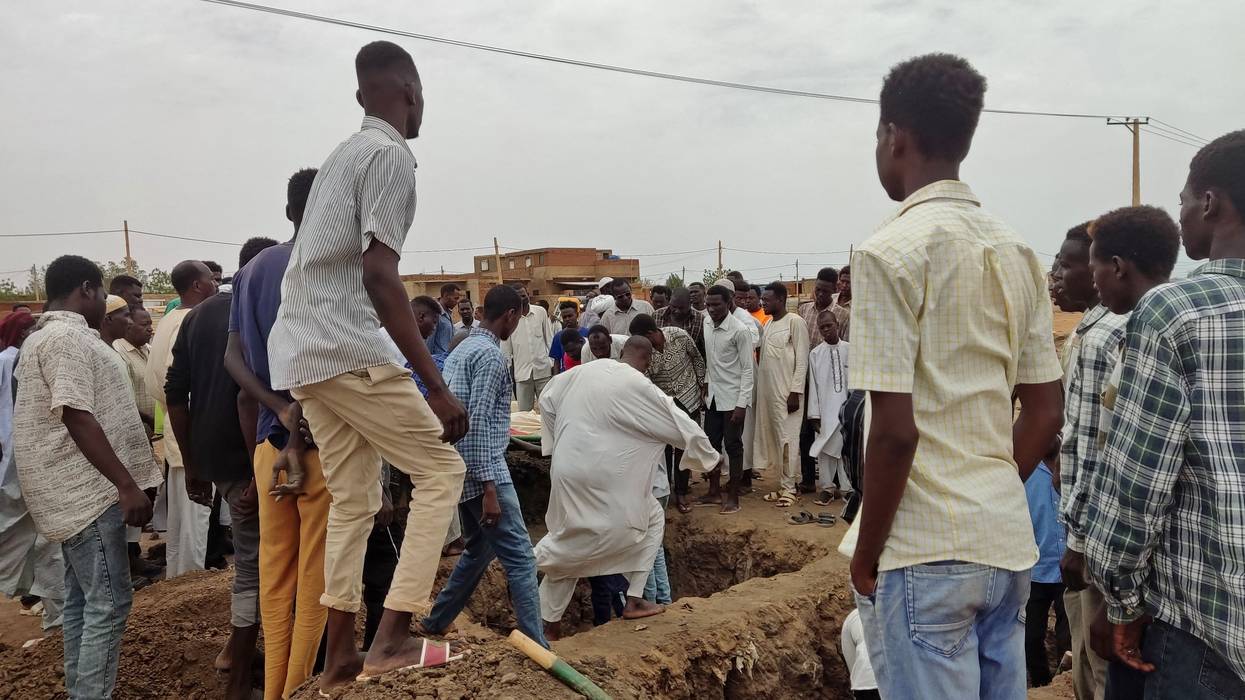
News of the upcoming meeting in Cairo followed U.N. Secretary-General António Guterres' warning that an ongoing armed conflict in Sudan could destabilize "the entire region."
Egypt announced Sunday that it plans to host a summit of Sudan's neighbors on July 13 to discuss how they might help broker an end to the 12-week battle between the Sudanese Armed Forces (SAF) and the paramilitary Rapid Support Forces (RSF)—an ongoing conflict that has exacerbated humanitarian crises in North Africa.
News of Thursday's meeting in Cairo came after United Nations Secretary-General António Guterres warned—in a Saturday statement issued by his deputy spokesperson Farhan Haq—that intensified fighting between the two factions "has pushed Sudan to the brink of a full-scale civil war, potentially destabilizing the entire region."
Since combat began on April 15 in the Sudanese capital of Khartoum, hundreds of people have been killed and nearly three million have been displaced, including almost 700,000 who have fled to neighboring countries, many of which are already grappling with extreme poverty and the impacts of local armed conflicts.
Speaking from a refugee camp in Adre, on the Sudan-Chad border, Al Jazeera correspondent Ahmed Idris noted Sunday that "cases of malnutrition are on the rise in camps in eastern Chad and other parts of Chad where Sudanese refugees have moved to."
Reuters reported Sunday that previous diplomatic efforts to halt fighting between SAF and RSF "have so far proved ineffective, with competing initiatives creating confusion over how the warring parties might be brought to negotiate."
As the news outlet explained:
Neither Egypt, seen as the Sudanese army's most important foreign ally, nor the United Arab Emirates, which has had close ties to the RSF, have played a prominent public role.
The two countries were also not involved in talks in Jeddah led by the United States and Saudi Arabia that adjourned last month after failing to secure a lasting ceasefire.
Sudan's two largest neighbors, Egypt and Ethiopia, have been at odds in recent years over the construction of a huge hydroelectric dam on Ethiopia's Blue Nile, close to the border with Sudan.
The upcoming summit in Cairo "aims to 'develop effective mechanisms' with neighboring states to settle the conflict peacefully, in coordination with other regional or international efforts," Reuters reported, citing a statement from Egyptian President Abdel Fattah El-Sisi.
The current fighting in Sudan erupted following weeks of tensions between SAF commander Abdel Fattah al-Burhan, chair of Sudan's Transitional Sovereign Council, and RSF commander Mohamed Hamdan Dagalo, or "Hemedti," the council's deputy chair.
The former allies joined forces to take control of Sudan in October 2021, two years after a 2019 military coup that occurred in the wake of a popular uprising to oust Omar al-Bashir, who had ruled Africa's third-largest country since leading the 1989 overthrow of a democratically elected government. However, during talks to establish a new transitional government, a dispute emerged over security force reform, turning al-Burhan and Dagalo—both of whom have long records of human rights abuses, including the brutal repression of pro-democracy activists—into rivals.
On Saturday, Guterres condemned a fresh air strike that killed at least 22 people in Omdurman, Sudan. After offering his condolences to the families of the victims and wishing a swift recovery to the dozens who were injured, the U.N. chief made clear that he is "appalled by reports of large-scale violence and casualties across Darfur" and "concerned about reports of renewed fighting in North Kordofan, South Kordofan, and Blue Nile States."
"There is an utter disregard for humanitarian and human rights law that is dangerous and disturbing," said Guterres' spokesperson. The U.N. chief reiterated his call for SAF and RSF "to cease fighting and commit to a durable cessation of hostilities." He also urged both sides "to abide by their obligations under international humanitarian and human rights law to protect civilians and to enable humanitarian action."
According to Reuters, "Sudanese delegations, including from civilian parties that shared power with the army and RSF after the overthrow of former President Omar al-Bashir four years ago, are expected to meet on Monday in the Ethiopian capital Addis Ababa for exploratory talks."

The regional and global dimension of the conflict in the African country is itself an expression of the changing world order and the intense fight over resources and critical geographies.
The world is changing. In fact, it has been undergoing seismic change that long preceded the Russian-Ukraine war, and the recent U.S.-Chinese
tensions in the Taiwan Strait.
The U.S. debacle in Iraq and the Middle East, and the humiliating retreat from Afghanistan, were only signs of the decline in U.S. power.
Leading U.S. neoconservative strategists once argued in Rebuilding America's Defenses: Strategy, Forces, and Resources For a New Century that aggressive intervention policies were meant to keep emerging great powers, like China, out of areas designated as U.S. geopolitical domains. They sought to "preserve and extend (U.S.) position of global leadership (through) maintaining the preeminence of U.S. military forces."
A whole new world order is emerging, one that is hardly centered round U.S.-Western priorities alone.
They failed, and the future seems to head in a different direction than what the likes of Dick Cheney, John Bolton, Richard Perle, and Paul Wolfowitz had hoped for.
Instead, a whole new world order is emerging, one that is hardly centered round U.S.-Western priorities alone.
Indeed, what has taken place since the start of the Russia-Ukraine war in February 2022, and the provocative visit by then-U.S. House Speaker Nancy Pelosi to Taipei in August of the same year, are an acceleration of an existing momentum of global shifts, that ranged from the emergence of new economic alliances, geopolitical formations, turf wars, and, of course, competing political discourses.
These changes are currently on full display in the Middle East, Africa, and, indeed, much of the Global South.
While this can be considered a positive development, in the sense that a bipolar or multipolar world can offer alternatives to countries that have been at the receiving end of U.S.-Western exploitation and violence, it can—and will—have negative manifestations as well.
Though the current war in Sudan is understood to be a power struggle between two rival generals or, more accurately, corrupt warlords, General Abdel Fattah al-Burhan and General Mohamed Hamdan Dagalo, or Hemedti, it is also partly the outcome of a regional, and, increasingly, global power struggle as well. The regional and global dimension of the conflict in Sudan is itself an expression of the changing world order and the intense fight over resources and critical geographies.
Sudan is one of the richest African countries in terms of raw material, much of which remains un-exploited due to the country's multifront and multilayered conflicts, starting in the South—which has led to the secession of the Republic of South Sudan—then West, namely Darfur, and, as of now, everywhere else.
The North-South civil war and the Darfur crisis, too, were sustained and prolonged by outside parties, whether Sudan's own neighbors or global powers. Sadly, in all these cases, the outcome was horrific in terms of human and material losses.
What complicates the picture in Sudan now is the involvement of other regional actors, each with a specific set of interests, as they take advantage of the quickly dwindling U.S. leadership.
Sudan, however, was not the exception. Proxy wars in the Global South were one of the main features of the Cold War between Washington and Moscow, until the collapse of the Soviet Union from 1989 to 92. The dismantlement of the USSR, however, only exacerbated violence, this time channeled mostly through U.S.-led or championed wars in the Middle East, Africa, and Asia. Now that global rivalry is back with a vengeance, global conflicts, especially in resource-rich and strategic regions with no clear political allegiances, are also back.
Sudan will not be the last of such conflicts.
What complicates the picture in Sudan now is the involvement of other regional actors, each with a specific set of interests, as they take advantage of the quickly dwindling U.S. leadership, which, until recently, was the Middle East's primary political and military hegemon.
The current shifts in power relations in the Middle East—as in other parts of the world—are also significant within historical, not merely current, political contexts.
Since the Sykes-Picot Agreement was signed in 1916 between old colonial powers France and Britain—with a minor, but still important involvement of Tsarist Russia—the Middle East and North Africa, along with Central Asia, were divided into various spheres of influence. Global priorities then were almost entirely Western.
The Bolshevik Revolution in 1917 was a watershed moment in world history, as it sowed the seeds for a possibility of a new global bloc to rival Western domination.
It took decades for that new bloc to emerge. In 1955, the Warsaw Pact was born, unifying the Soviet Union and its allies against the North Atlantic Treaty Organization (NATO), a Western military alliance that saw the light six years earlier.
The rivalry between both camps was expressed in fierce economic competition, a political Cold War, a low-grade military conflict, proxy wars, and two distinctly ideological discourses that defined our understanding of world politics for much of the 20th Century.
All of this came to a bitter end in the early 1990s. NATO won, while the Warsaw Pact, along with the USSR, disintegrated rapidly and in the most humiliating fashion. It was "the end of history," Francis Fukuyama declared. It was the age of Western triumphalism and, by extension, more colonial wars, starting in Panama, then Iraq, Serbia, Afghanistan, Iraq again, and elsewhere.
China factored in all of this, not as a major global political player, yet, but as a worthy adversary and prized ally. The historic visit by U.S. President Richard Nixon to Beijing in 1972 thwarted efforts to unify the East against U.S.-Western imperialism. That trip, which supposedly "changed the world" per the assessment of then-Ambassador Nicholas Platt, was indeed consequential. It was the beginning of the end of the Soviet Union as it gave Washington a massive advantage and strategic boost over its rivals.
But history is now being reversed in ways that only a few geopoliticians could have possibly predicted.
The road ahead is not entirely clear. But numerous signs, accompanied by tangible changes, suggest that the world is transforming. However, this metamorphosis is more visible in some regions than others. The geopolitical tug-of-war between old and new global rivals is most visible in the Middle East and Africa, in addition, of course, to South America, East Asia, and Pacific regions. Each of these regions is undergoing its own re-ordering of power relations and dynamics.
In the Middle East, for example, Iran seems to be breaking away from its West-imposed isolation, while Saudi Arabia is challenging its old client regime status.
The latter move is particularly troubling for Washington, as it challenges two layers of Western domination of the Middle East: one which followed the Sykes-Picot agreement in 1916—thus dividing the region into subregions under Western "protection" and influence—and the other which resulted from the U.S.-NATO invasion of Iraq. With massive political sway, an ever-growing military presence, and a weaponized U.S. currency, Washington had dominated the Middle East with no serious competition for many years. This is no longer the case.
The fight over Sudan by outside parties is essentially a turf war due to Sudan's unparalleled geopolitical location.
For years, Russia and China have been staking claims in the region, though using mechanisms that are wholly removed from the Western style of old colonialism and neocolonialism. While the Russians tapped into their long Soviet tradition of cooperation, the Chinese resorted to a more ancient history of friendly trade and cultural exchanges.
Now that Beijing has developed a more candid and unapologetic approach to foreign policy, China's status as a new superpower shall demonstrate its effectiveness in the Middle East in unprecedented ways. In fact, it already has. The recent Iran-Saudi Accords was a tremendous achievement for the new politically oriented China, but the road ahead is still very challenging, as the region is rife with foreign contenders and old and new conflicts. For China to succeed, it must present itself as a new and better model, to be contrasted with Western exploitation and violence.
But China does not hold all the keys, as the U.S. and its Western and regional allies continue to hold significant influence. For example, the UAE is emerging as a powerful player in the current war in Sudan.
What is certain is that the consequences of the current fight for resources, influence, and domination are likely to lead to smaller, though bloody, conflicts, especially in countries that are politically and socially unstable. Sudan fits perfectly into this category, which makes its current war particularly alarming.
Although much has been said and written about Sudan's gold, agriculture potential, and massive wealth of raw materials, the fight over Sudan by outside parties is essentially a turf war due to Sudan's unparalleled geopolitical location. Egypt, Ethiopia, UAE, Israel, and others are all keen to emerge winners in the ongoing war. Russia is monitoring the situation closely from its various African bases. The U.S., Britain, and France are wary of the dire consequences of direct intervention and the equally costly price of no intervention at all. China is still gauging the challenges and opportunities.
The outcome of the bloody Sudan war is likely to redefine not only Sudan's own political balances but the power relations of the whole region as well.