

SUBSCRIBE TO OUR FREE NEWSLETTER
Daily news & progressive opinion—funded by the people, not the corporations—delivered straight to your inbox.
5
#000000
#FFFFFF
To donate by check, phone, or other method, see our More Ways to Give page.
Daily news & progressive opinion—funded by the people, not the corporations—delivered straight to your inbox.
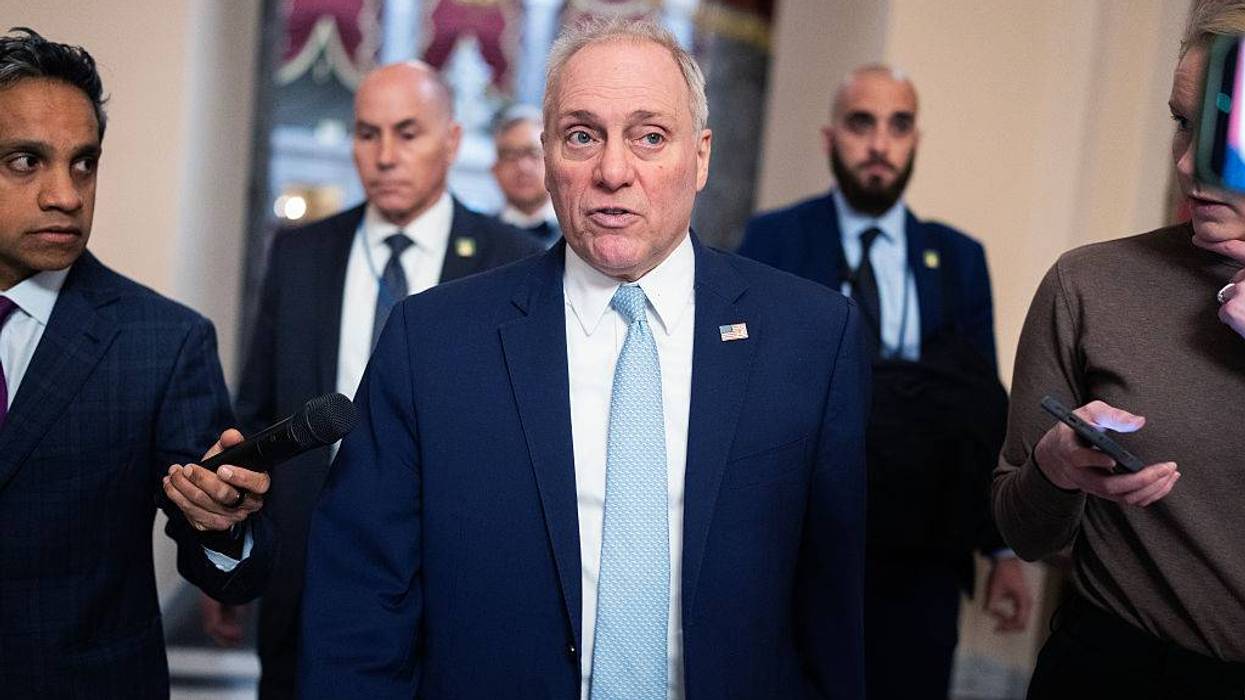
Even Trump-friendly CNBC anchor Joe Kernen jumped in to fact-check false claims by House Majority Leader Steve Scalise.
A top Republican in the US House of Representatives on Thursday lied so blatantly that even a Trump-friendly CNBC host felt compelled to fact check him.
During an appearance on CNBC's "Squawk Box," House Majority Leader Steve Scalise (R-La) defended Republicans' management of the US economy, which is currently experiencing an oil price shock thanks to President Donald Trump's illegal war of choice with Iran.
Scalise predicted that Republicans would hold onto their narrow House majority in the November midterms, and then falsely claimed that gas prices today are lower than they were two years ago when former President Joe Biden was still in office.
"People will remember, two years ago, we were paying almost $6 per gallon of gasoline, right now it's in the [$3 range]," Scalise falsely claimed. "Obviously, we've seen a jump with the Iran conflict..."
At this point, host Joe Kernen, a longtime Trump golfing buddy, interjected.
"When were we paying $6 [per gallon]?" Kernen asked.
"Two-and-a-half years ago," Scalise replied.
"That wasn't the average price," Kernen said.
SCALISE: We've delivered. People will remember that two years ago, we were paying almost $6 a gallon for gas. Right now it's in the $3s
KERNEN: When were we paying $6?
SCALISE: Two and a half years ago
KERNEN: That wasn't the average price
SCALISE: We are lowering inflation… pic.twitter.com/xPD172NdYq
— Aaron Rupar (@atrupar) April 30, 2026
According to data collected by AAA, the average price for a gallon of gas in late October 2023 was $3.53 per gallon, or nearly $0.80 lower than the current average price of $4.30 per gallon.
Scalise also said that gas prices would drop at the end of Trump's illegal war with Iran, which he falsely claimed was close to developing a nuclear weapon.
"Did anybody want a nuclear-armed Iran?" Scalise said. "I think if you ask most normal people, they would say absolutely not... they were about to get a nuclear weapon, and President Trump stopped that."
US Director of National Intelligence Tulsi Gabbard testified under oath before the Senate Select Intelligence Committee last month that Iran’s nuclear weapons program had been “obliterated” by US-led airstrikes that were launched last year, and that there “has been no effort since then to try to rebuild their enrichment capability."
After lying about Iran's nuclear weapons program, Scalise pivoted to making more false claims about the economy.
"So if you look across the board, we are lowering inflation, interest rates are starting to come down," he said. "They're not where we want them to be, by the way, we have a lot of work to do, but do you want to go back to the days when interest rates were in double digits?"
Inflation has been going up in recent months, not declining. The US Bureau of Economic Analysis on Thursday released data showing that the core personal consumption expenditures (PCE) price index rose to 3.2% in March, the highest level since November 2023.
In 2024, Trump campaigned on immediately ending inflation in the US economy, going so far as to promise grocery prices would fall beginning on his first day in office.
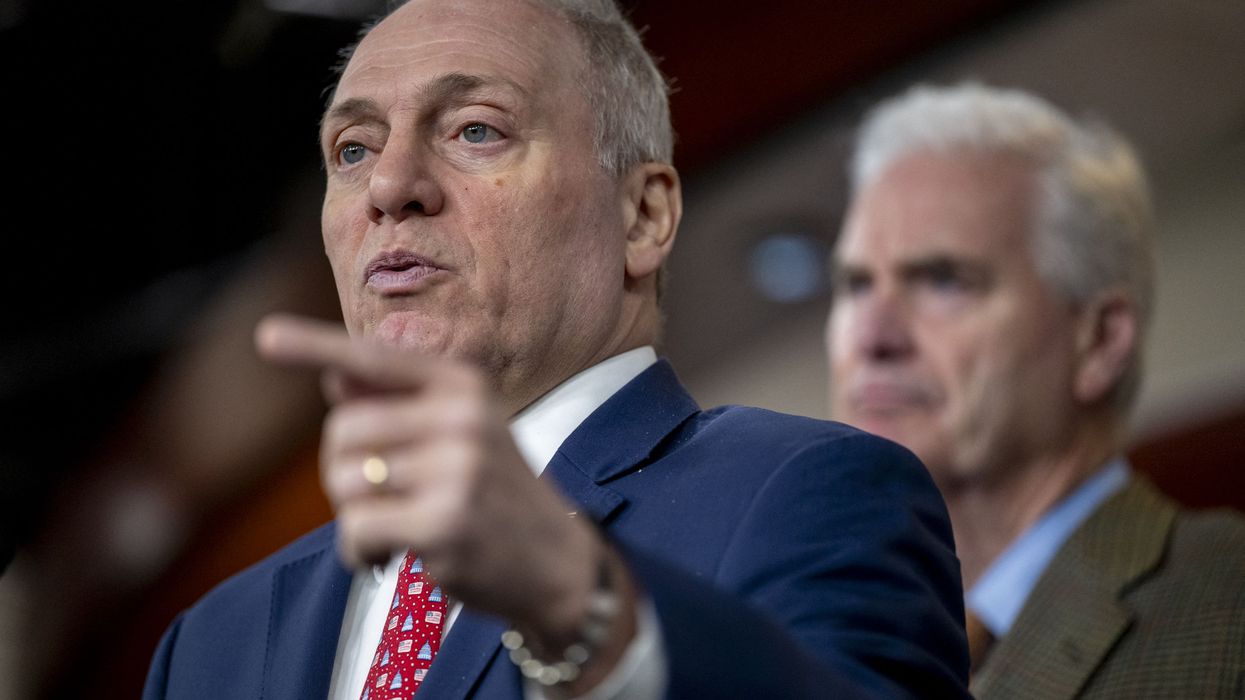
"If lawmakers are serious about AI governance, they must create strong, enforceable national protections as a regulatory floor—not wipe out state laws so Big Tech can operate without consequence," said one consumer advocate.
A Republican push to stop state legislatures from regulating artificial intelligence, including chatbots that have been found to pose harm to children, resoundingly failed over the summer, with 99 out of 100 senators voting against the provision in the One Big Beautiful Bill Act—but the previous rejection of the idea isn't stopping President Donald Trump and GOP lawmakers from trying again to impose a moratorium.
On Tuesday, Trump posted on his Truth Social platform that House Republicans should take action against "overregulation by the States" in the AI field.
Claiming that "DEI ideology" in AI models in some states will "undermine this Major Growth 'Engine'" and that "Investment in AI is helping to make the U.S. Economy the 'HOTTEST' in the World"—despite tech industry leaders' warnings that the value of AI investments may have been wildly overestimated and the bubble may be on the cusp of bursting—Trump called on Republicans to include the state regulations ban in the National Defense Authorization Act (NDAA), "or pass a separate Bill."
Also on Tuesday, House Majority Leader Steve Scalise (R-La.) told Punchbowl News that the GOP is considering adding language to the NDAA that would effectively ban state AI regulations, which have been passed in both Democratic- and Republican-led states. Those laws would be nullified if Republicans follow through with the plan.
Since the annual defense spending bill is considered a must-pass package by many lawmakers, inserting amendments related to other legislative goals is a common strategy used in Congress.
Trump previously tried to circumvent Congress' rejection of the moratorium in July, when he announced his AI Action Plan.
Emphasizing that the anti-regulatory effort has been rejected by "an alliance of Democrats, Republicans, social conservatives, parents rights groups, medical professionals, and child online protection groups," the consumer advocacy group Public Citizen on Tuesday called Trump's renewal of the push "highly inappropriate" and said it "would risk stripping away vital civil rights, consumer protection, and safety authority from states without putting any federal guardrails in place."
JB Branch, Big Tech accountability advocate at Public Citizen, said that "AI preemption strips away the safeguards states have enacted to address the very real harms of AI."
"Big Tech and its allies have spent months trying to ban states from protecting their own residents, all while refusing to support any meaningful federal AI safeguards," said Branch. "Congress should reject this maneuver outright. If lawmakers are serious about AI governance, they must create strong, enforceable national protections as a regulatory floor—not wipe out state laws so Big Tech can operate without consequence.”
On Tuesday, the Republican-controlled House Committee on Energy and Commerce held a hearing on "AI Chatbot Advantages and Disadvantages," where one witness, psychologist Marlynn Wei, warned that "AI chatbots endorse users 50% more than humans would on ill-advised behaviors."
In September, several grieving parents testified before the Senate Judiciary Committee that their children had died by suicide after being encouraged to take their own lives by AI chatbots.
At Tuesday's hearing, Ranking Member Frank Pallone (D-NJ) said that "Congress must be sure to allow states to put in place safeguards that protect their residents."
"There is no reason for Congress to stop states from regulating the harms of AI when Congress has not yet passed a similar law," he said.
Rep. Lori Trahan (D-Mass.) also addressed the issue, suggesting it was surprising that the Republican members would bother holding a hearing on the harms of AI when they are planning to strip state lawmakers of their ability to protect their constituents from those harms.
"I'm having real difficulty in reconciling this hearing and all that we've heard about the risks of AI chatbots, especially to our children, with the attempt by the House Republican leadership to ban state-level AI regulations," said Trahan. "Republicans' push for this regressive, unconstitutional, and widely condemned AI policy is real and it's unrelenting."
👀MUST WATCH: @RepLoriTrahan takes down House GOP’s efforts to slip the disastrous AI preemption into the NDAA — wiping out state laws that protect kids, seniors, and veterans. It’s a big handout for Big Tech. pic.twitter.com/8NxdkcDgul
— The Tech Oversight Project (@Tech_Oversight) November 18, 2025
"Let's just say in public what you are pushing in private," she added. "Don't be holding these hearings about the risks of AI chatbots while behind closed doors you kneecap state legislatures from protecting their constituents. I mean, if the AI moratorium is the topic in the speaker's office let's make it so in this hearing room, because the American people deserve to know where you truly stand on AI regulation."
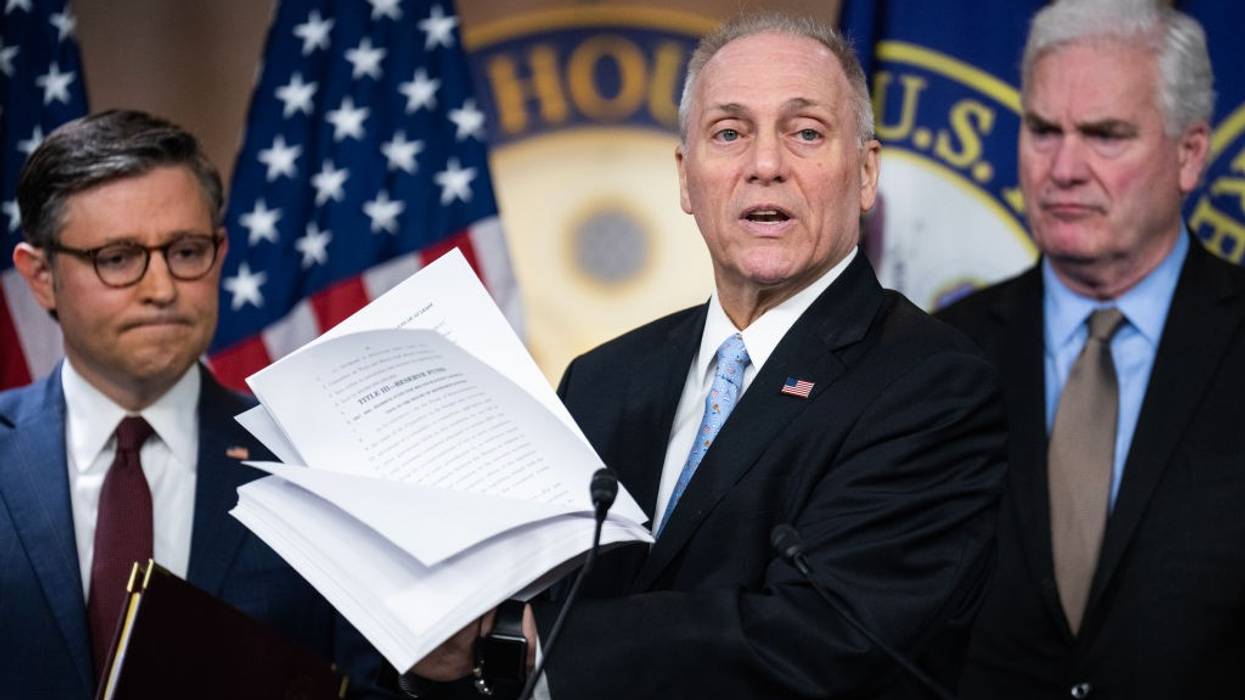
"Their plan would force the largest Medicaid cuts in American history—all to pay for more tax giveaways to billionaires," said Democratic Rep. Brendan Boyle.
At a press conference last week, U.S. House Majority Leader Steve Scalise claimed Democrats are lying when they warn that Medicaid is in the Republican Party's crosshairs.
"The word Medicaid is not even in this bill," Scalise (R-La.) declared, waving the text of a budget resolution that House Republicans went on to pass over unified Democratic opposition.
But an analysis released late Wednesday by the nonpartisan Congressional Budget Office (CBO) makes clear that deep cuts to Medicaid would be required under the House GOP resolution, which President Donald Trump has endorsed.
The analysis, produced at the request of leading House Democrats, shows that Medicaid accounts for 93% of projected mandatory spending under the jurisdiction of the House Energy and Commerce Committee over the next decade, not including Medicare.
That means Republicans would have to cut Medicaid, the Children's Health Insurance Program (CHIP), or Medicare to achieve the $880 billion in spending reductions that the House budget resolution instructs the energy and commerce panel to impose between fiscal years 2025 and 2034.
"This analysis from the nonpartisan CBO confirms what we've been saying all along: Republicans are lying about their budget," said Rep. Brendan Boyle (D-Pa.), the top Democrat on the House Budget Committee. "Their plan would force the largest Medicaid cuts in American history—all to pay for more tax giveaways to billionaires."
I keep hearing Republicans claim their budget doesn't cut Medicaid. We all know that's a lie — so I asked the nonpartisan CBO to look into it. Their analysis confirms it: the Republican budget delivers the largest Medicaid cuts in history to pay for giveaways to billionaires.
[image or embed]
— Rep. Brendan Boyle (@congressmanboyle.bsky.social) March 5, 2025 at 5:45 PM
According to the CBO, just $135 billion in spending under the House Energy and Commerce Committee's jurisdiction over the next decade would be available for cuts when excluding Medicaid, Medicare, CHIP, and programs that are "budget-neutral with revenues offsetting spending."
That would leave the GOP far short of the $880 billion in energy and commerce spending reductions proposed in the House budget resolution, which still must make its way through the Republican-controlled Senate before the GOP can move ahead with Trump's legislative agenda.
The CBO's analysis comes a day after Trump neglected to mention Medicaid during his first address to Congress of his second term, a decision that one advocate said confirms the president "knows his plan to cut nearly $1 trillion from Medicaid is so deeply unpopular that he would rather sweep it under the rug."
Rep. Frank Pallone, Jr. (D-N.J.), the top Democrat on the House Energy and Commerce Committee, said Wednesday that the CBO analysis "confirms what we've been saying all along: The math doesn't work without devastating Medicaid cuts."
"The reality is the only way Republicans can cut at least $880 billion within the Energy and Commerce Committee's jurisdiction is by making deep, harmful cuts to Americans' healthcare," said Pallone. "Republicans know their spin is a lie, and the truth is they have no problem taking healthcare away from millions of Americans so that the rich can get richer and pay less in taxes than they already do."

"We expect every Republican who voted for the budget resolution to hold a town hall during recess on what parts of Medicaid and SNAP they want to cut," said the national director of the Working Families Party.
In the wake of their passage late Tuesday of a budget resolution that sets the stage for massive cuts to Medicaid and other key programs, House Republicans who supported the measure with near unanimity faced calls to explain their vote to constituents who will be directly harmed if the proposed cuts become law.
"We expect every Republican who voted for the budget resolution to hold a town hall during recess on what parts of Medicaid and SNAP they want to cut," Maurice Mitchell, national director of the Working Families Party, said in a statement following Tuesday's vote.
"If you stand behind this plan," Mitchell added, "stop cowering from your constituents."
In recent days, GOP lawmakers have faced angry audiences at town halls in their home districts as voters—including Republican constituents—express outrage over President Donald Trump and Elon Musk's lawless assault on federal agencies and the party's broader legislative agenda, which includes destructive attacks on key programs to help finance trillions of dollars in tax breaks largely for the rich.
"Every single swing district Republican voted to cut Medicaid so they can shovel cash to their billionaire backers."
The intensifying constituent wrath has left Republicans "weary and wary of in-person town hall meetings," NBC News reported Tuesday.
Citing an unnamed GOP aide, the outlet reported that "House Republican leaders are urging lawmakers to stop engaging in" town halls altogether.
In response to NBC's story, Indivisible co-executive director Ezra Levin noted that "there were like eight GOP town halls last week in the entire country."
"Ninety-five percent of GOP members were already hiding from constituents," Levin wrote on social media. "The fact that they think EIGHT is too many is a real sign of how scared they are of constituents and owning this agenda."
Last night, every single swing district Republican voted to cut Medicaid so they can shovel cash to their billionaire backers. If you’ve got an R representative, call now to let them know you’re furious: indivisible.org/resource/cal...
[image or embed]
— Leah Greenberg (@leahgreenberg.bsky.social) February 26, 2025 at 7:41 AM
Survey data indicates that the deep spending cuts congressional Republicans are pursuing are extremely unpopular, including with their own base. One poll released earlier this week found that 71% of Trump voters oppose Medicaid cuts and 60% oppose cuts to federal nutrition assistance.
Under the budget resolution that House Republicans passed late Tuesday, the committees that oversee Medicaid and SNAP are instructed to find over $1 trillion in combined cuts—a clear indication that the two programs are in the party's crosshairs, despite GOP leaders' claims to the contrary.
"This bill doesn't even mention the word Medicaid a single time," House Majority Leader Steve Scalise (R-La.) told reporters Tuesday.
But as The New York Times observed, the resolution's instructions to the House Energy and Commerce Committee—which has jurisdiction over Medicaid—to slash $880 billion in spending over the next decade leaves Republicans with few options other than large cuts to the program that provides healthcare to more than 70 million low-income Americans, including children.
"If Republicans want to avoid major cuts to Medicaid, the largest pot of available money is in the other big government health insurance program: Medicare," the Times observed.
House Speaker Mike Johnson (R-La.) claimed Tuesday that Republicans are only targeting "fraud, waste, and abuse" in Medicaid—a statement that one expert called "a smokescreen for the tired, harmful playbook to gut the Medicaid program that was tried and failed in 2017 as part of the highly unpopular effort to repeal" the Affordable Care Act.
"House Republican leaders have not really moved on," Edwin Park, a research professor at the Georgetown University McCourt School of Public Policy's Center for Children and Families, wrote earlier this week. "Today, they are still pursuing the same kind of draconian Medicaid cuts that would take away coverage and access from tens of millions of low-income children, parents, pregnant women, people with disabilities, seniors, and other adults."
Shortly after Tuesday's vote, Protect Our Care announced a new flurry of ads targeting Republicans in competitive districts who backed the budget resolution, which still must be approved by the GOP-controlled U.S. Senate before the party can begin crafting its filibuster-proof reconciliation package.
The first round of ads, according to Protect Our Care, is aimed at Reps. David Valadao (R-Calif.), Ken Calvert (R-Calif.), Young Kim (R-Calif.), Dan Newhouse (R-Wash.), David Schweikert (R-Ariz.), Ryan Mackenzie (R-Pa.), and Scott Perry (R-Pa.).
"Instead of standing up for their constituents' health, Republicans fell in line to vote in favor of ripping away healthcare from millions of Americans—all so they can give a tax break to billionaires and big corporations," said Leslie Dach, the chair of Protect Our Care. "Medicaid is popular across the board with voters, no matter where they live or who they voted for."
"By ignoring the impact of these cuts on their constituents, every House Republican who voted for this horrific budget is playing a dangerous game," Dach added. "If Republicans proceed with these cuts, we will hold them accountable."
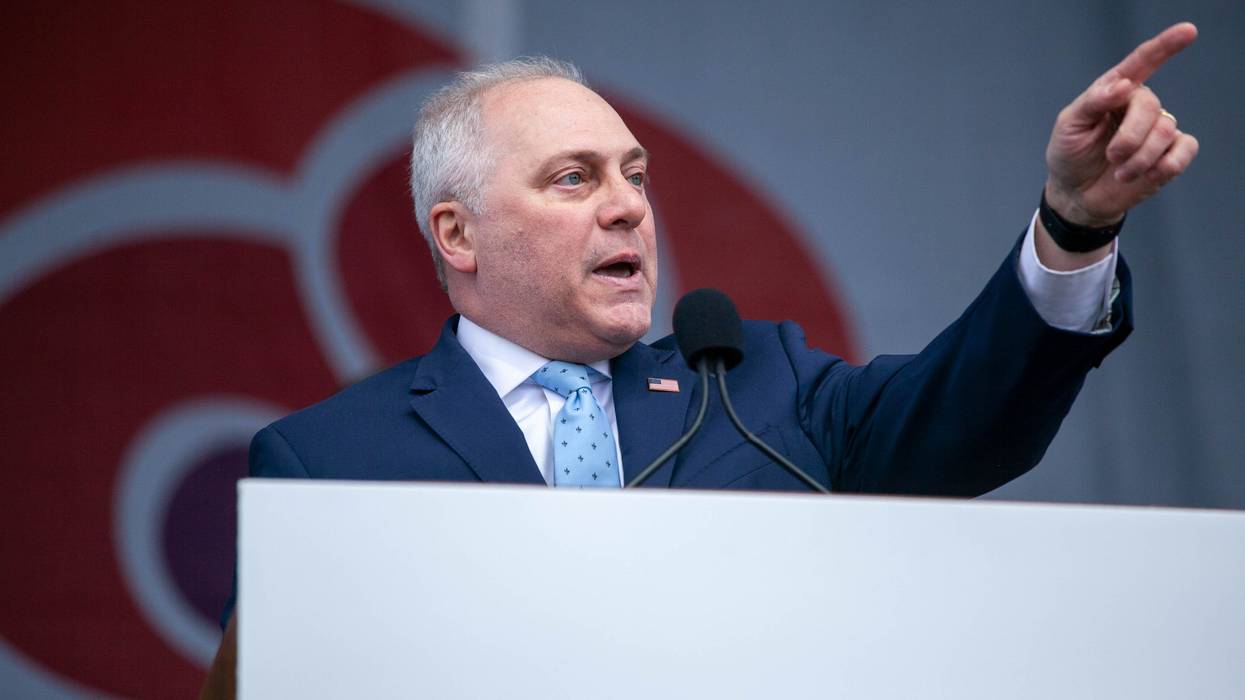
"Big Oil CEOs are out for themselves and the politicians who support their quest to drill for profit at the expense of the American people," said a spokesperson for Accountable.US, which highlighted the donation.
U.S. House Majority Leader Steve Scalise received a $40,000 campaign donation from the political action committee of a Big Oil CEO who allegedly colluded with the Organization of Petroleum Exporting Countries to drive up energy prices, the watchdog Accountable.US noted Monday.
Scalise (R-La.)—who has made opposing efforts to protect public lands from fossil fuel drilling a top legislative priority—took the money from the Williams Companies PAC, whose board includes Pioneer Natural Resources CEO Scott Sheffield, who was accused last month by the U.S. Federal Trade Commission (FTC) of holding private conversations with the OPEC cartel in which he allegedly assured members that his company would throttle production, creating an artificial scarcity in a bid to boost oil prices.
The majority leader ranks fourth among all House lawmakers in 2023-24 campaign contributions from oil and gas interests, according to the watchdog OpenSecrets. His $325,833 in Big Oil contributions trails only Rep. August Pfluger (R-Texas), who took $572,421; former House Speaker Kevin McCarthy (R-Calif.), who received $335,399; and House Speaker Mike Johnson (R-La.), who got $328,019.
"If Congressman Scalise wants to protect American consumers he should start by holding accountable Big Oil price gougers."
"Big Oil CEOs are out for themselves and the politicians who support their quest to drill for profit at the expense of the American people," Accountable.US spokesperson Chris Marshall said in a statement Monday. "So if Congressman Scalise wants to protect American consumers he should start by holding accountable Big Oil price gougers."
The FTC alleges in a complaint that "Sheffield has, through public statements and private communications, attempted to collude with the representatives of [OPEC] and a related cartel of other oil-producing countries known as OPEC+ to reduce output of oil and gas, which would result in Americans paying higher prices at the pump, to inflate profits for his company."
The regulator subsequently barred Sheffield from joining the board of ExxonMobil, which bought Pioneer, over the alleged collusion.
"Mr. Sheffield's past conduct makes it crystal clear that he should be nowhere near Exxon's boardroom," FTC Bureau of Competition Deputy Director Kyle Mach said in a statement last month. "American consumers shouldn't pay unfair prices at the pump simply to pad a corporate executive's pocketbook."
Senate Majority Leader Chuck Schumer took to the upper chamber's floor Monday to reiterate his call for the U.S. Department of Justice (DOJ) to investigate Big Oil collusion and price fixing.
"It's not hard to feel the frustration—the sheer exasperation—felt by millions when America's biggest oil companies rake in record profits but still raise prices at the pump. It is deeply, deeply unfair—and now we have reason to believe that in some cases it may be unlawful," the senator said.
Schumer called the FTC allegations against Sheffield "very, very troubling."
"This is what frustrates Americans so much about Big Oil: Even when they're making money hand over fist they'll keep raising prices on us, they will keep squeezing us for everything we've got," he said. "And now they may—may—have crossed the line into unlawful behavior."
"So the DOJ needs to step in and determine if any laws against collusion or price-fixing have been broken," Schumer added. "At minimum, the American people deserve to know if Big Oil executives are conspiring with each other or with OPEC behind our backs to illegally raise prices at the pump."
"The country and the world need real leadership from the House of Representatives in this moment, not resolutions designed purposefully to increase the likelihood of a deadly regional war or worse."
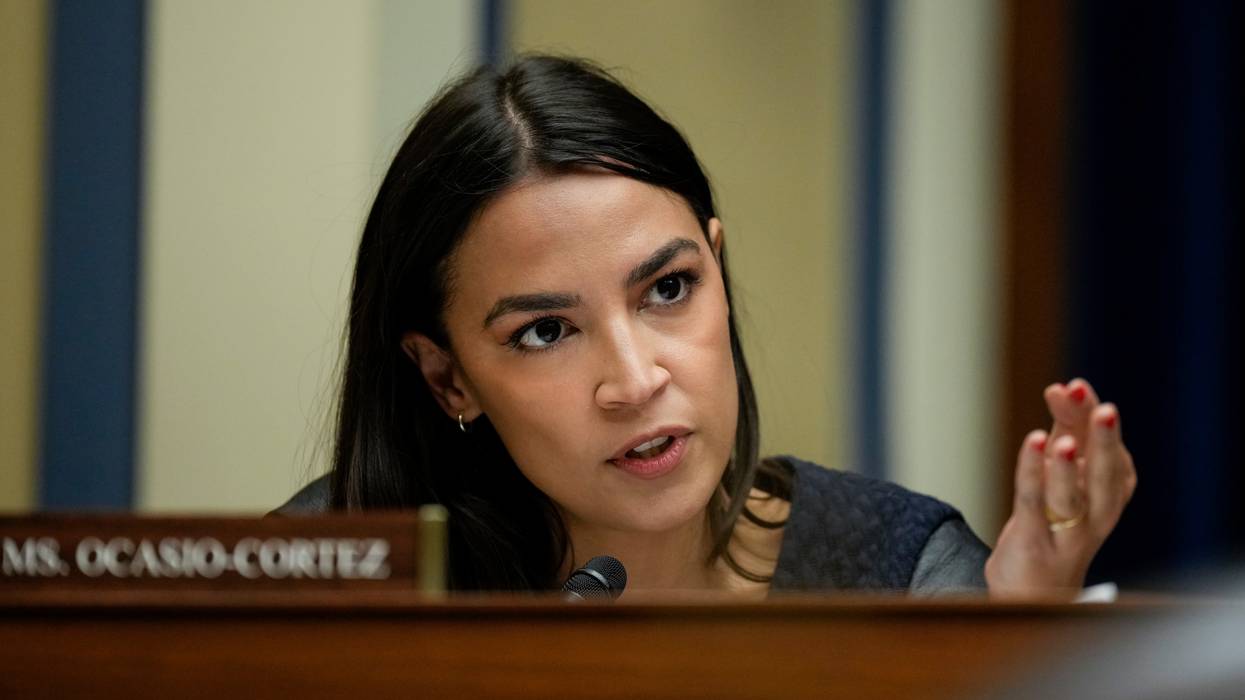
Congresswoman Alexandria Ocasio-Cortez on Tuesday accused her Republican colleagues of dangerously trying to cloak their own legislative impotence in a flurry of anti-Iran bills—including a bipartisan proposal to ban Americans from traveling to the country.
"Following last weekend's unprecedented response by Iran to Israel's attack on its consulate, the Republican majority is explicitly leveraging a series of bills to further escalate tensions in the Middle East," Ocasio-Cortez (D-N.Y.) said in a statement. "This is a blatant attempt to distract from their own incompetence."
On Monday, House Majority Leader Steve Scalise (R-La.) published this week's proposed bills and resolutions, which include 15 separate measures condemning or sanctioning Iran following the retaliatory missile and drone attack launched by Tehran against Israel last weekend.
"In light of Iran's unjustified attack on Israel, the House will move from its previously announced legislative schedule next week to instead consider legislation that supports our ally Israel and holds Iran and its terrorist proxies accountable," Scalise said in a statement.
Peace advocates expressed alarm over a bipartisan resolution introduced Tuesday by Rep. Randy Weber (R-Texas) calling for regime change in Iran—where the United States and United Kingdom led a 1953 coup that ensured the decadeslong rule of a repressive monarch that ended just before the current Islamist regime took power 45 years ago this month.
"Decades of a tyrannical regime in Tehran—destabilizing the Middle East and intentionally spreading chaos throughout the region—has culminated in Iran's direct attack on our greatest ally, Israel," Weber said in a statement. "The rogue regime needs to be overthrown immediately."
One of the most controversial bills on the docket, introduced by Reps. Joe Wilson (R-S.C.) and Jared Moskowitz (D-Fla.), would urge the Biden administration to ban U.S. passport holders from traveling to Iran.
"This shameful idea that punishes people instead of governments was first proposed by [former U.S. President] Donald Trump's Iran envoy (and likely war criminal) Elliott Abrams," the National Iranian American Council (NIAC) said in a statement. "Now, Rep. Wilson—who has deep ties to the [Mojahedin-e-Khalq] and other hawkish groups—is partnering with a hawkish Democrat on this proposal."
"Make no mistake: A ban as called for by this bill could have serious ramifications for anyone traveling to Iran, regardless of passport. We must make clear that this is unacceptable," NIAC continued.
"What if you could no longer travel to Iran to see relatives, visit a sick family member, attend a wedding, or claim an inheritance, out of fear of being imprisoned by the U.S. government?" the group added. "Seeing our loved ones isn't a crime, and no government, whether Iranian or American, should prevent us from doing so."
Congressional progressives say the anti-Iran bills are part of a scheme to deflect attention from what many social media users are calling the "#GOPShitShow," exemplified by yet another effort by far-right lawmakers to dethrone a Republican House speaker—less than six months after his GOP predecessor was ousted.
"The country and the world need real leadership from the House of Representatives in this moment, not resolutions designed purposefully to increase the likelihood of a deadly regional war or worse," said Ocasio-Cortez. "I will oppose any cynical effort to further inflame tensions, destroy a path to peace in the region, and further divide the American people."
The ex-president also filed a brief and claimed that ballot disqualification efforts "promise to unleash chaos and bedlam if other state courts and state officials follow Colorado's lead."
Two-thirds of congressional Republicans on Thursday signed an amicus brief to the U.S. Supreme Court urging the justices to reverse the Colorado Supreme Court's recent decision to remove former President Donald Trump from the state primary ballot.
The country's highest court—which has a right-wing supermajority that includes three Trump appointees and Justice Clarence Thomas, whose wife was involved in efforts to overturn President Joe Biden's 2020 win—agreed to take the case earlier this month, just before the start of the presidential primary season, which is now underway.
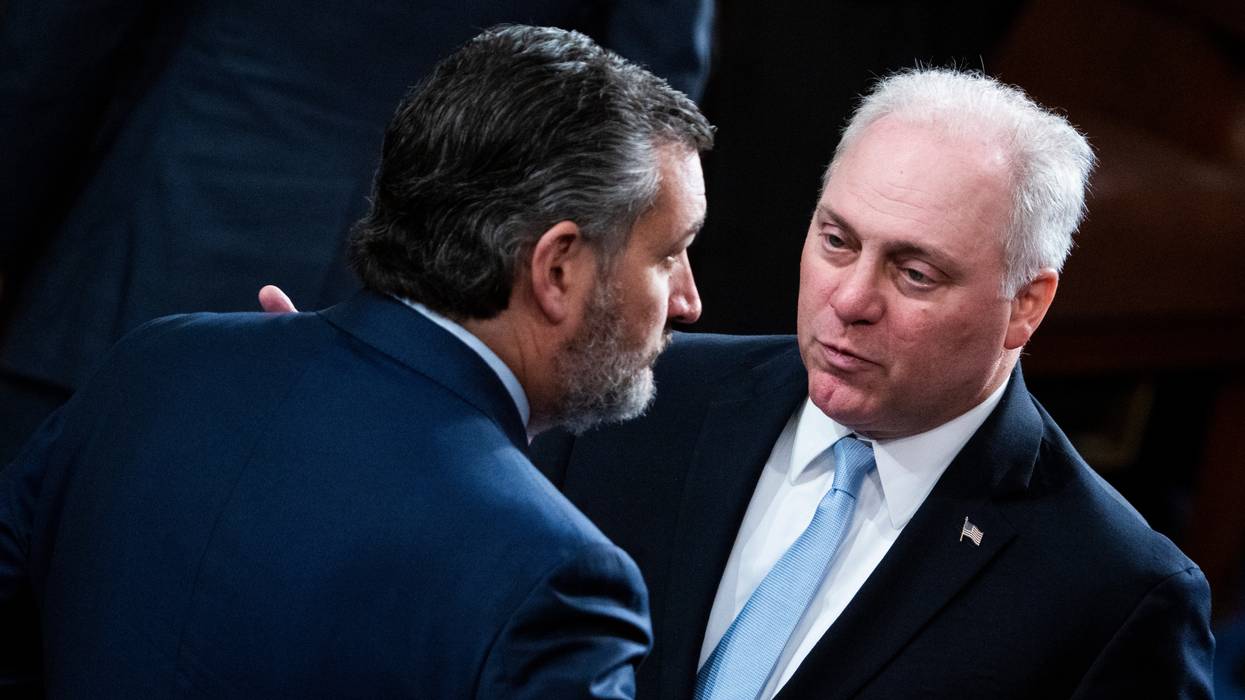
With arguments scheduled for February 8, the deadline for Trump's brief on the merits as well as any amicus curiae—or "friend of the court"—briefs like the one submitted by 179 Republican lawmakers, was Thursday. It was led by Sen. Ted Cruz (R-Texas) and House Majority Leader Steve Scalise (R-La.), and other supporters include Senate Minority Leader Mitch McConnell (R-Ky.) and House Speaker Mike Johnson (R-La.).
The voters behind the Colorado case—like other lawsuits and applications to election officials across the country—successfully argued that Trump's incitement of the January 6, 2021 attack on the U.S. Capitol, while Congress was certifying Biden's win, disqualifies him from serving as president again, because the 14th Amendment prohibits anyone who took an oath to the U.S. Constitution and then engaged in insurrection from holding office.
After having to flee the Trump-supporting rioters three years ago, the Republican lawmakers argued Thursday that "the Colorado Supreme Court's decision encroaches on Congress' express powers," claiming that federal lawmakers "must pass authorizing legislation to enforce Section 3" of the 14th Amendment.
"The Colorado Supreme Court also erred by rejecting the argument that Section 3 is inapplicable to former President Trump, as he was never previously 'an officer of the United States,'" the GOP lawmakers claimed. The brief also contests the court's definitions of "engaged in" and "insurrection," and warns that the decision "will lead to widespread de-balloting of political opponents."
Trump's lawyers also filed his brief on Thursday, writing that "the court should put a swift and decisive end to these ballot disqualification efforts, which threaten to disenfranchise tens of millions of Americans and which promise to unleash chaos and bedlam if other state courts and state officials follow Colorado's lead and exclude the likely Republican presidential nominee from their ballots."
So far, only Maine has joined Colorado in disqualifying the twice-impeached former president during the primary stage, but that decision is on hold until the high court weighs in.
"Donald Trump sent an armed mob to the Capitol in an attempt to overturn the results of the election, violating the Constitution and undermining the will of the people. He should not be given another opportunity to do so again," said Aly Belknap, executive director of Colorado Common Cause, in a statement Thursday.
"Former President Trump's eligibility for the Colorado ballot has broad-reaching implications for the permissible conduct of future presidents and other public officials," she continued. "In a strong democracy, elections are decided by the voters at the ballot box, not with violence or intimidation. The Supreme Court has the power to set a critical legal precedent to safeguard the future of American democracy: You cannot stoke political violence against your own country and hold elected office."
Belknap asserted that "the Supreme Court must embrace its role as an active defender of our Constitution, or else it may crumble under the immense pressure it will surely face in the years to come. Just as we argued in our brief to the Colorado Supreme Court, the U.S. Supreme Court must not allow politics to supersede constitutional requirements."
Take Back the Court Action Fund's president, Sarah Lipton-Lubet, declared that "if congressional Republicans want Trump on the ballot, they should simply pass a bill exempting him from the 14th Amendment's prohibition on insurrectionists holding office, as the Constitution specifies. But they've grown so accustomed to the Supreme Court doing their dirty work that they're hoping it will again."
In addition to the 14th Amendment arguments, Trump is facing four ongoing criminal cases—two of which stem from his 2020 election interference. Despite all of that, he won the Iowa caucuses on Monday and is the leading Republican candidate in other states. On the Democratic side, Biden is seeking reelection.
This post has been updated with comment from Colorado Common Cause and Take Back the Court Action Fund.
As former President Donald Trump attacked him, some progressives argued that "Democrats should only support a speaker that would disempower the Freedom Caucus through a power-sharing agreement."
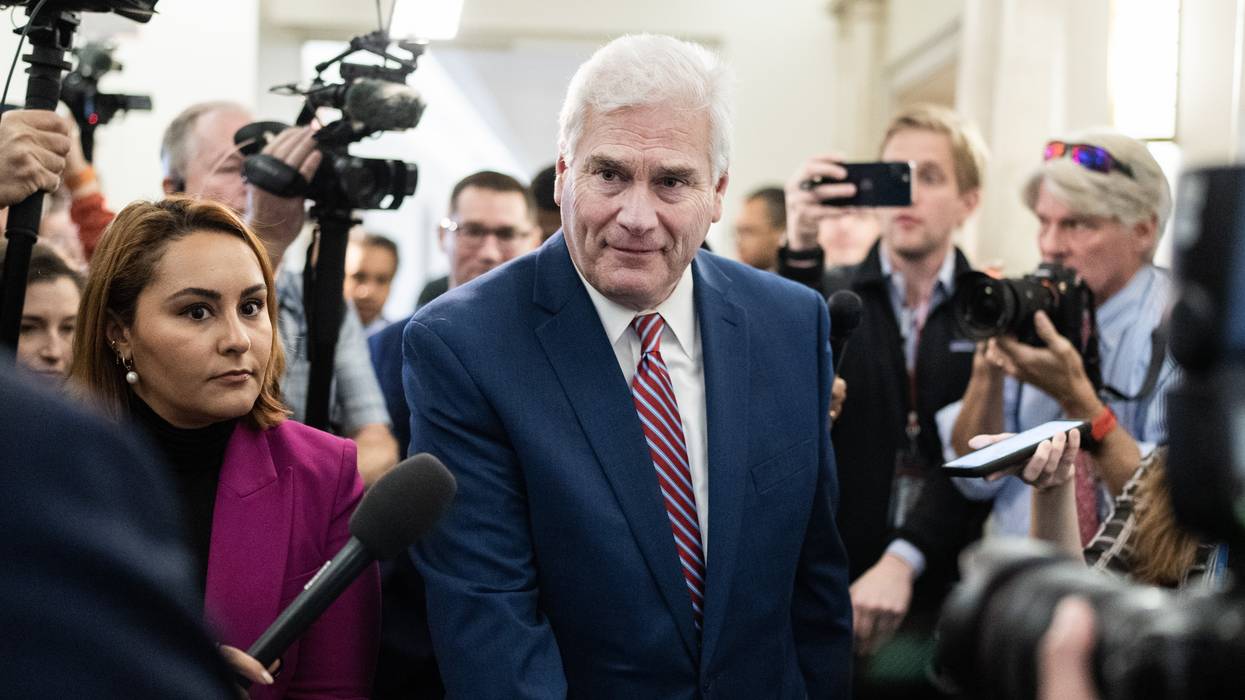
Just hours after Republicans in the U.S. House of Representatives selected Majority Whip Tom Emmer as their third speaker nominee in as many weeks, the Minnesota congressman dropped out of the race Tuesday afternoon.
Congressman Lance Gooden (R-Texas) told CNN that Emmer "wanted to do what's best for the conference and he didn't have the votes so he pulled his name down and got a standing ovation, and so now we're moving onto the next phase," which is a Tuesday night candidate forum.
Emmer's short-lived campaign followed failed bids by Reps. Steve Scalise (R-La.) and Jim Jordan (R-Ohio) in the weeks since a few far-right Republicans joined with Democrats to oust former House Speaker Kevin McCarthy (R-Calif.), whose January election required 15 rounds of voting.
Over two dozen House Republicans opposed Emmer's bid, leaving him short of the 217 votes necessary for election to the leadership role, and former President Donald Trump—the GOP's 2024 presidential front-runner, despite his legal trouble—spoke out against him on Tuesday.
Trump said on social media that Emmer "never respected the Power of a Trump Endorsement, or the breadth and scope of MAGA," his campaign slogan Make American Great Again, and "voting for a Globalist RINO," or Republican in name only, like him "would be a tragic mistake!"
While some GOP opponents of Emmer tried to paint him as too "moderate," progressives on Tuesday stressed that the Minnesota Republican is anything but, given his record on the 2020 election, reproductive healthcare, the climate emergency, and more.
"So Republicans have picked Tom Emmer as their next speaker nominee. I hear some people alleging he's 'not as bad' as some options," DemCast's Nick Knudsen said on social media Tuesday before the congressman withdrew.
Emmer voted against "the Violence Against Women Act, ensuring our right to contraception, improved red flag laws and banning of high capacity magazines, establishment of a January 6th commission, capping insulin costs at $35, bipartisan infrastructure, and the banning of wage discrimination based on gender (to name a few)," he highlighted. "Sounds pretty bad to me."
Indivisible on Tuesday reiterated a message the progressive group sent last week to every single House Democrat, which says in part that "while House Republicans remain in disarray and are unable to elect a speaker, Democrats have been united around their shared values—prioritizing people over politics and governing effectively."
The message notably went out before Republicans made clear that they won't support temporarily empowering Speaker Pro Tempore Patrick McHenry (R-N.C.) to pass spending bills before a potential government shutdown in mid-November.
"Indivisible encourages all House Democrats to stay united and only consider plans that also include a strong power-sharing agreement," the group added. "An agreement would disempower the Freedom Caucus and empower Democrats to meaningfully govern, mitigating Republican disarray. Any agreement would also need to be codified in the rules of the House."
"If elected speaker, Jordan would effectively give the House to Trump," said former Labor Secretary Robert Reich. "No alliance poses a greater threat to our democracy."
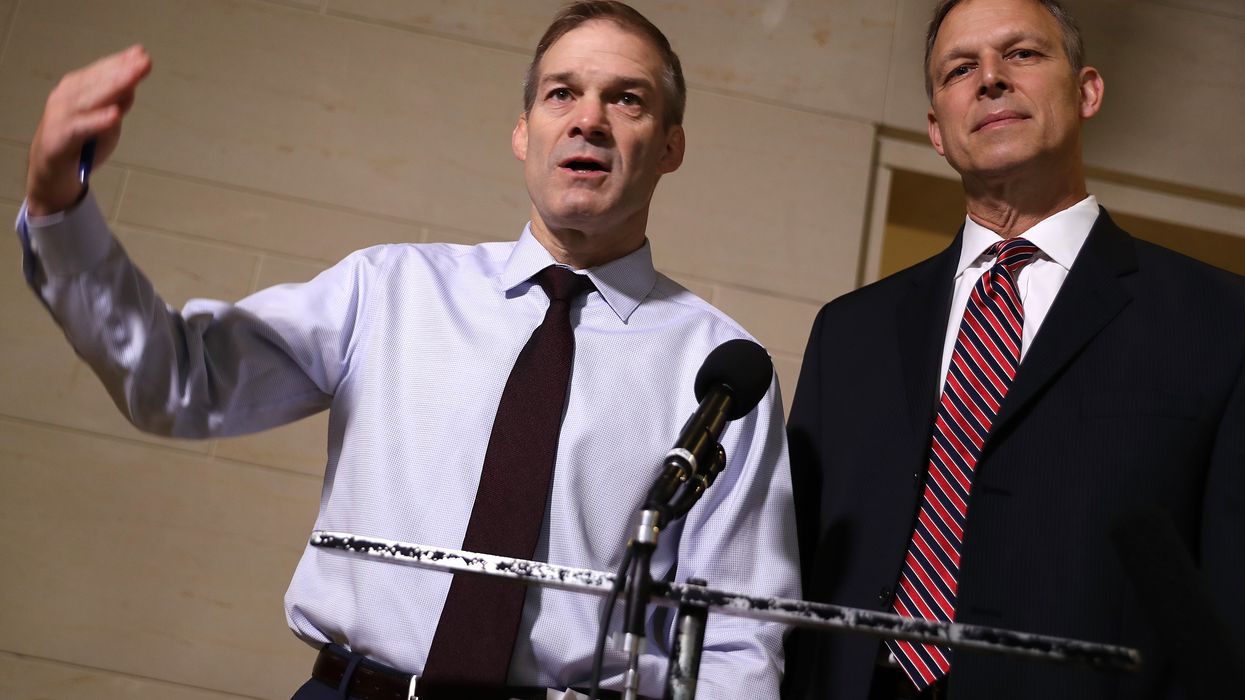
As the U.S. House began its latest voting process in an attempt to secure a speaker, progressive lawmakers made clear their view that Rep. Jim Jordan's history of spreading lies about the 2020 election and racist anti-immigration rhetoric disqualifies him from the role that would place him second in line for the presidency.
Not only that, said Rep. Cori Bush (D-Mo.) as the first round of voting got underway, but Jordan (R-Ohio) is "unfit to be in office."
Like other progressives have in recent days, Bush connected Jordan's refusal to accept former Republican President Donald Trump's loss in the 2020 election and his involvement in strategizing to challenge the election with the violent insurrection at the U.S. Capitol on January 6, 2021.
Jordan emerged on Friday as the latest candidate to lead Republicans in the House, where they hold a majority, after winning his party's nomination to replace former House Speaker Kevin McCarthy (R-Calif.) and beginning a pressure campaign to secure the 217 votes he needed to win the speakership.
Last week, Rep.Steve Scalise (R-La.) failed to garner the votes he needed, leading critics including Rep. Alexandria Ocasio-Cortez (D-N.Y.) to reason that House Minority Leader Hakeem Jeffries (D-N.Y.)—with all 212 Democrats supporting him—was far closer to gathering the support needed to win the speaker election.
Rep. Ilhan Omar (D-Minn.) repeated that sentiment on Tuesday, calling Jordan an "insurrectionist" and posting a video made by the Democratic Policy and Communications Committee which noted that in 17 years of public service, the lawmaker has never managed to get a bill signed into law or passed in the House.
"Rep. Jeffries has the votes if four Republicans work for the people," said Omar. "Americans deserve better than these political games."
Jordan, founder of the far-right House Freedom Caucus, quickly began a pressure campaign saying Republicans who wouldn't support him were harming the party and the country, with Fox News anchor Sean Hannity commencing "a thinly veiled pressure campaign by querying GOP House members about their refusal to support Jordan," as The Daily Beast reported.
Still, he failed to convince 20 of his GOP colleagues in the first round of voting on Tuesday afternoon, with several of the holdouts supporting Scalise and McCarthy. The vote placed Jordan further away from victory than McCarthy was in the first round of voting when he was eventually elected speaker in January; 19 Republicans opposed McCarthy in the first round, and lawmakers voted 15 times before McCarthy garnered enough support to win.
Jordan began speaking to the dissenters shortly after the first vote, while former U.S. Labor Secretary Robert Reich accused him of using "[Former President Donald] Trump's playbook to try to bully his way to victory."
"If elected speaker, Jordan would effectively give the House to Trump," said Reich. "No alliance poses a greater threat to our democracy."
Rep. Pete Aguilar (D-Calif.), who serves as chair of the House Democratic Caucus, urged his colleagues to vote against "the architect of a nationwide abortion ban, a vocal election denier, and an insurrection insider," saying elevating Jordan to the top House position would send "a terrible message to the country and our allies."
Ocasio-Cortez urged New York voters in districts represented by House Republicans to call their members and make their opposition to Jordan known.
"We will see if individuals like Mike Lawler or Marc Molinaro who represent New Yorkers in the Hudson Valley, the Catskills, Westchester County, will actually vote to install a man who voted to overturn the election and who supports a national abortion ban to be speaker of the House and second in line for the presidency," said Ocasio-Cortez Tuesday night on CNN. "I have my doubts that people in New York will stand for that."
"I will vote for Leader Jeffries and continue my work building bridges between marginalized communities to dismantle the systems of white supremacy enabling violence against our communities," said Rep. Summer Lee.
Louisiana GOP Congressman Steve Scalise—infamously accused of once calling himself "David Duke without the baggage," referring to a former Ku Klux Klan grand wizard—on Thursday night dropped his bid to become the next speaker of the U.S House of Representatives.
"It's been quite a journey and there's still a long way to go. I just shared with my colleagues that I'm withdrawing my name as a candidate for the speaker designee," Scalise told reporters, acknowledging divisions within his conference.
"This country is counting on us to come back together," he added. "This House of Representatives needs a speaker and we need to open up the House again. But clearly, not everybody is there. And there's still schisms that have to get resolved."
Republicans narrowly selected Scalise, the House majority leader, as the fractured party's nominee during a closed-door, secret-ballot election on Wednesday, but he still lacked the 217 votes needed to be elected speaker.
Some House Republicans prefer Rep. Jim Jordan (R-Ohio), who is backed by 2024 GOP front-runner former President Donald Trump but reportedly offered to give a nominating speech for Scalise after losing his party's contest.
Throughout the week, House progressives have spoken out against Scalise, with Congresswoman Summer Lee (D-Pa.) saying earlier Thursday:
I'm sickened to learn that years before he was caught calling himself David Duke without the baggage, Scalise spoke at the 2002 international white supremacist convention sponsored by a group whose website said that "Jews will attack us for wanting to restore white America and are responsible for the 'browning' of America" and peddled the same white supremacist and antisemitic replacement theory that motivated the murders of 11 beloved members of my community in the Pittsburgh synagogue shooting, 10 Black grocery shoppers in Buffalo, 23 Hispanic community members in El Paso, and 51 Muslim worshipers in Christchurch. Every Republican who votes for his speakership will vote in support of rising antisemitism, white supremacy, and Islamophobia.
Rep. Jamaal Bowman (D-N.Y.) similarly wrote on social media: "Republicans have chosen a candidate for speaker who has pushed white supremacist and antisemitic conspiracy theories, calling himself 'David Duke without the baggage.' We must be focused on dismantling white supremacy and violence, not allowing them into our leadership."
Reps. Becca Balint (D-Vt.), Cori Bush (D-Mo.), Jasmine Crockett (D-Texas), and Alexandria Ocasio-Cortez (D-N.Y.) have also highlighted the controversial Duke comment, which has haunted the key House Republican for nearly a decade.
Journalist Stephanie Grace wrote for Louisiana's The Advocate in December 2014, "This is what I remember about the first time I met Steve Scalise nearly 20 years ago: He told me he was like David Duke without the baggage."
"The 'baggage,' of course, was Duke's past, his racist and antisemitic views and his former role as a KKK grand wizard," Grace continued. "Scalise disavowed Duke then, as he did once again this week, when blogger Lamar White Jr. revealed that Scalise had spoken in 2002 at a meeting hosted by a Duke-founded white nationalist group."
The Washington Post reported that same week in 2014 that Scalise "confirmed through an adviser that he once appeared at a convention of the European-American Unity and Rights Organization, or EURO. But the adviser said the congressman didn't know at the time about the group's affiliation with racists and neo-Nazi activists."
However, Slate noted at the time that "Scalise may have just ineptly admitted to speaking at a white supremacist event that eyewitnesses say he never attended." Duke associate Kenny Knight claimed he invited Scalise, then his neighbor and a Louisiana state representative, to address the Jefferson Heights Civic Association in a room of the hotel booked for the conference—a version of events confirmed by Barbara Noble, Knight's ex-girlfriend.
Given Scalise's messy baggage—and solidly right-wing voting record—some Democrats, who last week joined with a small group of far-right Republicans to oust Rep. Kevin McCarthy (R-Calif.) as speaker, are advocating for Minority Leader Hakeem Jeffries (D-N.Y.).
Lee said Thursday that "I will vote for Leader Jeffries and continue my work building bridges between marginalized communities to dismantle the systems of white supremacy enabling violence against our communities."
Rather than directly pitching himself, Jeffries, in a television appearance, called for restructuring the House "in a bipartisan way designed to allow for commonsense things to come to the floor, receive an up-or-down vote, for us to be able to actually move legislation that emerges from the Senate that is bipartisan in nature."
Jeffries stressed that "we just need traditional Republicans to break from their extremist wing and join us in a bipartisan coalition."
The speaker fight comes about a month away from a potential government shutdown and as some House progressives face allegations of antisemitism for speaking out against the Israeli military assault and full blockade of Gaza in retaliation for Hamas' weekend attack—a common tactic supporters of Israel employ to try to discredit criticism of the Israeli government and military's mistreatment of Palestinians, from apartheid to war crimes.
As Common Dreams reported earlier Thursday, Rep. Rashida Tlaib (D-Mich.), the first Palestinian American elected to Congress, faces a motion to censure spearheaded by Rep. Jack Bergman (R-Mich.) because she said that "I grieve the Palestinian and Israeli lives lost" while also asserting that "the path to that future must include lifting the blockade, ending the occupation, and dismantling the apartheid system that creates the suffocating, dehumanizing conditions that can lead to resistance."
Fellow "Squad" members including Bush and Rep. Ilhan Omar (D-Minn.) have also endured attacks from fellow Democrats for condemning the killing of civilians on both sides and U.S. support for Israeli military occupation and apartheid.