SUBSCRIBE TO OUR FREE NEWSLETTER
Daily news & progressive opinion—funded by the people, not the corporations—delivered straight to your inbox.
5
#000000
#FFFFFF
To donate by check, phone, or other method, see our More Ways to Give page.


Daily news & progressive opinion—funded by the people, not the corporations—delivered straight to your inbox.
"The federal government cannot prioritize its cruel immigration agenda over Americans' safety," said New York's attorney general, who was part of the case.
A federal judge ruled Wednesday that US President Donald Trump's attempt to bully states states into cooperating with his administration's anti-immigrant crackdown by conditioning emergency and disaster aid upon such cooperation is unconstitutional.
Judge William Smith of the US District Court for the District of Rhode Island—an appointee of former President George W. Bush—sided with 20 Democrat-led states and the District of Columbia, asserting in his 45-page ruling that "several contested conditions attached to the award of federal grants under the Department of Homeland Security are beyond the scope of DHS’ statutory authority, are a violation of the Administrative Procedure Act (APA), and are unconstitutional."
"The court finds that the contested conditions are arbitrary and capricious and thus invalid under the APA and are also a violation of the conditions attached to the spending clause and thus unconstitutional," Smith added.
The 20 states and DC sued the administration in May, arguing that DHS was illegally using federal funds meant for emergency readiness and disaster relief to strong-arm them into cooperating with Trump's anti-immigrant crusade. In order to qualify for federal funds, states were ordered to grant federal immigration agents access to detainees and honor requests for cooperation, including by taking part in joint operations, sharing information, or holding detained immigrants.
The attorneys general in the case welcomed Smith's decision.
We just won our lawsuit against the DHS after a judge ruled the department can't hold life-saving disaster relief funds hostage to advance its anti-immigration efforts. The federal government cannot prioritize its cruel immigration agenda over Americans' safety.
— New York Attorney General Letitia James (@newyorkstateag.bsky.social) September 24, 2025 at 1:32 PM
“Today is an important win for the rule of law and reaffirms that the president may not pick and choose which laws he and his administration obey," Democratic Rhode Island Attorney General Peter Neronha said in a statement. "Today’s permanent injunction by Judge Smith says, in no uncertain terms, that this administration may not illegally impose immigration conditions on congressionally allocated federal funding for emergency services like disaster relief and flood mitigation. Case closed."
“These cases can feel long and daunting, and we still have a long road ahead of us, to be sure," Neronha added. "But today’s decision reminds us that this president cannot impose his will where he does not have the lawful power to do so. And while he may continue to try, we will continue to fight.”
Democratic California Attorney General Rob Bonta, who was also involved in the case, hailed Wednesday's "excellent news."
"This is a final win in our case that will protect funding for our communities to defend against terrorist attacks and prepare for emergencies," he added. "This is a good day for the rule of law and public safety."
"My experience tells me the discovery phase will be fascinating as the lawyers dig into the true motivations and scheming behind this ugly fossil fuel thuggery," said Sen. Sheldon Whitehouse.
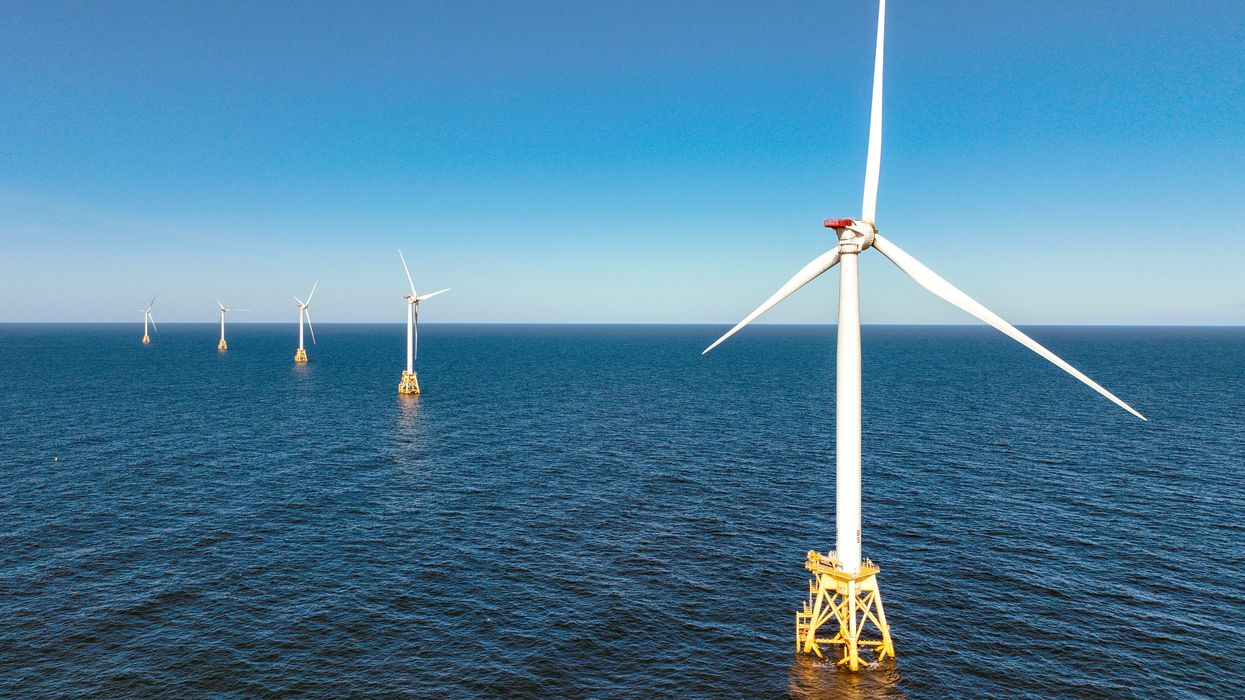
The attorneys general of Connecticut and Rhode Island on Thursday joined renewable energy companies in a lawsuit challenging the Trump administration's suspension of an offshore wind farm that, if completed, will power hundreds of thousands of homes in the two New England states.
Connecticut Attorney General William Tong and Rhode Island Attorney General Peter Neronha, both Democrats, announced they are suing "to overturn the baseless stop-work order abruptly issued on August 22, 2025, which halted the construction of Revolution Wind," a project located 15 miles south of the Rhode Island coast.
"Revolution Wind is fully permitted, nearly complete and months from providing enough American-made, clean, affordable energy to power 350,000 homes," Tong said in a statement. "Now, with zero justification, [US President Donald] Trump wants to mothball the project, send workers home, and saddle Connecticut families with millions of dollars in higher energy costs. This kind of erratic and reckless governing is blatantly illegal, and we're suing to stop it."
Acting US Bureau of Ocean and Energy Management (BOEM) Director Matthew Giacona issued the order directing Rob Keiser, head of asset management at the North American branch of the Danish firm Ørsted—the world's largest offshore wind developer—to "halt all ongoing activities related to the Revolution Wind project on the outer continental shelf."
Giacona's order—which cited "concerns related to the protection of national security interests of the United States"—is to remain in effect pending review by BOEM, which is part of the US Interior Department.
Ratepayers could have saved $400 million last winter if the 3.5 GW of offshore wind in New England was operational.Meanwhile, Trump just halted construction on Rhode Island's Revolution Wind and is trying to ban wind energy entirely. You can thank Trump when your energy bills continue to rise.
[image or embed]
— LCV – League of Conservation Voters 🌎 (@lcv.org) September 4, 2025 at 6:31 AM
At the time of the order, Ørsted said that Revolution Wind was "80% complete, with all offshore foundations installed and 45 out of 65 wind turbines installed."
The lawsuit filed by Revolution Wind—a joint venture between Ørsted and Skyborn Renewables—seeks to lift BOEM's order. An attorney for Ørsted contended Thursday in the US District Court for the District of Columbia that Trump's "apparent hostility toward offshore wind" was behind the stop-work order.
"The project has spent billions of dollars in reliance on these valid approvals," the Revolution Wind filing states. "The stop-work order is invalid and must be set aside because it was issued without statutory authority, in violation of agency regulations and procedures and the 5th Amendment's due process clause, and is arbitrary and capricious."
US Sen. Sheldon Whitehouse (D-R.I.), who previously condemned the stop-work order, said Thursday that "if Trump's plan is to raise families' energy prices, cut American jobs, turbocharge climate change, and accelerate the Great Climate Insurance Crisis, he's knocking it out of the park with his all-out attack on American offshore wind."
"Wind power is one of the fastest, safest, cheapest ways to meet rising electricity demand and cut energy prices," the senator continued. "The only winners here are the corrupt fossil fuel donors who bankrolled Trump's campaign."
In a separate social media post on Thursday addressing the new lawsuit, Whitehouse said that "my experience tells me the discovery phase will be fascinating as the lawyers dig into the true motivations and scheming behind this ugly fossil fuel thuggery."
Revolution Wind is at least the second major wind project hit with a BOEM stop-work order during the second administration of Trump, who campaigned on a "drill, baby, drill" pro-fossil fuels platform.
Trump has also antagonized Denmark by threatening to take control of Greenland, a Danish territory. Last month, Denmark's Foreign Ministry summoned Mark Stroh, Trump's charge d'affaires in the Nordic nation, following a report by the main Danish public broadcaster alleging that three Americans with ties to Trump have been attempting to instigate tensions between Denmark and Greenland.
Thursday's lawsuit follows another multistate complaint filed in May by 18 attorneys general seeking to block Trump's effort to pause offshore wind development via an executive order issued on the president's first day in office.
"This arbitrary and unnecessary directive threatens the loss of thousands of good-paying jobs and billions in investments, and it is delaying our transition away from the fossil fuels that harm our health and our planet," Democratic New York Attorney General Letitia James, who is leading the coalition of states, said at the time.
"This administration is not streamlining the federal government; they are sabotaging it and all of us," said New York Attorney General Letitia James.
A coalition of 20 attorneys general on Monday sued the U.S. Department of Health and Human Services, HHS Secretary Robert F. Kennedy Jr., and other Trump administration officials in federal court over cuts to the agency, arguing that "dismantling" and "paralyzing" it through terminations and reorganizations is an "unlawful effort" to undercut Congress.
The lawsuit focuses on a March 27 directive that unveiled sweeping changes to HHS, and the plaintiffs are requesting that the court declare the directive unlawful, arguing that it is unconstitutional and violates the Administrative Procedure Act.
"This administration is not streamlining the federal government; they are sabotaging it and all of us," said New York Attorney General Letitia James, one of the attorneys general leading the lawsuit, in a statement on Monday. "When you fire the scientists who research infectious diseases, silence the doctors who care for pregnant patients, and shut down the programs that help firefighters and miners breathe or children thrive, you are not making America healthy—you are putting countless lives at risk."
The lawsuit argues that prior to March 27 the administration had sought to "systematically deprive" HHS of necessary resources, but the March directive was an escalation of this effort, announcing the agency's intention to terminate thousands HHS employees, restructure 28 divisions down to 15, and reduce regional offices from 10 to 5.
"Secretary Kennedy refused to undertake this restructuring legally or carefully," according to the suit, which also highlights that the steep reductions in staff were not slated to yield significant savings.
"The March 27 directive came after scores of probationary employees were laid off and many employees took a buyout offer. None of these layoffs were necessary to accommodate a funding shortfall—Congress's appropriations have remained steady, or in many cases, grown in recent years. All told, 20,000 full-time employees—almost 25% of HHS headcount—would be terminated in a few months to save, by defendants' own estimate, less than 1% of HHS expenditures," according to the suit.
The attorneys general argue that cuts to HHS and its subagencies have prevented them from carrying out their "statutorily required functions." The lawsuit ticks through changes to various agencies within HHS and explains how the March 27 directive has made them unable to do their work.
At the Centers for Disease Control and Prevention (CDC), for example, some 2,400 employees were dismissed on April 1, according to the complaint.
Per the suit, all workers that handled Freedom of Information Act requests have been fired, as have members of the communication team. The cuts have reduced the Division of Global HIV & Tuberculosis's staff by roughly a quarter and also meant that infectious disease laboratories have either been shuttered or reduced their capacity.
"The closure and cuts to infectious diseases laboratories within CDC are perhaps the most egregious example of how the March 27 directive is destroying CDC's ability to meet its statutory mandates to investigate, detect, and identify diseases," according to the suit.
"Since day one, this president and his administration have attempted to illegally decimate agencies across the federal government upon which the American people rely," said Rhode Island Attorney General Neronha, who is also co-leading the suit, in a statement on Monday. "In a world where the next pandemic could be right around the corner, and cases of measles are on the rise, taking an axe to the agency responsible for the health and safety of Americans is wildly irresponsible."
In addition to attorneys general from Rhode Island and New York, the plaintiffs includes state attorneys general from Washington; Arizona; California; Colorado; Connecticut; Delaware; Washington, D.C.; Hawaii; Illinois; Maine; Maryland; Michigan; Minnesota; New Jersey; New Mexico; Oregon; Vermont; and Wisconsin.