

SUBSCRIBE TO OUR FREE NEWSLETTER
Daily news & progressive opinion—funded by the people, not the corporations—delivered straight to your inbox.
5
#000000
#FFFFFF
To donate by check, phone, or other method, see our More Ways to Give page.
Daily news & progressive opinion—funded by the people, not the corporations—delivered straight to your inbox.
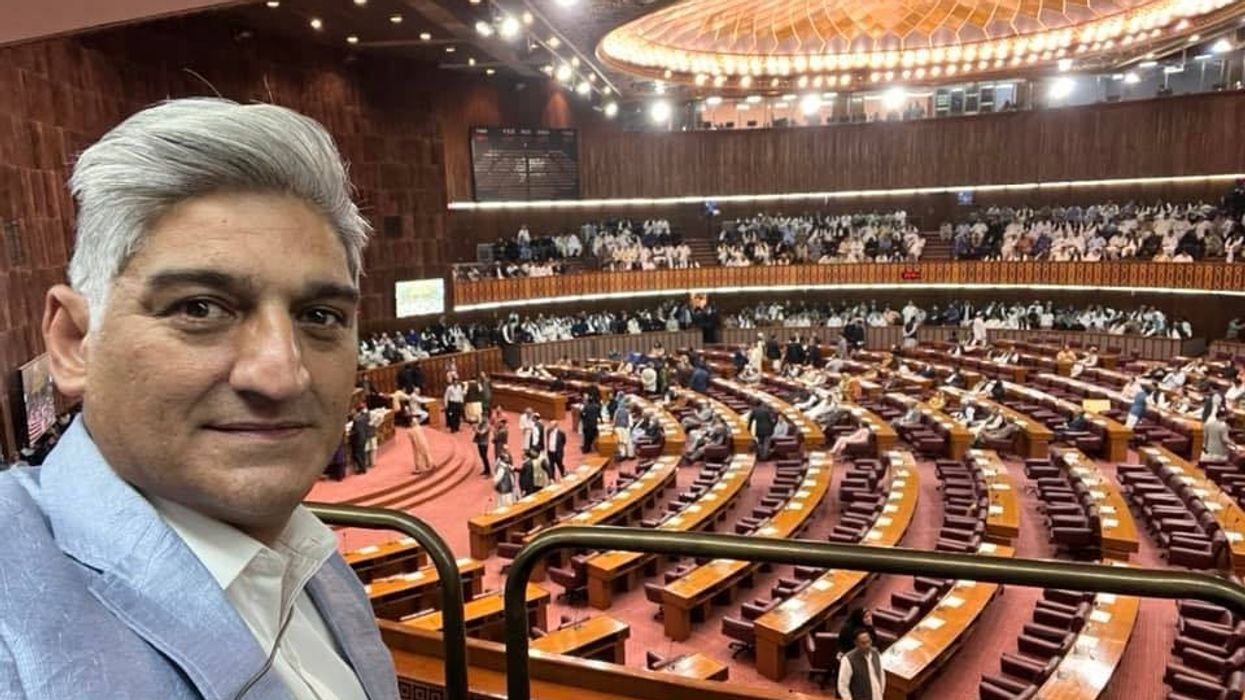
Amnesty International said that his arbitrary detention "on trumped up charges after he was abducted in the late hours of November 27 is an affront on the right to freedom of expression and media freedom."
Human rights and press freedom groups on Thursday expressed concern after Pakistani journalist Matiullah Jan's family said he was "abducted," and then a judge placed him in police custody for a terrorism and narcotics case that critics call "bogus."
"Matiullah Jan has been abducted from the parking of PIMS tonight at around [11:00 pm] by unmarked abductors in an unmarked vehicle alongside Saqib Bashir (who was let go five minutes later)," Jan's son, Abdul Razzaq, said on the journalist's X account, referring to the Pakistan Institute of Medical Sciences.
"This follows his courageous coverage of the protests in Islamabad. I demand that my father be let go immediately and his family immediately be informed of his whereabouts," added the son, who later posted a video on social media.
Journalist Asad Toor told the Pakistani newspaper Dawn that he was able to see Jan at the Margalla police station and that "he was fine." When Toor demanded to see the booking document, the first information report (FIR) was about protests by the political party Pakistan Tehreek-e-Insaf (PTI) and did not name Jan.
According to Dawn:
It later emerged that the anchor had been booked in a terrorism case, which also included charges of possessing narcotics. The FIR, shared by Toor and also independently verified by Dawn.com, was filed by the Margalla police on the complaint of Superintendent of Police Asif Ali.
Jan was later presented in the Rawalpindi Anti-Terrorism Court where Judge Tahir Abbas Sipra presided over a request by the police to grant the journalist's 30-day physical remand. However, the judge only granted his physical remand for two days.
The newspaper also noted Jan's suggestion that his case is based on his work: "This is highly irresponsible. The integrity of institutions is being destroyed. The reason [for the arrest] is as you know that I was [reporting] on the dead bodies."
Pakistani authorities are accused of trying to cover up the deaths of PTI protesters who descended on Islamabad this week demanding fair elections and the release of former Prime Minister Imran Khan, who has has been behind bars for over a year due to charges that he calls politically motivated.
"All records of dead and injured have been confiscated by authorities," a doctor who was working at an Islamabad hospital Tuesday night told The Guardian. "We are not allowed to talk. Senior government officials are visiting the hospital to hide the records."
Despite reports of "shoot-at-sight" orders for troops responding to the protests, Islamabad's police chief, Ali Rizvi, denied that live ammunition was used and Pakistani Interior Minister Mohsin Naqvi called on PTI to provide proof of the firing of live ammunition.
Amnesty International, which had decried the shoot-on-site order and then demanded an urgent and transparent investigation into the deaths and injuries of protesters, also sounded the alarm about Jan's arrest.
"The arbitrary detention of journalist Matiullah Jan in Islamabad on trumped up charges after he was abducted in the late hours of November 27 is an affront on the right to freedom of expression and media freedom," Amnesty's South Asia office said on social media. "The Pakistani authorities must immediately release Mattiullah and drop the politically motivated charges against him. The government should stop targeting journalists for simply doing their job."
The Committee to Protect Journalists' Asia office similarly said on social media that "CPJ expresses grave alarm over reports of the abduction of journalist Matiullah Jan (@Matiullahjan919) in the capital Islamabad following his coverage of protests by supporters of imprisoned former Prime Minister Imran Khan. Authorities must ensure Jan's safety and immediate release."
"Journalist Saqib Bashir (@saqibbashir156), who was abducted alongside Jan, has since been released. We call for a swift and impartial investigation into the incident and accountability for all perpetrators," CPJ added, pointing out that "complete impunity persists for Jan's previous abduction in 2020," when Khan was still in office.
According to Dawn, the Digital Media Alliance of Pakistan, Human Rights Commission of Pakistan, Pakistan Federal Union of Journalists, the PTI, and various other reporters, rights advocates, and political leaders slammed Jan's arrest.
Reuters highlighted Thursday that "Jan is known as a critic of the military's heavy influence in Pakistani politics."
The news agency also shared comments from Jan's lawyer, Imaan Mazari, who said of the case: "It is no less than a joke... There is not an iota of truth in these charges."

"All records of dead and injured have been confiscated by authorities," said one doctor. "We are not allowed to talk. Senior government officials are visiting the hospital to hide the records."
The Guardian reported Wednesday that at least 17 civilians in Pakistan were killed and hundreds more were wounded by army and paramilitary gunfire at protesters and one doctor in Islamabad claimed that authorities were attempting to cover up deaths.
"At least seven have died and four are in critical condition in the hospital," according to the unnamed doctor, who said that on Tuesday night he treated over 40 patients, many injured by gunfire. "Eight more have been admitted to the hospital with bullet wounds."
"All records of dead and injured have been confiscated by authorities," added the emergency doctor, who requested anonymity for his safety. "We are not allowed to talk. Senior government officials are visiting the hospital to hide the records."
The newspaper noted that its reporter "witnessed at least five patients with bullet wounds in one hospital, which was surrounded by police."
"Yet again, protestors in Pakistan have faced a brutal and lethal crackdown shrouded in a callous opacity by the authorities."
Supporters of jailed former Prime Minister Imran Khan and his political party Pakistan Tehreek-e-Insaf (PTI) have converged on Islamabad this week. Troops were supposedly given "shoot-on-site" orders as the protesters closed in on D-Chowk, a popular square in the capital near multiple government buildings, calling for fair elections and the release of Khan, who says the charges against him are politically motivated.
"Islamabad's police chief, Ali Rizvi, denied that live ammunition had been used during the operation, which he said police had conducted alongside paramilitary forces," Reuters reported. "Rizvi said 600 protesters had been arrested in Tuesday's operation, bringing the total since the protest sit-in began on Sunday to 954."
The office of Pakistani Interior Minister Mohsin Naqvi said in a statement that "as of now, no death has been reported, and the claims circulating regarding any such incidents are baseless and unverified."
According to Reuters:
Visiting protest sites on Wednesday, Naqvi said law enforcement agencies had successfully cleared protesters from the site of the sit-in and other areas of the capital.
He called on PTI to provide any evidence of the firing of live ammunition by security forces, and said it had not provided any details of deaths of its supporters.
PTI said on social media Tuesday that "a massacre has unfolded in Pakistan at the hands of security forces under the brutal, fascist military regime led by the Shehbaz-Zardari-Asim alliance. The nation is drowning in blood. Today, armed security forces launched a violent assault on peaceful PTI protesters in Islamabad, firing live rounds with the intent to kill as many people as possible."
On Wednesday, PTI highlighted The Guardian's reporting—calling it "alarming"—and shared an image of protesters that the party said are "confirmed dead as a result of direct firing by security forces."
Multiple U.S. lawmakers have condemned the crackdown on PTI protesters in Pakistan. Congressman Ro Khanna (D-Calif.), who has spoken out multiple times this week, took note of The Guardian's reporting on Wednesday.
"Horrified by reports of an attempted cover-up of the alleged killings of peaceful protesters by Asim Munir's regime in Pakistan," Khanna said, referring to Pakistan's chief of the army staff. "The U.S. must impose visa bans and asset freezes on senior officials in the military regime."
Drop Site News journalist Murtaza Hussain explained that "visa bans and asset freezes on Pakistani officials would be [a] nuclear event," because "everyone knows their assets are all in Western countries where they also spend all their free time."
Amnesty International, which on Tuesday demanded that the government rescind the shoot-on-site orders and "exercise maximum restraint" in response to protests, issued a Wednesday statement calling for an urgent and transparent investigation.
"Yet again, protestors in Pakistan have faced a brutal and lethal crackdown shrouded in a callous opacity by the authorities," said Babu Ram Pant, Amnesty's deputy regional director for South Asia. "The escalation of violence, shutdown of mobile internet services, mass detentions, and alarming rhetoric against PTI protesters by the authorities speaks of a pattern of intolerance for the right to freedom of peaceful assembly throughout the country. Similar clampdowns against Baloch and Pashtun protesters were witnessed earlier this year."
"Disturbing reports and testimonies regarding the unlawful use of force including lethal ammunition against protesters, during a government-enforced communication blackout, are emerging from yesterday," the campaigner noted. "Continued restrictions on reporting by media and independent observers have made it difficult to verify the number of casualties and raise urgent questions about accountability for human rights abuses."
"Amnesty International calls for a prompt, thorough, impartial, effective, and transparent investigation into the deaths and injuries of protesters as well as the unlawful use of force including lethal and less-lethal weapons by security personnel," he added. "Authorities must also immediately release all protesters detained solely for exercising their right to freedom of peaceful assembly."
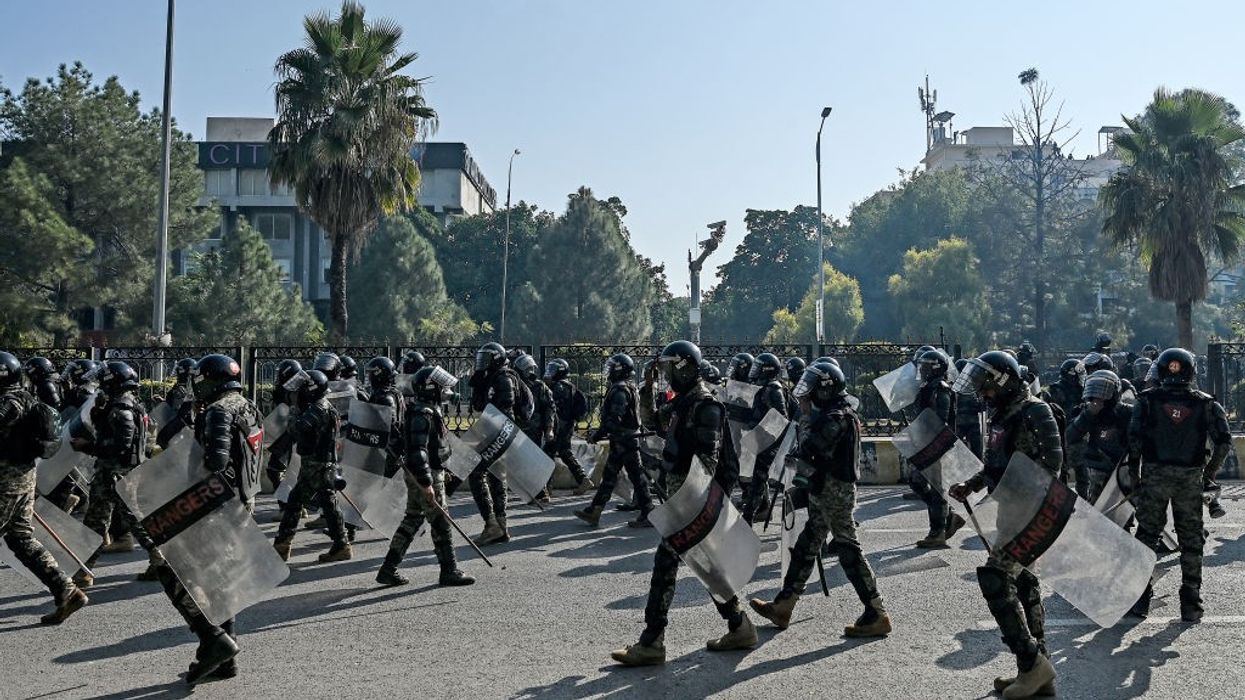
Jailed former Prime Minister Imran Khan commended "the Pakistani nation and PTI's political workers, who are fighting for their rights by participating in this peaceful protest."
Amnesty International on Tuesday joined people around the world in pressuring the Pakistani government to revoke the "shoot-on-site" orders given to troops responding to tens of thousands of protesters in Islamabad who are demanding the release of jailed former Prime Minister Imran Khan.
Khan has been behind bars for over a year due to various charges that he and his allies argue are politically motivated. So far, at least six people, including four paramilitary soldiers, have been killed and dozens more injured as supporters of the 72-year-old and his political party Pakistan Tehreek-e-Insaf (PTI), led by his wife Bushra Bibi, have converged on the country's capital in recent days.
In addition to Khan's release, the protesters "seek the resignation of the current government over what they call
rigged general elections this year," Reuters reported Tuesday. "Prime Minister Shehbaz Sharif's government has given no indication yet of bending to the demands. Authorities have used shipping containers to block major roads and streets in Islamabad, with police and paramilitary patrolling in riot gear."
NDTV explained that "when the Pakistan Army stepped in, it issued 'shoot-at-sight' orders under Section 245—which is a clause meant for the armed forces 'to defend Pakistan against external aggression or threat of war.' The clause also gives the army an open hand as it nullifies any judicial intervention or future proceedings."
"Any use of force must be lawful and no more than is necessary and proportionate and the authorities must take all necessary measures to prevent arbitrary deprivation of life."
Responding to the developments on Tuesday, Amnesty's South Asia office said that "the government must fully protect and ensure the rights of protesters and immediately rescind the 'shoot-on-sight' orders that provide undue and excessive powers to the military... The authorities must exercise maximum restraint, aiming to prevent and de-escalate violence and to avoid the use of force. Any use of force must be lawful and no more than is necessary and proportionate and the authorities must take all necessary measures to prevent arbitrary deprivation of life, including by ensuring that law enforcement actions are adequately planned to minimize the risk to life."
"There must also be effective accountability for any unlawful use of force," Amnesty continued. "The severe restrictions on assembly, movement, and mobile and internet services as well as arbitrary detentions of thousands of protesters across Pakistan, particularly in Islamabad, are a grave violation of the rights to freedom of peaceful assembly, movement, and expression. As protesters enter the capital, law enforcement officials have used unlawful and excessive force including tear gas, live ammunition, and rubber bullets against PTI protesters."
"Even if protests become nonpeaceful, the authorities must respect and ensure the protesters' rights to life and freedom from torture and other ill-treatment," the group added. "The Pakistani authorities have obligations under international human rights law to provide an enabling environment for the protesters. Amnesty International urges the government to ensure that the right to freedom of peaceful assembly is respected and protected. Those detained solely for exercising their right to peaceful assembly must be released immediately."
Pakistani poet and journalist Ahmed Farhad has used social media to share protest updates in Urdu, but also posted a message in English on Tuesday: "I don't know if I'll be alive or free to report further. I've been riding on bike for several kilometers to share these updates. I request international and national media to show the situation at D-Chowk. People are being shot at with heartless brutality. I don't know how many more people have been injured or killed by the time this post reaches you."
D-Chowk, a popular square in the capital near multiple government buildings, was "the final destination of PTI's main convoy," according to Dawn. As midnight neared in Pakistan Tuesday night, the newspaper reported that "rangers have regained control of Islamabad's D-Chowk after beginning arrests and pushing back PTI protesters from the venue of the party's much-touted power show."
Meanwhile, Khan on Tuesday
issued a new statement from Adiala Jail in Rawalpindi, commending "the Pakistani nation and PTI's political workers, who are fighting for their rights by participating in this peaceful protest, and resolutely standing before the mafia that has imposed itself upon our country, to demand their rights and genuine freedom."
"My message for my team is to fight until the last ball is bowled. We will not back down until our demands are met!" he continued, taking aim at the Pakistan's interior minister. "On Mohsin Naqvi's instructions, paramilitary rangers and police relentlessly fired tear gas shells and even shot at our political workers, resulting in the martyrdom of and injuries to peaceful, unarmed citizens. Let me tell you, they will have to answer for this! The protesters were not only peaceful, but they even assisted the very police officers and rangers who were shooting and firing teargas shells at them (when they were in need of help)."
"My thanks go to overseas Pakistanis around the globe, who are not only mobilizing Pakistanis and contributing funds, but also holding historic protests in their respective countries," he said. "Social media warriors around the globe should continue to vigorously reiterate our demands and show the world the ongoing oppression in Pakistan! To those threatening to try me in military court: Do what you must; I will not back down from my stance. Those who haven't yet joined the protest must also head to D-Chowk. All Pakistanis participating in the protest must remain peaceful, stay united, and stand firm until our demands are met. Remember, this is a struggle for Pakistan's survival and true freedom!"
Several solidarity protests were held around the world on Sunday and multiple U.S. political leaders weighed in the past few days.
"The brutal repression of protesters in Pakistan and growing political violence is an attempt to suppress democracy and human rights," U.S. Rep. Rashida Tlaib (D-Mich.) said Tuesday. "I stand with the brave Pakistanis who are rising up and protesting for change."
Congresswoman Barbara Lee (D-Calif.) declared Monday that "freedom of speech and the freedom to peacefully protest are essential to democracy—that holds true in the United States, in Pakistan, and around the globe. I stand with pro-democracy advocates in Pakistan as they fight for justice and human rights."
Rep. Summer Lee (D-Pa.) said Monday that "I am moved by the bravery demonstrated by the Pakistani people as they protest for electoral integrity, and judicial fairness—and I condemn any violent suppression of them exercising their fundamental rights. Everyone deserves to speak out and demand democracy."
In a pair of social media posts on Sunday, Congressman Ro Khanna (D-Calif.)
noted his support for recent letters led by Reps. Greg Casar (D-Texas), Susan Wild (D-Pa.), and John James (R-Mich.) "urging for the release of all political prisoners in Pakistan and for the U.S. to stand up for human rights," and specifically sounded the alarm about communications blackouts.
"Deeply concerned by reports that Asim Munir's regime in Pakistan is cutting internet, blocking roads, and abducting activists this weekend," he
said. "As the congressman for Silicon Valley, I am committed to standing up for freedom of speech including a free internet."
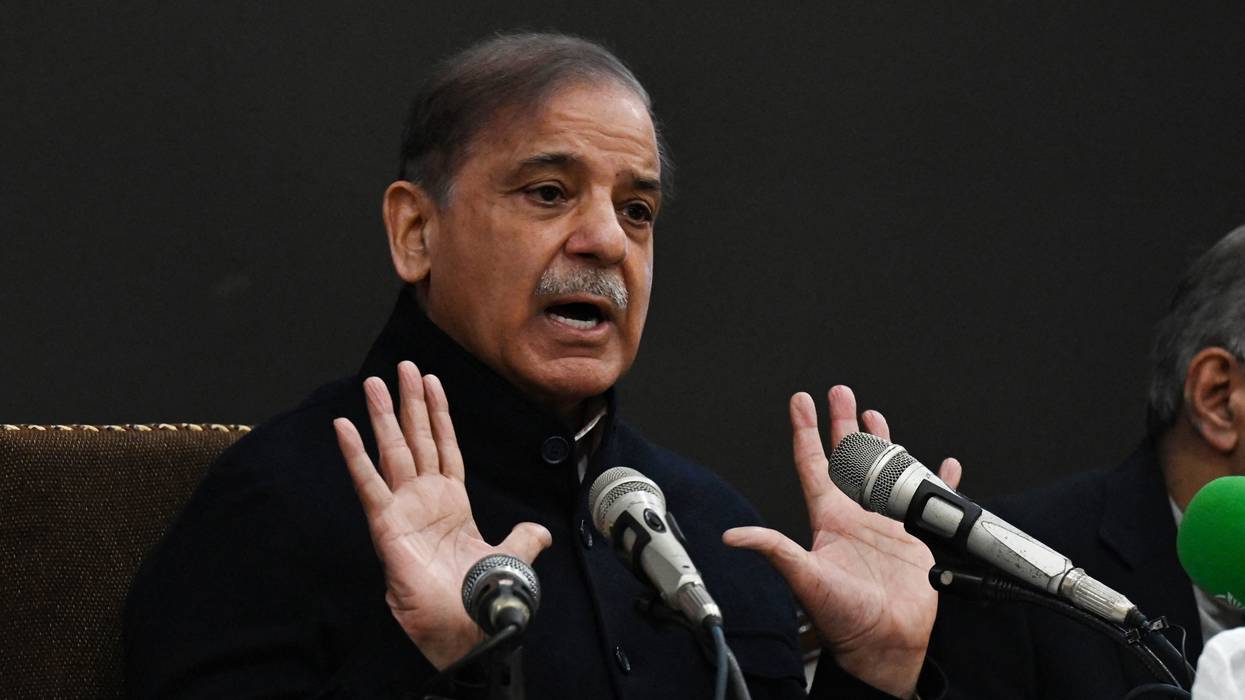
"We do not want the United States taxpayer dollars to go to militaries that then use that money to incarcerate journalists or suppress free speech or suppress political parties," said Rep. Greg Casar.
Pakistani lawmakers on Sunday elected Shehbaz Sharif to serve a second term as the country's prime minister following elections last month that were widely decried as illegitimate, with top officials and the military
manipulating the vote and cracking down on the party of jailed former Prime Minister Imran Khan—the nation's most popular politician.
The election of Sharif, the younger brother of three-time Prime Minister Nawaz Sharif, drew shouts of protest from Khan's allies in Parliament who supported Omar Ayub, who served as federal minister for economic affairs under Khan. Despite facing large-scale repression ahead of the February contest, candidates backed by Khan's Pakistan Tehreek-e-Insaf (PTI) party won more seats than any other party—but not enough for an outright majority.
Sharif's Pakistan Muslim League-Nawaz (PMLN) party, the favored party of the nation's military, formed an alliance with the Pakistan People's Party and others, a partnership that Khan allies have derided as a "coalition of losers" and "mandate thieves."
Less than two weeks after the national elections, a top Pakistani administrative official publicly admitted to manipulating the results by converting "losers into winners, reversing margins of 70,000 votes of independent candidates for 13 national Parliament seats."
PTI-backed candidates were forced to run as independents after election authorities banned the party's well-known symbol, a cricket bat.
قومی اسمبلی ہو یا سڑکیں، #CoalitionOfLosers کو پی ٹی آئی پارلیمنٹیرینز اور پاکستان کے عوام کی جانب سے ٹف ٹائم مل رہا ہے۔ ان کا مستقبل اچھا نظر نہیں آتا۔ وہ شرمناک زندگی گزار رہے ہیں کیونکہ پاکستان میں ہر کوئی جانتا ہے کہ وہ مینڈیٹ چور ہیں!#مینڈیٹ_پر_ڈاکہ_نامنظور pic.twitter.com/xuuo1kYmxX
— PTI Layyah (@PtiofficialLyh) March 3, 2024
Days before Sharif's election as prime minister, U.S. lawmakers led by Rep. Greg Casar (D-Texas) expressed concerns about "pre- and post-poll rigging" and called on President Joe Biden and Secretary of State Antony Blinken to withhold recognition of a new Pakistani government until a "thorough, transparent, and credible investigation of election interference has been conducted."
"Without taking this necessary step, you risk enabling anti-democratic behavior by Pakistani authorities and could undermine the democratic will of the Pakistani people," reads the letter, which was signed by more than 30 Democratic lawmakers.
"Pakistan is a longstanding ally of the United States, and we recognize the importance of our relationship for regional stability and counterterrorism efforts," the letter continues. "It is in the U.S. interest to ensure that democracy thrives in Pakistan and that election results reflect the interests of the Pakistani people, not the interests of the Pakistani elite and military. We look forward to working with you to show Pakistanis that the U.S. stands with them in their fight for democracy and human rights."
Last August, The Intercept obtained a secret cable indicating that the Biden administration pressured the Pakistani government to remove Khan as prime minister. Khan was ousted in a no-confidence vote shortly after two American diplomats met with Pakistan's ambassador to the U.S. in March 2022.
Khan has since been imprisoned on corruption charges that he and his supporters say are politically motivated.
In an interview with Voice of America on Friday, Casar said he has "long studied" how "the United States supported coups, supported military governments, and suppressed democracy in Latin America."
"And that ultimately hurt, not just Latin Americans, but also hurt people in the United States. It did not work. It did not work economically. It did not work for our safety," said Casar. "The same should apply with [the] United States and Pakistan. We should not simply let geopolitics or corporations or our military alliance override our core value of democracy."
Addressing suggestions that his call for an investigation of the February election might constitute "meddling" in Pakistan's internal politics, Casar said that "our interest is not whether one group or another group wins an election."
"The people of Pakistan should be able to decide their own election," said Casar. "We have very clear laws that aid is contingent on human rights being respected, free speech being respected. We do not want the United States taxpayer dollars to go to militaries that then use that money to incarcerate journalists or suppress free speech or suppress political parties."

Rather than continue to support the discredited military establishment bent on subverting the will of the people, the Biden administration would do well to support the democratic aspirations of millions of Pakistanis.
As polls closed following Pakistan’s parliamentary election on February 8, major media networks began election-night coverage with prominent TV anchors and pundits discussing voter turnout and the timeline for expected results. When it came time to offer his analysis, one of Pakistan’s most popular TV hosts, Hamid Mir, launched an unexpected tirade against the entire electoral process. He refused to call the proceedings of the day an “election,” railed against the suspension of mobile services (which caused massive disruption to voters as they cast their ballots), and questioned the relevance of discussing voter turnout when the outcome of the election was predetermined.
This was a stunning moment on live television at a time when Pakistan’s military and intelligence apparatus had systematically suppressed all forms of dissent. Somebody had dared to vocalize what millions of Pakistanis in the country and in the diaspora already knew about the deeply flawed electoral process.
Mir was perhaps referring to pre-election rigging against Pakistan’s most popular political party, the Pakistan Tehreek-e-Insaf (PTI), led by former Prime Minister Imran Khan. However, as the night wore on, the military and intelligence establishment in collaboration with the Election Commission of Pakistan (ECP) tried to pull off the greatest post-electoral heist in Pakistan’s recent history.
It is no longer sustainable for the U.S. government to continue its support of the Pakistani military and risk its long-term relationship with a population of 240 million, two-thirds of which is under 30.
As soon as the media began reporting that PTI-backed candidates were defeating former prime minister Nawaz Sharif (favored by the military) and other leading candidates in his party, the ECP abruptly withheld and delayed the announcement of results in key constituencies. Several hours later, Pakistanis woke up to an entirely new reality. PTI candidates who had been winning by wide margins and had documentation to prove it, found themselves defeated according to the ECP. Despite “losing” dozens of seats in the process, which they are currently challenging in the courts, PTI-backed candidates still won the highest number of seats in parliament.
Put simply, PTI supporters in Pakistan staged nothing short of a civilian coup against the Pakistani military.
Rather than continue to support the discredited military establishment bent on subverting the will of the people, the Biden administration would do well to support the democratic aspirations of millions of Pakistanis.
Pre-Election Rigging
As the date for parliamentary elections approached, the PTI was stripped of its electoral symbol, and party candidates were forced to contest as independents. The party chairman and former Prime Minister Imran Khan was convicted on three separate counts and sentenced to a total of 31 years. PTI candidates and their families were targeted, harassed, and assaulted, and many were forced to campaign in hiding.
Voter suppression was rife. People did not know until very late where they would vote, and at times voters within a single family were assigned polling stations hundreds of miles apart. The day before the election, citing security concerns, the Election Commission of Pakistan (ECP) announced that polls would close early, further restricting voter access.
And yet, despite massive pre-poll rigging and voter intimidation, supporters of the PTI came out in droves. Tens of millions exercised their electoral rights and delivered a stunning upset.
Rather than continue to support the military at the expense of democratic processes in Pakistan, the U.S. government would do well to understand the implications of this unprecedented moment in Pakistan’s history.
The Pakistani election demonstrated that despite long periods of direct and indirect military rule in the country, the people of Pakistan continue to have faith in the democratic process. It made clear that the Pakistani military and its intelligence agencies can no longer manipulate electoral processes and outcomes in the face of overwhelming people power. It revealed that the military’s attempts to control the narrative by muzzling the media and targeting journalists no longer work with a population that is technologically adept and social-media savvy. It showed that the military’s iron grip is slipping.
This is a critical moment in Pakistan’s history and for U.S.-Pakistan relations.
Once a venerated institution in Pakistan, the military is now viewed with contempt by millions of Pakistanis in the country and in the diaspora, who blame it for Imran Khan’s ouster. They are now increasingly aware of the insidious role the military leadership played in various chapters of Pakistan’s history: its genocidal actions in 1971 against the Bengalis of East Pakistan, its cultivation of militant groups to advance domestic and foreign policy objectives, its involvement in the enforced disappearances of Pakistani citizens, its collaboration with the CIA in the so-called War on Terror, and its repeated violations of Pakistan’s constitution.
U.S.-Pakistan Relations
It is no longer sustainable for the U.S. government to continue its support of the Pakistani military and risk its long-term relationship with a population of 240 million, two-thirds of which is under 30.
Successive U.S. administrations have relied on the Pakistani military to advance their strategic interests and actively worked to undermine “aggressively neutral” civilian leaders like Imran Khan, who tried to craft independent foreign policies.
It is why the Biden administration remained conspicuously silent in the face of brutal state repression against Imran Khan’s supporters following his ouster two years ago. This indifference continued in the run-up to the election even after widespread reports of pre-poll rigging.
Disillusioned by the administration’s lack of support, many in the Pakistani-American community turned to their elected representatives to garner bipartisan support for House Resolution 901, which called for free and fair elections in Pakistan. They managed to get more than 70 members of Congress to co-sponsor the resolution.
Since the election, and at the behest of Pakistani-American constituents, many of these representatives tweeted their alarm at the massive rigging that took place on election day. Some called on Pakistani authorities to respect the will of the people, while others called for an investigation into the election amid charges of widespread fraud.
This is a critical moment in Pakistan’s history and for U.S.-Pakistan relations. Amid growing anti-Americanism in the nuclear-armed country, the Biden administration has an opportunity to reset its relations with the people of Pakistan. As is being urged by some members of Congress, the administration should stand in solidarity with the Pakistani people and publicly refuse to recognize the results of Pakistan’s election until all irregularities are resolved. Anything short of that will imperil stability in the country as well as in the region. It will also make a mockery of Biden’s rhetoric regarding democratic principles and the rule of law.

A member of the military's preferred party called the early results "probably the biggest election upset in Pakistan's political history."
This is a developing story... Please check back for possible updates...
Early results released Friday by Pakistani officials showed that candidates backed by jailed former Prime Minister Imran Khan are currently leading the country's national elections, a stunning development given measures the nation's powerful military took to suppress the Pakistan Tehreek-e-Insaf party.
Members of Khan's party, known as PTI, were forced to run as independents after the nation's Supreme Court and election authorities banned its well-known symbol, a cricket bat. The Associated Press noted that the party also "couldn't hold rallies or open campaign offices, and its online events were blocked."
Friday's tallies from Pakistan's election commission showed that independent candidates backed by PTI have won 62 seats thus far, more than any other party. Former Prime Minister Nawaz Sharif's Pakistan Muslim League—the preferred party of the nation's military—has won 46 seats.
Results for more than 100 contested seats are still being counted.
Sen. Mushahid Hussain, a member of the Pakistan Muslim League, wrote on social media that the early results mark "probably the biggest election upset in Pakistan's political history."
While PTI supporters welcomed the early results, deep concerns remained over whether their lead would hold amid ongoing tampering allegations.
Just ahead of Thursday's long-delayed election, Pakistani authorities cut off mobile phone and internet services across the country in what human rights groups called an overt attack on the democratic process.
Gohar Ali Khan, PTI's chairman, said late Thursday that "any attempt to change the results overnight will be thwarted and not accepted at any cost by the people of Pakistan or the local and international observers and media."