
SUBSCRIBE TO OUR FREE NEWSLETTER
Daily news & progressive opinion—funded by the people, not the corporations—delivered straight to your inbox.
5
#000000
#FFFFFF
To donate by check, phone, or other method, see our More Ways to Give page.


Daily news & progressive opinion—funded by the people, not the corporations—delivered straight to your inbox.
Police announced a shelter-in-place order for "all areas north of the airport to the Ohio River."
This is a developing story… Please check back for updates…
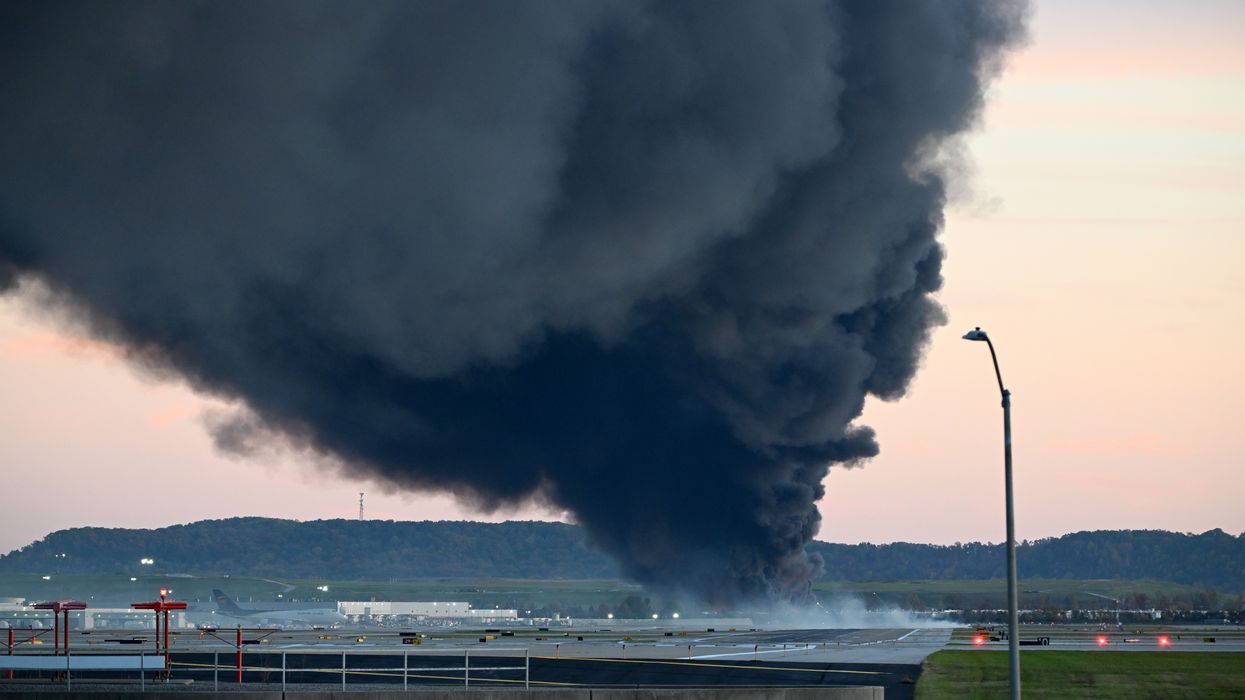
Aerial footage showed plumes of black smoke and flames around the Louisville Muhammad Ali International Airport in Kentucky after a UPS plane crashed during its departure on Tuesday evening.
The Federal Aviation Administration said on social media that UPS Flight 2976—a McDonnell Douglas MD-11 bound for Daniel K. Inouye International Airport in Honolulu, Hawaii—crashed around 5:15 pm local time. The agency added that the FAA and National Transportation Safety Board will investigate, with the NTSB providing all updates.
The Louisville Metro Police Department confirmed that the LMPD and multiple other agencies were responding to the scene, where there are "injuries reported."
LMPD initially announced a shelter-in-place order "for all locations within five miles of the airport," which was then expanded to "all areas north of the airport to the Ohio River."
The airport—which confirmed that "the airfield is closed" after the crash—is the UPS global hub. The shipping giant said in a statement that there were three crewmembers onboard and "at this time, we have not confirmed any injuries/casualties."
"UPS will release more facts as they become available, but the National Transportation Safety Board is in charge of the investigation and will be the primary source of information about the official investigation," the company added.
As CNN reported Tuesday:
The McDonnell Douglas MD-11F is a freight transport aircraft manufactured originally by McDonnell Douglas and later by Boeing. The aircraft is primarily flown by FedEx Express, Lufthansa Cargo, and UPS Airlines for cargo.
The plane also served as a popular wide-bodied passenger airplane after it was first flown in 1990. The aircraft involved in Tuesday's crash was built in 1991.
As fuel costs increased for the three engine jets many of them were converted to freighters. The plane can take off weighing in at a maximum 633,000 pounds and carrying more than 38,000 gallons of fuel, according to Boeing, which bought McDonnell Douglass.
The International Brotherhood of Teamsters said that it "is monitoring this developing tragic event on the ground," and "as this horrific scene is being investigated, prayers on behalf of our entire international union are with those killed, injured, and affected, including their families, co-workers, and loved ones."
Louisville Mayor Craig Greenberg said that he and his wife, Rachel, "are praying for victims of the UPS plane that crashed."
"We have every emergency agency responding to the scene," the Democrat added. "There are multiple injuries and the fire is still burning. There are many road closures in the area—please avoid the scene."
Democratic Kentucky Gov. Andy Beshear, who is headed to Louisville for a briefing with the mayor, said, "Please pray for the pilots, crew, and everyone affected."
Republican President Donald Trump's transportation secretary, Sean Duffy, similarly said, "Please join me in prayer for the Louisville community and flight crew impacted by this horrific crash."
During a press conference earlier on Tuesday, Duffy had warned of "mass chaos" if the ongoing government shutdown continues, saying: "You will see mass flight delays. You'll see mass cancellations, and you may see us close certain parts of the airspace, because we just cannot manage it because we don't have the air traffic controllers."
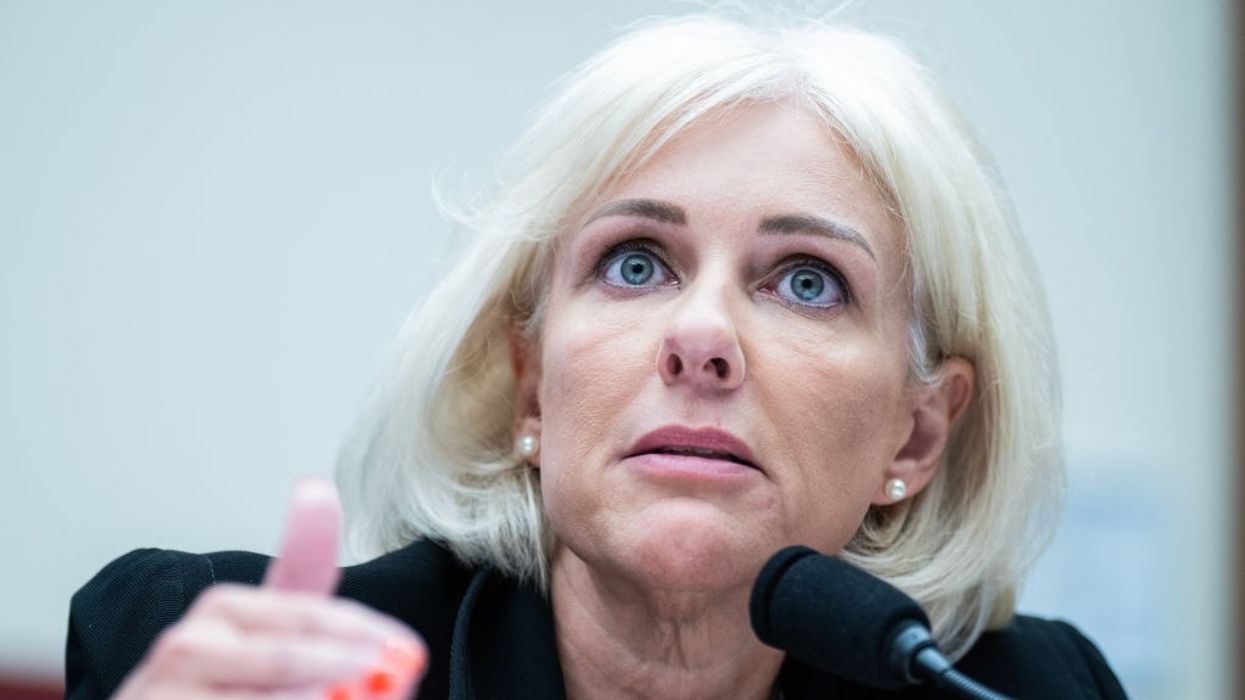
The NTSB chair said the company tried to "manufacture" evidence, avoided sharing information, and threatened agency staff as she released findings from a 17-month investigation into the East Palestine disaster.
The chair of the National Transportation Safety Board on Tuesday condemned Norfolk Southern for interfering with its investigation into last year's East Palestine train crash and the "vent and burn" of harmful chemicals that followed.
The remarks came at the final NTSB hearing on the disaster, in which the agency released a preliminary report—damning to Norfolk Southern and its contractors—from a 17-month investigation. NTSB officials explained that a decision to intentionally burn vinyl chloride, a carcinogen, from five derailed train cars was flawed and resulted from the company's selective sharing of information with officials at the time.
Norfolk Southern's uncooperative approach didn't stop after the vent-and-burn, according to the NTSB. Throughout the investigation, the company delayed or avoided sharing information, sought to "manufacture" evidence, and even issued a "threat" to agency staff, Jennifer Homendy, the NTSB chair, said.
"Norfolk Southern's abuse of the party process was unprecedented and reprehensible," Homendy said, also describing it as "unconscionable."
She praised NTSB investigators "for their fortitude in the face of mounting pressure, for their laser focus on the facts."
Why is this so predictable? The head of the NTSB said Norfolk Southern repeatedly tried to interfere with the agency’s investigation into the East Palestine derailment. Oh, and the venting and burning of the chemicals was unnecessary and they failed to disclose it, too.
“Norfolk… pic.twitter.com/BrKYD0Cm6s
— Truthstream Media (@truthstreamnews) June 26, 2024
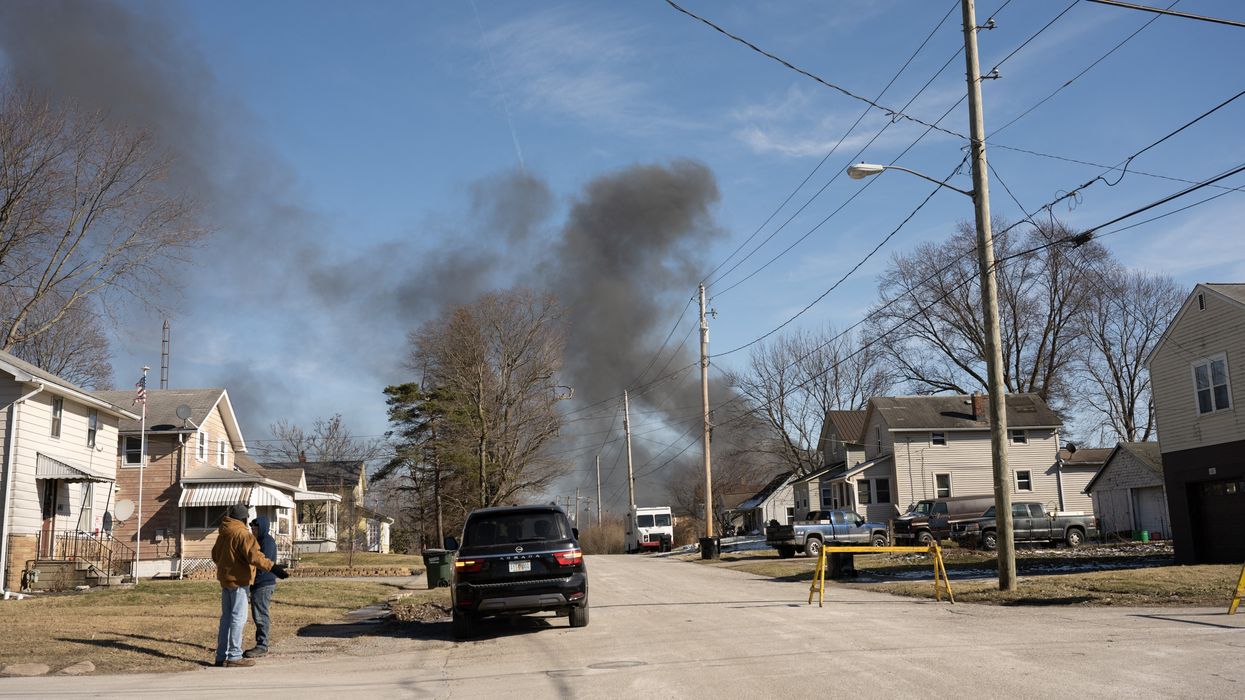
Dozens of train cars derailed in East Palestine, Ohio, a village near the Pennsylvania border, on February 3, 2023. Hazardous materials were released when a DOT-111 model of train car—not ideal for carrying hazardous materials—was punctured during the crash. This set off fires that spread more than 1,000 feet and lasted for days.
On February 6, concerned that there would be a large-scale explosion, the company got official approval to breach five train cars carrying the vinyl chloride, drained it into a trench, and set it alight in a controlled burn.
That vent-and-burn was "not necessary," says the NTSB's new report, which is set to be finalized in the coming weeks. Homendy had previously said as much while testifying to a congressional committee in March, and a former Environmental Protection Agency employee also said that the incineration likely went against federal regulations, as Common Dreams reported in March.
The burning of the vinyl chloride left a chemical odor over the town, and may have been the cause of nausea, rashes, and headaches. And its impact was not limited to East Palestine—the burned chemicals spread to 16 states and likely Canada, a study released last week found.
Tuesday's hearing helped clarify why the flawed decision to burn the vinyl chloride was made: Norfolk Southern didn't share all available information with authorities, and pressured them to approve the burn immediately.
Oxy Vinyls, the company that produced the chemical, had already assessed the situation and determined that a feared chemical reaction that could have led to an explosion wasn't happening, but Norfolk Southern didn't share this with the incident commander, the report says. The East Palestine fire chief has said the company gave him only 13 minutes to approve the burn; the new report cites "unwarranted urgency."
Norfolk Southern presented vent-and-burn as the only option, the report says.
"There was another option: Let it cool down," Homendy said previously.
In fact, the temperature of one of the train cars in question was already going down, indicating that the feared chemical reaction wasn't happening, but Norfolk Southern didn't share this fact with authorities, the report says.
The company's lack of transparency began even earlier: Firefighters and emergency personnel weren't told which hazardous materials were on board until an hour after they arrived.
"This resulted in greater exposure of emergency responders and to the public to post-derailment hazards," said NTSB investigator Troy Lloyd.
When a responder called Norfolk Southern to ask for more information about the materials on board, a company representative said they would call back, but never did, The Washington Post reported.
Krissy Ferguson, a 50-year-old local resident, told the Post that she felt "heartbroken" after the hearing and called for criminal charges to be filed.
Other local people expressed similar discontent with the company after the hearing.
"Community members deserve transparency and proactive protection, not the silence, secrecy, and manipulation that has been unveiled today about Norfolk Southern," East Palestine resident Misti Allison told The Associated Press.
Homendy expressed her own discontent with Norfolk Southern's approach to dealing with her agency. She said that a senior executive had requested that the agency "put to bed" the "rumor" that the company had rushed through the vent-and-burn to keep trains moving and had said that the results of the agency's investigation could "close a chapter" for the company and allow it to "move on."
Homendy said the request was not only "unethical and inappropriate," but also that the entire room full of NTSB staff perceived it as a "threat," as "it was delivered that way."
The alleged intimidation didn't have apparent effect. In addition to its findings about the accident and the burn, the NTSB on Tuesday set forth more than two dozen recommendations for stricter safety regulations, one of which is removing the DOT-111 model of train car from flammable liquids service.
The recommendations are not binding and must be enacted by Congress, which failed to pass a proposed package of railroad reforms last year likely due to industry lobbying and Republican resistance. The Biden administration did institute new regulations in April.
Norfolk Southern issued a statement in response to the NTSB's findings.
"We resolved not to wait for the NTSB's final report before taking decisive action," said John Fleps, the company's chief safety officer. "We will continue to build on our strong safety culture through partnership and innovation to be the gold standard of safety for the rail industry."
"It's inconceivable that there wouldn't have been someone from the enforcement office, or general counsel, saying, 'Oh, Norfolk Southern wants to do an uncontrolled burn—that's illegal, you cannot do that," said a former EPA official.
A day after the head of the National Transportation Safety Board told Congress that the deliberate burning of toxic chemicals in five crashed train cars in East Palestine, Ohio last year was unnecessary, a former Environmental Protection Agency official said the so-called "controlled burn" also likely went against EPA regulations.
Kevin Garrahan, who worked for the agency for 40 years and focused on environmental risk assessment and hazardous waste cleanup, told HuffPost that soon after a Norfolk Southern train derailed in the town of 4,700 people, he alerted a former EPA colleague to a 2022 memo on the open burning and open detonation of waste explosives.
The memo described when local EPA officials can issue permits for the pre-planned combustion of waste explosives, and said the open burning of hazardous waste should be a last resort.
Because the EPA determined in 1987 that "open burning of nonexplosive waste could not be conducted in a manner that was protective of human health and the environment," the memo says, the method "is generally the least environmentally preferred treatment technology and, consistent with existing requirements, should only be available where there are no safe modes of treatment."
Considering laws banning the open burning of chemicals and the EPA's knowledge of the danger that was spelled out in the memo, the decision to allow emergency crews to blast holes in five train cars, drain the toxic vinyl chloride they were carrying into pits, and set the chemicals on fire seemed "incredibly stupid and reckless," Garrahan wrote to his colleague.
"Am I missing something?" he asked.
"The big question is if there is another train derailment involving toxic chemicals—and there will be—would EPA sit idly by and allow a state and a polluter to decide to do an open burn again?"
Garrahan's former colleague agreed that there were concerns about "OB/OD," or open burning and open detonation, but did not reply to Garrahan's later emails about the safety of the operation.
In a case of a private company directing a public official regarding their response to a potential public safety threat, East Palestine fire chief Keith Drabick told the NTSB that Norfolk Southern and its contractors pushed him to approve the deliberate burning of the vinyl chloride, a known carcinogen that has been linked to liver, brain, lung, and blood cancers as well as neurological damage. Drabick said railroad officials gave him just 13 minutes to make the decision.
Garrahan told HuffPost that the EPA, which deployed state and federal officials to the crash site, should have stepped in and cited the 2022 memo as proof that the so-called "controlled burn" that Norfolk Southern was suggesting actually fit the definition of open detonation.
"It's inconceivable that there wouldn't have been someone from the enforcement office, or general counsel, saying, 'Oh, Norfolk Southern wants to do an uncontrolled burn—that's illegal, you cannot do that," Garrahan said, calling the memo a "bombshell."
Instead, the EPA to this day has referred to the operation, which sent huge plumes of black smoke into the surrounding area and forced an evacuation of East Palestine, as a "controlled burn," suggesting any damage would have been contained.
The incineration of the vinyl chloride raised concerns about the release of dioxins, another class of toxic compounds that are linked to reproductive and developmental harms and are also carcinogenic. HuffPost reported that an EPA dioxin expert was not consulted about the Norfolk Southern derailment and its aftermath until a month after the accident.
Judith Enck, a former EPA regional administrator, told the outlet that the EPA went against their previous protocols, which were in place in 2012 when a train carrying vinyl chloride derailed in Paulsboro, New Jersey.
Officials in that case sealed off the affected cars and vacuumed the hazardous materials before taking it to a facility for safe disposal.
As Jennifer Homendy, chair of the NTSB, testified at a congressional hearing on Wednesday, Drabick and other officials tasked with approving the deliberate burn were not given all the relevant information they needed from Norfolk Southern about a potential spontaneous explosion.
The maker of the vinyl chloride in the cars, Oxy Vinyls, told the rail company that there was no hazardous chemical reaction happening in the crashed train.
"They believed polymerization was not occurring, and there was no justification to do a vent and burn," Homendy said. "There was another option: let it cool down."
Oxy Vinyls' input was not passed along to Ohio Gov. Mike DeWine, Drabick, or other local authorities who proceeded with the incineration that allowed Norfolk Southern to reopen the railroad the following day.
"Meanwhile," said Plain Dealer reporter Jake Zuckerman, "some of the locals are still stuck in hotels, that Norfolk Southern is no longer paying for. And they say they're suffering symptoms of chemical exposure, which the EPA and Norfolk Southern deny."
The EPA's decision-making in the case of East Palestine raises questions about the future safety of other American communities if a similar accident happens.
"EPA sat idly by when a major bad decision was made," Enck told HuffPost. "The big question is if there is another train derailment involving toxic chemicals—and there will be—would EPA sit idly by and allow a state and a polluter to decide to do an open burn again?"